Watering & Irrigation

12 Best Automatic Watering System for Indoor Plants 2026: Simple, Reliable Kits That Avoid Leaks

Find an automatic watering system for your indoor plants that won't leak, fail, or confuse you. We cut through the hype to show which pump-based timers actually work for 10-15 pots.

Every indoor plant owner eventually faces the same question: how to keep plants hydrated when you are away or too busy to water daily. Automatic systems promise convenience, but many deliver leaks, timer drift, or pump failures that leave pots overwatered or bone-dry.

The truth is that reliable watering comes down to a few simple features: a self-priming pump with anti-siphon protection, a clear timer, and a power source that does not fail mid-vacation. Skip the systems with check valves and cheap tubing that look good in photos but fail in practice.

This guide focuses on pump-based kits that actually work for 10 to 15 indoor pots. Whether you want a straightforward rechargeable system or a WiFi-connected one with remote control, the picks here share one thing in common: they keep your plants alive without turning your living room into a flood zone.

1

DAOTAILI 10-Pot

Top Pick
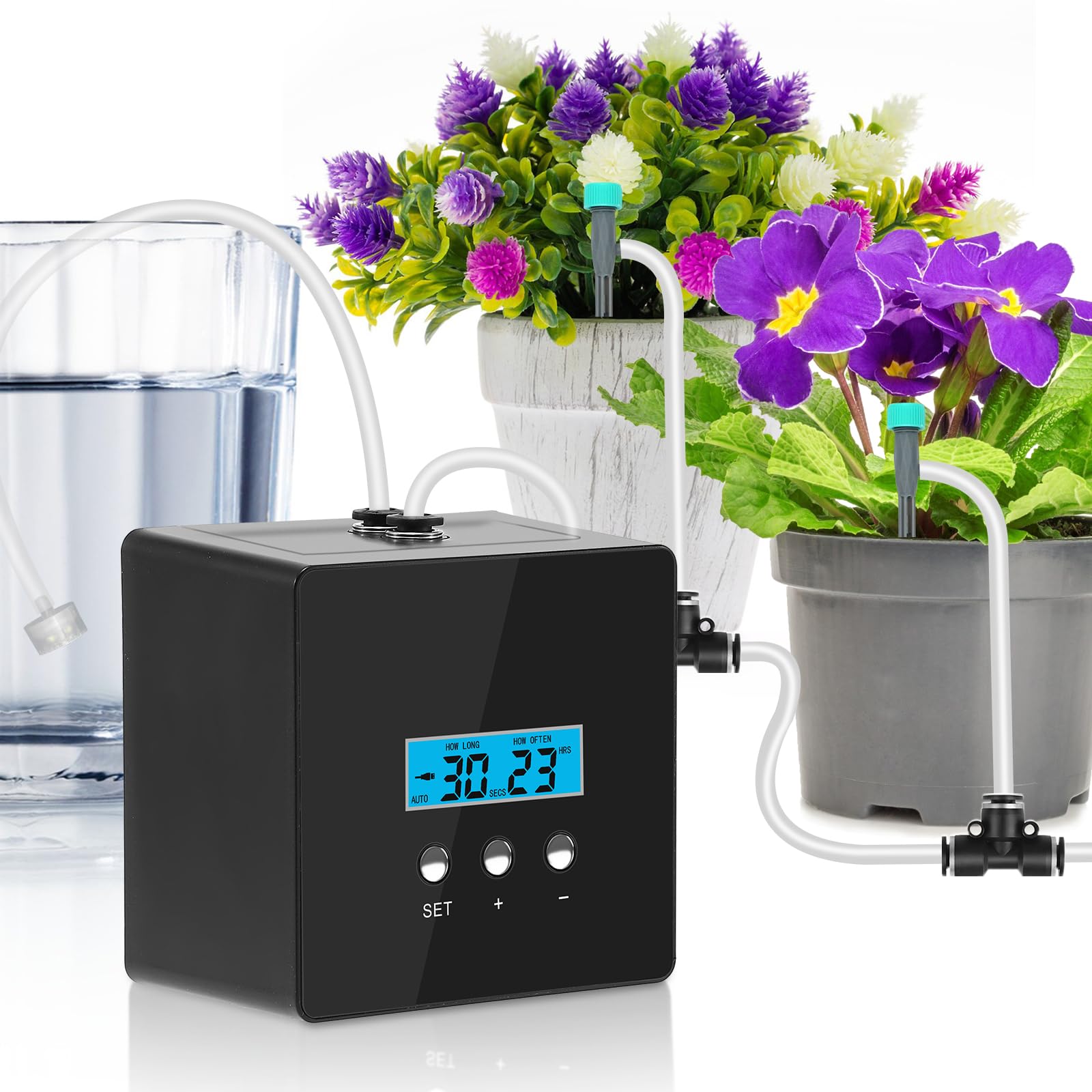
DAOTAILI 10-Pot

Small indoor gardens

Our Score 8.8/10
Check Price

Worth Noting

  • Long-term durability may be less predictable than systems with more widespread field use.
  • The system is limited to a maximum of 10 pots with no option to expand tubing or add extra drippers.
Power
USB-C or 4 AA
Timer
1-99 sec, 1-30 days
Plants
10
Anti-Siphon
Read the full review

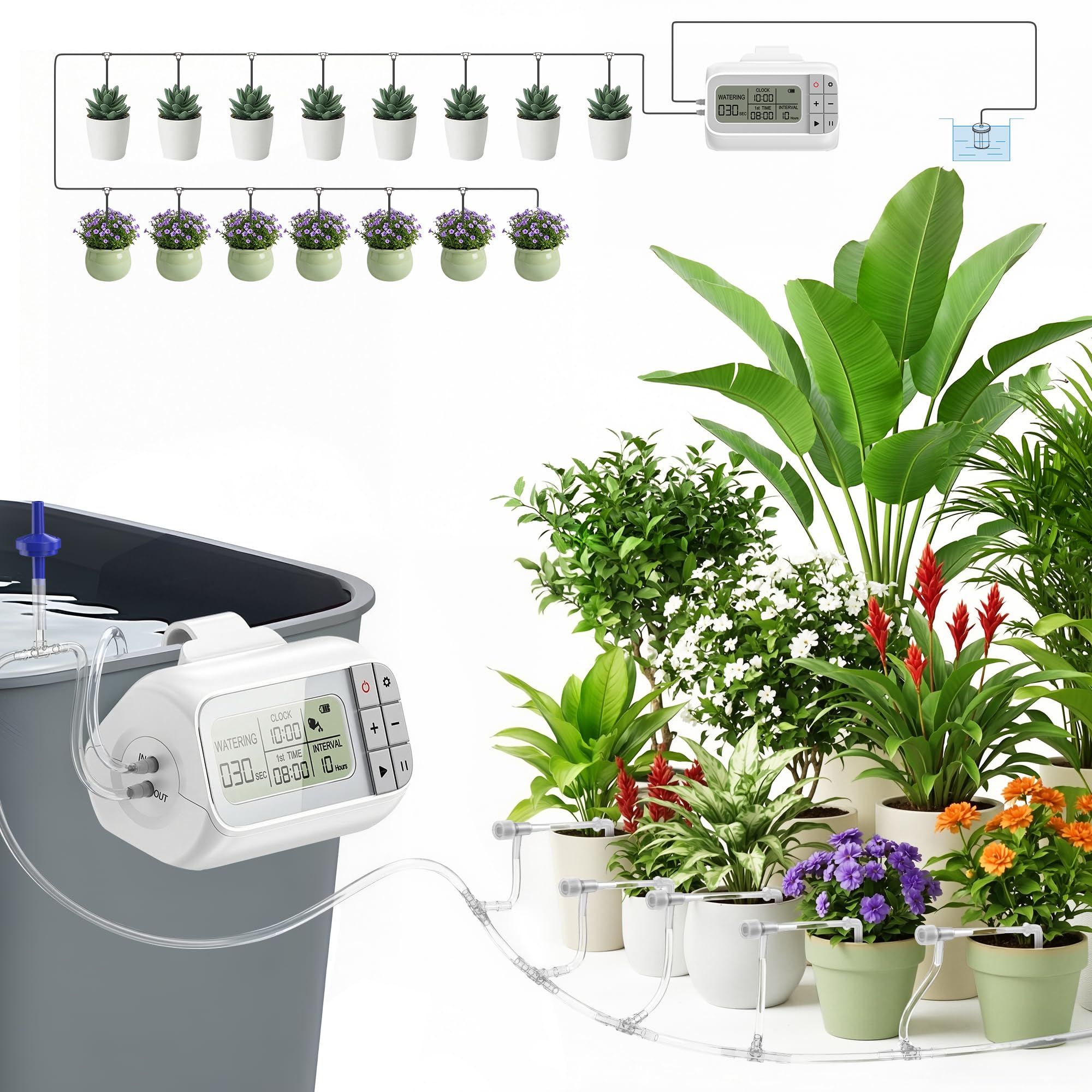
The DAOTAILI 10-Pot keeps assembly simple with leak-proof pneumatic locks that prevent drips at connections, and its LCD timer offers clear interval and duration settings. Long-term performance is less documented compared to more established systems, but early feedback points to consistent watering within its 10-plant capacity. This works well for owners of exactly 8–10 indoor pots who want a no-fuss, compact setup and don’t need app control or dual-zone scheduling.

Bottom line: A capable option for small indoor plant collections that prioritizes simplicity and leak-proof design over advanced features.

2

moistenland 15-Plant Timer

moistenland 15-Plant Timer

Faucet access users

Our Score 8.8/10
Check Price

Worth Noting

  • Timer drift may require frequent re-adjustment for precise schedules.
Power
Water pressure (faucet)
Timer
Digital programmable
Plants
15
Anti-Siphon
Read the full review

This faucet-driven timer waters up to 15 plants on a basic schedule without batteries or pumps. It suits short vacations when you have a nearby outdoor spigot. However, timer accuracy may shift over days, and the filter can corrode with extended use. For indoor setups without a faucet nearby, a pump-based system is a better fit.

Bottom line: Only consider this if you have a convenient spigot near your plants and need a budget-friendly temporary watering solution for trips.

3

beday 2026 Rechargeable

beday 2026 Rechargeable

Frequent travelers

Our Score 8.6/10
Check Price

Worth Noting

  • A small number of units may experience pump failure within the first few weeks of use.
Power
USB-C rechargeable
Timer
Plants
15
Anti-Siphon
Yes
Read the full review

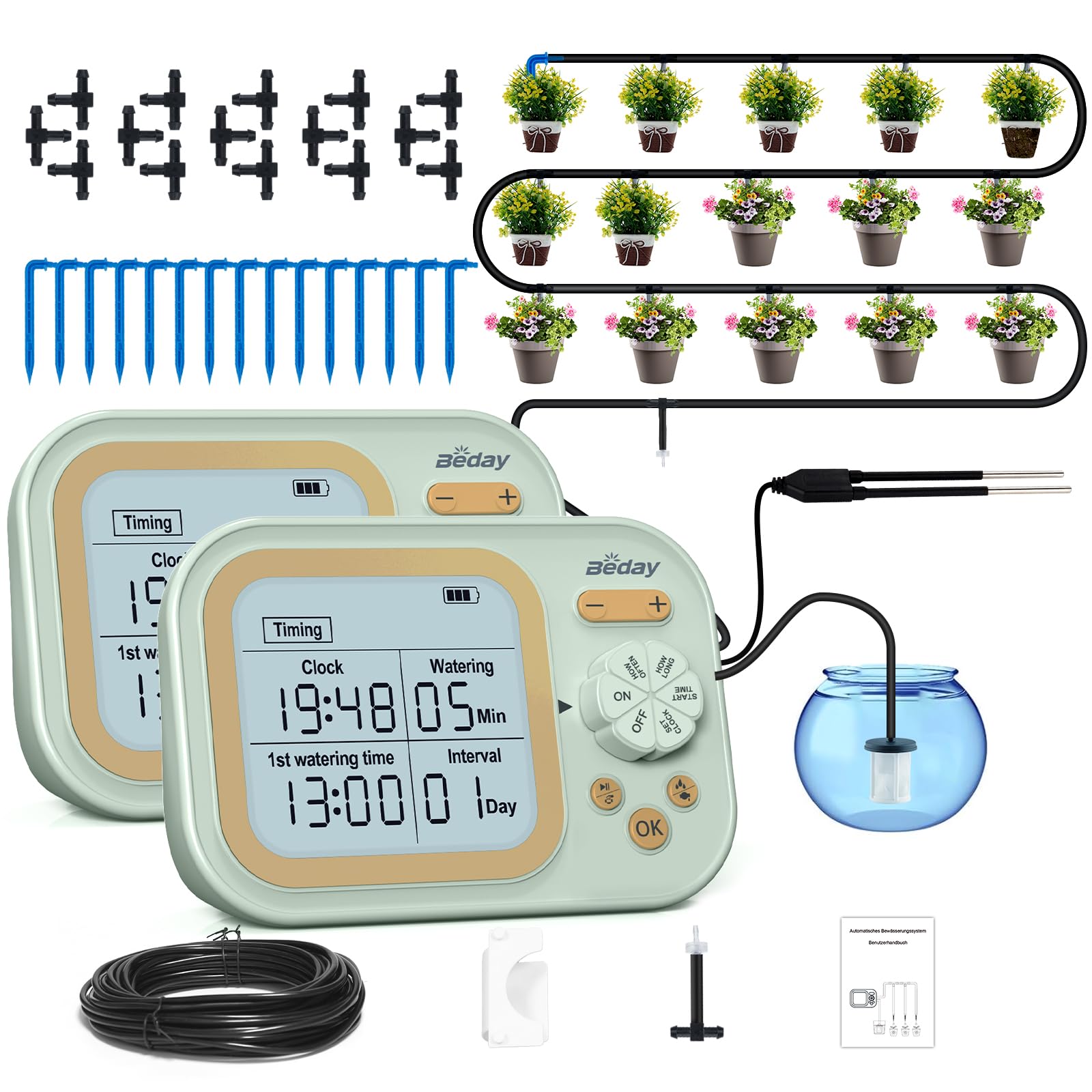
The beday automatic drip irrigation system handles up to 15 pots with a USB-C rechargeable battery that lasts over a month on a typical 30-second daily schedule. An anti-siphon valve and humidity mode add flexibility for different plant needs, while the simple timer and included tubing make setup a quick DIY task. Owners report consistent performance across a wide variety of indoor plants, from succulents to tropicals.

This system is best suited for busy plant owners or frequent travelers who want to keep 10–15 pots watered without daily involvement. The occasional pump failure within the first few weeks has been noted in a minority of units, so it pays to run a test cycle before a long trip. For most users, the combination of battery life, anti-siphon protection, and straightforward programming covers the essentials without unnecessary complexity.

Run a full test cycle a few days before leaving on vacation to confirm the pump and timer function properly.

Bottom line: For most indoor plant owners with 10–15 pots, this system delivers a dependable watering routine at a budget-friendly price – just verify the pump works before relying on it unattended.

4

LetPot Gen-3 WiFi

LetPot Gen-3 WiFi

Tech-savvy plant owners

Our Score 8.4/10
Check Price

Worth Noting

  • Drip emitters may require adjustment to achieve drip instead of stream
  • WiFi connection can drop, and only 2.4GHz networks are supported
Power
AC adapter
Timer
App schedules (5)
Plants
10-20
Anti-Siphon
Read the full review

WiFi app control with up to five schedules and push notifications, paired with a quiet German pump, makes the LetPot Gen-3 a strong option for those who want to monitor and adjust watering from anywhere. However, the system requires a 2.4GHz WiFi network — 5GHz is not supported — and some users find the drip emitters stuck on a stream mode rather than drip. This suits tech-savvy plant parents who have a stable 2.4GHz network and don't mind occasional tinkering with emitters.

Bottom line: If you want app-based watering monitoring and have a 2.4GHz network, the LetPot Gen-3 delivers quiet performance; for a simpler approach with fewer setup hurdles, the top pick is the safer bet.

5

beday Solar USB

beday Solar USB

Eco-conscious users

Our Score 8.4/10
Check Price

Worth Noting

  • Pump may leak onto electronics after months of use in some cases.
  • Plastic connectors can break when removing tubing.
Power
Solar + USB-C
Timer
490 modes
Plants
15
Anti-Siphon
Yes
Read the full review

The beday Solar USB distinguishes itself with a solar panel that charges the battery even in overcast conditions, plus a USB-C port for indoor use. Its 490 timer combinations allow you to schedule watering by the second, minute, hour, or day. This system best suits eco-conscious users who have a sunny window and enjoy fine-tuning schedules. Be aware that durability data indicates the pump may leak after months, and the plastic connectors can break if tubing is removed forcefully — a limitation that makes this a better fit for moderate-use scenarios rather than long-term unattended operation.

Twist tubing gently when disconnecting to reduce strain on the plastic connectors.

Bottom line: Best for users who want solar power and maximum timer control, with the understanding that long-term durability is a secondary concern.

6

RAINPOINT Cycle & Soak

RAINPOINT Cycle & Soak

Water-conscious gardeners

Our Score 8.4/10
Check Price

Worth Noting

  • Water distribution can vary if tubing isn’t perfectly level
  • Battery-only operation provides very limited water
Power
USB-C plug-in & battery
Timer
Cycle & Soak
Plants
10-15
Anti-Siphon
Yes
Read the full review

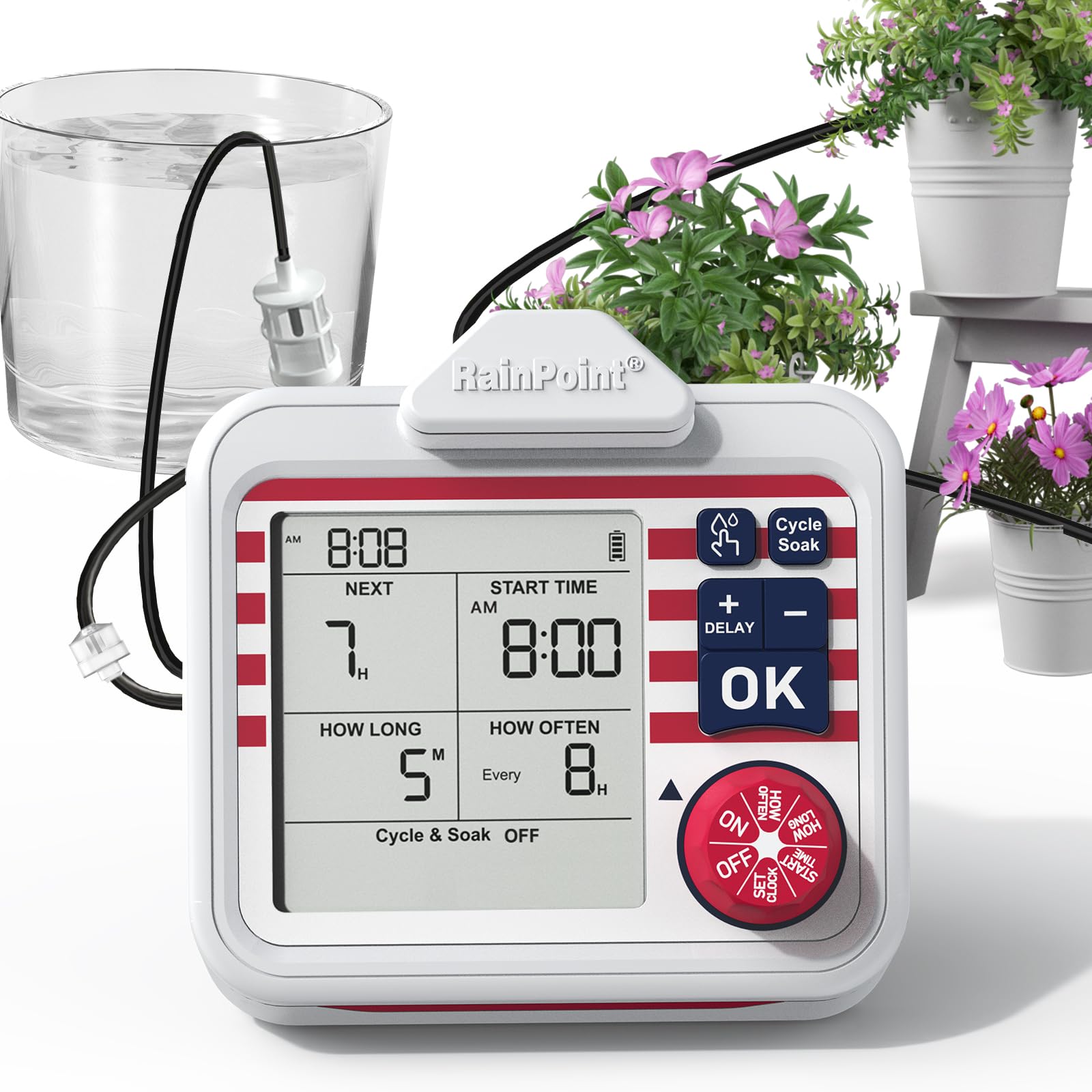
The RAINPOINT Indoor Large Display takes a different approach from simpler drip kits by breaking each watering into short pulses. This cycle-and-soak sequence pushes water deeper into the soil before runoff starts, which suits root health and reduces waste. The large backlit countdown display and intuitive controls make scheduling straightforward — no app needed.

This unit works best for indoor plant owners who can keep it plugged in via USB-C; the rechargeable battery provides only a brief splash during power loss. The dual-tube design delivers water to 10–15 pots, but distribution can be uneven if the tubing isn’t level — plants at similar heights get consistent moisture, while others may need manual adjustment. It’s a sensible choice for those who prioritize water efficiency and don’t mind careful placement.

Keep the tubing as level as possible between pots to ensure even distribution.

Bottom line: A practical choice for indoor gardeners who want efficient deep watering and can keep the unit plugged in with level tubing.

7

DAOTAILI Dual Pump

DAOTAILI Dual Pump

Mixed plant collections

Our Score 8.2/10
Check Price

Worth Noting

  • Water may leak at tubing connections or pump output
  • Pump may stop working shortly after installation in some units
Power
USB-C or 4 AA
Timer
Plants
20
Anti-Siphon
Read the full review

Two self-priming pumps let you water succulents on a dry schedule and tropicals on a wet one from the same reservoir. The kit covers up to 20 plants with ample tubing and emitters. For plant owners who need to group plants by water needs, this setup offers flexibility that single-pump systems can't match. Leaks at tubing connections and occasional pump failure after installation are noted, making consistency less assured than simpler alternatives.

Tighten all pneumatic locks before first use and check connections periodically.

Bottom line: For plant owners who need two watering zones, the dual-pump design delivers unique flexibility, but the top pick beday system offers more consistent performance for most users.

8

Noctila USB Rechargeable

Noctila USB Rechargeable

Very small pots

Our Score 8.2/10
Check Price

Worth Noting

  • Five-minute maximum watering time limits use to very small pots only
Power
USB-C rechargeable
Timer
Max 5 min only
Plants
15
Anti-Siphon
Yes
Read the full review

The Noctila kit offers a budget-friendly USB-C rechargeable pump with anti-siphon protection and enough tubing for up to 15 small pots. However, the maximum watering time of five minutes makes it unsuitable for plants needing longer soaks, and battery life can fall short of expectations.

Bottom line: A cheap option for keeping tiny succulents alive during a weekend trip, but not a daily watering solution for most houseplants.

9

beday Twin Pack

beday Twin Pack

Multi-zone watering

Our Score 8.2/10
Check Price

Worth Noting

  • Interval timer can stick after the first watering cycle, requiring manual reset.
Power
Battery (rechargeable)
Timer
Plants
30
Anti-Siphon
Yes
Read the full review

This twin-pack gives you two complete self-watering systems, each supporting up to 15 plants with a humidity sensor that adjusts watering to the environment. The interval timer can stop advancing after the first cycle, and the anti-siphon valve may not prevent backflow in all setups. For multi-zone watering where you can occasionally reset the timer, this works well, but two separate single units offer fewer unknowns.

Bottom line: Best for buyers who want two separate watering zones and can accept the occasional timer reset — otherwise, two single units are a safer bet.

10

RAINPOINT IP54 Dial

RAINPOINT IP54 Dial

Absolute beginners

Our Score 8.0/10
Check Price

Worth Noting

  • Drip valve connections may leak and tubing tends to crimp, making it best for supervised short-term use
Power
Battery powered
Timer
Two-dial interface
Plants
10-15
Anti-Siphon
Yes
Read the full review

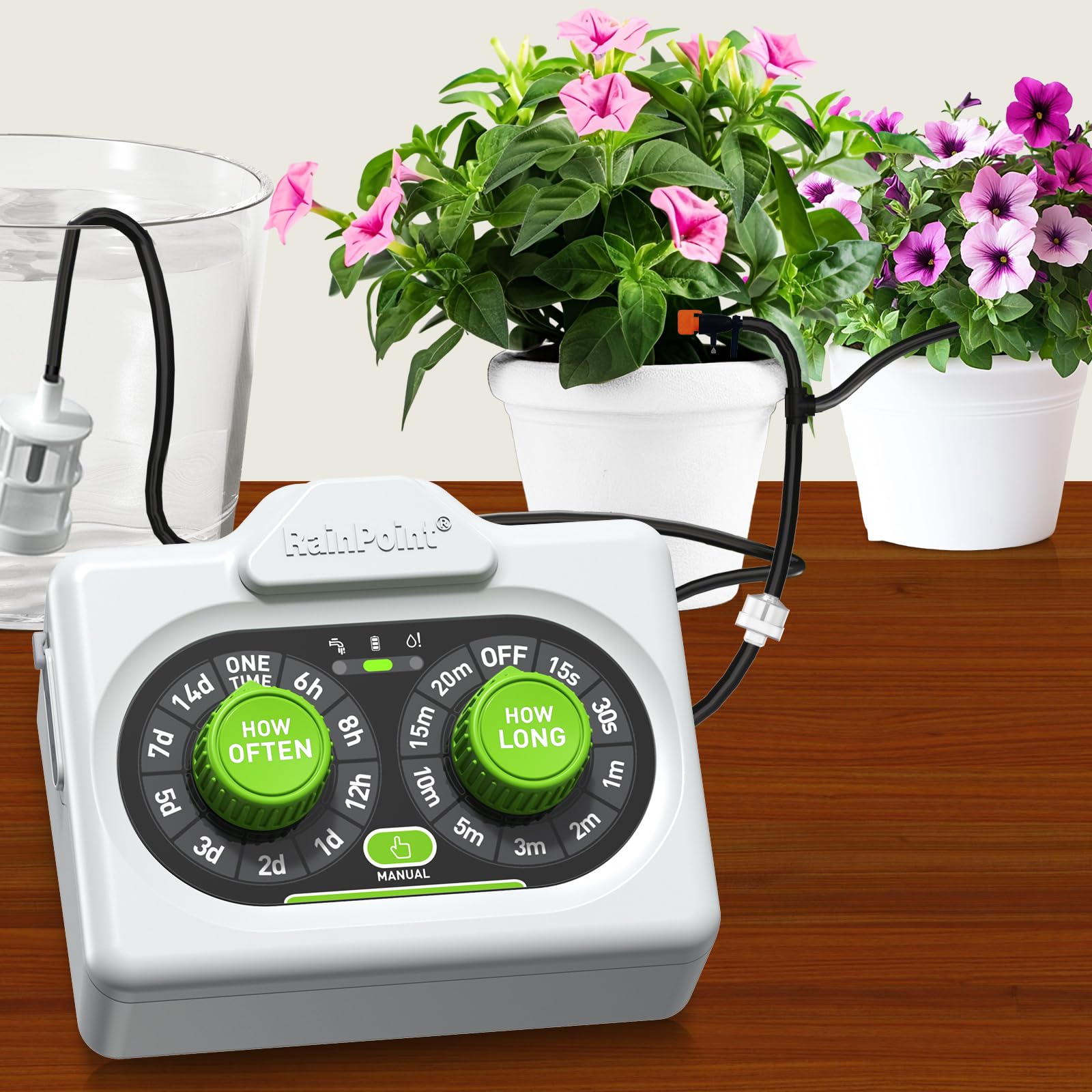
Two-dial controls make setup straightforward — no apps or screens to navigate. It waters 10-15 plants on a budget-friendly price, but drip valve connections can leak and the tubing may crimp under barbs. This limits it to short-term supervised use, such as weekend trips, rather than long-term unattended watering.

Bottom line: Best as a low-cost trial for first-time users testing automated watering on a few pots before investing in a more durable system.

11

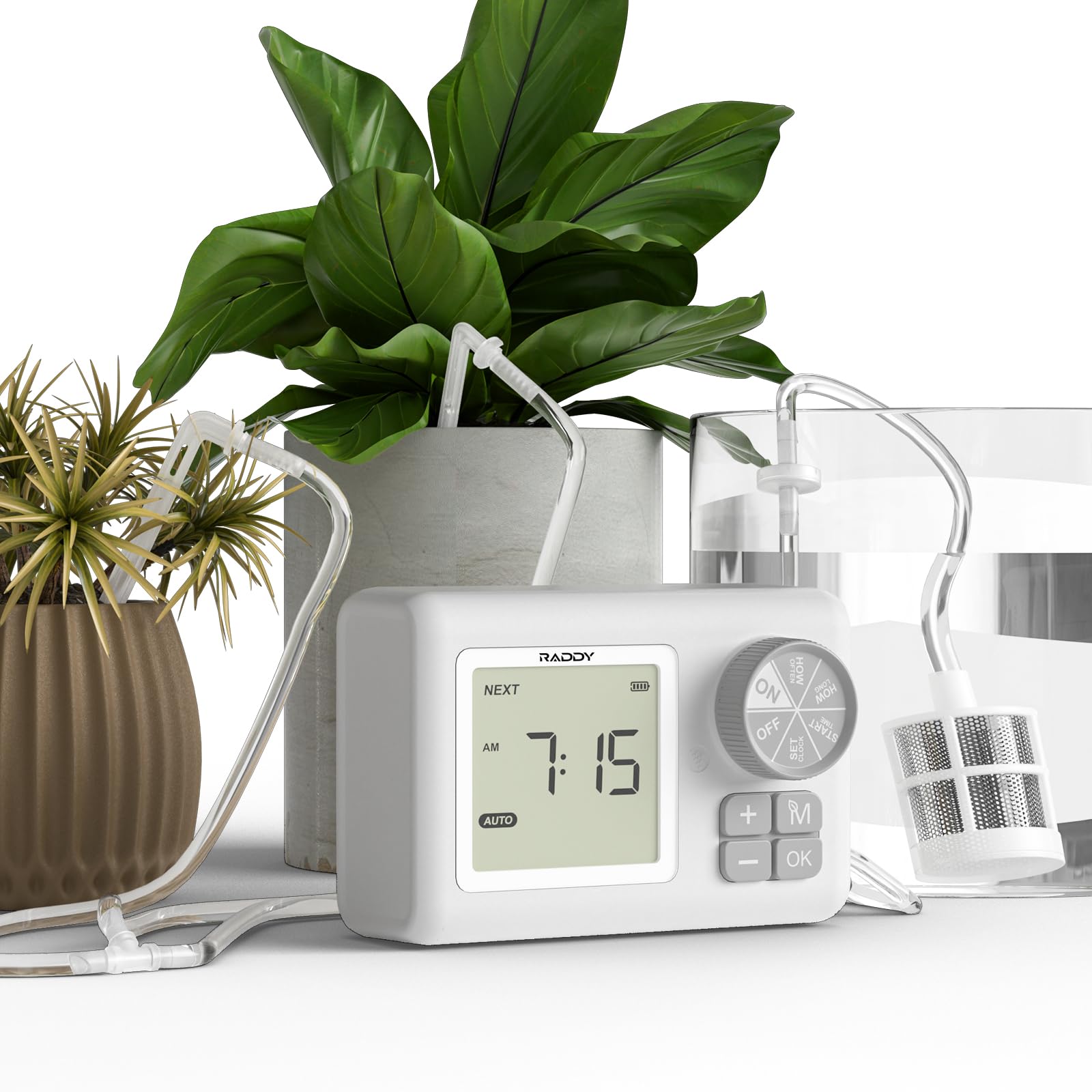
Raddy WS-6

Raddy WS-6

Tight budgets

Our Score 8.0/10
Check Price

Worth Noting

  • In some cases, the system may water daily regardless of the timer setting, risking overwatering.
Power
USB-C or AA
Timer
0-30 min, 1h-30d
Plants
15
Anti-Siphon
Yes
Read the full review

The Raddy WS-6 covers a wide timer range and alerts you when water runs low - features usually found on pricier systems. Its budget-friendly price makes it tempting, but some units may override the set interval and water daily, and parts can be missing from the box. This works best for small indoor plant collections where a potential flood won't ruin your floor, not for unattended vacation watering.

Bottom line: Best for small, non-critical plant collections where the cost savings outweigh the risk of a potential flood or missing parts.

12

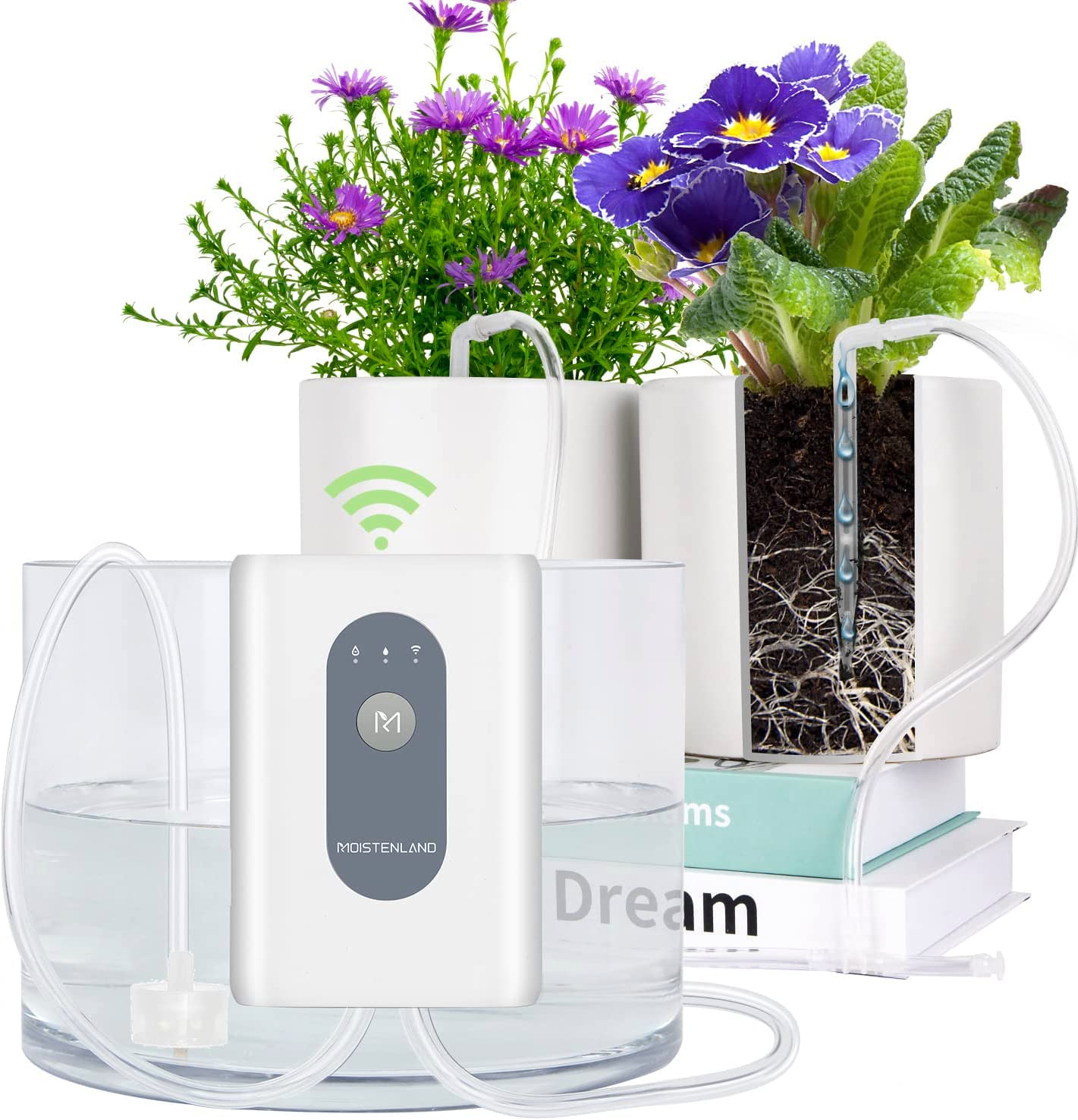
moistenland WiFi

moistenland WiFi

Tech enthusiasts

Our Score 8.0/10
Check Price

Worth Noting

  • Pump may fail to draw water or stop working over time.
Power
Electric plug-in
Timer
App schedules
Plants
15
Anti-Siphon
Read the full review

The Moistenland WiFi system delivers remote scheduling and irrigation logs through its app, making it easy to adjust watering from anywhere. However, pump failures and leakage from the outflow nozzle have been noted, and the WiFi requires a 2.4GHz network which may disconnect occasionally.

Bottom line: Best suited for tech enthusiasts with a 2.4GHz network who want to experiment with app-based watering, but are willing to accept potential pump and leakage issues.

How to Choose

Number of Plants Supported

Kits are designed for a specific count of drippers, usually 10 to 20. Exceeding that number starves the last emitters of pressure, leaving some pots dry. Stick to the rated capacity for even distribution, and remember that a 15-plant system can water fewer pots by capping unused outlets.

Power Source

Rechargeable USB-C systems offer the most flexibility for indoor use: you can place the reservoir anywhere without a nearby outlet. The trade-off is that battery life varies from a few weeks to over a month depending on watering frequency and duration.

Plug-in systems run continuously but limit placement to within a few feet of an outlet. Solar hybrid models work near windows but rely on USB backup for cloudy stretches. Water-pressure-driven faucet timers avoid batteries entirely but require a threaded spigot and can lose accuracy if pressure fluctuates.

Anti-Siphon Valve

An anti-siphon valve prevents water from flowing backward from the tubing into the reservoir when the pump is off. Without it, gravity can drain the whole tank onto your floor, especially if the reservoir sits above the lowest plant. This is a critical safety feature for indoor use, yet many budget kits omit it.

Timer Flexibility

The timer determines how long and how often the pump runs. A wide range lets you fine-tune for different plant types: succulents need short, infrequent pulses, while thirsty tropicals need longer soaks. Look for a minimum duration of 1 second and a maximum of at least 30 minutes, with intervals from hours to days.

App-controlled timers add remote adjustment but introduce potential connectivity issues. The most reliable approach is a simple onboard display with clear buttons that you can set without a phone.

Frequently Asked Questions