Birding & Garden Decor

Best Bird Seed of 2026

Fill a feeder with the wrong bag and you'll know within a week: a dusting of crumbs under the pole, a lot of pale round seeds scattered across the lawn, and not many birds. Cheap mixes pad their weight with milo, wheat, and red millet, fillers most backyard birds kick straight to the ground, so you pay twice — once at checkout and again when you refill a feeder nobody's visiting. The right blend pulls in more species, gets eaten instead of swept up, and earns its higher price per pound.

To find out which blends actually earn it, my team and I hung 12 different bags in our own yards over four months — tube, hopper, and platform feeders, all refilled at the same hour each morning. Some bags vanished in days; a few sat untouched while the birds worked the feeder next door. A tip before you shop: read the ingredient panel like a cereal box, heaviest ingredient first, and treat any bag that leads with millet as a bargain that isn't one. The picks below are the ones the birds kept coming back to.

1

Wagner's 13008 Deluxe Wild Bird Food

Top Pick
Wagner's 13008 Deluxe Wild Bird Food

All-purpose feeding

Our Score 9.4/10
Check Price

Worth Noting

  • Sunflower content varies by bag
  • Not a squirrel deterrent
Closure
Velcro press-lok
Bag Size
10 lb
Bird Types
Perching and ground
Seed Blend
Sunflower and general-purpose seeds
Read the full review

A good all-purpose bag has to do two jobs at once: keep perching birds busy at the feeder and give ground feeders something worth picking up. Wagner's 13008 Deluxe is the one we reach for first because it covers both without asking you to buy two separate bags. The 10-pound bag is small enough to store in a garage bin and large enough to keep a couple of feeders going for a while. We used it in a tube feeder and on a platform feeder, and the mix disappeared at a steady clip in both spots.

The blend is built on sunflower plus general-purpose seeds, which is why it pulls in a wider crowd than a straight safflower bag. The velcro press-lok closure is a small convenience we appreciated—it keeps the bag from spilling between refills and makes it easier to tuck away. The mix is also forgiving: you can scoop it into a hopper, a tube, or a tray without worrying about big chunks bridging the opening.

Where it earns its keep is as the everyday bag: a scoop in the hopper, a scoop on the tray, and you're done. If cardinals are the whole point, Audubon Park's sunflower-safflower blend is the cleaner shortcut; if you want to control the recipe, black oil sunflower is the single-seed route. But for a mixed backyard and one bag to reach for, this is the one we keep coming back to.

Bottom line: We recommend Wagner's Deluxe as the default bag for a mixed backyard: it feeds perching and ground birds, comes in a resealable 10-pound bag, and is easy to keep on hand.

2

Wagner's 76027 Black Oil Sunflower

Wagner's 76027 Black Oil Sunflower

Single-seed feeding

Our Score 9.4/10
Check Price

Worth Noting

  • Sticks and woody debris in some bags
Shell
Thin-shelled
Bag Size
25 lb
Seed Type
Black oil sunflower
Bird Types
Small-beaked birds
Read the full review

The reason black oil sunflower earns a place in a bird-seed roundup is the shell: it's thin enough for small-beaked birds to open, so you're not just feeding the biggest guests. This is a single ingredient, not a blend, and that's the point. The 25-pound bag is the largest here, and it's the one we reach for when we want to control the mix ourselves.

We used it straight in a tube feeder and mixed a scoop into a platform feeder, and it did what a good sunflower seed should: it kept the feeder busy without a lot of dust. The high energy content is the other half of the appeal; sunflower is the seed birds burn through when the weather turns. Because it's one ingredient, you can stretch a premium blend with it or cut a filler-heavy mix without guessing what's in the bag.

It also isn't a complete blend, so if you want cardinals and finches at the same feeder, you'll be adding something else. For a big feeder and a simple recipe, though, this is the bag we keep on the shelf.

Bottom line: We recommend this single-seed bag for anyone feeding small-beaked birds or filling a large feeder: the thin shells are easy to open, and the 25-pound bag goes a long way.

3

Audubon Park Cardinal Wild Bird Seed

Audubon Park Cardinal Wild Bird Seed

Cardinals and songbirds

Our Score 9.4/10
Check Price

Worth Noting

  • Sticks and woody debris in some bags
Bag Size
8 lb
Seed Blend
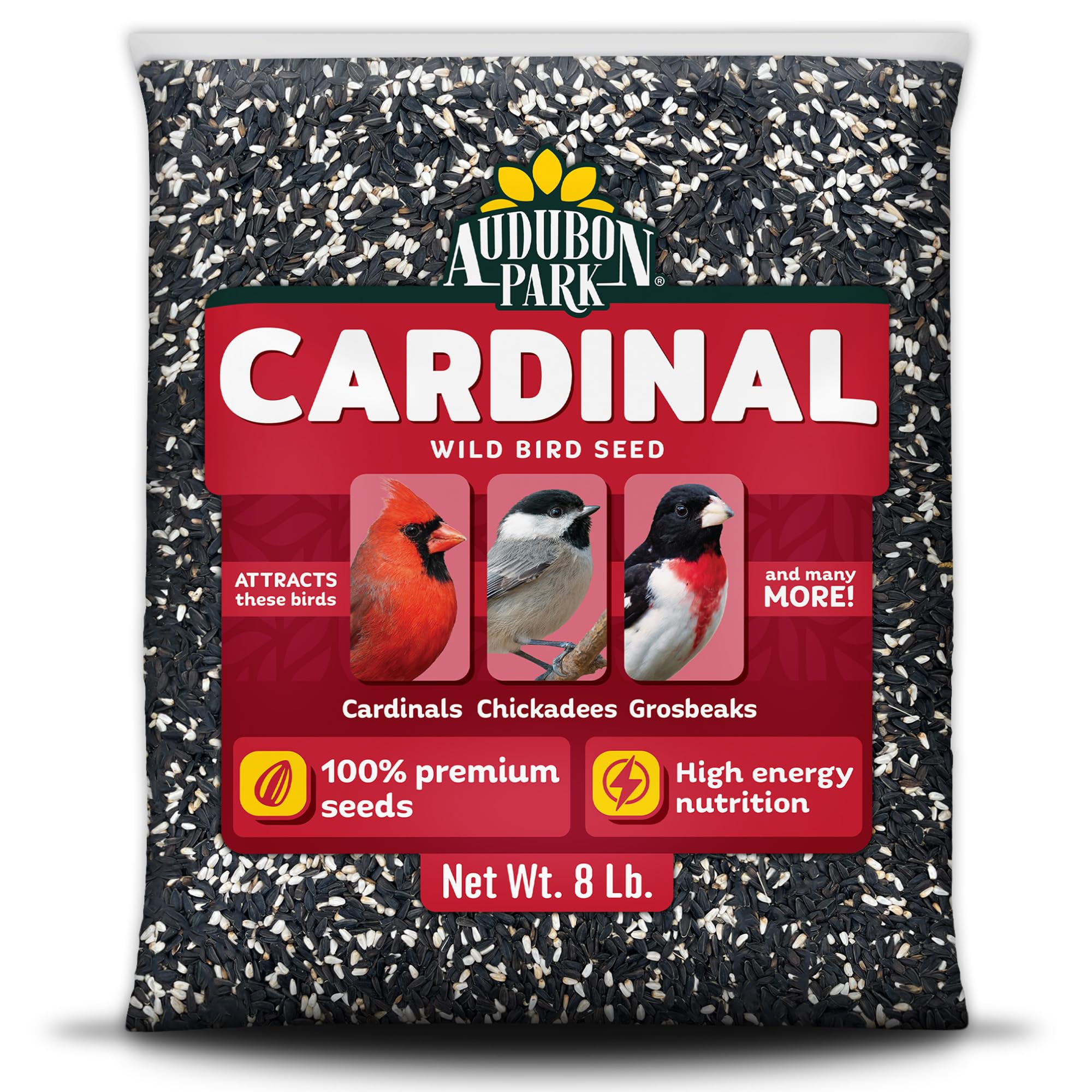
Black oil sunflower and safflower
Feeder Types
Tube, tray, hopper, platform, smart
Squirrel Resistance
Safflower blend
Read the full review

Cardinals don't need a ten-ingredient blend; they need sunflower and safflower, and Audubon Park's Cardinal blend is the cleanest shortcut to that pairing in this group. The 8-pound bag is built on those two seeds, and the safflower does double duty: cardinals like it, and many squirrels would rather eat something else. We filled a tube feeder and a tray feeder with it, and the cardinals found it quickly.

What we like most is the lack of filler. The blend is built on sunflower and safflower rather than a long list of cheap grains, so there's less to kick to the ground. It also works in tube, tray, hopper, platform, and smart feeders, which makes it easy to try without changing your setup. The safflower isn't a squirrel force field, but it does cut down traffic compared with a straight sunflower bag.

The trade-off is that it costs more than a basic mix. If you want a cardinal-focused bag and don't mind paying for the cleaner recipe, this is the one we point to.

Bottom line: We recommend this blend when cardinals are the priority: sunflower and safflower in one bag, with a clean two-seed recipe that works across feeder types.

4

Kaytee Songbird Wild Bird Seed

Kaytee Songbird Wild Bird Seed

Colorful songbirds

Our Score 9.4/10
Check Price

Worth Noting

  • Sunflower-heavy mix
Protein
High protein
Bag Size
7 lb
Bird Focus
Songbirds
Seed Blend
Two sunflower types, peanuts, millet
Read the full review

Some bags are a general backyard mix with a songbird label; Kaytee's Songbird blend is actually built around the birds in its name, with two types of sunflower plus peanuts and millet. The 7-pound bag is a good middle size for one or two feeders, and the ingredient list reads like a songbird feeder rather than a bargain mix. It's aimed at cardinals, chickadees, titmice, finches, nuthatches, grosbeaks, juncos, and jays.

We used it in a tube feeder and liked that the mix didn't turn into a pile of dust at the bottom of the bag. The peanuts and sunflower get the bigger birds; the millet picks up the smaller ones. That combination is why it feels more deliberate than a generic wild bird blend.

The catch is that it's a smaller bag than the bulk options, which means more frequent reordering if you run several feeders. It's also a blend you'll want to use in a feeder with decent ports, since the sunflower and peanuts are the first things birds go for. For a songbird feeder with a little of everything, though, it's a strong pick.

Bottom line: We recommend this bag for a songbird-focused feeder: two sunflower types, peanuts, and millet give cardinals, chickadees, and nuthatches plenty to work through.

5

Kaytee Nut & Fruit Wild Bird Seed

Kaytee Nut & Fruit Wild Bird Seed

Woodpeckers and nuthatches

Our Score 9.4/10
Check Price

Worth Noting

  • Fruit and nut pieces can be sparse
  • Some bags are mostly sunflower
Form
Nuts and fruit chunks
Bag Size
5 lb
Bird Focus
Woodpeckers and nuthatches
Seed Blend
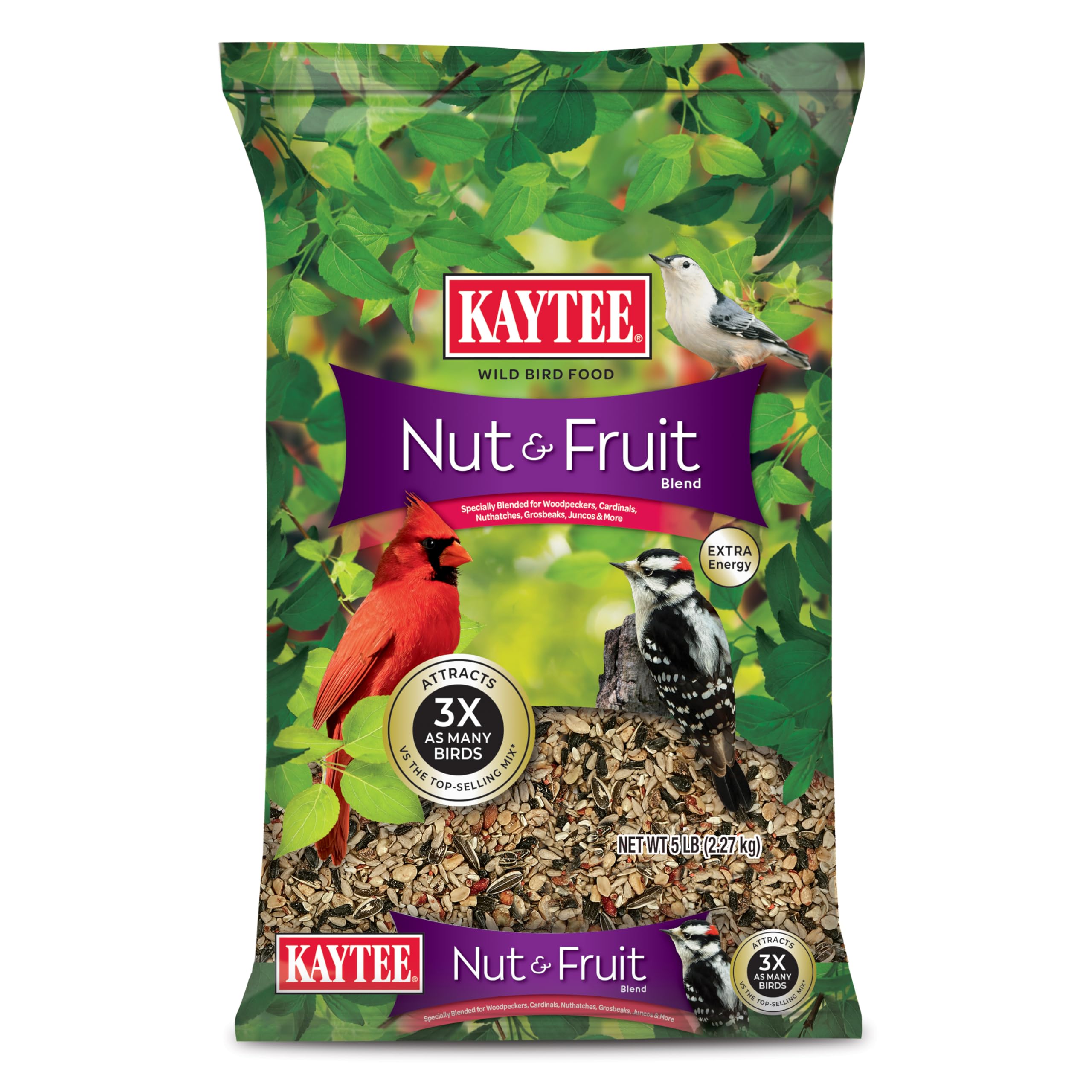
Sunflower, peanuts, mixed nuts, raisins, cherries
Read the full review

The first thing to know about Kaytee's Nut & Fruit blend is that it's closer to a treat than a staple: sunflower, peanuts, mixed nuts, raisins, and cherries in a 5-pound bag. The chunks are built for birds that like to pick through a feeder, and the blend is aimed at cardinals, chickadees, nuthatches, grosbeaks, juncos, and woodpeckers. It's the bag we reach for when we want to add something different to a platform feeder.

We used it as a change-up alongside a straight sunflower bag, and the woodpeckers and nuthatches were the first to show interest. The nuts and fruit make it feel more like a treat than a daily ration, which is exactly how we use it. It's also the heaviest-feeling mix here in terms of texture, with big pieces that don't disappear quite as fast as plain seed.

It's a premium change-up for a platform feeder, and it earns its place. If you want a daily staple, start with a simpler sunflower or sunflower-safflower blend; this is the bag to add when you want to see a different crowd.

Bottom line: We recommend this as a treat bag for woodpeckers and nuthatches: the fruit-and-nut chunks are high energy and bring a different crowd, but don't expect a consistent fruit ratio.

How We Chose and Tested the Best Bird Seed Blends

We started with labels, not reviews. Every bag on our shortlist listed ingredients by weight, so we could see how much of the mix was black oil sunflower, peanuts, or dried fruit and how much was filler. Anything leading with millet or wheat got cut, then we filtered what remained by price per pound so we were comparing blends of roughly similar quality. That left 12 bags, from single-seed staples to fruit-and-nut mixes, and we bought every one at retail in whatever size it was sold so the per-pound math was honest.

Weekday mornings meant filling feeders before work, so we topped up at the same hour and checked the next day what had disappeared. On weekends we sat with coffee and watched who arrived and, just as telling, what they dropped. After each fill we swept beneath the feeders and noted whether the ground was covered in hulls and crumbs or in whole, untouched seeds — a blend the birds toss aside costs you twice.

We also tracked how quickly each feeder emptied as a rough read on palatability, and picked through samples by hand to see whether the sunflower content and fruit pieces were as generous as the label claimed. The last calculation was the least glamorous: how many refills a bag gave us and what that worked out to per week of feeding. The priciest bag was never the worst deal, and the cheapest was never the best.

How to Choose

Start With the Birds You Want

Black oil sunflower is the closest thing to a universal seed: thin-shelled, high in energy, and easy for small beaks to open. Safflower is the cardinals' favorite and a mild squirrel deterrent, though some birds ignore it. Millet and cracked corn bring ground feeders such as doves and juncos, but they're also the first things to get kicked under the feeder. If cardinals are the goal, a sunflower-safflower blend is a better shortcut than a bargain mix padded with milo. Decide which birds you want to see, then buy the seed that gets them there.

Match the Mix to Your Feeder

Small-port tube feeders punish big seeds and long chunks; a sunflower-safflower blend flows better than a nut-and-fruit mix. Platform and tray feeders handle almost anything, including the hulls and debris that drop out. Hopper feeders sit in the middle. Before you buy a large bag, check the port size and the seed size—if the bag is full of whole peanuts, it's a better fit for a platform or a large-port feeder. The right feeder can make a mid-priced mix perform better than a premium one in the wrong setup.

Blend or Single Seed?

Blends are convenient, but they put you at the mercy of the recipe: one bag can be sunflower-heavy, the next can be full of filler. A single seed such as black oil sunflower gives you control and makes it easy to stretch a premium blend. We prefer a single-seed bag when we're feeding a mix of birds and want to adjust the ratio ourselves; we reach for a blend when we want one scoop to do the job. Neither is automatically better—just decide whether you want convenience or control.

Judge Freshness, Debris, and Storage

Bird seed is a food product, so freshness matters. Look for clean seed, not a bag full of sticks and dust; debris can clog feeders and is a sign of a rough batch. Store the bag dry and sealed—a velcro closure or a dedicated bin keeps moisture out. Damp seed can mold, and moldy seed belongs in the trash, not the feeder. Buy a size you can use in a reasonable time, especially if you only fill one feeder. A 5- to 10-pound bag is easier to keep fresh than a 25-pound sack if your feeder is small.

Squirrels and Regional Blends

Safflower and some blends reduce squirrel traffic, but no seed is squirrel-proof. A baffle and a good feeder matter more than the bag. Regional blends are formulated for local bird populations; they can be good value if the mix matches your area, but a bag heavy in milo may end up on the ground. Start with a smaller bag if you're trying a regional blend, and switch if the birds leave one ingredient behind. The best seed for your yard is the one that gets eaten, not the one with the longest ingredient list.

Frequently Asked Questions

Final Verdict

For most backyards, Wagner's 13008 Deluxe is the bag we point to first: a 10-pound sunflower-and-general-seed mix that feeds perching and ground birds, comes in a resealable bag, and doesn't ask you to choose between cardinals and everyone else.

If cardinals are the priority, Audubon Park's sunflower-safflower blend is the cleaner shortcut; if you want to control the recipe, go with black oil sunflower. Either way, buy the size you'll finish before it goes stale.