Pest & Weed Control

6 Best Copper Fungicide 2026: Effective Disease Control, No Stains

Struggling with powdery mildew and blight? This guide helps you choose a copper fungicide that actually works without leaving blue stains on your plants and hardscape.

Copper fungicides are a staple for organic gardeners fighting blight, powdery mildew, and leaf spot. But nearly every buyer discovers the same surprise: the blue residue that stains decks, siding, and even the leaves themselves. That trade-off is rarely mentioned on the bottle.

The real choice comes down to how you apply it and how much area you need to cover. Concentrates save money per gallon but require mixing; ready-to-use sprays offer convenience at a higher cost-per-plant. And sprayer reliability varies sharply between products.

The best pick for your garden depends on its size, your willingness to mix, and how much you care about blue spots on concrete. This guide helps you match the product to your actual use — not the label's promises.

1

Captain Jack Copper Fungicide

Top Pick
Captain Jack Copper Fungicide

Large area control

Our Score 9.2/10
Check Price

Worth Noting

Form
Liquid Concentrate
Active Ingredient
Copper Octanoate
Organic Certification
USDA listed
Read the full review

Captain Jack Copper Fungicide delivers consistent control of blight, powdery mildew, and black spot when applied preventatively. As a concentrate, it mixes easily with water and works with standard sprayers, offering lower cost per treatment than ready-to-use options. Users report fewer staining issues on surfaces compared to other copper concentrates, a practical benefit for maintaining garden appearance. Its USDA-listed organic formulation aligns with certified organic practices.

This concentrate is best for organic gardeners with medium to large gardens who need an economical solution for ongoing disease management. Overapplication may cause leaf yellowing or stunted growth on sensitive plants, so following label rates exactly is required. For those comfortable with mixing, it provides effective blight prevention without the high per-bottle cost of ready-to-use sprays. It excels at preventing blight on tomatoes and potatoes, a common challenge for vegetable gardeners.

Bottom line: For organic gardeners with large gardens, this concentrate provides effective disease control at a lower cost per application than ready-to-use options, as long as you follow the label rates.

2

Captain Jack's RTU 32oz

Captain Jack's RTU 32oz

Small spot treatment

Our Score 9.0/10
Check Price

Worth Noting

  • Effectiveness can vary
Form
Ready-to-Use Spray
Active Ingredient
Copper (unspecified)
Organic Certification
Suitable for organic
Read the full review

This spray eliminates the need for measuring and mixing, making it the quickest option for spot-treating a handful of plants. The copper formulation targets powdery mildew and peach leaf curl effectively, though results can be less predictable on advanced infections or certain plant types. For organic gardeners on a tight budget with a small garden, the convenience is real — but the spray bottle can arrive with priming issues or leaks, so it's worth checking before heading to the garden. Those covering larger areas should consider the concentrate for better value and reliability.

Inspect the bottle and prime it before first use; if it fails, transfer the liquid to a different sprayer.

Bottom line: A practical choice for small-scale organic gardening when you want to skip mixing and don't mind checking the sprayer before use.

3

Southern Ag Copper 16oz

Southern Ag Copper 16oz

Vegetable fruit crops

Our Score 9.0/10
Check Price

Worth Noting

  • Leaves blue stains on plants, concrete, and painted surfaces that are hard to remove
  • May not stop all fungal infections; effectiveness varies by disease type and application timing
Form
Liquid Concentrate
Active Ingredient
Copper (unspecified)
Organic Certification
Listed as organic
Read the full review

The Southern Ag Liquid Copper Fungicide delivers effective disease control on tomatoes and ornamentals at a budget-friendly price. As a concentrate, it offers good value per application. However, the copper leaves a blue stain on plants, concrete, and painted surfaces that is difficult to remove. Additionally, its effectiveness against fungal diseases can vary depending on the strain and timing of application. This makes it a better fit for vegetable gardens and fruit crops where appearance matters less, rather than for show flowers or areas near hardscapes.

Apply carefully away from hardscapes and painted surfaces; the blue residue sets in quickly and is difficult to remove.

Bottom line: For budget-focused gardeners who can live with staining, this concentrate is a solid choice. Those who need stain-free application or more reliable control on a wider range of fungi should consider the top pick in this category.

4

Bonide Copper Dust 1lb

Bonide Copper Dust 1lb

Dust application

Our Score 9.0/10
Check Price

Worth Noting

  • Powder does not fully dissolve in water, so sprayers can clog unless the mixture is constantly agitated.
  • Packaging may leak during storage, leading to product loss
Form
Powder (dust or spray)
Active Ingredient
Copper Sulfate
Organic Certification
Suitable for organic
Read the full review

This Bonide fungicide offers a dry dust format that liquid-only competitors can't match. It can be mixed with water, but the powder does not fully dissolve — sprayers may clog unless you shake continuously. That makes it best for dusting or for small batches where constant agitation is practical. It's effective on roses and fruit trees against common fungal diseases, and the organic certification supports garden use. Gardeners who prefer dusting or already own a duster tool will find this a straightforward option.

Use a duster tool for dry application; if spraying, agitate the mixture continuously and rinse the nozzle after each use.

Bottom line: Best for gardeners who want a dust application or are willing to shake continuously; for a hassle-free spray concentrate, the top-pick Bonide Captain Jack is more convenient.

5

Natria Copper RTU 24oz

Natria Copper RTU 24oz

Budget organic

Our Score 9.0/10
Check Price

Worth Noting

Form
Ready-to-Use Spray
Active Ingredient
Copper (unspecified)
Organic Certification
OMRI-listed
Read the full review

The Natria Copper RTU spray is OMRI-listed and priced under $12 for 24 ounces, making it the most affordable certified organic option for small-scale treatments. However, no customer reviews are available, so performance against specific fungi and sprayer consistency are unknown. This spray suits organic gardeners who trust the Natria brand and are comfortable buying without user feedback — the lack of data makes it a blind purchase for those who prefer confirmed performance.

Bottom line: This is the cheapest OMRI-listed RTU spray, ideal for organic gardeners who prioritize low upfront cost and organic certification over documented user experience.

6

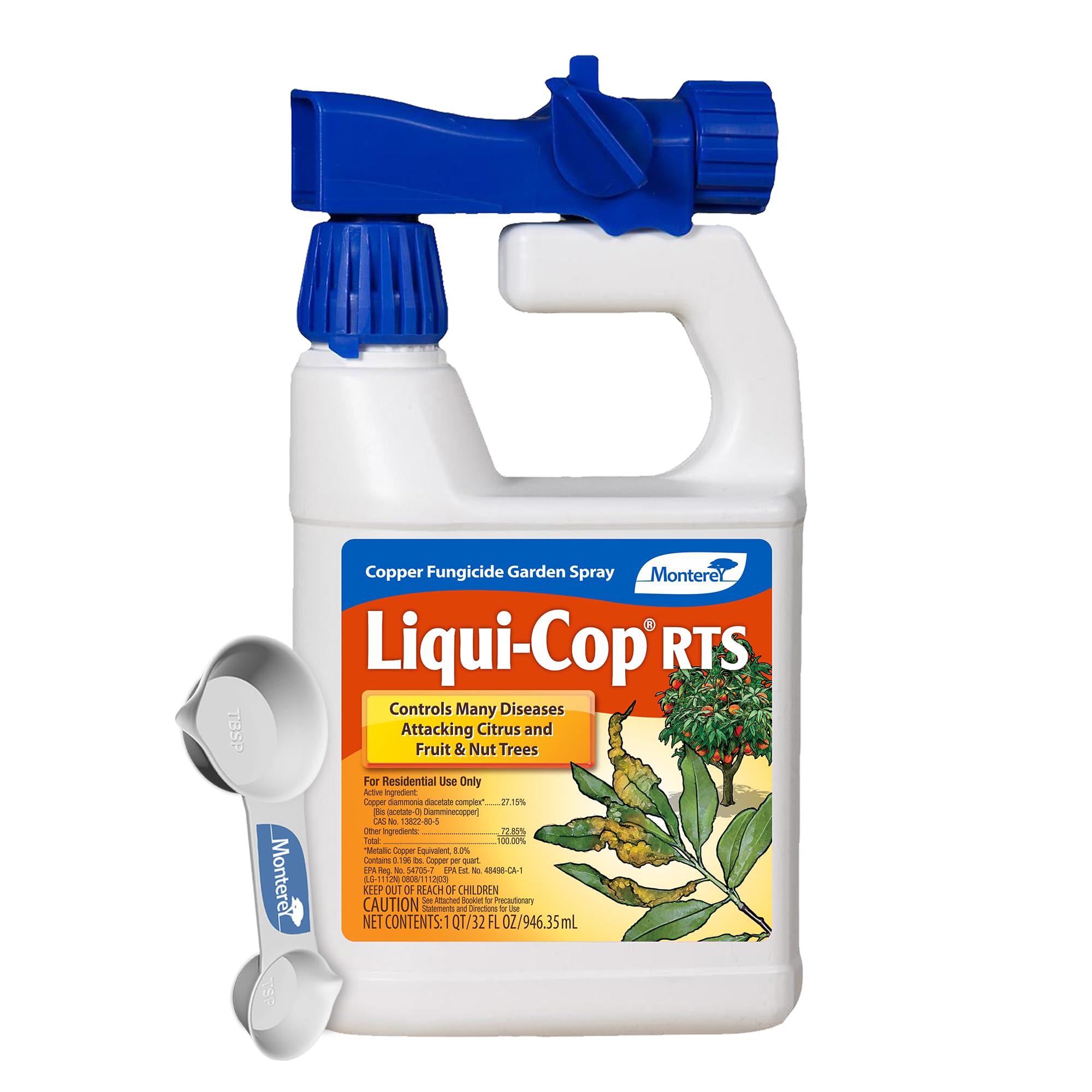
Monterey Liqui-Cop Qt

Monterey Liqui-Cop Qt

Tall trees shrubs

Our Score 8.8/10
Check Price

Worth Noting

  • Plastic container and sprayer can crack during use, leading to leaks and product waste.
  • Overspray may leave persistent blue stains on decks, siding, or other hardscapes.
Form
Ready-to-Spray (hose-end)
Active Ingredient
Copper Octanoate
Organic Certification
Suitable for organic
Read the full review

The hose-end sprayer on this Monterey Liqui-Cop delivers copper fungicide to high branches and large shrubs without mixing or a ladder — a convenience gap compared to the concentrate-based top pick that requires a separate sprayer. The formulation handles powdery mildew, rust, and other common diseases well.

This is for gardeners who prioritize speed and reach over container durability. The plastic bottle and nozzle can develop cracks during use, causing product loss — handle the bottle gently and consider transferring to a sturdier vessel for multiple seasons. Overspray on decks or siding may leave blue stains, so shield nearby surfaces.

To reduce the chance of leaks, handle the bottle gently and avoid overtightening the spray head.

Bottom line: If your priority is reaching tall trees without a ladder, this hose-end system delivers convenience — just keep a spare container handy for the next season.

How to Choose

Active Ingredient Form

Copper octanoate (copper soap) tends to be gentler on plants and leaves less visible residue than copper sulfate. Copper sulfate is the traditional Bordeaux mixture base and can stain more aggressively.

If you grow ornamental flowers or have light-colored hardscapes, choose a product with copper octanoate to minimize blue marks. For tough blight on fruit trees, copper sulfate may be more cost-effective.

Concentrate vs Ready-to-Use

Concentrates cost less per gallon but require mixing and a separate sprayer. Ready-to-use (RTU) sprays are grab-and-go but typically cost two to three times more per application.

For a single rose bush or a few tomato plants, RTU is fine. For a vegetable patch of 100 square feet or more, a concentrate pays for itself in two seasons.

Organic Certification

USDA Organic and OMRI listings mean the product meets national organic standards. Most copper fungicides qualify, but some are only 'suitable for organic gardening' without formal certification.

If you sell certified organic produce, verify the label has an OMRI or USDA seal. For home gardens, the 'suitable' claim is usually sufficient.

Staining Potential

All copper fungicides can leave a blue or green residue on plants, concrete, siding, and stone. The staining is more pronounced with copper sulfate formulations and when the product dries on surfaces.

Protect nearby hardscapes with a tarp or rinse overspray immediately with water. On plants, the stain is cosmetic and will wash off in rain, but it can persist on porous surfaces for weeks.

Application Method

Bottle sprayers on RTU products are a common failure point — nozzles clog, leak, or fail to prime. Hose-end sprayers (like the Monterey Liqui-Cop) are better for tall trees but add cost.

Powder formulations (like Bonide Copper Dust) work well for dry application on beans or cucumbers, but they do not dissolve fully in water, making them unsuitable for standard sprayers without constant agitation.

Frequently Asked Questions