Outdoor Power Equipment

9 Best Dethatcher of 2026: The Ones That Actually Survive a Full Season

Find a dethatcher that won't break mid-season. This guide helps homeowners choose between manual, electric, and tow-behind models for their lawn size and budget.

Every electric dethatcher on the market ships with a bag that fills after three passes. Plastic housings crack, belts snap, and the rear hinge on some models breaks before you finish the first lawn. The category is full of tools that look good on paper but don't hold up to regular use.

The solution isn't to avoid dethatching — it's to pick the right tool for your lawn and accept that you'll likely skip the bag and collect debris with your mower afterward. For most homeowners with small to medium lawns, a corded electric model with a proven track record delivers the best balance of power and longevity.

Tow-behind units cover acres quickly but require a tractor and patience for assembly. Manual rakes handle small patches without any mechanical risk. This guide breaks down those trade-offs and highlights the models that actually last.

1

BlumeTrec Manual Rake

Top Pick
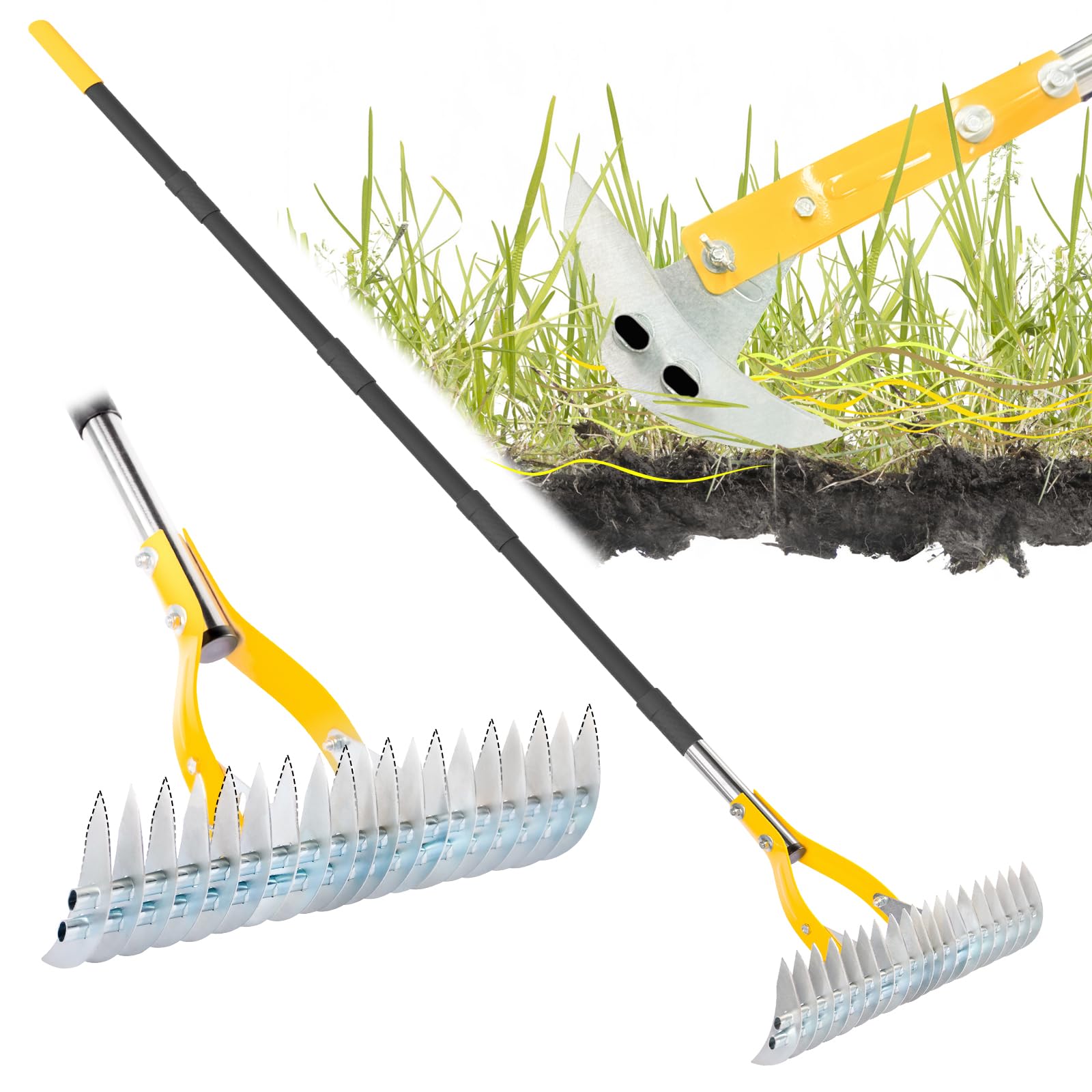
BlumeTrec Manual Rake

Small spots

Our Score 9.2/10
Check Price

Worth Noting

  • Manual labor requirement makes it impractical for lawns over 2,000 sq ft or heavy thatch buildup.
  • Physical effort may be challenging for users with back or mobility concerns.
Motor
Bag Capacity
Working Width
15 inches
Depth Settings
Read the full review

This manual rake combines a manganese steel head with an adjustable 74-inch handle for comfortable, effective dethatching on targeted spots. The curved dual-sided tines pull thatch cleanly from grass without requiring a power cord or bag management, making it a direct alternative to electric models when you only need to clear a few hundred square feet.

This rake suits budget buyers who want a simple, durable tool for small yards or garden beds. The manual effort means it is not practical for lawns larger than 2,000 sq ft or for heavy thatch buildup. Users with back or mobility concerns may find the repeated bending and pulling tiring, so it is best for those comfortable with light physical yard work.

Break up the work over a few sessions to avoid fatigue; the rake is sturdy enough for repeated use.

Bottom line: For small patches and targeted dethatching, this rake offers the best value and durability under $30 — just be prepared for manual labor.

2

Greenworks 13A 14" Corded

Greenworks 13A 14" Corded

Small-medium lawns

Our Score 9.0/10
Check Price

Worth Noting

  • Bag fills quickly; plan to dethatch without it and collect debris separately
  • Tines may wear or break after several uses, especially on rocky soil
Motor
13 Amp
Bag Capacity
~12 gal
Working Width
14 inches
Depth Settings
3 positions
Read the full review

The Greenworks DHA103’s 13-amp motor drives 14-inch tines through thatch and topsoil, with a 2-in-1 mode switch for dethatching or scarifying. Three depth settings let you match aggression to lawn condition, and the push-button start removes pull-cord frustration. Users report that it lifts and removes thatch effectively, often in a single pass, without bogging down on moderately thatched lawns. The 14-inch clearing path is ideal for small to medium lawns, and the corded design eliminates the need to manage battery life.

At 28.7 pounds, this is one of the lighter electric dethatchers, making it easy to pivot around trees and garden edges. The collection bag is small — it fills after a few feet on heavily thatched turf. Most owners find it faster to skip the bag entirely, let the tines pull up debris, then rake or mow it up afterward. That workaround is simple but worth knowing before you start. Even with the bag removed, the tines effectively deposit thatch in windrows for easy collection.

This model suits homeowners with lawns up to 5,000 square feet who want a corded electric dethatcher that’s easy to store and operate. It’s a strong match for first-time users: the 2-in-1 function and depth adjustments provide flexibility without complexity. Durability holds up well for typical residential use, though some users report tines wearing out sooner than expected, especially on rocky or root-heavy soil. Compared to the most popular electric alternatives, the Greenworks has fewer complaints about plastic hinge failures and belt issues. The lightweight frame also makes it easy to carry up and down stairs or store in a small shed.

At its mid-range price, the Greenworks delivers performance that matches or exceeds similarly priced competitors. The tradeoff is a smaller bag and occasional tine wear, but neither issue undermines its core dethatching ability for the target buyer.

Remove the bag and collect thatch with a lawn mower or rake after dethatching; it saves constant emptying.

Bottom line: For small to medium lawns, the Greenworks DHA103 is the electric dethatcher that balances power, weight, and the fewest compromise notes — just skip the bag and rake the debris.

3

WEN 15" 13A DT1315

WEN 15" 13A DT1315

Budget small lawns

Our Score 9.0/10
Check Price

Worth Noting

  • Bag fills quickly and the chute clogs with damp thatch
  • Durability varies: some units develop gear noise or lose tines over time
Motor
13 Amp
Bag Capacity
12 gal
Working Width
15 inches
Depth Settings
5 positions
Read the full review

The WEN DT1315 pairs a 13-amp motor with a 15-inch clearing path, making it the widest budget-friendly electric model in this comparison. Assembly takes minutes, and the five depth settings let you dial in aggression for light scarifying or heavy thatch removal. The 12-gallon bag is present, but its small capacity means you'll be emptying it often — the chute can clog with damp thatch, so working without the bag and raking afterward is a practical approach.

This machine suits homeowners with lawns up to 5,000 square feet who prioritize cutting width over bag convenience. The plastic components and occasional reports of gear or tine issues mean it's not a long-term investment for heavy use, but for seasonal dethatching on a modest lawn the performance-to-price ratio is hard to beat.

Run the first pass without the bag to avoid clogs, then rake the loosened thatch by hand for a cleaner result.

Bottom line: If your lawn is under 5,000 square feet and you want the most cut width for your money, this WEN delivers — just be ready to manage the bag limitations.

4

BILT HARD 16" 15A

BILT HARD 16" 15A

Medium lawns

Our Score 9.0/10
Check Price

Worth Noting

  • 14.5-gallon bag fills quickly on heavily thatched lawns, requiring frequent stops to empty.
  • Some units may experience motor or part failure shortly after first use, raising long-term reliability questions.
Motor
15 Amp (copper)
Bag Capacity
14.5 gal
Working Width
16 inches
Depth Settings
5 positions
Read the full review

The BILT HARD delivers a wide 16-inch clearing path and a 15-amp copper motor that handles medium lawns well, all at a competitive price. The 33-pound weight makes it manageable. However, the 14.5-gallon bag fills quickly on heavy thatch, and occasional unit issues — motor or part failure after first use — mean durability is uncertain for those planning multiple seasons.

Bottom line: A reasonable pick for budget-conscious buyers with medium lawns who prioritize power and width over long-term reliability.

5

MZK 15" 2-in-1

MZK 15" 2-in-1

Very small lawns

Our Score 9.0/10
Check Price

Worth Noting

  • Not suitable for regular or heavy-duty dethatching
Motor
Bag Capacity
8 gal
Working Width
15 inches
Depth Settings
4 positions
Read the full review

Priced below all other powered models, this MZK works adequately for small, lightly thatched lawns. However, the plastic build lacks durability, the 8-gallon bag clogs easily, and long-term reliability is uncertain — this is not a tool for regular or heavy-duty dethatching.

Bottom line: Best for the budget-conscious homeowner with a very small lawn and occasional thatch buildup — ignore if you need a tool for regular use.

6

BUCOTOD 16" 15A

BUCOTOD 16" 15A

Medium-large lawns

Our Score 8.8/10
Check Price

Worth Noting

  • Bag fills quickly on heavily thatched lawns despite being largest in class
  • Heavier than most competitors at 34 pounds
Motor
15 Amp (copper)
Bag Capacity
14.5 gal
Working Width
16 inches
Depth Settings
5 positions
Read the full review

The BUCOTOD dethatcher stands out with a 14.5-gallon bag and 15-amp copper motor — the biggest combination in electric dethatchers. That bag holds more than any competitor, meaning fewer trips to the compost pile during a session. The 16-inch clearing path and five depth settings give solid coverage for medium to large lawns up to roughly 7,000 square feet. Compared to the top pick Greenworks, the BUCOTOD trades lighter weight and longer track record for raw bag capacity and motor power.

This machine suits homeowners who want the largest possible bag and don't mind a heavier tool at 34 pounds. On lawns with heavy thatch, even this bag can fill quickly — expect to empty it mid-job on the first pass. The extra weight provides stability but makes maneuvering more effort than lighter alternatives, so it's not ideal if you need an ultra-lightweight tool or have a small yard.

For heavily thatched lawns, plan for two passes to fully clear the debris.

Bottom line: Homeowners with medium to large lawns who want to empty less often will appreciate this, but be prepared for the extra weight and the need to double-pass on heavy thatch.

7

Agri-Fab 40" Tow Behind

Agri-Fab 40" Tow Behind

Large lawn tractor

Our Score 8.8/10
Check Price

Worth Noting

  • Assembly instructions are vague and some hardware may be missing.
  • Handle and axle can bend under heavy load without added weight.
Motor
Bag Capacity
Working Width
40 inches
Depth Settings
Read the full review

The Agri-Fab 40-inch tow-behind dethatcher provides 40-inch working width at a budget-friendly price, making it the most cost-effective option for owners of half-acre to one-acre lawns. Its build quality notably outpaces the larger 48-inch model, which feels flimsier in comparison. The 20 spring-steel tines effectively pull thatch without excessive wear. User feedback confirms consistent thatch removal performance across varied lawn sizes.

This dethatcher is best suited for those with a lawn tractor and a desire to save money over wider models. However, assembly can be time-consuming with incomplete instructions, and some owners have noted that the handle and axle may bend under heavy strain, particularly if additional weight (like cinder blocks) isn't added to compensate. The low price point makes it an easy choice for budget-conscious buyers, but the assembly and bending tradeoffs require some patience.

Set aside a dedicated afternoon for assembly and verify all parts against the manual before starting.

Bottom line: For those with a half-acre or more who are willing to invest some assembly time, this is the most budget-friendly way to dethatch large areas effectively.

8

Sun Joe AJ801E 12"

Sun Joe AJ801E 12"

Small lawns

Our Score 8.8/10
Check Price

Worth Noting

  • Included bag fills after a few feet, requiring frequent stops to empty or removal altogether.
  • Belt and plastic housing wear can lead to reduced longevity of the unit.
Motor
12 Amp
Bag Capacity
8 gal
Working Width
12.6 inches
Depth Settings
5 positions
Read the full review

The Sun Joe AJ801E provides effective thatch removal for small to medium lawns, with a lightweight build and straightforward controls that make it accessible to first-time buyers. Where it falls short of the top pick is in two specific areas: the collection bag fills after a few feet of use, making it effectively unusable for most dethatching sessions, and belt and plastic housing wear can occur within the first season, raising long-term durability questions. These tradeoffs matter most for anyone wanting a tool that lasts multiple years or who prefers not to clean up thatch manually after dethatching.

Bottom line: Best for budget-conscious first-time buyers with a small lawn who prioritize immediate dethatching ability over bag utility and long-term durability.

9

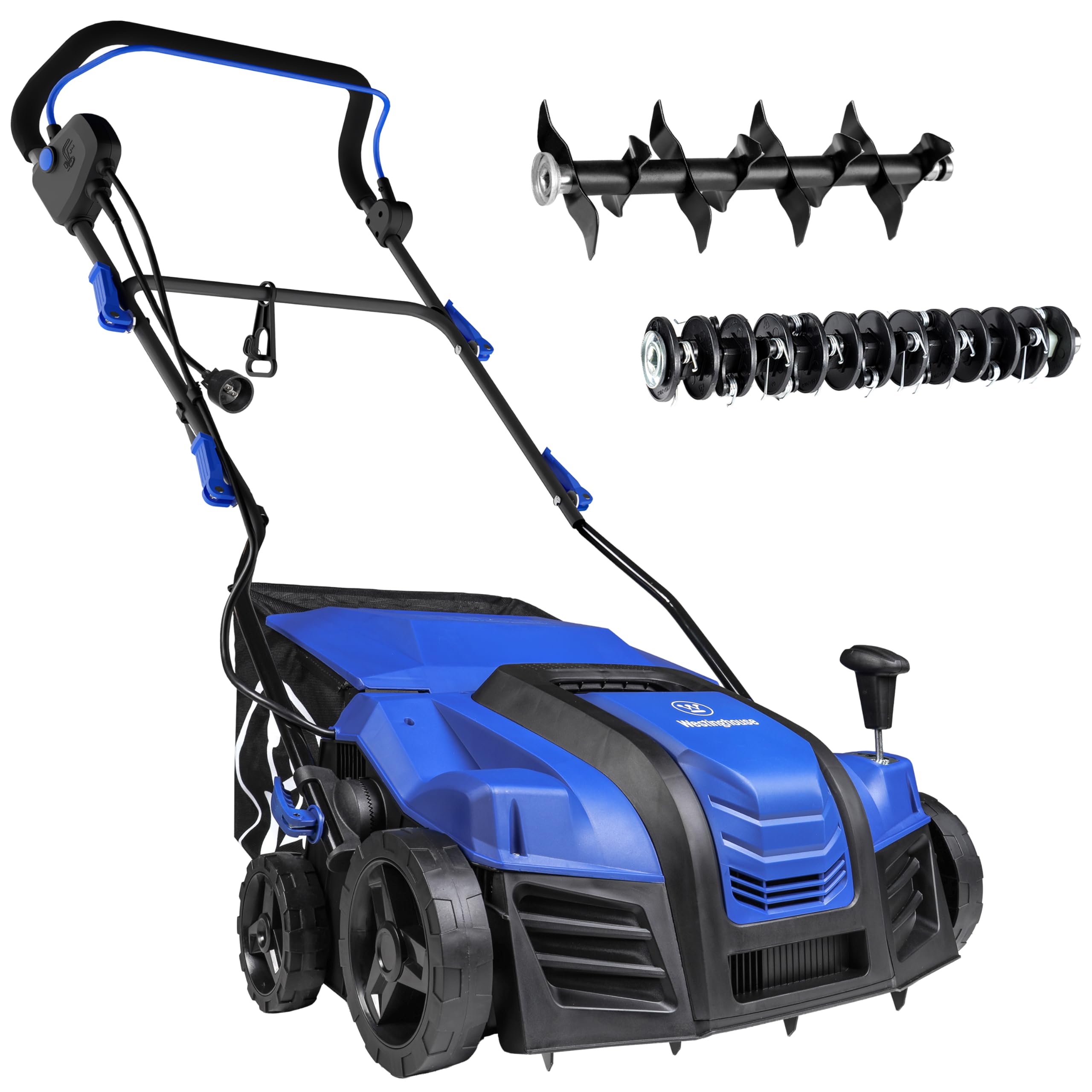
Westinghouse 16" 15A

Westinghouse 16" 15A

Medium-large lawns

Our Score 8.8/10
Check Price

Worth Noting

  • Bag, though larger than most, may require frequent emptying on heavily thatched lawns.
Motor
15 Amp
Bag Capacity
14.5 gal
Working Width
16 inches
Depth Settings
5 positions
Read the full review

The Westinghouse 16-inch electric dethatcher brings a wide cutting path and a powerful motor that reduce passes on medium to large lawns. Its 14.5-gallon bag is larger than many competitors, though still fills quickly when thatch is heavy. Long-term durability under frequent use is not yet clear, making this a solid choice for buyers who value current specs over an established track record.

Bottom line: Best suited for buyers who want a powerful, wide dethatcher with a larger bag and are willing to accept uncertainty around long-term reliability.

How to Choose

Motor Power

Corded electric dethatchers range from 12 to 15 amps. Higher amps mean more torque to pull through thick thatch, but also draw more current through your extension cord. A 15-amp motor on a 100-foot 16-gauge cord will cause voltage drop and reduced performance — use 12-gauge cord for runs over 50 feet.

For lawns under 5,000 sq ft, 12–13 amps is sufficient. Above that, 15 amps helps maintain speed in dense grass. Battery-powered models trade runtime for cord freedom; expect 10–30 minutes per charge, which covers only small yards.

Working Width

Wider cutting paths (15–16 inches) cut dethatching time by 25–30% compared to 12-inch models. But width adds weight and can make the machine harder to maneuver around flower beds and trees. Tow-behind units at 40–48 inches are the fastest option for open lawns but require a tractor.

The trade-off is that wider electric models often have larger bags, but none are large enough to complete a whole lawn without emptying. Plan to dethatch without the bag regardless of width.

Bag Capacity

Every electric dethatcher's bag — even the 14.5-gallon models — fills after a few passes on moderately thatched grass. The bag is designed more for containing debris than holding it, and the chute clogs when thatch is damp or heavy. Most experienced users remove the bag entirely and let the debris lay on the lawn, then collect it with a mower or rake.

If you insist on using the bag, choose the largest capacity available (14.5 gal) and expect to empty it every 2–3 passes. The BUCOTOD and Westinghouse come closest to making the bag usable, but it's still a compromise.

Depth Adjustment

Depth settings control how aggressively tines dig into the soil. More positions (5–14) let you dial in the exact amount of thatch removal without scalping the lawn. Start at the shallowest setting and increase until you see thatch being pulled without exposing bare dirt.

Models with 3 positions limit your fine-tuning but are simpler for first-time users. The LawnMaster's 14 positions are overkill for most; 5 positions is the sweet spot for balancing control and simplicity.

Durability of Tines and Frame

Plastic housings and belt-driven systems are the primary failure points on electric dethatchers. Sun Joe's rear flap hinge breaks after a season; Greenworks uses a simpler design that holds up better. On tow-behind units, bent handles and broken spring-steel tines are common, especially on rocky soil. Adding weight to the tray increases tine wear.

Replaceable tines extend the life of both electric and tow-behind models. Check if replacement tines are readily available before buying — the Agri-Fab models have universal replacements, while some budget electrics do not.

Frequently Asked Questions