Outdoor Power Equipment

7 Best Gas String Trimmer of 2026: Match Power to Your Yard

Find the best gas string trimmer for your yard size — from lightweight curved shafts for small lawns to powerful brushcutters for overgrowth.

Gas string trimmers promise to cut through weeds and grass, but too many models fail after a few uses or refuse to start when you need them. The real issue isn't a lack of power — it's matching the right engine and shaft design to your actual yard conditions.

Most residential yards are served perfectly by 21–28cc engines. Going bigger adds weight without improving trimming on typical grass and light weeds. But reliability varies wildly between brands, and even well-known names can have units that stall or break early.

This guide focuses on the trade-offs that matter: weight vs. power, curved vs. straight shafts, and which brands deliver consistent starting and long-term durability. The goal is a trimmer that fits your property and lasts more than one season.

1

ECHO SRM-225

Top Pick
ECHO SRM-225

Reliable straight shaft

Our Score 9.2/10
Check Price

Worth Noting

  • At 12.5 lbs, the trimmer's weight becomes noticeable during extended sessions
  • Cutting width is not published, so replacement line length may require trial
Shaft
Straight
Weight
12.5 lbs
Cut Width
Engine (cc)
21.2cc
Read the full review

The ECHO SRM-225 comes with a 5-year consumer warranty that outlasts most residential trimmers, paired with a 21.2cc engine that delivers consistent power through a straight shaft. While the GT-225 trades weight for maneuverability, this model keeps the straight shaft for better torque transmission during tough weeds.

The straight shaft reduces flex, which helps when edging along driveways or flower beds. The engine starts after a few primer pumps — typical for a 2-cycle. During longer trimming sessions, the 12.5 lb weight becomes noticeable, especially compared to curved-shaft alternatives.

This trimmer fits homeowners who want a straight-shaft tool for medium to large yards with occasional thick weeds. The tradeoff is weight: at 12.5 lbs, it is heavier than curved-shaft options like the GT-225, so users with smaller frames or long trimming sessions may find it tiring. Additionally, the cutting width is not specified in the manual, which can complicate replacement line selection.

Bottom line: If you want a straight-shaft trimmer with a warranty that backs up long-term use, the SRM-225 delivers — provided you can handle the weight and aren't bothered by the missing cutting spec.

2

Echo GT-225

Echo GT-225

Lightweight daily trimmer

Our Score 8.8/10
Check Price

Worth Noting

  • Stock trimmer head may cause string breakage or jamming, especially in thicker growth
Shaft
Curved
Weight
10 lbs
Cut Width
17 in
Engine (cc)
21.2cc
Read the full review

At 10 pounds, the GT-225 is one of the lightest gas trimmers available, and that weight pays off in reduced fatigue during longer sessions. The 21.2cc engine starts on the first or second pull even after sitting for weeks, which is a direct result of Echo's consistent build quality. Cutting performance is adequate for grass and light weeds at 7500 RPM, clearing typical residential edges and undergrowth without bogging down.

Some owners find the stock trimmer head can be finicky: the string may break during use or jam inside the head, requiring disassembly. This is not a widespread failure but a known behavior with the factory head. A straightforward fix is an aftermarket replacement head, which several owners report resolves the issue entirely. For those comfortable with a simple swap, the trimmer delivers years of service without further complications.

This trimmer suits homeowners with small to medium lawns who prioritize light weight and hassle-free starting over heavy brush capability. It is not intended for clearing blackberries or dense overgrowth, nor for buyers who prefer to avoid aftermarket modifications. The stock head is the main compromise: if you are not open to upgrading it, the GT-225 may test your patience with string jams. But for the core use case – routine trimming of grass and light weeds – it is a well-matched tool.

Replacing the stock head with a Speed-Feed or similar aftermarket model is a common upgrade that addresses string jams.

Bottom line: The Echo GT-225 makes sense for anyone who wants a gas trimmer that doesn't fight back – just be aware that a ten-dollar head swap can transform the experience.

3

Husqvarna 122RJ

Husqvarna 122RJ

Brush & weeds

Our Score 8.6/10
Check Price

Worth Noting

  • Trimmer head may not spin after assembly if not aligned correctly
  • Switching between blade and string head takes a few minutes and some familiarity with the instructions.
Shaft
Straight
Weight
12.6 lbs
Cut Width
17 in
Engine (cc)
22cc
Read the full review

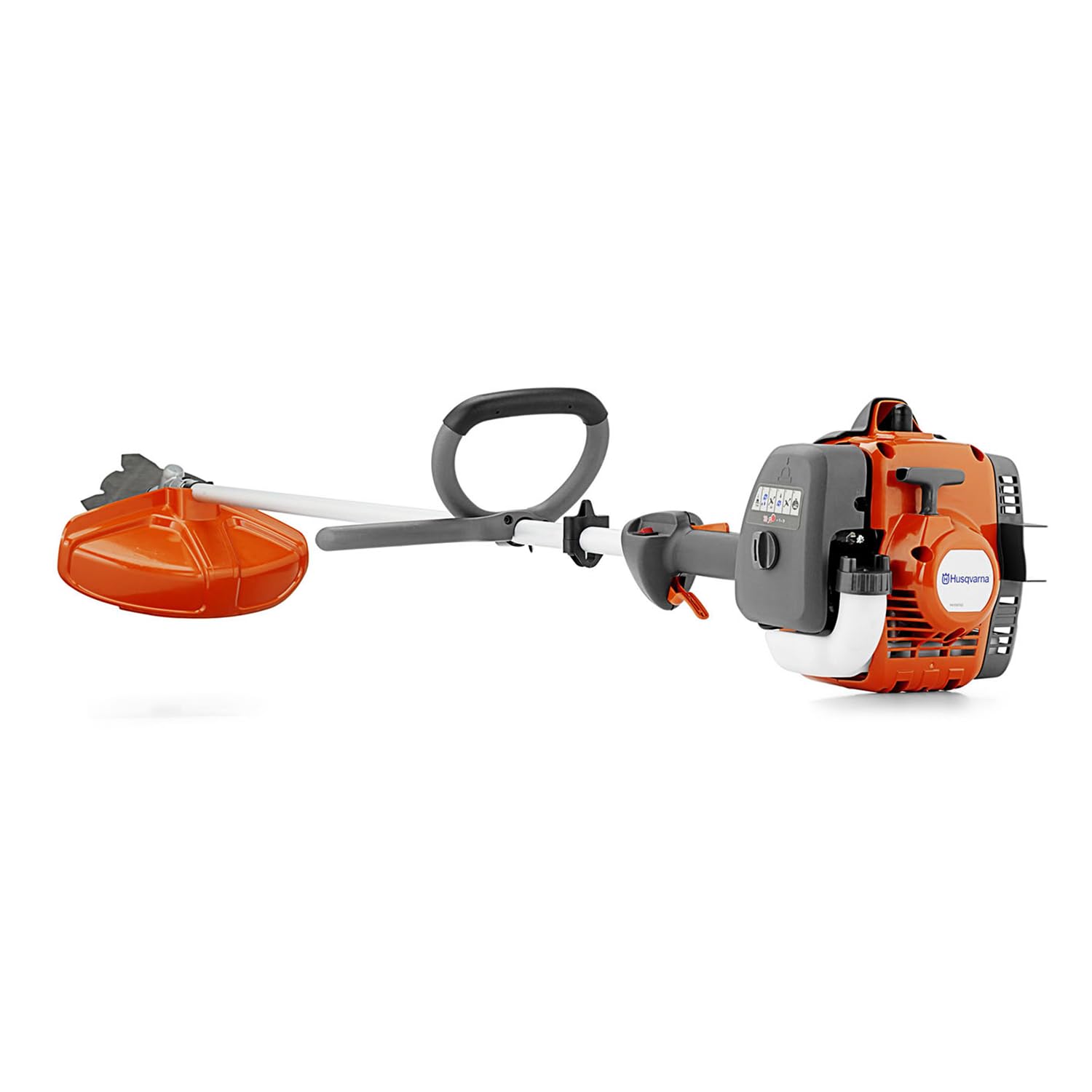
The Husqvarna 122RJ combines a string trimmer head with a grass blade, making it suited for properties that have moved beyond lawn maintenance into brush control. Its 22cc engine and straight shaft deliver the torque needed for blackberries and light brush, while the included blade handles woody stems that would stall a standard trimmer.

Cuts through thick weeds effectively, and the straight shaft gives good reach for edging along fences and garden beds. Build quality feels above average for a mid-range brushcutter, with components that resist flexing under load. The 122RJ does require some assembly out of the box, and a small number of units may need adjustment to get the trimmer head spinning correctly. This is more of a setup hiccup than a long-term durability concern.

This brushcutter is a fit for homeowners who face dense weeds, blackberries, or saplings and want one tool for both string trimming and blade cutting. It is less ideal for those who only need basic grass trimming — lighter, curved-shaft trimmers are easier to handle for that job. Also, buyers who prefer a fully assembled tool or are uneasy with minor adjustments should consider alternatives.

After assembling, spin the trimmer head by hand to confirm it engages — a quick check before starting the engine can prevent frustration.

Bottom line: Best for homeowners with overgrown lots who need one tool for both string and blade work, not for those wanting a simple plug-and-trim experience.

4

PROYAMA 42.7cc

PROYAMA 42.7cc

Heavy brush budget

Our Score 8.4/10
Check Price

Worth Noting

  • Durability of plastic parts and pull-start mechanism can vary
  • At 19 pounds, the tool is heavy and may cause fatigue during extended trimming even with the harness
Shaft
Weight
19 lbs
Cut Width
18 in
Engine (cc)
42.7cc
Read the full review

The PROYAMA's 42.7cc engine delivers enough power to cut through thick brush and even small saplings – a capability typically found in machines costing twice as much. Unlike the lighter Echo GT-225, this unit is built for aggressive clearing, not casual lawn trimming.

Once tuned, the engine starts dependably and runs consistently across varied terrain – some users note that after a short break-in, it fires on the first or second pull. The included brush blade slices through woody stems, and the trimmer head handles grass and weeds efficiently. Assembly is straightforward, with parts fitting together solidly. The kit also includes a harness, face shield, gloves, and ear defenders – everything needed to get started without additional purchases.

Considering the power and accessories included, the price is notably lower than comparable offerings from major brands. This makes it an attractive option for those on a tight budget who need serious cutting capability.

This trimmer's value comes with clear tradeoffs: durability can be inconsistent and the weight is high – some units have experienced early failures with plastic components and the pull-start mechanism. It suits budget-conscious buyers who need to clear heavy brush and are willing to accept the risk of premature repairs and a physically demanding tool. For typical lawn maintenance, the Echo GT-225 is a better match.

Use the included harness to reduce fatigue – the trimmer's weight is best managed with both hands on the handles.

Bottom line: Buy this if you need maximum cutting power on a tight budget and are prepared for a heavier tool with possible early repairs. Otherwise, the Echo GT-225 offers lighter weight and more dependable long-term performance.

5

Troy-Bilt TB304S

Troy-Bilt TB304S

4-cycle engine

Our Score 8.4/10
Check Price

Worth Noting

  • Engine can seize after limited use in some cases, shortening usable life
  • At 15 pounds, the trimmer can cause arm fatigue during extended trimming sessions
Shaft
Straight
Weight
15 lbs
Cut Width
17 in
Engine (cc)
30cc
Read the full review

The Troy-Bilt TB304S uses a 30cc 4-cycle engine that runs on straight gas — no oil mixing required. That convenience sets it apart from every other trimmer in this lineup, including the lighter curved-shaft top pick from Echo. However, the design carries notable compromises: the engine can seize after limited use in some cases, and the 15-pound frame may feel heavy during longer jobs.

This trimmer suits homeowners who prioritize the simplicity of 4-cycle operation over long-term dependability. If you trim a small yard and prefer not to measure and mix oil, the TB304S sidesteps that chore. But those expecting several seasons of regular trimming should consider a more established 2-cycle model from this guide instead.

The straight shaft provides good reach under shrubs, and the 17-inch cutting width covers a moderate swath per pass. Starting is typical for a four-stroke — a primer bulb and choke are standard. For buyers who accept the durability risk, the TB304S offers a unique fuel-handling advantage in a mid-range price tier.

Bottom line: For homeowners who strongly prefer 4-cycle engines and trim small to medium yards, the TB304S delivers that convenience. Just be prepared for the possibility of early engine issues and a heavier tool.

6

Husqvarna 122LK

Husqvarna 122LK

Light duty brand

Our Score 8.2/10
Check Price

Worth Noting

  • Engine may stall prematurely in some units, cutting a trimming session short.
  • Plastic trimmer head housing can crack on impact with rocks or concrete edges.
Shaft
Straight
Weight
10 lbs
Cut Width
19.7 in
Engine (cc)
22cc
Read the full review

The Husqvarna 122LK offers a lightweight 22cc straight-shaft design that makes light trimming less tiring. Compared to the top pick, which delivers consistent starting and long-term dependability, this trimmer is more of a gamble on durability.

This suits homeowners with small to medium yards who value a light tool and don't mind the possibility of early engine stalling or trimmer head cracking. The potential for a unit to stop running after the first tank or for the plastic head to crack on hard contact should be factored into the purchase decision.

Build quality feels solid for the price, with a straight shaft that reaches under shrubs and a 19.7-inch cutting width that handles typical grass and light weeds. However, some units may experience engine stall early on, and the stock trimmer head is vulnerable to impact damage, making this a more cautious pick for those who want trouble-free use season after season.

Swapping the stock trimmer head for a metal version can improve impact resistance.

Bottom line: For light trimming where weight matters, this Husqvarna works well in the short term, though inconsistent durability means it is a more cautious buy than its price suggests.

7

Wild Badger 26cc

Wild Badger 26cc

DIY multi-tool

Our Score 8.0/10
Check Price

Worth Noting

  • The 23.85-pound design can cause arm fatigue during longer trimming sessions, even with the shoulder strap.
  • The string head may get stuck and the edger wheel can require occasional repositioning during use.
  • Engine may develop starting difficulties after a few months, and plastic components can crack under normal stress.
Shaft
Weight
23.85 lbs
Cut Width
17 in
Engine (cc)
26cc
Read the full review

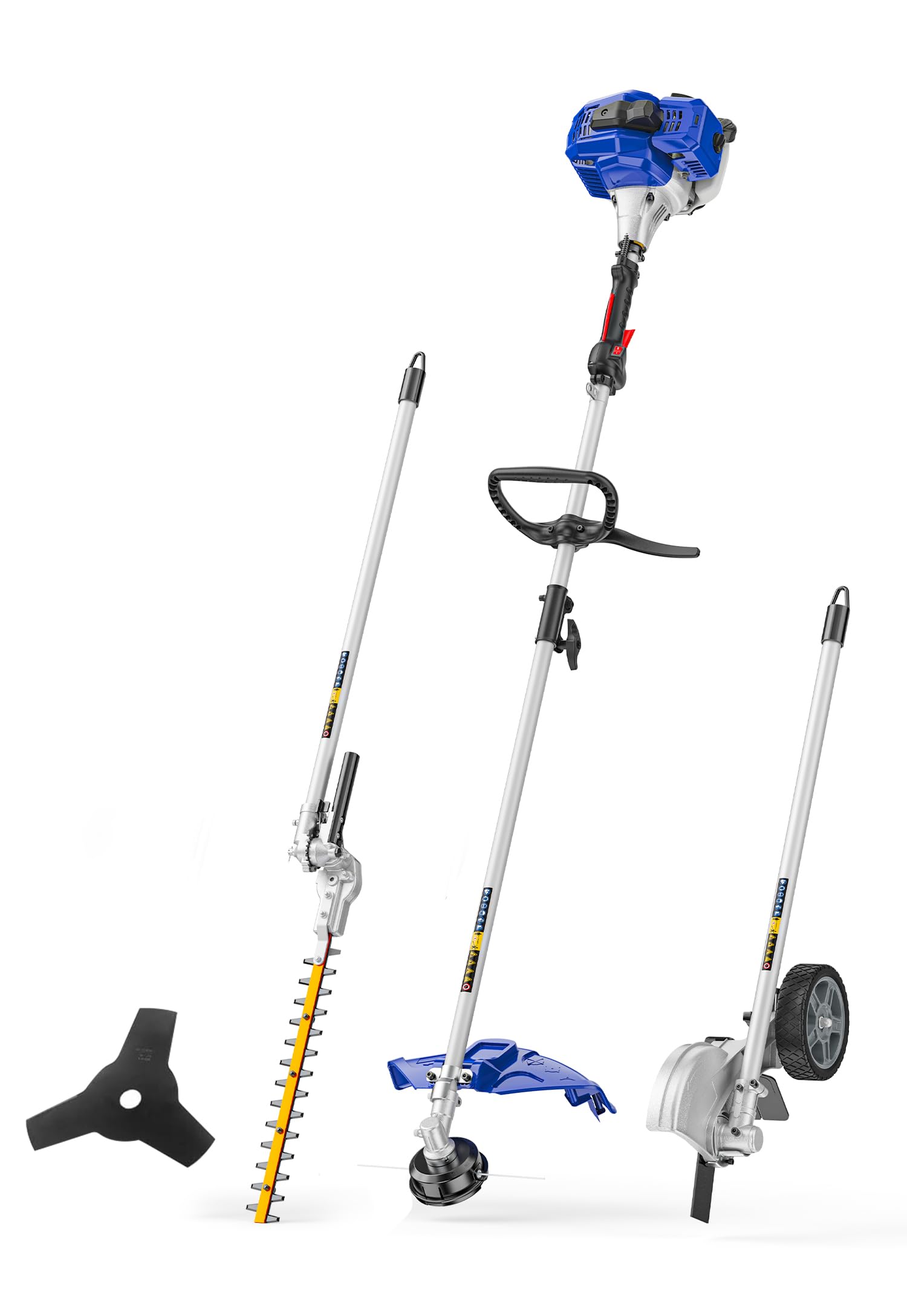
The Wild Badger Power 26cc 4-in-1 gas weed wacker bundles a string trimmer, edger, hedge trimmer, and brush cutter in one engine, an offer that appeals to DIYers who want to cover multiple tasks without buying separate tools. Where the top pick Echo GT-225 prioritizes effortless starting and lightweight handling for small yards, this kit prioritizes attachment variety over refinement. Some owners have experienced engine issues or plastic part breakage within months of use — a factor to weigh against the initial value.

Once the engine starts, the 26cc 2-cycle motor delivers enough torque to cut through thick grass and light brush. The attachments click on fairly easily and feel sturdy for the price, particularly the hedge trimmer and brush blade. The wheeled edger helps create neat edges along driveways and walkways, though the string head may need occasional adjustment to avoid jamming.

This multi-tool suits occasional users who are comfortable with minor tinkering and don't depend on it for weekly trimming. The weight (23.85 lbs) is noticeable even with the included shoulder strap, so extended sessions may cause fatigue. For those with a single small yard and a willingness to accept possible downtime, the price-per-tool ratio is appealing.

Storing the tool with stabilized fuel and running it dry before storage can reduce starting issues.

Bottom line: Suits the DIY tinkerer who values attachment variety over long-term dependability.

How to Choose

Engine Displacement (cc)

Engine size directly determines how much power the trimmer can deliver, but bigger isn't always better. A 21–28cc engine handles grass, weeds, and light brush for most home lots without the extra weight that causes arm fatigue.

The hidden trade-off: larger engines (30cc and up) often require more effort to pull-start and consume more fuel per session. If your property is under an acre and you don't need to cut saplings, stick with 21–25cc and save your shoulders.

Shaft Type

Curved shafts position the engine closer to your body, shifting the center of gravity and reducing perceived weight. They're easier to swing around flower beds and fence lines, but they limit reach under low-hanging shrubs.

Straight shafts offer better leverage and let you reach deeper under bushes and along fences. They also accept brush blades and edger attachments more readily. The trade-off: straight shafts feel nose-heavy and can tire your arms faster during long trimming sessions.

Weight

Weight is the number one fatigue factor, especially for anyone trimming for more than 20 minutes. A 10-pound trimmer feels manageable; anything over 15 pounds will leave your arms sore the next day without a harness.

The hidden issue: published weights often exclude the fuel tank full and the cutting head. An '11 lbs' trimmer can feel closer to 15 pounds when you add fuel and string. Always look at the dry weight and plan for that extra pound or two.

Cutting Width

A wider cutting swath (e.g., 19 inches vs 17 inches) covers more ground per pass, reducing total trimming time. For large open lawns, wider is better. But wider heads also require more power to spin, which can strain smaller engines.

In practice, a 17-inch width is the sweet spot for balance between speed and power, especially on 21–25cc engines. Larger engines can handle 19-inch heads without bogging down, but the extra width adds little benefit if you have tight corners and obstacles.

Frequently Asked Questions