Watering & Irrigation

7 Best Hose Timer 2026: Models That Outlast the Season

Which hose timer keeps your garden watered without leaking or early failure? Find the timers worth your money.

Hose timers promise automated watering, but many fail within months — leaking at connections or stopping entirely. The market is filled with cheap plastic models that crack, and even digital timers often let water into the battery compartment.

The key is knowing which material and design choices actually prevent these problems. Brass fittings resist corrosion and seal better, while mechanical timers sidestep battery failures altogether. This guide focuses on the timers that balance durability with the features you actually need.

Whether you need a simple one-zone timer for a small garden or a multi-zone schedule for raised beds, the right choice depends on your climate, water pressure, and tolerance for maintenance.

1

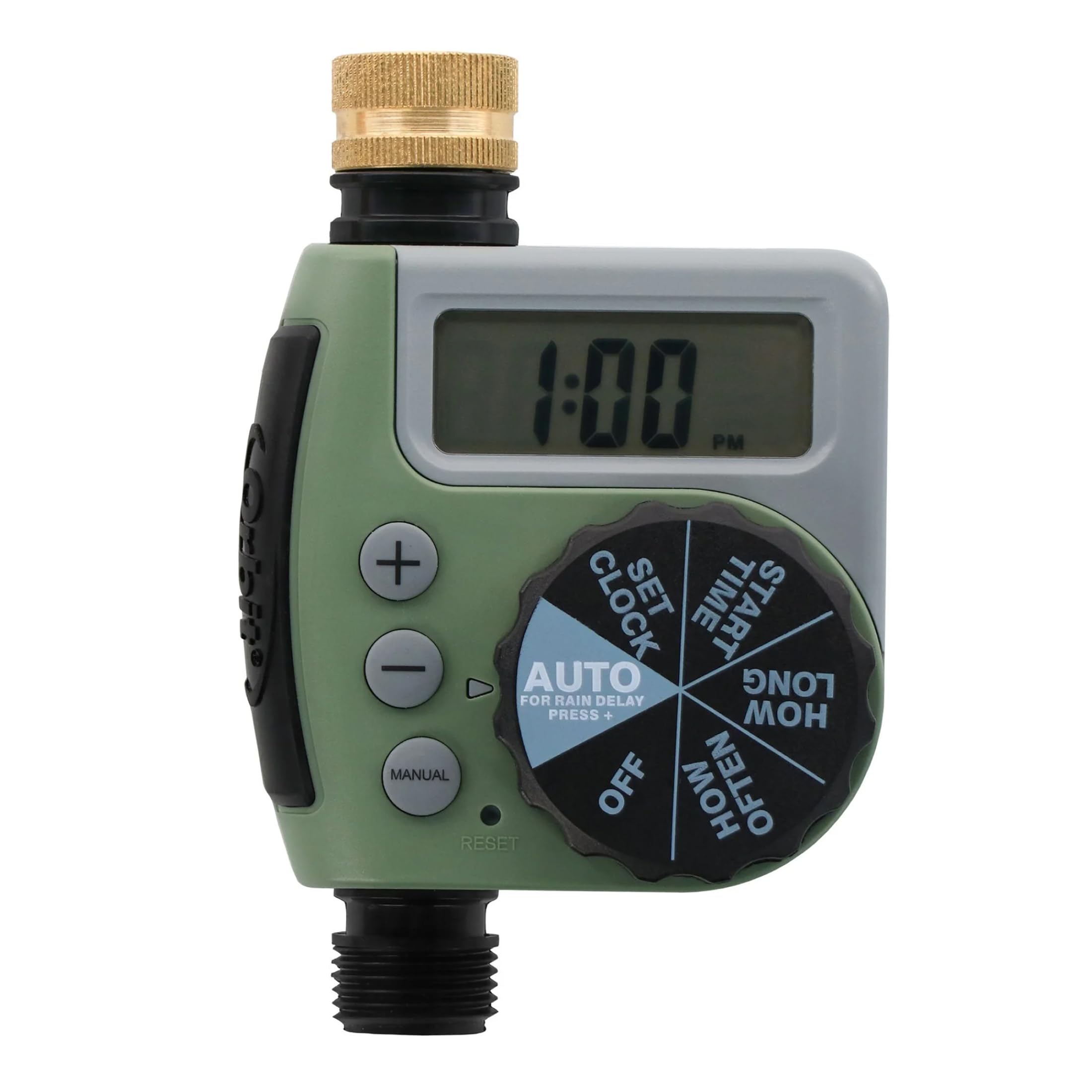
Orbit 62056 Digital Timer

Top Pick
Orbit 62056 Digital Timer

Most home gardeners

Our Score 8.8/10
Check Price

Worth Noting

  • Some units may develop internal leaks after a few seasons of heavy use.
  • Brass connector may require thread tape to prevent occasional leakage.
Type
Digital
Outlets
1
Material
Plastic with brass swivel
Rain Delay
Yes
Read the full review

The Orbit 62056 uses a single-dial interface to set watering frequency (every 1 to 7 days) and duration (1 minute to 4 hours) — no app, no confusing menus. The brass swivel connection provides a sturdy, corrosion-resistant attachment to standard hose faucets, and the 6-year limited warranty backs the build. Rain delay and manual override add practical flexibility for unexpected weather or spot watering.

This timer suits home gardeners who want direct, dial-based control without added complexity. Some units may develop internal leaks after a few seasons of heavy use — the warranty covers certain defects, but long-term trouble-free operation is not guaranteed. For buyers prioritizing simplicity and brass quality over a decade of service, this timer delivers reliable day-to-day watering. If you need something that lasts many years, a mechanical timer without digital components may be a better fit.

Use Teflon tape on the brass threads to reduce the chance of leakage at the connector.

Bottom line: For home gardeners who want straightforward scheduling and a brass connection, this timer delivers the essentials — just be aware that some units may develop internal leaks after a few seasons.

2

Raindrip R675CT Analog

Raindrip R675CT Analog

Reliability seekers

Our Score 8.8/10
Check Price

Worth Noting

  • At threaded connections, occasional water leakage may occur
  • Watering starts immediately upon setup
Type
Analog
Outlets
1
Material
Plastic
Rain Delay
Yes
Read the full review

The Raindrip R675CT stands out for its consistent operation, outperforming many digital timers in sustained use. It suits drip irrigation users who value simplicity and don't need multiple daily start times. Just be aware that watering begins as soon as you set the dials — there is no delayed start option.

Set the timer right when you want watering to begin — there's no way to program a later start.

Bottom line: For those who prioritize consistency over scheduling flexibility and run a drip system, this is the most dependable analog option.

3

Gilmour Digital Timer

Gilmour Digital Timer

Short-term use

Our Score 8.8/10
Check Price

Worth Noting

  • Durability can be an issue; some units may not last a full season.
Type
Digital
Outlets
1
Material
Metal swivel coupling
Rain Delay
Yes
Read the full review

The metal easy-swivel coupling makes connecting this timer to a faucet noticeably easier than plastic alternatives. However, some units may develop leakage at connections or become unreliable within a year, so it suits short-term use or those willing to accept that the lifespan may be limited.

Bottom line: A reasonable choice if you need the metal coupling and are okay with the possibility of replacing it within a year.

4

Orbit Mechanical Timer

Orbit Mechanical Timer

Budget buyers

Our Score 8.6/10
Check Price

Worth Noting

  • Leakage may occur around the dial or hose connections in some units.
  • Plastic construction can degrade with extended outdoor exposure over multiple seasons.
Type
Mechanical
Outlets
1
Material
Plastic
Rain Delay
Read the full review

The Orbit Mechanical Timer is the simplest way to water without batteries or digital schedules. You rotate the dial to set a single watering duration from 0 to 120 minutes, and it runs mechanically until the timer winds down. This makes it ideal for renters or budget buyers who need occasional watering and can accept that it must be re-set each day. It lacks scheduling flexibility — you cannot set multiple cycles or specific start times, and there is no rain delay. Compared to digital timers like the top pick with brass fittings and a 6-year warranty, this plastic model trades longevity for low cost and simplicity.

Bottom line: The cheapest entry point for basic timed watering — but only suitable if you don't need daily scheduling and can accept a plastic body that may not outlast a single season.

5

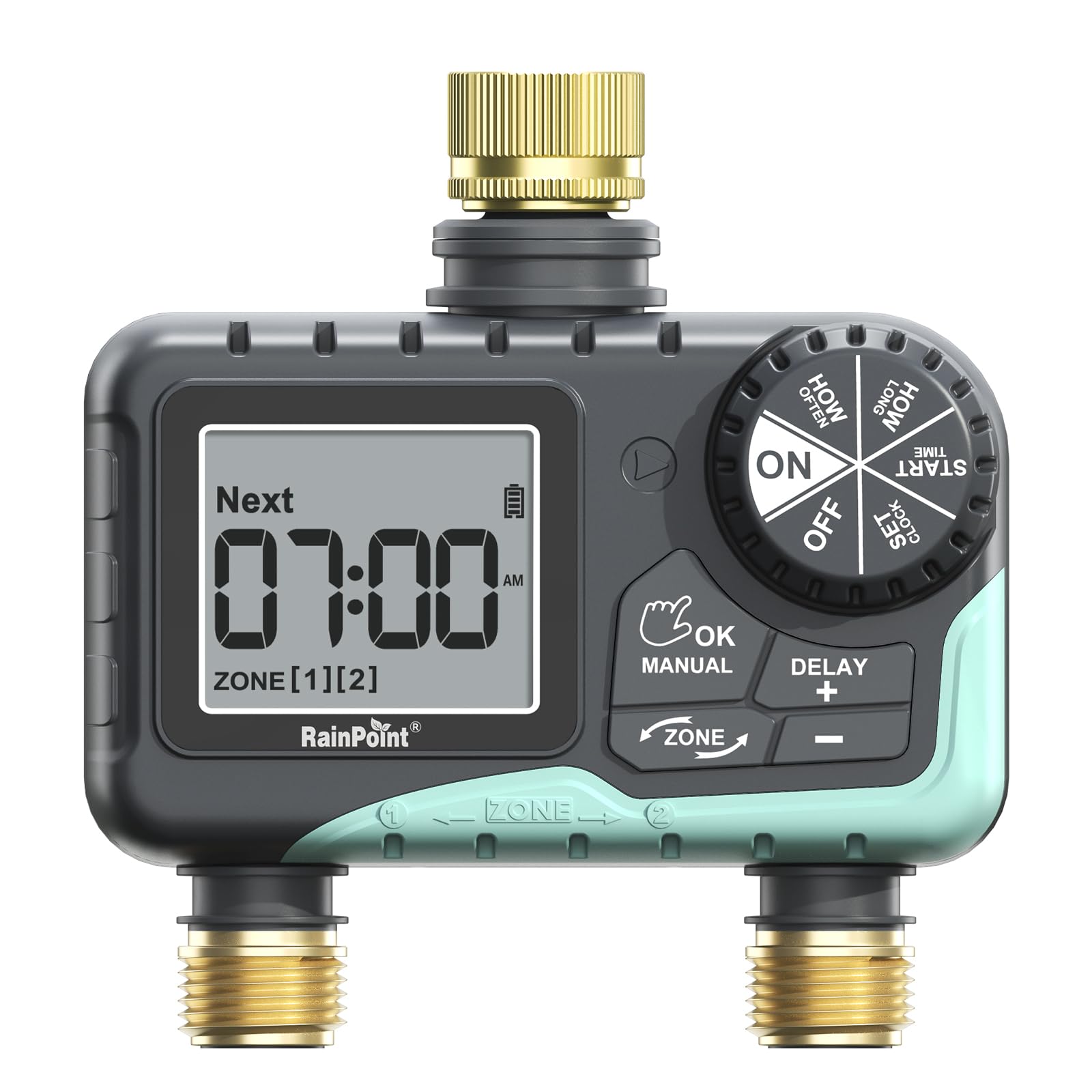
RAINPOINT 2-Outlet V2

RAINPOINT 2-Outlet V2

Dual-zone gardens

Our Score 8.6/10
Check Price

Worth Noting

  • Some units may develop leakage around the hose connections
  • Reliability can vary
Type
Digital
Outlets
2
Material
Plastic
Rain Delay
Yes
Read the full review

The RAINPOINT V2 stands out for its two independently programmable outlets with up to 38 schedules, making it a practical choice for dual-zone gardens. For those seeking a long-term solution, occasional leakage around connections and early reliability issues have been noted — this timer is best suited for users who value independent scheduling and are comfortable with possible unit variance.

Bottom line: Get this for flexible dual-zone scheduling at a fair price, but be aware that longevity isn't guaranteed — consider a model with a warranty if you need years of service.

6

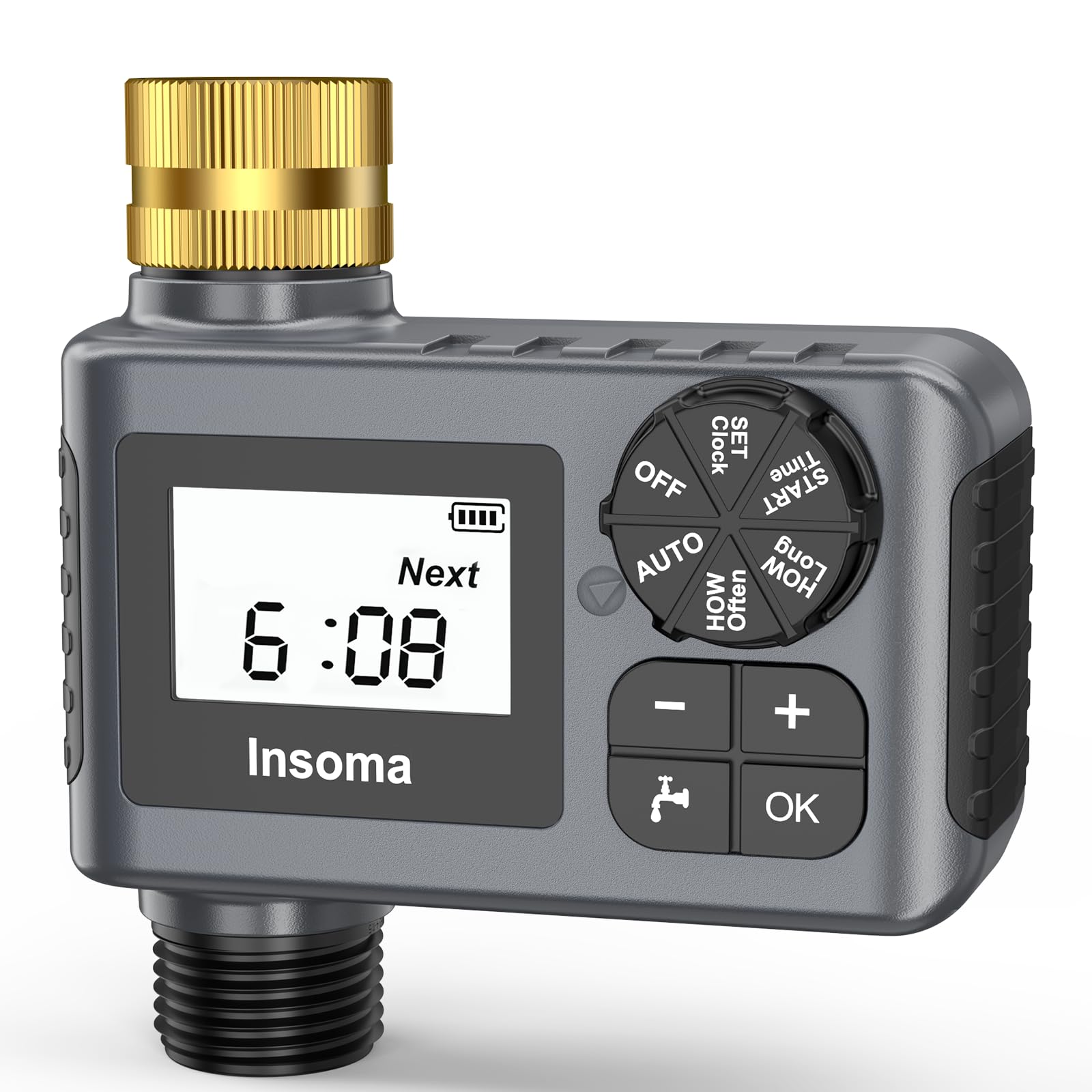
Insoma Brass Timer

Insoma Brass Timer

Budget brass

Our Score 8.6/10
Check Price

Worth Noting

  • Connections may develop leaks over time
  • Unit lifespan can vary; some stop working within months
Type
Digital
Outlets
1
Material
Brass inlet, plastic body
Rain Delay
Yes
Read the full review

The Insoma Water Timer pairs a brass inlet with digital programming at a price rarely seen in this category. Setup takes minutes, and the basic watering functions — manual mode, rain delay, and child lock — cover what most seasonal gardeners need. For the cost, it undercuts other brass-inlet timers like the mid-range alternative while offering similar core features.

This timer suits budget buyers who need a brass connection for a single zone and plan to use it for a season or two. The catch is that build quality is inconsistent; some units may stop working within months, and leakage at the connections has been noted. For short-term or periodic watering where replacement cost is low, it works well, but those wanting a multi-year solution should look elsewhere.

Bottom line: A smart choice for budget-conscious gardeners who want brass fittings and digital controls for a short-term or seasonal setup, provided they accept the possibility of early failure.

7

RAINPOINT 2-Zone Brass

RAINPOINT 2-Zone Brass

Dual-zone brass

Our Score 8.4/10
Check Price

Worth Noting

  • Some units may cease functioning within months of installation.
Type
Digital
Outlets
2
Material
Brass inlet and outlet
Rain Delay
Yes
Read the full review

The RAINPOINT timer uses brass fittings and provides independent dual-zone scheduling for precise watering. Its premium build appeals to quality-oriented buyers, though the higher cost and occasional early reliability issues make it a specialist pick rather than a universal recommendation.

Bottom line: A good fit for gardeners who prioritize brass construction and dual-zone flexibility and are comfortable with potential early maintenance.

How to Choose

Number of Outlets or Zones

A single-outlet timer works for one hose or sprinkler. For gardens with separate areas, a two- or four-zone timer lets you run different schedules for each zone without manual switching.

More zones increase programming complexity and cost. If you only water a single flower bed or lawn, a one-zone timer is simpler and less prone to mechanical failure.

Digital vs. Mechanical Operation

Digital timers offer flexible scheduling – multiple start times, rain delay, and up to 38 programs. The trade-off is battery dependency and potential water ingress into electronics.

Mechanical timers use a clockwork dial: set a duration up to 120 minutes, and it shuts off automatically. No batteries, but limited to one cycle per day and no custom start times. Best for simple, repetitive watering.

Material: Brass vs. Plastic

Brass fittings resist corrosion and provide a tighter seal than plastic. Plastic connections are cheaper but can crack under temperature swings or overtightening.

A brass inlet or swivel reduces leak risk and extends the timer's lifespan. Even with brass, using plumber's tape on all threads is recommended to prevent slow drips.

Rain Delay Feature

A rain delay pauses your schedule for 24 to 72 hours after heavy rain. This saves water and prevents overwatering. Most digital timers include it, but mechanical timers lack this feature entirely.

If you live in a region with unpredictable rainfall, a timer with rain delay is worth the upgrade. Check if the delay is fixed increments or adjustable – some only offer 24/48/72 hour blocks.

Frequently Asked Questions