Tree & Forestry Care

7 Best Kindling Splitter of 2026: The Ones That Actually Split Cleanly Without Chipping

For farm and garden owners: which manual kindling splitters handle knotty hardwood and which chip on the first log. Find the right splitter for safe, durable use.

Most kindling splitter listings claim to be 'heavy duty' and split any wood. In practice, success depends on log diameter, seasoning, and how well the splitter is mounted. The wrong tool can leave you with a chipped blade and a pile of unsplit wood.

The best manual splitters use cast iron or hardened steel, a wide enough opening for your logs, and a solid base to absorb hammer strikes. This guide focuses on real-world performance: which models hold up to hardwood, which stay safe for family use, and which are best left on the shelf.

1

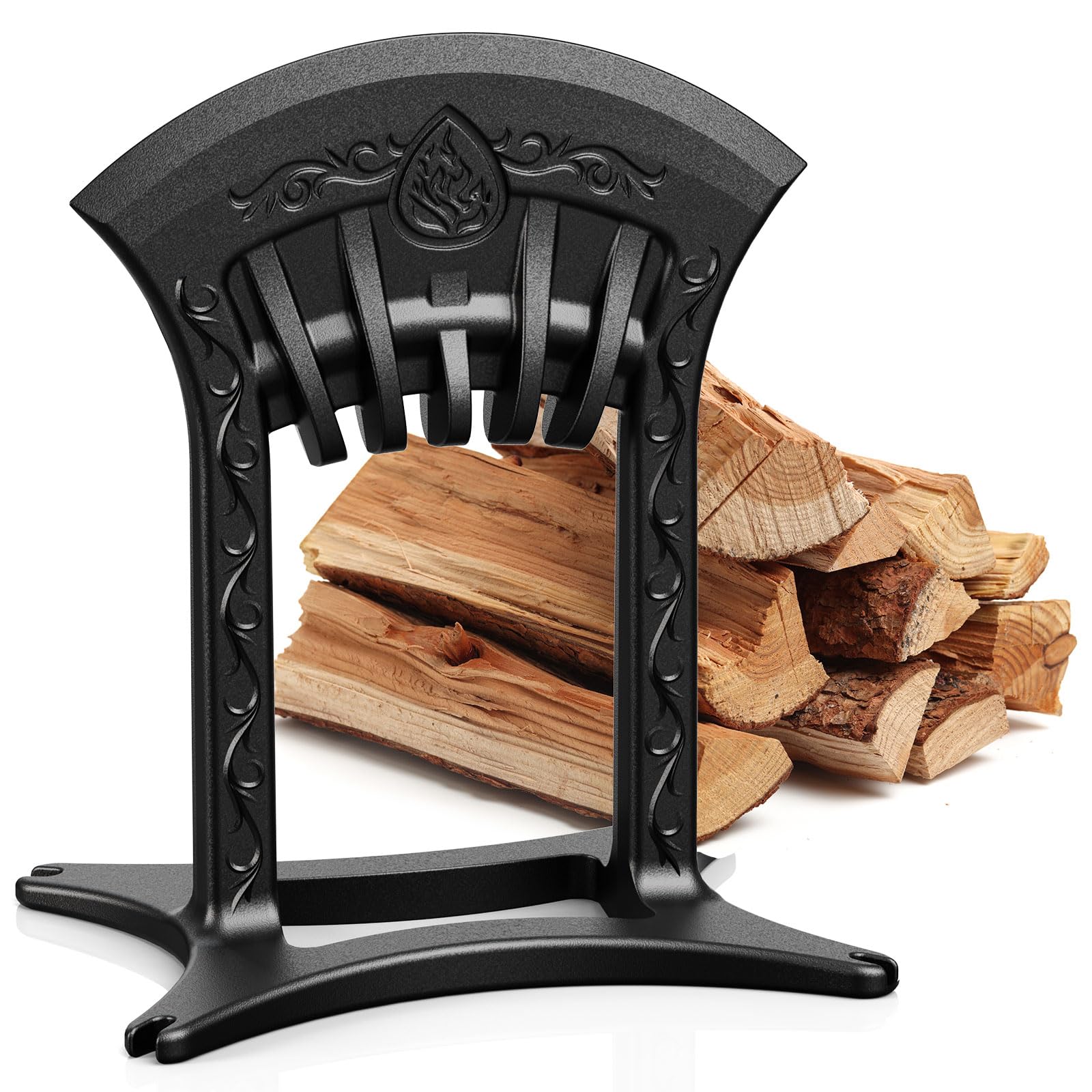
Kindling Cracker Original

Top Pick
Kindling Cracker Original

Safety-conscious families

Our Score 9.6/10
Check Price

Worth Noting

  • Knotty or twisted wood pieces may get stuck and need extra strikes to split fully.
Material
Cast iron
Safety Features
Safety ring
Weight & Stability
10.6 lbs
Read the full review

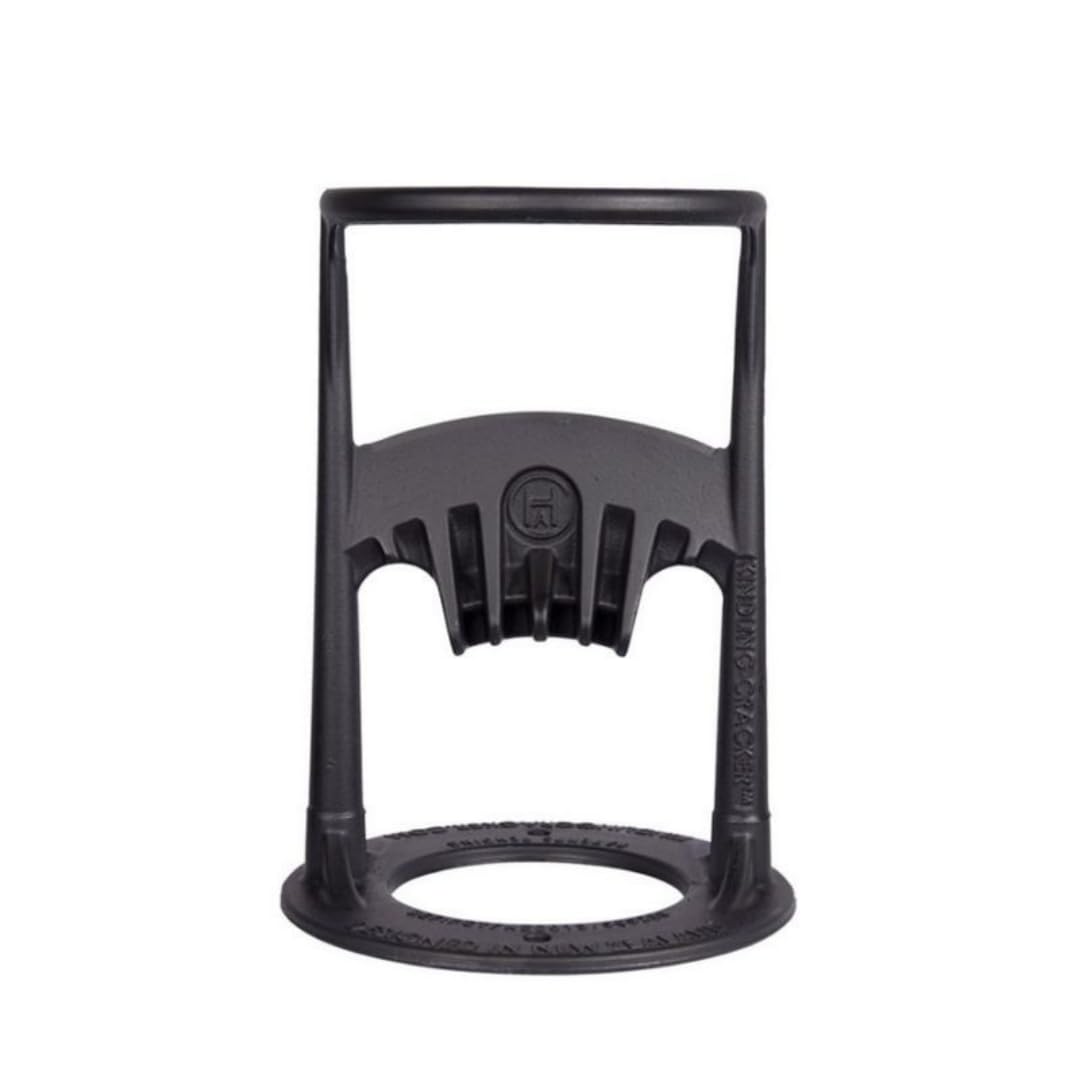
The Kindling Cracker’s cast iron frame and integrated safety ring let you strike a log without bringing your fingers near the blade. The ring guides the hammer blow straight down, while the 12-inch frame gives enough clearance to split damp or slightly twisted wood cleanly. The hammer hits the log directly, not the wedge, so the edge stays sharp through years of use.

Splitting small logs into kindling requires setting a piece inside the ring and giving it a single firm hit with a hammer. The wedge does the rest — no repeated chopping or holding wood in place. Most seasoned softwood and hardwood pieces up to about 6 inches in diameter split in one or two strikes. The ring’s 6.5-inch opening accommodates typical firewood, and the tall frame keeps the hammer clear of the ground. Wood with large knots or twisted grain can catch and require a few extra hits to free, but the ring prevents the log from flying off.

The splitter is cast as a single piece of iron with no welded joints — the most common failure point on cheaper models. The bolt-down base allows permanent mounting to a stump or workbench, preventing movement during use. Owners report the wedge edge stays sharp for years with routine use on softwoods and hardwoods alike. Cast iron does require protection from rust; storing it indoors or applying a light oil coat keeps it in top shape.

This splitter suits anyone who prioritizes hand safety — families with children around, people with limited grip strength, or anyone tired of chasing split kindling. Its single-piece build means it will outlast multiple owners with proper care. The tradeoff: logs larger than the 6.5-inch ring won’t fit, and knotty wood may need more effort. Budget isn’t a concern at this premium price, but the durability and safety justify it.

If a knotty piece gets stuck, strike it from a slightly different angle or hit harder; the ring will hold it in place.

Bottom line: For anyone who values hand safety and a splitter that will last decades, this is the kindling tool to own — just allow an extra whack for gnarly knots.
2

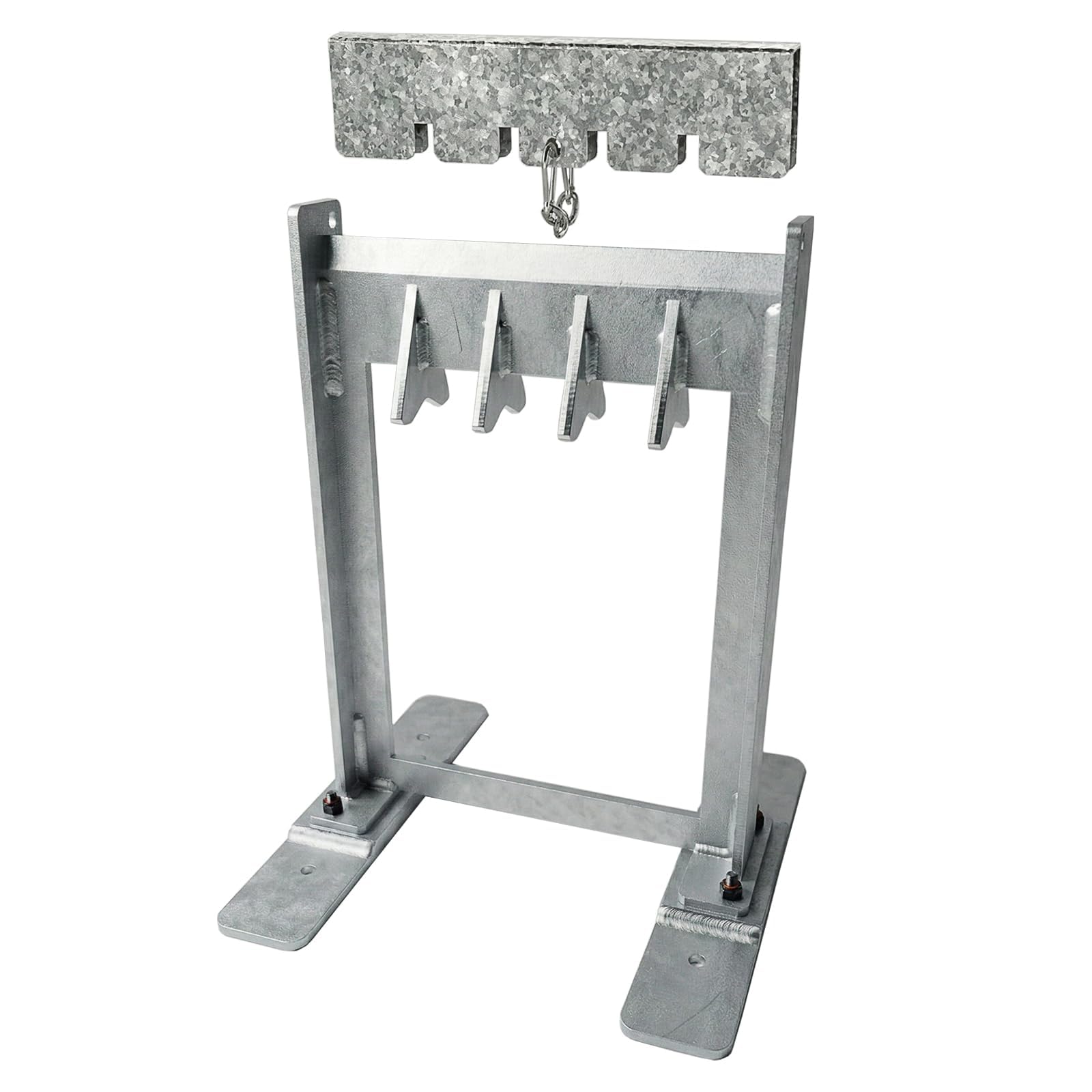
MEEPOCAN 8.5" Steel

MEEPOCAN 8.5" Steel

Campers & RV owners

Our Score 8.8/10
Check Price

Worth Noting

  • 8.5-inch blade opening limits use to logs under 8 inches in diameter
Material
Carbon steel
Safety Features
Lock-on guard
Weight & Stability
10.47 lbs
Read the full review

The MEEPOCAN’s high-ductility carbon steel blade resists chipping and stays sharp through repeated use — a clear advantage over cast iron splitters that can dent or dull on hardwood. The 10.47-pound body is easy to pack for camping trips, and the rust-proof electroplated finish holds up to outdoor storage. While the leading kindling splitter uses a cast iron safety ring, this model focuses on blade longevity and portability.

This splitter suits campers and RV owners who keep their firewood under 8 inches in diameter. The 8.5-inch blade opening means standard cut logs larger than that won’t fit without pre-splitting — a boundary for those working with full-size rounds. For its intended use, the tool simplifies kindling prep and is easy to set up on a stump or workbench.

The electroplated satin finish resists rust, and the precision machining ensures the blade sits securely in the base. Users find the splitter easy to mount with the included screws, requiring only a flat surface and a hammer to turn logs into kindling quickly.

Pre-split logs larger than 8 inches before using, or limit pickup to pieces that fit the opening.

Bottom line: Campers and RV owners who consistently split small-diameter wood will get years of sharp cutting from this steel splitter. It’s a focused tool for a specific use case, not a general round splitter.

3

Poffattr Cast Iron

Poffattr Cast Iron

Small softwood kindling

Our Score 8.8/10
Check Price

Worth Noting

  • Not intended for splitting dense hardwood logs
  • Long-term durability under frequent use is not yet confirmed, so this model suits lighter duty
Material
Cast iron
Safety Features
Safety cover
Weight & Stability
7.3 lbs
Read the full review

The Poffattr Cast Iron Kindling Splitter combines a heavy-duty cast iron frame with a 6.1-inch blade suited for splitting softwood and small branches into kindling. Early feedback indicates clean splits with minimal effort when using a hammer. However, the splitter is best reserved for softwood — splitting dense hardwood logs can dull the edge and stress the frame. Because this is a newer model with a limited track record, its ability to hold up to years of regular use remains unverified. For occasional kindling from softwood, it presents a reasonable entry-level option at a mid-range price.

Bottom line: Best for occasional softwood splitting where the buyer is willing to accept a newer design without extensive long-term user feedback.

4

ZIMOMOTA Wedge

ZIMOMOTA Wedge

Budget occasional kindling

Our Score 8.6/10
Check Price

Worth Noting

  • Only effective on small, seasoned rounds - not for larger or unsplit logs
  • Open wedge design requires careful hand placement; no built-in safety ring for protection
Material
Cast iron
Safety Features
Safety cover
Weight & Stability
7.17 lbs
Read the full review

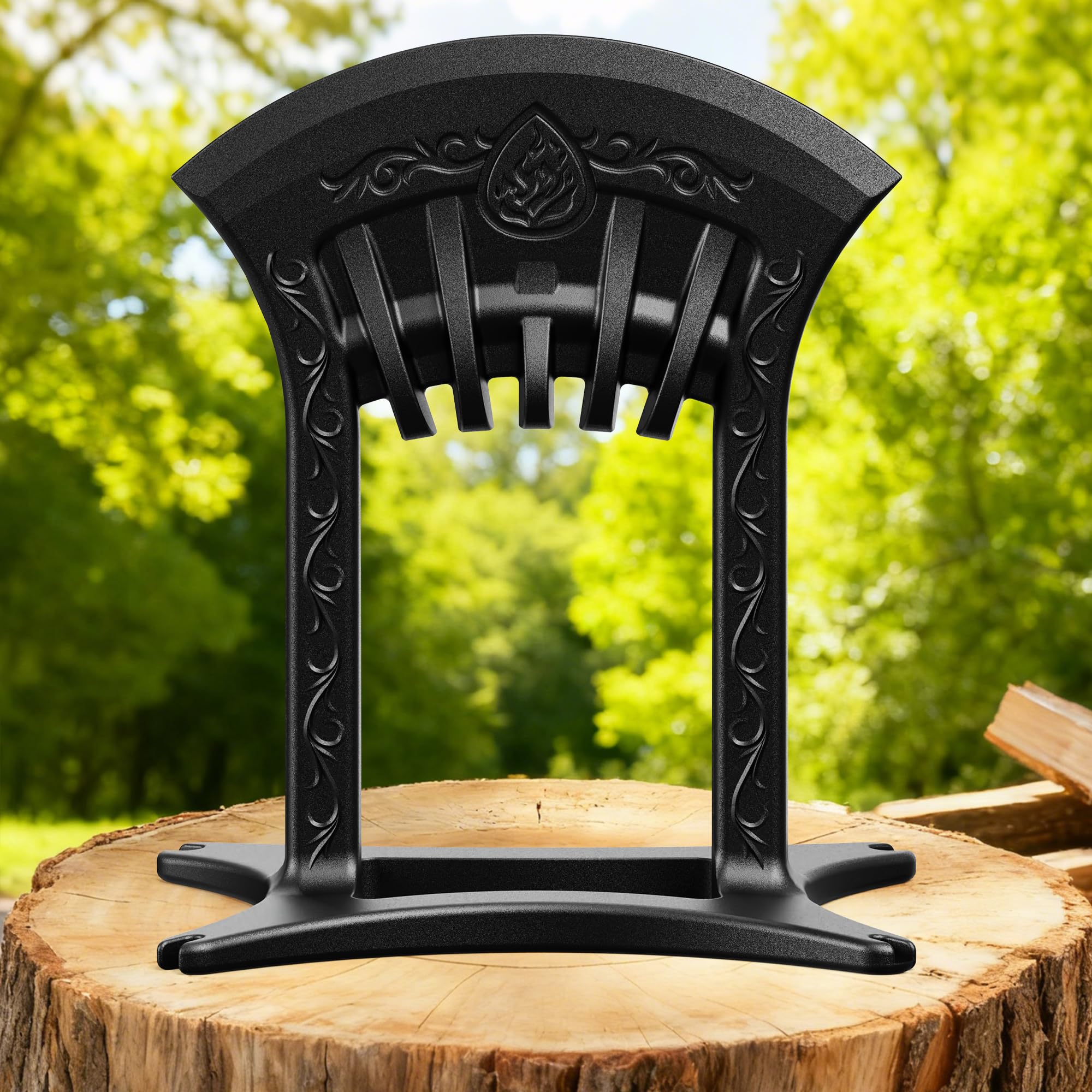
The ZIMOMOTA Wedge combines single-piece cast iron construction with a budget-friendly price, making it the most affordable cast iron option for light kindling tasks. Unlike powder-coated steel splitters that may dent over time, the cast iron body offers a dense, stable striking surface - though it's best reserved for small rounds.

Its X-shaped base keeps the wedge planted during strikes, and the 7.17-pound weight provides enough mass to split seasoned softwoods or small hardwood pieces into kindling with a sharp blow. The included cover protects the blade when stored.

This splitter suits occasional fire-builders who need a simple tool for turning small log chunks into campfire or fireplace kindling. It is not intended for splitting large rounds or unsplit logs - those tasks require a heavier wedge or hydraulic splitter. Users who frequently split knotty hardwood may prefer a steel splitter with a safety ring for added peace of mind.

Place the log firmly on the wedge and strike with a sharp blow - avoid holding the log from the sides to keep fingers clear.

Bottom line: A functional, no-frills cast iron splitter for light kindling work at the lowest price in this category - best for occasional use on small, seasoned rounds.

5

Hi Flame Splitter

Hi Flame Splitter

Casual fire pit users

Our Score 8.4/10
Check Price

Worth Noting

  • Steel blade edge may dent when used with a steel hammer on hardwood over time.
  • Paint can peel from the blade area, leaving exposed metal susceptible to rust.
Material
Powder-coated steel
Safety Features
Weight & Stability
9 lbs
Read the full review

The Hi Flame Splitter is an entry-level steel wedge that turns smaller, well-seasoned logs into kindling with a heavy hammer, making it a cost-effective option for light fire pit or stove use.

The steel blade edge can dent under repeated impacts from a hard hammer on dry hardwood, and the painted finish may chip over time, exposing bare metal to rust — these are tradeoffs that matter when the tool is used frequently for dense wood.

This splitter fits budget buyers who split softwood or seasoned hardwood for occasional fires and understand that the blade will require some care; for anyone splitting knotty, green, or large logs daily, the top pick's cast iron ring and harder steel are a better match.

To reduce blade edge wear on hardwood, use a dead-blow mallet or a hammer with a softer face rather than a steel sledge.

Bottom line: For casual fire users on a budget who split softwood or seasoned wood a few times a week, the Hi Flame Splitter delivers functional kindling without spending for a premium safety ring.

6

SPEED FORCE 6"

SPEED FORCE 6"

Occasional softwood kindling

Our Score 8.4/10
Check Price

Worth Noting

  • Included mounting screws may strip or not hold the splitter firmly on a stump.
  • Blade edge can chip or the cast iron body can crack after a few logs of normal use.
Material
Nodular cast iron
Safety Features
Safety cover
Weight & Stability
6.3 lbs
Read the full review

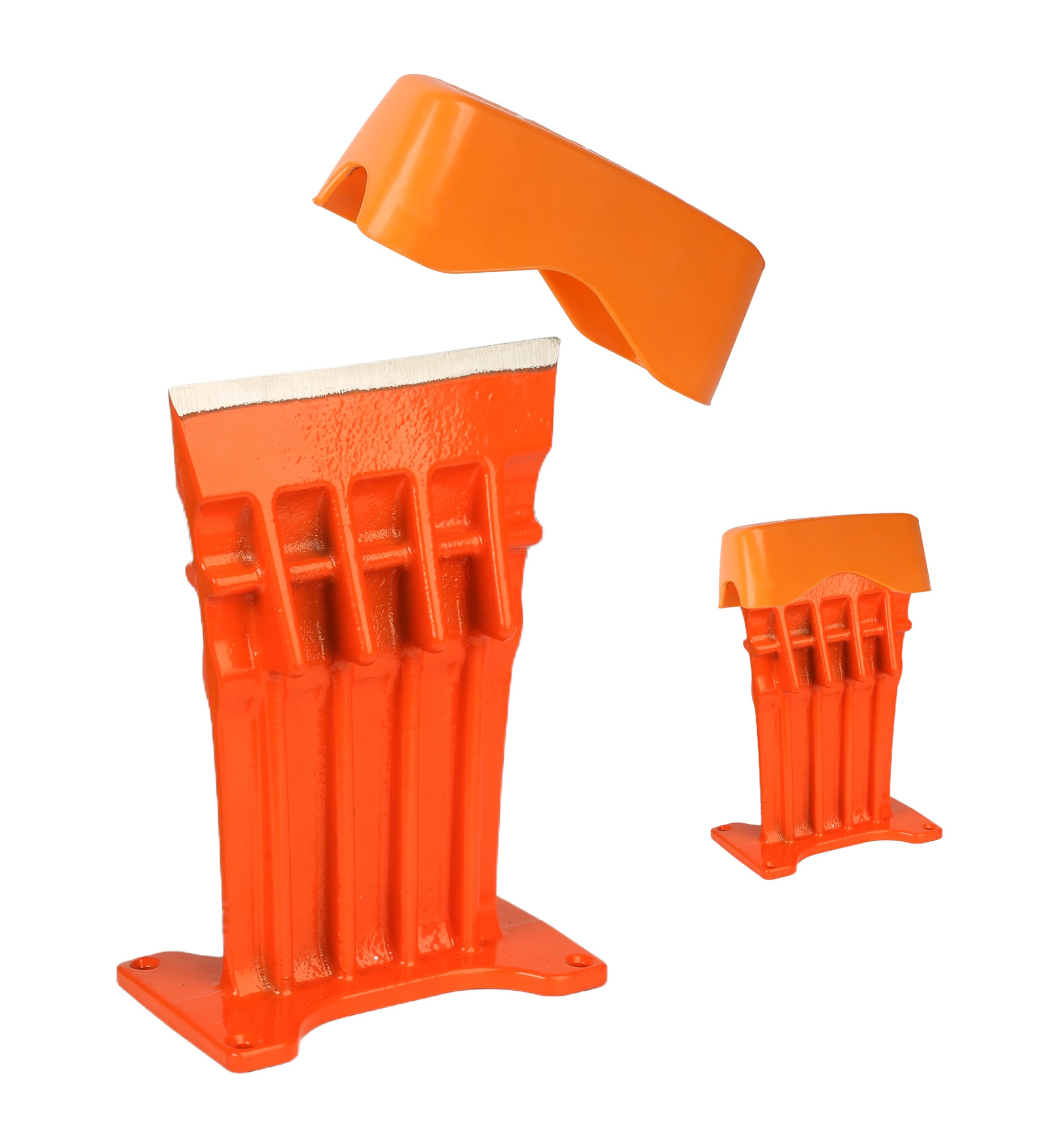
This cast iron splitter handles softwood and well-seasoned light wood well, turning them into kindling with a few strikes from a 3 lb sledgehammer. The cutting edge can chip or the casting can crack after a few logs, and the included mounting screws may not hold the splitter securely on a stump. Its smaller height also limits splitting range for larger logs. This works best for occasional fires using softwood, not for hardwood or daily splitting. Compared to the cost-effective steel splitter in this guide, this cast iron option has more durability concerns that make it a short-term solution for budget-conscious buyers.

Bottom line: Useful for very light duty in softwoods if you are okay with replacing it after a season or two of occasional use.

7

BAYQISI with Hammer

BAYQISI with Hammer

Budget softwood use

Our Score 8.0/10
Check Price

Worth Noting

  • Blade edge can lose sharpness after a few uses on hardwood.
  • Some units may not split wood due to dull blade or insufficient splitting force.
Material
Cast iron
Safety Features
Weight & Stability
7.5 lbs
Read the full review

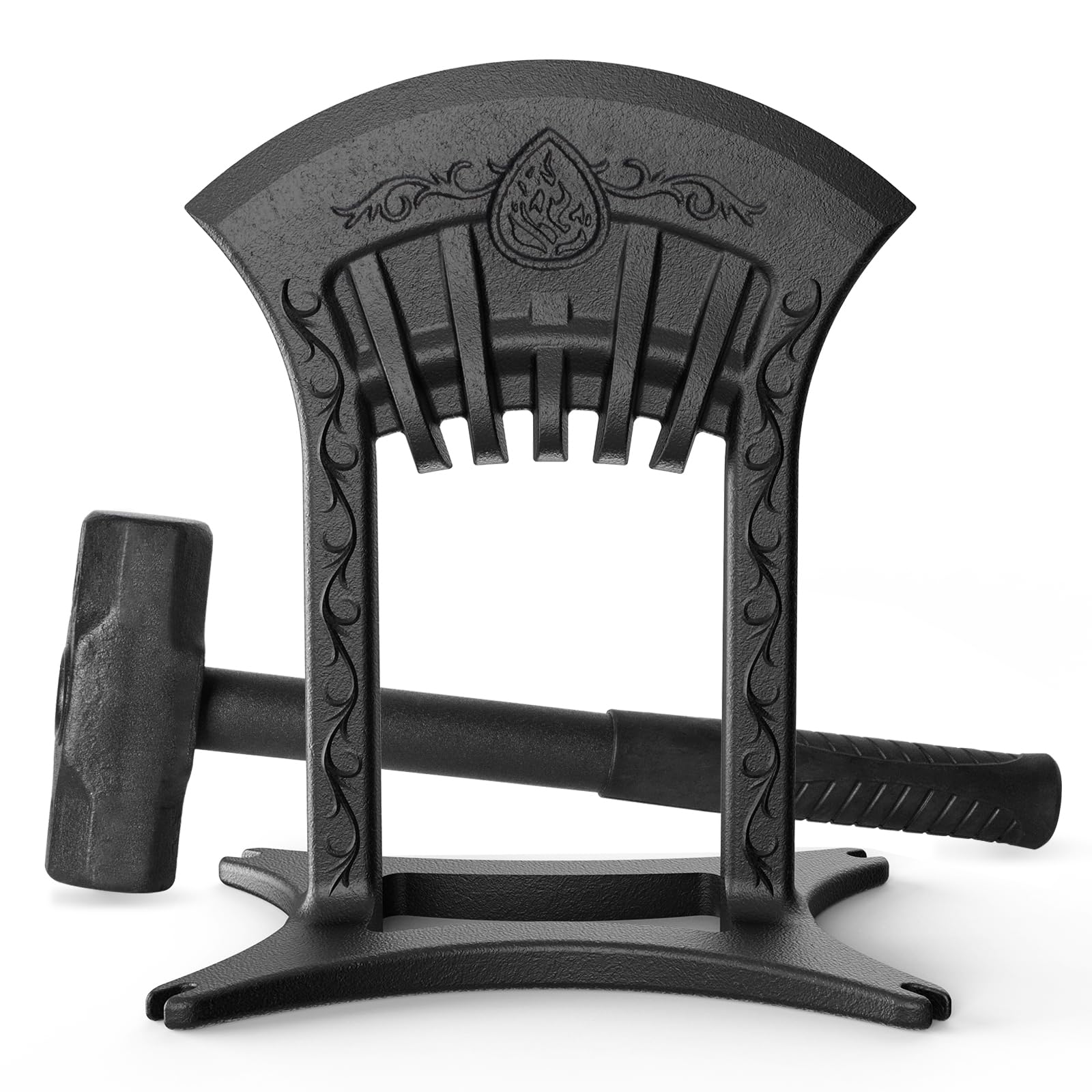
The BAYQISI kindling splitter includes a 3 lb sledge hammer and mounting screws for an all-in-one start, saving separate purchases. When properly mounted, it works well for small logs and softwood kindling. The one-piece cast iron construction offers decent build quality for the price. However, quality control inconsistency means some units arrive with a dull blade or are unable to split wood at all. The blade edge can lose sharpness after a few uses on hardwood, requiring periodic sharpening. This makes it a gamble over similarly priced options that have more consistent performance.

Bottom line: A budget-friendly option for occasional softwood kindling if you get a sharp unit and are willing to sharpen the blade as needed.

How to Choose

Cast Iron vs Steel Construction

Cast iron is dense and absorbs hammer strikes well, but it is brittle and can chip on knotty hardwood or if struck at an angle. Steel is more ductile and resists chipping, but softer steel can dent under heavy hammer use over time.

For occasional use on softwoods, cast iron is fine. For frequent hardwood splitting, a hardened steel blade like the one on the MEEPOCAN holds its edge longer.

Weight and Stability

Heavier splitters (10+ lbs) stay planted on the stump and transfer more energy into the split rather than bouncing. Light models under 8 lbs tend to skid or tip, requiring more strikes and increasing fatigue.

A heavy splitter reduces effort and is safer because the log stays in place. For permanent installation, weight is less critical than for portable units.

Blade Opening Size

The blade opening determines the maximum log diameter the splitter can handle. Most budget models accept logs up to 6 inches, while larger units handle up to 8.5 inches. Logs that are too large must be pre-split with a maul.

Measure your typical firewood round before buying. Splitters with openings under 6 inches are only useful for kindling-sized pieces.

Mounting Options

Almost all manual splitters perform best when bolted to a heavy stump or a thick plank. Freestanding use on the ground causes the tool to bounce and the log to shift, making splitting harder and less safe.

Look for models with pre-drilled bolt holes and include screws. If screws are not included, buy appropriate lag bolts. Portable splitters may use a lock-on clamp but still need a stable base.

Safety Features

The most important safety feature is a ring guard that keeps hands away from the blade while the log is struck. A blade cover protects the edge when the tool is not in use and prevents accidental cuts.

Models without a ring guard require extra caution to keep fingers clear. The Kindling Cracker’s enclosed design is the gold standard for safe operation.

Frequently Asked Questions