Tree & Forestry Care

10 Best Manual Pole Saw of 2026: Saws That Stay Rigid at Full Reach

Find a manual pole saw that doesn't wobble or break on thick branches – from budget to pro, we highlight which picks actually cut cleanly at full extension.

A pole saw that wobbles at full extension is worse than no pole saw at all. Many budget models promise 20-plus feet of reach but flex so much that every cut turns into a wrestling match, and locking mechanisms fail under load. The frustration is real, but the solution isn't just spending more.

The real difference comes down to pole construction and blade quality. Fiberglass poles with thick walls and metal locking collars keep the saw stable where aluminum tubes and plastic clamps give way. A sharp, properly hardened blade cuts through branches without forcing you to push harder, which reduces strain on the pole itself.

This guide cuts through the marketing by focusing on structural integrity. The picks below are organized around what matters most: rigidity at full reach, reliable locking, and a blade that stays sharp through a season of pruning.

1

Jameson LS 18ft Pole Saw

Top Pick
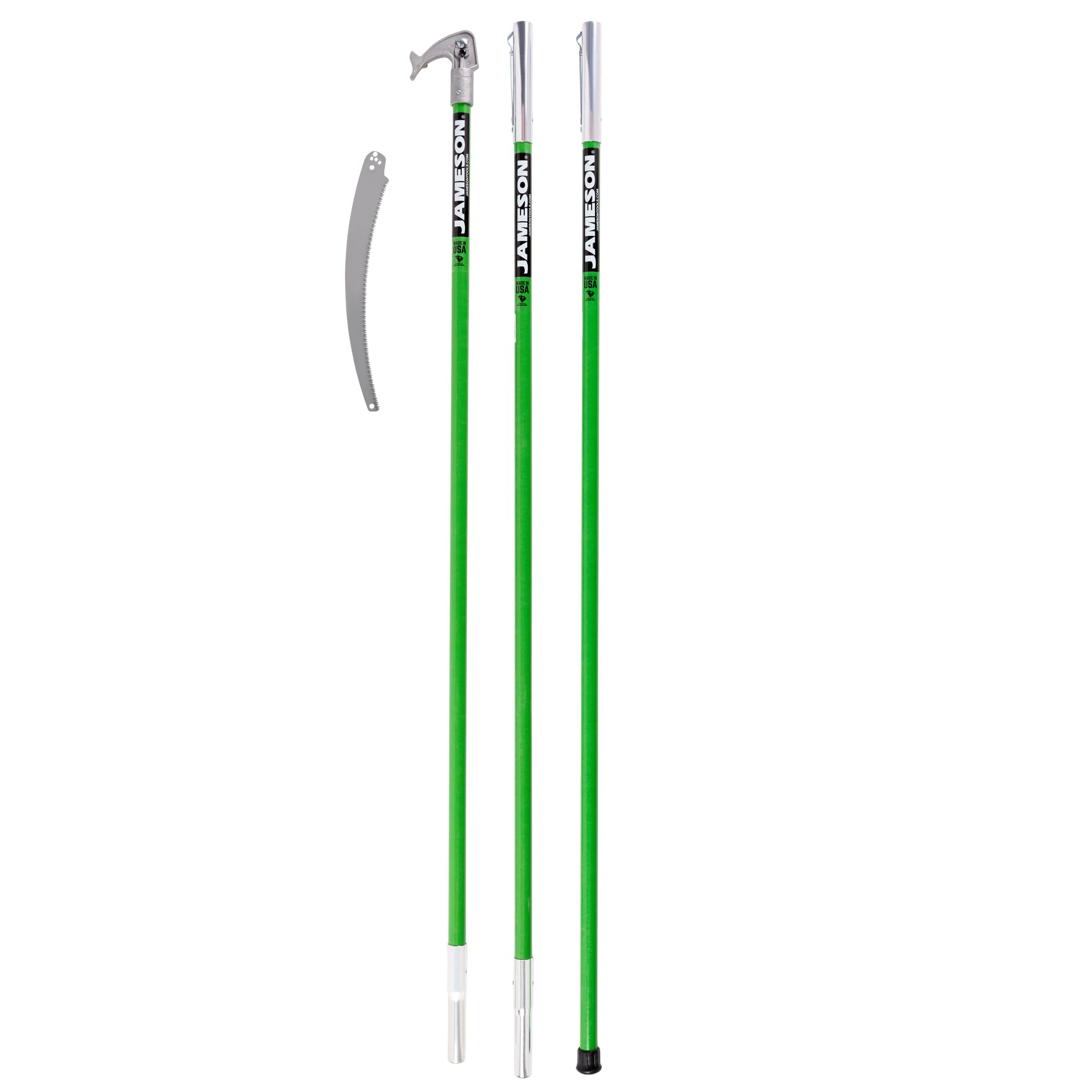
Jameson LS 18ft Pole Saw

Tall trees, pros

Our Score 9.4/10
Check Price

Worth Noting

  • At 7.4 pounds with all poles attached, the weight may fatigue users during extended overhead work
Blade
16 in Barracuda
Max Reach
18 ft
Pole Material
Fiberglass
Read the full review

The Jameson LS-Series pole saw cuts through 3-inch branches with a clean kerf, driven by a 16-inch Barracuda blade that holds its edge across many cuts. Three fiberglass sections lock via external leaf-spring buttons that resist slipping, keeping the pole stable even at full 18-foot extension – no wobble or sag when reaching high limbs.

For landscapers and homeowners with tall trees who need a tool that won't flex or bind during overhead work, this is a strong fit. The 7.4-pound weight with all poles attached can contribute to arm fatigue during extended trimming sessions – users who prioritize ultra-lightweight gear may prefer a shorter telescoping model instead.

Using two hands on the pole – one near the blade, one near the grip – helps balance the weight during overhead cuts.

Bottom line: If you need a manual pole saw that holds its line at full reach and cuts cleanly without binding, this is the one to own – the premium price reflects the build quality that budget alternatives can't match.

2

Jameson FG 12ft Pole Saw+Pruner

Jameson FG 12ft Pole Saw+Pruner

Professionals, heavy use

Our Score 9.4/10
Check Price

Worth Noting

Blade
13 in tri-cut
Max Reach
12 ft
Pole Material
Fiberglass
Read the full review

The Jameson FG series swaps between a 13-inch saw blade and a bypass pruner with a quick-release head change, covering both cutting tasks without needing separate tools. The hollow core fiberglass pole stays steady at full 12-foot extension, and the saw handles thick branches cleanly without binding.

This setup targets arborists and homeowners with frequent heavy pruning who want a single tool for sawing and clipping thick branches. The tradeoff: the saw weighs about 10 pounds, which can cause arm fatigue during overhead use, and the premium price reflects professional-grade materials and a lifetime warranty.

Bottom line: A professional-grade manual pole saw and pruner combo that earns its premium price through a lifetime warranty and durable construction for heavy users.

3

Notch 18ft Pole Saw (No Reviews)

Notch 18ft Pole Saw (No Reviews)

Professional design

Our Score 9.4/10
Check Price

Worth Noting

  • No consumer feedback is available to confirm durability or cutting performance in real use.
Blade
15 in chrome steel
Max Reach
18 ft
Pole Material
Fiberglass
Read the full review

The Notch 18-foot pole saw offers an extended reach and a chrome-plated, impulse-hardened blade capable of cutting branches up to 8 inches thick — specifications that align with heavier professional models. Without verified customer feedback, however, its real-world cutting performance and durability remain unconfirmed, a risk for buyers who need assured performance from their gear.

Bottom line: Consider this pole saw if the listed specs alone meet your needs and you are comfortable buying without community validation of its real-world behavior.

4

BlumeTrec 14.5ft Pole Saw

BlumeTrec 14.5ft Pole Saw

Budget, medium trees

Our Score 9.0/10
Check Price

Worth Noting

  • Maximum reach of 14.5 feet may not suffice for very tall trees
Blade
Mn steel
Max Reach
14.5 ft
Pole Material
Stainless steel
Read the full review

The BlumeTrec 14.5ft pole saw uses a stainless steel pole that stays rigid at full extension and a manganese steel blade that cuts through branches with minimal effort. At a budget-friendly price, it undercuts many competitors while maintaining build quality that holds up in light-to-medium yard work. This saw suits homeowners tackling branches up to 14.5 feet high—perfect for medium-height trees, but not for the 20-foot limbs the top-pick Jameson handles.

Bottom line: A budget-friendly pole saw that delivers solid performance for medium-height pruning, but the limited reach means taller trees still need a longer tool.

5

LAANPOLE 26ft Telescoping Pole Saw

LAANPOLE 26ft Telescoping Pole Saw

Variable reach users

Our Score 9.0/10
Check Price

Worth Noting

  • Some wobble may be noticeable at maximum 20-foot extension
Blade
Carbon steel
Max Reach
20 ft
Pole Material
Aluminum
Read the full review

The LAANPOLE's telescoping pole extends from 5 to 20 feet, and the safety locking joint keeps the segments rigid during cutting. Some wobble can occur at maximum extension, but it's a reasonable trade-off for the adjustable reach. This saw is best for homeowners with medium branches on trees up to 20 feet; it's not intended for thick branches over 3 inches in diameter.

To reduce wobble at full extension, brace the pole against a stable support when making cuts.

Bottom line: For homeowners who need a telescoping saw for medium branches at heights up to 20 feet, the LAANPOLE offers a well-balanced combination of reach and stability at a mid-range price.

6

Fiskars 2-in-1 12ft Pole Saw

Fiskars 2-in-1 12ft Pole Saw

Lightweight, small trees

Our Score 9.0/10
Check Price

Worth Noting

  • Plastic head assembly can crack under stress from larger branches
  • Extension lock may loosen over time, requiring occasional re-tightening
Blade
15 in double-grind
Max Reach
12 ft
Pole Material
Read the full review

At under 5 pounds and with a rope-free chain drive, this Fiskars pruner/saw combo cuts fatigue as well as it cuts small branches. The 15-inch blade handles limbs up to 2 inches cleanly, and the rotating head helps angle cuts in tight spots. That lightweight build comes with plastic components — the head assembly can crack if pushed into thicker wood, and the extension lock may loosen during extended sessions. This saw suits homeowners who need occasional reach for light trimming on small trees, not daily work or branches over 2 inches.

Check the locking collars before each use to ensure they are fully tightened during longer sessions.

Bottom line: A capable lightweight option for homeowners with small trees and light pruning needs — stay within its 2-inch limit and it performs reliably.

7

Spear & Jackson 8ft Pole Saw

Spear & Jackson 8ft Pole Saw

Low branches, fruit trees

Our Score 9.0/10
Check Price

Worth Noting

  • Wing nut that secures the saw blade can loosen during use, requiring re-tightening
Blade
13 in SK5 carbon steel
Max Reach
7.7 ft
Pole Material
Fiberglass
Read the full review

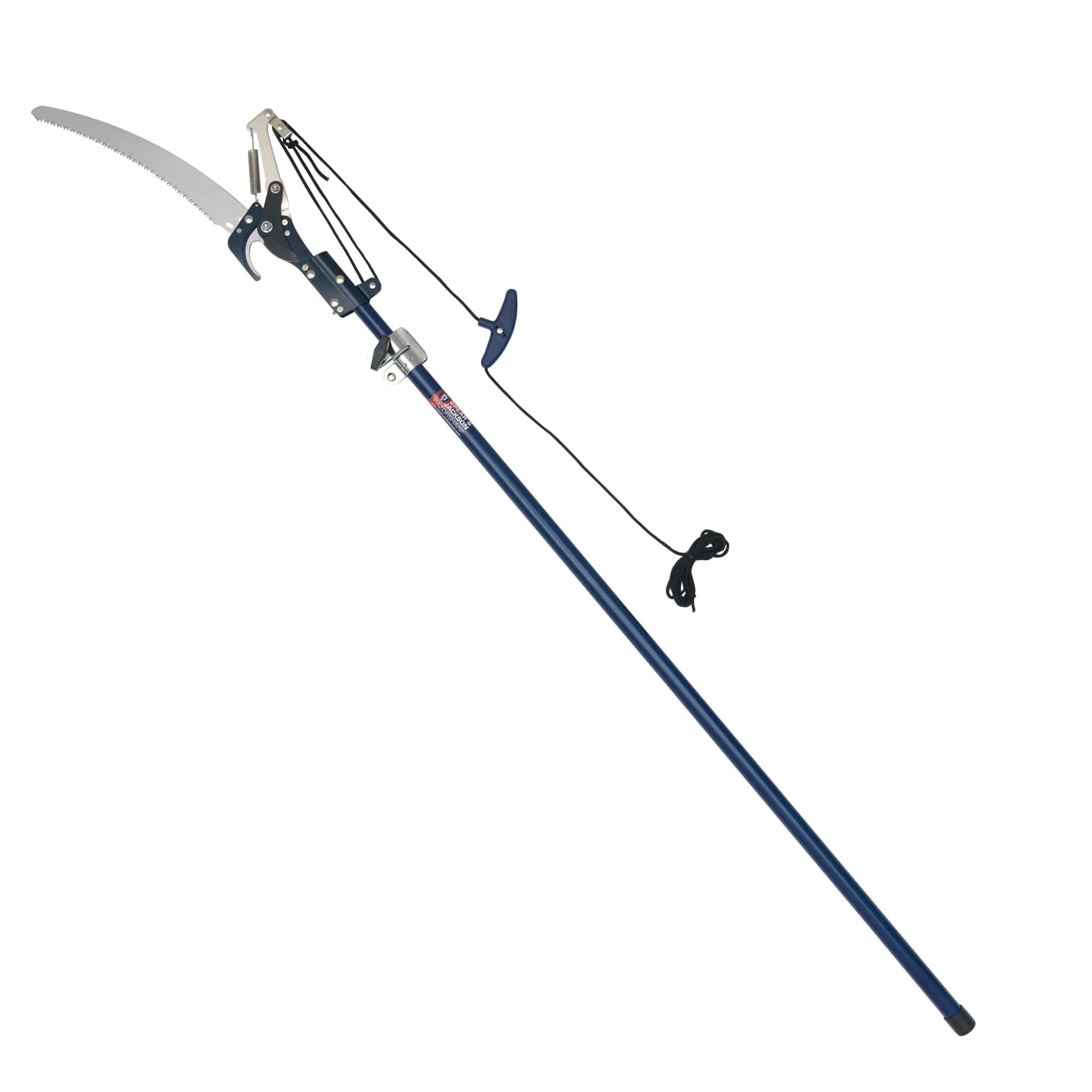
The Spear & Jackson 4930FZ cuts cleanly through low branches and fruit tree limbs thanks to its SK5 carbon steel saw blade, and assembly is quick with minimal fuss. The 7.7-foot pole handles shrubs and small trees, but it won't reach high branches taller than about 8 feet — a hard limit for typical tree trimming. Buyers with small yards and light pruning needs will find good value here, though the wing nut securing the saw blade can loosen during use and may need occasional tightening.

Bottom line: Best for low-level pruning on small properties or fruit trees where the reach limitation isn't a dealbreaker.

8

SISUPASSIE 20ft Telescoping Pole Saw

SISUPASSIE 20ft Telescoping Pole Saw

Tall trees, new model

Our Score 9.0/10
Check Price

Worth Noting

Blade
Carbon steel
Max Reach
20 ft
Pole Material
Aluminum
Read the full review

The telescoping pole extends smoothly from 5 to 20 feet with minimal wobble, and the carbon steel blade cuts branches cleanly. The anti-slip foam grip improves comfort during overhead work. This manual saw suits homeowners with tall trees who need a mid-priced extendable option.

Bottom line: For homeowners with tall trees who want a stable telescoping pole saw at a mid-range price, this model delivers clean cuts without the need for power tools.

9

Walensee 10ft Pole Saw

Walensee 10ft Pole Saw

Light pruning

Our Score 8.8/10
Check Price

Worth Noting

  • Under pressure on thicker branches, the blade can bend or break.
Blade
Manganese steel
Max Reach
10 ft
Pole Material
Stainless steel
Read the full review

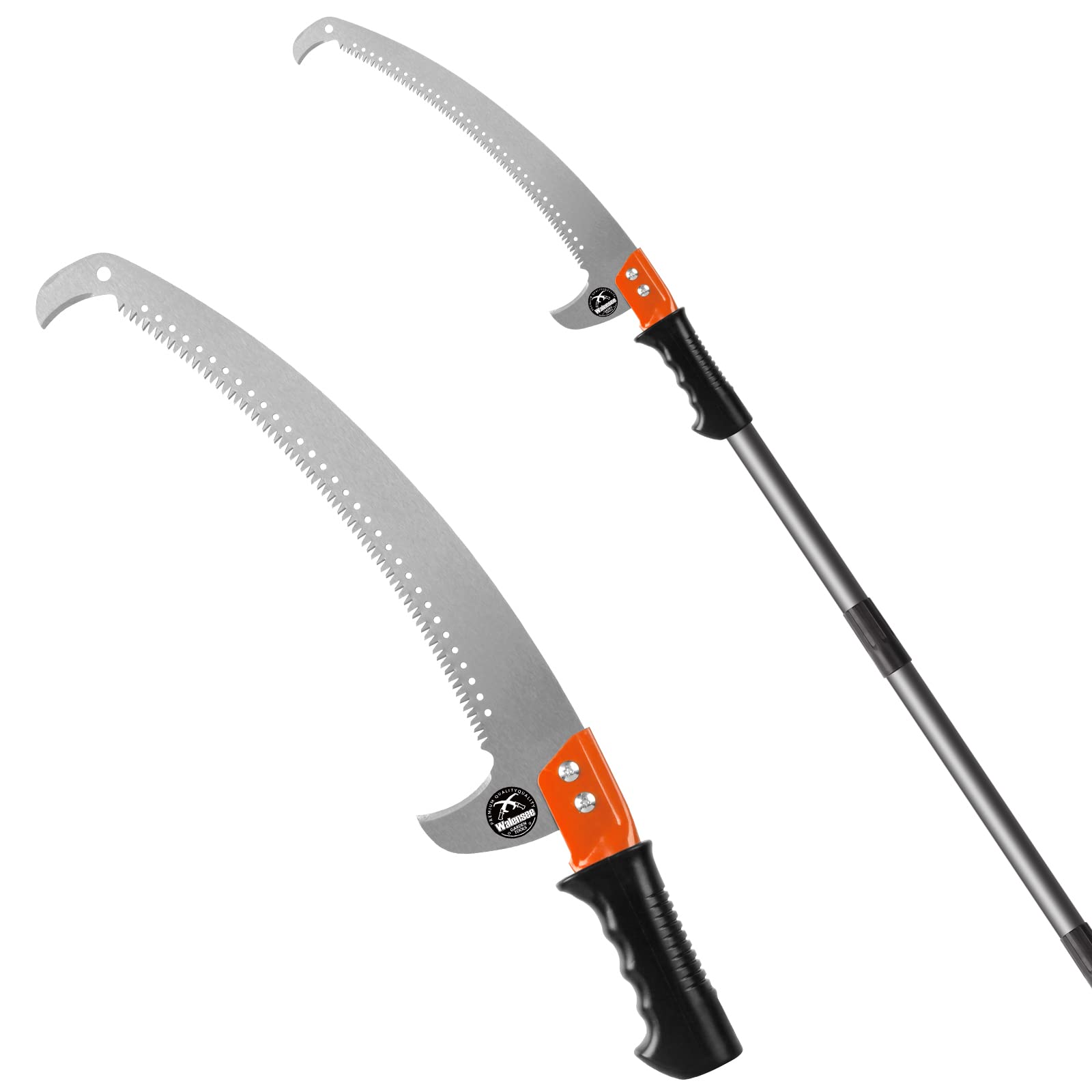
The Walensee 10FT pole saw pairs a quick-cutting manganese steel blade with a budget-friendly price, making it a natural fit for light yard work. Its 10-foot reach handles small branches near the ground, though thicker limbs can cause the blade to bend. This saw suits occasional users who prioritize cost over reach and durability.

Bottom line: Best for light, occasional trimming of small branches where budget is the primary concern.

10

HOSKO 14ft Pole Saw

HOSKO 14ft Pole Saw

Ultra-budget, fronds

Our Score 8.8/10
Check Price

Worth Noting

  • Blade may bend or flex when cutting thicker branches
Blade
22.8 in stainless steel
Max Reach
14 ft
Pole Material
Stainless steel
Read the full review

At its price point, this pole saw delivers the reach needed for light pruning tasks like cutting palm fronds or thin branches. The blade can bend under pressure on thicker wood, and the pole may wobble at full extension — fine for infrequent use but not for tougher jobs.

Bottom line: This saw works for budget-conscious homeowners who only need to trim thin branches or palm fronds occasionally — not for regular pruning of hardwood.

How to Choose

Maximum Reach

Longer reach always introduces more flex. A 27-foot saw may sound ideal for tall trees, but at full extension even a slight wobble multiplies into a 6-inch deviation at the blade. For most homeowners, 14 to 18 feet offers a practical balance.

If you regularly trim branches above 20 feet, look for a saw with thick fiberglass poles and a 3-section design (each section shorter to reduce leverage). Telescoping models are convenient but often sacrifice stiffness for adjustability.

Blade Length and Material

Blade length should match branch thickness: a 15-inch blade handles 3-inch limbs comfortably, while shorter blades bind on thicker wood. Material matters more – carbon steel (like 65Mn) holds an edge longer than standard stainless, but chrome-plated blades resist rust in humid climates.

A sharp blade reduces the force you need to apply, which directly lowers the stress on the pole and locking mechanism. Dull blades push you to saw aggressively, increasing the chance of bending a thin blade or overloading the pole.

Pole Construction

Fiberglass poles dampen vibration better than aluminum and are less likely to dent, but they are heavier. Aluminum poles are lighter and often telescoping, but can flex more under load. Wall thickness is the hidden spec – thin-walled poles (common under $50) bend noticeably at 12 feet or more.

Look for poles with metal ferrules (reinforced joints) rather than all-plastic connections. The best designs use a double-lock system or external leaf-spring buttons that engage metal-to-metal, not plastic-to-plastic.

Locking Mechanism Reliability

The locking mechanism is the most common failure point. Twist-lock collars with plastic threads strip over time, and push-button locks can retract under side load. The most reliable designs use leaf-spring buttons or metal screw collars that require a full rotation to secure.

If you see a thin plastic wing nut or a simple friction clamp, expect it to loosen mid-cut. A safety locking joint (like on the LAANPOLE) or a double locking system (Fiskars) adds redundancy but still needs metal components to last.

Weight and Balance

A heavier saw is more stable because mass dampens vibration, but it fatigues your arms during overhead work. The sweet spot for homeowners is around 5 to 7 pounds at full extension. Professional models can exceed 10 pounds, which is manageable for short bursts but tiring for all-day pruning.

Balance matters too – a saw that is pole-heavy (most weight near the blade) forces you to fight leverage. Look for a design where the heaviest components are near your grip, or consider models with a counterweight or ergonomic handle placement.

Frequently Asked Questions