Lawn Care

7 Best Mulch Paint of 2026: Revive Faded Beds Without Replacing Mulch

Find the right mulch paint to restore color to faded garden beds without the mess or cost of new mulch.

Faded mulch is a garden eyesore that makes even well-kept beds look neglected. Replacing it every season is expensive and labor-intensive. Mulch paint offers a smarter alternative, but the wrong choice can leave you scrubbing stains off concrete or reapplying after the first rain.

The real challenge is sorting through claims of long-lasting color and easy application. In practice, every product in this category shares two trade-offs: it can stain hardscapes and will fade over time. What separates a good buy from a waste of money is how well the formula handles those realities and how much area it covers per dollar.

This guide focuses on the products that balance coverage, durability, and mess management best for the typical homeowner. You will find clear picks for large beds, tight budgets, and quick touch-ups, with honest notes on what each requires from you.

1

MulchWorx Black Quart Concentrate

Top Pick
MulchWorx Black Quart Concentrate

Large mulched areas

Our Score 8.8/10
Check Price

Worth Noting

  • Spray can splatter onto nearby concrete or walkways
  • Dye will stain skin and fabric on contact; gloves and old clothes are recommended.
Coverage Area
2,800 sq ft
Read the full review

MulchWorx turns sun-bleached black mulch back to a deep, uniform color in a single application. The liquid concentrate mixes with water and sprays on through any standard pump sprayer, covering up to 2,800 square feet per quart. The color bonds to wood fibers without creating a plasticky film, so the bed still looks natural.

This dye is best for homeowners managing large mulched beds who want to avoid the cost and physical strain of hauling new bags of mulch. The tradeoff is that the spray can splatter onto nearby concrete, pavers, or siding, and it will stain skin and clothing on contact. These are category-wide realities, not design flaws — preparation (masking or wetting hardscapes, wearing gloves) keeps the job clean.

Lay down cardboard or plastic sheeting adjacent to beds to catch overspray and protect hardscapes.

Bottom line: For homeowners with large mulched beds, this dye delivers consistent color at a low effort-to-cost ratio.

2

Peach Country Black Quart Concentrate

Peach Country Black Quart Concentrate

Budget homeowners

Our Score 8.8/10
Check Price

Worth Noting

Coverage Area
2,800 sq ft
Read the full review

At a budget-friendly price, Peach Country delivers noticeable color restoration with coverage matching pricier options. The quart size covers up to 2,800 sq ft, suitable for medium to large beds. The water-based formula mixes easily and dries to a natural-looking black. Application with a pump sprayer is simple, and the color develops within a day.

First-time mulch dye users will appreciate the low cost and straightforward application. However, color may fade faster than premium picks, especially in sunny or rainy climates — expect to reapply more frequently than with alternatives like MulchWorx.

Mix the concentrate with water as directed and strain if necessary to avoid nozzle blockages.

Bottom line: A budget-friendly entry point for homeowners testing mulch dye for the first time.

3

EnviroColor Black Forest 32oz

EnviroColor Black Forest 32oz

Professional landscapers

Our Score 8.8/10
Check Price

Worth Noting

  • Permanent staining on concrete and other surfaces if not protected
Coverage Area
2,400 sq ft
Read the full review

EnviroColor delivers a deep, natural-looking black that revives faded mulch with a durable finish holding up through rain and sun. It is suited for professional landscapers and homeowners covering large areas who want a cost-effective alternative to replacing mulch. The concentrated formula may clog inexpensive sprayer nozzles if not mixed thoroughly, so using a quality sprayer is important.

Mix thoroughly with water and apply in calm weather to minimize overspray – pre-wet surfaces you want to protect.

Bottom line: An effective and economical choice for large-scale mulch refresh projects, provided you take care to protect hardscapes and use a suitable sprayer.

4

Petra Black Mulch Dye 32oz

Petra Black Mulch Dye 32oz

Large landscapes

Our Score 8.8/10
Check Price

Worth Noting

  • Color may fade sooner than expected, especially in sunny or rainy climates.
Coverage Area
3,600 sq ft
Read the full review

Petra's Black Mulch Dye delivers the highest coverage among concentrates, treating up to 3,600 square feet per bottle. This makes it a strong choice for large properties where minimizing refills is key. The deep black color effectively revives wood, rubber, and pine straw mulch. However, color retention varies: in sunny or rainy climates the dye may fade within weeks, reducing the value of the premium price. The concentrate is best used with a PetraTools sprayer for consistent application.

This product is for you if you have expansive beds and already own a Petra sprayer — the high concentration saves time and trips to refill. The tradeoff is that longevity is climate-dependent; buyers in consistently wet or high-sun areas may need to reapply more frequently than with some alternatives.

For best color retention, apply on a dry day and avoid over-watering the treated area for 24 hours.

Bottom line: This concentrate suits large-scale refreshes where coverage per bottle is the priority, but fading in wet or sunny conditions means reapplication may be needed sooner than with some alternatives.

5

Oycevila Ultra Black 34oz

Oycevila Ultra Black 34oz

Small garden beds

Our Score 8.8/10
Check Price

Worth Noting

  • Color may fade noticeably after a few months in sunny conditions, requiring reapplication
Coverage Area
3,600 sq ft
Read the full review

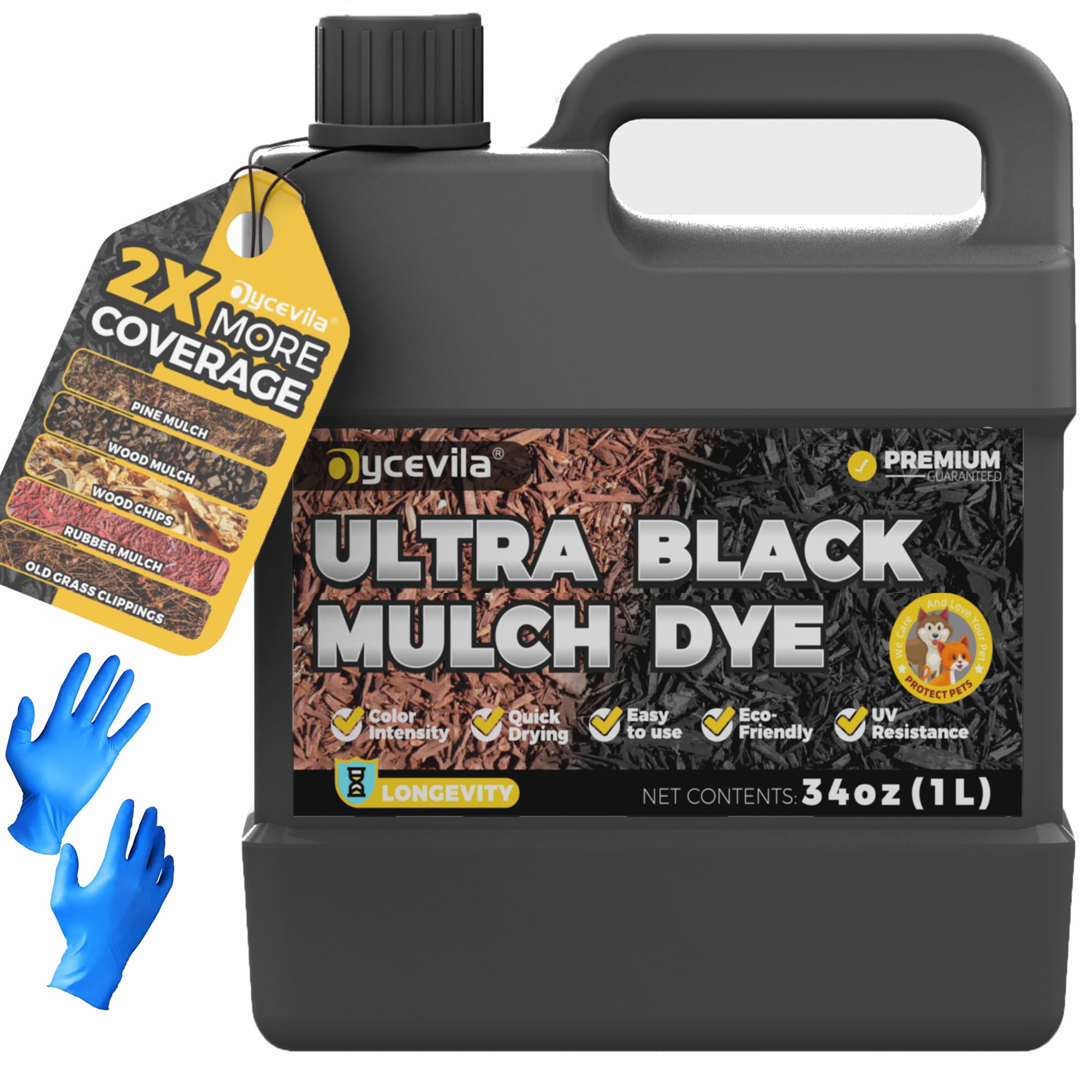
The Oycevila Ultra Black comes with gloves and covers 3,600 sq ft per bottle, making it easy to apply on small garden beds. The finish gives old mulch a like-new appearance. However, color can fade within a few months, especially in direct sun, and durability is inconsistent across different mulch types. This makes it a decent choice for quick touch-ups but not for large-scale landscaping that needs season-long color.

Bottom line: A solid option for small flower beds or quick refreshes where periodic reapplication is part of the plan.

6

COLORBACK Black Quart

COLORBACK Black Quart

Quick refreshes

Our Score 8.6/10
Check Price

Worth Noting

  • Color may fade after the first heavy rain, requiring reapplication to maintain appearance
Coverage Area
3,200 sq ft
Read the full review

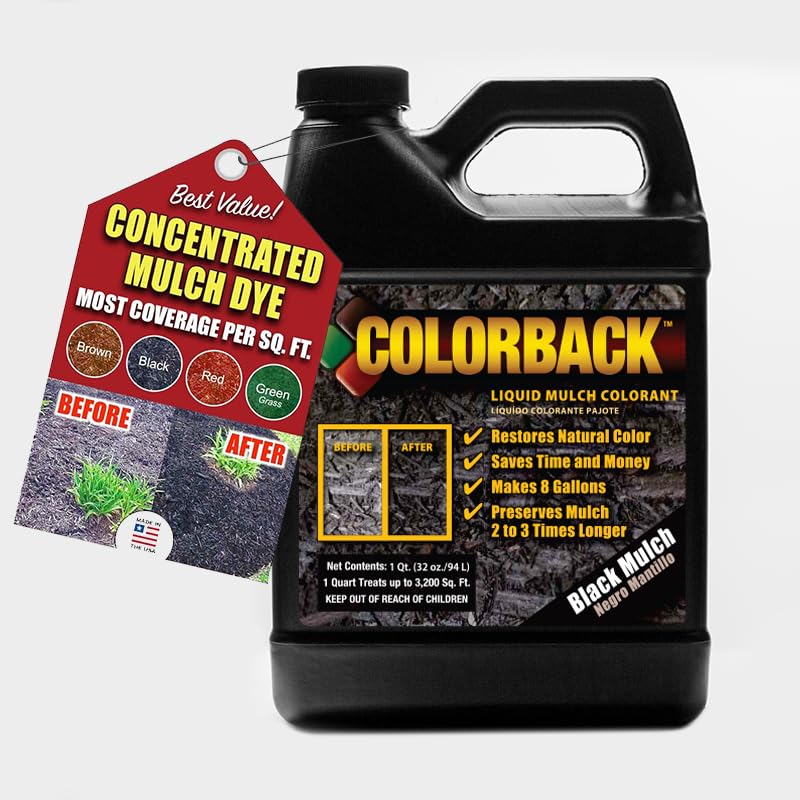
COLORBACK Black Quart dries quickly and costs $19.99, ideal for a last-minute spruce-up before an event or open house. Mixed with water and sprayed, it restores faded wood, bark, or rubber mulch to a deep black. Compared to more durable options, this one prioritizes speed and low upfront cost over longevity — the color may not hold through heavy rain, so budget for reapplication if you want it to last more than a month. Best for budget-conscious buyers tackling small to medium beds who don’t mind occasional touch-ups.

Plan to reapply after heavy rain if you want the color to last beyond a few weeks.

Bottom line: A fast, cheap fix for temporary color improvement — perfect for event prep, but not a set-and-forget solution for season-long curb appeal.

7

Not Rocket Sciences Black 32oz

Not Rocket Sciences Black 32oz

Very small areas

Our Score 8.4/10
Check Price

Worth Noting

  • Coverage may fall short of the claimed 2,500 sq ft, requiring extra coats for even saturation
Coverage Area
2,500 sq ft
Read the full review

This pigment-based concentrate effectively restores black color to faded wood, rubber, or pine straw mulch. However, the dye can stain concrete, siding, and clothing, and removing it is difficult. Best for very small beds where precision is less critical and accidental spills are manageable.

Bottom line: Best for refreshing a small flower bed or isolated mulch patch where staining can be controlled.

How to Choose

Coverage Area Per Quart

Coverage claims range from 2,400 to 3,600 square feet per quart. These numbers assume a single light coat on dry, porous mulch. In practice, weathered or dense mulch absorbs more liquid, so real coverage may be 20-30% lower.

For large beds (over 500 sq ft), a higher-coverage concentrate like Petra saves you from buying multiple bottles. For small beds, a standard 2,800 sq ft quart is fine, but avoid overspending on premium concentrates if you only need a quart.

Concentrate Ratio (Ounces Per Gallon)

Some products specify a mixing ratio (e.g., 3-6 oz per gallon of water), while others leave it vague. A precise ratio matters because too thick a mix clogs sprayer nozzles, and too thin yields weak color that fades faster.

Products with clear instructions reduce trial and error. If a label says 'mix to desired consistency,' plan on testing a small patch first to dial in the right balance for your sprayer and mulch type.

Ease of Application with Pump Sprayer

All mulch paints are designed for pump sprayers, but not all formulas flow equally. Thick concentrates can clog cheap sprayer tips, forcing you to stop and clean mid-project. Using a sprayer with a metal or adjustable nozzle reduces frustration.

Application is straightforward: mix, shake, spray. The real difficulty is avoiding overspray onto hardscapes. A dedicated low-pressure sprayer lets you control the mist, while high-pressure models increase drift and staining risk.

Color Longevity and Fade Resistance

Longevity depends more on climate and mulch type than on the product. Full sun and heavy rain accelerate fading; shaded beds can hold color for a year. Manufacturers claim 'long-lasting,' but expect to reapply every 6-12 months for best appearance.

The pigment type and binder quality matter. Water-based formulas with added binders (like EnviroColor) resist rain better than simple dyes. If you need color that survives a wet season, invest in a product with proven fade resistance from user feedback.

Staining Potential on Concrete or Hands

Every mulch paint stains concrete, siding, and clothing. This is not a defect but a property of the pigment. The dye is designed to adhere to wood fibers, and it adheres equally well to porous hardscapes.

Prevention is the only solution: wet down adjacent concrete before spraying (water repels the dye), cover delicate surfaces with plastic, and wear gloves and old shoes. If a product claims to be 'stain-free,' treat that claim with skepticism.

Frequently Asked Questions