Ponds & Water Gardens

11 Best Pond Thermometer of 2026: Accurate Reads That Last More Than a Season

Find a pond thermometer that gives reliable readings without breaking or tipping over within weeks. We separate the durable from the disposable.

A floating pond thermometer that sinks on its side, a digital display that fogs up after a month, a tether that rots away in weeks — these are the common frustrations that turn a simple temperature check into a recurring expense. Most pond thermometers under $15 fall apart or lose accuracy faster than you'd expect, leaving koi and plant health to guesswork.

The real difference comes down to build quality and intended use. Analog models are simple and cheap but often sacrifice readability and seal integrity. Digital solar thermometers offer big, bright displays but can fail when moisture gets past the gasket. Wireless remote units give you indoor monitoring but at a higher upfront cost.

This guide cuts through the claims to show you which designs actually stay afloat, stay accurate, and stay functional through a full season — so you can match the right thermometer to your pond size, climate, and how often you really check the temp.

1

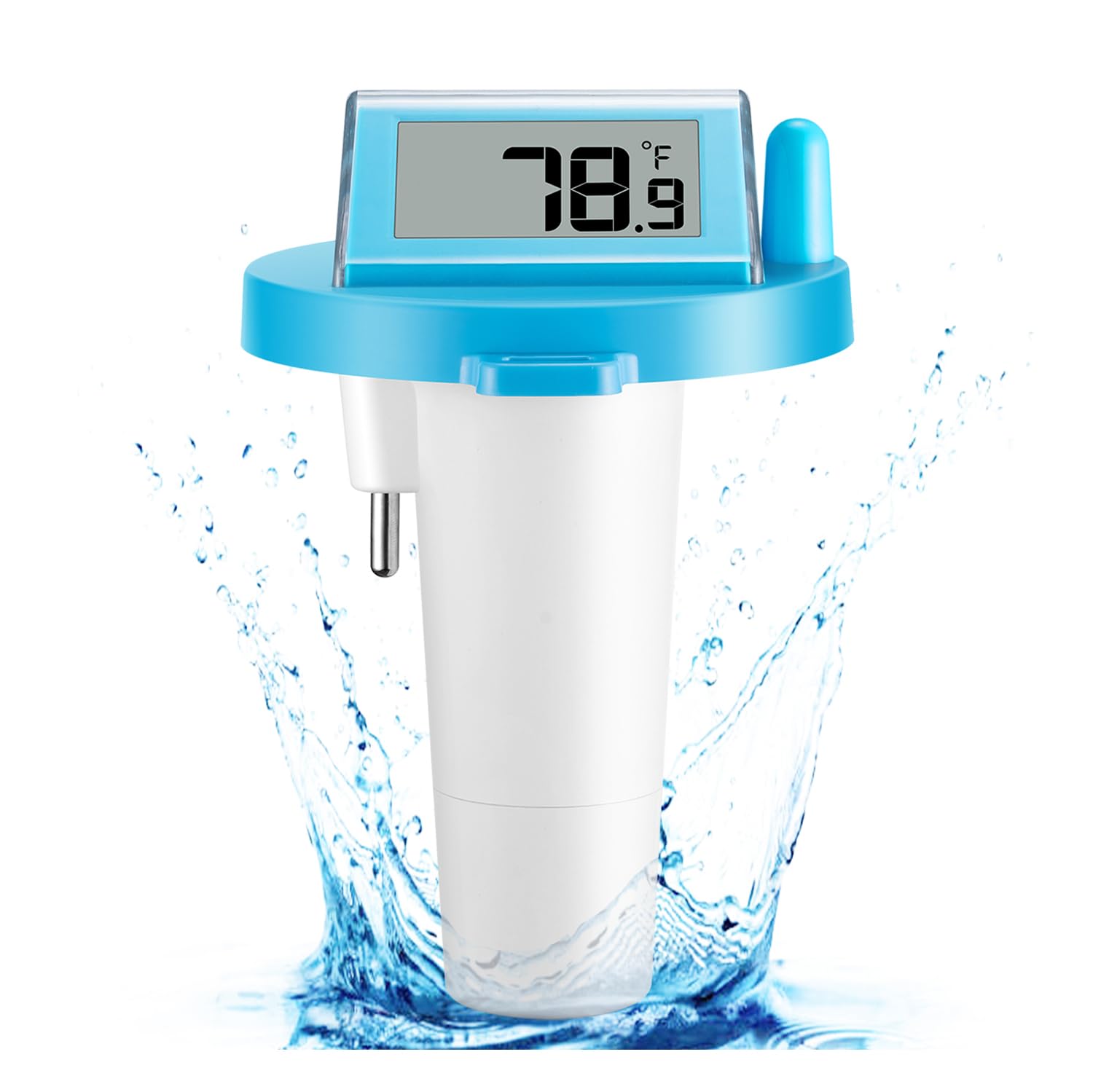
Sainlogic Wireless

Top Pick
Sainlogic Wireless

Wireless new

Our Score 9.4/10
Check Price

Worth Noting

  • Long-term waterproof seal durability and accuracy consistency have not been verified through extended field use.
Accuracy
Spec ±1°C
Durability
Untested
Floatability
Floats
Extra Features
Wireless 164ft, IP68
Read the full review

Wireless remote monitoring up to 164ft and IP68 waterproofing are strong specs for pond use, but the limited real-world feedback means long-term durability is unverified. Best suited for early adopters; those wanting proven reliability should consider alternatives.

Bottom line: A promising option if you want wireless remote monitoring and are willing to accept that long-term reliability is unverified.

2

Unipool Turtle Float Thermometer

Unipool Turtle Float Thermometer

Decorative fun

Our Score 8.8/10
Check Price

Worth Noting

  • Temperature readings can vary between units - suitable for casual use but not for precise monitoring.
Accuracy
Inconsistent
Durability
String disintegrates
Floatability
Floats upright
Extra Features
Decorative
Read the full review

The Unipool Turtle Float Thermometer adds a playful turtle design that brightens up pool decor. However, temperature readings can vary between units, and the tether may disintegrate within weeks. This thermometer serves as decoration first - fine for children's pools or hot tubs where exact temperature isn't critical, but not for pond monitoring.

Bottom line: Best for children's pools or hot tubs where exact temperature isn't critical, but avoid for serious pond monitoring.

3

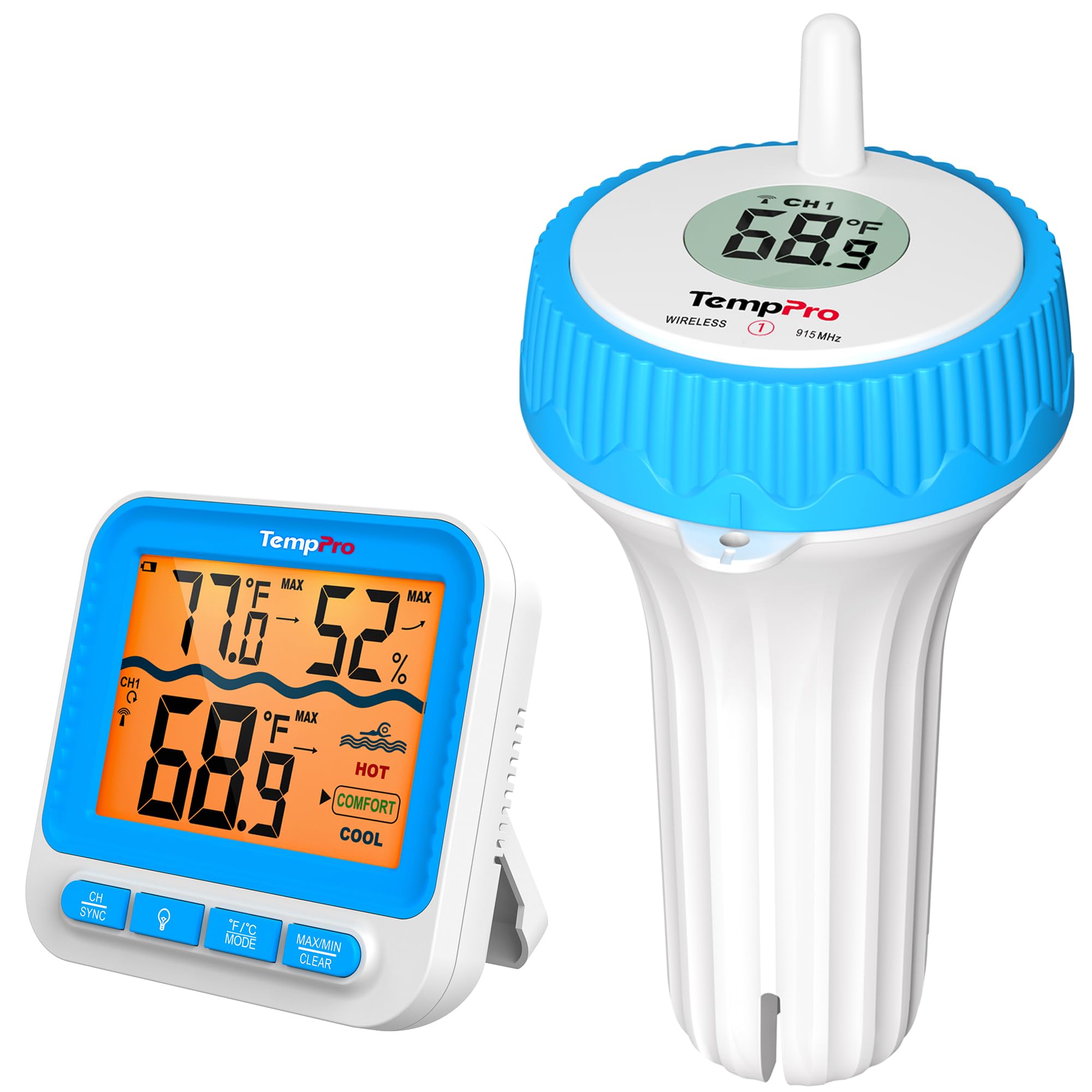
TempPro Wireless Digital

TempPro Wireless Digital

Remote monitoring

Our Score 8.6/10
Check Price

Worth Noting

  • Accuracy variation within ±2°F has been noted
  • Lifespan inconsistent
Accuracy
±0.9°F reported
Durability
Seal fails 3-7 months
Floatability
Floats upright
Extra Features
Wireless 500ft, IPX8
Read the full review

TempPro's wireless remote maintains a connection up to 500 feet, so you can read pond temperature from inside on a large, backlit display. The build quality feels solid, and setup is straightforward – drop the floating sensor in water and place the receiver wherever convenient. Lifespan can vary: some units lose function within months due to water ingress, making this a choice for those who prioritize remote access over long-term durability.

This thermometer suits pond owners who want to monitor temperature without going outside, especially during cold weather or at night. Accuracy within ±2°F has been noted on occasion, which matters for sensitive setups like koi ponds but is acceptable for general tracking. If you can accept the possibility of replacement within a season, the remote convenience is unmatched among floating thermometers.

For critical temperature management, double-check with a second thermometer to account for possible offset.

Bottom line: Best for pond owners who value remote reading convenience and are comfortable with the possibility of seasonal replacement.

4

eLander Pro Float

eLander Pro Float

Budget basic use

Our Score 8.6/10
Check Price

Worth Noting

  • Display numbers are small
  • Tether cord can deteriorate over a season, leading to loss of the float
Accuracy
Mixed reports
Durability
String disintegrates
Floatability
Floats upright
Extra Features
None
Read the full review

Extensive user feedback confirms basic temperature measurement works as intended for the price. While the packaging claims a 'large' display, the numerals are actually quite small, making distance reading a challenge. This budget analog float is best for pond owners who check temperature infrequently and plan to replace the unit each season. The tether cord can degrade within a few months, so periodic replacement is expected. For the low cost, it provides usable readings without extra features, making it a functional backup or starter thermometer for casual pond monitoring.

Consider upgrading the tether to a more durable cord to prevent premature loss of the float.

Bottom line: A functional, low-cost thermometer for pond owners who prioritize budget over long-term durability and don't need to read the display from across the yard.

5

Pentair Tube Sink

Pentair Tube Sink

Depth readings

Our Score 8.6/10
Check Price

Worth Noting

  • Temperature accuracy can vary between units, sometimes by 4–10 degrees.
  • The lanyard may detach from the tube over time, requiring a replacement tether.
Accuracy
±4-10°F off
Durability
Lanyard breaks
Floatability
Sinks (weighted)
Extra Features
3ft cord
Read the full review

The Pentair R141036 stands out among analog pond thermometers for its weighted, sinking design that reaches deeper water columns — useful for koi ponds where surface temperature alone isn't enough. The ABS case holds up well outdoors and the large numbers are easy to read without bending over.

This is for pond owners who need a below-surface reading and prefer an analog display. Note that accuracy can vary between units by several degrees, and the lanyard attachment may loosen over time — periodic checks are worth building into your routine.

Tie a secondary knot or use a thin zip-tie to secure the lanyard to the tube as a backup.

Bottom line: A functional depth-measuring thermometer for traditionalists, but expect to verify its readings against a reference and plan to replace the cord at some point.

6

Pircaath Solar Digital

Pircaath Solar Digital

Night visibility

Our Score 8.6/10
Check Price

Worth Noting

  • Over months of continuous outdoor use, condensation may appear inside the display.
Accuracy
Good reports
Durability
Condensation possible
Floatability
Floats upright
Extra Features
Backlight, solar
Read the full review

The Pircaath Solar Digital stands out for its auto-backlit LCD that lights up in low light, making pond temperature checks at dusk effortless. Unlike a wireless remote thermometer that requires an indoor receiver, this floating unit is self-contained with solar charging and a quick 10-second response. Best for pond owners who check temperature after dark and prefer a no-battery, direct-read design. Seal integrity can be an issue — some units may develop internal condensation over months of outdoor exposure.

Drying the unit thoroughly before winter storage may help reduce moisture buildup inside the display.

Bottom line: A solid choice for evening pond monitoring if you check the unit for seal tightness and store it dry during off-season.

7

LICHI Solar Digital

LICHI Solar Digital

Budget solar

Our Score 8.6/10
Check Price

Worth Noting

  • Some units may stop displaying temperature after a couple of months of use
Accuracy
Good reports
Durability
Some fail 1-2 months
Floatability
Floats upright
Extra Features
Solar, IPX8
Read the full review

For pond owners on a tight budget who want digital temperature readings without changing batteries, this solar-powered model delivers a large, angled LCD that is easy to read from a distance. The IPX8 rating and solid build feel good initially. However, some units may stop showing temperature after a few months, making this more suitable for a single season than long-term pond monitoring.

Bottom line: A budget-friendly pick for pond owners who need a digital readout for a single season and are comfortable replacing it annually.

8

BALDR Solar Digital

BALDR Solar Digital

Solar digital

Our Score 8.4/10
Check Price

Worth Noting

  • Waterproof seal can allow moisture ingress, potentially affecting display function after several months.
Accuracy
±1.8°F reported
Durability
Seal fails 3-9 months
Floatability
Floats upright
Extra Features
Solar powered, IPX8
Read the full review

This floating thermometer uses solar power to run a clear LCD that shows temperature from across the pond — no batteries to replace. Unlike BALDR's dual-screen model, this single-screen design keeps the price lower while still offering an IPX8 rating and ±1.8°F accuracy. Best for eco-conscious pond owners who prioritize easy readability and minimal maintenance, and who are comfortable with the possibility that the waterproof seal may degrade within a season.

Bottom line: A strong solar digital option for pond owners who want a clear, battery-free readout — just keep in mind that the waterproof seal is a known vulnerability that may limit its lifespan.

9

BALDR Dual Screen

BALDR Dual Screen

Dual viewing

Our Score 8.4/10
Check Price

Worth Noting

  • The floating unit may stop working earlier than expected in some cases
Accuracy
Accurate reports
Durability
Some fail early
Floatability
Floats upright
Extra Features
Dual screens, solar
Read the full review

The dual-screen design provides clear temperature readings from either side of the pond, making it easy to check without walking around. However, the maximum temperature of 104°F limits its use to ponds and pools only, and some floating units have stopped working earlier than expected, which makes the higher price less appealing compared to simpler single-screen models.

Bottom line: Best for pond owners who value dual viewing angles and accept the possibility of early unit failure, but budget buyers should consider single-screen alternatives.

10

SplashTech Pocket Sink

SplashTech Pocket Sink

Pocket submersible

Our Score 8.4/10
Check Price

Worth Noting

  • Readability is hindered by glare and small markings, especially in bright sunlight
Accuracy
Inconsistent
Durability
Glass tube breaks
Floatability
Sinks (reservoir)
Extra Features
Pocket size
Read the full review

Build quality is solid for the price, and the large analog face helps when you are up close. However, glare and small markings make it difficult to read from a distance, and accuracy can vary between units. The pocket-style reservoir is a niche feature that does not replace a floating or long-cord thermometer for pond monitoring.

Bottom line: Suitable for quick spot checks when you can hold the thermometer close and don't need high precision, but not a practical choice for pond owners needing distant or consistent readings.

11

U.S. Pool Buoy Analog

U.S. Pool Buoy Analog

Large display

Our Score 8.2/10
Check Price

Worth Noting

  • Internal thermometer tube can separate from the housing during use.
Accuracy
Off by 10°
Durability
Tube separates
Floatability
Floats upright
Extra Features
Tether
Read the full review

The U.S. Pool Supply buoy delivers the most legible analog display in this roundup, with jumbo numbers visible without glasses. However, the internal thermometer tube can separate from the plastic housing, and temperature readings may be off by 10°F or more between units. This thermometer suits casual pond owners who prioritize quick readability over long-term reliability and precise measurement.

Bottom line: A decent option for short-term seasonal pond monitoring where exact temperature isn't critical, but not for year-round koi pond care.

How to Choose

Display Type and Readability

Analog dials are simple and never run out of battery, but the numeral size varies wildly. A thermometer marketed as 'large display' may still have tiny print once it's floating in the middle of a pond. Digital LCD screens offer much better readability at a distance, especially backlit models. However, digital units require power — solar or battery — and the screen can become unreadable if condensation builds up inside the housing.

The trade-off: analog is lower-maintenance but often hard to read from more than a few feet away. Digital is crisp and visible from across the pond, but adds a failure point if the seal fails and moisture gets in.

Durability of Tether and Seal

The tether is almost always the first component to fail on floating thermometers. Most come with a thin nylon or plastic string that disintegrates after a few weeks of UV exposure and water contact. Replacing the tether with a durable nylon cord or fishing line upfront can extend the usable life significantly. The waterproof seal on digital units is another critical weak point. Even IPX8-rated models can develop condensation or stop working if the gasket degrades over time.

Accuracy Consistency

Accuracy varies even among well-reviewed models because thermometers are rarely calibrated individually at this price point. Budget analog units often have a tolerance of ±2–4°F, and some can drift further after exposure to temperature extremes. Digital sensors are typically more precise (within ±1°F), but individual units can be off by several degrees if the electronics are faulty. Checking the thermometer against a known reference at purchase time is a good habit.

Floatability

A pond thermometer that tips over or floats on its side is useless because the sensing element may not be fully submerged, giving a reading of air temperature instead of water. The shape and buoyancy of the housing determine whether it stays upright in wind or waves. Models with a wide, low base are more stable. Sinking thermometers avoid this issue entirely by measuring at a fixed depth, but they require a tether to retrieve.

Extra Features

Wireless remote monitoring allows you to check pond temperature from inside your house, which is a major convenience for serious pond keepers. Solar-powered models eliminate battery changes but need direct sunlight to maintain charge — placing them under a shade sail or overhang can cause the display to go dark after a few cloudy days. Backlit displays are helpful for evening checks. Dual-screen designs let you read the temperature from either side of the pond without walking around.

Frequently Asked Questions