Lawn Care

7 Best Robot Lawn Mower of 2026: Match Your Lawn's Terrain and Size

Confused by slope ratings and wire-free claims? This guide helps you choose a robot mower that actually works on your specific yard's size, slope, and grass type.

Many robot mower specs promise coverage of half an acre or more, but real-world performance often depends on your yard's specific layout, grass type, and slope. A mower that handles a flat, open lawn perfectly may struggle on uneven ground or with narrow passages.

The wire-free models you see online often require multiple mapping runs and can get stuck on the same spot repeatedly. The deciding factor isn't the sticker on the box — it's how the mower's navigation system, battery life, and terrain handling match your actual yard.

This guide cuts through the marketing by focusing on the key specs that matter: navigation type, slope capability, cutting width, and real-world battery performance. You'll find the right mower for your size and shape of lawn, not just the highest-rated one.

1

Segway Navimow X430

Top Pick
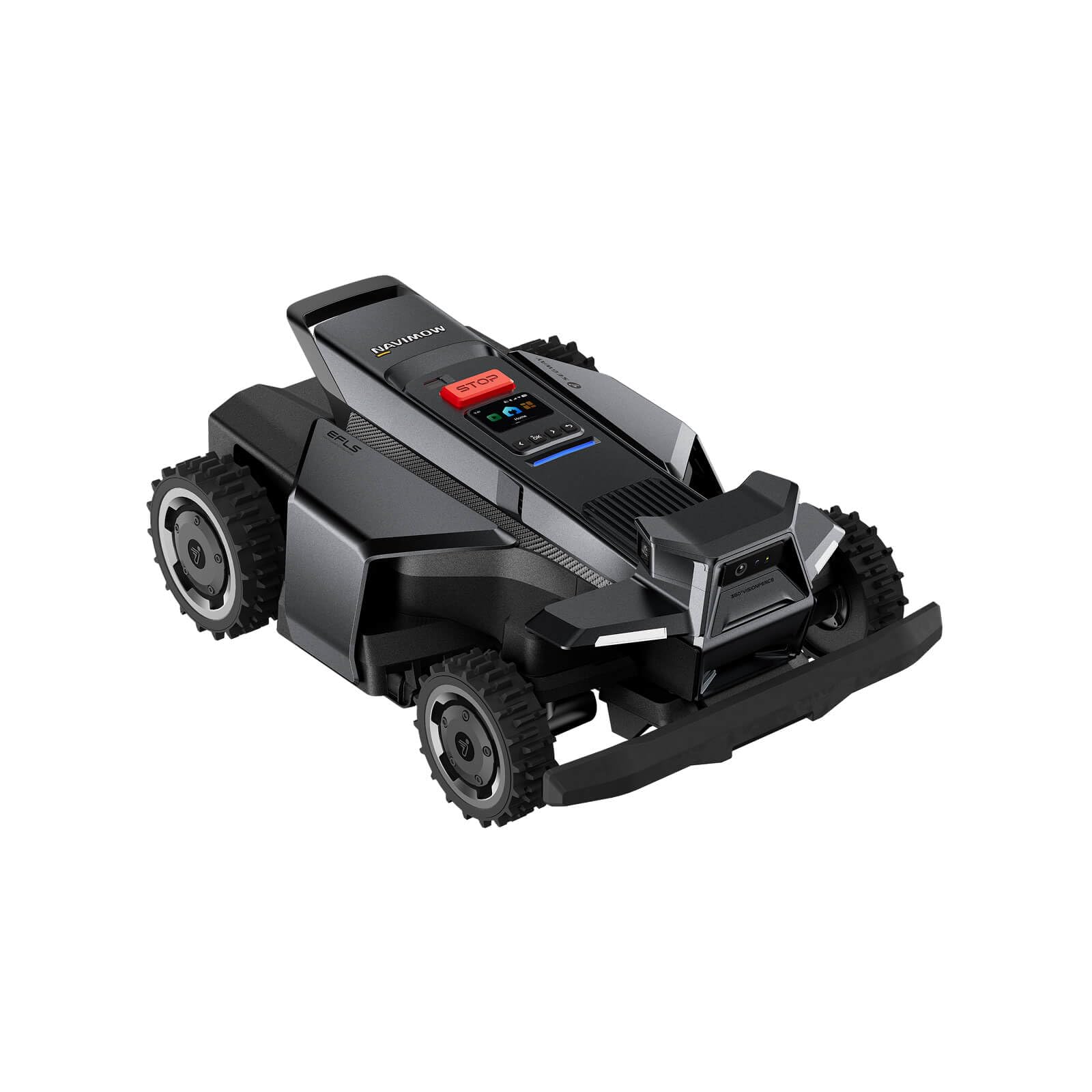
Segway Navimow X430

Steep large yards

Our Score 8.6/10
Check Price

Worth Noting

  • On delicate or thin turf, the 4WD traction may leave scuff marks or tears
  • Navigation between separate lawn sections (e.g., across driveways) can be inconsistent
  • Battery life may require a midday recharge when covering the full acre
Slope
84% (40°)
Navigation
RTK + 360° Vision
Read the full review

The Segway Navimow X430 stands apart with its 4WD drivetrain and zero-turn steering, climbing slopes up to 84% that leave other wire-free mowers stuck. While the top pick handles medium flat lawns with dual LiDAR, this machine is at home on hills and rough ground where traction matters more than navigation finesse.

Cut quality remains strong across uneven terrain, but the tri-frequency RTK and vision system sometimes lose track when moving between separate lawn sections across driveways or paths — an issue if your yard has multiple disconnected zones. The mower’s traction can also scuff soft or thin turf, so owners of delicate grass types should test a patch first.

This model is best for those with steep, continuous lawns of durable grass (Bermuda, Zoysia) up to an acre. If your yard is flat or has manicured bluegrass, the top pick avoids the scuffing risk and navigation gaps. Battery life may require a midday recharge for full-acre coverage — a minor inconvenience for the slope capability.

Consider a midday recharge schedule if your lawn approaches the full acre; otherwise, let the mower resume after charging.

Bottom line: If your yard is steep, continuous, and covered in hardy grass, the Navimow X430 is unmatched — but flat-lawn owners or those with delicate turf will find the top pick a better fit.
2

ECOVACS Goat O1000

ECOVACS Goat O1000

Compact narrow yards

Our Score 8.4/10
Check Price

Worth Noting

  • Edge trimming can skip along complex flowerbed borders
  • Battery life may require a recharge to finish a 1/4-acre lawn in one day
  • Wet grass on slopes can cause loss of traction and mapping accuracy
Slope
Navigation
HoloScope 360° Dual-LiDAR
Read the full review

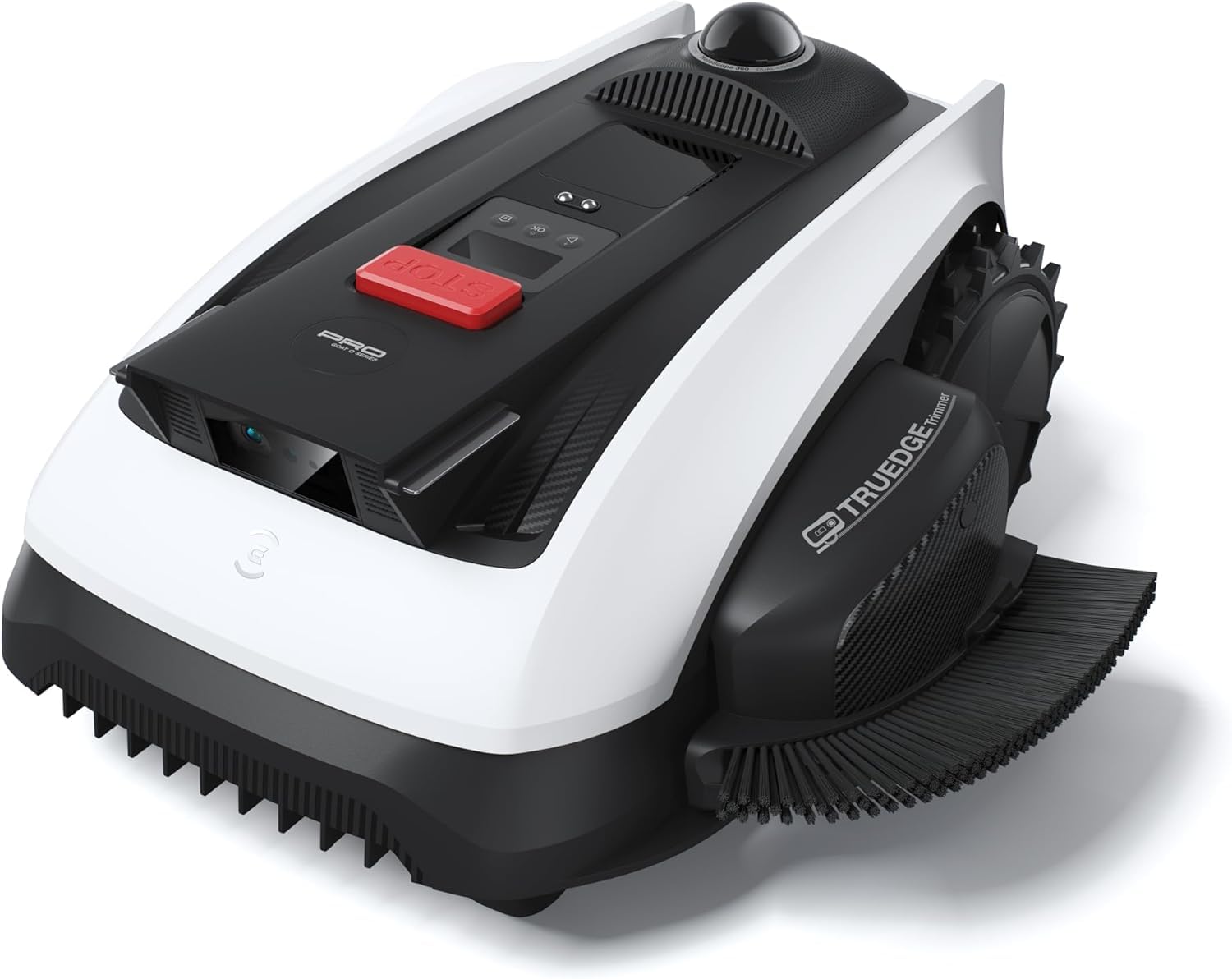
The ECOVACS Goat O1000 slips through side passages and narrow gates that stop other wire-free mowers cold — its body is just 0.8 m wide. Where the top pick offers dual LiDAR and integrated edge trimming for medium lawns, the O1000 prioritizes maneuverability over acreage.

Setup is wire-free and fast thanks to HoloScope 360° Dual-LiDAR mapping — no perimeter wire to bury. Once mapped, it runs quietly enough to operate during a backyard conversation without being intrusive.

For owners of small, intricate lawns with tight access points, the O1000 is a precise fit. However, edge trimming can miss along complex borders, and the mower's mapping and traction drop noticeably on wet slopes — yards with saturated ground or steep inclines will need a different approach. The battery also may require a midday recharge to finish a full quarter-acre.

Keep the O1000 to dry, mild slopes — it handles a light incline but saturated ground will stall it.

Bottom line: If your lawn has narrow gates or tight side passages that rule out other models, the O1000 solves that puzzle. Just plan for manual edge trimming and dry-weather operation.

3

eufy E15

eufy E15

Tiny flat lawns

Our Score 8.4/10
Check Price

Worth Noting

  • Mapping can take several sessions to finalize and may need occasional remapping if lawn layout changes.
  • Battery performance may decline over months, possibly requiring a recharge mid-cut on full 0.2-acre lawns.
Slope
Up to 18°
Navigation
V-FSD 1.0 stereo cameras
Read the full review

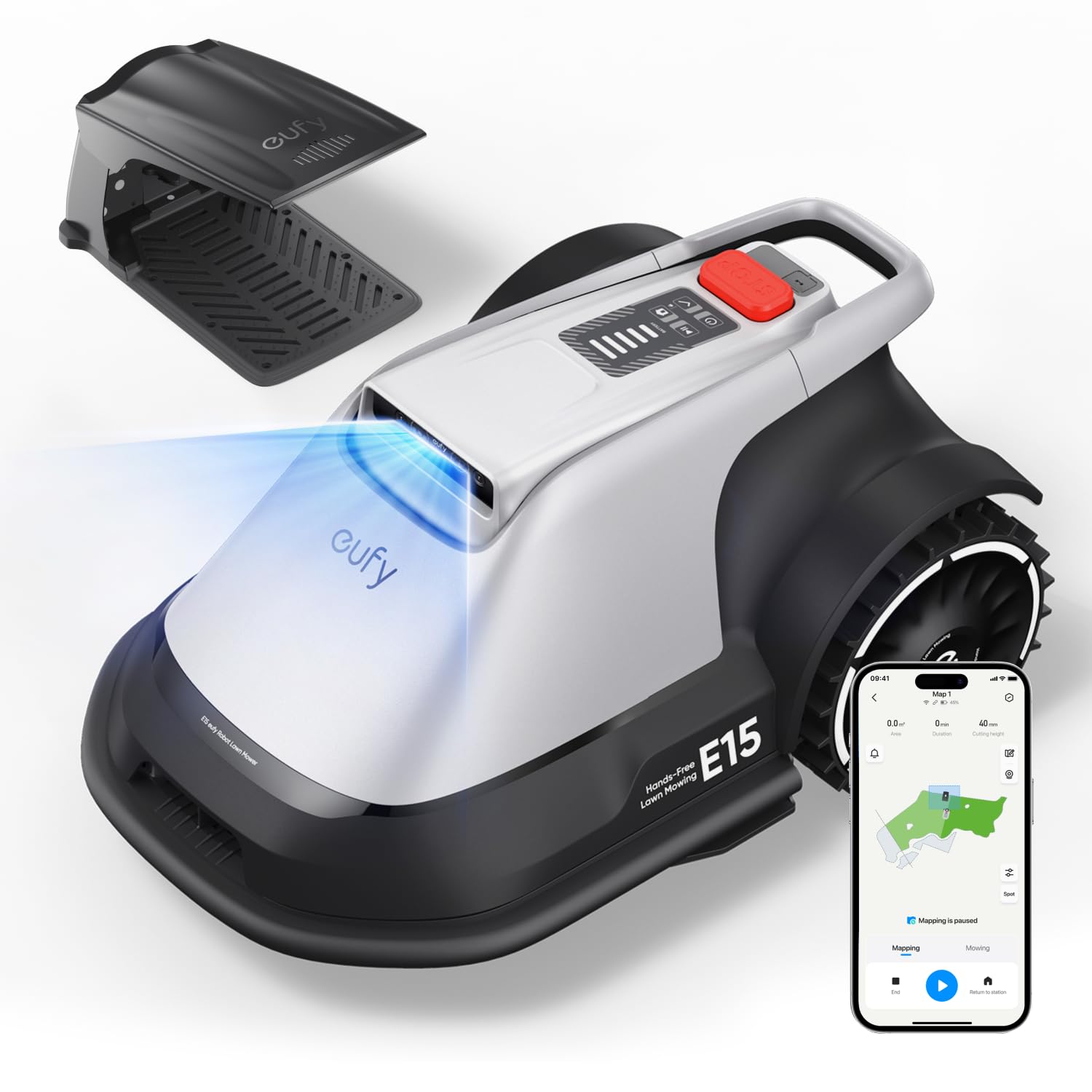
Setting up the eufy E15 is notably quick – the app walks you through mapping, and the 18-degree slope rating means it handles gentle inclines without issue. Where cheaper wire-free mowers often suffer from early firmware bugs, the E15's stereo camera navigation and mapping routines have been polished over time through ongoing updates, resulting in smoother day-to-day operation. This refinement places it ahead of budget alternatives, though it remains confined to small yards with cool-season grass.

This mower is best suited for owners with small, flat lawns of cool-season grass types like fescue or ryegrass. The 0.2-acre capacity and 18-degree slope limit mean it won't work for larger or steeper properties. It is also not compatible with St. Augustine or dense Zoysia grass, common in southern regions – a critical compatibility check before purchase.

The cutting deck adjusts between 1 and 3 inches, handling most cool-season grasses cleanly. Obstacle avoidance with stereo cameras is effective: the mower stops or diverts around garden furniture, hoses, and pet toys, though it can occasionally bump into low-lying obstacles. The wire-free design means no perimeter wire to trim around or break, which is a real convenience for properties with irregular borders.

Schedule mowing sessions after the battery has fully charged to avoid mid-cut returns to the base.

Bottom line: The eufy E15 is a polished wire-free mower for small cool-season lawns, with a refinement that comes from extensive owner use – just confirm your grass type and slope beforehand.

4

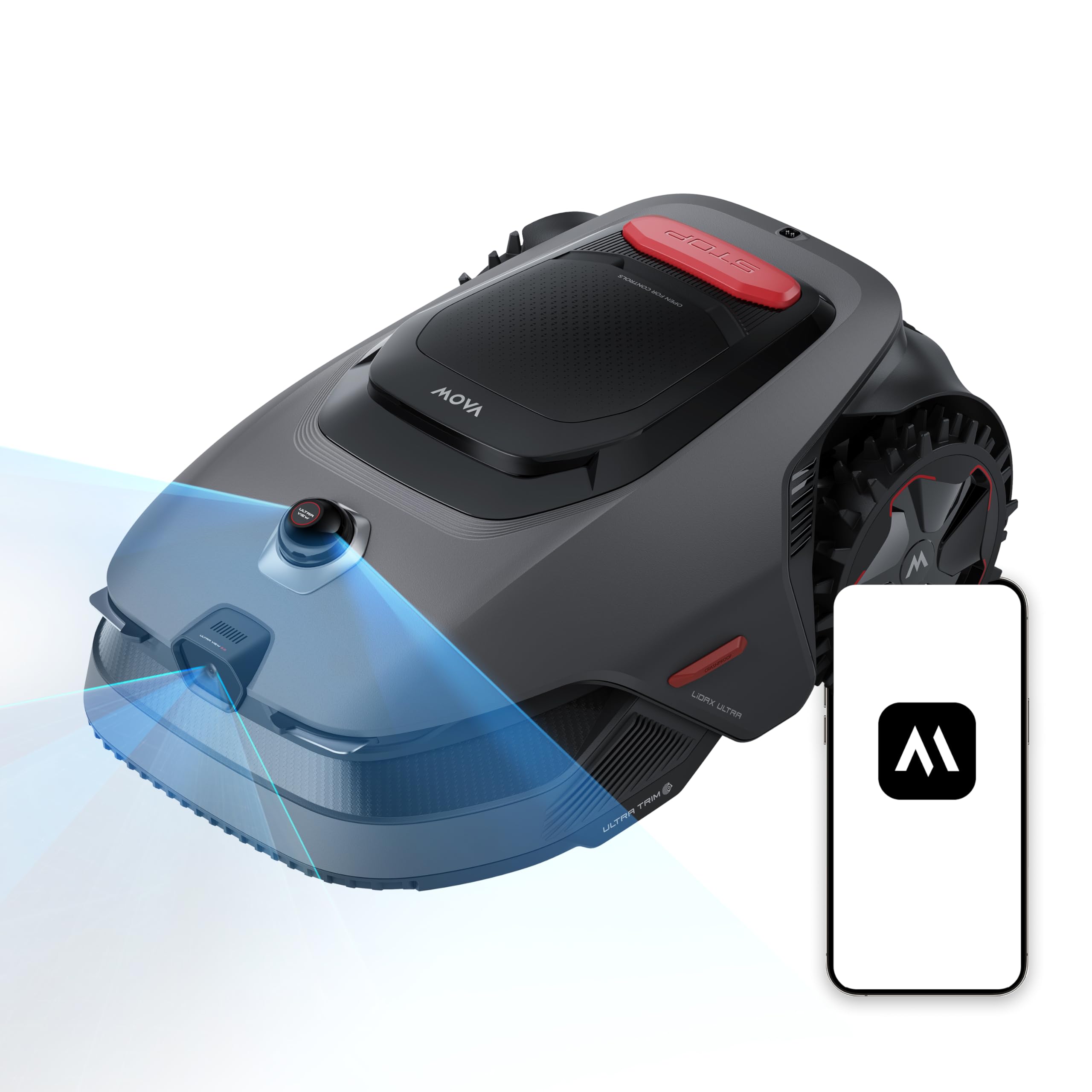
MOVA LiDAX Ultra 1000

MOVA LiDAX Ultra 1000

Small moderate yards

Our Score 8.2/10
Check Price

Worth Noting

  • Positioning can glitch near tall buildings or metal structures, causing occasional navigation errors
Slope
Up to 45%
Navigation
360° 3D LiDAR + AI Vision
Read the full review

The MOVA LiDAX Ultra 1000’s 360° 3D LiDAR and AI vision system maps your yard without needing an external RTK antenna, which simplifies installation and removes a common wire-free mower hassle. This approach prioritizes onboard processing over satellite corrections, making it a distinct option in the sub-1/4 acre market at a mid-range price.

Tech enthusiasts who want to be the first to try RTK-free LiDAR will appreciate the quick setup and the ability to handle moderate slopes. Yet this early-stage product has a limited track record, so long-term durability remains an open question. Additionally, its edge trimming can leave tougher weeds near walls, requiring occasional manual touch-ups.

On typical small to medium lawns, the mower moves efficiently and creates a consistent cut across open areas. The all-terrain wheels handle moderate slopes without slipping, and the 45% rating covers most residential inclines. However, positioning accuracy can degrade near metal sheds or dense overhead foliage, causing the mower to pause or reroute — but these glitches are infrequent and don't compromise the overall mowing pattern.

Avoid placing the charging station near metal structures or under dense tree canopies to reduce positioning glitches.

Bottom line: For buyers who prioritize innovative navigation over proven track records and don't mind touching up edges, the LiDAX Ultra 1000 offers a unique wire-free experience at a mid-range price.

5

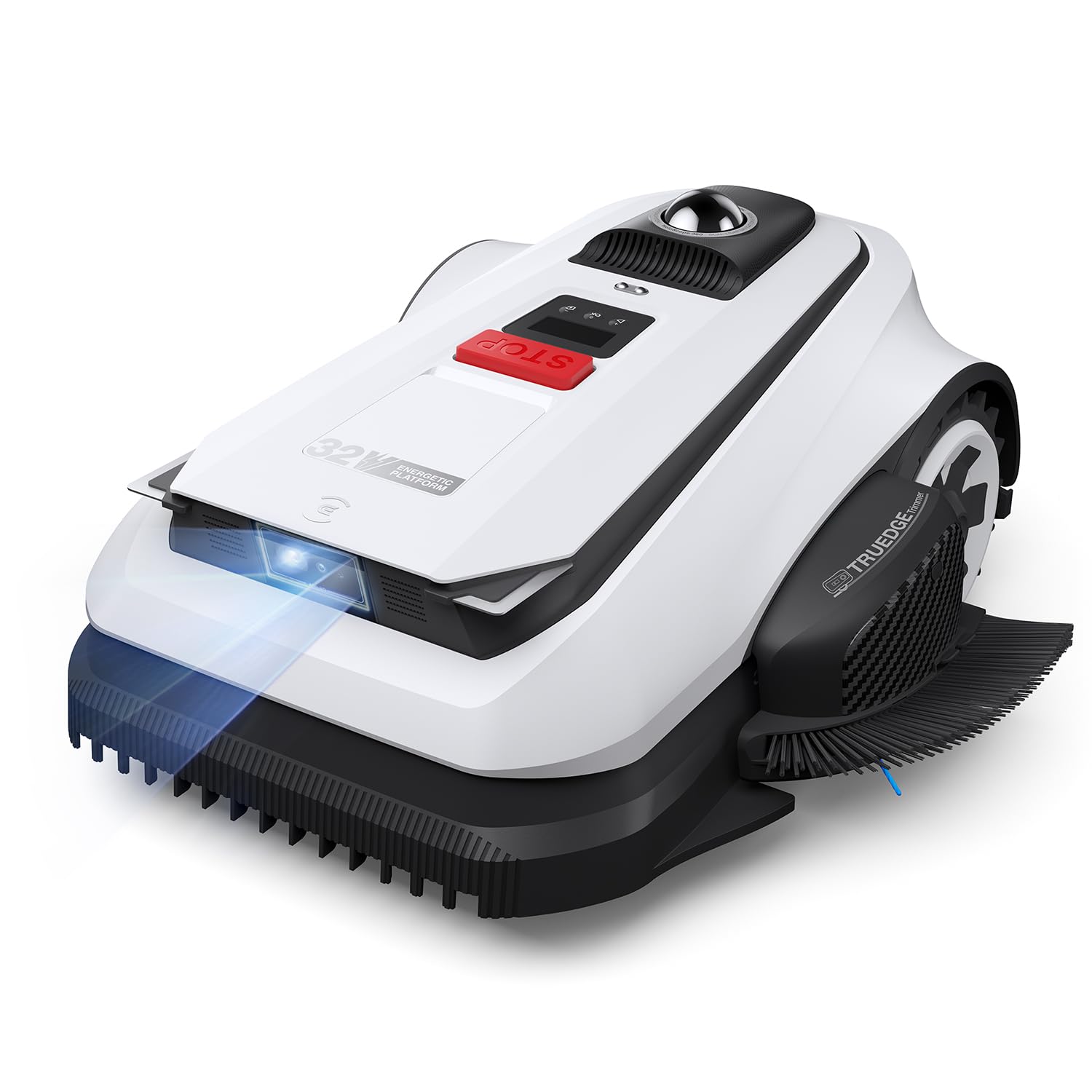
ECOVACS GOAT A2000

ECOVACS GOAT A2000

Medium flat lawns

Our Score 8.0/10
Check Price

Worth Noting

  • On uneven ground or around low obstacles, the mower can stall and require manual freeing
Slope
Navigation
Dual LiDAR (wire-free)
Read the full review

The ECOVACS A2000 uses dual LiDAR to build a detailed map of your yard in under 30 minutes, no boundary wires or setup stakes needed. Cut quality is strong, and the integrated TruEdge trimmer cleans up lawn borders without a separate tool, saving time on edge work.

Navigation around flower beds, furniture, and other obstacles is consistent day to day. The mower adjusts its path when something blocks its way and returns to the charging station automatically when battery runs low (roughly 50 minutes of cutting per charge).

This mower suits homeowners with a relatively flat, medium lawn (up to 1/2 acre) who want wire-free convenience and solid trimming. On uneven terrain or around low-hanging obstacles, the mower can stall and need manual freeing, so complex yards with steep slopes, bumps, or clutter are better served by a different design.

For its price tier, the A2000 avoids the common RTK antenna requirement and instead relies entirely on onboard LiDAR. That simplicity, combined with positive user feedback across cut quality and mapping, makes it a strong candidate for buyers focused on a no-fuss setup and sharp results.

Clearing low-hanging branches and loose objects from the mowing path reduces the chance of needing to free the mower.

Bottom line: For a medium, flat lawn where you want to skip boundary wires and still get sharp edges, the A2000 delivers a complete package – just keep the yard tidy to avoid interruptions.

6

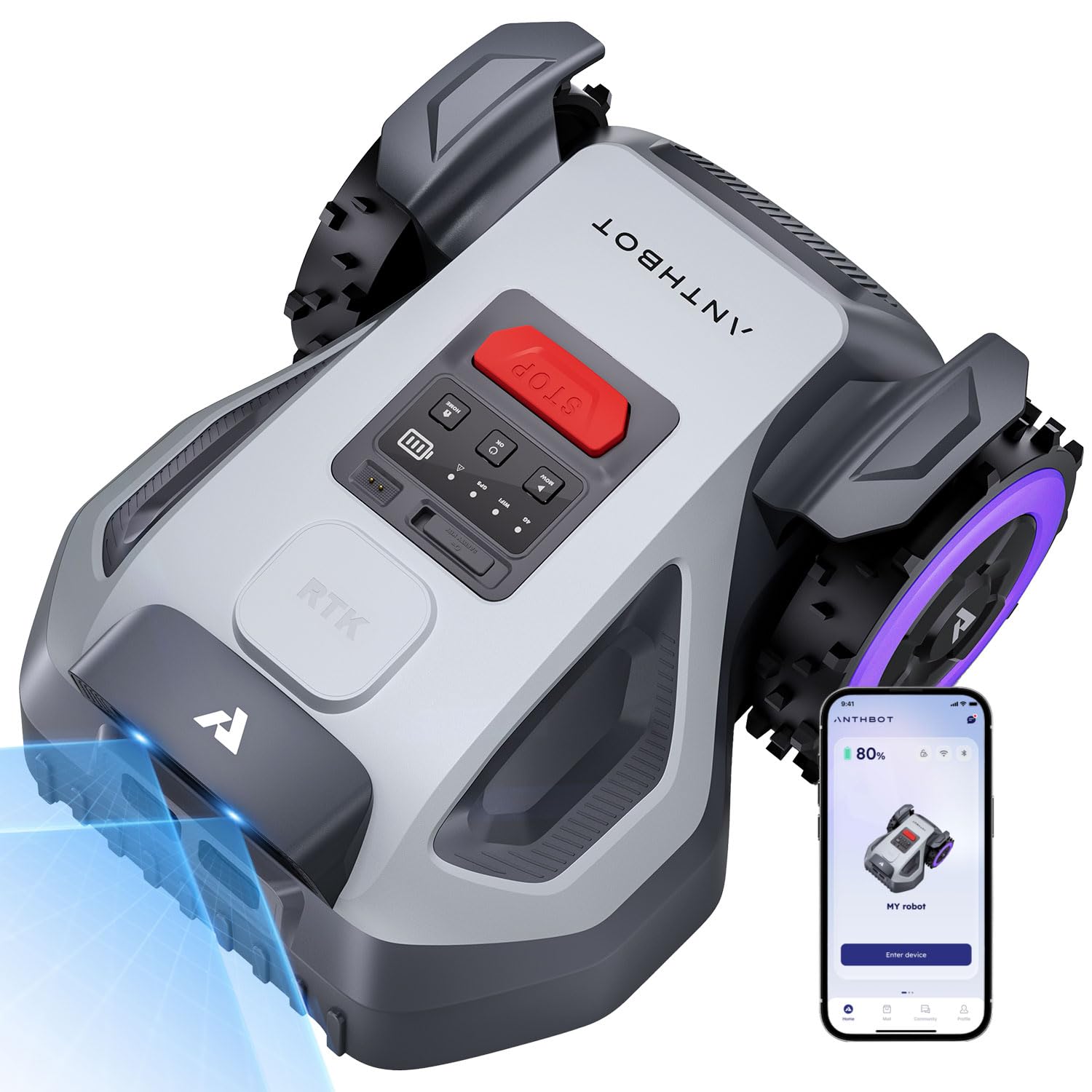
ANTHBOT M9

ANTHBOT M9

Small flat yards

Our Score 8.0/10
Check Price

Worth Noting

  • May wander outside mapped zones in some yard layouts
  • Battery delivers about 30 minutes of run time, requiring multiple cycles for a full mow
  • Some units have experienced early performance issues such as random stopping or missed areas
Slope
Up to 45%
Navigation
Dual AI Vision + RTK
Read the full review

The ANTHBOT M9 combines dual AI vision and RTK guidance at a price under $800, undercutting most wire-free rivals with similar navigation tech. Setup is quick via the app, and cut quality holds up well on small, level lawns. Where more established wire-free mowers (like the user-proven model in this lineup) lean on a larger review base and longer runtime, the M9 trades some consistency for affordability.

The battery lasts about 30 minutes, which means covering even a quarter-acre yard may require a midday recharge. Some units have exhibited early hiccups — occasional random stops or missed areas — though not universally. Map management can also let the mower drift outside intended zones in certain layouts. These traits make the M9 a better fit for owners willing to monitor sessions and accept possible glitches over the long term.

This mower suits budget-conscious buyers with flat lawns up to 1/4 acre who want wire-free operation and don't mind a shorter runtime and the potential for early performance issues. It is not recommended for larger or more complex yards, or for anyone seeking worry-free, long-term operation without occasional troubleshooting.

Plan for multiple mowing sessions — the battery runs roughly 30 minutes, so a full cut may require a recharge break.

Bottom line: For buyers with a small, simple lawn and a tight budget who accept the need for extra charging sessions and the possibility of early quirks, the M9 delivers solid wire-free features at the lowest entry price.

7

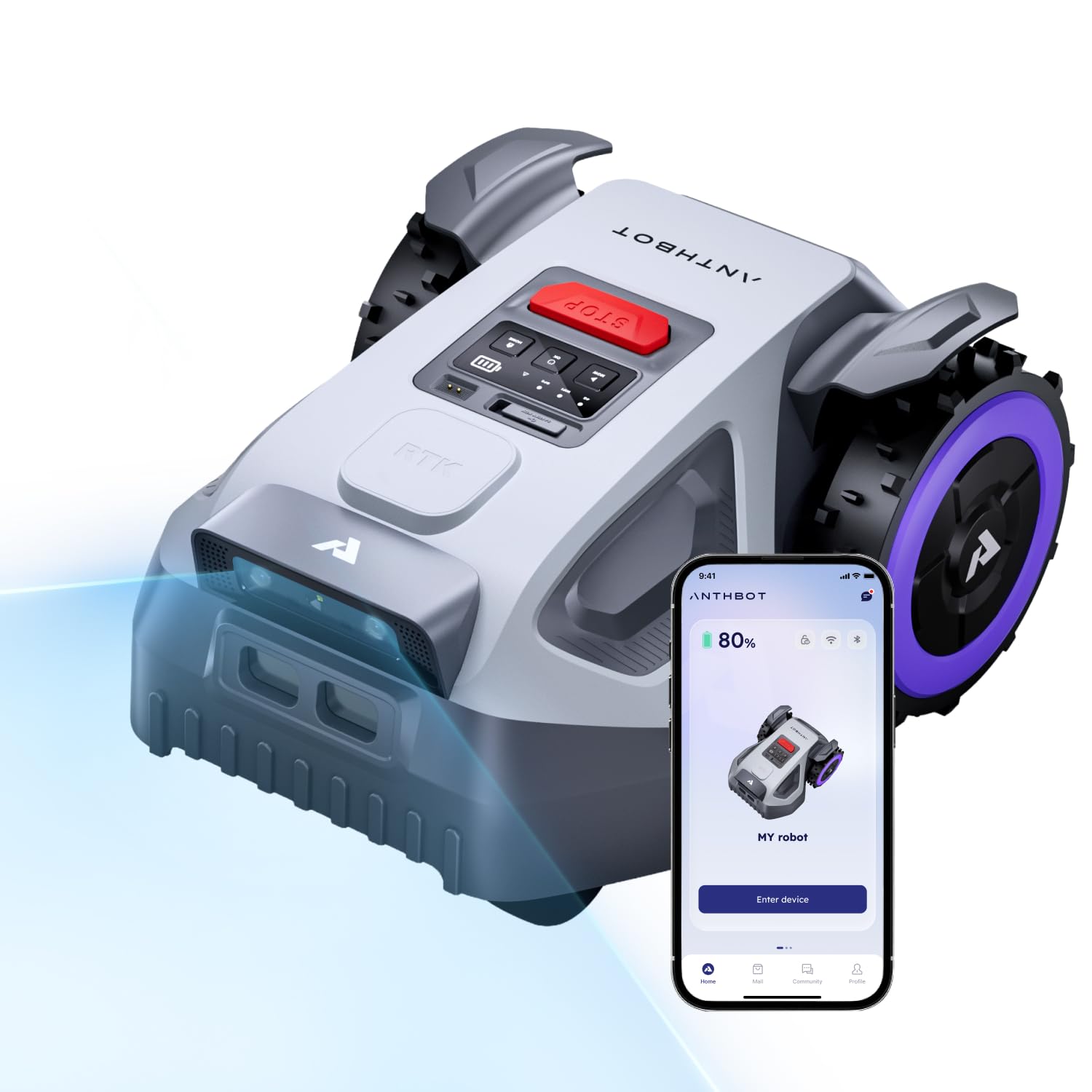
ANTHBOT M5

ANTHBOT M5

Tiny flat yards

Our Score 8.0/10
Check Price

Worth Noting

  • Battery runtime of roughly 30 minutes may require daily charging for consistent use
  • Map management can be inconsistent, with the mower occasionally crossing designated boundaries
Slope
Up to 45%
Navigation
Dual AI Vision + RTK
Read the full review

The M5 is easy to set up and its app control works well. Cut quality is consistent for a mower at this price. For tiny lawns under 1/8 acre, this is the most budget-friendly wire-free option available. That said, it shares the same reliability concerns as the larger M9 and is limited to 0.15 acre.

Bottom line: This mower is worth considering only if your lawn is truly under 1/8 acre and you accept occasional quirks in mapping and battery life; for any larger or more complex space, the M9 is a more capable option.

How to Choose

Navigation System

Navigation determines how your mower learns and traverses the yard. LiDAR systems use spinning lasers to build a 3D map of the property, working well day or night but may struggle in heavy rain or dust. Vision-based systems rely on cameras and AI to recognize obstacles, which can be thrown off by low light or tall grass. RTK (Real-Time Kinematic) uses a satellite reference station for centimeter-level GPS accuracy, ideal for open yards but can lose signal near buildings or under dense tree cover.

Each method has trade-offs: LiDAR offers reliable mapping without GPS dependency, but adds cost. Vision-only is cheaper but requires clear lighting. Hybrid systems (LiDAR + vision or RTK + vision) are becoming common and provide the best robustness across varied conditions.

Slope Capability

Slope ratings are often measured on dry, manicured grass. Real-world grip drops significantly when the grass is wet or the soil is soft. A mower rated for 45% slope may struggle on a 30% wet hill. Pay attention to drive type: two-wheel drive mowers lose traction on steep grades, while four-wheel drive and tracked models maintain grip. Also consider the mower's weight distribution — lighter mowers are more prone to slipping on inclines.

Cutting Width

A wider cutting deck reduces mowing time but may struggle to navigate tight passages or complex beds. For yards under 1/4 acre, a 16-18 inch cutting width is typical and efficient. For larger areas, 20+ inch decks cut faster but require more turning space. The trade-off is between speed and maneuverability: a narrow deck (under 14 inches) excels in intricate layouts but requires more passes to cover open areas.

Battery Life

Battery runtime is usually quoted under ideal conditions (flat, dry, short grass). Real-world runtime can be 30-50% shorter when mowing thick or wet grass, climbing slopes, or in hot weather. Most mowers return to the charging dock automatically and resume after recharging, but a long recharge cycle can delay completion. For yards near the mower's maximum advertised area, expect the job to take the better part of a day with multiple recharging cycles.

Obstacle Avoidance

Obstacle avoidance technology varies widely. Entry-level models may only detect large objects like trees and fences, while premium systems can identify pets, toys, and garden hoses. AI-powered vision can learn and avoid static obstacles over time, but may struggle with novel objects or sudden changes in terrain (e.g., a dropped garden tool). Ultrasonic sensors work well for transparent obstacles like glass doors but have limited range. The more sensor types a mower combines, the fewer manual rescues you'll need.

Frequently Asked Questions