Tree & Forestry Care

9 Best Rope for Pulling Down Trees of 2026: Balance Strength and Handling

Avoid the stiffness trap: find a double-braid rope with the strength (5,000+ lbs) and handling that makes pulling down trees safer and easier.

Pulling down a tree with a rope that won't knot is a fast route to frustration. Many double-braid ropes under $50 are so stiff out of the box that tying a clove hitch feels like wrestling wire. That stiffness is often a sign of a tight weave that resists abrasion — a real durability win — but it comes at the cost of immediate usability.

The real choice isn't between cheap and expensive; it's between raw breaking strength and handling. A 20,000-lb rope is overkill for a 12-inch oak, and its stiffness will have you cursing every knot. A softer, well-constructed rope in the 8,000-9,000 lb range with low stretch gives you the control to pull directionally without a struggle. This guide helps you decide based on the tree sizes you actually work with and how often you use the rope.

1

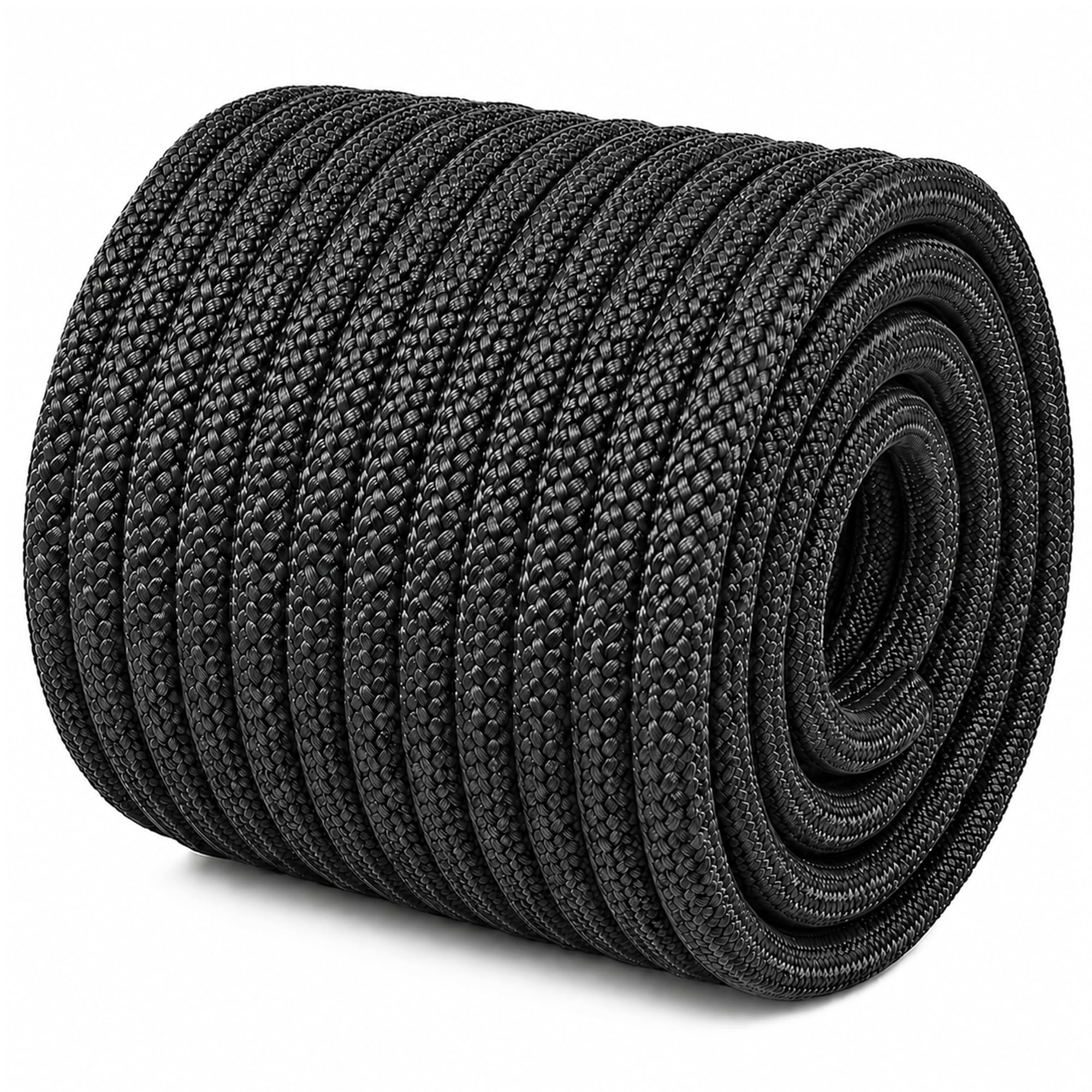
HOKINETY 3/8" 100ft 3.5K

Top Pick
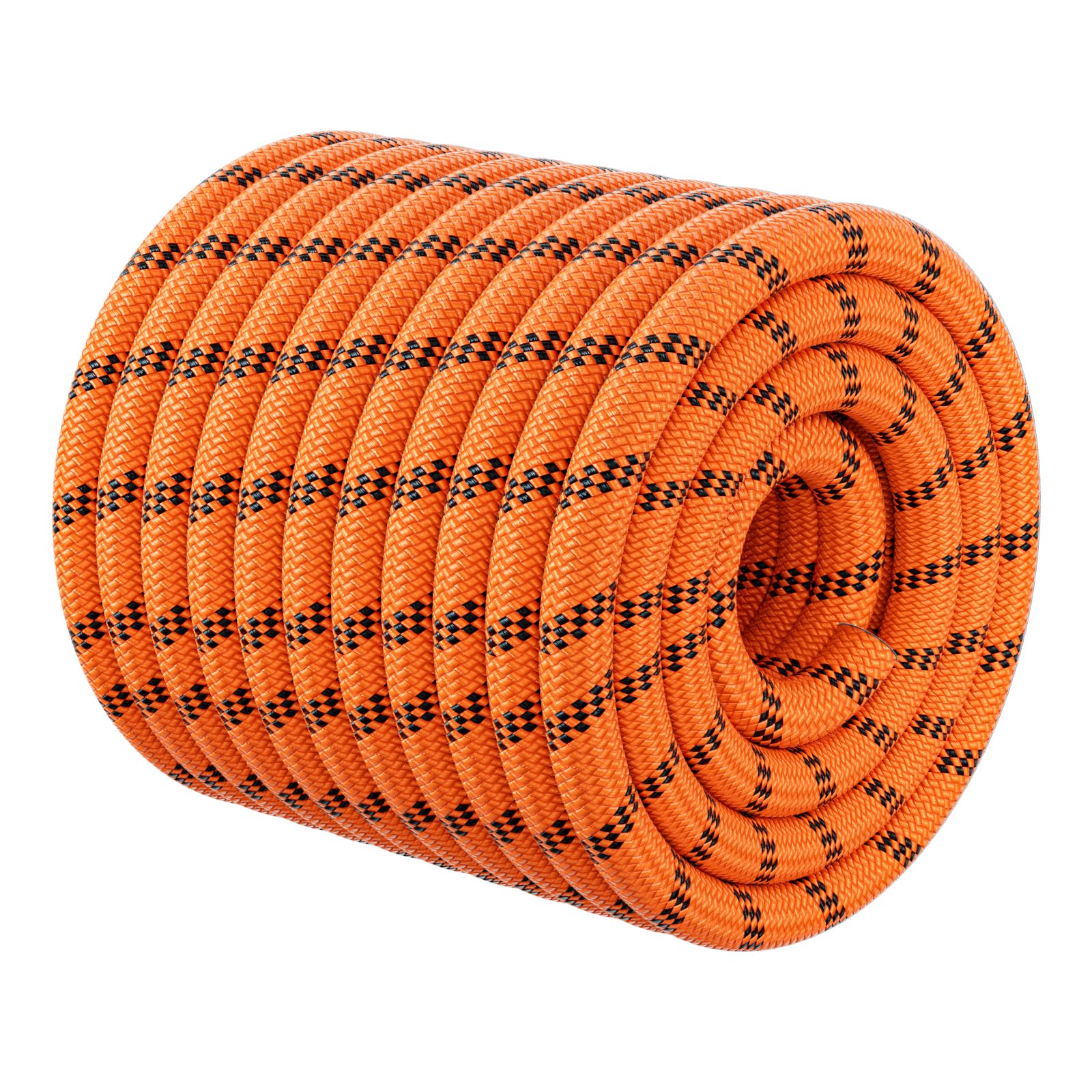
HOKINETY 3/8" 100ft 3.5K

Light pruning, swings

Our Score 9.6/10
Check Price

Worth Noting

  • Not suitable for pulling down trees
Length
100 ft
Diameter
3/8"
Stiffness
Construction
Double-braid polyester
Read the full review

HOKINETY's double-braid polyester rope offers 3,500 lbs breaking strength at a budget-friendly price, ideal for light rigging, camping, and kids' tree swings. Its breaking strength falls short of the 5,000 lbs threshold needed for tree pulling, so it's limited to non-critical tasks around the yard or farm.

Bottom line: A good fit for tree swings and camping where loads stay low, but not for tree pulling.

2

Right Rope 5/8" 150ft 8.9K

Right Rope 5/8" 150ft 8.9K

Directional tree felling

Our Score 9.4/10
Check Price

Worth Noting

  • Tight packaging can make first-time uncoiling and straightening a chore.
  • No spliced eye included
Length
150 ft
Diameter
5/8"
Stiffness
Soft, manageable
Construction
Double-braid polyolefin
Read the full review

The low-stretch polyester construction keeps loads steady during pulling, while the soft cover makes knotting and winch feeding unusually smooth — a combination that avoids the stiffness typical of budget double-braid ropes.

For homeowners and pros managing moderate tree work, this rope handles repeated pulls without losing grip on hitch knots. The tight packaging can make first-time uncoiling a chore, though the rope relaxes into a manageable coil after initial use. It is not designed for loads exceeding 10,000 lbs or jobs requiring a spliced eye.

This rope suits buyers who value easy handling over raw capacity — if you regularly pull large timber, a stiffer 20,000-lb alternative would be more appropriate.

After the first use, the rope relaxes and coils more easily — a brief soak in warm water can speed the process.

Bottom line: For most tree-pulling jobs that stay within its working load, this rope delivers the best handling-to-strength ratio available.

3

Blue Ox 1/2" 150ft 8K

Blue Ox 1/2" 150ft 8K

Climbing and pulling

Our Score 9.4/10
Check Price

Worth Noting

  • Stretches under load, reducing control for static tree pulling vs double-braid.
Length
150 ft
Diameter
1/2"
Stiffness
Flexible, springy
Construction
12-strand single braid
Read the full review

This 12-strand single-braid excels for SRT climbing and hitches, offering good abrasion resistance and knot retention. Made in the USA with a long track record. However, the polyester construction stretches under load, reducing precision for static tree pulling compared to double-braid ropes. Best for arborists who climb and rig, not for controlled felling pulls.

Bottom line: A reliable climbing rope, but for controlled tree pulling, choose a low-stretch double-braid instead.

4

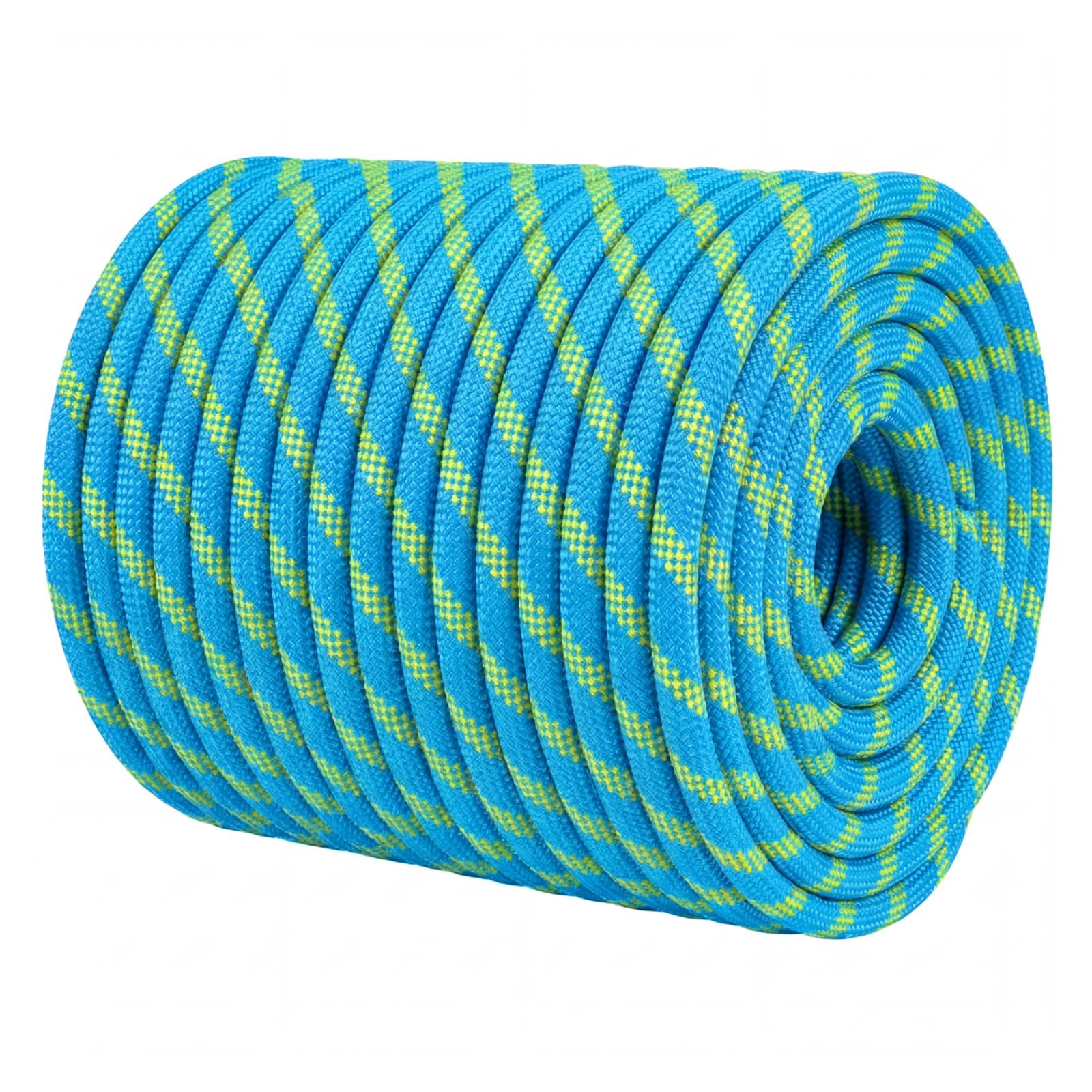
YUZENET 3/8" 100ft 3.5K

YUZENET 3/8" 100ft 3.5K

Swings and camping

Our Score 9.4/10
Check Price

Worth Noting

  • Breaking strength of 3,520 lbs falls short of the 5,000 lbs minimum for tree pulling.
Length
100 ft
Diameter
3/8"
Stiffness
Construction
Double-braid polyester
Read the full review

This YUZENET rope offers good weather resistance and a low price, making it a practical choice for kids' tree swings, camping lines, and general tie-downs where loads stay under 1,000 lbs. However, its 3,520 lbs breaking strength is well below the 5,000 lbs minimum required for pulling down trees, so it should not be used for that purpose.

Bottom line: Great for kids' swings and general tie-downs where loads are light, but choose a stronger rope if you need to pull down trees.

5

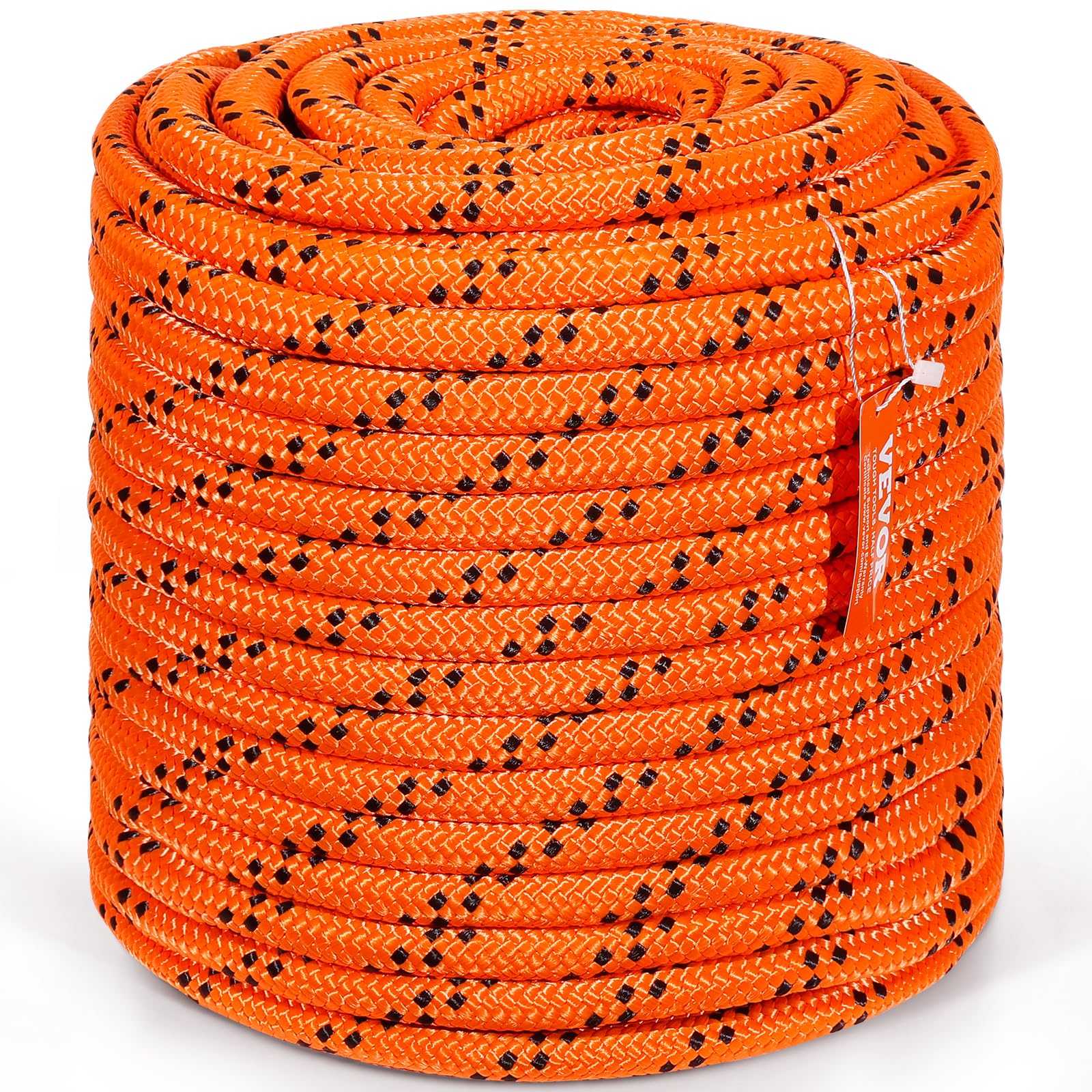
VEVOR 3/4" 220ft 20K lbs

VEVOR 3/4" 220ft 20K lbs

Heavy-duty pulling

Our Score 9.2/10
Check Price

Worth Noting

  • Very stiff out of the box, like wire, making initial knotting difficult.
  • Knots can be hard to tie and may slip before the rope breaks in.
Length
220 ft
Diameter
3/4"
Stiffness
Very stiff
Construction
Double-braid polyester
Read the full review

20,000 lbs breaking strength and 220 ft length at a budget price — this rope delivers raw pulling power few others match. The trade-off is a stiffness that makes it behave more like wire than rope, especially when new. Knots require real effort to tie and may slip until the rope breaks in, so this works best for straight-line winching or vehicle-assisted pulling where complex hitches aren't needed. Budget-conscious users who prioritize strength over handling will find exceptional value here, while those wanting a flexible, knot-friendly rope should look to the top pick.

Soak the rope or coil it loosely for a day before tying critical knots to reduce initial stiffness.

Bottom line: Best for heavy pulling jobs where raw strength matters more than handling — budget-friendly brute force for winching and straight-line tree removal.

6

Ezjsdltech 1/2" 150ft 7.1K

Ezjsdltech 1/2" 150ft 7.1K

Occasional tree work

Our Score 9.2/10
Check Price

Worth Noting

  • For knotting right out of the package, the rope may be stiff
  • If you need an exact 1/2-inch fit for hardware or splices, the actual diameter can be slightly smaller.
Length
150 ft
Diameter
1/2"
Stiffness
Slightly stiff
Construction
Double-braid polyester
Read the full review

This 1/2-inch double-braid polyester rope delivers 7,100 lbs of breaking strength for under $50, making it a cost-effective option for occasional tree work, farm tasks, and tree swings. It suits homeowners who need a capable rope for pulling branches or hanging a swing without spending premium prices. The stiffness lessens after a few uses, but if you require soft handling out of the box, consider the top pick. Also, some users report the diameter can measure slightly under 1/2 inch, which may affect grip in certain hardware.

Breaking in the rope with a few cycles of pulling and coiling will soften it significantly.

Bottom line: For homeowners on a budget who don't mind a short break-in period and can tolerate minor diameter variance, this rope delivers dependable strength without the premium price.

7

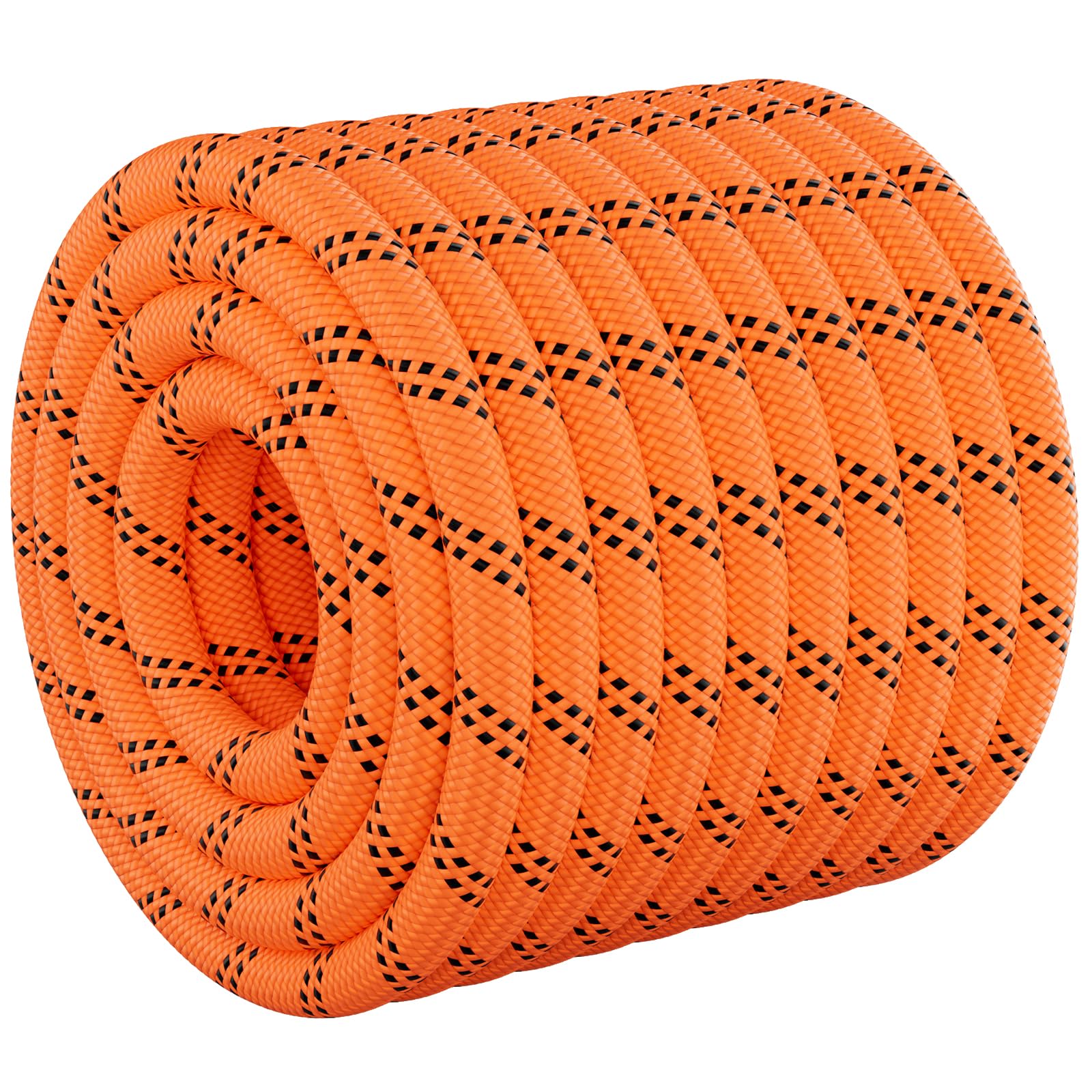
cosirulnta 1/2" 150ft 9K

cosirulnta 1/2" 150ft 9K

High-vis static rigging

Our Score 9.2/10
Check Price

Worth Noting

  • Stiffness makes tying and dressing knots more difficult, especially in cold conditions
  • Not designed for climbing hitches like Blake's or Prusik knots due to limited flexibility
Length
150 ft
Diameter
1/2"
Stiffness
Stiff, especially cold
Construction
Double-braid polyester
Read the full review

The cosirulnta 1/2-inch double-braid delivers 9,000 lbs of breaking strength in a bright orange sheath that stays visible in leaf litter or low light, reducing accidental cuts. Its stiffness — especially noticeable in cold weather — makes knotting more laborious than with softer ropes like the top pick, so this suits budget-conscious buyers who prioritize straight-line pulling and low stretch over handling ease.

Working the rope thoroughly in warmer conditions can ease initial stiffness, but cold-weather use remains a challenge.

Bottom line: Best for budget-focused tree pulling where stiffness is a secondary concern — the bright jacket adds a useful safety layer.

8

X XBEN 1/2" 120ft 5.2K

X XBEN 1/2" 120ft 5.2K

Light to medium

Our Score 9.2/10
Check Price

Worth Noting

  • Breaking strength barely exceeds the 5,000 lb minimum, limiting heavy use; some units arrive with loose strands.
Length
120 ft
Diameter
1/2"
Stiffness
Construction
Double-braid polyester
Read the full review

A 1/2-inch double-braid polyester rope with a 5,174 lb breaking strength that just clears the threshold for pulling small trees. The construction feels sturdy for the price, but some units show loose strands or sheath damage. It suits budget-conscious buyers who need a backup rope or light farm use rather than regular tree pulling.

Bottom line: A budget-friendly option for light tree pulling or backup use, but not a primary rope for regular heavy work.

9

Glfcai 1/2" 150ft 9K

Glfcai 1/2" 150ft 9K

Certified static rigging

Our Score 9.0/10
Check Price

Worth Noting

  • Very stiff when new, making knot tying difficult until broken in.
  • Some units can have core twisting or sheath separation.
Length
150 ft
Diameter
1/2"
Stiffness
Stiff, break-in needed
Construction
Double-braid polyester
Read the full review

This rope offers ASTM F2116 certification and 9,000 lbs breaking strength at a price that undercuts most competitors. The double-braid polyester construction handles heavy loads for static rigging and tree lowering. The stiffness out of the box can feel like a wire, making knotting a struggle until the rope is broken in. For those who prioritize certified strength and cost savings over immediate handling comfort, this is a sensible choice. Some units may exhibit minor QC issues such as uneven strands or core protrusion, but the overall performance aligns with expectations.

Expect a break-in period of a few uses to soften the rope for easier knotting.

Bottom line: This rope suits budget-conscious buyers who need certified strength and can tolerate a stiff rope that requires break-in.

How to Choose

Breaking Strength

Breaking strength is the raw figure — the load at which the rope parts. For pulling down trees, 5,000 lbs is the absolute minimum for safety with a 10:1 working load limit (WLL) of 500 lbs. A rope rated 8,000 lbs gives a WLL of 800 lbs, enough for most single-stem trees under 24 inches diameter without shock loads.

Higher strength (10,000+ lbs) is overkill for typical farm or garden use. It adds weight, bulk, and often stiffness. Reserve ultra-high-strength ropes (20,000 lbs) for winching large timber or pulling against heavy friction.

Diameter

Diameter affects compatibility with pulleys, blocks, and winch drums. A 1/2-inch rope fits most standard arborist blocks and hardware, while 5/8-inch requires larger sheaves to avoid pinching the rope. The thicker rope is harder to tie and store, and its extra weight adds fatigue during long pulls.

For occasional tree work, 1/2 inch is the sweet spot: strong enough (7,000-9,000 lbs) and light enough to handle. 3/8-inch ropes, common in camping, are too weak and should never be used for tree pulling.

Construction

Double-braid polyester is the gold standard for static pulling. The outer braid takes the load and abrasion, while the inner core provides strength and low stretch (less than 3% at 20% load). This low stretch gives you predictable control when pulling — the rope doesn't bounce like a rubber band.

Single-braid (12-strand) ropes, like the Blue Ox, are more flexible and knot-friendly but stretch significantly under load. They are ideal for climbing where some give is needed, but for pulling trees, that stretch translates to lost directional control and potential recoil. Stick with double-braid for felling.

Length

100-150 feet covers most single-tree scenarios: from the tree to the anchor point (truck, winch, or pulley) with some slack. Longer ropes (220 ft) are useful when you need to reach across a field or wrap around multiple anchors, but they add weight and coiling hassle.

For farm use, 150 feet is a versatile length. If you regularly pull trees from a distance (e.g., across a fence line), consider 200+ feet — but only if the rope's stiffness is manageable, as long ropes amplify coiling frustration.

Stiffness

Stiffness is the hidden trade-off in budget double-braid ropes. A stiff rope has a tighter weave, which improves abrasion resistance and reduces fraying. But it makes tying knots like a Blake's hitch or clove hitch extremely difficult — especially in cold weather when polyester stiffens further.

If you rarely retie knots and use the same hitch for long pulls, stiffness is acceptable. For users who switch setups often (e.g., directional felling with different anchor points), a softer rope like the Right Rope saves time and frustration. A break-in period of several heavy pulls can soften stiff ropes, but it's not guaranteed.

Frequently Asked Questions