Greenhouses & Hydroponics

15 Best Seed Starter Kits with Grow Light of 2026: Reliable Picks That Last

Find the right seed starter kit with grow light for your home garden – balancing cell count, light power, and durability so you don't waste time or money.

Starting seeds indoors with a grow light kit should be simple: fill a tray, add water, flip the switch. But many affordable kits come with a catch – the LEDs flicker or stop working within weeks, leaving you with leggy seedlings that struggle to survive transplanting.

This guide cuts through the hype to find kits where the lights actually hold up. Whether you need a heat mat, self-watering system, or just a reliable 80-cell tray, these picks balance features and longevity for real garden results. The key is knowing which specs matter – and which marketing claims to ignore.

1

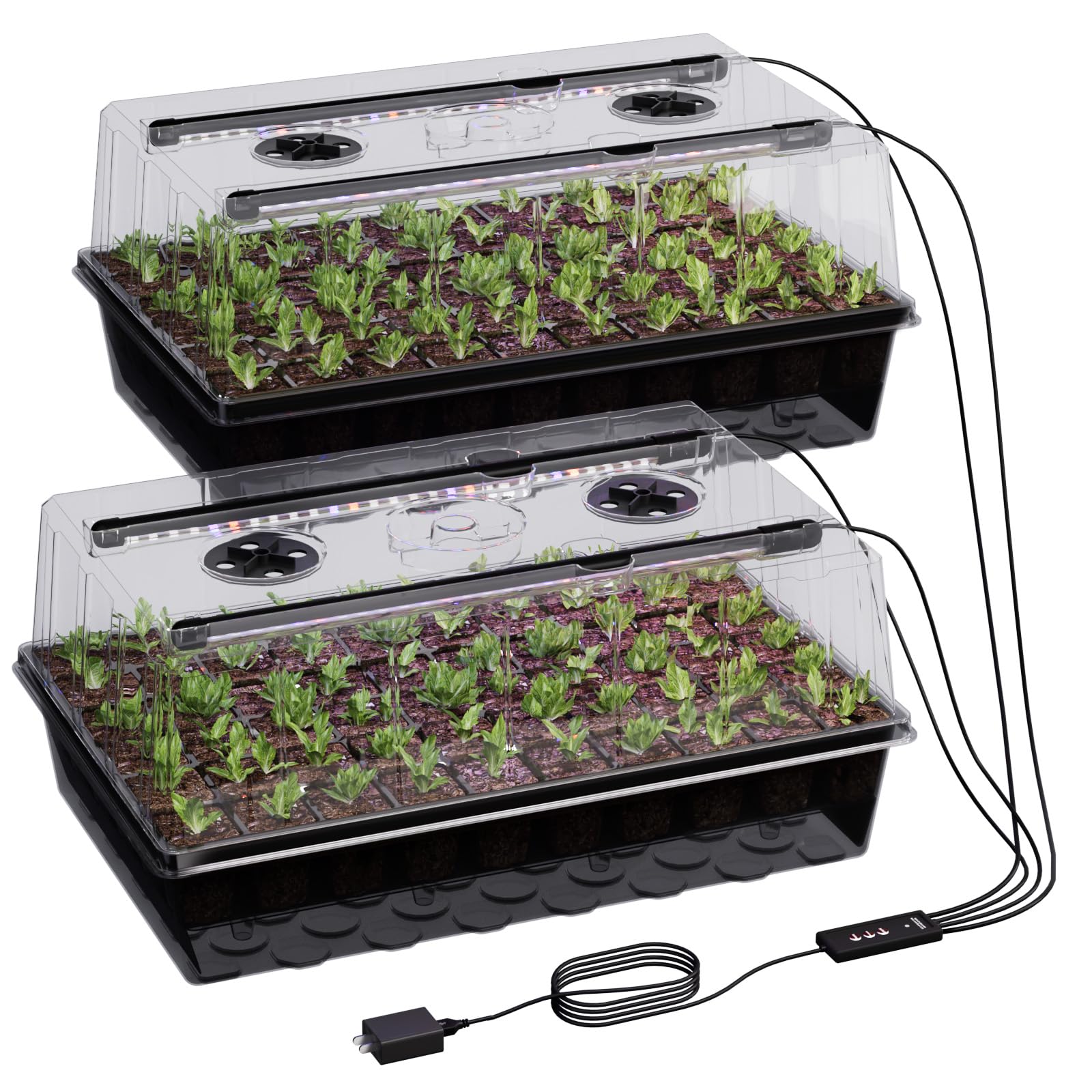
Sondiko 80-Cell 2-Pack

Top Pick
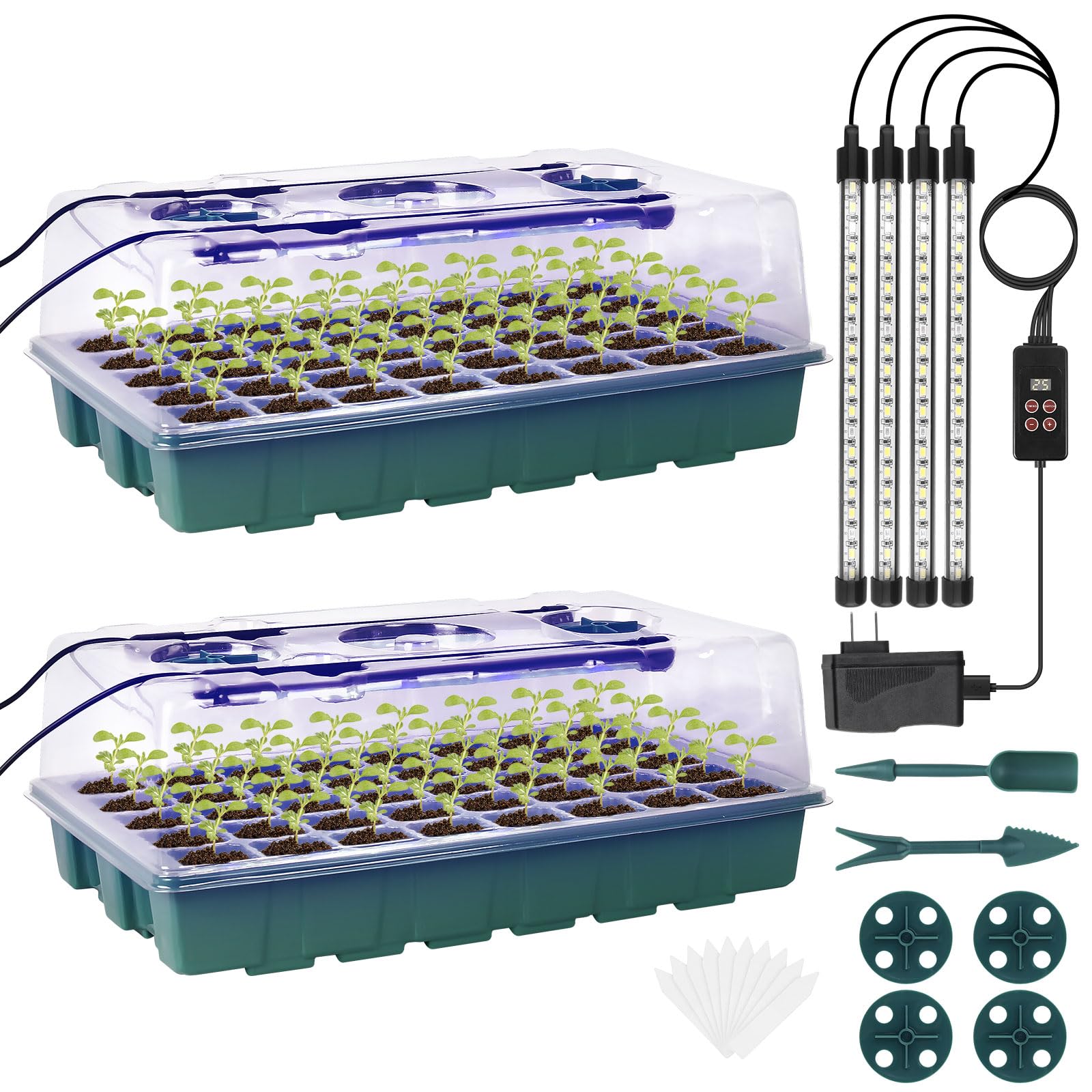
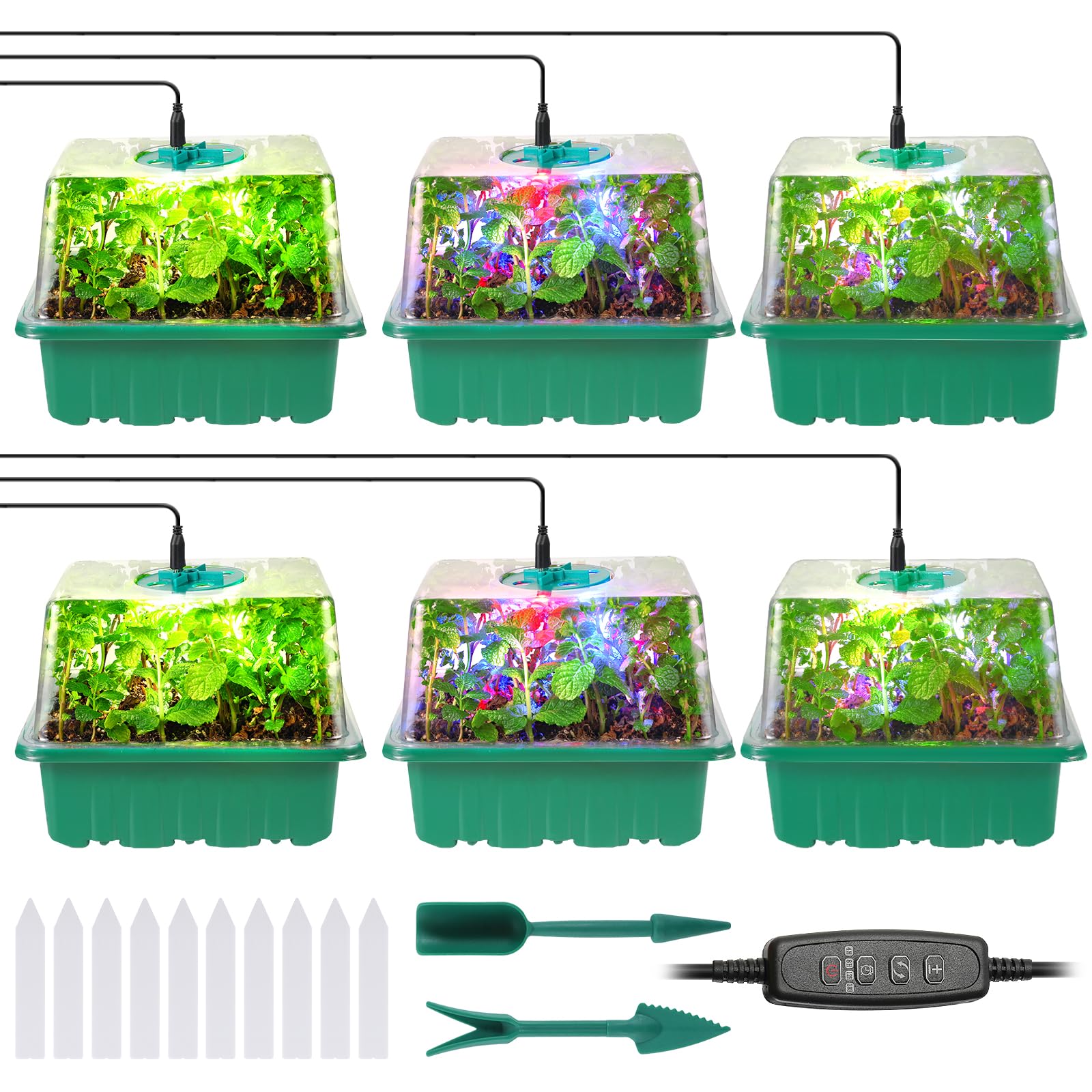
Sondiko 80-Cell 2-Pack

First-time starters

Our Score 9.0/10
Check Price

Worth Noting

  • Grow light output can be too dim for sun-loving crops, leading to leggy growth without supplemental light.
  • Light attachment to the dome can be finicky
Price
$$
Rating
4.5 ★
Best For
First-time starters
Cell Count
80
Read the full review

Seeds sprout consistently and seedlings push up fast under the dual adjustable LEDs, and the digital display with timer makes scheduling light cycles a set-and-forget affair. Assembly takes minutes, and the humidity dome with eight vents gives you fine control over moisture without guesswork.

The grow lights may produce less intensity than some seedlings need – those starting tomatoes, peppers, or other sun-lovers under weak ambient light will want a supplemental source. The lamp arms also require a firm press to snap into the dome; an occasional unit may not seat fully, but a bit of extra force usually resolves it.

This kit suits first-time seed starters who want an all-in-one solution with clear controls, especially if growing leafy greens, herbs, or other moderate-light crops. For higher-light seedlings, plan to add a separate LED panel or place the tray near a bright window after germination.

Press the lamp arms firmly into the dome slots until you hear a click – a little extra force ensures a snug fit.

Bottom line: For the most complete and beginner-friendly seed starting kit under $50, Sondiko's smart controls and consistent germination track record make it a safe bet – just plan to supplement the lights if starting sun-loving crops.
2

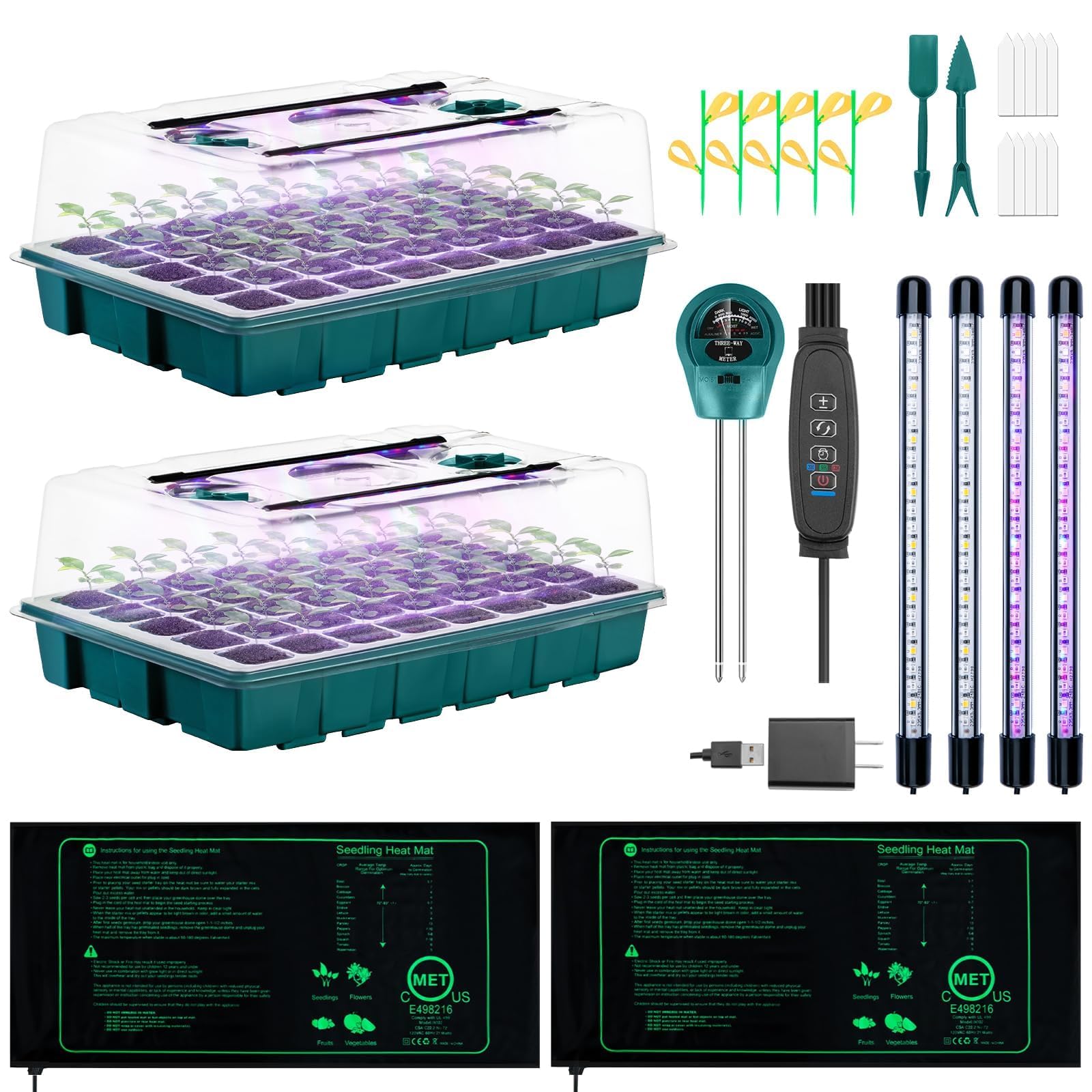
SOLIGT 60-Cell w/ Heat Mat

SOLIGT 60-Cell w/ Heat Mat

Heat mat needed

Our Score 9.0/10
Check Price

Worth Noting

  • In a humid room, condensation from the dome can drip onto the heat mat, requiring periodic wiping.
  • Some seeds sensitive to excess warmth may rot if the mat runs too hot.
Price
$$
Rating
4.5 ★
Best For
Heat mat needed
Cell Count
60
Read the full review

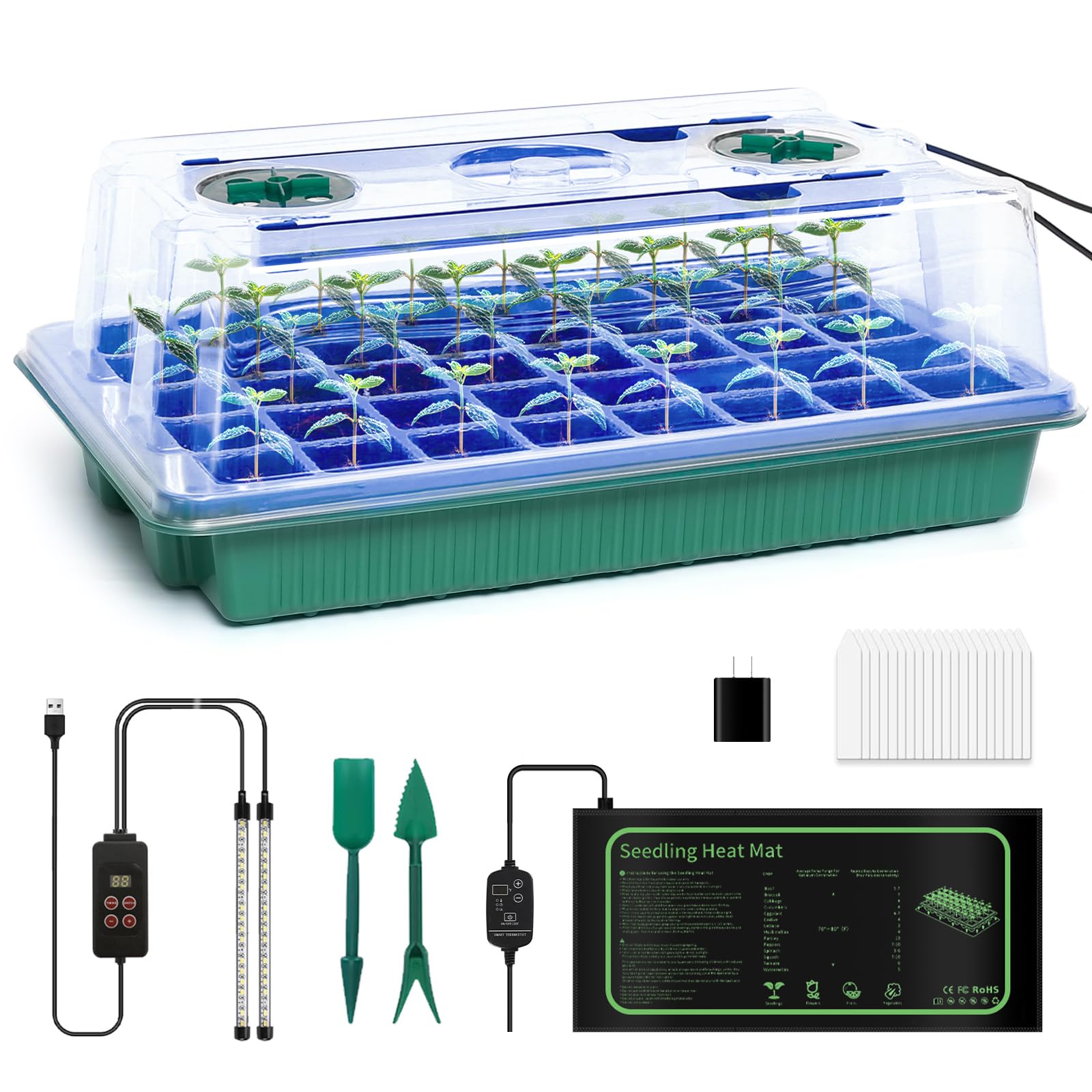
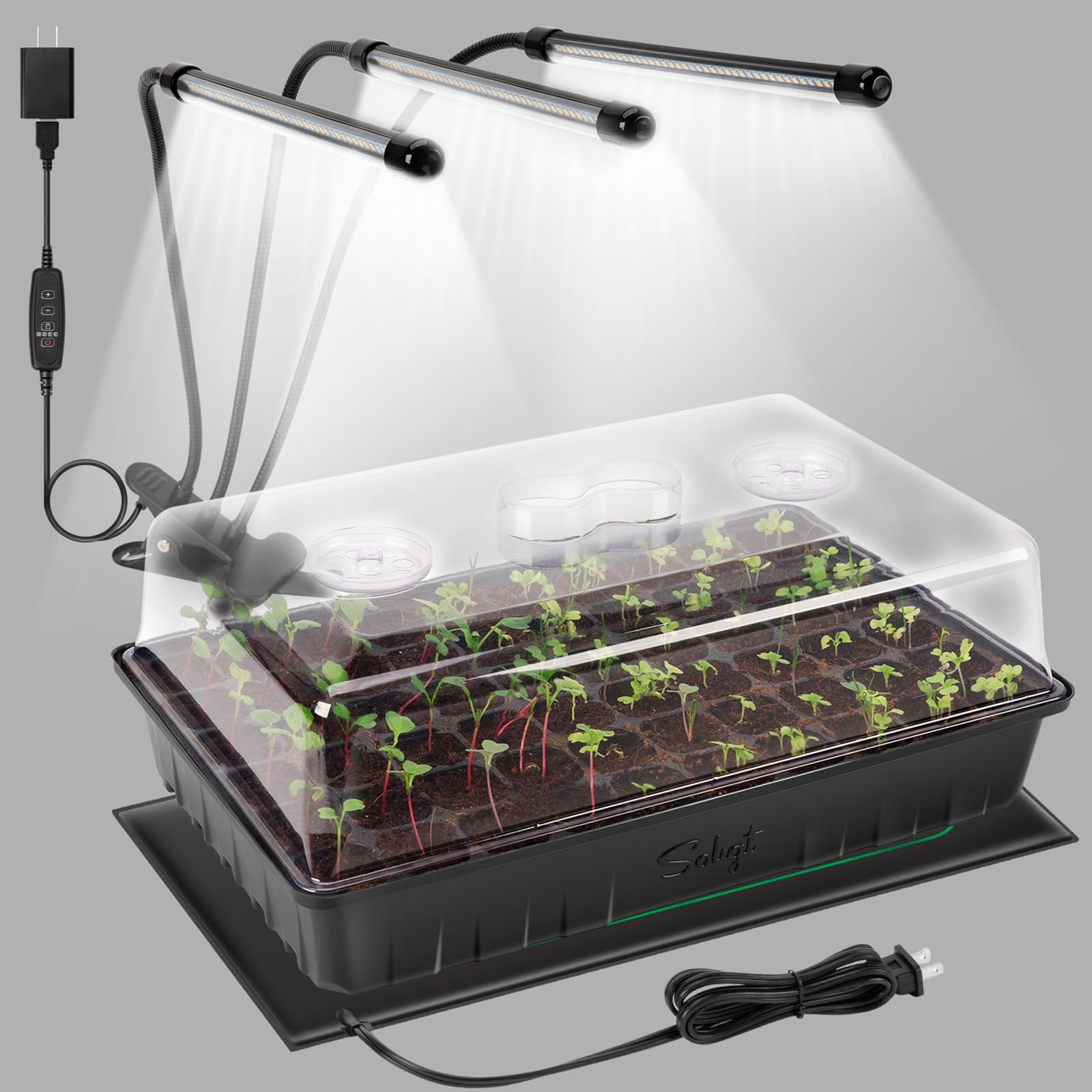
The SOLIGT 60-cell kit stands out by pairing a waterproof heat mat with a three-head gooseneck light that adjusts to different seedling heights. This speeds germination effectively, but the humidity dome can drip condensation onto the mat, so positioning the mat slightly off-center helps. The heat mat may run warm for some seeds, making it better suited for warm-season crops like tomatoes than cool-weather herbs. The kit includes 60 cells and a 4.3-inch dome with adjustable vents, offering decent space for small to medium projects. Compared to the top pick, this kit prioritizes heat and light flexibility over overall light reliability.

Position the heat mat slightly off-center to avoid direct condensation drips.

Bottom line: A strong all-in-one option with a heat mat and flexible light, but moisture management requires attention.

3

Guioiby 120-Cell 2-Pack

Guioiby 120-Cell 2-Pack

Large capacity budget

Our Score 9.0/10
Check Price

Worth Noting

  • Dome lids may not seal securely, letting humidity escape
Price
$
Rating
4.5 ★
Best For
Large capacity budget
Cell Count
120
Read the full review

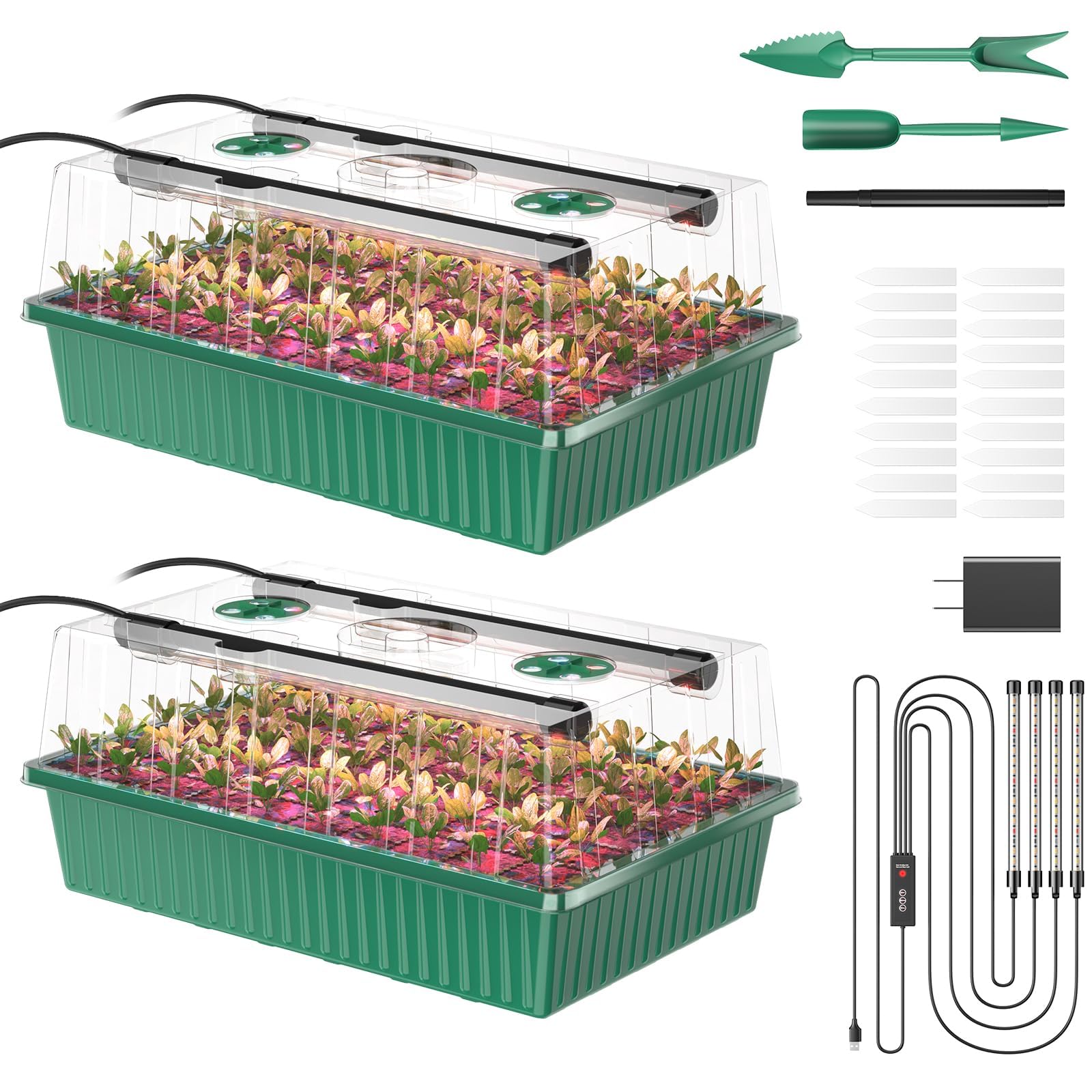
This kit packs 120 cells into two trays, giving budget-conscious gardeners more starting space than most options at this price. The trays hold up well and clean easily for reuse. However, the dome lids may not snap tight, which can reduce humidity for fussy seeds, and a small number of trays ship with cracks. If you need maximum cell count on a shoestring and can accept some lid alignment fussiness, this is a cost-effective way to go.

Bottom line: A good pick if you need maximum cell count for the lowest cost and can accept some lid alignment fussiness and checking for cracked units on arrival.

4

Adawook 72-Cell 6-Pack

Adawook 72-Cell 6-Pack

Separate light users

Our Score 9.0/10
Check Price

Worth Noting

  • Cells are shallow, limiting root space for longer growth before transplanting.
Price
$
Rating
4.5 ★
Best For
Separate light users
Cell Count
72
Read the full review

This kit offers three lighting modes (white, blue+red, all) to match germination and growth stages, and the clear dome with vents helps control humidity. However, the light output is insufficient for many seedlings, leading to stretched growth; it works best as a tray system supplemented with a stronger external light source.

Bottom line: Best for starting low-light herbs or as a backup tray system when paired with a separate grow light.

5

MIXC 6-Pack Green

MIXC 6-Pack Green

Budget bulk starters

Our Score 8.8/10
Check Price

Worth Noting

  • Under high heat mats, the plastic can soften or become brittle over time
Price
$
Rating
4.4 ★
Best For
Budget bulk starters
Cell Count
72
Read the full review

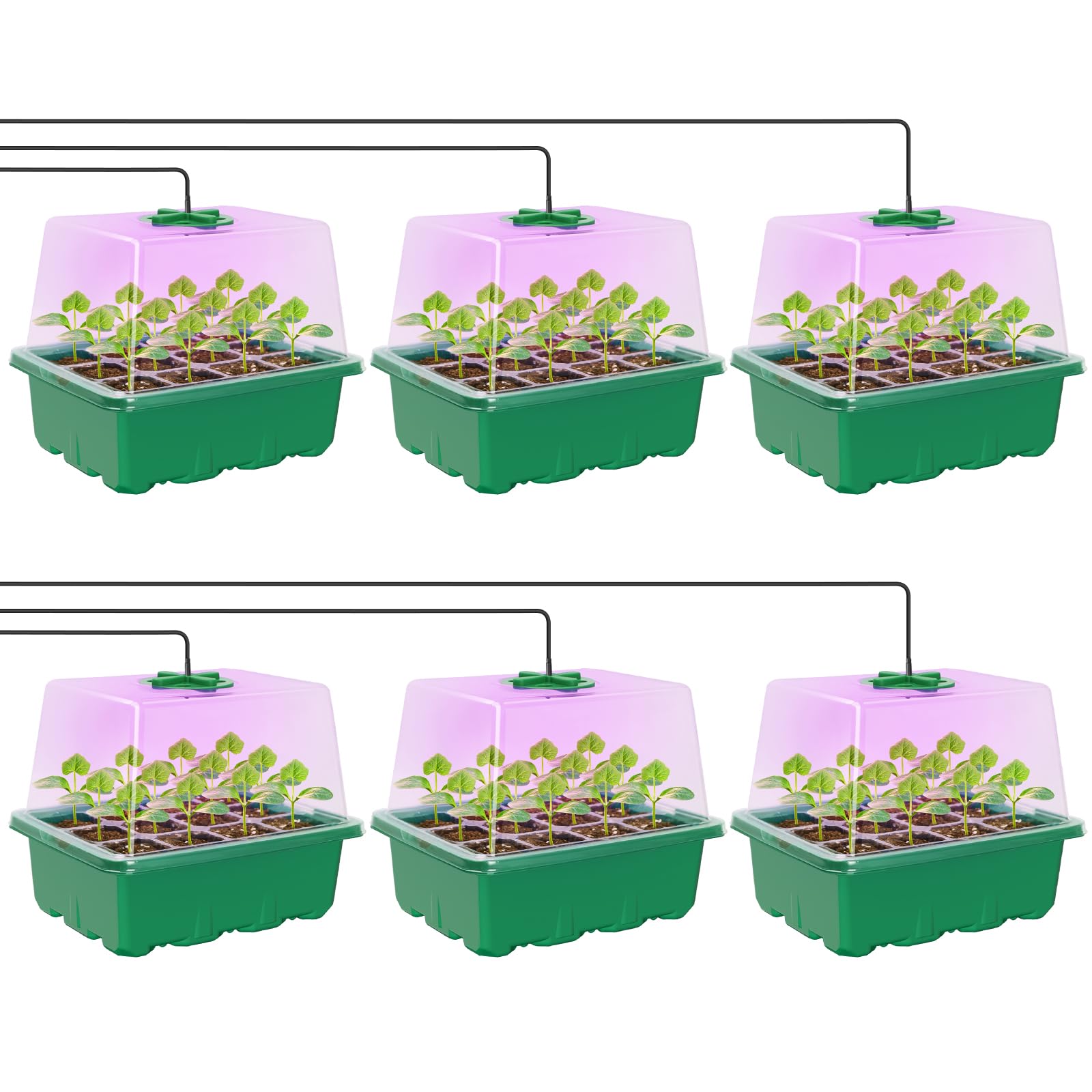
The MIXC 6-pack delivers the largest cells in the budget tier, giving roots more room before transplanting than similarly priced kits. Germination speed gets a consistent thumbs-up, and the 72-cell total spreads across six separate trays for organizing different seed varieties. The plastic can become brittle under heat mats, so a thermostat is advisable to keep temperatures moderate — this makes the kit ideal for single-season use rather than repeated cycles.

Use a thermostat to keep heat mat temperatures below the plastic’s softening point — this avoids accidental warping.

Bottom line: For budget gardeners starting a large assortment of seeds this season, the MIXC delivers more root space per dollar than any other kit in its class.

6

LYDTICK 6-Set 72-Cell

LYDTICK 6-Set 72-Cell

Cost-conscious domes

Our Score 8.8/10
Check Price

Worth Noting

  • Light brightness is modest; seedlings may stretch if raised too far from the LEDs or used for sun-loving varieties
Price
$
Rating
4.4 ★
Best For
Cost-conscious domes
Cell Count
72
Read the full review

The LYDTICK kit stands out with taller domes than most budget seed starters, allowing seedlings to grow several inches before needing a transplant. The included timer controller automates light cycles, so you can set it and forget it — a convenience rarely seen at this price point.

Best for cost-conscious gardeners starting low-light crops like lettuce, herbs, or flowers. The LEDs provide enough intensity for these plants, but the light output is average; if you plan to grow sun-loving seedlings like tomatoes, expect some legginess unless you place the tray near a bright window.

Place the tray near a bright window to supplement the LEDs when starting crops that need more light.

Bottom line: A practical choice for budget-minded seed starters who prioritize dome height and timer convenience over maximum light output.

7

Bonviee 5-Pack Clear

Bonviee 5-Pack Clear

Budget bulk trays

Our Score 8.8/10
Check Price

Worth Noting

  • Built-in grow lights may flicker or stop working; best treated as a supplement.
Price
$
Rating
4.4 ★
Best For
Budget bulk trays
Cell Count
60
Read the full review

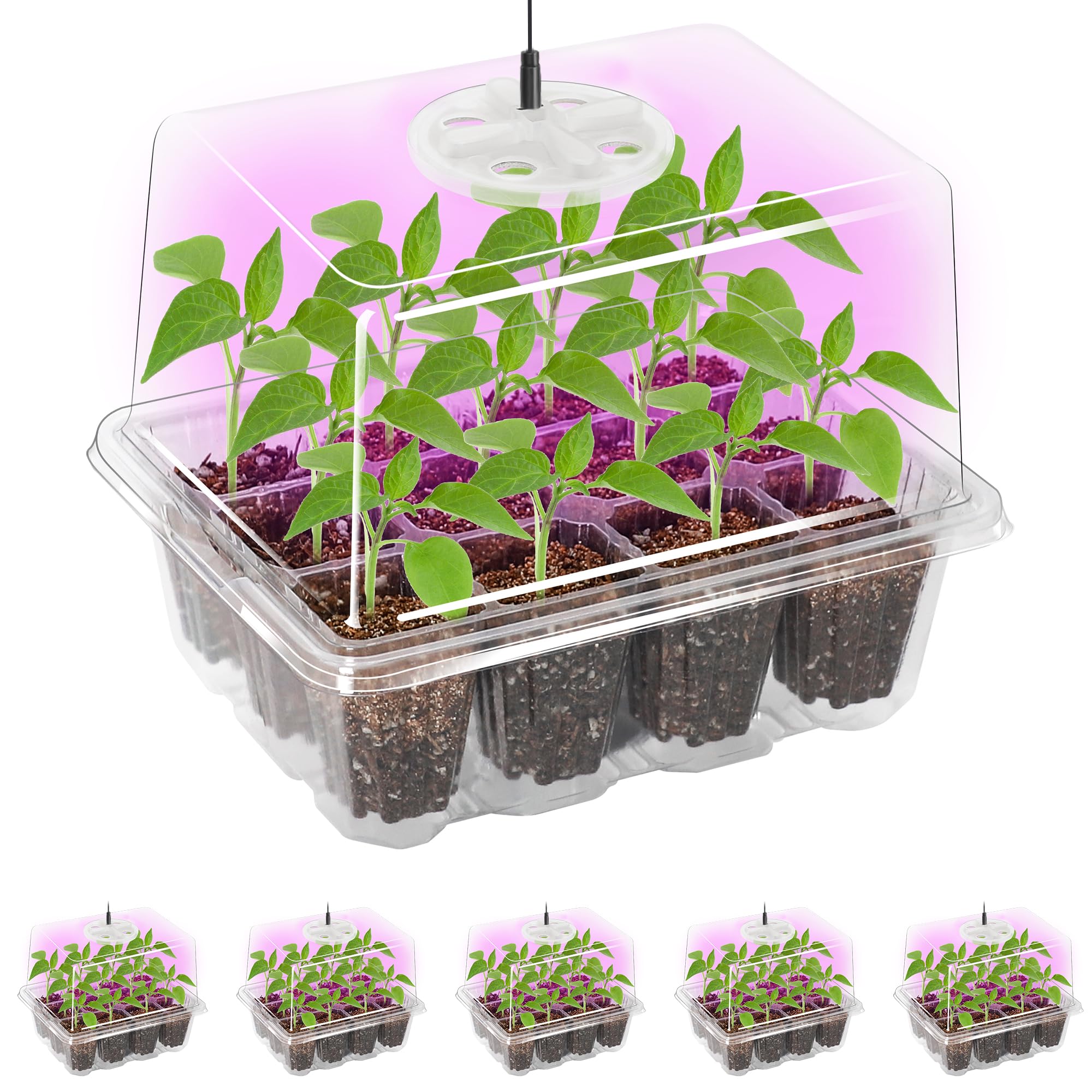
Bonviee delivers five complete seed-starting trays for the price of one from many competitors — unbeatable for budget growers starting a wide variety of seeds. The built-in LEDs may flicker or stop working, making them a bonus rather than a primary light source, and the plastic trays can crack under heat mats. It's a volume play, not a long-term investment.

Bottom line: Best for budget-conscious gardeners who need many trays at once and are willing to replace the lights or use an external source.

8

BlumWay 80-Cell 2-Pack

BlumWay 80-Cell 2-Pack

Casual starters

Our Score 8.8/10
Check Price

Worth Noting

  • Grow lights can be too dim for seedlings that need strong light, leading to leggy growth.
Price
$$
Rating
4.4 ★
Best For
Casual starters
Cell Count
80
Read the full review

This two-pack offers 80 cells and a remote for adjusting brightness and timer, making setup easy. The included lights are average – sufficient for soft greens but not for seedlings that need intense light to stay stocky. The plastic trays feel thin; they work for one season but may not hold up for years. It's a decent starter kit for casual gardeners who supplement with extra light, but it doesn't deliver standout performance for the price.

Bottom line: For casual gardeners starting herbs or lettuce with supplemental light, this kit offers decent value, but serious seed starters should look elsewhere.

9

joyhalo 40-Cell w/ Heat Mat

joyhalo 40-Cell w/ Heat Mat

Compact heat mat

Our Score 8.8/10
Check Price

Worth Noting

  • Bottom tray may crack under normal use.
Price
$$
Rating
4.4 ★
Best For
Compact heat mat
Cell Count
40
Read the full review

This kit's graphene heat mat distributes warmth evenly, helping seeds germinate consistently. The tall 4.7-inch dome gives seedlings room to grow before transplanting. However, the bottom tray can crack under normal handling, and with only 40 cells, it suits small windowsill projects rather than starting a full garden. Handle the tray with care to avoid breakage.

Bottom line: This kit fits well for small-scale seed starting where a heat mat is desired, provided the tray is handled gently.

10

Homiton 48-Cell 4-Pack

Homiton 48-Cell 4-Pack

Budget heat mat

Our Score 8.8/10
Check Price

Worth Noting

  • Limited vertical space under the domes for seedlings that grow tall.
Price
$
Rating
4.4 ★
Best For
Budget heat mat
Cell Count
48
Read the full review

This budget kit combines a heat mat and grow lights at a price that's hard to beat, with quick germination reported. But the 48 cells limit variety, the short domes restrict taller seedlings, and the heat mat can run too hot for delicate seeds without careful monitoring.

Bottom line: A secondary option for budget-starting a few seed varieties if you monitor heat and choose short crops.

11

Patigrow 120-Cell Self-Watering

Patigrow 120-Cell Self-Watering

Self-watering beginners

Our Score 8.6/10
Check Price

Worth Noting

  • Grow lights may stop working after a few weeks of use, reducing their value as a long-term light source
Price
$$$
Rating
4.3 ★
Best For
Self-watering beginners
Cell Count
120
Read the full review

The capillary mat system pulls water from the reservoir into each cell automatically, keeping the soil evenly damp without daily attention — a real advantage for gardeners who tend to forget watering. Two 60-cell trays, adjustable vents, and a 4.07-inch humidity dome give seedlings room to start, and the included timer and brightness controls add convenience.

This kit suits beginner gardeners or anyone growing crops that don't demand intense light, such as microgreens or leafy greens. The grow lights themselves can stop working within weeks of use, so plan to either replace them with a separate light source or treat the unit as a self-watering tray system with an external LED panel. For consistent light output over multiple seasons, the top pick Sondiko is the safer investment.

If the lights fail early, repurpose the tray system with a separate LED panel; the self-watering base remains functional.

Bottom line: Best for forgetful growers who value automatic watering over reliable built-in lighting — pair with an external grow light for best results.

12

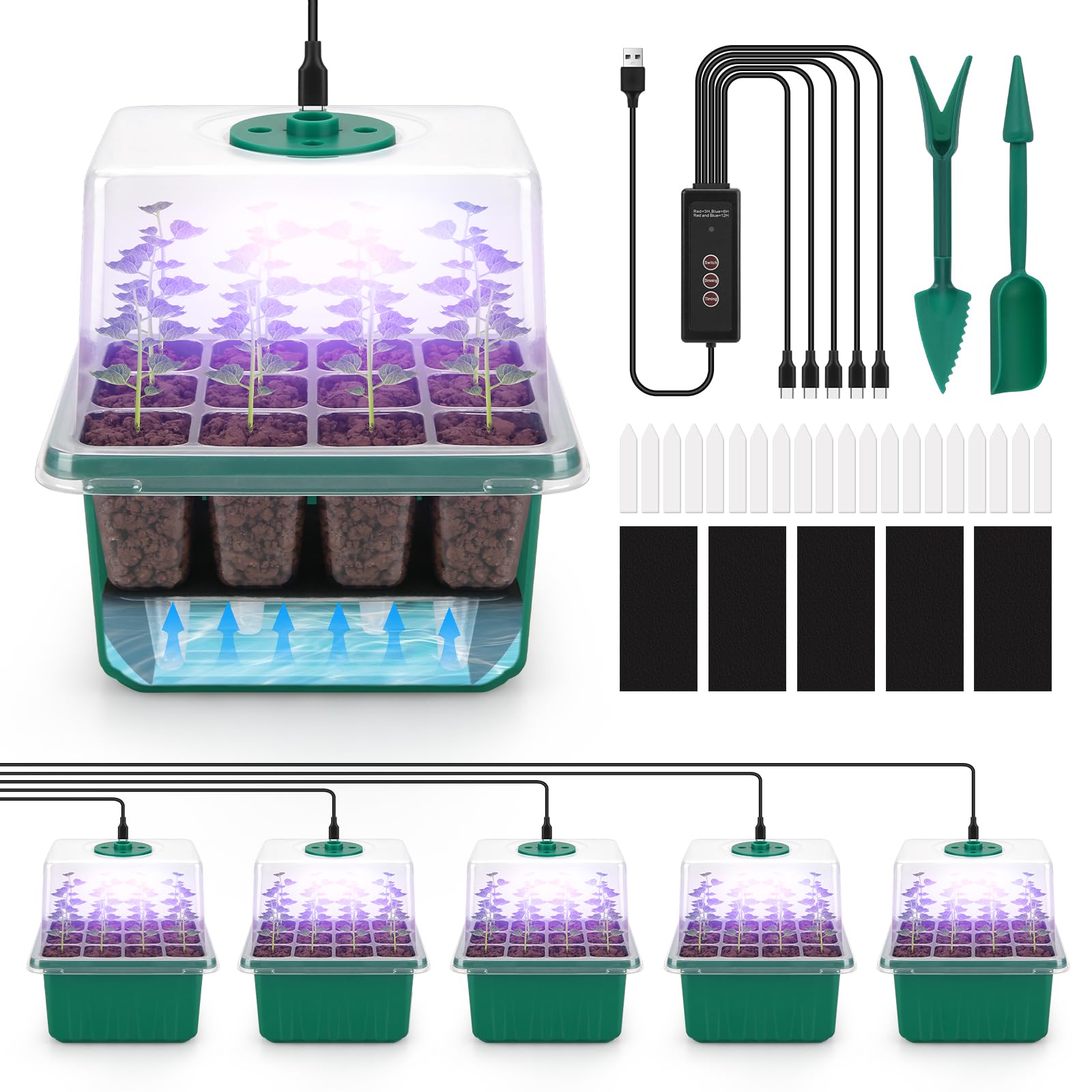
Idealife 2-Pack

Idealife 2-Pack

Low-cost trial

Our Score 8.6/10
Check Price

Worth Noting

  • The 1.5-inch cells limit use to very early growth; larger seeds may need transplanting sooner.
Price
$
Rating
4.3 ★
Best For
Low-cost trial
Cell Count
24
Read the full review

This kit is the cheapest way to get a built-in grow light and humidity domes for indoor seed starting. The two 12-cell trays with full-spectrum LEDs and a timer let you control light cycles, and seeds can sprout in as little as three days. However, the 1.5-inch cells restrict growth to the earliest stage, and there is no AC adapter included – you need a USB power source. That combination makes this best suited for casual windowsill trials or for beginners who want to test the waters before investing in a larger system.

Bottom line: A smart pick if you are a beginner wanting to test seed starting with minimal investment and already have a USB power source.

13

Hugbow 80-Cell 2-Pack

Hugbow 80-Cell 2-Pack

High quality heat mat

Our Score 8.6/10
Check Price

Worth Noting

  • The embedded LED bars may stop working within weeks of first use.
Price
$$
Rating
4.3 ★
Best For
High quality heat mat
Cell Count
80
Read the full review

The Hugbow kit bundles sturdy trays with a heat mat and soil meter. Seedlings sprout quickly in the dense 80-cell setup. But the grow lights are the weak link — they may stop working within weeks, making this best for those who plan to use their own light source and view the included lights as a bonus.

Bottom line: Ideal for growers who already own a dedicated grow light and want a solid tray setup with bonus heat mat and meter — the light reliability is not its selling point.

14

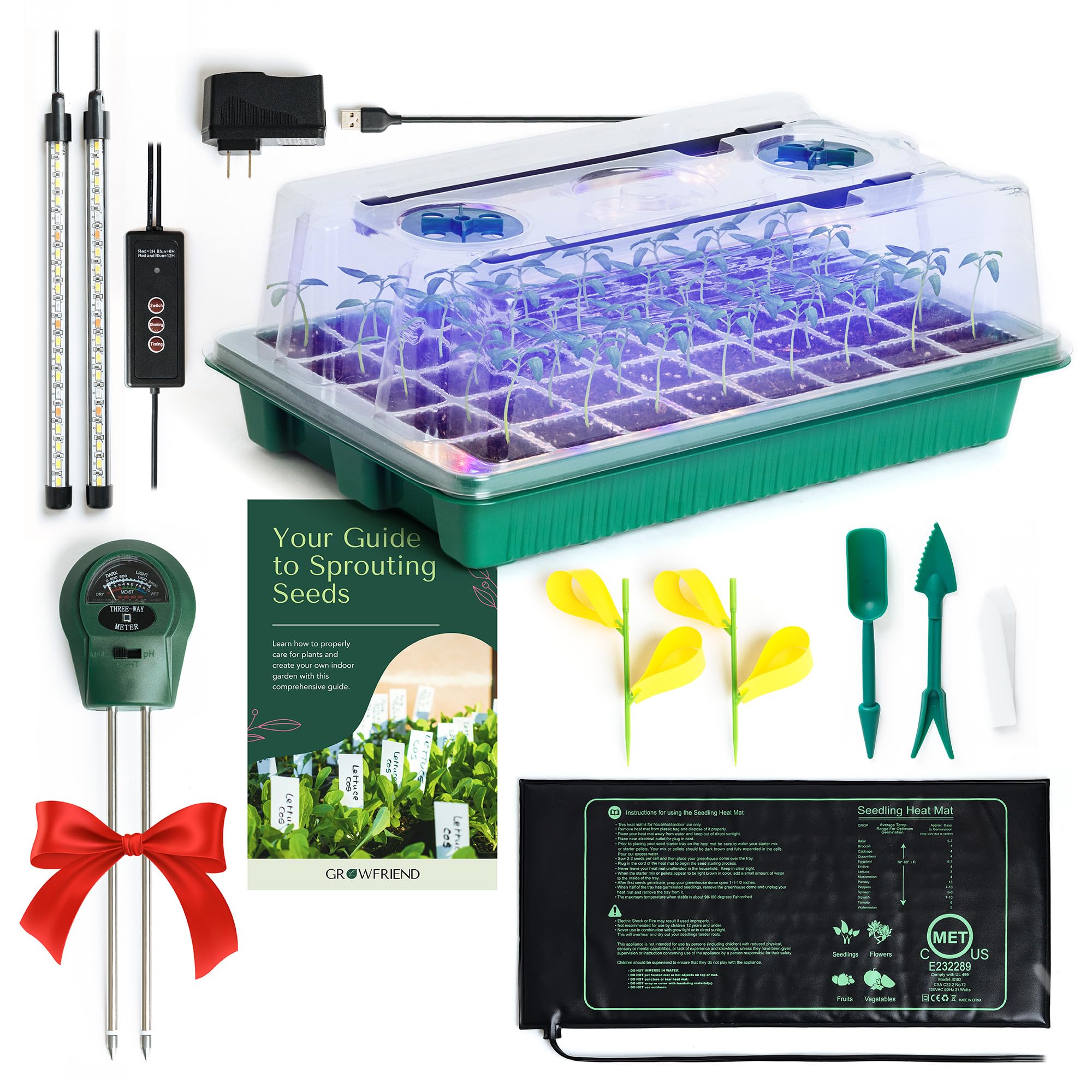
GROWFRIEND 40-Cell Kit

GROWFRIEND 40-Cell Kit

Complete beginner kit

Our Score 8.4/10
Check Price

Worth Noting

  • Grow lights and heat mat may stop heating or dim over several months of use
  • Plastic tray can develop cracks under regular handling
Price
$$
Rating
4.2 ★
Best For
Complete beginner kit
Cell Count
40
Read the full review

This kit arrives with a heat mat, a 3-in-1 soil moisture meter, sticky gnat traps, and a gardening eBook — extras that save a new grower from making separate purchases. The 40-cell tray and adjustable LED lights get seeds sprouting quickly. But like many kits under $50, the electronic components have a limited lifespan. The lights may dim or the heat mat may stop warming after a few months, and the plastic tray can develop cracks with repeated use. That makes this a season-long starter bundle rather than a long-term investment — ideal for someone testing indoor seed starting for the first time.

Treat the lights and heat mat as single-season components — they are best used with a thermostat to extend their life.

Bottom line: Best for first-time growers who want a complete setup without buying accessories separately — expect to replace the electronic parts after a season or two.

15

BlumWay Self-Watering 60-Cell

BlumWay Self-Watering 60-Cell

Self-watering budget

Our Score 8.4/10
Check Price

Worth Noting

  • The integrated grow lights may stop working within the first season, requiring replacement.
Price
$
Rating
4.2 ★
Best For
Self-watering budget
Cell Count
60
Read the full review

The BlumWay kit delivers on its self-watering promise with capillary mats that reduce watering frequency, and assembly takes minutes. However, the grow lights are prone to early failure, and the plastic trays can become brittle under heat mats. This setup works best for gardeners willing to replace the lights or use the trays as a plain germination system with an external light source.

Bottom line: Buy this if you need an inexpensive self-watering tray set and plan to use your own grow lights or accept a single-season lifespan.

How to Choose

Cell Count and Tray Size

Cell count determines how many seeds you can start at once. A 40-cell kit works for a small herb garden, while 80 to 120 cells suit a full vegetable patch. But larger trays take up more space and can be harder to move under a windowsill or grow stand.

Cell size matters too. Standard cells are about 1.5 inches square. Deeper cells (like the MIXC's 1.5x2-inch pockets) let roots develop longer before transplanting, which is useful for slow-growing crops like peppers or tomatoes.

Grow Light Quality

Not all 'full spectrum' LEDs are equal. Many budget kits use 8 to 12 small beads per tray, which deliver only enough light for germination. After a few weeks, seedlings need higher intensity to stay compact. Look for kits with at least 40 beads per tray or adjustable brightness levels above the minimum.

The real hidden trade-off: LEDs that seem bright when tested alone can be too weak once the dome and plastic diffuser are installed. Some kits also use timer or remote controls, but those don't affect light output. If your space lacks natural light, invest in a kit with a gooseneck or flexible arm so you can place LEDs 2-3 inches above the leaves.

Included Accessories

Heat mats are the most useful extra – they consistently warm soil 10-15°F above ambient, speeding germination for tomatoes and peppers by days. However, not all heat mats are waterproof. A mat that gets wet from dome condensation can short out or create hot spots that cook seeds.

Self-watering systems reduce daily attention but can oversaturate delicate seeds like lettuce. Bottom-watering via a reservoir is gentler than top-watering. Soil meters and pest traps are nice bonuses, but don't let them distract from checking the light quality and tray durability.

Tray Material and Durability

Most kits use either ABS plastic (sturdy, can be reused) or thinner polypropylene that becomes brittle under heat mats or sunlight. A tray that cracks mid-season forces you to repot everything into emergency containers. Check the plastic thickness in reviews – thick walls also help retain humidity better than flimsy ones.

If you plan to reuse trays year after year, spend a few extra dollars for a kit with proven durability (like the Sondiko or SOLIGT). For one-season use, budget multi-packs work fine, but expect some cells or domes to warp or break when you try to clean them.

Frequently Asked Questions