Greenhouses & Hydroponics

7 Best Smart Grow Tent Controller of 2026: Match Your Gear, Avoid Dropouts

Which smart grow tent controller works with your gear and keeps a stable connection? We help you pick without ecosystem lock-in.

Many smart grow tent controllers promise seamless automation but deliver dropped connections and drifting sensors. The real headache isn't the feature list — it's whether the controller stays online and reads accurately.

WiFi signal strength and sensor placement often matter more than the spec sheet. A controller that looks perfect on paper can fail in a tent with thick walls or a heat source near the probe.

This guide focuses on controllers that balance connectivity, sensor accuracy, and compatibility with your existing gear. The goal is a system that works day after day without surprises.

1

AC Infinity 69 Pro

Top Pick
AC Infinity 69 Pro

Serious indoor growers

Our Score 9.2/10
Check Price

Worth Noting

  • WiFi connectivity may drop in setups with thick walls or long distance from the router, requiring occasional re-pairing.
  • Firmware updates can cause the controller to freeze or stop following a schedule until a manual reset is performed.
Brand Fit
AC Infinity gear
Device Ports
4 ports
Automation Features
VPD, cycles, schedules
Read the full review

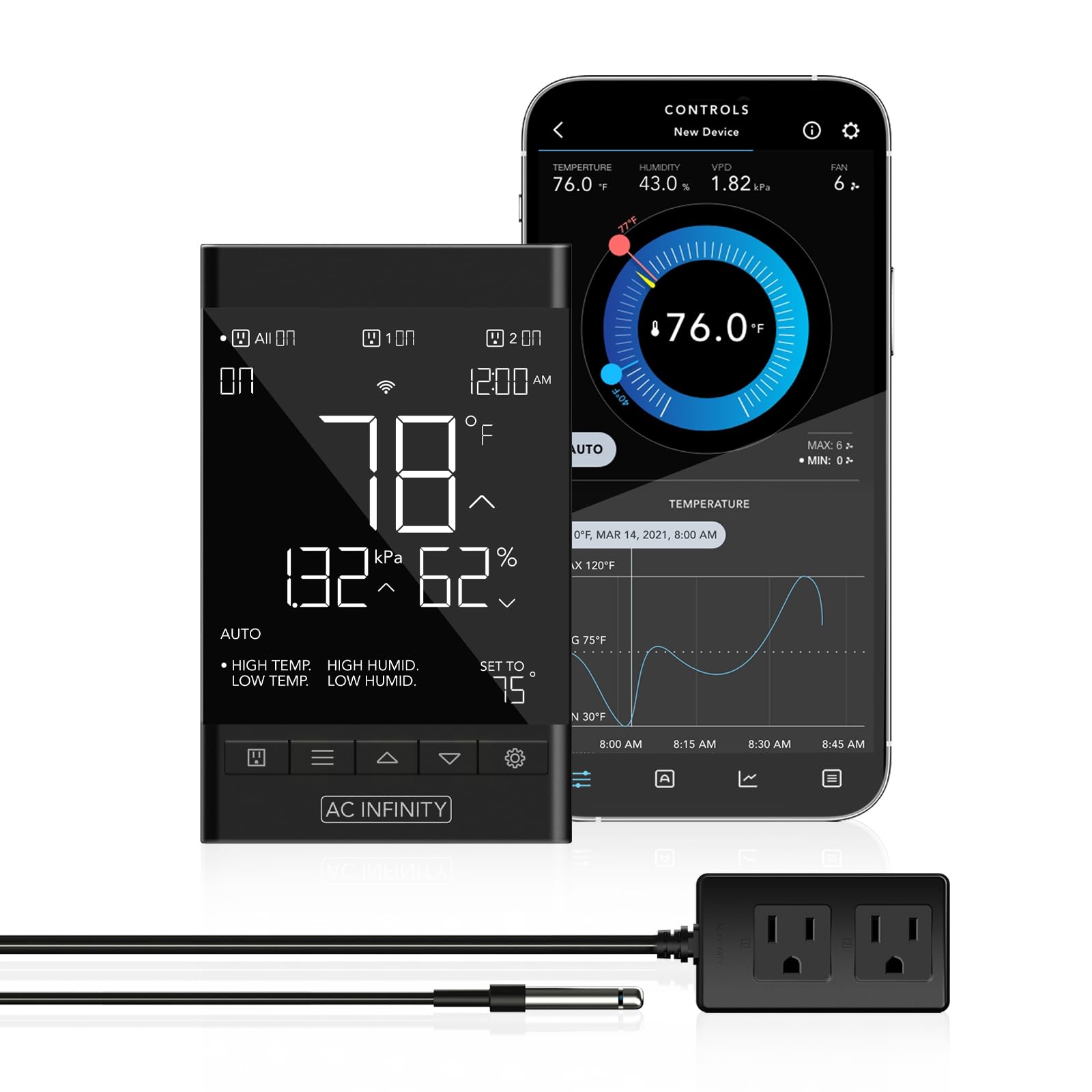
The AC Infinity Controller 69 Pro calculates VPD in real time and adjusts fan speed in response — a level of precision that keeps temperature and humidity locked to your target zone without constant tinkering. Dual sensor inputs and the ability to set separate day/night parameters mean the automation adapts to the grow cycle rather than running a single setpoint.

WiFi connectivity can drop in setups where the router is far from the grow tent, and the app may require re-pairing after a power outage. Some units have shown firmware quirks that cause the controller to stop following a schedule until it is power-cycled. These are not dealbreakers for most indoor gardeners, but they add a layer of vigilance compared to an always-on wired controller.

This controller suits serious growers who already own AC Infinity fans, lights, or ventilation gear and want to automate VPD, humidity, and temperature triggers across up to four devices independently. It rewards the time spent learning the app and menu logic with precise, repeatable environmental control. Growers who avoid smartphone-based monitoring or who prefer plug-and-play simplicity may find the login and setup process more involved than it needs to be.

Place the controller within range of a strong WiFi signal and keep firmware updated to minimize resets.

Bottom line: This controller delivers the most precise environmental automation for growers already invested in AC Infinity gear, provided they are comfortable with occasional app troubleshooting.

2

VIVOSUN GrowHub E42A+

VIVOSUN GrowHub E42A+

VIVOSUN ecosystem users

Our Score 9.0/10
Check Price

Worth Noting

  • Temperature and humidity readings may drift
  • WiFi connection can be finicky; placement near the router helps avoid sync issues.
Brand Fit
VIVOSUN gear
Device Ports
Automation Features
Program light, fan, schedules
Read the full review

The GrowHub E42A+ pairs directly with VIVOSUN equipment — no adapters or workarounds needed — and the companion app includes stage-based grow recipes that adjust light schedules and fan speeds as plants move from seedling to flower. That level of guided automation is rare at this price point, especially when compared to simpler outlet-based controllers that lack device-specific tuning.

This controller suits growers who already own VIVOSUN gear and want a single interface for scheduling and environmental logging. The built-in temperature and humidity sensor can show 5–6°F differences from a separate reference probe, so cross-checking readings with an external sensor is worth doing if you rely on tight VPD targets. WiFi connection drops are possible but typically resolved by repositioning the unit closer to the router.

Place an external temp/humidity probe inside the tent to confirm the onboard sensor readings against your grow-room conditions.

Bottom line: For VIVOSUN ecosystem users, the GrowHub E42A+ delivers guided automation that simpler controllers can't match — just keep a separate sensor handy if you need tight environmental accuracy.

3

Spider Farmer GGS AC10

Spider Farmer GGS AC10

Multi-device growers

Our Score 9.0/10
Check Price

Worth Noting

  • Some units may stop functioning within weeks, creating uncertainty about long-term reliability.
  • WiFi connectivity may drop, requiring manual reconnection and disrupting app control during critical periods.
Brand Fit
Universal plug-in
Device Ports
10 outlets
Automation Features
Stage-based, schedules, sensors
Read the full review

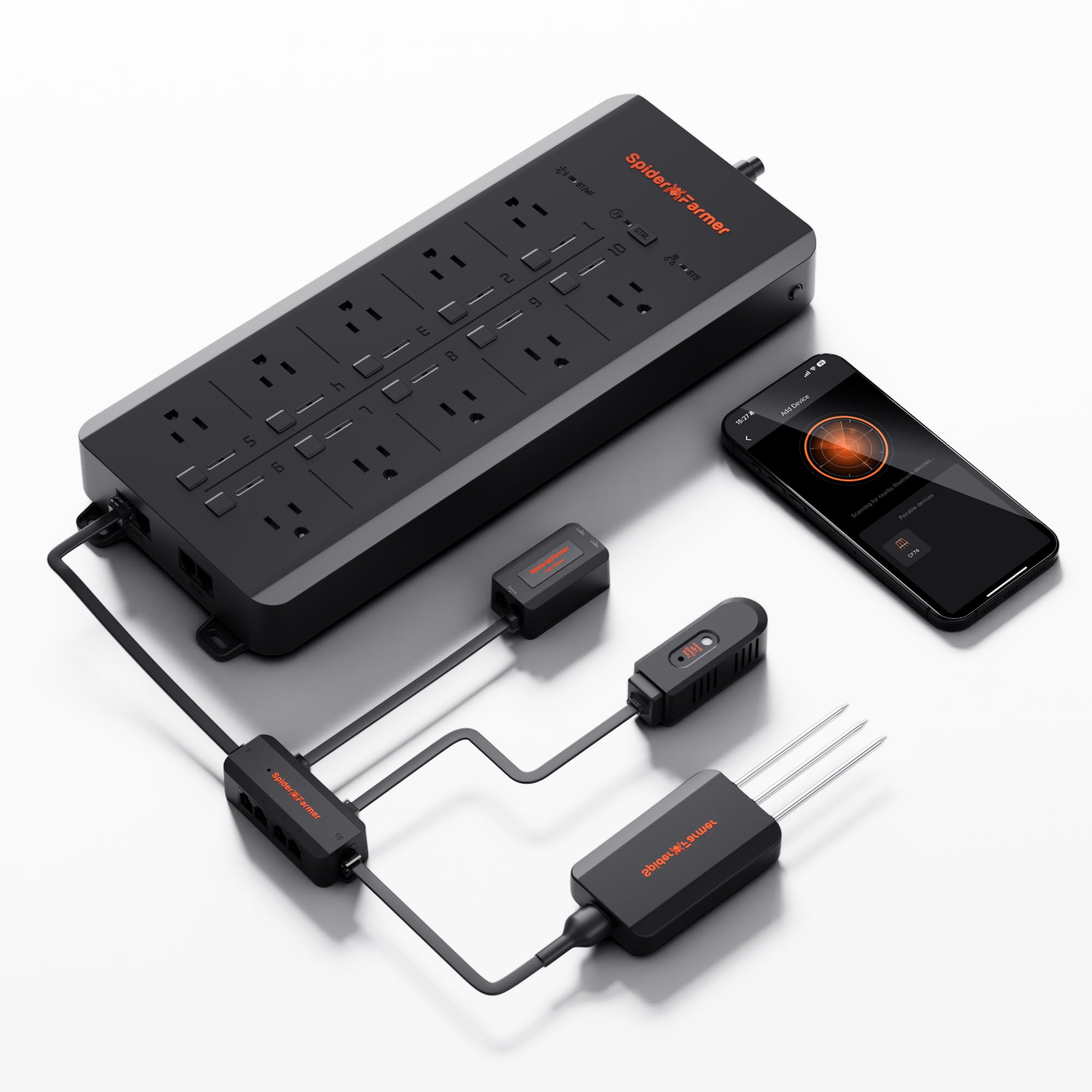
The Spider Farmer GGS AC10 offers 10 individually controlled AC outlets and a built-in 3-in-1 soil sensor that reads moisture, EC, and temperature alongside standard environmental data. Unlike universal power strips that handle any brand plug-in device, this unit is designed for the Spider Farmer ecosystem, providing app-based scheduling and control for each outlet without extra hardware.

This controller suits growers who need many outlets and integrated soil monitoring in one package, especially those already using Spider Farmer gear. However, some units may become non-functional within weeks, and WiFi connectivity may drop during use, so it fits best for those comfortable with occasional troubleshooting and who prioritize feature count over long-term dependability.

Bottom line: The GGS AC10 delivers on outlet count and soil integration but carries early reliability risks that make it best for those who value features over a proven track record.

4

AC Infinity 79 Pro

AC Infinity 79 Pro

Small tent setups

Our Score 9.0/10
Check Price

Worth Noting

  • WiFi and Bluetooth pairing can fail on some units, requiring occasional reconnection.
Brand Fit
Universal plug-in
Device Ports
2 outlets
Automation Features
Temp, humidity, VPD
Read the full review

Controls two plug-in devices like heaters and fans with accurate thermostat functions and solid build quality. Works with non-AC Infinity gear, avoiding brand lock-in. The two-outlet maximum limits expansion, and WiFi or Bluetooth connectivity may drop on some units. For steady users who can tolerate occasional re-pairing, this fills a narrow niche that the more capable 69 Pro doesn't quite match at a similar price.

Bottom line: Best for growers who need a simple two-outlet VPD controller and can accept occasional connectivity resets rather than a more feature-rich setup.

5

AC Infinity Outlet AI

AC Infinity Outlet AI

Multi-brand gear

Our Score 8.8/10
Check Price

Worth Noting

  • AI automation may occasionally miss its target, leaving a device off when triggered.
  • App setup guide provides minimal detail, requiring external walkthroughs.
Brand Fit
Universal plug-in
Device Ports
4 plugs
Automation Features
AI targeting, schedules
Read the full review

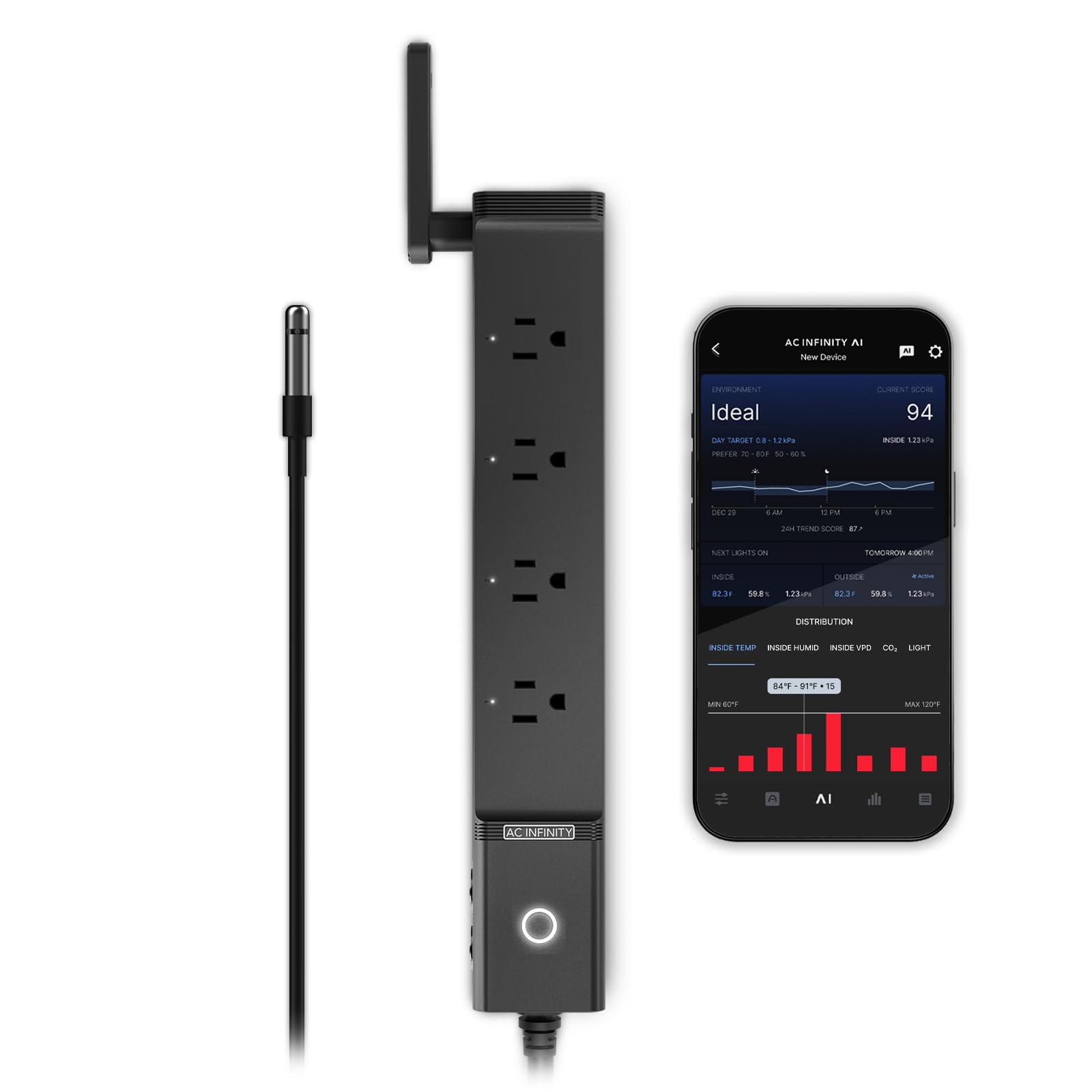
The AC Infinity Outlet AI stands apart by accepting any brand of plug-in equipment — fans, heaters, humidifiers — and giving each of its four outlets its own climate trigger from dual-zone sensors. The metal enclosure and surge protection lend it a durability that holds up in humid grow spaces, and the basic on/off scheduling does what you’d expect without surprises.

This unit fits growers who run mixed-brand gear inside small tents or propagation stations and want a single interface to set temperature or humidity thresholds. The AI targeting can sometimes miss its cue, leaving a device off when conditions change — not a dealbreaker if you’re around to check, but worth factoring in. Setup instructions are thin; a quick search for community guides fills the gaps.

For critical climate tasks, set a backup schedule to catch any missed AI triggers.

Bottom line: A solid pick for growers who want to unify mixed-brand equipment under one controller, provided they’re comfortable with occasional manual oversight of the AI automation.

6

VIVOSUN GrowHub A22

VIVOSUN GrowHub A22

Budget beginners

Our Score 8.8/10
Check Price

Worth Noting

  • Some units may trip and stop working shortly after installation.
  • No VPD control and only two outlets limit automation to simple timers and triggers.
Brand Fit
Universal plug-in
Device Ports
2 outlets
Automation Features
Timer, temp triggers
Read the full review

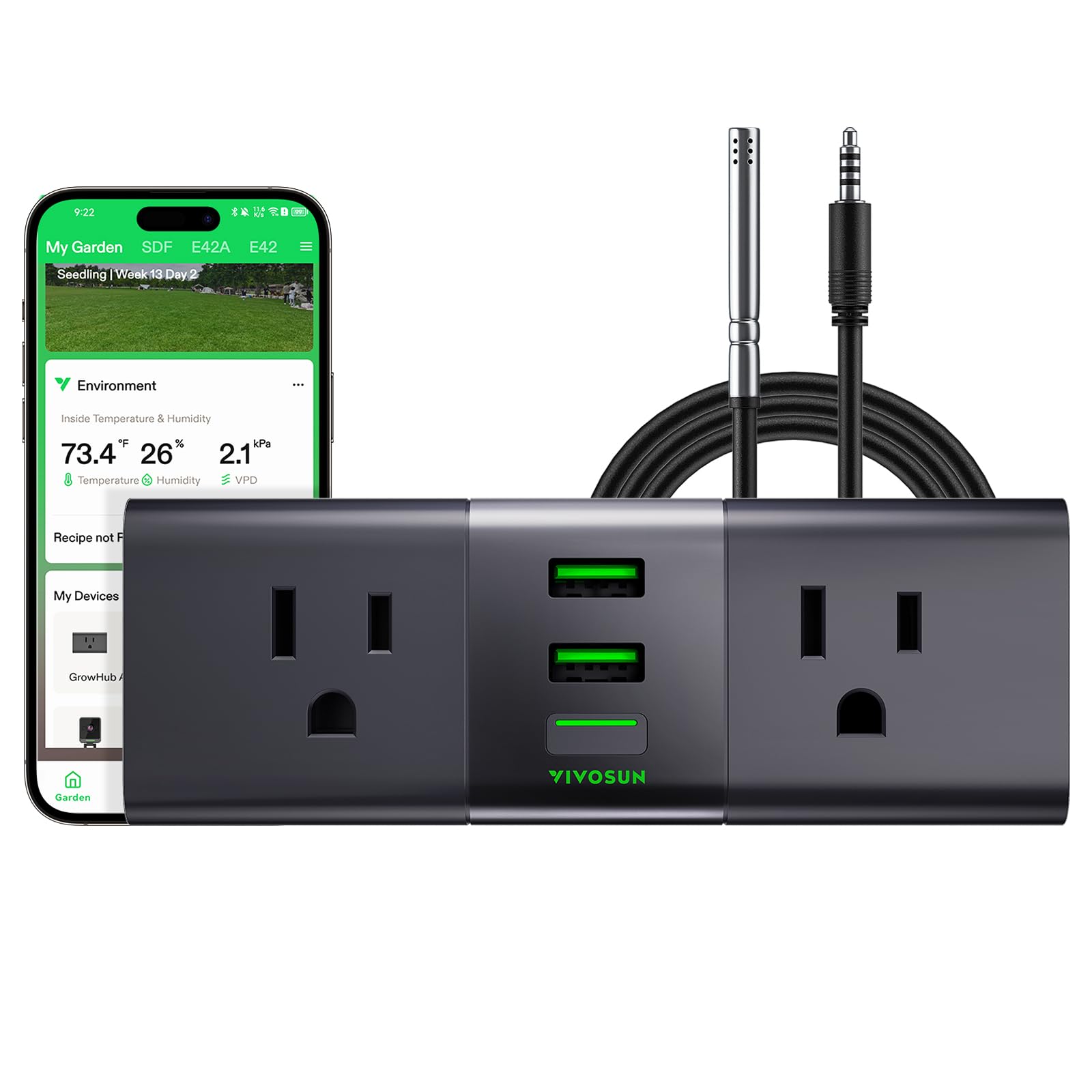
At under $35, the VIVOSUN GrowHub A22 is the most affordable way to add WiFi-based smart control to a grow tent, with an external temperature and humidity probe for basic monitoring. While the full VIVOSUN ecosystem controller offers integrated recipes for lights and fans, this outlet-only model keeps things simple — it turns any two plug-in devices on and off based on your programmed triggers. There is no VPD support, and the two outlets limit what you can automate at once.

This controller suits first-time growers on a tight budget who only need timed lights or a heater trigger. That said, some units have been known to trip and stop working within days of installation — the reliability depends on unit variance. If unexpected downtime could hurt your grow, this is not the right option.

Run a 48-hour stress test with your devices after setup to confirm the unit stays stable.

Bottom line: If your priority is the lowest cost and you can accept the risk of early unit failure, the A22 gets you basic smart control. For more reliable automation, consider stepping up to the VIVOSUN ecosystem controller.

7

MARS HYDRO iControl

MARS HYDRO iControl

MARS HYDRO users

Our Score 8.2/10
Check Price

Worth Noting

  • Requires compatible MARS HYDRO fans and lights with RJ12 connections, not universal for other brands.
Brand Fit
MARS HYDRO gear
Device Ports
Automation Features
Stage-based auto transitions
Read the full review

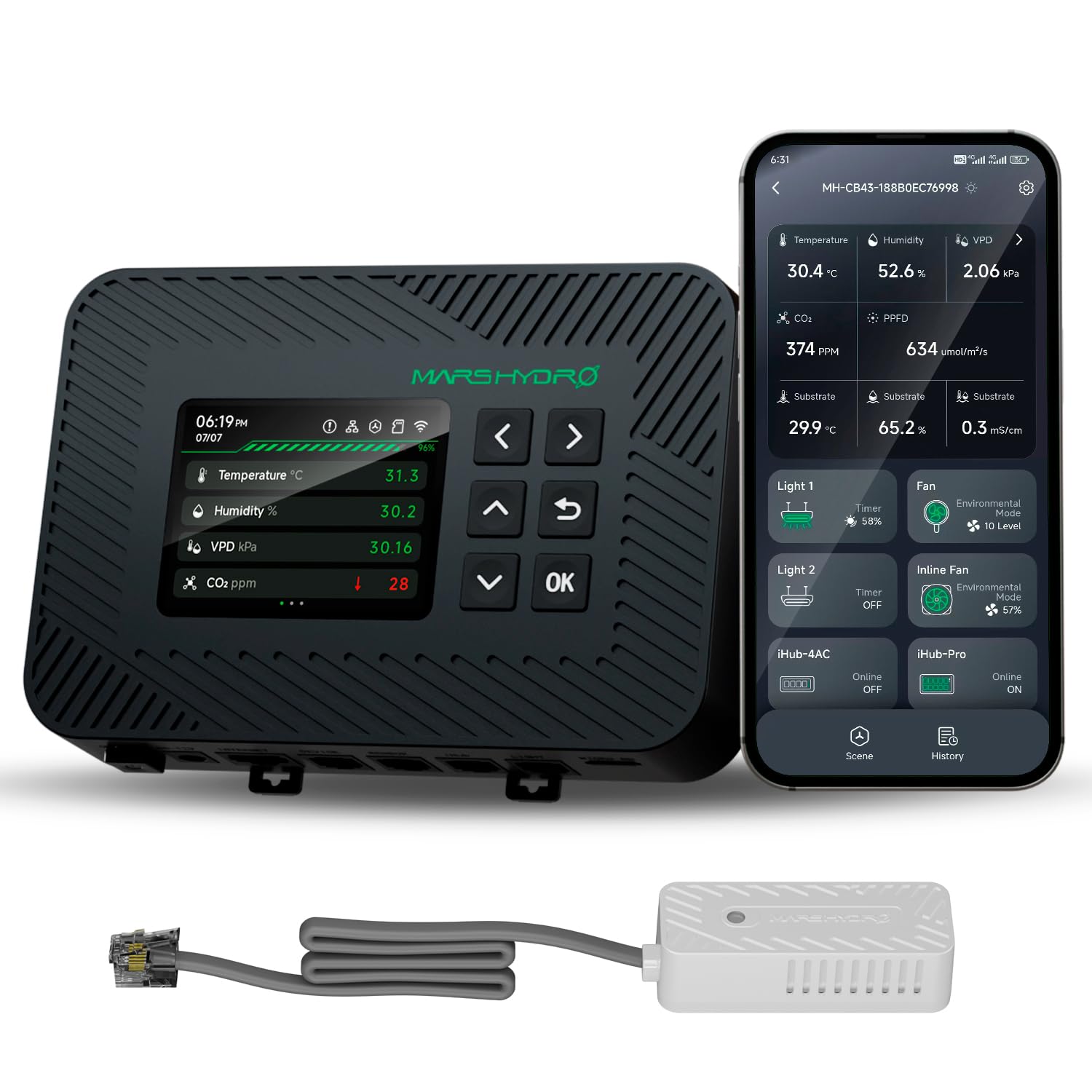
The MARS HYDRO iControl automates the grow cycle by transitioning through seedling, veg, and flower stages without manual adjustment, ideal for growers already using MARS HYDRO lights and fans. Its built-in sensor tracks temperature, humidity, and VPD, with optional expansion for soil moisture, CO2, and PPFD. However, because the controller has limited field exposure, its long-term consistency under daily use is not yet well documented, making it a choice for early adopters rather than growers seeking a widely validated solution.

Bottom line: Best suited for MARS HYDRO fans who want stage-based automation and are comfortable being among the first to test its long-term performance.

How to Choose

Number of Outlets or Device Ports

Each outlet or port corresponds to one device you can control independently. If you run a fan, a light, a heater, and a humidifier, you need at least four. But more outlets don't always mean more useful control — some controllers only turn devices on or off, while others can adjust speed or intensity.

For gear like inline fans that use variable speed, a simple power strip outlet will only give you on/off, not progressive speed changes. That's fine for a heater or humidifier, but not for ventilation that needs to ramp up gradually.

WiFi Reliability and Signal Strength

WiFi drops are the top complaint across all smart controllers. The issue is often less about the controller itself and more about distance to the router or interference from metal tent frames and dense plant canopies. A controller that relies on 2.4 GHz WiFi can be especially susceptible.

If your tent is in a basement or far from the router, look for models with Bluetooth fallback or consider adding a WiFi mesh extender. Some controllers pair more reliably than others, but no model is immune to signal issues in a challenging location.

Sensor Accuracy (Temp, Humidity, VPD)

Built-in sensors are convenient, but they can drift by 5-10 percent or more if placed near a hot light, a wet floor, or an active air intake. A sensor that reads 5°F high will cause your heater to run less than needed, affecting plant health.

Serious growers should cross-check the controller's readings with a standalone hygrometer placed at canopy level. If you need precise VPD control, consider a controller that supports an external probe — those are typically more accurate and can be positioned away from heat sources.

Compatibility With Existing Equipment

Most controllers are locked into a single brand's ecosystem, especially for communicating fans and lights. If you already own a brand's inline fan or LED, staying within that ecosystem gives you full speed and dimming control.

If you mix brands, choose a universal power strip controller that treats every device as an on/off plug. You lose variable speed but gain the freedom to use any brand of heater, humidifier, or pump. Check compatibility lists before buying — some controllers claim 'universal' but only work with certain plugs.

Automation Features (Schedules, Triggers, Cycles)

Automation can range from simple timers to stage-based transitions that shift temperature and humidity as plants move from seedling to flower. The more advanced automation, the more setup time it requires.

Schedule-based controls are straightforward: set a light timer or a temperature trigger. VPD-based automation is more powerful but demands accurate sensors and stable WiFi to avoid runaway conditions. Decide whether you need simple on/off cycles or full environmental orchestration — the latter often justifies a higher price.

Frequently Asked Questions