Beekeeping

5 Best Swarm Trap of 2026: Complete Kits That Actually Capture Swarms

Find the right swarm trap or lure for your apiary — from budget-friendly lures to professional-grade complete kits that pay for themselves.

A swarm lure alone often fails to attract bees if the trap itself isn't designed right. Many beekeepers discover this after weeks of an empty box. The difference comes down to the combination of scent, visual cues, and proper placement.

Complete trap kits, with beeswax coating and frames, tend to outperform a lure in a homemade box. They provide the dark cavity, familiar scent, and easy transfer that scout bees look for. Lures can work, but only when paired with the right trap and location.

This guide helps you decide which approach matches your setup and budget, cutting through marketing claims to focus on what actually brings swarms home.

1

Interceptor Pro Trap

Top Pick
Interceptor Pro Trap

Serious beekeepers

Our Score 9.6/10
Check Price

Worth Noting

  • Premium price compared to buying just a lure or building a trap from scratch
Type
Complete kit
Volume
Shelf Life
2 years
Read the full review

The Interceptor Pro arrives fully assembled with frames, foundation, beeswax coating, and a pheromone lure. Hang it directly on a tree using the included strap and hooks — no extra parts or assembly needed. Captures typically occur within days, supported by the combination of visual and scent cues from the wax and lure.

This kit suits serious beekeepers who want a no-fuss solution and can absorb the premium price — one captured swarm offsets the investment. Hobbyists on a tight budget or those who prefer building their own traps will find better value elsewhere, as the higher upfront cost only makes sense for those ready to deploy a complete, ready-to-go trap.

Bottom line: If you want a trap that works out of the box with zero tinkering, the Interceptor Pro delivers consistent results and often pays for itself after the first swarm.
2

Swarm Commander Spray

Swarm Commander Spray

Proven easy-use

Our Score 9.0/10
Check Price

Worth Noting

  • Higher upfront cost than many alternative spray lures
Type
Spray
Volume
2 oz
Shelf Life
2 years
Read the full review

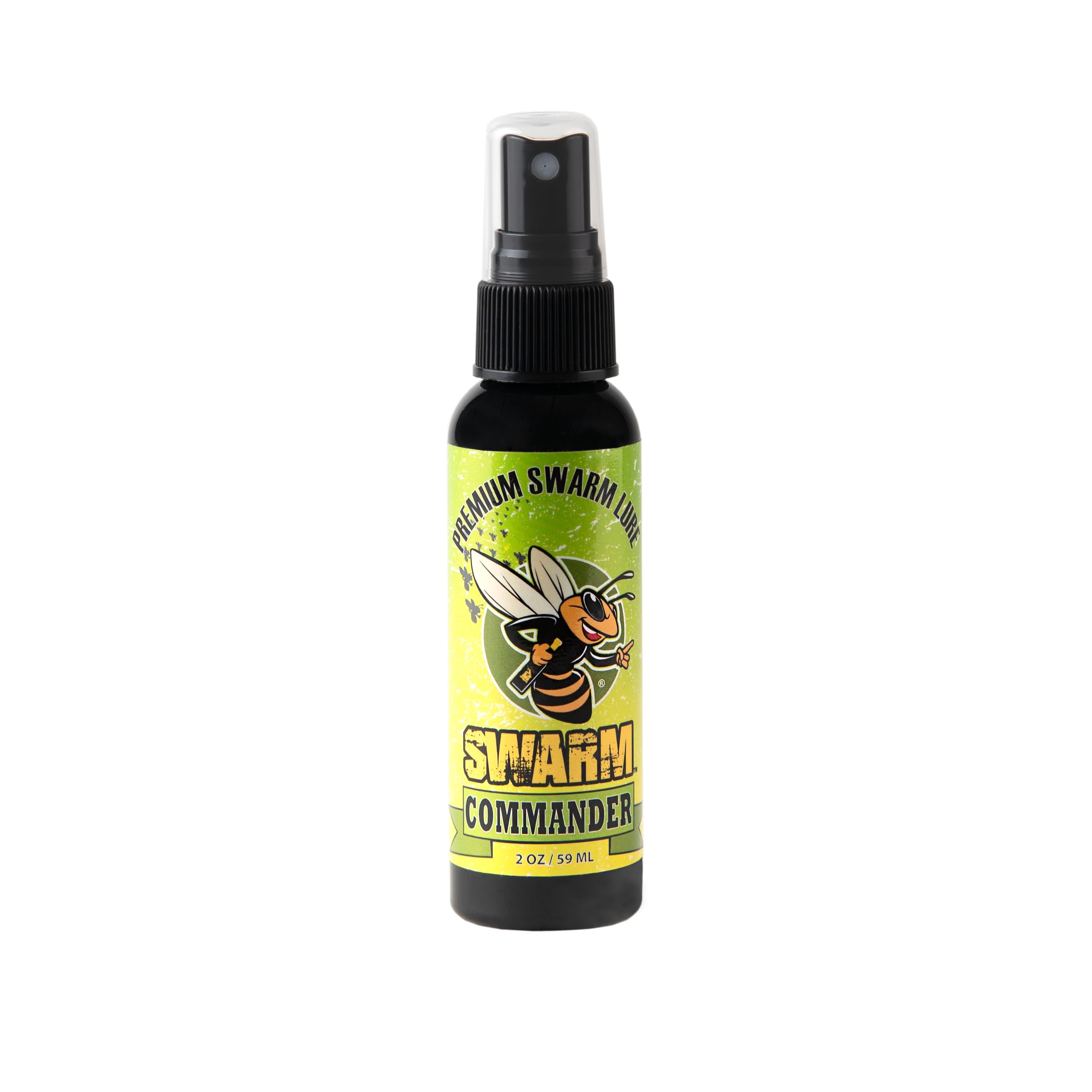
The Swarm Commander Spray uses a synthetic Nasonov pheromone that consistently attracts honey bee swarms, with many beekeepers seeing results within days. Its high-mist sprayer provides even coverage over bait hive surfaces, and the pleasant scent makes handling easier than other lures. At a premium price, the 2oz bottle yields roughly 200 applications, offering good value for those who already have traps or bait hives. Budget-conscious shoppers or those who prefer gel or dropper methods should consider alternatives.

Bottom line: For beekeepers who want a reliable spray lure and have the budget, the Swarm Commander delivers consistent results without guesswork.

3

Swarm Commander Gel

Swarm Commander Gel

Precise gel application

Our Score 8.4/10
Check Price

Worth Noting

  • Smaller 1oz volume provides fewer applications than the spray version.
  • Gel may be less potent for attracting swarms compared to the liquid spray.
Type
Gel
Volume
1 oz
Shelf Life
2 years
Read the full review

Gel format prevents drips and mess, making it a clean option for hanging traps and easy storage without leakage.

Best for beekeepers who prioritize portability and precision over maximizing applications per dollar. The 1oz volume delivers fewer lure changes than the spray version, and some users find the gel less potent for attracting swarms.

Bottom line: For beekeepers who need a spill-proof lure for portable traps, this gel delivers. If maximizing applications per dollar matters more, the spray version is a better fit.

4

Swarm Science Spray

Swarm Science Spray

Budget spray lure

Our Score 8.4/10
Check Price

Worth Noting

  • Attraction success can be inconsistent; some traps may show no response.
  • Results are less predictable compared to the top-rated Swarm Commander spray.
Type
Spray
Volume
2 oz
Shelf Life
2 years
Read the full review

The Swarm Science Lure offers the lowest price per spray bottle, with claims of up to 100 treatments per 2 oz. Results vary in practice – some beekeepers attract swarms, others see no activity. This makes it a fitting choice for beekeepers wanting a low-cost trial before investing in a more consistent option like the Swarm Commander spray.

Bottom line: A low-cost entry point for beekeepers curious about synthetic lures, but those needing dependable results should look to the more consistent Swarm Commander spray.

5

Bountiful Bees Lure

Bountiful Bees Lure

Very tight budget

Our Score 8.4/10
Check Price

Worth Noting

  • Bottle may leak during shipping or use, causing product loss.
Type
Dropper
Volume
1 oz
Shelf Life
2 years
Read the full review

This dropper lure uses synthetic Nasonov and lemongrass to attract swarms at the lowest price, but the bottle can leak, wasting product. It suits budget beekeepers who accept that risk; alternatives with fewer leaking issues cost slightly more.

Bottom line: Consider this if you need the cheapest lure and can handle possible leakage; otherwise, spend a little more for a sealed format.

How to Choose

Type of Product

The choice between a lure and a complete trap kit hinges on what you already own. Lures (spray, gel, dropper) add scent to an existing bait hive or box, but they don't provide the visual cues bees need. Complete trap kits include a dark, ventilated cavity, beeswax-coated frames, and a pheromone lure, giving scout bees everything they look for.

A complete kit works best for beekeepers starting from scratch or those who want a turnkey solution. Lures suit experienced trappers who already have functional boxes and just need to refresh the attractant. The trade-off: lures are cheaper upfront but require a suitable container that might not be ideal, reducing success rates.

Volume and Applications

Spray lures typically come in 2 oz bottles offering 100–200 applications, while gel and dropper lures hold about 1 oz with fewer treatments. More volume doesn't always mean better results if the formulation degrades quickly after opening. Check the shelf life (usually 2 years) and how long an opened bottle remains effective.

For seasonal trappers, a 2 oz spray can last multiple seasons if stored correctly. Small 1 oz gels are ideal for one or two traps and for beekeepers who want to avoid waste. Buying a larger bottle than needed leads to diminished potency over time.

Included Components

Complete trap kits bundle everything: frames, foundation, pheromone lure, tree strap, and hooks. This eliminates guesswork and ensures all parts work together. Lures only include the attractant, so you must supply a suitable trap with frames and a dark, ventilated interior.

Missing or mismatched components are a common reason for failure. A lure placed in a bright, uncoated box with no frames rarely attracts swarms. Complete kits like the Interceptor Pro guarantee a ready-to-use system that matches what scout bees seek.

Durability and Weather Resistance

Swarm traps sit outdoors for weeks, exposed to rain, wind, and sun. Plastic traps with beeswax coating resist moisture and maintain the dark interior better than untreated wood. Lures in glass or plastic bottles can leak in temperature swings, wasting product and leaving your box without scent.

Check for UV-resistant materials and sealed packaging. A trap that warps or fades may lose its ability to hold scout bees. Lures with airtight seals prevent evaporation and contamination. Weather durability matters more than most buying guides acknowledge because a failed trap means a missed swarm season.

Ease of Setup and Transfer

Complete trap kits are designed to be hung and left alone for weeks, then transferred directly to a brood box. Look for a trap with a removable bottom board and smooth interior surfaces that don't trap bees during relocation. Lures require you to apply the scent inside your existing box and position it correctly.

The Interceptor Pro includes a tree strap and hooks that simplify hanging, and its frames slide out easily for hive transfer. Lures demand more labor upfront: you must prepare the box, apply the lure, and ensure proper entrance size. For beginners, a complete kit reduces the learning curve.

Frequently Asked Questions