Fencing & Farm Structures

11 Best T-Post Puller of 2026: Choose the Right Leverage for Your Soil

Which T-post puller actually works on your soil type and post size? This guide helps you pick the right tool for metal or wood posts without wasted effort.

Pulling T-posts by hand is a fast track to a sore back – unless you have a tool that matches your ground and post type. The biggest frustration? Too many pullers sink into soft soil the moment you apply force, leaving you searching for a board to set under the base.

The mechanical trade-off is simple: longer handles give more leverage but add weight; wider bases prevent sinking but can be bulky. Meanwhile, budget models often cut the base plate width to save steel, which works fine on compact gravel but fails after a rain.

This guide cuts through the confusion by focusing on three specs that actually predict real-world performance: handle length, base plate width, and whether the tool includes a chain for wood posts. Pick the combination that matches your soil and post mix, and you will save both time and muscle.

1

TNCZHYLX Puller Plate

Top Pick
TNCZHYLX Puller Plate

Farm jack add-on

Our Score 9.4/10
Check Price

Worth Noting

  • Needs a separate jack or tractor to function, and the chain shown in photos isn't always included.
Length
Weight
1.98 lbs
Material
Heavy-duty steel
Chain & Plate
Plate only
Read the full review

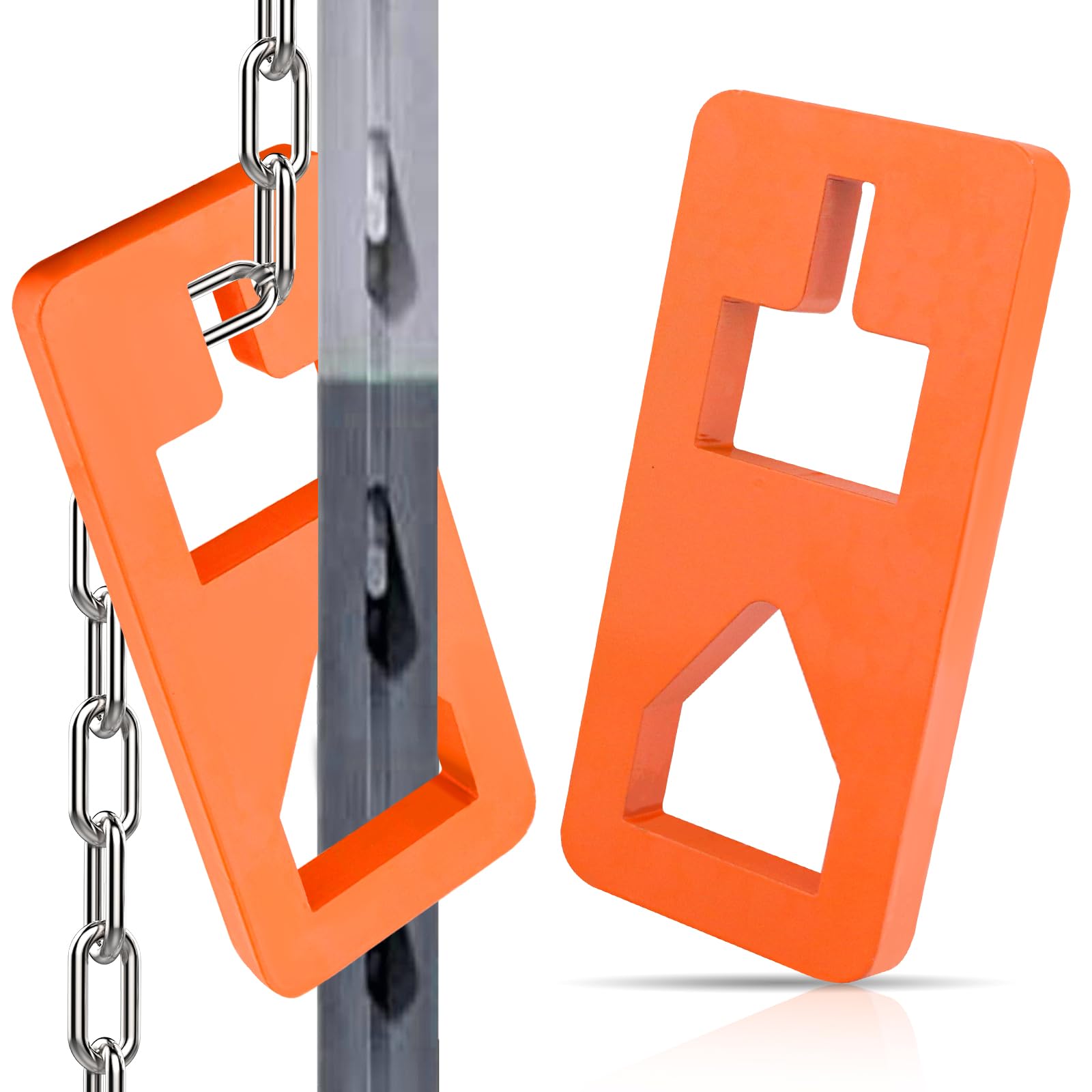
This budget-friendly steel plate turns any farm jack into a post puller – a smart buy if you already own one. Build quality is solid for the price. But it's not a standalone tool: you need a jack or tractor, and the chain from product photos may not be included.

Bottom line: Ideal for those who already have a farm jack and want a cheap, durable plate to pull T-posts.
2

Field Tuff PG-07

Field Tuff PG-07

T-post removal

Our Score 9.2/10
Check Price

Worth Noting

  • Lacks a chain and plate for pulling wooden posts or stumps
Length
36 in
Weight
17 lbs
Material
1.5" steel sq tubing
Chain & Plate
No
Read the full review

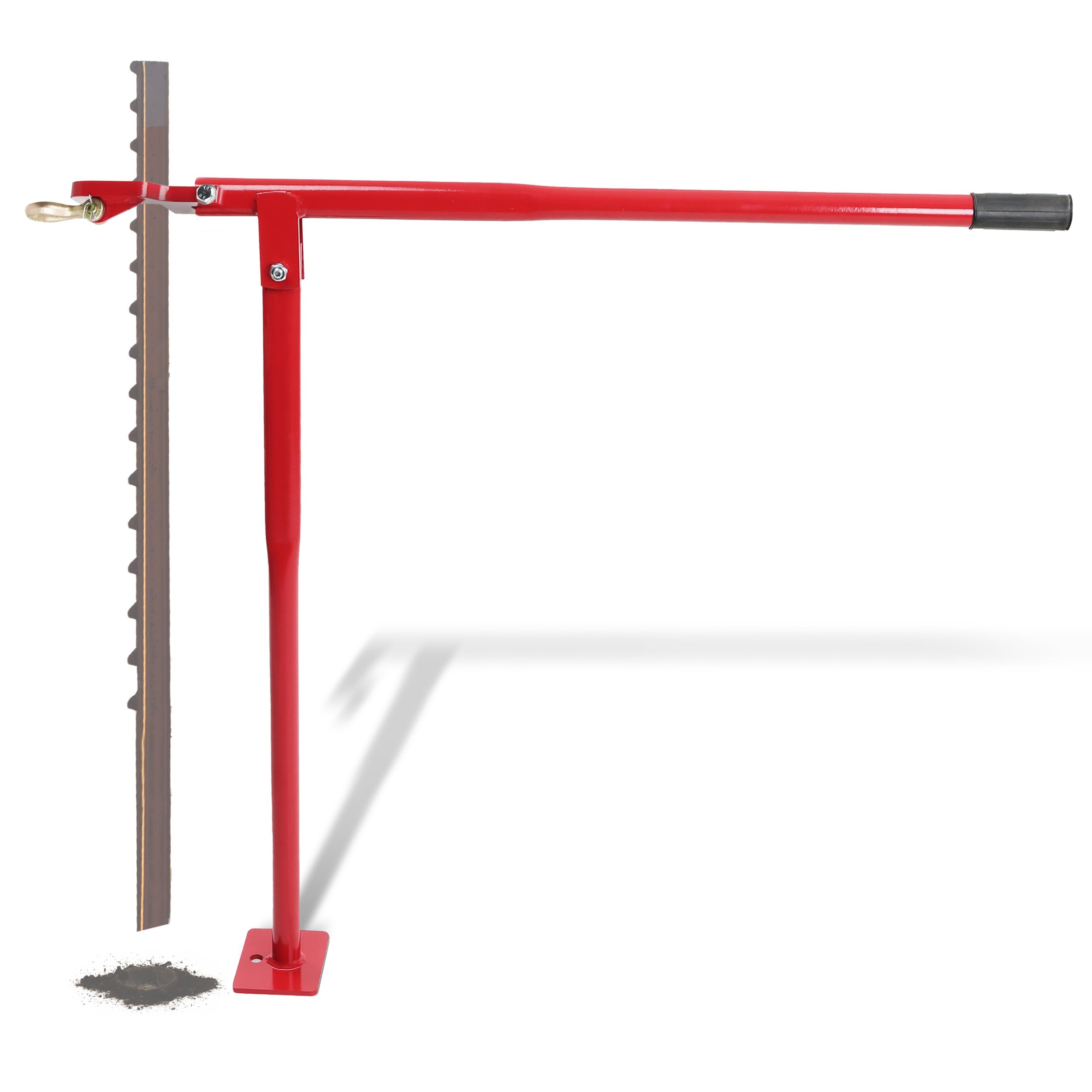
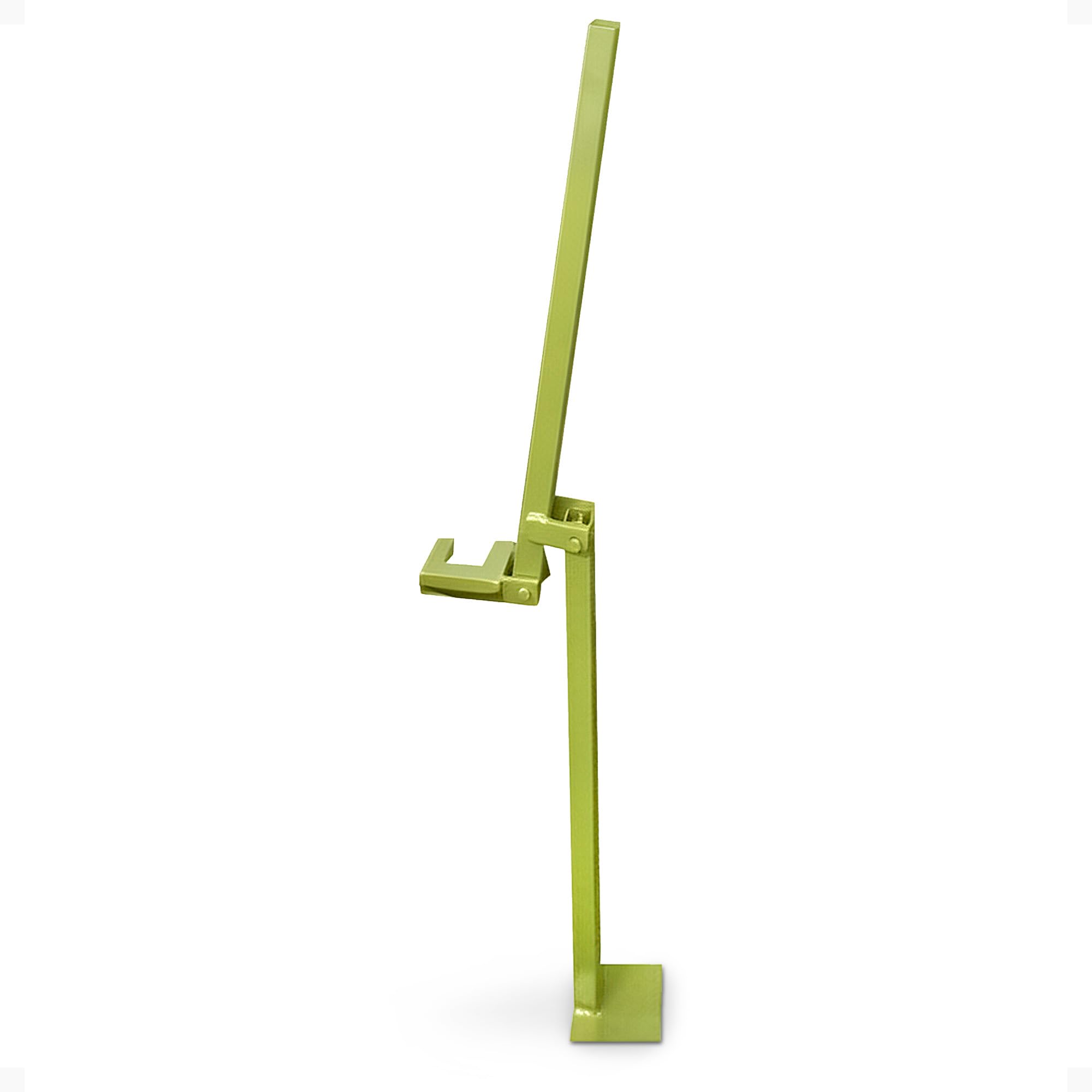
Pulling fence posts usually means wrestling with a bent bar and sinking feet. The Field Tuff PG-07 sidesteps both problems with a 36-inch handle that delivers good leverage and a 5x5-inch base plate that stays on top of most soil. At 17 pounds it is light enough to carry across a field without dragging, and the steel square tubing feels solid under load.

This is the right tool for anyone who works with metal T-posts — homeowners repairing a garden fence, farmers maintaining pasture lines, or older users who want to avoid the strain of cheaper pullers. It does not include a chain or plate for wooden posts or stumps, so if that is part of your regular work, you will need to buy those separately or look at a combined kit like the LOADSECRTOOL w/Chain.

Bottom line: If you only pull metal T-posts, this is the one to buy — no compromises, no gimmicks.

3

Maasdam PP100

Maasdam PP100

High-volume removal

Our Score 9.2/10
Check Price

Worth Noting

  • Base may sink into soft soil; handle can bend under extreme pull
Length
36 in
Weight
13 lbs
Material
Heavy-duty steel
Chain & Plate
Bar grabber
Read the full review

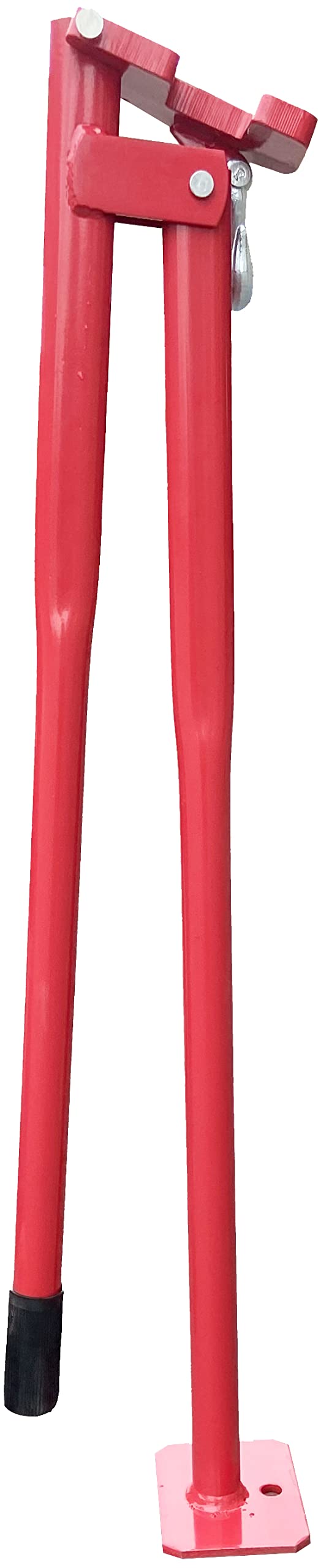
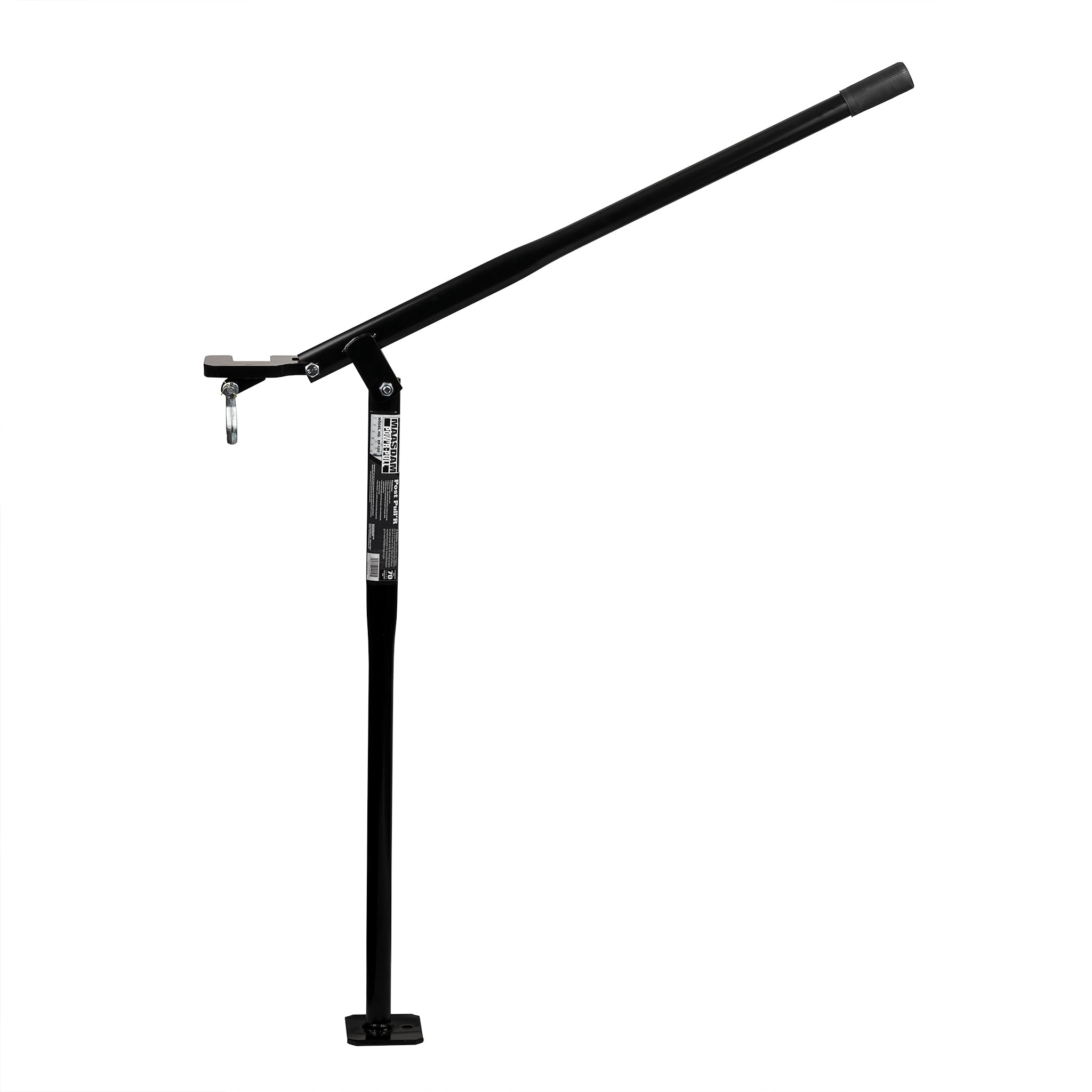
The Maasdam PP100 carries a lifetime warranty and uses a bar-grabber design that pulls T-posts straight, making it a go-to for high-volume fence removal. Its steel construction holds up to repeated heavy use, though on very stubborn posts or soft soil the base can sink and the handle may bend.

This puller works best on firm ground or with a board placed under the base to prevent sinking. It suits users who prioritize durability and a lifetime guarantee over a wider base that avoids this extra step.

Place a board under the base on soft ground to prevent sinking.

Bottom line: For high-volume fence removal where you are willing to add a board on soft ground, the Maasdam PP100 delivers durable performance backed by a lifetime warranty.

4

LOADSECRTOOL Puller w/Chain

LOADSECRTOOL Puller w/Chain

Metal & wood posts

Our Score 9.2/10
Check Price

Worth Noting

  • Heavy weight (23 lbs) makes it cumbersome to carry along a fence line.
  • Included chain may break under heavy load; quality control varies between units.
Length
36 in
Weight
23.2 lbs
Material
Heavy-duty steel
Chain & Plate
Yes (49" chain)
Read the full review

This LOADSECRTOOL model bundles a 47-inch lifting chain and puller plate right in the box, so you can remove T-posts and wooden fence posts without hunting for accessories. The 36-inch handle and heavy steel construction generate enough leverage to make the job quick – reviewers note it pulls posts with minimal effort. That convenience comes at a cost in portability: at 23 pounds, this is the heaviest option in this set, and the included chain has shown occasional breakage on first use. It suits farmers who want a single tool they can toss in the truck bed and use for both post types, but less ideal for anyone walking a long fence line or needing lighter gear.

Keep it in a vehicle or on a utility cart – carrying it by hand along the fence line for extended periods will be tiring.

Bottom line: If you need one tool that handles both metal and wood posts straight out of the box and don't mind the weight for truck-based transport, this kit delivers. Just plan to inspect the chain before heavy use.

5

BISupply 36in Puller

BISupply 36in Puller

Firm soil T-posts

Our Score 9.2/10
Check Price

Worth Noting

  • Base plate narrow
  • Not designed for 4x4 wood posts due to small plate opening
Length
36 in
Weight
12.67 lbs
Material
Heavy-duty steel
Chain & Plate
No
Read the full review

The BISupply puller's 36-inch handle and solid steel build provide easy leverage for T-post removal without the heft of heavier tools. On compact, well-drained ground it pulls posts with minimal effort. However the 5-inch base plate sinks into soft soil, so this tool suits users with hard-packed or dry soil rather than sandy or muddy sites. It also can't handle 4x4 wood posts, keeping its focus squarely on T-posts.

Place a scrap board under the base on soft ground to prevent sinking.

Bottom line: For homeowners pulling T-posts on firm ground, this is a cost-effective tool that gets the job done without the premium price.

6

UTAKU 36in Puller

UTAKU 36in Puller

Compact storage

Our Score 9.2/10
Check Price

Worth Noting

  • Handle may bend under repeated heavy use
Length
36 in
Weight
12.72 lbs
Material
Powder-coated steel
Chain & Plate
No
Read the full review

This puller’s foldable 36-inch handle makes storage easy and its pivot design delivers good leverage for standard T-posts on firm ground. Build quality feels solid for the price and the tool works smoothly even for lighter users. The main limitation is the folding hinge: under frequent or especially stubborn posts, the handle can bend. That makes this a smart choice for occasional fence maintenance on compact soil, not for commercial-scale or heavy-duty removal.

Bottom line: Get this if you need a compact, easy-to-store puller for light to moderate fence maintenance on firm ground – not for high-volume or stubborn posts.

7

Powerfields Puller Plate

Powerfields Puller Plate

Farm jack add-on

Our Score 9.2/10
Check Price

Worth Noting

  • Over-tightening the plate against lighter T-posts can bend them during removal.
Length
Weight
2.53 lbs
Material
1/2" steel plate
Chain & Plate
Plate only
Read the full review

This heavy-duty plate delivers a secure, slip-resistant grip on T-posts when paired with a farm jack or tractor. It is built to last with thick steel, but it is not a complete puller – you need a separate lifting device. This is a budget-friendly option for anyone who already owns a jack and wants a durable attachment.

Bottom line: Ideal for those who already have a farm jack or tractor and need a low-cost, durable post-pulling attachment.

8

Hi-Lift PP-300

Hi-Lift PP-300

Heavy-duty fence

Our Score 9.0/10
Check Price

Worth Noting

  • May not provide enough force for posts set in concrete or extremely deep in the ground.
  • At 20 pounds, carrying it along a long fence line adds fatigue compared to lighter models.
Length
40.5 in
Weight
20 lbs
Material
Heavy-duty steel
Chain & Plate
Hook only
Read the full review

The PP-300 uses a 40.5-inch lever and a chain hook to pull both T-posts and wood posts, outperforming standard pullers in raw strength. Its 20-pound steel construction stands up to commercial-scale fence removal projects. For farmers and ranchers who need to move heavy posts daily, the weight is a reasonable tradeoff, though the tool may still struggle with posts set in concrete or exceptionally deep, and the required chain is not included.

A vehicle or cart helps transport the 20-pound puller along long fence lines.

Bottom line: Best suited for commercial-scale fence removal where maximum pulling capacity and wood post capability justify the weight premium.

9

Yararday Adj Puller

Yararday Adj Puller

Adjustable height

Our Score 9.0/10
Check Price

Worth Noting

Length
20/36 in
Weight
12.38 lbs
Material
Square tube steel
Chain & Plate
No
Read the full review

The Yararday puller stands out as the only model offering two handle lengths — 20 and 36 inches — allowing you to adjust leverage for different post depths or compact storage. The shorter handle works well in tight spaces while the longer one provides extra leverage for stubborn posts. Despite its budget price, it removes T-posts quickly with minimal effort, and its 12-pound weight makes it easy to transport.

Best suited for homeowners with varied post heights or limited storage, this puller works exclusively on T-posts unless you add a separate chain. The adjustable height adds convenience without sacrificing effectiveness, making it a smart choice for those who prioritize flexibility.

Buy a separate chain if you plan to remove wood posts.

Bottom line: For homeowners who need an adjustable puller for T-posts and value flexibility over all-in-one capability, this budget-friendly option delivers.

10

Yararday Sq Tube 36in

Yararday Sq Tube 36in

Firm soil only

Our Score 8.8/10
Check Price

Worth Noting

  • Narrow base (under 2 inches) sinks into soft ground, limiting use to firm soil.
Length
36 in
Weight
~12 lbs
Material
Square tube steel
Chain & Plate
No
Read the full review

This budget-friendly puller lifts T-posts from compact ground with minimal effort, and the price is hard to beat. However, the base plate is less than 2 inches wide, which can cause the tool to sink into soft or loose soil rather than lift the post. It works well on dry, firm soil, but anyone dealing with sandy or muddy conditions will need a wider base plate added to make it usable.

Bottom line: Best for budget buyers who only pull posts from hard, dry ground and are open to adding a wider base plate if conditions change.

11

TNCZHYLX 36in Puller

TNCZHYLX 36in Puller

Budget full kit

Our Score 8.2/10
Check Price

Worth Noting

  • Some units may arrive with missing hardware or crooked welds, requiring inspection before use.
Length
36 in
Weight
14.12 lbs
Material
Heavy-duty steel
Chain & Plate
Yes
Read the full review

This budget-friendly puller includes a chain and plate, ready for both T-posts and wood posts right out of the box. When assembled properly, it effectively pulls posts. But inconsistent quality control means some units may have missing bolts or misaligned welds — inspect upon arrival.

Bottom line: For buyers on a strict budget who are willing to inspect and possibly modify, this puller can be a functional tool for occasional light use.

How to Choose

Handle Length

A longer handle gives more mechanical advantage, meaning less force required to pull a post. A 36-inch handle is the standard for most jobs – it provides enough leverage to yank even deeply-set T-posts without exhausting yourself.

Shorter handles (24 inches) are lighter and more portable, but they demand significantly more downward force. If you frequently encounter posts set in hard clay or rocky ground, a 36-inch handle is the difference between a quick job and a sweaty struggle.

Weight

Weight determines how much tool you can comfortably carry along a fence line. Pullers range from 10 to 23 pounds. Lighter tools (under 13 lbs) are easy to haul but may flex under extreme loads. Heavier tools (17+ lbs) are more rigid and can handle repeated heavy use, but they become a burden if you are walking a half-mile of fence.

The trade-off: a heavy puller stays planted and transfers force directly into the post, while a light puller requires you to brace harder with your body. Choose based on whether you are pulling a few posts or a hundred.

Base Plate Width

The base plate is what the tool pushes against as you lever the post up. A narrow base (under 5 inches) concentrates the force into a small area, causing the tool to sink into soft or wet soil. This is the most common complaint among budget pullers.

A wider base (5 inches or more) spreads the load and keeps the tool stable on grass or mud. If you work on packed gravel or dry clay, a narrow base works fine. For pasture or after a rain, a wide base is a must – or plan to carry a scrap board to set under the foot.

Chain & Plate Inclusion

A chain and adaptor plate turn a T-post puller into a tool for wooden posts and even small stumps. The chain wraps around the post and hooks onto the puller, converting the lever action into a vertical lift. Without it, you are limited to the metal T-post claw.

The catch: cheap chains snap under heavy loads. If you plan to pull wood posts frequently, look for a tool that uses a grade 70 chain or buy a separate high-tensile chain rated for at least 2,000 lbs. Some pullers include a hook for a chain but no chain itself – factor in that extra cost.

Steel Gauge & Weld Quality

Most T-post pullers are made from steel square tubing. Thicker walls (1.5-inch or larger) resist bending when you lean into the handle. Thinner tubing (1-inch) can flex or permanently deform on stubborn posts, especially if the welds are weak.

Weld quality matters at the pivot point and the claw attachment. Poor welds crack after a few dozen pulls. Look for models with reinforced pivot points or gussets. A puller that bends on its first heavy post is a waste of money – spending $10 more for thicker steel pays off the first time you hit a buried post.

Frequently Asked Questions