Garden Tools

14 Best Transplanting Trowel 2026: Sharp Edges for Tough Soil

Find a transplanting trowel that cuts through roots and resists bending, matched to your soil and budget.

Every transplanting trowel claims to be 'heavy duty,' but in practice many bend or dull after a season in clay soil. The real test is blade material and construction, not marketing labels.

You can spend under $10 on a lightweight aluminum trowel that works fine in raised beds and pots. But if you face rocky ground or dense roots, thicker steel and sharp edges make the difference between a tool that lasts decades and one that twists on the first dig.

This guide matches trowels to your specific garden conditions, from budget-friendly options to heirloom-quality investments. The goal is a tool that works as hard as you do.

1

Wilcox All-Pro Trowel

Top Pick
Wilcox All-Pro Trowel

Heavy-duty digging

Our Score 9.8/10
Check Price

Worth Noting

  • Under heavy push in compacted soil, the plastic handle cover can slide down the shaft.
  • At 0.7 lb, it is heavier than typical trowels
Handle
Plastic-coated
Weight
Blade Material
Stainless steel
Read the full review

The Wilcox All-Pro's one-piece stainless steel blade stays sharp and won't bend, even in rocky soil — a clear advantage over lighter cast-aluminum trowels. This build suits professional gardeners who need a tool for deep planting and root cutting, though the 0.7-lb weight and occasional handle sleeve slip mean it's less ideal for casual or extended use.

Wiping the handle shaft dry before use can help prevent the plastic sleeve from sliding.

Bottom line: For heavy digging and root cutting, this trowel offers near-indestructible strength — just be prepared for a heavier tool and the possibility of handle sleeve movement.
2

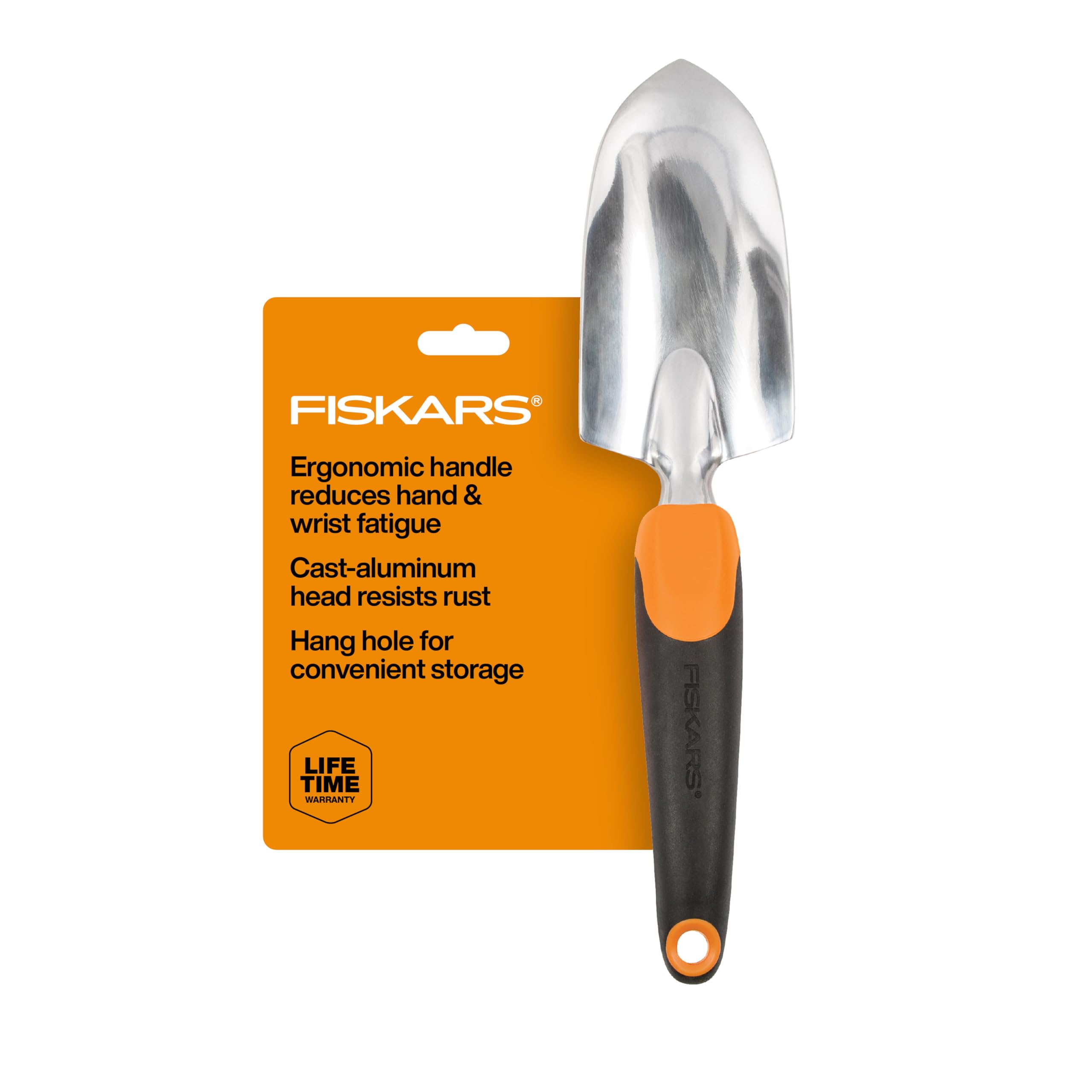
Fiskars Ergo Trowel

Fiskars Ergo Trowel

General transplanting

Our Score 9.6/10
Check Price

Worth Noting

  • In heavy clay or rocky soil, applying excessive force can bend the aluminum blade.
Handle
Aluminum with ergonomic grip
Weight
6.4 oz
Blade Material
Cast aluminum
Read the full review

Cast aluminum construction resists rust and holds a sharp edge for everyday transplanting work. The ergonomic handle with soft grip reduces hand fatigue during extended planting sessions. Backed by a lifetime warranty, this trowel delivers long-term usability at a cost that undercuts many alternatives.

This trowel suits budget-conscious gardeners with small to medium hands who work primarily in loose garden soil, raised beds, and containers. In heavy clay or rocky ground where extreme torque is needed, the blade may bend under pressure — a tradeoff for its lightweight aluminum build. For typical transplanting tasks, it performs consistently.

Reduce pressure in compacted clay soil to prevent blade bending.

Bottom line: A cost-effective everyday trowel that balances comfort and durability for most garden beds — avoid in tough clay or rock.

3

Garden Weasel Transplanter

Garden Weasel Transplanter

Large soil moving

Our Score 9.6/10
Check Price

Worth Noting

  • When planting deep bulbs or in tight spaces, the straight scoop shape limits precision
Handle
TPR
Weight
12 oz
Blade Material
Alum-Iron
Read the full review

The Garden Weasel Transplanter’s wide scoop and serrated teeth let you shift compost, potting mix, or loose soil in fewer scoops than a standard trowel. Its heavy-duty build feels near-indestructible, and the large handle suits gardeners with arthritis or a weak grip. The straight scoop shape limits control when you need a narrow hole for deep bulbs or seedlings in tight spaces — this tool is built for volume, not finesse.

Use this for bulk digging and filling; switch to a pointed trowel for planting bulbs or seedlings in tight spots.

Bottom line: A heavy-duty option for gardeners who prioritize soil-moving speed over delicate planting — keep a narrower trowel on hand for bulbs.

4

DeWit Forged Trowel

DeWit Forged Trowel

Artisan quality

Our Score 9.6/10
Check Price

Worth Noting

  • Wooden handle requires periodic oiling to prevent drying and cracking.
  • Higher price point may not suit all budgets.
Handle
Ash wood
Weight
9.6 oz
Blade Material
Boron steel
Read the full review

The DeWit trowel's hand-forged boron steel blade takes a sharp edge that slices through roots and hard soil with less effort than most metal-stamped trowels. The FSC-certified ash handle feels balanced and comfortable, though the mid-priced carbon steel alternative offers similar cutting performance with a rubber sleeve that requires no maintenance.

This trowel suits gardeners who value traditional craftsmanship and are willing to invest in a tool built to last for decades. The ash handle needs occasional oiling to prevent drying and cracking, and the upfront cost sits well above budget-friendly options.

Apply a light coat of linseed oil to the ash handle once or twice a season to keep the wood from drying out.

Bottom line: For gardeners who prefer heirloom-quality tools and don't mind occasional maintenance, the DeWit hand trowel delivers a sharp, durable blade and a comfortable grip that will last a lifetime.

5

Kemaier Carbon Steel Trowel

Kemaier Carbon Steel Trowel

Precision root cutting

Our Score 9.6/10
Check Price

Worth Noting

  • Rubber handle sleeve can rotate or slide on the tang when you apply strong twisting force
Handle
Rubber sleeve
Weight
10 oz
Blade Material
Carbon steel
Read the full review

Heat-treated 65Mn carbon steel gives this trowel a precise edge that slices through compacted clay and roots — performance usually found in hand-forged tools at double the price. It suits gardeners tackling heavy soil or those who want a sharp transplanting trowel for clean cuts. The rubber handle can twist under strong torque, and the blade requires drying after use, but these are manageable tradeoffs for the cutting ability.

Wipe the blade dry after each use to prevent rust — carbon steel is not stainless.

Bottom line: For its price, this trowel delivers root-cutting power that rivals premium steel tools — ideal if you prioritize sharpness over comfort grip.

6

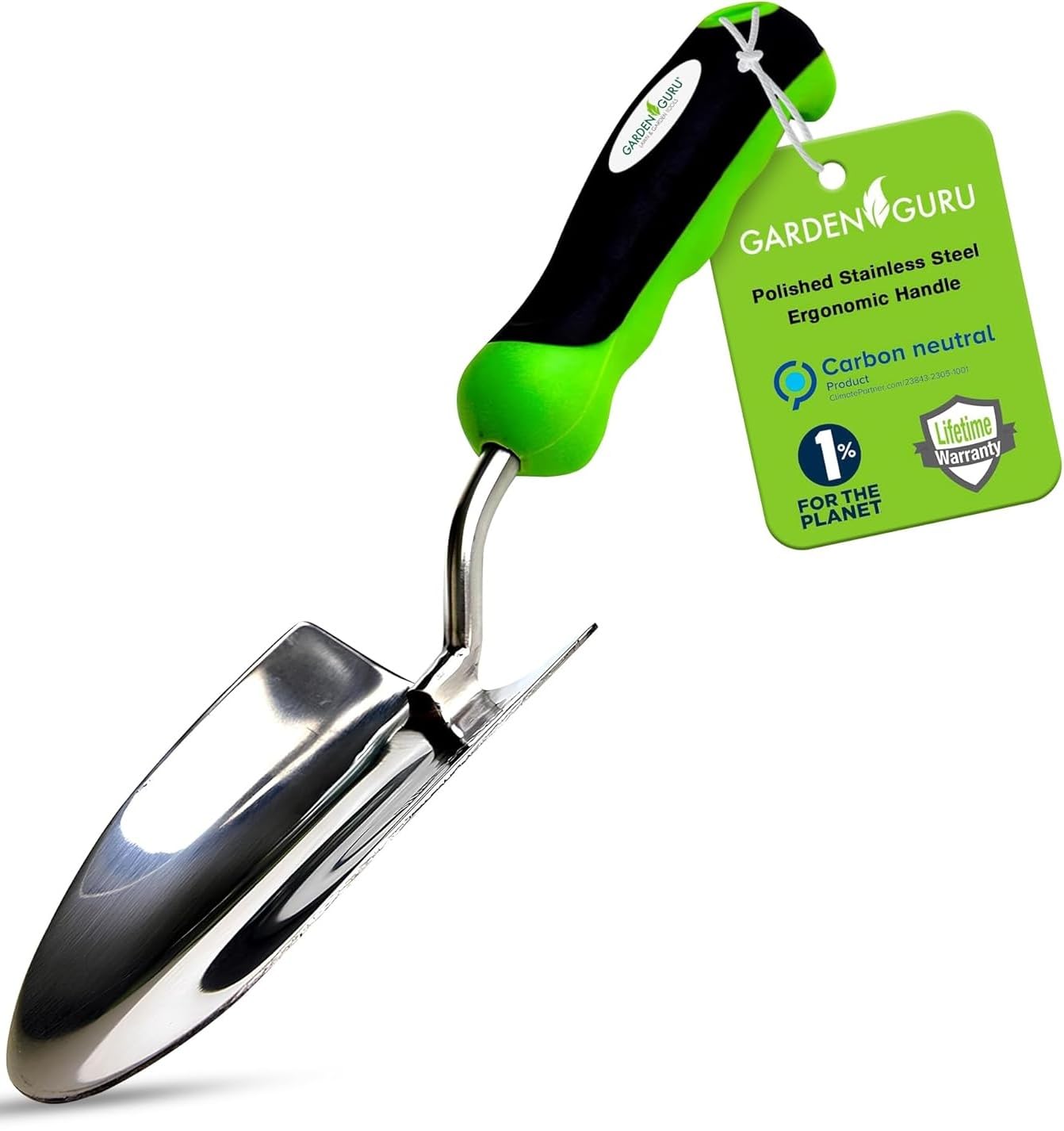
Garden Guru Stainless Trowel

Garden Guru Stainless Trowel

Rust-resistant steel

Our Score 9.6/10
Check Price

Worth Noting

  • For gardeners with small hands, the handle may feel oversized and the thumb rest may not align.
Handle
Rubber grip
Weight
9 oz
Blade Material
Stainless steel
Read the full review

The stainless steel blade resists rust and stays sharp in wet soil. The rubber grip with thumb rest reduces strain for medium to large hands. At 9 oz it’s heavier than the top pick, and the handle may feel large for those with smaller hands. A good value for gardeners who prioritize rust resistance and comfort over weight.

Bottom line: Gardeners who want a rust-proof steel trowel and have medium to large hands will find this a cost-effective option despite the extra weight.

7

Edward Tools Transplanter

Edward Tools Transplanter

Depth-marked aluminum

Our Score 9.6/10
Check Price

Worth Noting

  • Aluminum blade may struggle in hard or compacted soil compared to steel trowels
Handle
Rubber palm rest
Weight
5.6 oz
Blade Material
Aluminum
Read the full review

This trowel delivers rust-proof aluminum construction that won't bend under normal potting and raised-bed use, plus engraved marks for consistent bulb depth. The ergonomic rubber handle with palm rest makes extended planting sessions comfortable. The tradeoff: the aluminum blade is not as sharp as steel, so it may struggle in hard or compacted soil. Best for loose garden beds and potting mixes rather than clay or root-cutting tasks.

Bottom line: Best suited for gardeners working in raised beds and potting mixes who value rust resistance and depth measurements over cutting power.

8

Kemaier Serrated Trowel

Kemaier Serrated Trowel

Serrated root cutting

Our Score 9.6/10
Check Price

Worth Noting

  • Heavy weight can cause hand fatigue during extended use.
Handle
Rubberized grip
Weight
10.6 oz
Blade Material
Stainless steel
Read the full review

The Kemaier’s 2.5mm thick blade and serrated edge slice through roots and compacted soil with minimal effort, and the full-tang rubberized grip stays secure. At 0.66 lb it’s noticeably heavier than most trowels, which can fatigue the wrist during long transplanting sessions. Some units have shown surface rust despite the ‘stainless’ label, so it’s best suited for buyers who prioritize cutting power over weight and are willing to dry the blade after use.

Bottom line: Pick the Kemaier if your priority is a tough, sharp blade for breaking up rooty soil and you can tolerate the heft and occasional rust risk.

9

Gardena Combisystem Head

Gardena Combisystem Head

Combisystem head

Our Score 9.6/10
Check Price

Worth Noting

  • Requires separate handle purchase, increasing total cost.
Handle
Weight
9.9 oz
Blade Material
Alloy steel
Read the full review

The blade stays sharp and resists corrosion thanks to the droplet coating, backed by a 25-year warranty. It's a smart addition for anyone with a Gardena handle, but buyers expecting a complete trowel will need to factor in a separate purchase. The short 8.5 cm blade limits depth for bulb planting — fine for raised beds and pots, less suited for deep transplanting.

Bottom line: Best for gardeners already using Gardena combisystem handles who need a sharp, durable trowel head for light transplanting in containers or raised beds.

10

Root Slayer Trowel

Root Slayer Trowel

Root cutting heavy

Our Score 9.4/10
Check Price

Worth Noting

  • Powder coating can chip over time, exposing steel to rust
  • Blade thickness can be too aggressive for delicate transplanting
Handle
Thermoplastic
Weight
12 oz
Blade Material
Carbon steel
Read the full review

The Root Slayer's ripsaw serrations slice through established roots and tough sod like a saw through wood, giving you leverage no standard trowel can match. The carbon steel blade is thick and aggressive — it can damage small root balls if not handled carefully, and the powder coating may chip over time, exposing the steel to rust. This trowel suits gardeners who regularly battle tough clay, roots, and sod rather than those doing delicate transplanting in loose soil.

Rinse and dry the blade after use — exposed steel points can rust if left wet.

Bottom line: The Root Slayer is the right choice if your primary task involves cutting through roots and tough soil; for general transplanting, a more balanced trowel will serve better.

11

WORKPRO Wood Handle Trowel

WORKPRO Wood Handle Trowel

Budget wood handle

Our Score 9.4/10
Check Price

Worth Noting

  • Narrow blade less efficient for moving larger amounts of soil
Handle
Wood
Weight
8.8 oz
Blade Material
Stainless steel
Read the full review

The WORKPRO trowel delivers sharp stainless steel that cuts through tough soil and roots, paired with an FSC-certified wood handle. Its narrow blade makes it less efficient for moving large amounts of soil, and the wood handle may crack if left wet. This trowel suits precision transplanting and budget-conscious gardeners who don't need to scoop heavy loads.

Bottom line: Best for precision transplanting and budget-conscious gardeners who don't need to move large volumes of soil.

12

Corona Comfort Trowel

Corona Comfort Trowel

Comfortable budget

Our Score 9.4/10
Check Price

Worth Noting

  • Aluminum blade may bend in very hard or rocky soil
Handle
Cushioned grip
Weight
Blade Material
Aluminum alloy
Read the full review

This trowel's cushioned grip keeps hands comfortable during extended transplanting sessions in loose soil. The one-piece aluminum build holds up well in typical garden beds, but the blade can bend in heavy clay or rocky ground, and it lacks extra features found on some comparably priced options.

Bottom line: Works well for gardeners with loose, loamy soil who want a comfortable handle at a low price — not for compacted clay or rocky ground.

13

Spear & Jackson Carbon Trowel

Spear & Jackson Carbon Trowel

Classic wood handle

Our Score 9.4/10
Check Price

Worth Noting

  • Epoxy coating may chip on sharp rocks or very abrasive soil, leaving carbon steel exposed.
Handle
Ash wood, leather
Weight
7 oz
Blade Material
Carbon steel
Read the full review

This trowel balances a classic ash wood handle with a carbon steel blade coated in hammer-finish epoxy to resist rust and minor scratches. It feels well-proportioned and comfortable for light transplanting in loose or sandy soil. However, the epoxy coating can chip when encountering sharp rocks, and the carbon steel will need drying after use to prevent corrosion — typical of traditional materials rather than modern alloys. For gardeners who prefer the feel of wood and maintain a refined soil bed, this is a good option, but for rocky or heavy clay conditions a forged steel trowel like the 4055 makes more sense.

Bottom line: Best suited for gardeners who work in well-tended beds and appreciate a traditional wood-handled trowel, but choose a forged steel alternative if your soil contains sharp rocks or heavy clay.

14

Showvigor Yellow Trowel

Showvigor Yellow Trowel

Kids gardening

Our Score 9.0/10
Check Price

Worth Noting

  • Blade material may rust in damp soil despite being marketed as stainless steel.
Handle
Rubber
Weight
5 oz
Blade Material
Aluminum alloy
Read the full review

The Showvigor trowel costs very little and is light enough for small hands or quick soil surface work. However, the blade is aluminum alloy rather than the advertised stainless steel, and some owners report rust after first contact with damp earth. The protruding hang tab on the handle also interferes with a full grip, making longer sessions uncomfortable. This is not a tool for serious transplanting or frequent digging in heavy soil.

Bottom line: Only for very occasional light use or as a starter tool – not for regular transplanting or tough soil.

How to Choose

Blade Material

Aluminum trowels resist rust and stay light, but they bend under heavy torque in clay or rocky soil. Stainless steel offers rust resistance and strength, though at a higher weight. Carbon steel can be razor-sharp and strong, but requires drying to prevent rust.

For regular garden beds with loamy soil, aluminum or stainless steel work fine. For tough, compacted ground, a thick carbon steel or forged stainless blade will hold up season after season.

Handle Ergonomics

A comfortable handle reduces hand fatigue during extended planting. Look for a shape that fills your palm and provides a secure grip, especially if you have arthritis or weak grip. Contoured rubber or TPR handles offer the most comfort.

Wood handles can be beautiful and comfortable, but they require maintenance and may crack if left wet. Metal handles with a plastic sleeve can slip under heavy load, so a full tang with a secure grip is preferable for tough digging.

Weight and Balance

Heavier trowels (over 10 oz) provide more leverage for hard soil but tire your arm during long sessions. Lightweight trowels (under 7 oz) are easier for quick tasks but may lack the force needed in compacted ground. A well-balanced tool feels natural in hand and reduces strain.

For all-day transplanting, a mid-weight trowel around 8-10 oz with a centered balance point is ideal. Heavy users in clay may prefer a heavier tool, while container gardeners can go lighter.

Blade Shape

Narrow, pointed blades are best for precise transplanting and bulb planting. Wide, scooped blades move large volumes of soil quickly but are less effective in tight spaces. Straight blades work well for general digging, while curved blades help lift roots.

If you primarily plant seedlings and bulbs, a narrow trowel under 2 inches wide will get into small holes. For potting and filling raised beds, a wider scoop saves time and effort.

Edge Sharpness

A sharp edge cuts through roots and compacted soil with far less effort than a blunt one. Serrated edges are especially effective on fibrous roots and sod. Plain sharp edges work well for slicing through soil and can be maintained with a file.

For gardens with established perennials or tree suckers, a serrated trowel is a game-changer. If you mostly work in loose, well-tended soil, a standard sharp edge is sufficient and easier to resharpen.

Frequently Asked Questions