Garden Tools

9 Best Anvil Loppers of 2026: Cut Branches Without Overpromising

Find anvil loppers that actually cut the branches you have, not the marketing claims. For homeowners and gardeners.

Many anvil loppers boast 2-inch cutting capacities but struggle on live oak or bend handles under the first real load. That gap between marketing and reality leaves gardeners with a broken tool mid-project.

This guide focuses on loppers that have proven their worth on actual branches, with reliable designs and honest specs. Whether you need telescoping reach for high limbs or a ratchet for extra leverage, the right tool matches your wood type and avoids wasted effort.

The payoff: a clean cut every time and handles that stay straight season after season.

1

Wolf-Garten RS750

Top Pick
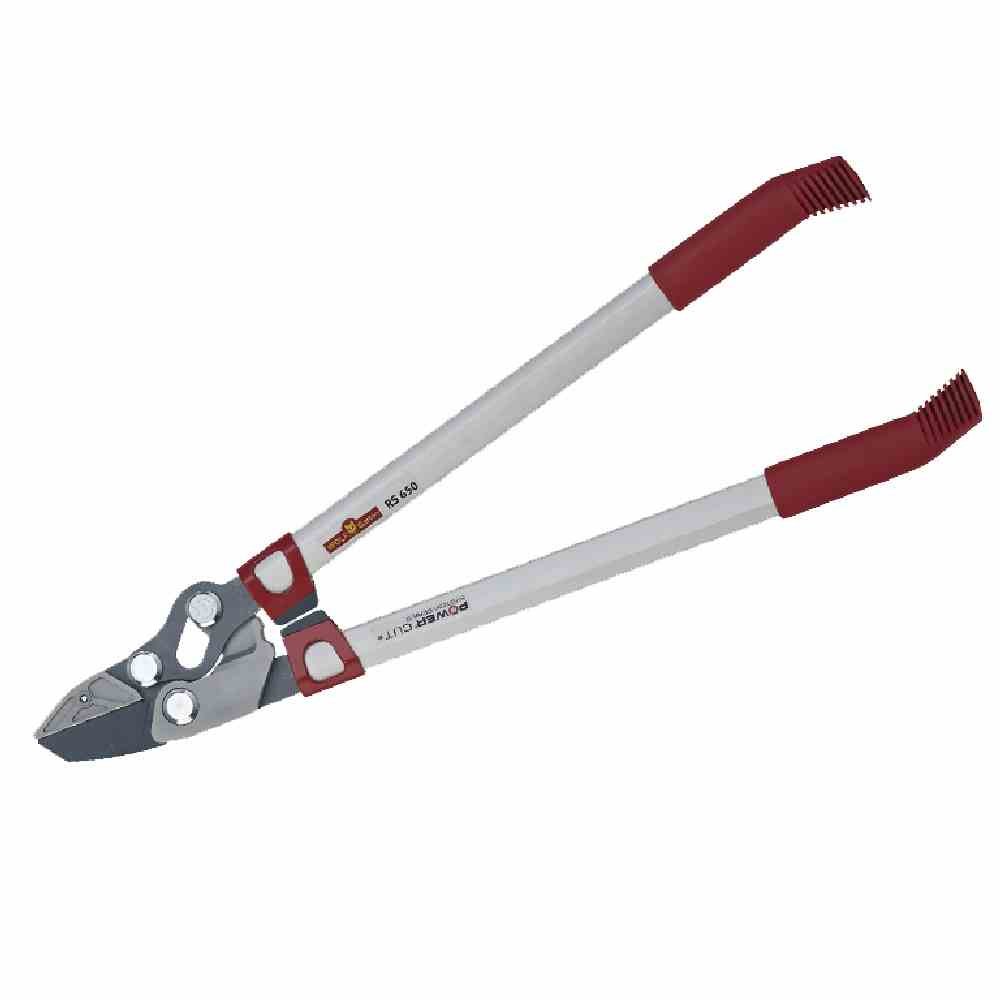
Wolf-Garten RS750

Light high-capacity

Our Score 9.6/10
Check Price

Worth Noting

  • For buyers who rely on user feedback to validate performance, this lopper provides no confirmation of its weight or cut capacity claims.
Weight
0.34 kg
Mechanism
Handle Length
Blade Material
Read the full review

The Wolf-Garten RS750 weighs under 1 lb, making it the lightest anvil lopper with a claimed 1.77-inch cut capacity, backed by a 10-year guarantee. Unlike the Spear & Jackson 8290RS, which has thousands of customer reviews confirming its performance, the RS750 has no such verification. This suits gardeners who prioritize weight savings and warranty length over proven performance from user experiences.

Bottom line: The Wolf-Garten RS750 is the right choice for gardeners who prioritize ultra-light weight and a long warranty over verified performance data.
2

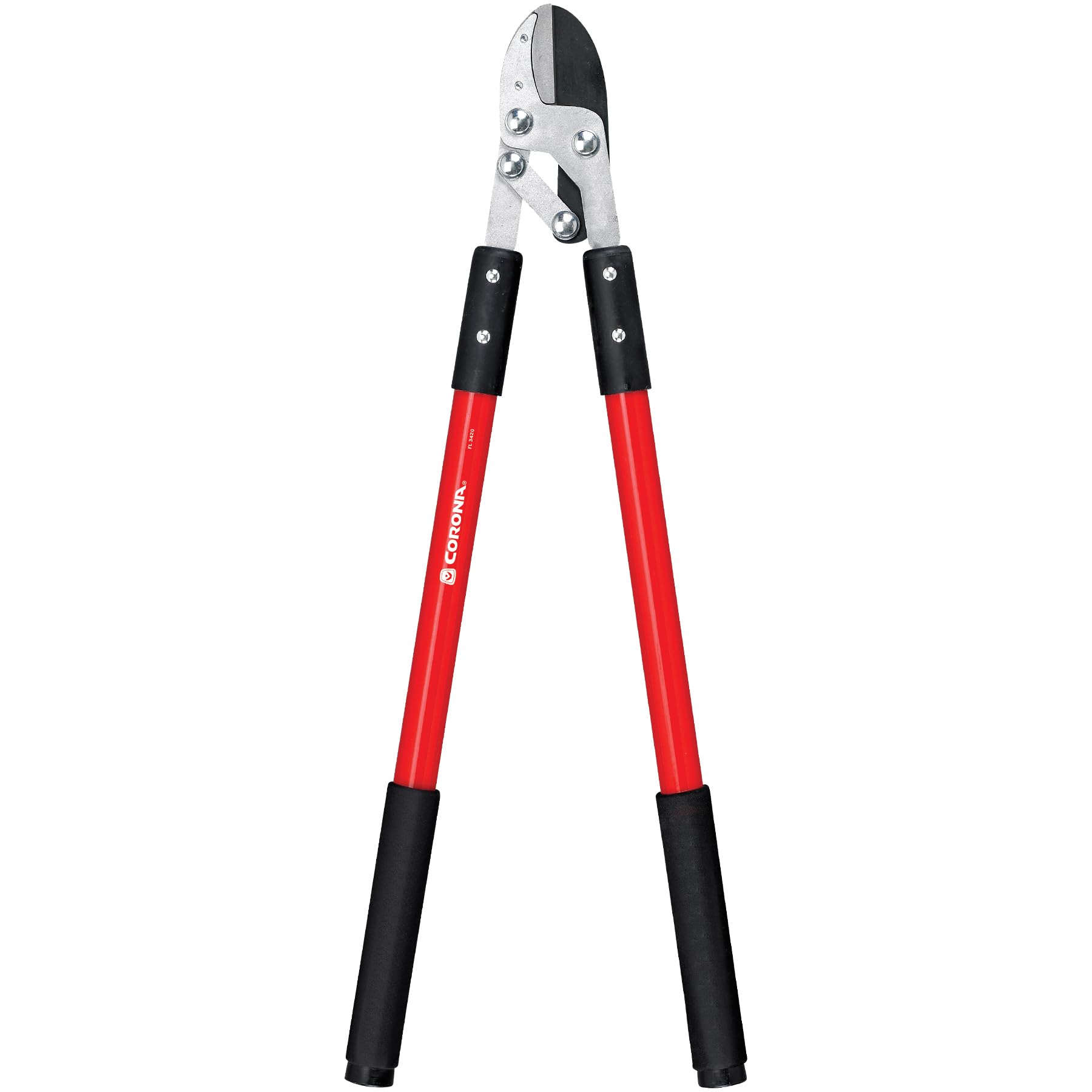
Corona FL 3420

Corona FL 3420

Medium pruning

Our Score 9.4/10
Check Price

Worth Noting

  • Heavier than competing loppers in this price range, can cause arm fatigue during extended use
  • Blade may chip or break if used on very hard wood or forced beyond its 1.5-inch capacity
Weight
2.7 lbs
Mechanism
Compound Action
Handle Length
32 in
Blade Material
Alloy Steel, Serrated
Read the full review

Best value among budget loppers for cutting dry wood and dead branches up to 1.5 inches. The compound action multiplies leverage, reducing effort compared to standard anvil designs of similar weight. Build quality is decent for the price, with sharp serrated blades that slice through dry material cleanly.

This lopper suits homeowners who prune dead limbs occasionally, not those cutting thick live wood. The blade can bend or chip on very hard dry wood if forced, and the 2.7-pound weight adds fatigue during longer sessions. For heavy-duty live branches, the telescopic ratchet of the guide's top pick handles larger cuts with less risk.

Stick to dry wood under 1.5 inches and avoid twisting the blade mid-cut to prolong its life.

Bottom line: A capable budget choice for homeowners who mainly cut dead branches and want to save money, but not the tool for thick live wood or all-day trimming sessions.

3

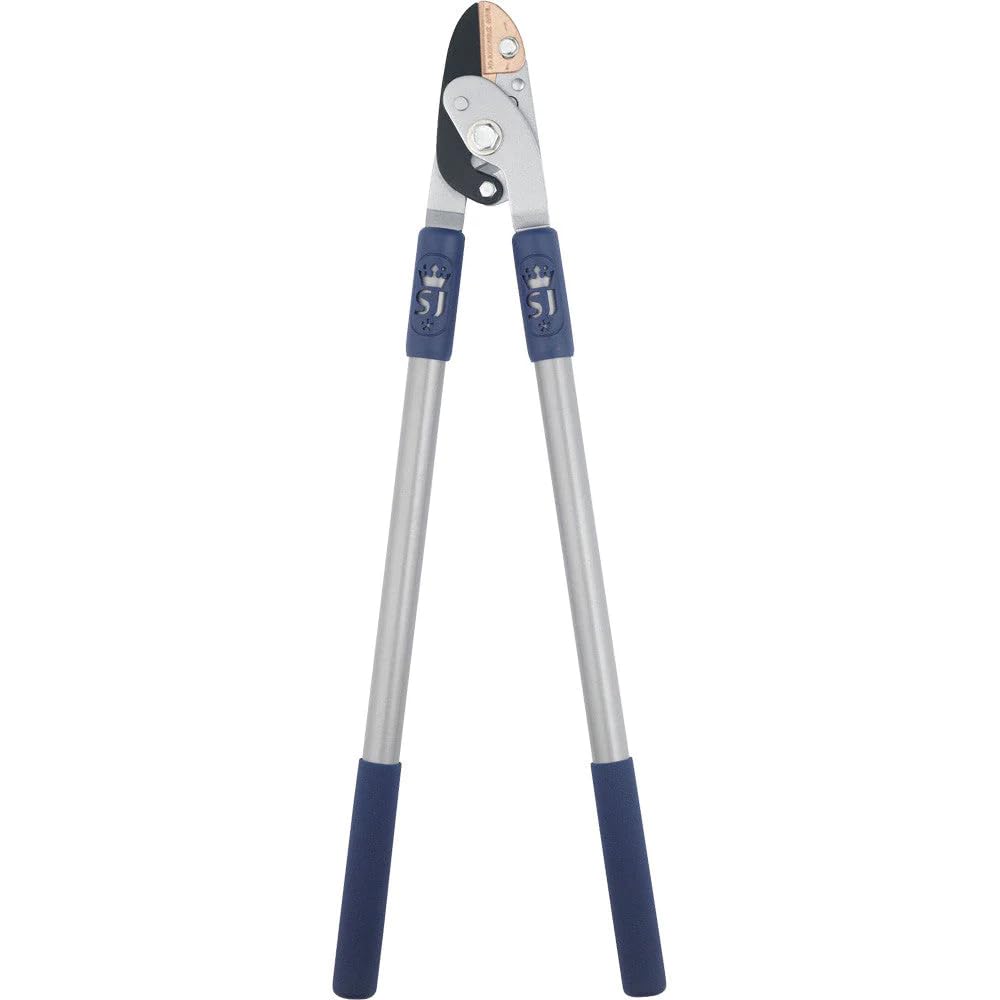
Spear & Jackson 4826RSA

Spear & Jackson 4826RSA

Light pruning

Our Score 9.4/10
Check Price

Worth Noting

  • Cutting capacity limited to 1.26 inches; cannot handle thicker branches found in heavy pruning tasks.
Weight
2.77 lbs
Mechanism
Compound Action
Handle Length
26 in
Blade Material
Hardened Carbon Steel
Read the full review

This compact compound-action lopper cuts branches up to 1.26 inches, making it a good fit for light pruning but not for heavy-duty trimming. The low price and lightweight design suit gardeners needing a quick tool for small tasks.

Bottom line: Best for gardeners who need an affordable lopper for small, light pruning jobs and don't require cutting branches over an inch thick.

4

Fiskars LX99

Fiskars LX99

Premium large cut

Our Score 9.4/10
Check Price

Worth Noting

  • Without customer feedback, long-term durability and cutting consistency on live hardwoods remain unverified.
Weight
3.0 lbs
Mechanism
PowerGear X
Handle Length
31.5 in
Blade Material
Hardened steel
Read the full review

The Fiskars LX99 boasts the biggest cut capacity of any lopper in this comparison, and its PowerGear X gear mechanism is designed to multiply leverage on thick branches. The aluminum handles keep weight under 3 pounds, reducing fatigue during longer sessions. However, this is a premium-priced tool with no user feedback to confirm how it performs on live hardwoods over time. That makes it a choice for Fiskars brand loyalists willing to accept untested real-world performance, rather than buyers who want verified customer experiences before spending this much.

Bottom line: Best for Fiskars loyalists who want the highest claimed cut capacity and are comfortable with unproven performance.

5

Spear & Jackson 8290RS

Spear & Jackson 8290RS

Heavy-duty pruning

Our Score 9.2/10
Check Price

Worth Noting

  • Each cut requires a full handle open, which can add time on smaller branches
  • Extended handles may flex under extreme pressure on very thick or knotty wood
Weight
4.2 lbs
Mechanism
Ratchet
Handle Length
28-40.5 in
Blade Material
SK5 Carbon Steel
Read the full review

The Spear & Jackson 8290RS uses an SK5 carbon steel blade with a PTFE coating to cut 2-inch branches on live wood without stalling. The ratchet mechanism lets you cut in stages, reducing the force needed on each stroke. Telescoping handles extend from 28 to 40.5 inches, providing reach for high branches without a ladder.

This lopper suits homeowners tackling thick branches at height or anyone who wants extra leverage without a power tool. The ratchet requires a full handle open between each cut, which slows down quick trimming of small twigs – a fair trade for the mechanical advantage on tough wood. Best for deliberate, heavy pruning sessions rather than rapid cleanup.

For best results, open the handles fully between cuts to engage the ratchet – a minor rhythm adjustment on quick jobs.

Bottom line: If you need to cut 2-inch branches at height without a power tool, this lopper delivers – just plan for the slower cadence of the ratchet mechanism.

6

Kings County KC8807

Kings County KC8807

Heavy limb cutting

Our Score 9.2/10
Check Price

Worth Noting

  • Heavy and top-heavy design causes fatigue during extended overhead use
  • Ratchet requires wide handle opening between cuts, slowing work on smaller branches
Weight
4.4 lbs
Mechanism
Double Ratcheting
Handle Length
26-40 in
Blade Material
Alloy Steel
Read the full review

Double ratchet mechanism delivers the highest mechanical advantage among loppers in this guide, cutting through 2-inch branches with repeated ratchet strokes. This power comes at the cost of weight – at 4.4 lbs and top-heavy – making it fatiguing for overhead trimming. The ratchet also requires the handles to open fully between cuts, which slows down work on smaller limbs. Best for occasional heavy-duty pruning where maximum cutting force is needed and speed isn't critical.

Extend handles fully to reduce fatigue on tall branches; plan for an extra second per cut due to the ratchet cycle.

Bottom line: Choose this lopper when you need maximum mechanical advantage for thick, stubborn branches and can accept the extra weight and slower cutting rhythm.

7

Jardineer Ratchet Lopper

Jardineer Ratchet Lopper

Budget pruning kit

Our Score 9.2/10
Check Price

Worth Noting

Weight
4.99 lbs
Mechanism
Ratchet
Handle Length
30 in
Blade Material
SK5 Carbon Steel
Read the full review

The Jardineer includes a spare SK5 blade and a bypass pruner, making it a complete pruning kit at a budget-friendly price. Its ratchet mechanism cuts through 2-inch branches, though the nearly 5-lb weight can cause fatigue during extended sessions, and the blade may need a touch-up to reach its sharpest edge out of the box. This setup suits DIYers on a tight budget who want a full set and are willing to manage these tradeoffs for occasional heavy pruning.

Bottom line: Best for budget-conscious DIYers who want a complete pruning set without spending extra on accessories.

8

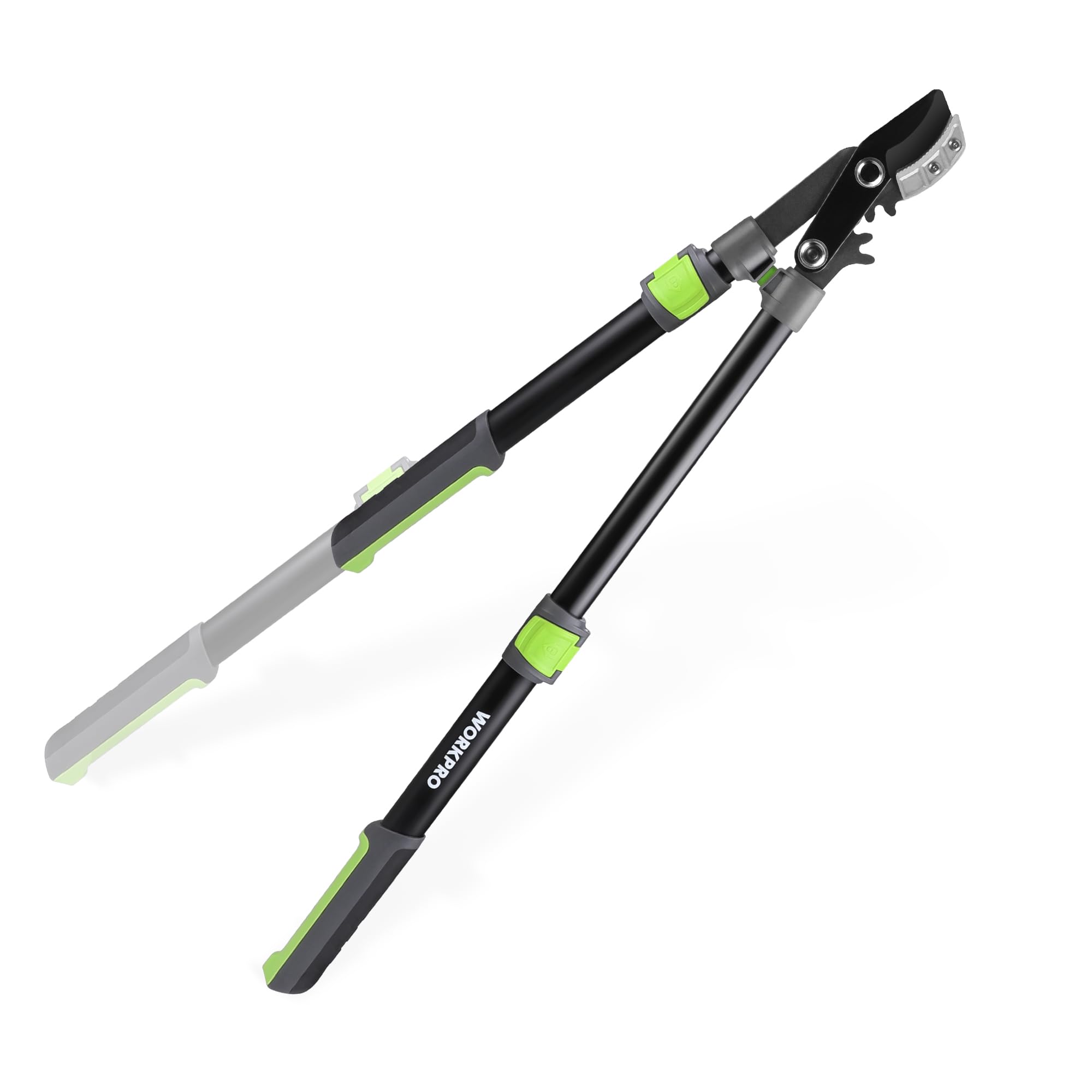
WORKPRO 25-37 Lopper

WORKPRO 25-37 Lopper

Occasional small branches

Our Score 9.2/10
Check Price

Worth Noting

  • During extended pruning sessions, the weight can cause fatigue
Weight
Mechanism
Gear
Handle Length
25-37 in
Blade Material
SK-5 Carbon Steel
Read the full review

The gear mechanism provides good cutting leverage on small branches, and the telescoping handles add reach at an entry-level price. The steel blade cuts cleanly initially, though the weight can be noticeable over time and sharpness may fade. Limited to 1.6-inch cuts, this suits occasional pruning, not heavy daily use.

Bottom line: A reasonable choice for light, occasional trimming where reach and budget are priorities, but not for frequent cutting of thick branches.

9

Fiskars L77

Fiskars L77

Mid-range heavy

Our Score 8.8/10
Check Price

Worth Noting

  • Long-term performance on heavy, repeated cuts has not been documented by actual owners
Weight
2.47 lbs
Mechanism
PowerGear II
Handle Length
27.2 in
Blade Material
Alloy steel
Read the full review

The Fiskars L77 brings the brand's PowerGear II gearing to an anvil lopper, offering a mechanical advantage that makes cutting through branches up to 5 cm (2 inches) noticeably easier than direct-drive designs. The alloy steel blade with non-stick coating resists sap buildup, and the 69 cm handles provide reach without excessive weight (1.12 kg). However, real-world performance under sustained heavy use remains unverified by owner feedback — the cutting capacity and durability claims rely on spec sheets rather than field reports, making this a reasonable choice for those willing to trust Fiskars' engineering but less suited to buyers who want confirmed long-term results before purchasing.

Bottom line: A solid pick if you trust Fiskars' reputation and want a gear-assisted anvil lopper at a moderate price. If verified owner experience is a priority, look at models with extensive user feedback.

How to Choose

Cutting Capacity

Cutting capacity is the maximum branch diameter the blade can sever. A 2-inch claim may hold on dead or dry wood but can stop cold on green live oak, which is much denser. Manufacturers often test on softwood or dry branches.

Measure the thickest branch you regularly prune and add half an inch as a buffer. For most homeowners, 1.5 to 2 inches covers the majority of tasks. If you regularly tackle 2-inch live oak, look for a lopper with a ratchet or compound mechanism to multiply force.

Mechanism Type

Ratchet loppers cut in stages: each squeeze advances the blade a little, so you can cut branches thicker than your grip strength would normally allow. The trade-off is that you must fully open the handles between each squeeze, which slows down rapid trimming.

Compound action uses a pivot system that multiplies leverage without the step-by-step action. It offers faster cuts on branches up to 1.5 inches but provides less mechanical advantage than a ratchet on larger wood. Gear-driven mechanisms sit between the two in speed and power.

Handle Length and Extendability

Longer handles give more leverage but add weight. Fixed 30-inch handles are a good all-around size. Telescoping handles extend reach for high branches but often sacrifice structural strength: the locking joints and thinner tubing can bend under heavy load.

If you primarily prune ground-level shrubs, a fixed handle is lighter and more durable. For orchard work, telescoping handles are convenient, but look for steel or heavy-duty aluminum with a reinforced locking collar.

Weight

Heavier loppers (over 4 lbs) transfer more cutting force but cause arm fatigue during extended use. Lighter models (under 3 lbs) are easier to maneuver overhead but may lack the inertia to cut through tough wood. Weight must be balanced against the mechanism: a 5-lb ratchet lopper may still feel easier to use than a 3-lb compound action on a thick branch.

For occasional pruning, weight matters less. For all-day trimming sessions, every extra pound adds up. Test the balance by holding the lopper one-handed if possible.

Blade Material and Coating

SK5 carbon steel holds a sharper edge longer than standard alloy steel but can chip if struck against hard material like gravel or metal. PTFE or non-stick coatings reduce friction and prevent sap buildup, but they wear off over time, especially on abrasive wood.

Serrated blades grip bark and prevent slipping on live wood but are harder to sharpen. For most users, a smooth SK5 blade with a PTFE coating offers the best balance of edge retention, rust resistance, and ease of sharpening.

Frequently Asked Questions