Garden Tools

12 Best Manual Lawn Edger of 2026: Get Clean Borders Without Power Tools

Find a manual lawn edger that cuts cleanly without breaking your back or budget. From half-moon to saw-tooth designs, we help you choose the right tool for your soil and yard size.

Most manual edgers arrive with blades that are not sharp enough to cut through dry grass and compacted soil. That first pass can feel like you are driving a dull knife through concrete. But the real trick is not just buying a sharper tool — it is knowing that damp soil and a quick sharpening session turn even a basic edger into a precision border cutter.

This guide cuts through the noise of half-moon versus saw-tooth, T-grip versus O-handle, and budget versus premium. The core trade-off is between weight and cutting power: a heavier tool powers through roots and clay but tires you out faster, while a lighter model is easier on the arms but may struggle with tough ground. The right choice depends on your soil type and how often you edge.

We have focused on tools that balance blade sharpness, handle comfort, and durability across common lawn conditions. Whether you have a small city plot or a sprawling garden, the picks here match the job to the tool — without the hype.

1

Radius 206 Stainless Edger

Top Pick
Radius 206 Stainless Edger

Serious gardeners

Our Score 9.4/10
Check Price

Worth Noting

  • Premium price
Assembly
One-piece
Footplate
Extra-wide elevated
Handle Design
O-handle
Blade Material
Stainless Steel
Read the full review

The stainless steel blade resists rust and holds its edge longer than carbon steel options, reducing the need for frequent sharpening. The ergonomic O-handle and wide step design ease strain on wrists and back, making this a strong fit for users with hand or joint concerns. This premium build comes at a price nearly double that of budget models, so it suits dedicated gardeners who view the tool as a long-term investment rather than an occasional purchase.

Bottom line: If your budget stretches and you want an edger that combines rust resistance with ergonomic comfort, the Radius 206 is a worthwhile investment.

2

Radius Pro-Lite Edger

Radius Pro-Lite Edger

Ergonomic comfort

Our Score 9.4/10
Check Price

Worth Noting

  • In dense soil, the blade may need sharpening before achieving clean cuts
Assembly
One-piece
Footplate
Extra-wide elevated forward step
Handle Design
Circular handle
Blade Material
Carbon Steel
Read the full review

The Radius Pro-Lite combines an ergonomic circular handle and a wide step to ease edging with less wrist strain. However, the carbon steel blade may arrive needing sharpening and lacks the rust resistance of the stainless steel version, making it a better fit for gardeners comfortable with occasional maintenance.

Bottom line: A strong mid-range pick for gardeners who prioritize comfort over blade longevity and are willing to touch up the edge.

3

AMES Saw-Tooth Edger

AMES Saw-Tooth Edger

First-time buyers

Our Score 9.2/10
Check Price

Worth Noting

Assembly
Multi-part
Footplate
Yes
Handle Design
T-Grip
Blade Material
High Speed Steel
Read the full review

The AMES Saw-Tooth Edger slices through grass and soil easily, with a steel blade and T-grip handle that hold up to regular edging without bending.

This tool fits homeowners with average lawns and sidewalks who want a no-fuss manual edger. The blade may need sharpening out of the box, and damp soil gives the cleanest cuts. It is not designed for rocky ground; for tougher soil, consider a heavier alternative like Root Slayer.

Bottom line: For average lawn edging without power tools, the AMES delivers dependable performance at a reasonable price.

4

Root Slayer Edger

Root Slayer Edger

Heavy clay soil

Our Score 9.2/10
Check Price

Worth Noting

  • Heavier than most edgers at 4.8 lbs
Assembly
One-piece
Footplate
Handle Design
Fiberglass grip
Blade Material
Carbon Steel
Read the full review

The serrated carbon steel blade slices through compacted clay and roots where lighter edgers stall. At 4.8 pounds, the weight adds cutting momentum but can cause arm fatigue during extended use. This tool is best for gardeners dealing with heavy clay or root-filled soil who prioritize cutting power over lightweight convenience. It contrasts with the top pick’s more balanced approach for average lawns — the Root Slayer is purpose-built for demanding conditions.

Take breaks during longer sessions to manage fatigue — the momentum at the blade reduces effort once you build a rhythm.

Bottom line: For gardeners with heavy clay and roots, the Root Slayer delivers the cutting edge needed — the heft is a fair trade for the power.

5

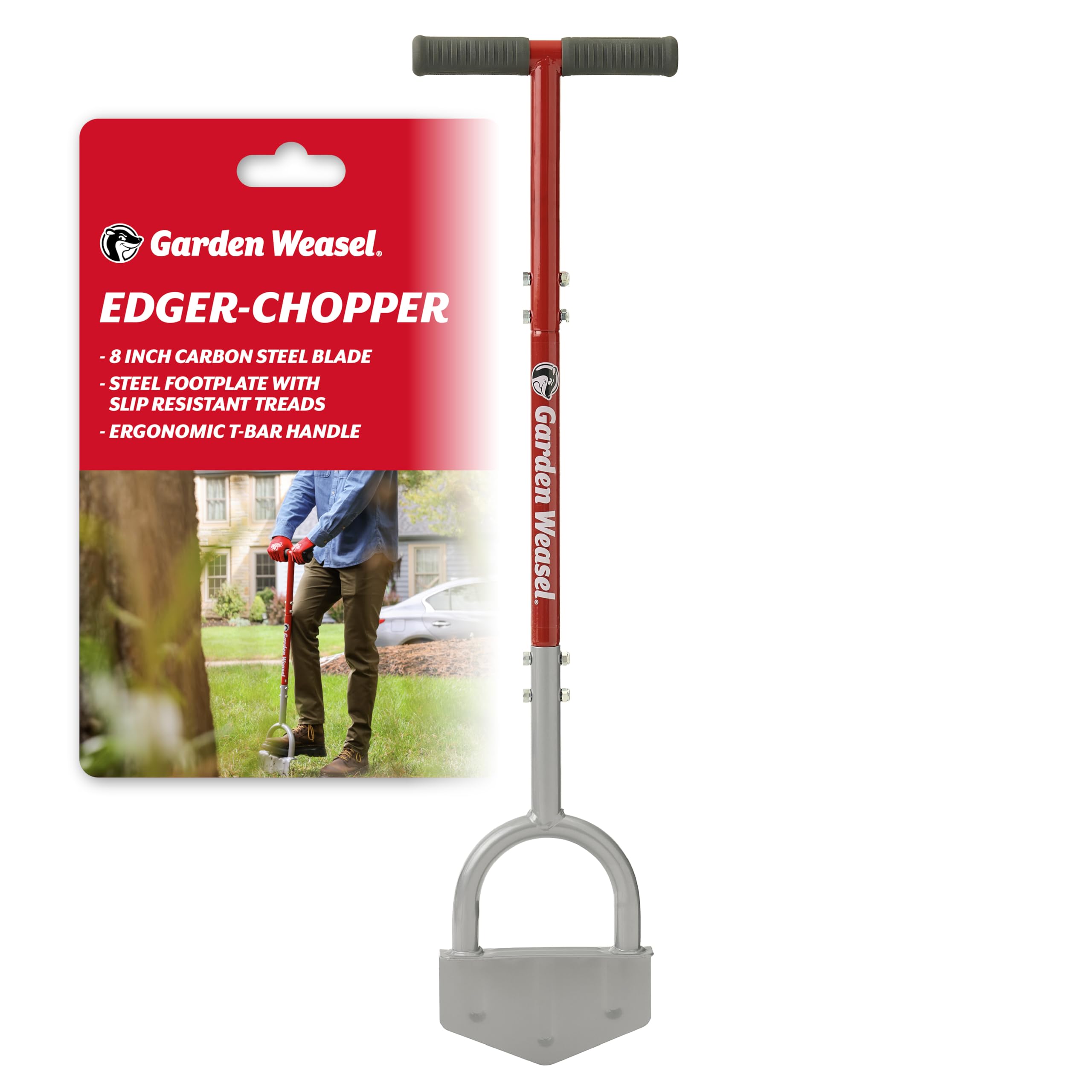
Garden Weasel Edger-Chopper

Garden Weasel Edger-Chopper

Comfort & design

Our Score 9.2/10
Check Price

Worth Noting

  • Blade sharpness may vary between units, with some needing sharpening before first use
Assembly
Multi-part
Footplate
Slip-resistant wide step
Handle Design
T-handle
Blade Material
Carbon Steel
Read the full review

The Garden Weasel Edger-Chopper combines a slip-resistant wide footplate with an ergonomic T-handle, reducing fatigue during border maintenance. Its carbon steel blade cuts through sod and roots effectively, even on stony properties, and the build quality feels sturdy for long-term use. However, blade sharpness can be inconsistent – some units require sharpening before first use, a common trade-off in this category. This tool is a fit for gardeners who prioritize comfort and modern design, especially those with stony or root-filled soil.

A quick pass with a file before your first edging session will improve cutting performance.

Bottom line: Best suited for gardeners who value ergonomic design and need a tool that can handle stony soil, provided they are willing to check and sharpen the blade on arrival.

6

CKLT One-Piece Edger

CKLT One-Piece Edger

No-assembly needed

Our Score 9.0/10
Check Price

Worth Noting

  • At 5.24 pounds, it is heavier than most edgers and may fatigue users during extended edging jobs.
Assembly
One-piece
Footplate
8-inch wide
Handle Design
Rubber grip
Blade Material
Spring steel
Read the full review

The CKLT edger arrives fully assembled with a one-piece steel frame, so no wobble or tightening is needed. The spring steel blade cuts through sod and roots cleanly.

It suits moderate edging around patios and walkways where you value instant readiness. The 5.24-pound weight aids cutting but can tire arms during longer sessions — a reasonable tradeoff for a tool that never needs assembly.

Rest the blade on the ground and use your foot to drive it — the weight helps cut deeper without extra effort.

Bottom line: For buyers who prioritize zero-assembly and a solid, one-piece build over featherlight weight, this CKLT edger delivers exactly what it promises.

7

Fiskars Steel Edger

Fiskars Steel Edger

Occasional users

Our Score 9.0/10
Check Price

Worth Noting

  • Plastic top handle may snap under moderate use
Assembly
Multi-part
Footplate
Large platform
Handle Design
T-grip
Blade Material
14-gauge hardened alloy steel
Read the full review

This Fiskars edger cuts clean edges along walkways with a well-designed steel blade. The lifetime warranty adds peace of mind for occasional users. However, the plastic top handle may snap under moderate use, and the blade can arrive dull, requiring sharpening. This makes it best for light touch-ups rather than frequent edging.

Bottom line: A suitable choice for occasional edging tasks where warranty coverage matters, but not for regular heavy use.

8

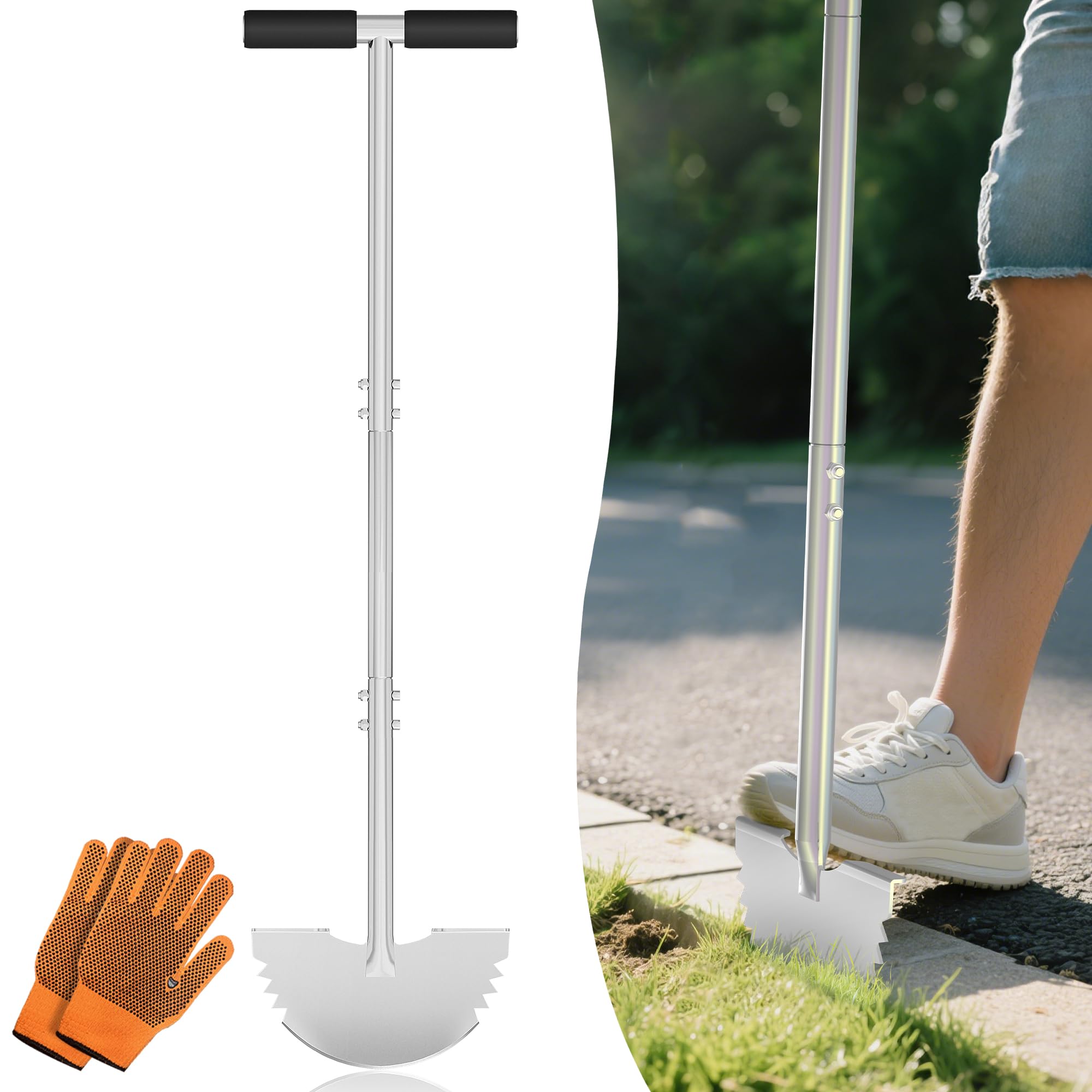
Colwelt Saw-Tooth Edger

Colwelt Saw-Tooth Edger

Budget prep work

Our Score 8.8/10
Check Price

Worth Noting

  • Assembly may require patience due to misaligned bolt holes
Assembly
Multi-part
Footplate
Extra-wide step
Handle Design
T-Grip
Blade Material
Carbon Steel
Read the full review

For budget-conscious buyers willing to spend a few minutes on prep, the Colwelt Saw-Tooth Edger cuts clean edges along walkways and garden beds with its comfortable T-grip handle and extra-wide step. It includes garden gloves as a bonus, but assembly may involve misaligned bolt holes, and blade sharpness can vary between units. Those who want a ready-to-use tool out of the box should look elsewhere.

Bottom line: Suitable for budget-conscious buyers who don't mind minor prep work, not for those wanting a ready-to-use tool.

9

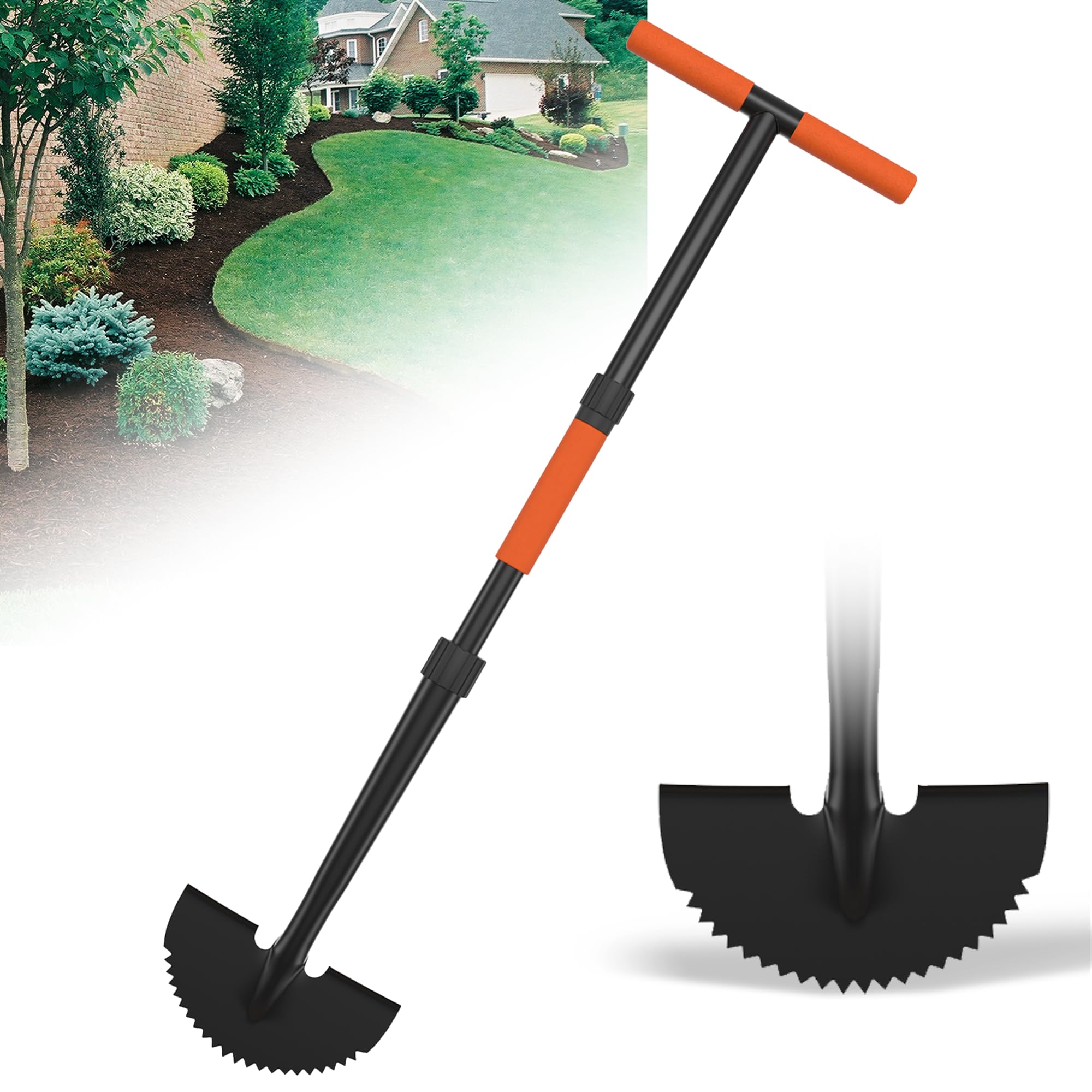
KYEEN-TOOLS Serrated Edger

KYEEN-TOOLS Serrated Edger

Budget-conscious

Our Score 8.6/10
Check Price

Worth Noting

  • Handle or blade can separate under frequent heavy use
Assembly
Multi-part
Footplate
Wide
Handle Design
T-handle
Blade Material
Rust-proof steel
Read the full review

This edger delivers a sharp, rust-proof blade and a broad footrest for under $20 – a rare combination in manual lawn tools. Assembly takes minutes, and the serrated edge cuts through grass and sod on typical lawns with minimal effort.

For light to moderate edging around flower beds and walkways, it performs well. But those tackling dry, compacted soil or expecting daily use should consider sturdier options – the handle or blade may separate under repeated heavy stress.

Work in damp soil to reduce stress on the tool and prolong its life.

Bottom line: A smart buy for budget-focused homeowners who edge a few times a season – just don’t push it past its limits.

10

BARAYSTUS Adjustable Edger

BARAYSTUS Adjustable Edger

Multiple heights

Our Score 8.6/10
Check Price

Worth Noting

  • Weld between handle and blade can give way under heavy stress.
Assembly
Multi-part
Footplate
Included
Handle Design
Adjustable T-grip
Blade Material
Cast iron / alloy steel
Read the full review

The adjustable T-grip makes this a smart pick for households where people of different heights share the edging chores. The saw-tooth blade cuts through turf cleanly, and the build feels solid for the budget-friendly price. However, the weld connecting handle to blade can separate under stress, which limits this tool to lighter, occasional use on soft soil rather than heavy-duty or rocky ground.

Bottom line: Best for light edging tasks around the yard when multiple family members will use the same tool - skip it if your soil is rocky or you need to cut deep trenches.

11

ATUHOLA Saw-Tooth Edger

ATUHOLA Saw-Tooth Edger

Occasional budget

Our Score 8.6/10
Check Price

Worth Noting

  • Some units may not hold up well after limited use
Assembly
Multi-part
Footplate
Included
Handle Design
T-grip
Blade Material
Forged steel
Read the full review

The tool-free lock-on assembly and forged steel blade make setup quick, and the low price is attractive. Edging sidewalks and garden beds works well when the blade is sharp. However, blade sharpness varies between units, making consistency a gamble. This suits occasional use on small lawns where precision isn't critical.

Bottom line: A decent pick for occasional use where the low cost is prioritized over consistent performance and longevity.

12

BARAYSTUS Wheel Edger

BARAYSTUS Wheel Edger

Light touch-ups

Our Score 8.0/10
Check Price

Worth Noting

  • Difficult to push through thick or overgrown grass
Assembly
Multi-part
Footplate
Handle Design
Adjustable heights
Blade Material
Carbon steel
Read the full review

The BARAYSTUS Wheel Edger uses self-sharpening carbon steel blades to trim grass along sidewalks and driveways with a rolling motion. The adjustable handle suits different heights. However, it struggles with thick grass and clogs with mud, and the wheel assembly can become loose over time. This is best for maintaining existing edges, not for cutting back overgrown borders.

Bottom line: Best for homeowners who keep their edges clean and want a rolling tool for quick touch-ups, not heavy-duty edging.

How to Choose

Blade Material

Carbon steel is the most common choice: it holds a sharp edge well and is easy to sharpen. The trade-off is rust – carbon steel blades need to be cleaned and oiled after use, especially in humid climates.

Stainless steel blades stay rust-free and require less maintenance, but they are more expensive and can be harder to sharpen when they eventually dull. For light, occasional edging, carbon steel is sufficient. For heavy, wet-soil use, stainless steel saves long-term hassle.

Handle Design

T-grips are the standard and work well for most users. D-grips and O-handles spread force more evenly across the palm, reducing fatigue during long sessions. The key hidden trade-off is height: a handle that is too short forces you to stoop, while one that is too long reduces leverage. Look for an adjustable handle if multiple people will use the tool.

A rubber or cushioned grip is not just comfort – it prevents blisters and gives better control when the handle is wet. Fiberglass handles are lighter and absorb vibration better than steel, but they can crack under extreme stress.

Footplate

A wide footplate (4 inches or more) distributes your weight so you can push the blade into the soil without slipping. Narrow or curved footplates concentrate force but can dig into your foot or cause instability on uneven ground. For hard or rocky soil, a wider platform with a serrated edge gives you more control.

The best footplates are elevated so you can step directly onto them without bending. Models with a flat, wide step are generally easier to use than those with a small or angled ledge.

Assembly

One-piece tools eliminate wobble and are ready immediately – but they are heavier and cannot be broken down for storage. Multi-piece designs are easier to store and transport, but the connection joint is a common failure point. Bolts that loosen over time can cause the handle to twist, making edging harder.

If you choose a multi-piece edger, look for one with a locking mechanism or reinforced weld. Budget models often use cheap fasteners that strip or break, so tightening the joints with thread-locker can extend the tool's life.

Weight and Balance

Heavier tools (over 4 lbs) provide momentum to cut through tough soil but will tire your arms and back during an hour of edging. Lighter tools (under 3 lbs) are easier to maneuver but may bounce off hard ground. The ideal weight for most homeowners is 3–4 lbs – heavy enough to sink in, light enough to control.

Balance matters just as much: a tool with the weight centered near the footplate will require less effort to lift and reposition. Check the overall length: longer handles give more leverage but can feel unwieldy in tight spaces.

Frequently Asked Questions