Garden Tools

14 Best Pitchfork of 2026: Match Your Soil's Demands Without Overpaying

Find a pitchfork that won't bend or break in your garden soil — whether you need a heavy-duty digger or a lightweight mulcher.

Many pitchforks marketed as 'heavy-duty' bend under rocky soil, while lightweight ones snap on first use. The real divide is between tools built for digging versus those designed for moving material.

Shoppers often pick by price or handle length, but tine thickness and heat treatment matter more. A 10-tine wide fork won't dig hard clay, and a 4-tine digging fork is inefficient for moving mulch.

This guide focuses on matching fork design to your primary tasks — whether breaking new beds or spreading compost — so you don't waste money on a tool that fails mid-season.

1

TABOR TOOLS J59A Digging Fork

Top Pick
TABOR TOOLS J59A Digging Fork

Heavy-Duty Champion

Our Score 9.4/10
Check Price

Worth Noting

  • At 5.5 lb, the weight becomes fatiguing during extended sessions
Tines
4
Rating
4.7 ★
Weight
5.5 lb
Best For
Clay & rocky soil
Read the full review

The TABOR J59A's welded steel shaft and high-carbon tines handle prying and rocky soil without bending, a claim backed by customers who have used it on tough terrain. While the Ymachray offers a better weight-to-durability balance for home gardeners, the TABOR is purpose-built for those who break lesser forks.

This fork suits gardeners with heavy clay or rocky soil, farmers, and homesteaders who need a tool that lasts a lifetime. At 5.5 lb, it can be tiring for all-day use, and the premium price is overkill if your soil is soft or you only garden occasionally.

The weight helps drive tines into hard ground — consider it an asset for tough soil rather than a flaw, but take breaks during long projects.

Bottom line: For serious diggers in unforgiving soil, this fork will likely outlast any other tool in your shed. If your garden is typical loam, a lighter fork may serve you better.
2

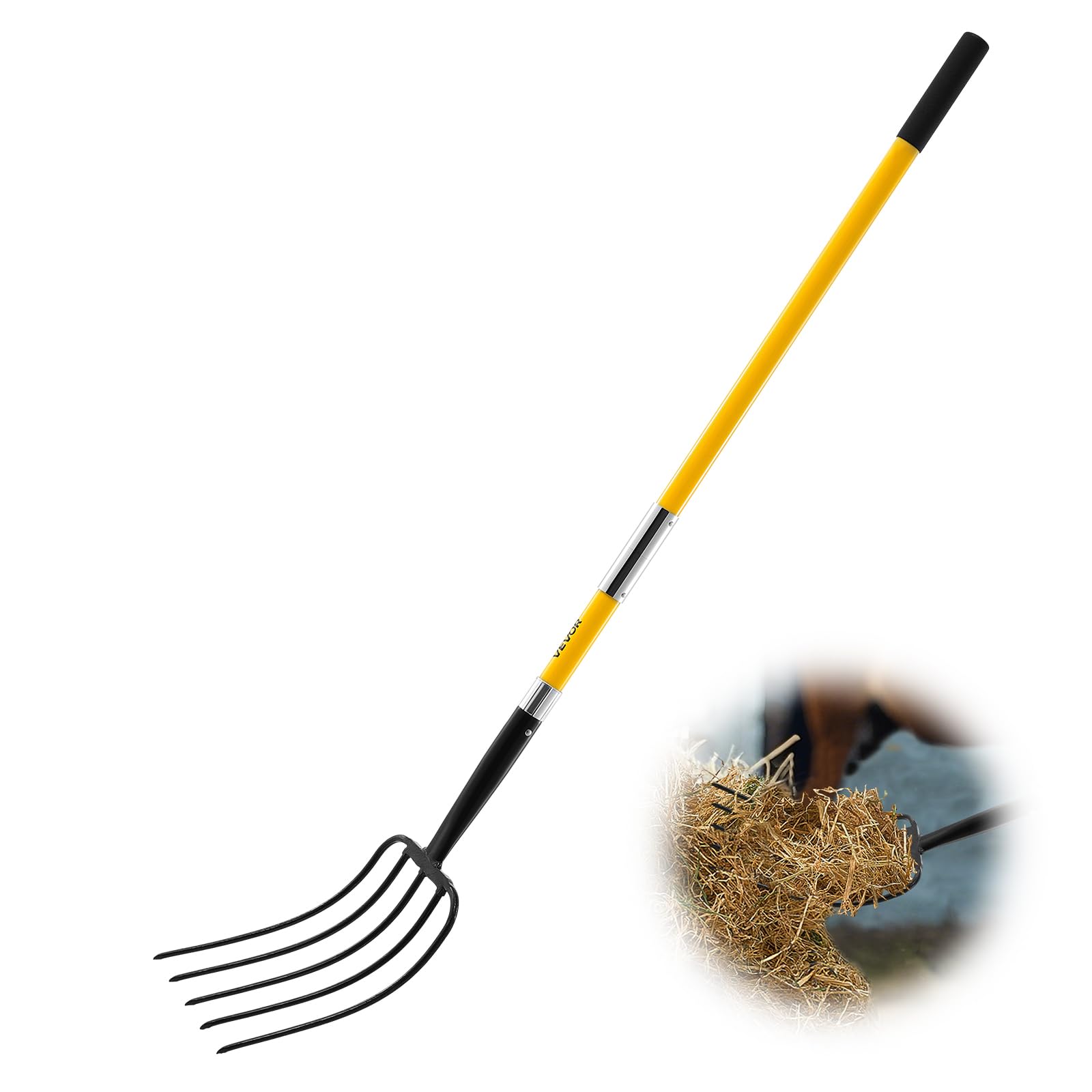
VEVOR 5-Tine Garden Fork

VEVOR 5-Tine Garden Fork

Best Budget for Moving Material

Our Score 9.4/10
Check Price

Worth Noting

  • Not designed for digging or breaking up soil
  • In very rocky ground or when used as a pry bar, occasional tine bending has been noted
Tines
5
Rating
4.7 ★
Weight
4.94 lb
Best For
Mulch & compost
Read the full review

The VEVOR Garden Fork is built for scooping and transporting loose material, not for breaking ground. Its five forged steel tines slide under hay, leaves, or manure without catching, and the fiberglass handle with Y-grip keeps the weight down to under five pounds. Assembly takes a few minutes, and the non-slip grip works even with wet gloves.

Where this fork separates itself from the top pick is in its narrow focus. The Ymachray handles both digging and mulching — the VEVOR stays in its lane. If you need to turn compost, spread mulch, or muck a stall, the long handle spares your lower back and the tines hold up well under repeated loads. A few backs bending tines have been noted when the fork is used on rocky soil or for prying roots, but that’s outside its stated design.

This fork suits gardeners and small-scale farmers who already own a digging fork or spade for soil work. If your primary task is moving material around the yard or barn, the VEVOR saves money and weight compared to a combined digging-and-scooping fork. Just do not expect it to double as a cultivator — the manufacturer explicitly states it is made for scooping, and using it to dig into hard ground risks bending the tines.

Keep the fork for scooping only — using it to pry rocks or break clay will risk bending the tines.

Bottom line: If your garden work is limited to moving loose material and you already own a tool for digging, this fork delivers a lightweight, budget-friendly option that holds up well.

3

Nohovu 10-Tine Wide Fork

Nohovu 10-Tine Wide Fork

Best Wide Mulch Fork

Our Score 9.4/10
Check Price

Worth Noting

  • 6.1 lb weight can cause fatigue during extended mulching sessions
  • 45-inch handle requires bending for taller users, reducing comfort over time
Tines
10
Rating
4.7 ★
Weight
6.1 lb
Best For
Bulk mulching
Read the full review

The Nohovu wide fork sets itself apart from lighter, longer-handled options like the Ymachray with its 10-tine head that swallows wood chips, pine straw, and hay in one pass. Owners consistently note that the quenched high-carbon steel tines hold up under repeated loads — the wide layout means fewer trips across a large property. This is a tool designed for volume, not finesse.

This fork suits gardeners who move bulk materials regularly and are comfortable with a heavier implement. The 6.1 lb weight and 45-inch handle mean it can fatigue smaller or older users, and taller individuals will need to bend more than they might like. It is not a digging fork — using it to pry or loosen soil risks bending the tines. Best kept to scooping and transporting loose matter.

Take breaks every 20–30 minutes to manage arm fatigue; this fork rewards short, efficient work bursts.

Bottom line: If your priority is moving large volumes of mulch or hay quickly and you don't mind a heavier tool, this wide fork delivers on capacity — just keep it away from digging duties.

4

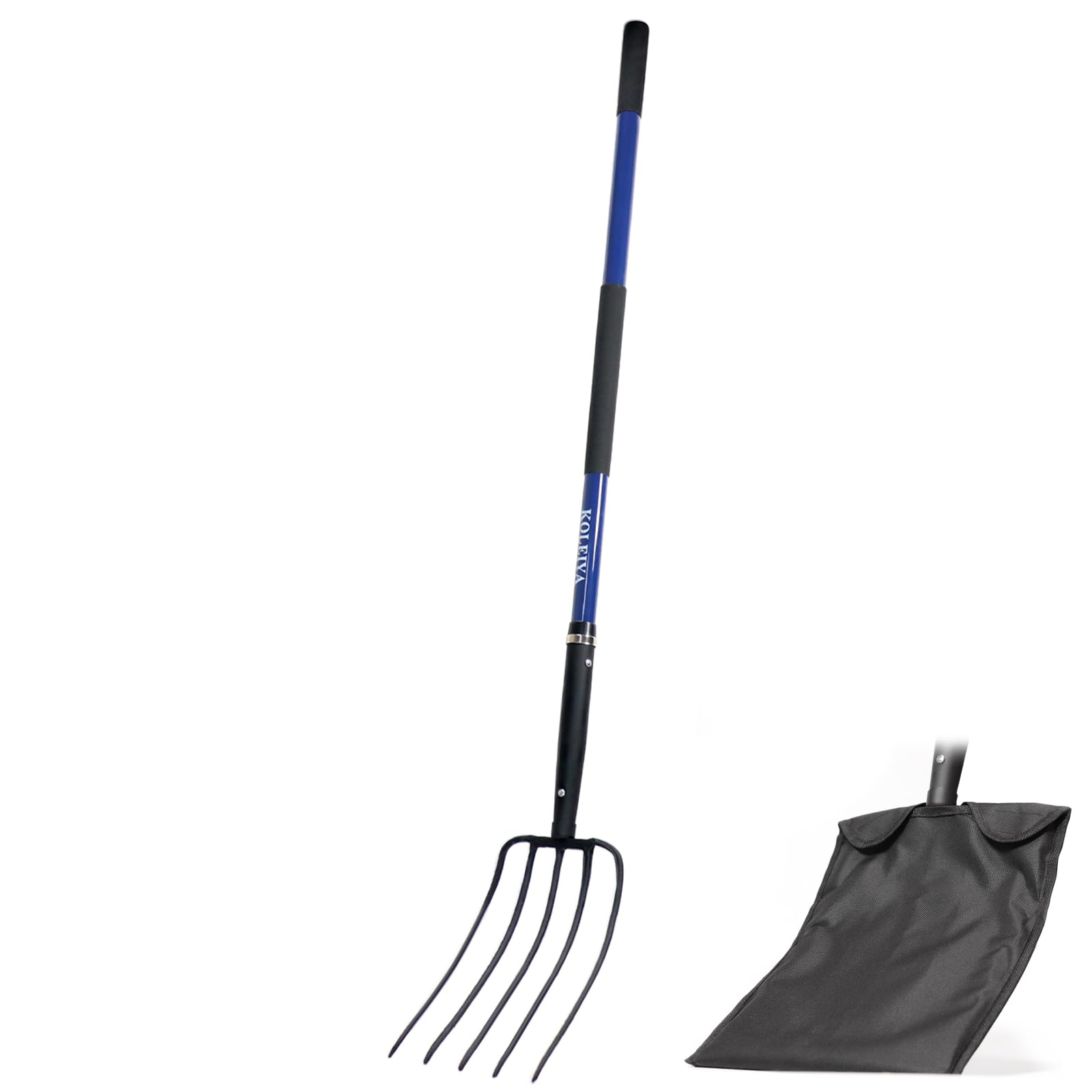
KOLEIYA 5-Tine Fiberglass

KOLEIYA 5-Tine Fiberglass

Best Ultra-Budget

Our Score 9.4/10
Check Price

Worth Noting

  • Not designed for breaking up compacted clay or rocky soil
Tines
5
Rating
4.7 ★
Weight
3.5 lb
Best For
Mulch & compost
Read the full review

The KOLEIYA 5-Tine Pitchfork is one of the lightest full-size garden forks available, yet its high-carbon steel tines handle routine mulch and compost loads without bending. Where the top-pick Ymachray offers greater durability for digging in clay, the KOLEIYA trades some ruggedness for a lower price and less fatigue during extended use. Unlike replacement-head options, this fork comes ready to use with a fiberglass handle and non-slip grip.

This fork suits budget-conscious gardeners who primarily move mulch, compost, or wood chips. The fiberglass handle with non-slip grips reduces fatigue, and the 57-inch length helps taller users avoid stooping. Those planning to dig in compacted soil or pry out roots should look at heavier options — the KOLEIYA is not built for that abuse. Additionally, the handle-to-head joint may loosen over time, so periodic checking is wise.

For moving lightweight loads such as straw or finished compost, the tines hold their shape without bending. The non-slip grip stays comfortable even when wet, and the overall balance makes one-handed carrying possible. The tradeoff for this light weight is that the fork can flex under heavy prying forces — not an issue for its intended scooping tasks.

Periodically check the handle connection for tightness, especially after moving heavy loads.

Bottom line: A capable budget fork for moving mulch and compost — light enough for all-day use, but it's not the tool for heavy digging or rocky ground.

5

Ymachray 5-Tine Digging Fork

Ymachray 5-Tine Digging Fork

Best Overall

Our Score 9.2/10
Check Price

Worth Noting

  • In very rocky soil, tines may bend when used for prying
  • 41-inch handle requires bending for users over 5'10"
Tines
5
Rating
4.6 ★
Weight
5.99 lb
Best For
Digging & mulching
Read the full review

The Ymachray 5-Tine Digging Fork cuts through compacted clay and lifts heavy mulch without flexing — a result of its stainless steel head and steel shaft. Home gardeners find it reduces the effort needed compared to a shovel, especially in raised beds and vegetable plots.

In typical garden use, the fork slides into soil with minimal resistance and holds up to repeated digging. On very rocky ground, some users report tine bending — this is not an issue for most soil types, but worth considering for stone-filled plots.

This fork is built for home vegetable gardeners and raised-bed enthusiasts who dig regularly and need a tool that balances weight with stiffness. The 41-inch handle suits average-height users; taller gardeners may find it requires more bending. It is not intended for commercial farm work or daily use in rocky fields.

Compared to heavier all-steel forks that can survive prying in rock, the Ymachray trades some indestructibility for a lighter weight (5.99 lb) and lower cost. This makes it a more practical choice for most home gardens where soil is workable.

The T-handle provides a secure grip for pushing and pulling, reducing hand fatigue during longer sessions. At a mid-range price, the Ymachray offers a stainless steel head that resists rust — a step up from painted carbon steel forks that chip over time.

When working in rocky ground, use a gentle rocking motion instead of prying to avoid bending the tines.

Bottom line: For home gardeners who dig moderate soil and want a stainless steel fork without the weight of heavy-duty models, the Ymachray is a practical choice.

6

Berry&Bird 4-Tine Digging Fork

Berry&Bird 4-Tine Digging Fork

Best Craftsmanship

Our Score 9.2/10
Check Price

Worth Noting

  • Occasional rust spots may appear on stainless steel head after use in damp conditions.
  • Ash wood handle can crack if left outdoors or subjected to extreme dryness.
Tines
4
Rating
4.6 ★
Weight
6.24 lb
Best For
Root harvesting
Read the full review

The Berry&Bird digging fork stands out for its handcrafted build and FSC-certified ash wood handle, finished with a polished stainless steel head that customers consistently describe as sturdy and beautiful. Where the top pick focuses on rugged versatility for rocky soil, this fork prioritizes elegant craftsmanship and precise harvesting without damaging tubers — a deliberate tradeoff in material choice that limits its use in abusive conditions.

This fork suits gardeners who appreciate a tool that doubles as a display piece and need a precise implement for harvesting potatoes, carrots, or other root vegetables. The wood handle requires indoor storage to avoid cracking, and occasional rust spots have been noted on the stainless steel head despite the material claim — a quality variance worth inspecting upon arrival.

In flower beds, compost piles, and general garden digging, the four-tine design delivers clean penetration without bending. The ash wood D-grip provides comfortable handling, though the weight (6.24 lb) feels substantial during extended sessions. For gardeners working in soft, well-tended soil, this fork offers a level of craftsmanship rarely seen at this price point.

Store the wood handle indoors and dry it after use; occasional rust spots can be wiped off with light abrasive.

Bottom line: A premium-priced fork for gardeners who prioritize beauty and precision over ruggedness — best in soft soil and for root harvesting, not rocky abuse.

7

Nohovu 5-Tine Fiberglass Fork

Nohovu 5-Tine Fiberglass Fork
Our Score 9.2/10
Check Price

Worth Noting

  • Tines can bend when used in rocky or heavy clay soil
Tines
5
Rating
4.6 ★
Weight
3.88 lb
Best For
Light mulching
Read the full review

The 58-inch fiberglass handle reduces back strain, and the 3.88 lb weight keeps fatigue low during long mulching or compost turning sessions. This budget-friendly fork moves lightweight materials efficiently, with customers reporting moving 12 yards of mulch in a day without issue. However, the tines are made from thinner steel to keep weight down, which means they can bend if used for digging in clay, rocky soil, or prying roots. This fork shines for moving leaves, compost, and barn bedding, but it is not a digging tool. For heavy soil work, a sturdier fork with thicker tines would hold up longer.

Bottom line: A good fit for tall gardeners who mostly move mulch, leaves, or compost and want to avoid back strain — but skip this if your soil is rocky or you need a digging fork.

8

VNIMTI 5-Tine Fiberglass

VNIMTI 5-Tine Fiberglass
Our Score 9.2/10
Check Price

Worth Noting

  • Handle attachment can be wobbly or break under strain; quality control varies from unit to unit.
  • Not designed for hard soil digging or heavy daily use
Tines
5
Rating
4.6 ★
Weight
3.74 lb
Best For
Light weeding
Read the full review

The VNIMTI pitch fork keeps cost and weight low, making it a reasonable choice for casual gardeners who need an inexpensive tool for lifting mulch or turning compost. The fiberglass handle and 58-inch length reduce bending, particularly appreciated by older users. However, quality control around the handle attachment can vary — some units arrive with a wobbly connection or develop looseness under strain. This limits the fork to soft soil and light tasks; it is not a tool for breaking up hard ground or daily farm work.

Bottom line: A solid pick for budget-conscious gardeners who only need a fork for soft soil and compost — just inspect the handle fit before first use.

9

VNIMTI 10-Tine Wide Fork

VNIMTI 10-Tine Wide Fork
Our Score 9.2/10
Check Price

Worth Noting

  • 6 lb weight can tire arms during longer sessions
  • 45-inch handle requires bending for users over 5'8", reducing comfort for taller gardeners.
Tines
10
Rating
4.6 ★
Weight
6 lb
Best For
Bulk hay moving
Read the full review

The VNIMTI wide fork moves bulk material like mulch, leaves, or hay in fewer scoops than standard forks, thanks to its 10-tine head and D-grip that gives good control. However, at 6 lb and with a 45-inch handle, it feels heavy during extended use and forces taller users to bend. This makes it a secondary alternative to the Nohovu wide fork for those who prioritize reach and lower weight.

Bottom line: A capable option for shorter users who need a wide scoop for light material and don't mind the extra weight, but those taller or tackling longer jobs should look at the Nohovu wide fork instead.

10

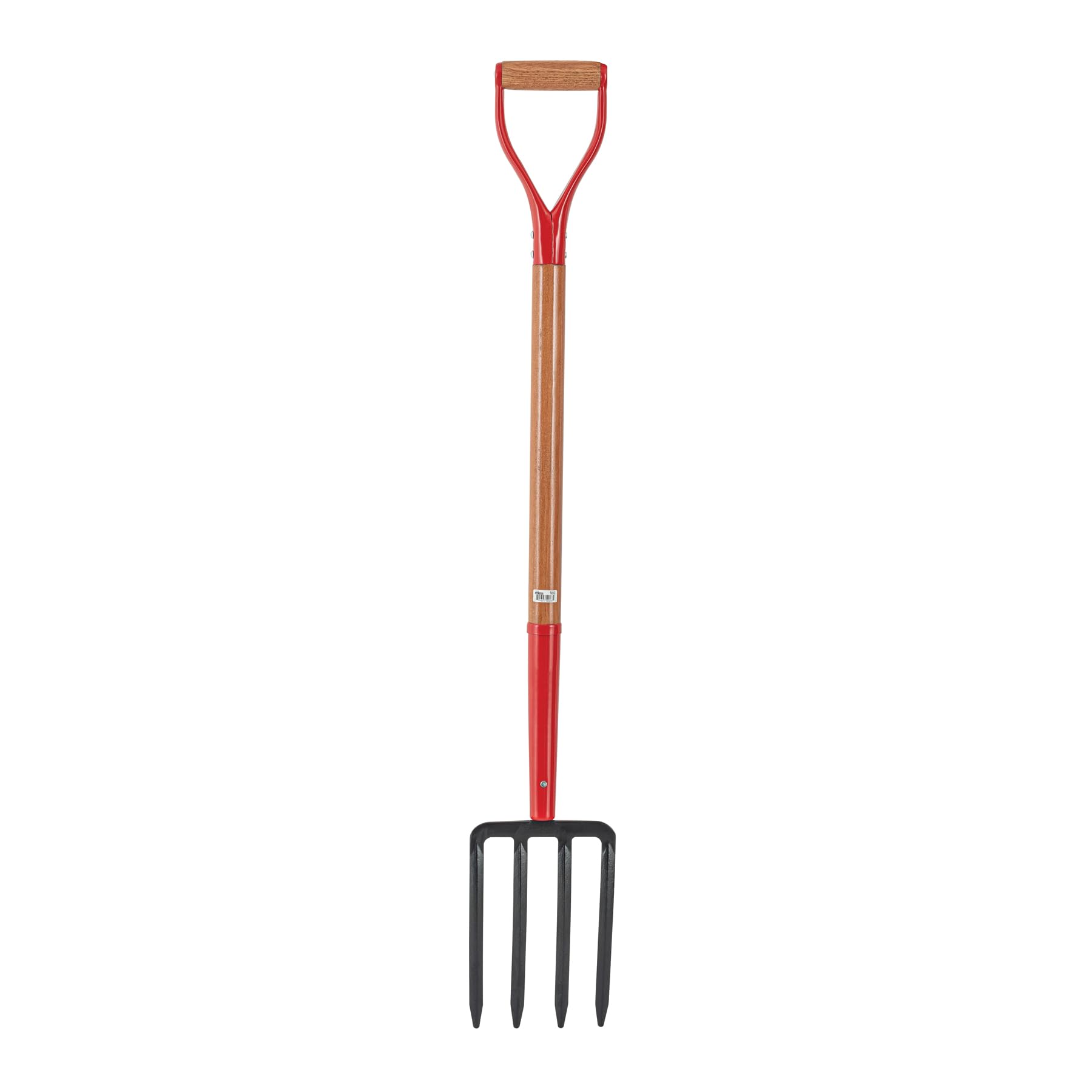
Truper 30" Spading Fork

Truper 30" Spading Fork
Our Score 9.0/10
Check Price

Worth Noting

  • Short handle (30 in) can require significant bending for users over 5-foot-8.
  • Some units may experience breakage at the head-to-handle junction under heavy use.
Tines
4
Rating
4.5 ★
Weight
3.75 lb
Best For
Raised beds
Read the full review

The Truper 30-inch Spading Fork offers solid steel tines and a wood D-handle at a budget-friendly price, making it a practical choice for light garden tasks like turning compost or working in raised beds and containers. Its compact size fits tight spaces, though the 30-inch handle means significant bending for anyone over 5-foot-8. Some units have shown breakage at the handle-to-tine junction under heavier loads, so it works best as a secondary tool for softer soil and modest jobs.

Bottom line: Best for small-space gardeners and those primarily turning compost or working raised beds, where the short reach is less of a concern and loads stay light.

11

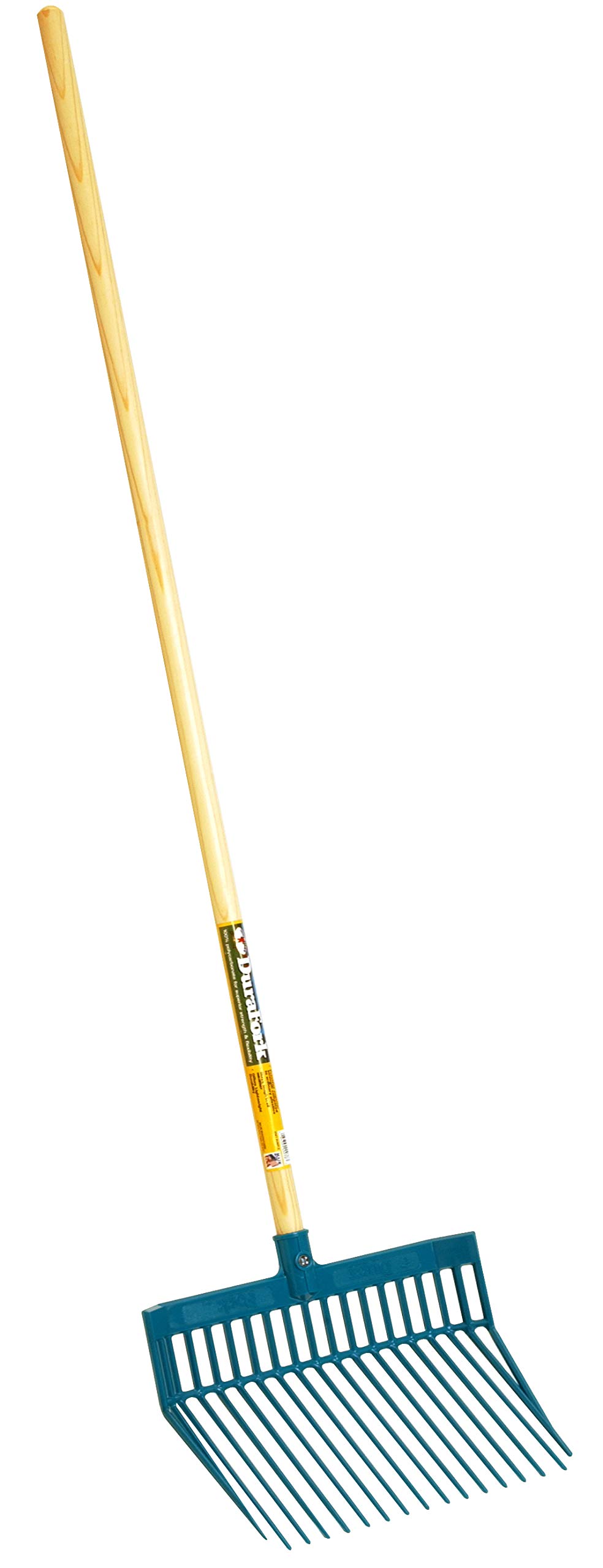
Little Giant DuraFork Head

Little Giant DuraFork Head
Our Score 9.0/10
Check Price

Worth Noting

  • Replacement head only
  • Angled tines are optimized for manure, not for soil digging or aerating.
Tines
Multiple
Rating
4.5 ★
Weight
1 lb
Best For
Manure mucking
Read the full review

The Little Giant DuraFork head delivers a tough polycarbonate design that holds up under daily barn mucking. Its lightweight build reduces fatigue during long cleaning sessions. The angled tines excel for manure and wet bedding but are not intended for soil digging or aeration. Keep in mind: this is a replacement head only — no handle is included. Buyers expecting a complete pitchfork will need to purchase a handle separately. This fork head serves horse and livestock owners who already have a compatible handle.

Bottom line: Best for horse owners who already have a compatible handle and need a lightweight, durable manure fork head.

12

GSBLUNIE 5-Tine Digging Fork

GSBLUNIE 5-Tine Digging Fork
Our Score 9.0/10
Check Price

Worth Noting

Tines
5
Rating
4.5 ★
Weight
6.21 lb
Best For
Soil loosening
Read the full review

The GSBLUNIE five-tine fork cuts through compacted soil and dislodges small roots without the weight of a full-size tool. Its 41-inch fiberglass handle and D-grip make it a natural fit for raised bed gardeners and seniors who value a lighter tool. That shorter handle does mean taller users will find themselves bending - the Ymachray or other long-handled forks offer more upright posture. This focus on compact efficiency limits its versatility for general-purpose digging, but within its intended use it delivers.

Bottom line: Best for raised bed gardeners and seniors who need a lightweight digging fork for loosening soil - not a full-length tool for tall users.

13

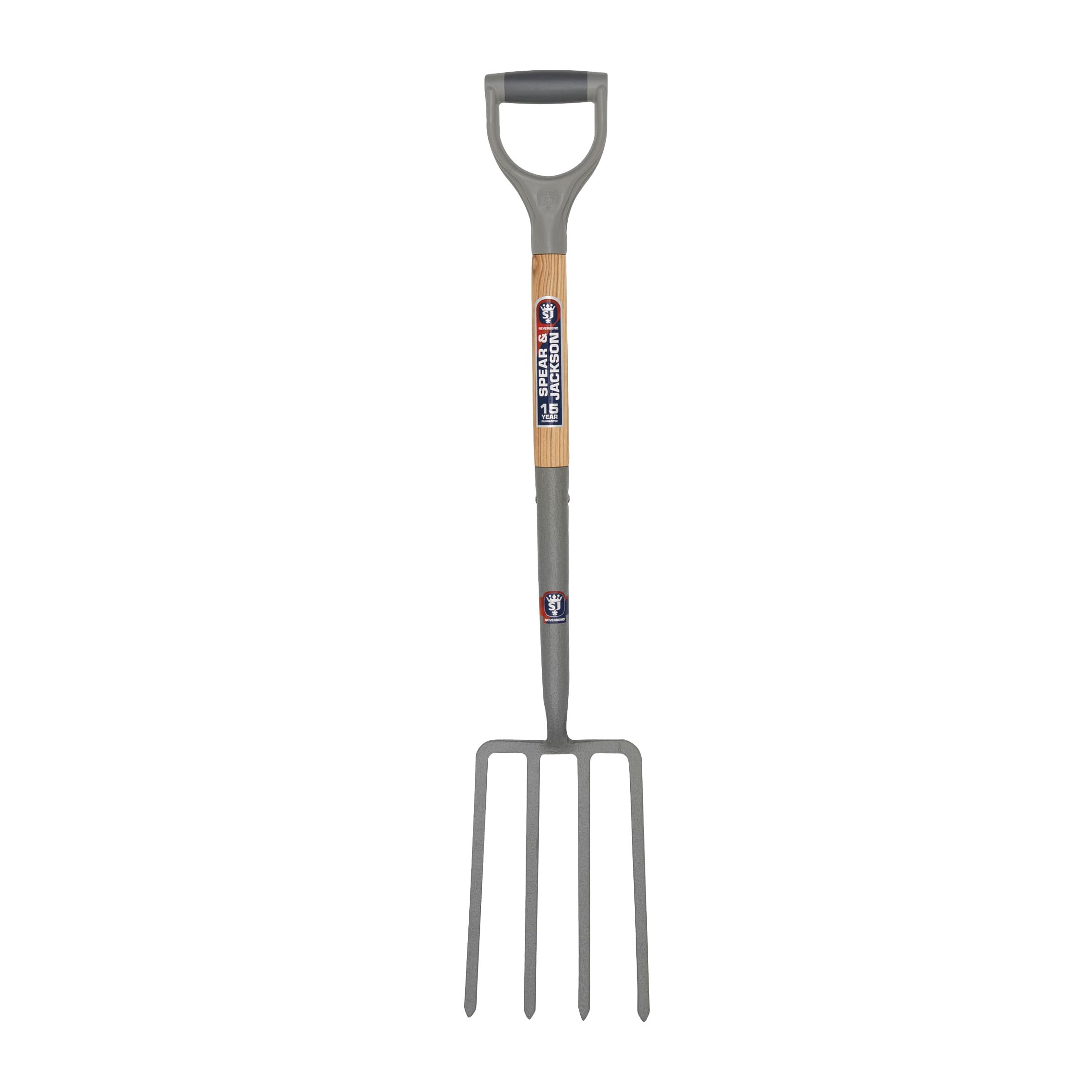
Spear & Jackson Digging Fork

Spear & Jackson Digging Fork
Our Score 9.0/10
Check Price

Worth Noting

  • Amazon customer feedback is not available to verify real-world performance.
Tines
4
Rating
4.5 ★
Weight
4.8 lb
Best For
Traditional digging
Read the full review

This digging fork uses traditional carbon steel and a weatherproofed hardwood handle with Supergrip grip, backed by Spear & Jackson's Neverbend warranty. The build quality expected from a reputable brand is present, but without customer feedback on Amazon, the fork's durability in rocky soil or heavy use remains unverified. This makes it a choice for buyers who already trust the brand over peer-reported experiences.

Bottom line: This digging fork fits buyers who already trust Spear & Jackson and are comfortable relying on brand reputation rather than customer reviews.

14

WIKER 4-Tine Digging Fork

WIKER 4-Tine Digging Fork
Our Score 8.6/10
Check Price

Worth Noting

  • Tines can bend when used in rocky or compacted soil.
  • Limited lifespan under regular garden use; may need replacement after one season in harder soils.
Tines
4
Rating
4.3 ★
Weight
4.5 lb
Best For
Very light use
Read the full review

At a rock-bottom price, the WIKER fork offers a fiberglass handle that won't rot if left outdoors — a practical advantage for gardeners who tend to forget tools. For turning compost or digging in soft garden beds, the 4-tine head moves soil adequately. However, the tines are not built for rocky or compacted ground; stress can cause them to bend. This fork suits occasional light-duty use only — anyone planning to break new ground or work tough clay should consider a sturdier option.

Bottom line: Works best for casual composting or mulching in loose soil where tine stress is minimal — not a fork for primary digging or rocky ground.

How to Choose

Number of Tines

4-tine forks are designed for digging and prying in heavy soil — they concentrate force into fewer points, making them ideal for breaking compacted clay. 5-tine forks offer a middle ground, effective for both digging and moving mulch. 10-tine wide forks are purpose-built for scooping large volumes of light material like hay or leaves; they will struggle in hard ground and may bend under the strain.

If you primarily dig, choose 4 or 5 tines with thick, heat-treated steel. If you move material, 10 tines save time but require a dedicated tool for soil work.

Tine Material and Heat Treatment

Tine material determines how much force the fork can take before bending. High-carbon steel with heat treatment (often marked as 'quenched' or 'tempered') resists deformation far better than basic steel or stainless steel used in cheaper forks. Stainless steel resists rust but is softer and more prone to bending under heavy prying.

For rocky or clay soil, look for explicit heat treatment claims. For light mulching, untreated steel or stainless may suffice, but expect shorter lifespan under stress.

Handle Material and Length

Handle length directly affects leverage and back strain. A 40-45 inch handle is standard for digging — shorter handles require more bending but offer better control. For taller users (over 5'10") or those with back issues, a 57-58 inch handle reduces stooping. Fiberglass handles are lighter and weatherproof but transmit more vibration; wood handles absorb shock and feel warmer but can crack if left outdoors. Steel shafts (like on the TABOR fork) are indestructible but heavy.

Choose length based on your height and primary task: longer for material moving, shorter for precision digging. Match handle material to your storage conditions and tolerance for weight.

Weight

Heavier forks (5-6 lb) drive into compacted soil with less user effort because gravity does the work, but they fatigue arms and shoulders during extended use. Lighter forks (3.5-4 lb) are easier to maneuver for repetitive tasks like turning compost but lack the mass to penetrate hard ground. A 4.5-5 lb sweet spot balances both for typical garden work.

Consider your physical strength and the duration of typical sessions. A heavy fork is fine for breaking a new bed but tiring for a whole afternoon of mulching.

Head Design

Straight tines are best for digging and prying — they slip straight into soil. Curved or angled tines improve scooping efficiency when moving mulch, hay, or manure because they cradle the load. Wide heads (10 tines) cover more area per scoop but create more resistance if accidentally pushed into soil.

If you switch between digging and moving, a straight 5-tine fork is the most versatile. Dedicated mulching or barn chores benefit from curved, wide designs.

Frequently Asked Questions