Garden Tools

14 Best Manual Lawn Aerator of 2026: Pull Plugs Without Clogging

Which manual aerators truly relieve soil compaction without the frustration of jammed tines? Find the right tool for your lawn size and soil type.

Many manual lawn aerators look promising on the shelf but deliver frustration the moment you hit dry soil or heavy clay. Hollow tines clog after every plunge, spike tips bend on buried rocks, and shoes slip loose mid-stride. The gap between what the package shows and what actually happens in your yard is where most buyers get stuck.

This guide cuts through that gap by focusing on tools that work when used correctly — meaning pre-soaked soil and the right aeration type for your compaction level. We highlight designs that minimize clogging (side-ejection tines, semi-open plugs) and spikes long enough to actually penetrate, not just scratch the surface.

The bottom line: core aerators consistently outperform spike models for relieving compaction, but they demand more moisture and physical effort. Spike tools are fine for light maintenance on soft soil. Know your soil and your patience before you buy.

1

Xuperace Side-Ejection Core Aerator

Top Pick
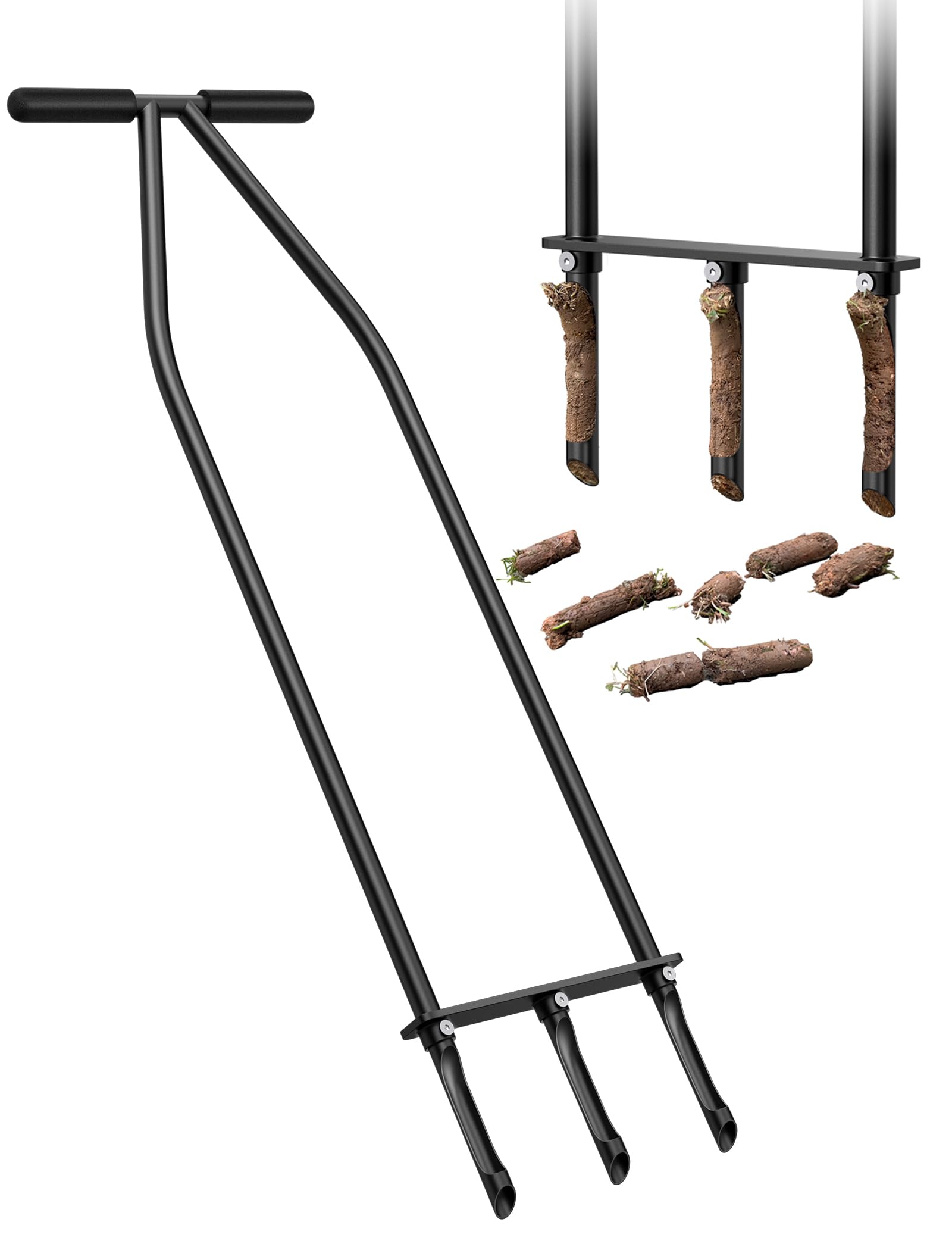
Xuperace Side-Ejection Core Aerator

Medium-large lawns

Our Score 9.2/10
Check Price

Worth Noting

  • Screws may loosen during use, requiring periodic tightening.
Aeration Type
Core/plug
Handle Height
42in
Clogging Tendency
None
Tines/Spikes & Depth
3 side-eject tines
Read the full review

The Xuperace sets itself apart with patented side-ejection tines that push soil cores out cleanly, avoiding the constant unclogging required by fully enclosed designs like the top pick. This makes it the preferred choice for medium to large lawns (up to 5,000 sq ft) where every saved minute counts. The alloy steel frame and knee-friendly foot plate add comfort, but the premium price means budget-focused buyers should look elsewhere. Be aware that screws may loosen during extended sessions, so periodic tightening is smart maintenance.

Check and tighten screws before each session to prevent loosening during use.

Bottom line: For lawn enthusiasts who aerate regularly and want the most efficient manual core aeration experience, this tool's anti-clog design justifies the investment.

2

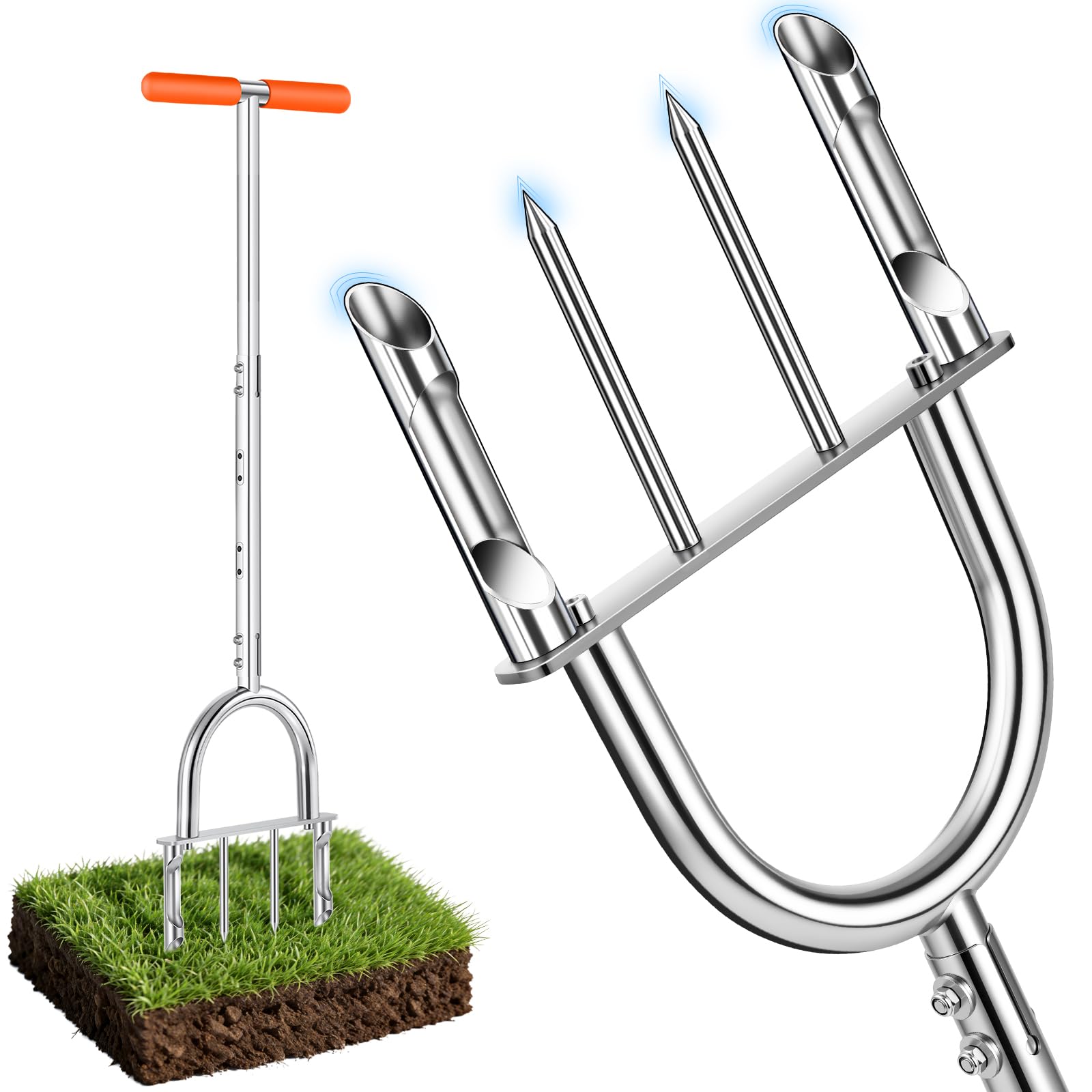
Colwelt Heavy Duty Spike Aerator

Colwelt Heavy Duty Spike Aerator

Moderately compacted soil

Our Score 9.0/10
Check Price

Worth Noting

  • Does not remove soil cores; for heavy compaction a core aerator is more effective
Aeration Type
Spike
Handle Height
38in
Clogging Tendency
Tines/Spikes & Depth
4 spikes, 3.5in
Read the full review

The Colwelt Lawn Aerator stands out with spikes that are not only longer (3.5 inches) but thicker (0.4 inch) than most competitors — cutting deeper holes with each step. That extra reach makes a real difference on moderately compacted soil where budget spike tools often skid. But this is a spike aerator, not a core puller: it pokes holes rather than removing plugs, so it eases surface compaction but won't fix dense, heavily trafficked turf the way a core aerator would. For owners of small to medium lawns who want a heavy-duty step tool that penetrates deeper without spending much, this is the right choice.

Work on slightly moist soil to let the spikes sink in without bending.

Bottom line: For small to medium lawns with moderately compacted soil, this spike aerator delivers deeper penetration at a budget price — just don't expect it to replace a core aerator.

3

LawnVigor Metal Sole Shoes

LawnVigor Metal Sole Shoes

Small-medium lawns

Our Score 9.0/10
Check Price

Worth Noting

  • Requires balance and is slower than step aerators -- not suited for large lawns
Aeration Type
Shoes
Handle Height
Clogging Tendency
Tines/Spikes & Depth
Replaceable spikes, 2.2in
Read the full review

The 5mm metal sole and replaceable spikes make these the most robust aerator shoes available. Unlike budget alternatives with flimsy straps and rust-prone spikes, the LawnVigor stays securely on your feet and handles compacted clay without clogging. That said, any shoe-style aerator is slower than a step tool and requires balancing weight on each foot -- this limits its practicality to small or medium lawns where you can walk the area without rushing. If you have a large yard or prefer a handle-operated tool, a core aerator or step aerator will save time.

Bottom line: For compacted lawns under 3,000 sq ft, these shoes offer the best durability and anti-clog design among shoe aerators -- just accept a slower pace than a step tool.

4

FLMAQE Hybrid Aerator

FLMAQE Hybrid Aerator

Small-medium lawns

Our Score 9.0/10
Check Price

Worth Noting

  • Slot tines may clog with sticky soil, requiring occasional unclogging.
Aeration Type
Hybrid spike/core
Handle Height
~37in
Clogging Tendency
Occasional
Tines/Spikes & Depth
2 slot+2 spikes, 4.7in
Read the full review

The FLMAQE Hybrid Aerator pairs two half-open slot tines for core pulling with two spikes for aeration, covering both needs in one tool. It handles compacted soil well on small lawns. Slot tines can clog in sticky soil, though less than full tubes. A fair compromise for gardeners wanting versatility, not a replacement for dedicated core aerators.

Bottom line: A practical hybrid for those who want both spike and core aeration in one tool, provided soil isn't sticky.

5

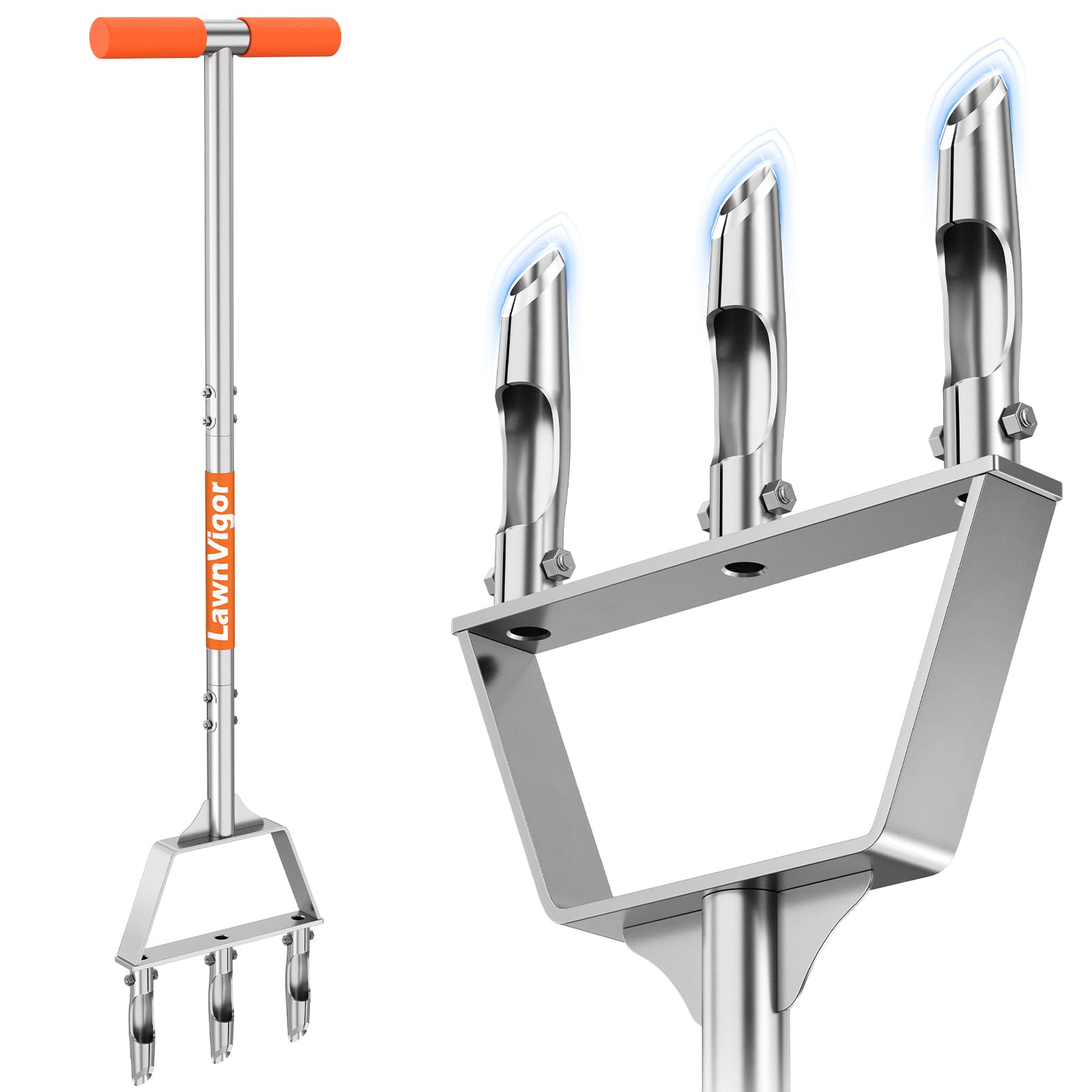
LawnVigor 3-Tine Core Aerator

LawnVigor 3-Tine Core Aerator

Small-medium lawns

Our Score 8.8/10
Check Price

Worth Noting

  • Requires physical effort; best suited for lawns under 3,000 sq ft
  • Works best when soil is moist; dry ground may need pre-watering for reliable plug extraction.
Aeration Type
Core/plug
Handle Height
~38in
Clogging Tendency
Minimal
Tines/Spikes & Depth
3 hollow tines
Read the full review

The LawnVigor’s hollow steel tines eject soil plugs cleanly on moist ground, cutting the frustration of stuck clogs that turns many manual aerators into a jam-clearing chore. Welds and metal construction feel solid under foot, and assembly takes minutes with basic tools. For small lawns where you’ll make a few dozen plunges, the lack of clogging makes this noticeably faster than cheaper alternatives.

This is a manual tool – expect to work for it. The LawnVigor is best on lawns up to 3,000 square feet; beyond that the pogo-stick motion becomes tiring. Dry, compacted soil may require pre-watering to get clean plugs, but that’s true of any core aerator. If your lawn is small and you want real aeration without unclogging every few steps, this is the tool to buy.

Water the lawn a day before aerating for the best plug extraction and easiest tine penetration.

Bottom line: For small to medium lawns, this is the most frustration-free manual core aerator at a mid-range price – clean plugs, solid build, no gimmicks.

6

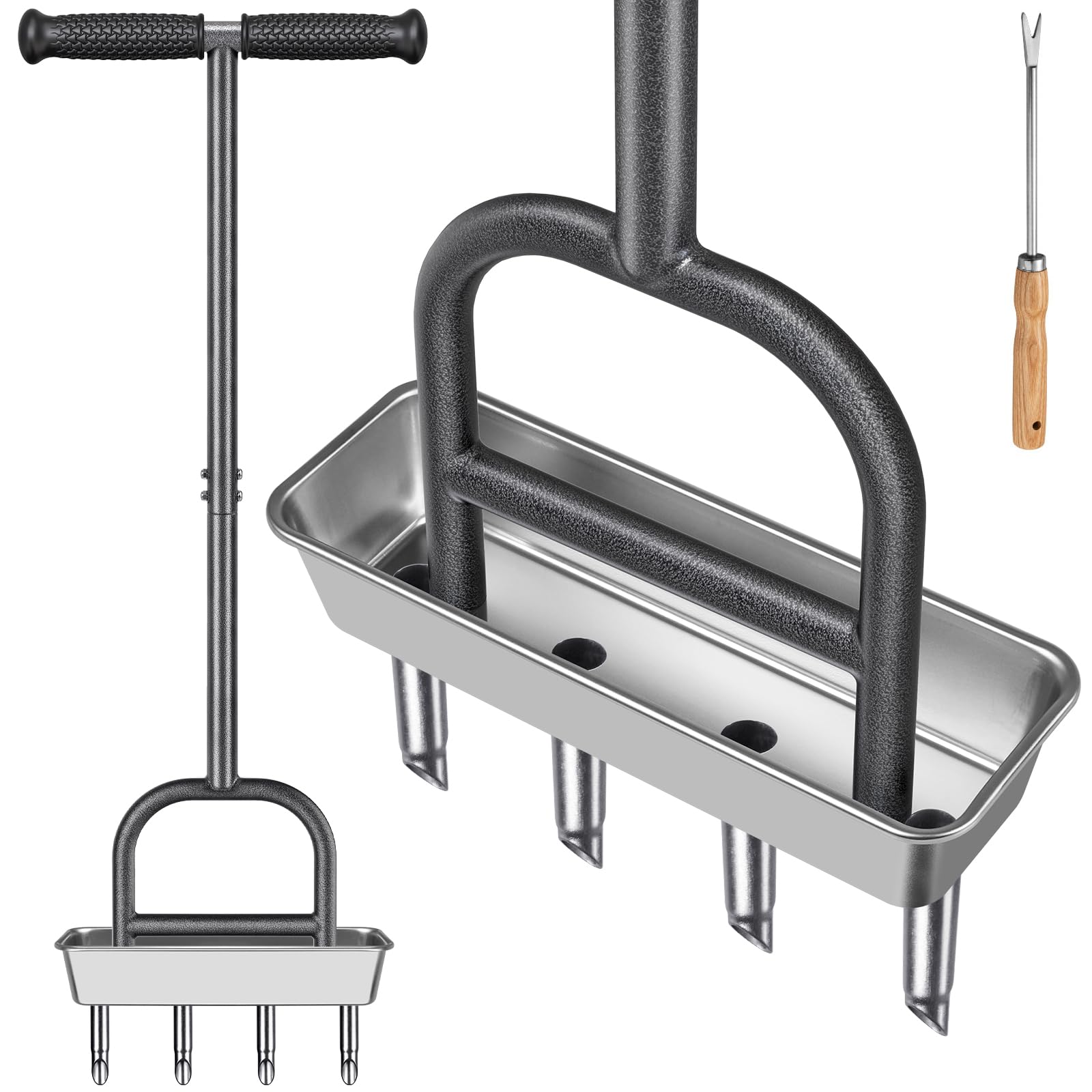
Dolibest 4-Plug Coring Aerator

Dolibest 4-Plug Coring Aerator

Composters, tidy yards

Our Score 8.8/10
Check Price

Worth Noting

  • Tines may clog and the cleaning tool can snap during use.
Aeration Type
Core/plug
Handle Height
~37in
Clogging Tendency
Occasional
Tines/Spikes & Depth
4 plugs with tray
Read the full review

This aerator pulls clean cores on moist soil and its tray catches plugs for easy composting. The tradeoff: tines may clog and the included cleaning tool can snap, which prevented it from ranking higher among core aerators.

Bottom line: Best suited for composters who value a tidy lawn and can handle occasional tine clearing and a delicate cleaning tool.

7

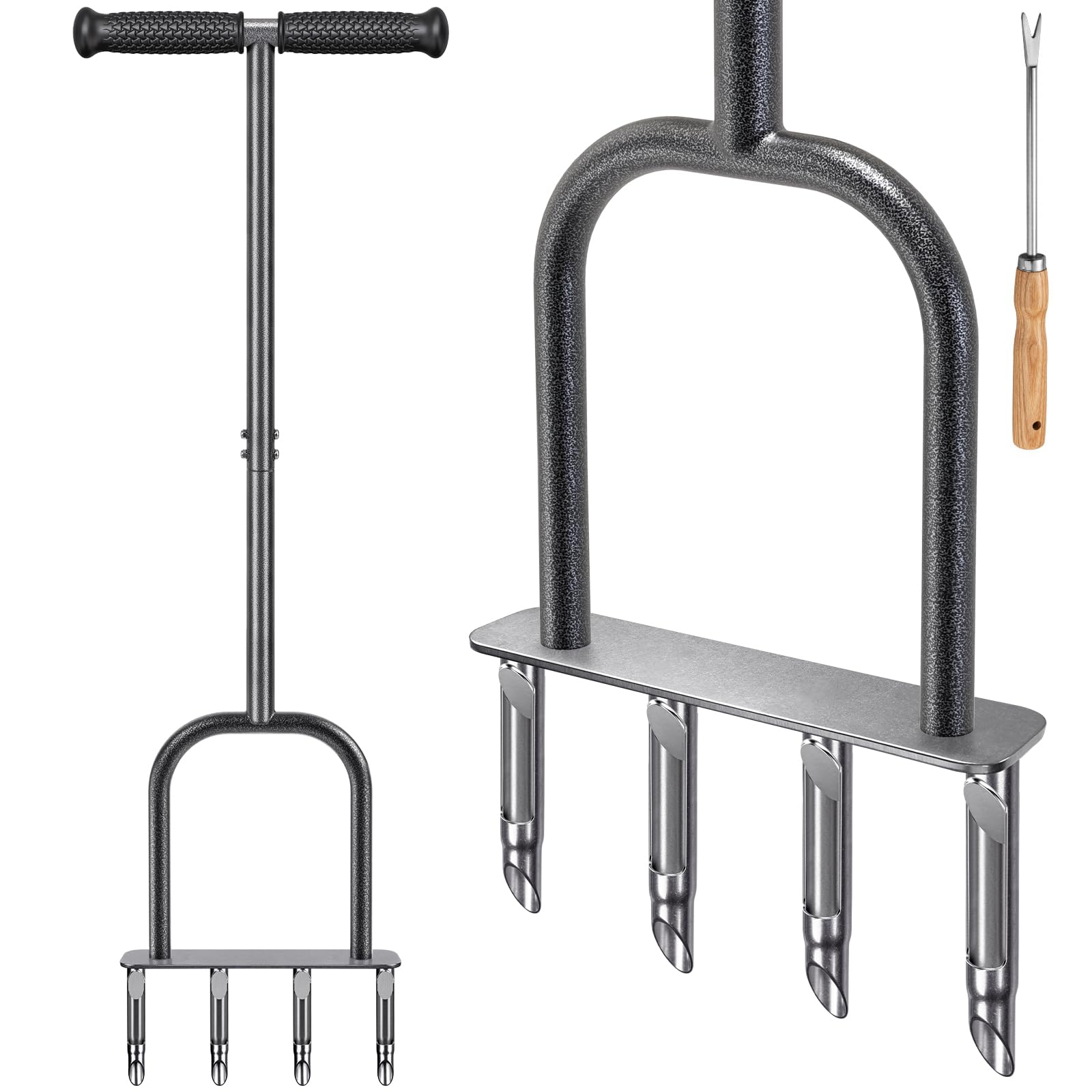
Dolibest 4 Semi-Open Aerator

Dolibest 4 Semi-Open Aerator

Small-medium lawns

Our Score 8.8/10
Check Price

Worth Noting

  • Handle screws may loosen during extended use, requiring periodic retightening.
Aeration Type
Core/plug
Handle Height
37.2in
Clogging Tendency
Reduced
Tines/Spikes & Depth
4 semi-open plugs
Read the full review

The Dolibest uses four semi-open stainless steel plugs that clear themselves on moist soil, reducing clogging compared to fully enclosed tube aerators. However, the handle screws may loosen during use and require periodic tightening, which keeps it from being as maintenance-free as the LawnVigor top pick.

Bottom line: If you value anti-clog performance on moist lawns and can manage occasional screw tightening, the Dolibest is a decent mid-range core aerator for small to medium yards.

8

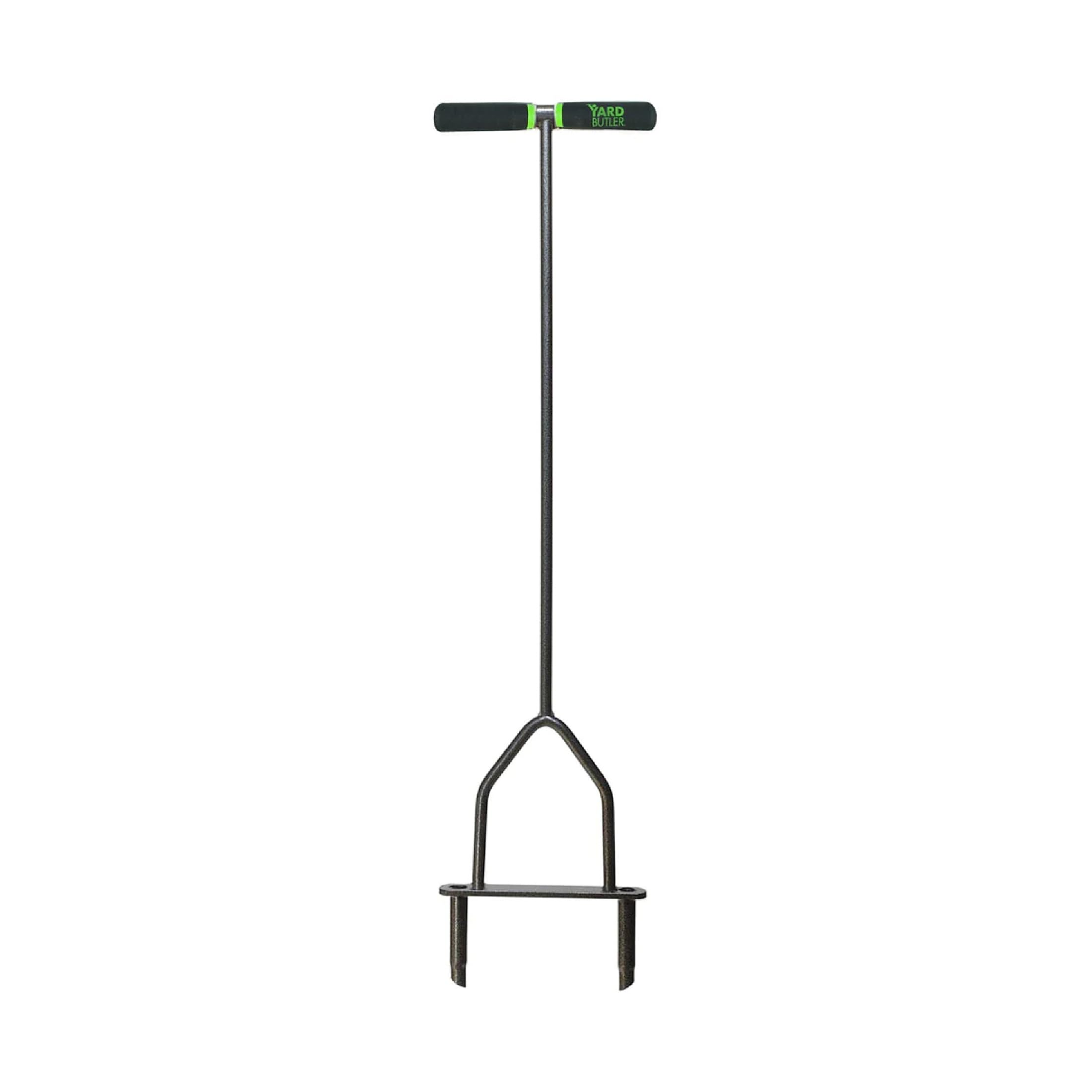
Yard Butler ID-6C Coring Aerator

Yard Butler ID-6C Coring Aerator

Small lawns, clay

Our Score 8.6/10
Check Price

Worth Noting

  • Hollow tines can clog with sticky soil, requiring clearing after a few plunges.
Aeration Type
Core/plug
Handle Height
38in
Clogging Tendency
Frequent
Tines/Spikes & Depth
2 hollow tines
Read the full review

Yard Butler's ID-6C is a popular manual core aerator with sturdy construction, effective on small lawns in moist clay soil. However, its hollow tines can clog with sticky soil, requiring frequent clearing. The LawnVigor outperforms it with a cleaner plug ejection at a lower price, making this a secondary option for budget buyers willing to manage clogging.

Bottom line: Best for budget-conscious homeowners with small, moist clay lawns who are willing to clear tines manually every few plugs.

9

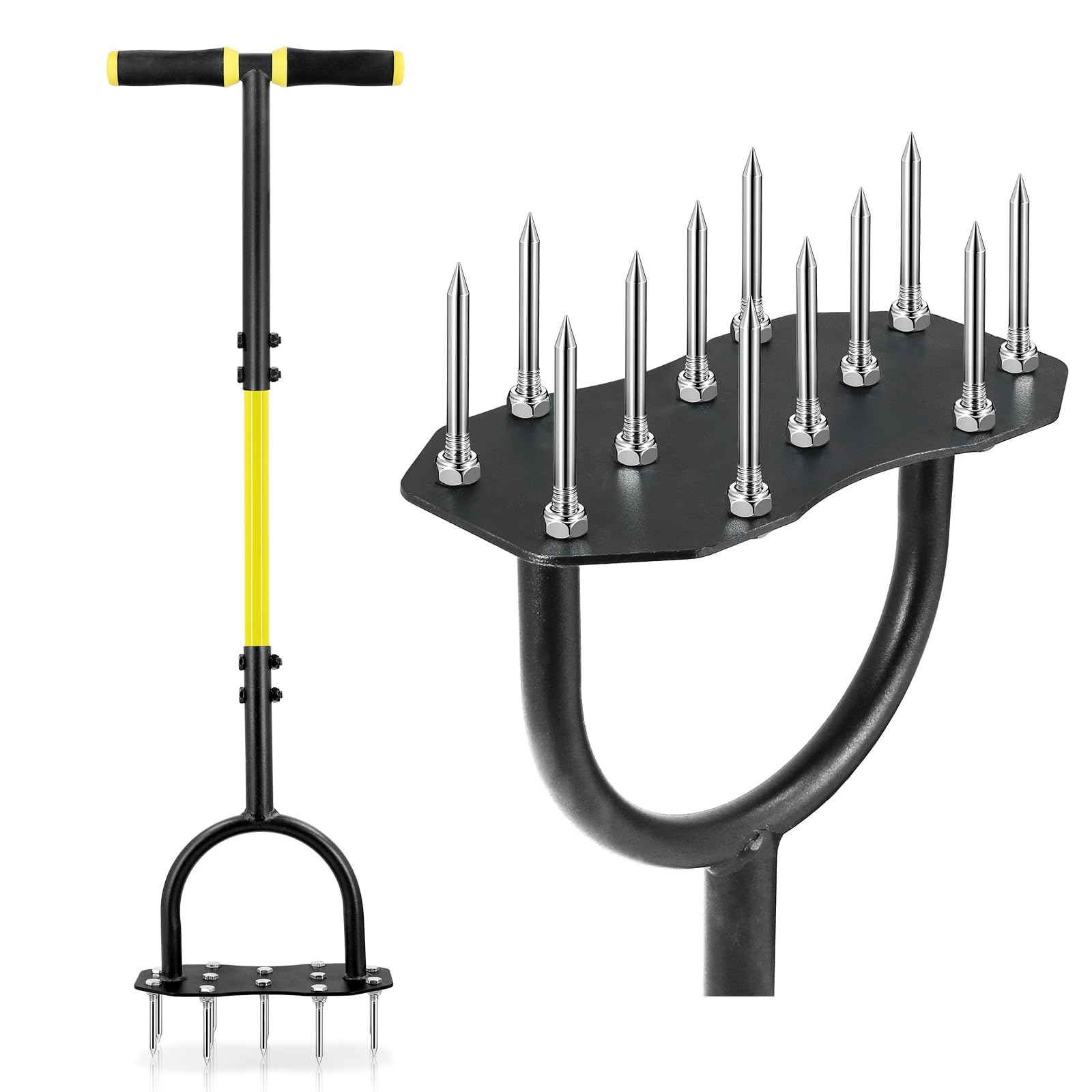
Walensee 15-Spike Aerator

Walensee 15-Spike Aerator

Small lawns, light

Our Score 8.6/10
Check Price

Worth Noting

  • Holes may be too small to relieve compaction on hard soil
Aeration Type
Spike
Handle Height
34.6in
Clogging Tendency
Tines/Spikes & Depth
15 spikes, 2.8in
Read the full review

Easy to assemble and effective for spot aeration on soft soil. The 2.8-inch spikes create holes that may not relieve significant compaction - this tool suits regular upkeep rather than deep aeration.

Bottom line: Best for buyers who need quick, light aeration on a small lawn with soft soil - not for tackling compacted ground.

10

Jardineer Spike Aerator

Jardineer Spike Aerator

Soft, loamy soil

Our Score 8.6/10
Check Price

Worth Noting

  • Spikes can bend when encountering hard ground or rocks, reducing usable life.
Aeration Type
Spike
Handle Height
36in
Clogging Tendency
Tines/Spikes & Depth
12 spikes, 2.75in
Read the full review

Assembles quickly and feels light in hand, making it a reasonable option for small, soft lawns where the goal is spot aeration or overseeding. The 2.75-inch spikes create holes that are best suited to maintenance, not compaction relief. On moist, loamy ground it does the job for occasional use, but harder soil or hidden rocks can bend the spikes, limiting its lifespan. This tool works for a narrow window: soft soil and light duty only.

Bottom line: Consider this only for very small, soft lawns where occasional spot aeration is the goal — the flimsy spikes make it unsuitable for any hard or rocky soil.

11

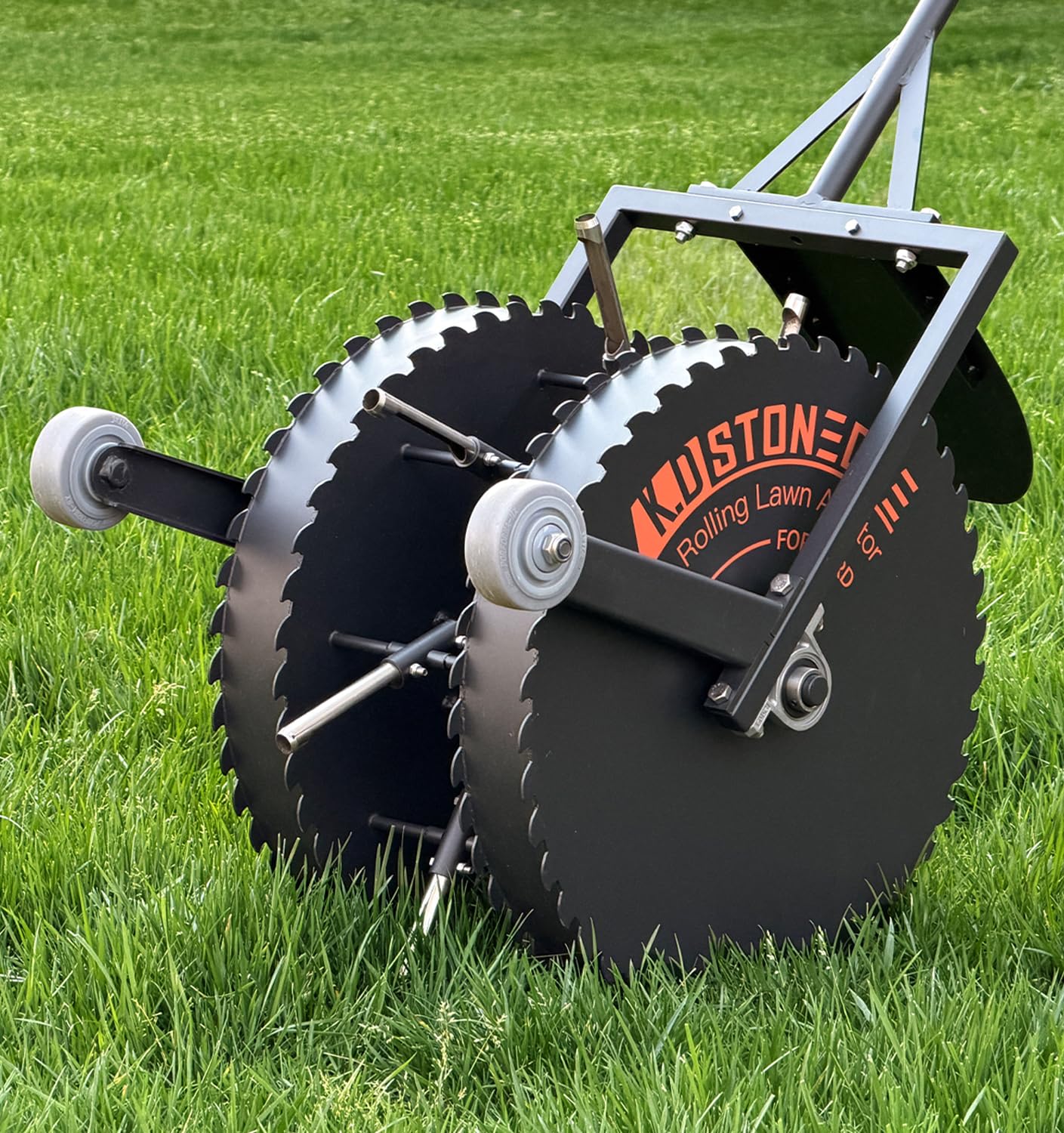
K.D. STONEDGE Rolling Core Aerator

K.D. STONEDGE Rolling Core Aerator

Large lawns

Our Score 8.4/10
Check Price

Worth Noting

  • Very heavy when filled with sand; difficult to push and maneuver on slopes
  • Handle may feel flimsy and wheels can deform under load over time
Aeration Type
Roller core
Handle Height
Adjustable
Clogging Tendency
Minimal
Tines/Spikes & Depth
Rotary coring
Read the full review

This roller’s rotary coring mechanism removes actual soil plugs, making it the most effective manual option for covering large lawns without renting. The solid build and 43.9 lb empty weight provide the stability needed for consistent core pulling.

Best for serious lawn enthusiasts with 5,000+ sq ft who prioritize core removal over convenience. The weight jumps significantly when filled with sand or water, making it very difficult to push on slopes and requiring substantial physical effort. Occasional reports of handle flex or wheel deformation suggest long-term durability is worth monitoring under heavy use.

For easier turning on slopes, fill with water instead of sand to reduce shifting weight.

Bottom line: A specialized tool for large, flat lawns where renting is impractical — be prepared for the physical effort and higher upfront cost.

12

DenForste Aerator Shoes

DenForste Aerator Shoes

Very small lawns

Our Score 8.4/10
Check Price

Worth Noting

  • Straps can lose grip over time, causing shoes to slip off during use.
Aeration Type
Shoes
Handle Height
Clogging Tendency
Tines/Spikes & Depth
Steel spikes, 2in
Read the full review

For very small lawns or garden beds, these shoes poke holes effectively as you walk and are simple to slip on with adjustable Velcro straps. The budget-friendly price makes them an accessible entry point. However, the straps can lose grip over time, and the spikes may rust with moisture, so this is best for occasional light use rather than regular aeration.

Bottom line: Best for budget-first buyers with a very small lawn who only need occasional aeration and are comfortable replacing them after a season.

13

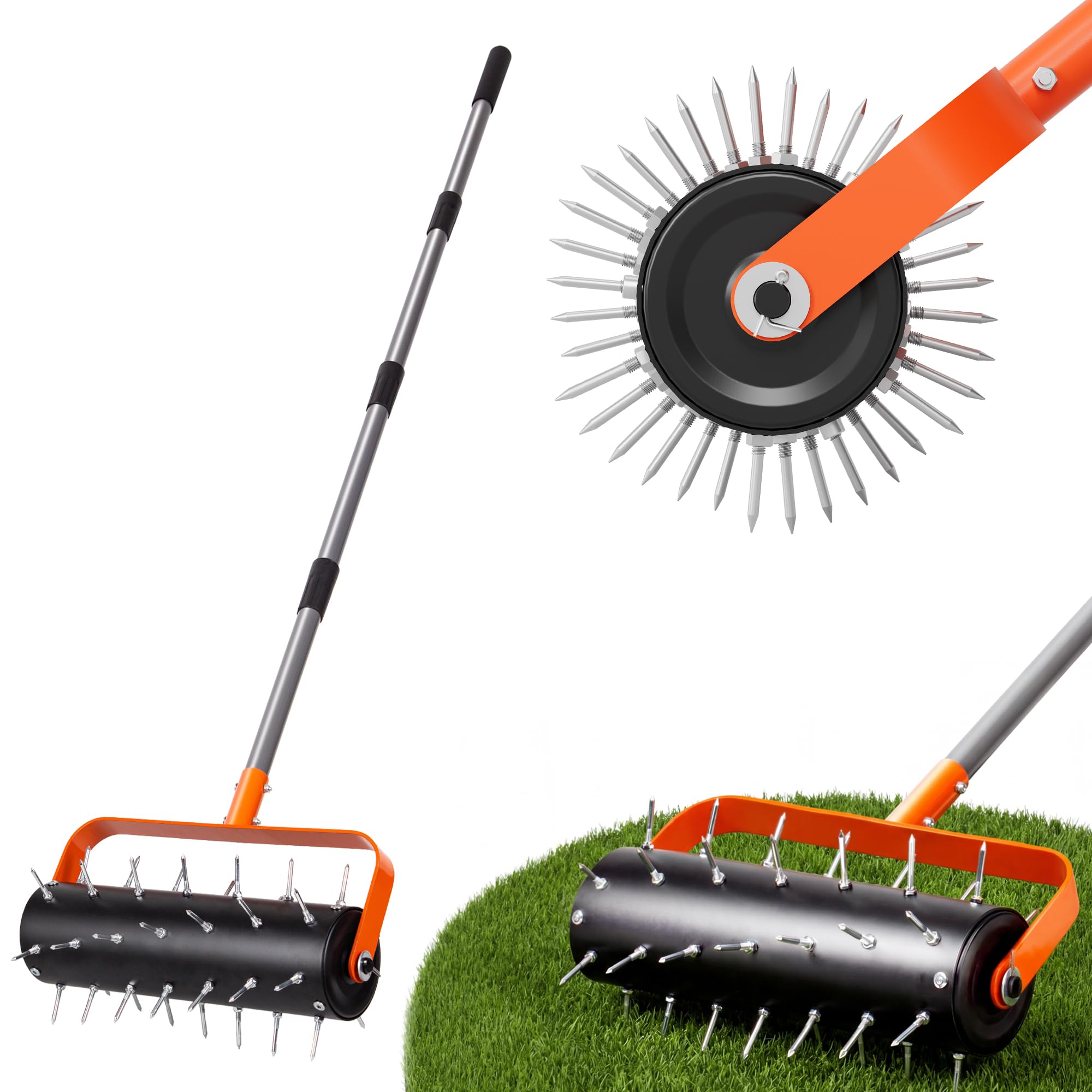
Walensee Rolling Spike Aerator

Walensee Rolling Spike Aerator

Medium lawns, soft

Our Score 8.2/10
Check Price

Worth Noting

  • Lightweight drum requires added weight (stones/sand) to penetrate firm soil; handle may crack under heavy use
Aeration Type
Roller spike
Handle Height
71in adjustable
Clogging Tendency
Tines/Spikes & Depth
42 spikes, 2in
Read the full review

Rolls faster than step aerators on medium lawns and assembles easily. Pushes smoothly on soft soil. The drum lacks weight for penetration — stones or sand are needed. Handle cracking has been noted on some units. This works best on soft, level ground where speed matters more than depth.

Bottom line: Ideal for quick aeration on soft, level lawns where budget is a priority, but not for compacted or rocky soil.

14

Ohuhu Aerator Shoes

Ohuhu Aerator Shoes

Very small lawns

Our Score 8.2/10
Check Price

Worth Noting

  • Straps can slip or loosen during use on uneven terrain
Aeration Type
Shoes
Handle Height
Clogging Tendency
Tines/Spikes & Depth
Stainless steel, ~2in
Read the full review

Cheap enough for one-season use on small, soft lawns. Walk-and-aerate design works when soil is moist, but strap loosening and potential rust limit it to occasional tasks. For regular aeration, the more robust metal-soled alternative from LawnVigor is worth the jump.

Bottom line: Suitable for a single season of light aeration on a tiny garden patch where convenience matters more than durability.

How to Choose

Aeration Type

Spike aerators punch holes by displacing soil, which can actually increase compaction around the hole in heavy clay. Core aerators remove a plug of soil, creating space for roots and air. For lawns with hard, compacted ground, core aeration is the only method that provides real relief.

Spike tools work for routine maintenance on already soft, loamy lawns. If you can push a screwdriver into the soil with little resistance, a spike aerator may be enough. Otherwise, invest in a core puller.

Tines/Spikes & Depth

Deeper penetration means better aeration. Most spike aerators have 2- to 3-inch spikes, which barely scratch the top layer. Look for spikes at least 3 inches long if you want to relieve compaction below the thatch layer. Core tines should be at least 3 inches deep to pull meaningful plugs.

More tines or spikes cover more area per step but require more force to push. A 4-tine core aerator demands significant body weight. Two-tine designs are easier to operate but slower. Match the number to your upper body and patience.

Construction Material

Heat-treated or stainless steel tines resist bending and rust far better than coated mild steel. Plastic components — especially on shoe straps and roller handles — are the first failure points. A tool with a solid steel frame and replaceable tines will outlast a budget model with plastic fittings.

Powder coating helps prevent rust on cheaper steel, but scratches from rocks expose bare metal. If you have rocky soil, step up to stainless or alloy steel tines to avoid early replacement.

Clogging Tendency

Hollow tines clog when sticky soil packs inside the tube and won't eject. This is the most common complaint with manual core aerators. Side-ejection or semi-open designs reduce clogging by giving the plug an easier exit path. If you have clay soil, prioritize a tool with anti-clog features.

Even the best anti-clog designs require moist soil. Aerating bone-dry clay will jam any tine. Pre-soak the lawn 24 hours before and you will cut clogging by more than half.

Handle Height

Handle height directly affects ergonomics. A handle that is too short forces you to stoop, which tires your back quickly on a 2,000 sq ft lawn. Most step aerators have fixed handles around 36-38 inches, which suits average-height users (5'8" to 6'0"). Taller users should look for adjustable handles or longer models (42 inches).

Rolling aerators with telescoping handles accommodate different heights but add weight. Test the handle height by mimicking the motion in-store if possible; a few inches of difference translates to significant fatigue over a full session.

Frequently Asked Questions