Outdoor Power Equipment

8 Best Backpack Leaf Blowers of 2026: Real Power for Your Yard

Which backpack leaf blower actually clears wet leaves without constant pull-start frustration? The right match for your property size and budget, not the highest CFM number.

Backpack leaf blowers often promise impressive CFM numbers but deliver inconsistent starting or fatigue you after 20 minutes. The gap between marketing specs and real-world performance is wide below $200, and even mid-range models can leave you fighting a pull cord.

The real choice comes down to a trade-off: raw blowing force versus proven reliability. Some high-CFM models offer a tempting power-per-dollar ratio but carry a higher risk of starter or exhaust failures within the first season. Others have a longer track record of consistent starts and balanced harness design, even if they don't top the spec sheet.

This guide matches blowers to your actual property size and tolerance for maintenance. Whether you need a workhorse for 2 acres of wet leaves or a quiet electric for a small lot, the right fit prioritizes daily usability over headline numbers.

1

Echo PB-9010T

Top Pick
Echo PB-9010T

Commercial use

Our Score 9.4/10
Check Price

Worth Noting

  • Roughly 30 pounds will fatigue operators during extended use, especially those not accustomed to heavy gear
  • Extremely loud
Starting
Recoil
Engine (cc)
79.9
Weight (lbs)
30
Air (CFM/MPH)
1110 / 220
Read the full review

With 1110 CFM and a 79.9cc engine, the PB-9010T clears wet leaves and thick debris in massive piles faster than any competitor on the market. The tradeoff is weight around 30 pounds and noise levels that demand hearing protection — this blower is designed for commercial operators running hours daily, not for a suburban driveway. Assembly of the tube can be finicky, and the connection must be locked securely to avoid slip-offs during use.

The tube connection must be locked securely — check the latch before each use to prevent slip-offs.

Bottom line: This blower fits crews that need maximum debris-moving power and can accept the weight, noise, and premium price — not a match for light-duty or occasional use.

2

Husqvarna 350BT

Husqvarna 350BT

1-2 acre homes

Our Score 9.2/10
Check Price

Worth Noting

  • At 22.5 pounds, the unit may cause fatigue during long sessions for smaller users
Starting
Recoil
Engine (cc)
50.2
Weight (lbs)
22.5
Air (CFM/MPH)
692 / 180
Read the full review

The Husqvarna 350BT starts reliably season after season, even after sitting for weeks. The 50.2 cc engine produces 692 CFM at 180 MPH — enough airspeed to clear wet leaves and debris from a typical 1-2 acre property without bogging down. The 2-cycle power comes on smoothly, and the cruise control holds a set speed so you are not constantly squeezing the trigger.

Real-world use shows this blower handles the mixed debris of a typical yard — damp leaves, grass clippings, light twigs — with minimal effort. The 180 MPH nozzle velocity pushes material out of flower beds and along fence lines effectively. Owners note that it does not stall when you drop it into a thick pile, and the air stream stays consistent across the rev range. The carburetor tuning holds steady across temperature swings, so you don't get surging once it warms up.

This blower suits homeowners with 1-2 acres who want a tool that will last and holds resale value. The 22.5 lb weight is toward the heavier end of this class — smaller users or anyone with back concerns may notice fatigue during hour-long clearing sessions. The padded harness distributes the load well, but the weight is a tradeoff for the durable construction and predictable starting. Budget-conscious buyers under $350 may find lighter entry-level options, but those often cut corners on carburetors and starting assemblies.

Some cheaper backpack blowers boast higher CFM numbers, but the 350BT earns its position through consistency rather than peak specs. The starter cord, carburetor, and fuel system are built to commercial standards — many owners report using the same unit for a decade with only routine maintenance. That reliability matters more for the average homeowner than a few extra CFM that may come with starting issues or plastic fatigue on less expensive models.

The price sits in the mid-range for a gas backpack blower — not the cheapest, but far from premium. Given the build quality and the brand's established dealer network, the 350BT represents a straightforward purchase for those who want a blower that works every time without tinkering. The 2-cycle fuel mix is a minor inconvenience compared to the reliability payoff.

For sessions longer than 30 minutes, take a break midway — the weight is manageable but cumulative.

Bottom line: The 350BT delivers the right balance of power, starting reliability, and price for most homeowners with 1-2 acres to manage.

3

Echo PB-770T

Echo PB-770T

Pro landscapers

Our Score 9.2/10
Check Price

Worth Noting

  • At around 23 pounds, the blower can lead to fatigue during long sessions.
  • 756 CFM is adequate for standard leaf cleanup but may not be enough for dense wet piles.
Starting
Recoil
Engine (cc)
63.3
Weight (lbs)
23
Air (CFM/MPH)
756 / 234
Read the full review

Echo's commercial-grade build and 5-year consumer warranty make the PB-770T a daily-use blower for professionals who prioritize starting confidence over raw CFM. While high-airflow competitors push past 900 CFM, this Echo delivers 756 CFM – enough for standard yard debris but not for heavy wet leaves.

This blower suits landscapers who need reliable equipment for every-day commercial use. The engine starts consistently and the build holds up to job site abuse. However, its 23-pound weight can cause fatigue during extended operation, so lighter operators may want to test the harness fit.

The 5-year consumer warranty provides peace of mind for those who keep equipment long-term, and Echo's parts availability reduces downtime compared to lesser-known brands.

Use the harness adjustment to distribute weight evenly during long sessions.

Bottom line: For professionals who run equipment daily and value consistent starts over peak power, the PB-770T is a solid daily driver – just know its airflow limits.

4

Husqvarna 360BT

Husqvarna 360BT

Large properties

Our Score 9.2/10
Check Price

Worth Noting

  • Gas tank cracking has been reported in isolated units; periodic inspection recommended.
  • At 23.2 pounds, the blower can cause arm and shoulder fatigue during prolonged sessions.
Starting
Recoil
Engine (cc)
65.6
Weight (lbs)
23.2
Air (CFM/MPH)
890 / 232
Read the full review

For those managing large, debris-heavy lots, the 360BT's engine delivers enough force to move wet leaves and packed debris that stall lower-powered blowers. Starting is consistent when following the cold-start procedure, and the harness distributes the 23.2-pound weight effectively. However, this power comes at a premium price and with extra heft that may cause fatigue during extended use. Isolated reports of gas tank cracking suggest periodic inspection is wise. For most homeowners, the top-rated 350BT offers similar real-world capability with lower cost and less weight, making the 360BT a specialized upgrade for those who prioritize max air volume over value.

Adjust the padded shoulder straps to distribute the load and take short breaks every 15-20 minutes to reduce fatigue.

Bottom line: Best suited for professionals and property owners who regularly move heavy, wet debris and accept the higher weight as a trade-off for maximum power.

5

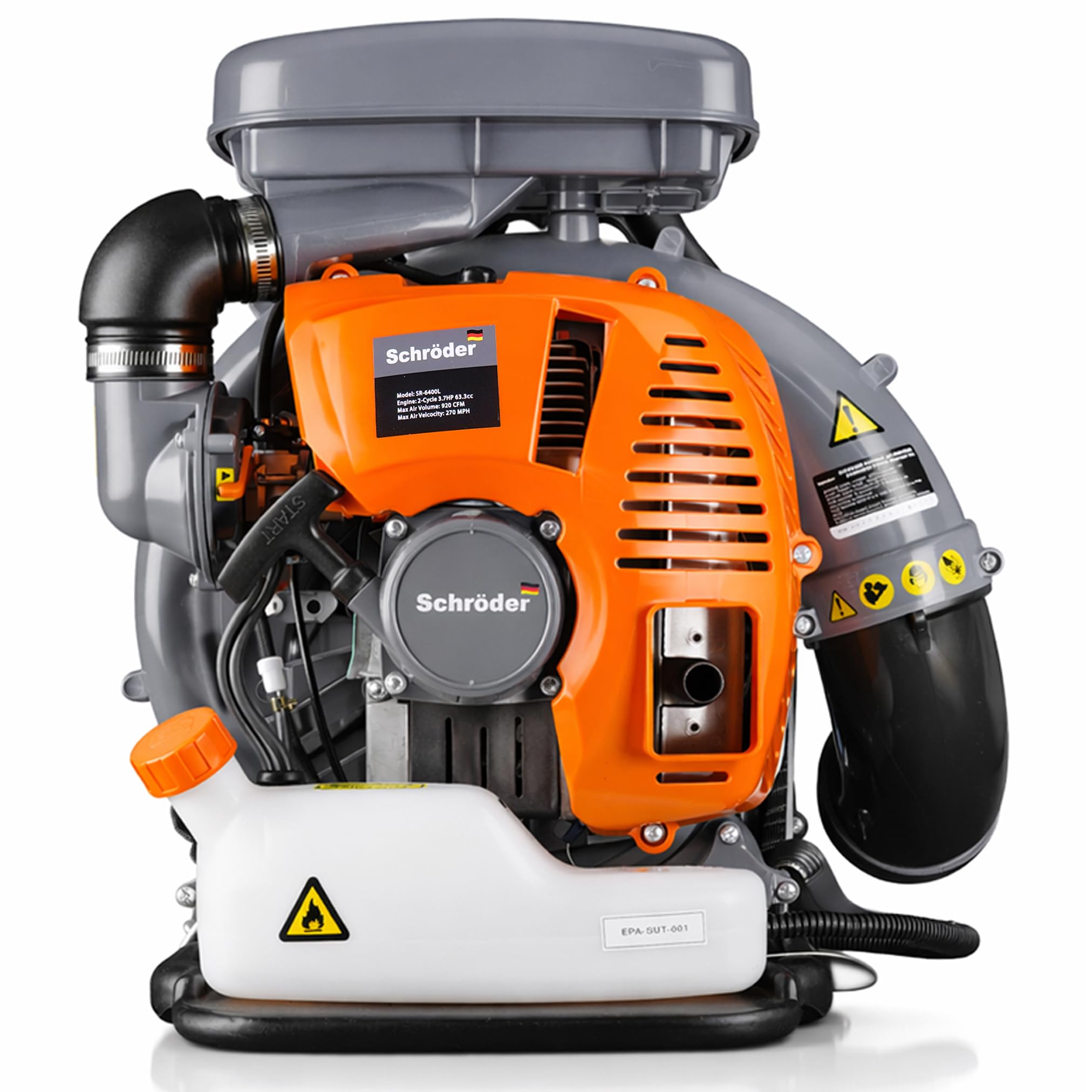
Schröder SR-6400L

Schröder SR-6400L

Semi-pro use

Our Score 9.0/10
Check Price

Worth Noting

  • Starter pull handle or exhaust problems can occur within the first few weeks of use.
Starting
Recoil
Engine (cc)
63.3
Weight (lbs)
19.5
Air (CFM/MPH)
920 / 230
Read the full review

The Schröder SR-6400L delivers 920 CFM at a mid-range price — more airflow than many blowers costing $500 or more. Where the Husqvarna 350BT wins on starting consistency and broad reliability, the Schröder goes straight for power per dollar.

This blower is aimed at buyers who prioritize raw airflow for moving large leaf piles quickly on properties up to a couple acres. It suits semi-professional use where performance per dollar matters more than guaranteed long-term reliability. A warranty is a practical addition given the potential for early mechanical issues.

The 63.3cc engine handles heavy wet leaves without bogging down, and the 19.5 lb weight is manageable for extended sessions. Assembly is straightforward, and build quality has drawn favorable comparisons to Stihl. For buyers comfortable with some uncertainty on durability, this blower delivers near-commercial power at a fraction of the cost.

Bottom line: The Schröder SR-6400L is the choice for buyers who want maximum CFM for their money and are willing to accept some durability risk — keeping the warranty paperwork handy is a smart move.

6

EGO LB6003

EGO LB6003

Eco-conscious

Our Score 8.6/10
Check Price

Worth Noting

  • Plastic tube connections may need alignment or reinforcement during assembly to stay secure.
  • Battery runtime around 30 minutes may not cover larger yards without an extra battery.
Starting
Button
Engine (cc)
Weight (lbs)
Air (CFM/MPH)
600 / 145
Read the full review

The EGO LB6003 pairs 600 CFM of airflow with a battery-powered backpack that eliminates gas and noise — a clear step up in convenience from traditional gas blowers. Its brushless motor delivers instant start with no pull cord, and the 7.5Ah 56V battery provides emissions-free operation. The harness distributes weight effectively, making it comfortable for shorter sessions.

Battery runtime averages around 30 minutes under normal leaf blowing, which suits under 1/4 acre lots but falls short for larger properties. Additionally, the plastic tube connections may require extra attention during assembly to ensure a secure fit. This makes the LB6003 best for eco-conscious owners with small yards who want a quiet, low-maintenance alternative to gas — the tradeoff being limited endurance.

The variable speed trigger gives good control for light debris on paved surfaces and grass. At a premium price, the included battery and charger mean no extra investment for the first battery — a second battery or a gas model would be more practical for larger lots or wet leaves.

Keep a spare battery charged if your lot exceeds 1/4 acre.

Bottom line: The LB6003 is a strong fit for homeowners with small yards who value quiet, instant-start electric operation — just keep expectations on runtime realistic for larger lots.

7

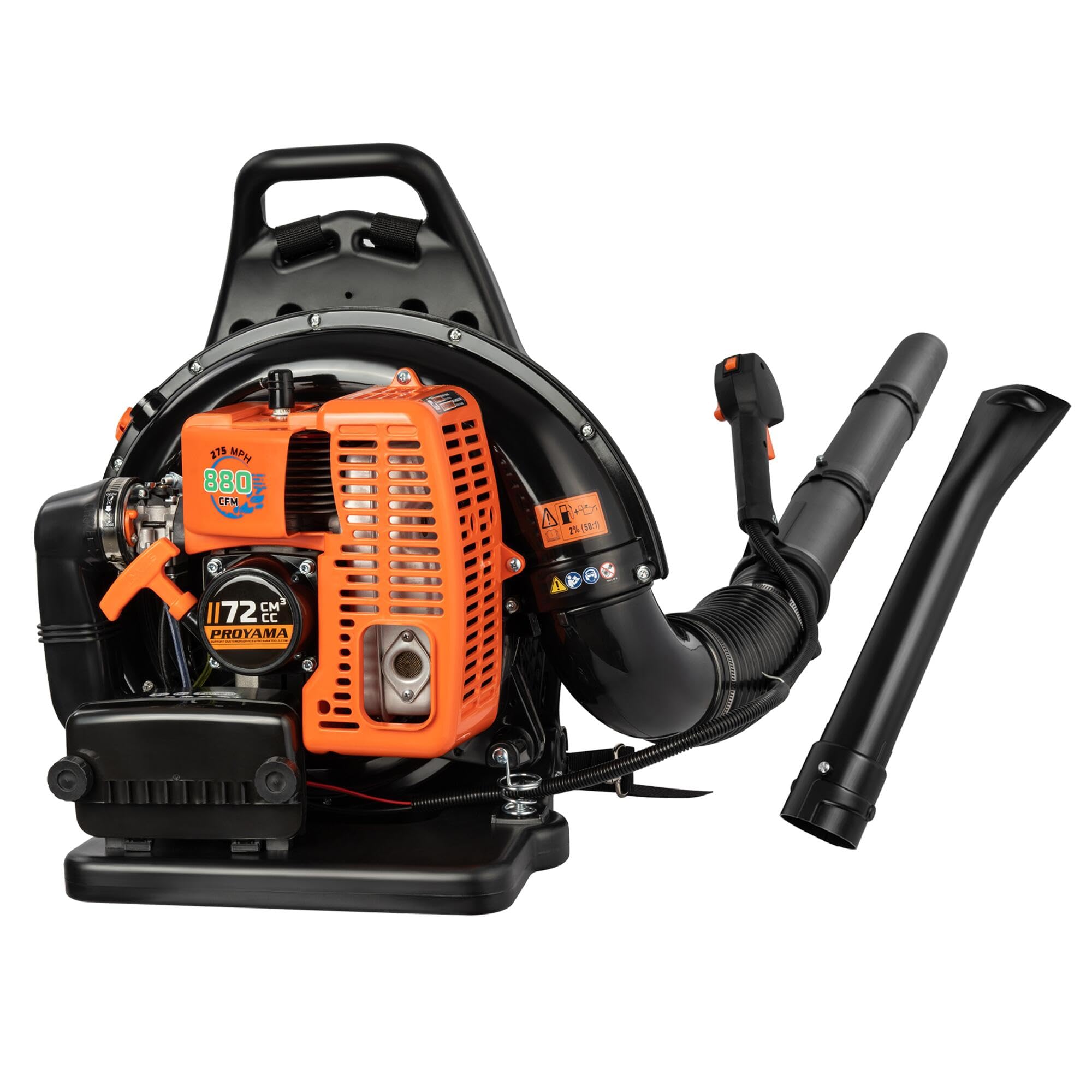
PROYAMA 72CC

PROYAMA 72CC

Light duty

Our Score 8.4/10
Check Price

Worth Noting

  • The 21-pound weight can cause fatigue during extended yard sessions.
  • Long-term durability under frequent or heavy use is not yet established.
Starting
Recoil
Engine (cc)
72
Weight (lbs)
21
Air (CFM/MPH)
880 / 275
Read the full review

The PROYAMA 72CC packs an 880 CFM airflow rating and a 72cc engine into a budget-friendly backpack blower. Assembly is quick, and early feedback confirms strong blowing force for moving leaves and debris. With only a small sample of reviews so far, long-term durability is uncertain, which limits this blower to occasional light-duty use rather than frequent heavy work. Buyers seeking a low-cost option with high spec numbers will find it appealing, but those needing a proven performer should look elsewhere.

Bottom line: Best for budget-conscious buyers who need high airflow for occasional light-duty clearing and are willing to accept unknown longevity.

8

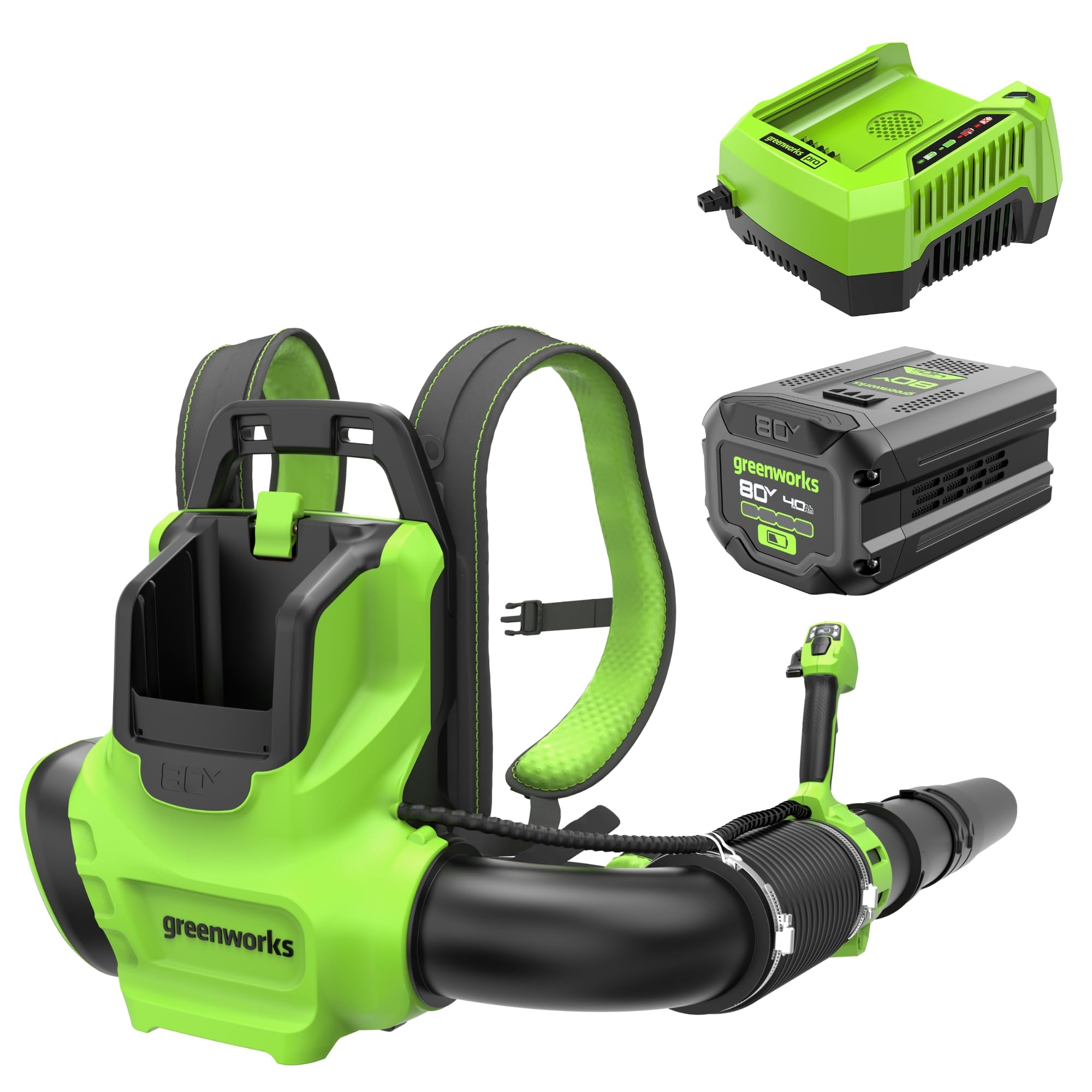
Greenworks BPB80L411

Greenworks BPB80L411

Small yards

Our Score 8.4/10
Check Price

Worth Noting

  • Battery runtime of about 30 minutes per charge limits use to small lots
  • Tube connections can slip during assembly or use, requiring occasional adjustment
Starting
Button
Engine (cc)
Weight (lbs)
9.48
Air (CFM/MPH)
750 / 180
Read the full review

The Greenworks BPB80L411 is the lightest backpack blower we've tested, which makes carrying it around a quarter-acre lot noticeably easier than gas alternatives. In turbo mode, airflow reaches 750 CFM at 180 MPH — sufficient for dry leaves and light debris on paved surfaces or short grass.

Battery runtime of about 30 minutes in standard mode means a single charge covers only small areas; turbo use cuts that further. Tube connections can slip during assembly or prolonged use, requiring occasional re-tightening. These limitations keep it from competing with gas models for larger properties or wet leaf cleanup.

Bottom line: A smart choice for homeowners with small lawns who prioritize weight and quiet operation over runtime — but not for clearing large or wet areas.

How to Choose

Air Volume and Speed (CFM and MPH)

CFM (cubic feet per minute) measures the volume of air moved; MPH measures the speed at which it exits the nozzle. High CFM is better for sweeping large piles of dry leaves, while high MPH helps dislodge wet, matted debris from grass and flower beds.

But these numbers don't tell the whole story. Nozzle design and engine tuning affect how concentrated the air stream is. A blower with 920 CFM at 230 MPH can feel stronger than one with 1100 CFM at a lower speed because the air is better channeled. Focus on real-world reports of moving wet leaves, not just peak specs.

Engine Size (cc)

Engine displacement (cc) indicates the engine's capacity and potential sustained power. Larger engines (65cc and up) can maintain high airflow longer without bogging down, which matters when you're pushing through heavy wet leaves or working on slopes.

However, bigger engines also mean more weight and vibration. A 50cc engine is plenty for 1-2 acre properties and typically easier to start and lighter on fuel. The trade-off: you may need to spend more time on a given task if the blower lacks reserve power.

Weight and Harness Design

Weight is only half the equation — harness design determines how that weight feels. A well-padded, adjustable harness with a hip belt can make a 23 lb blower feel manageable, while a poorly designed strap system turns a 20 lb blower into a backache.

Look for models with contoured backplates and multiple adjustment points. If you're under 5'6' or have a smaller frame, prioritize blowers under 20 lbs or electric models under 10 lbs. Test the harness in a store if possible, because comfort varies by body shape.

Starting Mechanism and Reliability

Gas backpack blowers use a recoil starter that engages the engine. Consistent starting depends on correct fuel mix (50:1 for two-stroke), choke and primer bulb sequence, and carburetor design. Some models flood easily if the sequence is off, leading to multiple pulls.

Electric blowers eliminate this pain entirely with a button start, but they trade that convenience for limited runtime. If you hate pull-start frustration, an electric model with a large battery (at least 4Ah) is worth considering, as long as your yard is under half an acre.

Frequently Asked Questions