Outdoor Power Equipment

5 Best Brush Cutter of 2026: Pick the Right Tool for Your Brush

Which brush cutter handles blackberry vines without stalling or breaking? This guide helps homeowners and farmers pick between gas, electric, and walk-behind models for their specific terrain.

Many brush cutters marketed as heavy-duty struggle with thick vegetation, leaving buyers frustrated. Gas models remain the workhorses, but they come with trade-offs in weight and maintenance.

The real choice is between raw cutting power and day-long comfort. A lighter machine is easier on the shoulders but may bog down on dense brush. A heavier unit can tear through saplings but will tire you out quickly.

This guide helps you match the machine to your property's actual demands — so you avoid both wasted money and physical strain.

1

WeGofly 13" Cordless

Top Pick
WeGofly 13" Cordless

Light trimming

Our Score 8.8/10
Check Price

Worth Noting

  • Strings and blades can wear quickly when used on anything beyond light weeds
  • Underpowered for thick brush or heavy vegetation despite being marketed as a brush cutter.
Weight
5.2 lbs
Power Output
15000 RPM brushless
Power Source
Battery
Cutting Width
13 inches
Read the full review

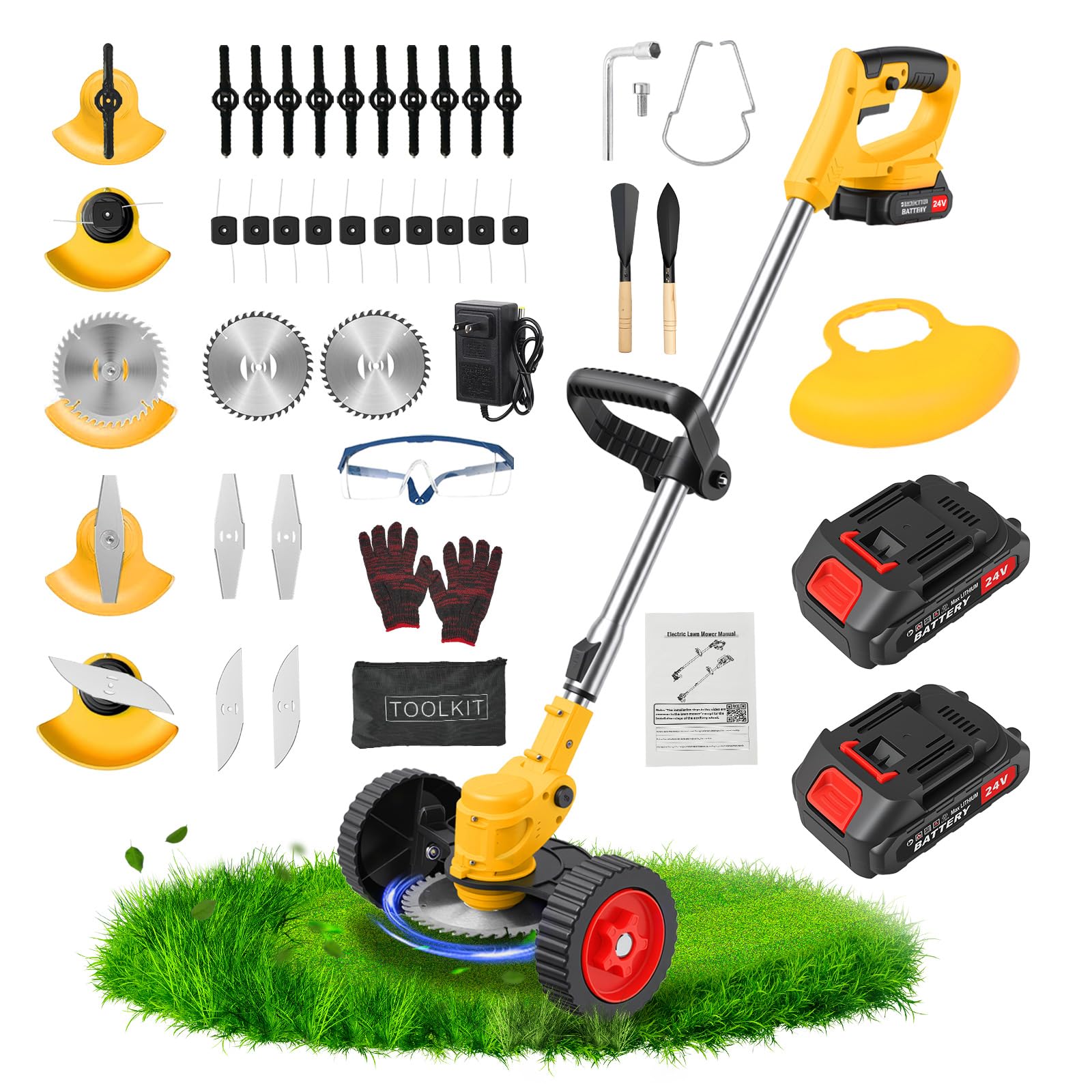
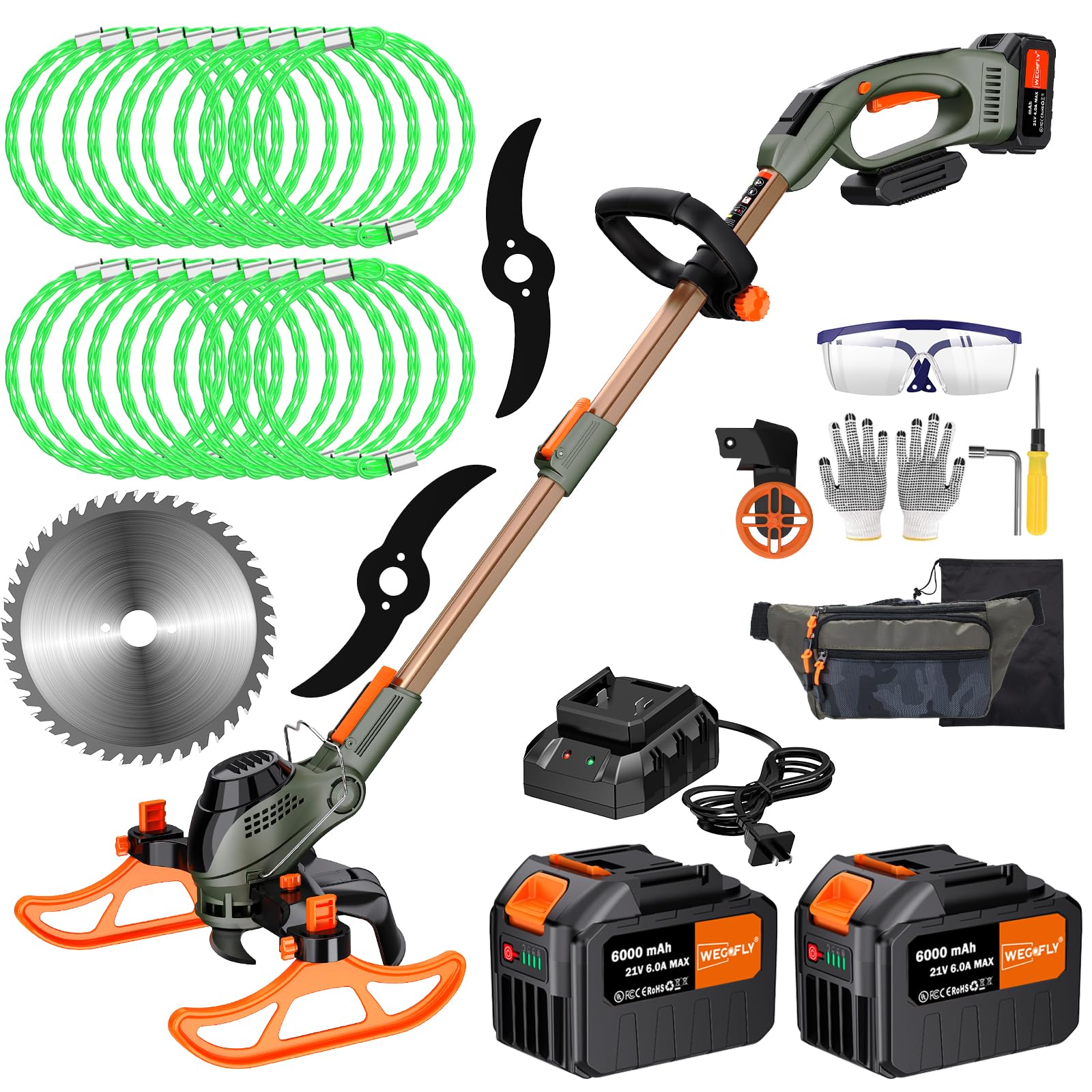
At 5.2 lbs with two 6.0Ah batteries, this electric trimmer keeps arm fatigue low during regular grass trimming and edging on small, flat yards. The brushless motor spins at 15,000 RPM, delivering decent cut quality on light weeds and lawn edges. However, any attempt to use it as a brush cutter on heavy vegetation will quickly reveal the limits: the included strings and blades can wear down rapidly under thick growth, and the motor lacks the torque to power through saplings or dense brambles. It is best understood as a string trimmer that happens to come with a metal blade – not a genuine brush cutter replacement.

Bottom line: Fits best as a lightweight string trimmer for seniors or those with small, flat lawns who prioritize easy handling over brush-clearing capability.
2

Husqvarna 122RJ

Husqvarna 122RJ

Medium brush clearing

Our Score 8.6/10
Check Price

Worth Noting

  • Starting may become harder after several weeks of use; carburetor adjustment can help.
  • Trimmer head can seize or become difficult to remove in some cases, making the tool unusable.
Weight
12.58 lbs
Power Output
Power Source
Gas
Cutting Width
17 inches
Read the full review

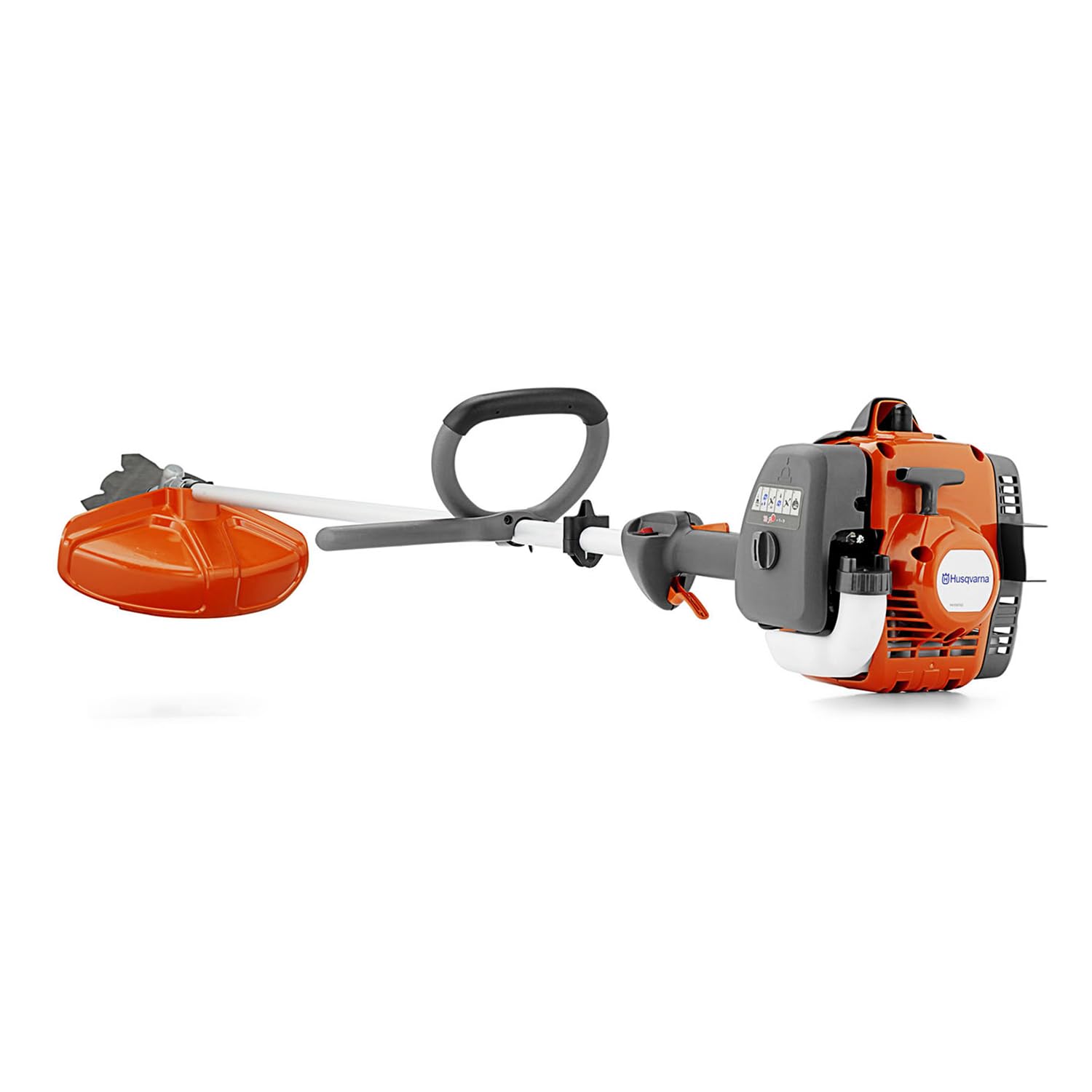
The 122RJ weighs just 12.5 pounds and starts on the first or second pull after priming, making it one of the more approachable gas brush cutters. It cuts through blackberries and small trees with consistent force, handling the typical mix of weeds and light brush on a 1-3 acre property.

Over time, some units may develop harder starting after extended use, which can often be addressed with a carburetor adjustment. The trimmer head has also shown occasional seizing in a small number of cases, though this is not a widespread issue. Both limitations are worth being aware of for long-term ownership.

This tool suits homeowners who need a dependable machine for medium brush and want the option to switch to string trimming for lawn edges. It is not the right choice for users tackling dense saplings or heavy thickets; that job demands a more powerful, heavier unit like the PROYAMA. The 122RJ's lighter weight and adjustable harness reduce fatigue during longer sessions.

The straight shaft and sturdy construction hold up across seasons, and the adjustable harness distributes weight for longer work sessions. The included grass blade and string head let you handle both brush and grass without buying extras. At a mid-range price, this is a sensible investment for regular clearing.

If starting becomes more difficult after heavy use, a carburetor adjustment typically restores easy starts.

Bottom line: For homeowners with a few acres of medium brush, the 122RJ offers a light, easy-starting package that handles the job without the fatigue of heavier alternatives.

3

PROYAMA 42.7cc Gas

PROYAMA 42.7cc Gas

Heavy brush clearing

Our Score 8.4/10
Check Price

Worth Noting

  • At 19 lbs, the weight can cause fatigue during extended trimming sessions.
  • Some units may develop pull-start or carburetor issues early.
Weight
19 lbs
Power Output
42.7cc
Power Source
Gas
Cutting Width
18 inches
Read the full review

42.7cc engine delivers commercial-grade torque that tears through saplings and brambles. This is where the PROYAMA parts ways with lighter models like the top pick—it sacrifices all-day comfort for raw cutting force that tackles thick brush without bogging down.

This machine suits buyers who need serious clearing power for large properties or farms and don't mind the extra poundage. The included harness helps distribute the 19-pound weight, but during prolonged sessions fatigue may still set in. Some units have shown pull-start or carburetor issues, so checking the gearbox and fuel system early is wise. If you prioritize long-term reliability over upfront cost, a more expensive brand may be a better fit.

Given the mid-range price, the cutting power is impressive—outperforming many pricier competitors in heavy brush. The tradeoff in weight and potential durability means it's best suited for those who accept these compromises for the cost advantage. For occasional trimming on smaller lots, a lighter gas or electric option may be more practical. The included metal blades make it capable of cutting small trees, extending its utility beyond string trimming.

The included safety gear and harness mean you can start working immediately without additional purchases.

Use the included harness and take breaks every 20 minutes to reduce fatigue.

Bottom line: A cost-effective heavy brush cutter for those who prioritize raw power over lightweight comfort and long-term reliability.

4

BILT HARD Walk Behind

BILT HARD Walk Behind

Large flat areas

Our Score 8.2/10
Check Price

Worth Noting

  • On uneven terrain, the hard rubber wheels and lack of self-propulsion make pushing strenuous.
  • Drive belt and plastic components can wear faster than expected under heavy brush clearing.
Weight
54.12 lbs
Power Output
170cc
Power Source
Gas
Cutting Width
22 inches
Read the full review

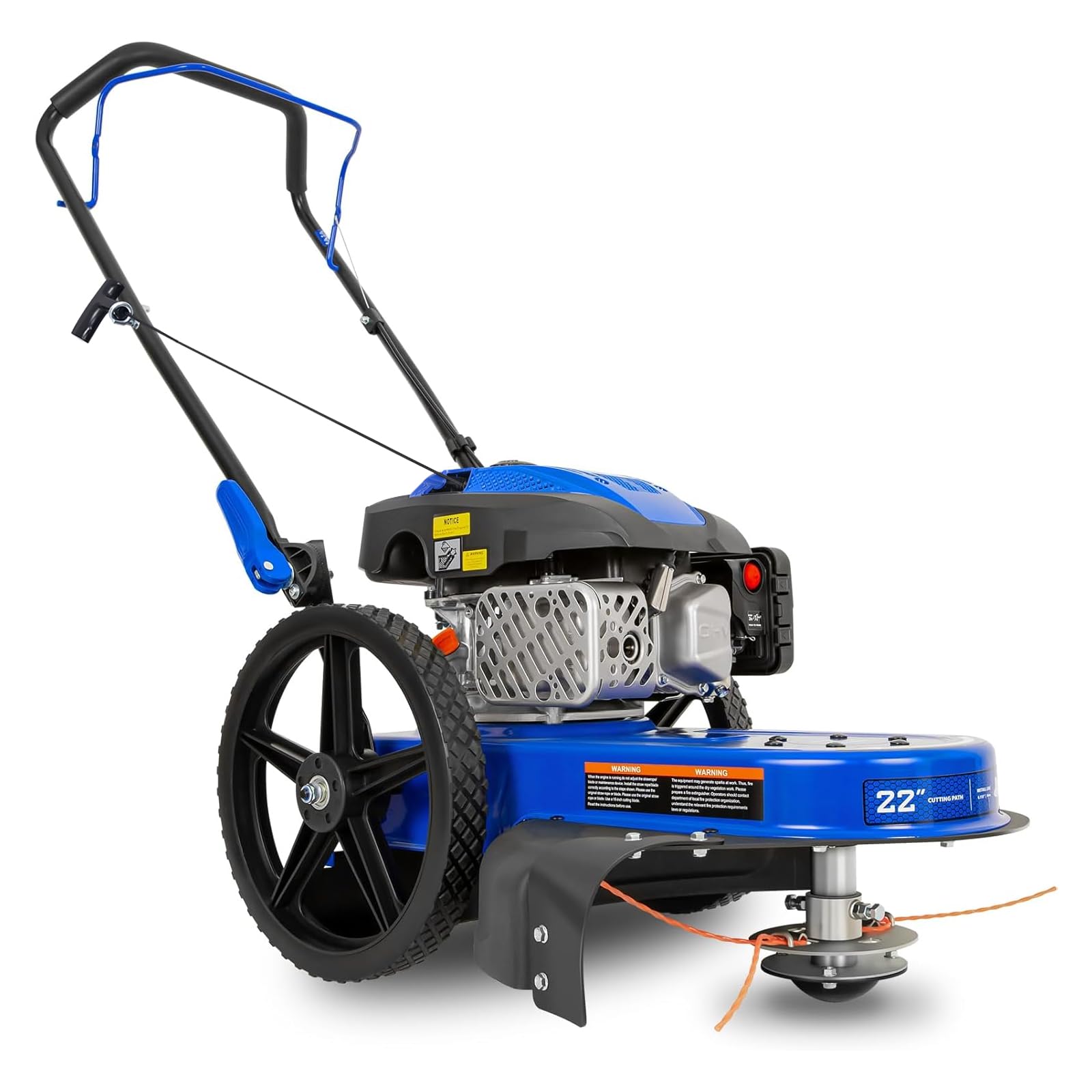
A 22-inch cutting width on a one-piece steel deck clears fencelines and open fields without you carrying the engine. The tradeoff surfaces on uneven terrain: the hard rubber wheels and lack of self-propulsion mean you push the machine, which requires significant effort on slopes or bumpy ground.

This walk-behind trimmer is built for owners of large, flat properties who want to avoid the fatigue of handheld gas trimmers. The 54-pound weight and flat-free wheels handle well on level ground, but hills, ruts, or dense brush requiring precision are outside its wheelhouse. The drive belt and plastic components may wear faster under heavy use, so occasional belt replacement is a realistic part of ownership.

The 170cc engine cuts through heavy grass and weeds effectively, and the large cutting width speeds up coverage. The steel deck and 14-inch wheels add to the sense of durability, though the plastic flaps that direct clippings can detach with rough use.

Inspect the drive belt periodically and replace when signs of wear appear.

Bottom line: This walk-behind trimmer is a sensible option for flat-land owners who value cutting width over maneuverability and accept periodic belt maintenance.

5

ALSO GO 24V Cordless

ALSO GO 24V Cordless

Small lawns

Our Score 8.0/10
Check Price

Worth Noting

  • Plastic parts and blades wear quickly under any load beyond light grass.
  • Battery runtime is short, requiring frequent swaps and cool-down periods.
Weight
approx 4 lbs
Power Output
650W copper motor
Power Source
Battery
Cutting Width
6 inches
Read the full review

At under $60, the ALSO GO 24V is one of the lightest cordless trimmers available, making it easy to handle for quick edge trimming on small patios or balconies. It cuts grass and small weeds cleanly with the appropriate blade, and the included two batteries mean you can swap to finish a modest patch.

However, the 6-inch cutting width and 24V motor will bog down in anything thicker than light grass. The plastic components feel fragile, and blades can dull rapidly under even modest use. Battery runtime is roughly 10–15 minutes per 2Ah pack, requiring a cool-down period before recharging. For buyers needing to clear brush or heavy weeds, this unit will not deliver.

Rotate between the two batteries to extend work time, but plan for multiple charging breaks.

Bottom line: Best suited for apartment dwellers or those with a small patch of grass who need a budget trimmer for edges only — not a brush cutter.

How to Choose

Engine Type: Gas vs Electric

Gas engines deliver consistent power for dense brush and saplings. They require mixing oil and fuel, seasonal carburetor care, and have a shorter lifespan if left with stale gas.

Electric models are quieter and start instantly, but battery power fades under heavy load. Most electrics marketed as brush cutters bog down on thick blackberry vines. Choose gas if you face woody growth regularly.

Cutting Width

A wider cutting swath covers ground faster, but the machine must push more vegetation through the blade. Wider heads put more strain on the engine and require more arm strength to keep the head level.

For small property borders, a 17-18 inch width is manageable. For open fields, 22 inches and up speeds work significantly, but the added torque can cause the head to kick if it hits a hidden rock.

Power Output

Engine displacement (cc) directly relates to torque at the blade. A 30cc engine handles light weeds; 40-50cc is needed for saplings and mature brambles. On electric models, voltage alone doesn't predict brush-cutting ability — look for high watts or brushless motors.

More power almost always means more weight and vibration. A 42.7cc gas engine can feel like a handful after 30 minutes of constant cutting. Match power to the thickest vegetation you expect to hit, not the occasional outlier.

Weight and Ergonomics

Weight directly affects how long you can work before fatigue sets in. A 12-pound handheld is manageable for an hour; a 19-pound model demands a high-quality harness and frequent breaks.

Harness design, handle position, and balance matter as much as weight. A poorly balanced heavy cutter torques your shoulders even with a harness. Test the feel of the setup — the best spec on paper means nothing if you can't swing it steadily.

Ease of Starting and Maintenance

Gas brush cutters that start easily when new often become harder to pull after a season of use. Priming systems, air purge bulbs, and smart start mechanisms reduce frustration but don't eliminate it.

Expect to clean the air filter, replace spark plugs, and run the carburetor dry before storage. If you value grab-and-go simplicity, consider a walk-behind with a 4-cycle engine that avoids mixing oil.

Frequently Asked Questions