Tree & Forestry Care

12 Best Chainsaw of 2026: Battery Power That Rivals Gas for Everyday Use

Which chainsaw actually fits your property work? Battery saws now match gas for most tasks. This guide helps homeowners and ranchers choose between power, convenience, and budget.

For years, the choice was simple: gas for power, corded for budget. But today's battery saws have closed the gap, delivering enough torque to handle most fallen trees and firewood without mixing fuel or pulling a starter cord. Yet many buyers still default to gas, paying for power they rarely use.

The real trade-off isn't gas versus battery — it's whether you regularly need to cut trees over 16 inches in diameter. If not, a quality battery saw saves time, noise, and maintenance. If you do need that extra capacity, a gas saw remains the tool for the job.

This guide cuts through the options by matching each saw to your actual property work, not marketing claims. No single saw works for every farm or garden — the right one depends on the size of your trees and how often you fire it up.

1

EGO Power+ CS1613

Top Pick
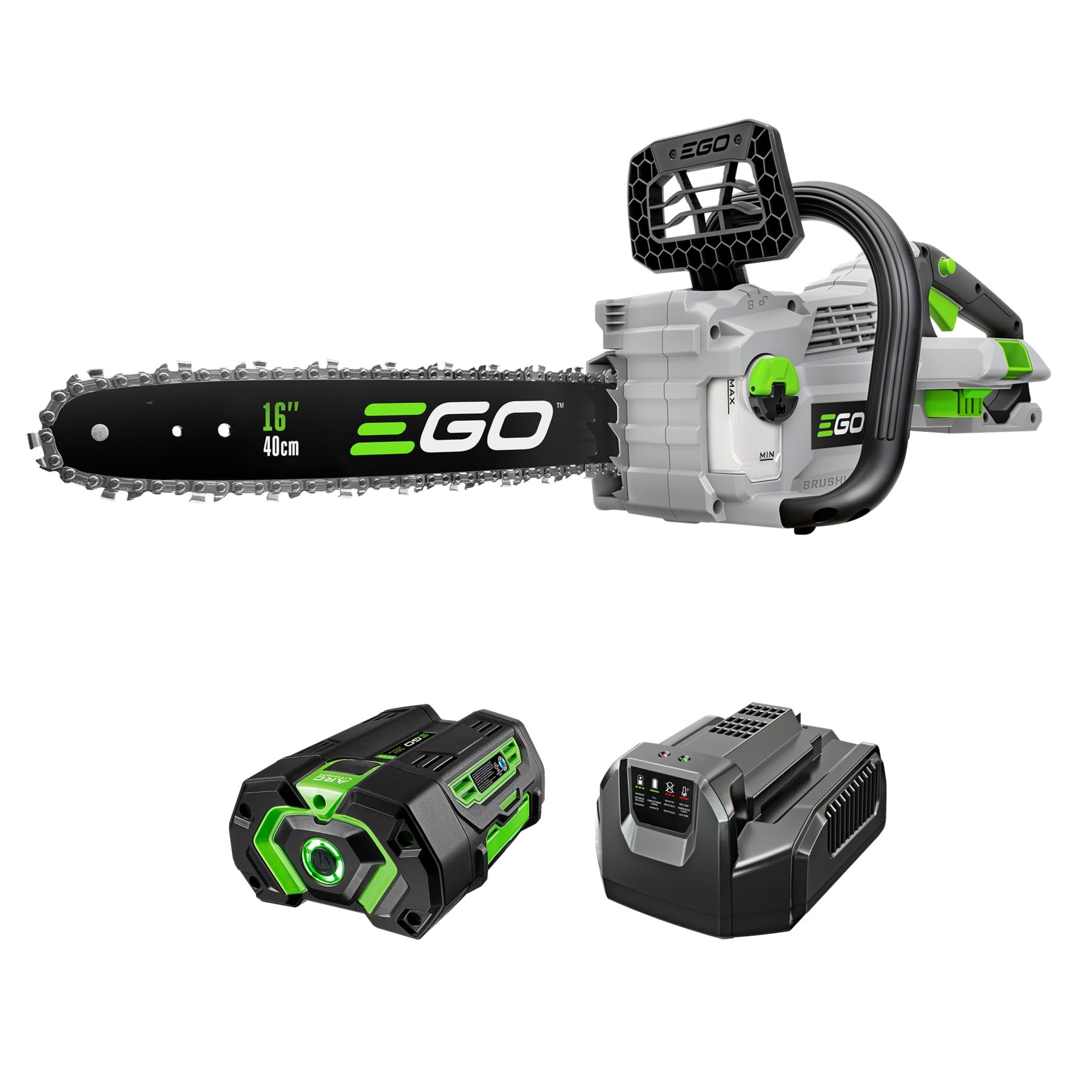
EGO Power+ CS1613

Medium-duty homeowners

Our Score 9.2/10
Check Price

Worth Noting

  • For smaller users, the 20.94-pound weight can be fatiguing during extended cutting sessions.
  • The chain may require sharpening sooner when cutting dirty or knotty wood.
Weight
20.94 lbs (with battery)
Bar Length
16 inches
Engine/Motor
Brushless 56V 4.0Ah
Power Source
Battery
Read the full review

This battery-powered chainsaw matches the cutting speed and torque of a gas-powered 40cc model, handling firewood and tree limbs up to 16 inches in diameter without hesitation. The brushless motor delivers consistent power through the cut, and starting is instant -- no pull cord, no choke, no priming.

The included 4.0Ah battery provides enough runtime for an afternoon of pruning and light felling, and the charger refills it in roughly 30 minutes. The saw operates quietly enough that neighbors won't hear it, and there are no exhaust fumes to deal with. Tool-free chain tensioning lets you adjust the chain in seconds without extra tools.

Homeowners who want gas-like cutting ability without the hassle of mixing fuel, cleaning filters, or storing gasoline will find this saw a direct substitute. The weight -- 20.94 pounds with the battery -- is noticeable for smaller users during sustained cutting, and the 16-inch bar won't handle logs larger than that in one pass. For occasional to moderate use and for anyone already invested in the EGO 56V battery system, these tradeoffs are easy to accept.

Using a shoulder strap (sold separately) can help manage the weight during longer cutting sessions.

Bottom line: For homeowners who want gas-level performance without the maintenance and noise, this battery saw delivers -- especially if you already own EGO tools.

2

DEWALT DCCS621B

DEWALT DCCS621B

Light pruning cleanup

Our Score 9.2/10
Check Price

Worth Noting

  • Bar oil may drip during storage, requiring draining after use
  • Some units can shut down unexpectedly under heavy load
Weight
10.04 lbs (with battery)
Bar Length
12 inches
Engine/Motor
Brushless 20V MAX (bare)
Power Source
Battery
Read the full review

The DCCS621B is the lightest and most compact standard rear-handle chainsaw in this lineup, weighing just over 10 pounds with a battery. Its 12-inch bar and brushless motor handle branches and small limbs with smooth, quick cuts, making one-handed trimming feasible. Unlike larger battery saws that prioritize raw power, this model emphasizes reach and agility for close-up work.

This saw fits homeowners who already own DEWALT 20V batteries and want a lightweight tool for pruning branches up to 6 inches in diameter. The 12-inch bar limits its use to material under 6 inches, so it is not suited for felling trees or processing thick firewood. Bar oil can drip during storage, but draining the tank after each use keeps the mess under control.

The saw cuts through green limbs smoothly, and a single 5Ah battery lasts through an afternoon of light trimming. The occasional oil drip is a minor annoyance rather than a functional problem, and the shutdown behavior some owners see under sustained heavy load is unlikely to occur during typical pruning.

Drain bar oil after each session and store the saw with the cap closed to minimize drips.

Bottom line: A nimble pruning saw for DEWALT 20V users who value portability over cutting capacity; the oil drip is manageable with proper storage habits.

3

Husqvarna 120 III

Husqvarna 120 III

Light trimming budget

Our Score 9.2/10
Check Price

Worth Noting

  • Chain tensioner may need frequent adjustment; some owners report it wearing out quickly.
  • Starting can require repeated pulls, especially when the engine is cold.
Weight
10.7 lbs
Bar Length
14 inches
Engine/Motor
38cc, 1.88HP
Power Source
Gas
Read the full review

The Husqvarna 120 Mark III delivers adequate power for light yard work like trimming branches and cleaning up small limbs, and its 10.7-pound weight makes it easy to handle for extended use. However, some units arrive with starting problems or a chain tensioner that can wear out after a few uses — buyers should be prepared to troubleshoot these issues. For households that only need an occasional gas saw and are willing to accept some risk, this remains a budget-friendly entry point.

Using fresh fuel and following the cold start sequence (choke on, full throttle) can reduce the number of pulls needed.

Bottom line: This saw works best for light yard cleanup on a budget, provided you have the patience to deal with occasional starting hiccups and tensioner adjustments.

4

Husqvarna 460 Rancher

Husqvarna 460 Rancher

Heavy firewood cutting

Our Score 9.0/10
Check Price

Worth Noting

  • Chain tensioner or oiler function may need attention, especially under heavy use
  • Starting can be temperamental, particularly in cold weather or after sitting unused
Weight
13.2 lbs
Bar Length
24 inches
Engine/Motor
60.3cc, 3.6HP
Power Source
Gas
Read the full review

The Husqvarna 460 Rancher delivers raw cutting power that defines this segment. Its 60.3cc engine drives a 24-inch bar through hardwood and large timber with ease, making it a top choice for heavy firewood cutting and land clearing. The Smart Start system reduces pull effort, and low-vibration handles improve comfort during extended use. For buyers needing a lighter saw for lighter tasks, the 450 Rancher offers easier handling but trades torque.

This saw is best suited to farm and ranch owners with large timber, or anyone processing significant firewood volumes. It is not for occasional light trimming, and its 13.2-pound weight will fatigue smaller users. Build quality has shown variability; some units require attention to the chain tensioner or oiler over time. A pre-use check of chain tension and oil output helps avoid issues.

Check chain tension and oiler output before each use; fresh fuel and proper priming help with starting.

Bottom line: For buyers who regularly cut large-diameter hardwood and want gas power, this saw delivers the torque needed. It’s not a casual-use tool, but for serious firewood processing, it’s a capable choice.

5

Husqvarna 450 Rancher

Husqvarna 450 Rancher

Ranchers moderate cutting

Our Score 9.0/10
Check Price

Worth Noting

  • Chain may come off the bar during initial use, requiring frequent tension checks.
  • Some saws need carburetor adjustment out of the box for smooth idle and acceleration.
Weight
11.33 lbs
Bar Length
20 inches
Engine/Motor
50.2cc, 3.2HP
Power Source
Gas
Read the full review

The Husqvarna 450 Rancher splits the difference between heavy-duty gas saws and smaller homeowner models. Its 50.2cc engine delivers enough torque for most residential cutting tasks, while the 11.33-pound weight keeps it manageable for longer sessions. The 20-inch bar handles trees up to that diameter in a single pass.

This saw suits ranchers and landowners with moderate cutting needs — firewood, clearing small trees, occasional fence-line work. It offers a lighter alternative to the 460 Rancher for those who don't need the extra displacement. The price sits in the mid-range, undercutting comparable Stihl models while offering similar cutting speed.

Some units arrive with the chain needing adjustment or the carburetor requiring fine-tuning for proper idle. The chain can also jump off the bar during use, especially when the saw is new and the tension hasn't settled. These are usability issues rather than safety hazards, but they mean the saw may demand more attention during the break-in period than a battery model would.

Check chain tension before each use during the break-in period — it can loosen as the bar warms up.

Bottom line: A solid mid-range gas saw for those who want manageable power for firewood and small tree clearing, but be prepared to check chain tension and carburetor settings during the first few uses.

6

Oregon CS1500

Oregon CS1500

Homeowners with outlets

Our Score 8.8/10
Check Price

Worth Noting

  • Weight can tire the arms during longer cutting sessions.
  • Chain may need occasional re-tensioning to stay on the bar.
Weight
12.6 lbs
Bar Length
18 inches
Engine/Motor
15A (2400W)
Power Source
Corded Electric
Read the full review

The Oregon CS1500 sets itself apart from battery-powered saws with its PowerSharp self-sharpening system, which keeps the chain cutting efficiently without manual filing. Its 15-amp motor delivers consistent power through logs and branches, making it a capable choice for light to medium trimming tasks.

This corded electric saw is best for homeowners with an outdoor electrical outlet within 100 feet. It handles tree pruning, branch cleanup, and firewood cutting up to moderate sizes. The 12.6 lb weight is heavier than some corded models, which can become tiring during extended use, but for typical yard work it remains manageable. The cord limits reach, so plan the work area accordingly. It is not suited for remote property work or heavy felling.

Assembly is straightforward, and the tool-free chain tensioning makes adjustments quick. The self-sharpening system activates with a simple button press, reducing downtime during cuts. Budget-conscious buyers will find it delivers solid performance at a cost-effective price.

Check chain tension before each use to minimize the chance of it coming off the bar.

Bottom line: For homeowners with outlet access, the Oregon CS1500 provides a self-sharpening feature and solid cutting performance at a budget-friendly price, avoiding the complexity of gas or battery systems.

7

Greenworks 80V 18"

Greenworks 80V 18"

Homeowners medium yards

Our Score 8.8/10
Check Price

Worth Noting

  • Battery runtime can drop to 20-30 minutes on heavy cuts, requiring a spare for longer sessions.
  • Chain may detach from the bar during use, requiring frequent tension checks.
Weight
2.1 lbs (powerhead only)
Bar Length
18 inches
Engine/Motor
Brushless 80V 2.0Ah
Power Source
Battery
Read the full review

The Greenworks 80V brushless motor delivers cutting power that holds its own against entry-level gas saws, making it a strong value for homeowners who already own Greenworks 80V tools. It handles logs up to 12 inches with minimal effort, and the push-button start eliminates the pull-cord routine entirely. The powerhead weighs just over 2 pounds, so the saw feels balanced and easy to maneuver for extended pruning sessions.

This saw suits homeowners with medium-sized yards who tackle seasonal pruning, limbing, and occasional firewood cutting. The battery runtime is adequate for a half-hour of continuous cutting, but heavy work on dense wood will drain it sooner. Plan around shorter sessions or buy a spare battery. Also, the chain can come off the bar during use — a frustration that requires occasional re-tensioning.

The 18-inch bar provides enough reach for most yard debris, and the brushless motor runs efficiently for moderate tasks. But if your work regularly involves oak or other hardwoods over 10 inches, the battery life becomes a limiting factor. This saw is best kept within its comfort zone: light to medium cutting in manageable amounts. The quiet operation is a bonus for residential areas.

Check the chain tension before each use and tighten as needed; it may require more frequent adjustment than gas saws.

Bottom line: For Greenworks 80V owners or those willing to manage battery range, this saw delivers gas-like cutting without the noise and fumes — just keep the chain tension adjusted.

8

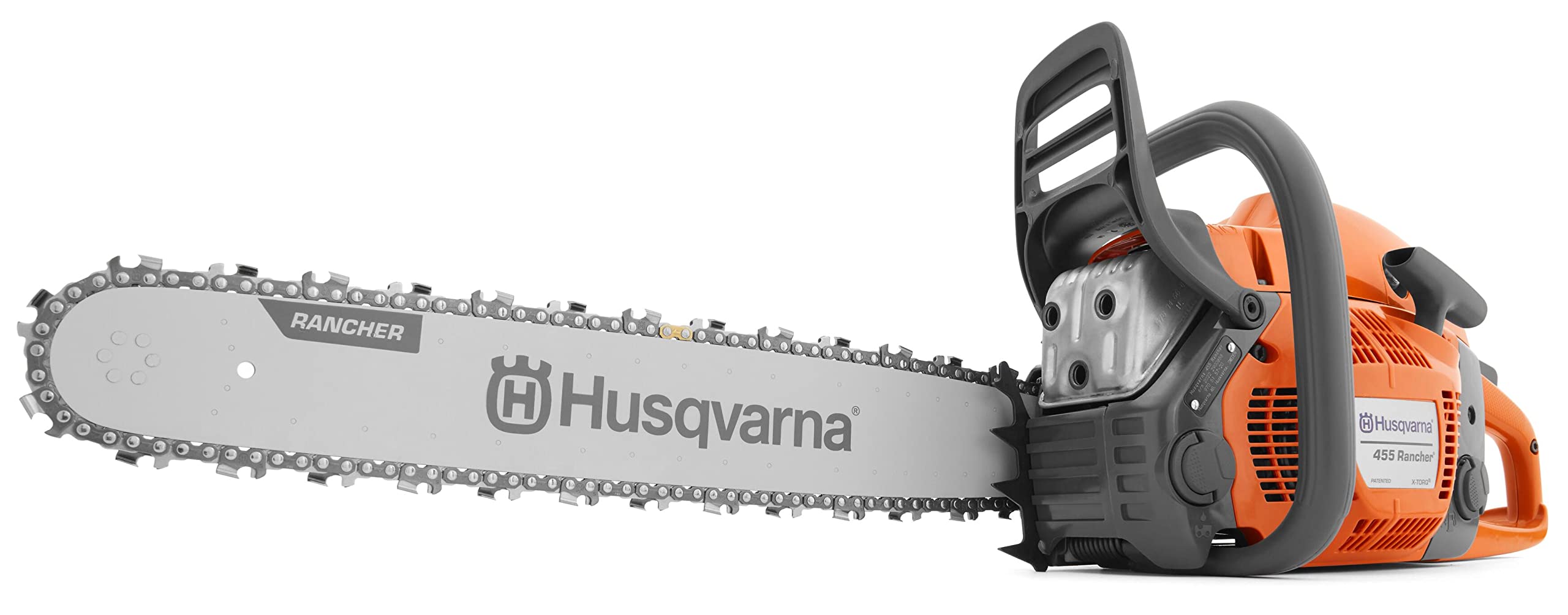
Husqvarna 455 Rancher

Husqvarna 455 Rancher

Farmers and ranchers

Our Score 8.8/10
Check Price

Worth Noting

  • At 13.2 pounds, the saw may cause fatigue during extended cutting sessions
  • Chain oiler or starting issues can occur in some units, requiring troubleshooting
Weight
13.2 lbs
Bar Length
20 inches
Engine/Motor
55cc, 3.5HP
Power Source
Gas
Read the full review

The Husqvarna 455 Rancher offers a step up in power from the 450, with 55cc and 3.5 HP that make short work of dense hardwood and large logs. The Smart Start feature reduces pulling effort, and the 20-inch bar suits ranch-sized tasks. However, this model carries the same quality-control risks as its sibling: some units experience oiler or starting troubles, and the 13.2-pound weight may feel heavy during extended use. For buyers who need the extra torque and are comfortable with potential repair downtime, it is a capable choice — but the 450 remains a lighter, equally steady alternative for most firewood cutting.

Bottom line: This saw suits ranchers who regularly cut dense hardwood and can accept the occasional oiler or starting inconvenience — for general firewood duty, the lighter 450 is a steadier pick.

9

Husqvarna 350i

Husqvarna 350i

Husqvarna tool owners

Our Score 8.6/10
Check Price

Worth Noting

  • In boost mode, battery runtime drops noticeably
  • Some units have experienced battery or chain tensioner failures, worth inspecting on arrival.
Weight
7.7 lbs (without battery)
Bar Length
18 inches
Engine/Motor
Brushless 40V 7.5Ah
Power Source
Battery
Read the full review

The Power Axe 350i packs a brushless motor that punches above its weight class, with boost mode providing a temporary power spike for those occasional thick branches. At 7.7 lbs without the battery, it handles more like a pruning saw than an 18-inch bar saw, reducing fatigue during longer sessions. However, this power comes at a cost: the 7.5Ah battery drains quickly when boost is engaged, and a subset of units have reported battery or tensioner issues. For homeowners already invested in Husqvarna 40V tools who need a lightweight occasional-use saw, this is a compelling option. But the price premium and reliability reports keep it behind the EGO CS1613, which offers similar cutting power with fewer durability caveats.

Bottom line: Fits best for Husqvarna 40V tool owners who want a lightweight battery saw for occasional cutting and are comfortable with shorter battery runs in boost mode.

10

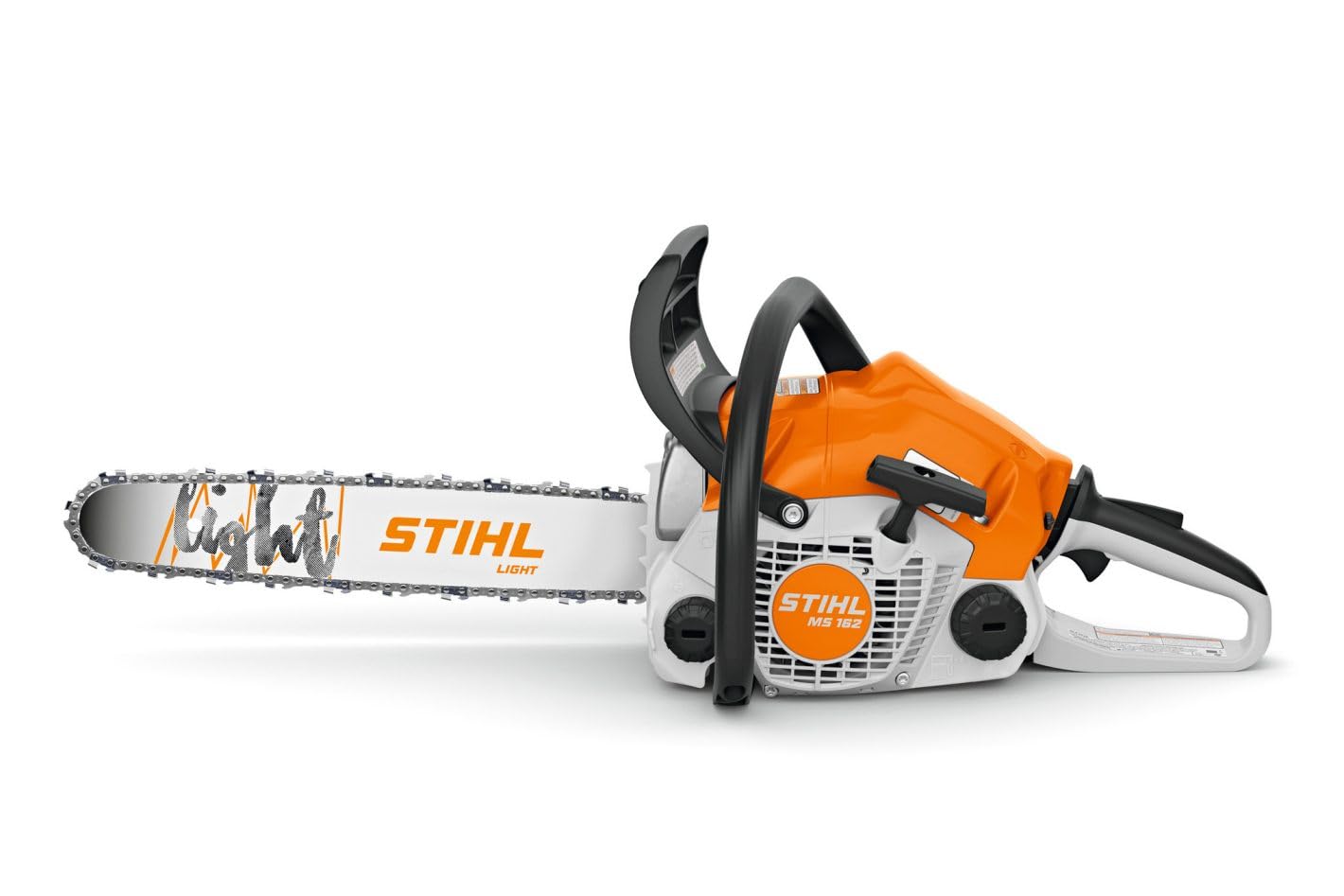
Stihl MS 162

Stihl MS 162

Stihl brand loyalists

Our Score 8.6/10
Check Price

Worth Noting

  • 30cc engine may require slower cutting when processing dense hardwood logs over 12 inches thick.
  • Gas operation involves mixed fuel preparation and routine spark plug, air filter, and bar oil maintenance.
Weight
13.25 lbs
Bar Length
16 inches
Engine/Motor
30cc, 1.6HP
Power Source
Gas
Read the full review

Stihl's MS 162 is a basic gas saw built around the brand's reputation, with a 16-inch bar and 30cc engine that delivers enough power for routine yard cutting and firewood processing. At 13.25 pounds, it's relatively light for a gas model, making it manageable for longer sessions. However, this model lacks the volume of detailed user feedback that would confirm its real-world performance and reliability, so it's best evaluated by visiting a Stihl dealer and inspecting the saw in person. For buyers who prioritize online reviews and third-party data before purchasing, the limited available feedback makes this a riskier choice compared to better-documented alternatives.

Bottom line: For Stihl loyalists who can test the saw in person and value brand support over online consensus, the MS 162 is a reasonable entry-level gas option; otherwise, well-documented alternatives offer more certainty.

11

DEWALT DCCS672B

DEWALT DCCS672B

DEWALT 60V owners

Our Score 8.6/10
Check Price

Worth Noting

  • Battery life can be short, especially when using smaller 20V packs on heavier cuts.
  • Chain may come off the bar during operation, requiring occasional re-tensioning.
Weight
1.52 lbs (bare)
Bar Length
18 inches
Engine/Motor
Brushless 60V FlexVolt
Power Source
Battery
Read the full review

The DEWALT DCCS672B delivers solid cutting torque for a battery saw, making quick work of limbs and small logs. Its lightweight powerhead balances well for extended overhead trimming. However, the chain can slip off the bar during use, and battery life runs short with smaller packs — issues that keep it from competing with the top battery saws for heavier or longer jobs.

Check chain tension before each use to help prevent derailment.

Bottom line: Best suited for DEWALT tool owners who already own 60V batteries and need a light saw for occasional pruning and limbing, provided they are comfortable with periodic chain adjustments.

12

Husqvarna 135 II

Husqvarna 135 II

Tinkerers on budget

Our Score 8.2/10
Check Price

Worth Noting

  • Starting can be intermittent, often requiring carburetor tuning.
  • Engine may stall after each cut or show early wear signs.
Weight
4.7 lbs (listed)
Bar Length
16 inches
Engine/Motor
38cc, 2.1HP
Power Source
Gas
Read the full review

The Husqvarna 135 Mark II undercuts most gas saws on price, weighing only 4.7 pounds (listed) with a 16-inch bar that cuts through 13-inch stumps without trouble. That light weight makes it easy to handle for trimming and small firewood. However, some units require carburetor adjustment before they start reliably, and the engine may stall after each cut or show wear after limited use. This saw suits buyers who are comfortable with basic tuning and accept the possibility of early replacement in exchange for the lowest upfront cost.

Bottom line: Consider this only if you need the absolute cheapest gas saw and are prepared to tune the carburetor and accept the risk of early replacement.

How to Choose

Bar Length

Bar length determines the maximum diameter you can cut in one pass. A 14-inch bar handles limbs up to about 12 inches thick, while a 20-inch bar can take down a 18-inch tree. Longer bars add weight and require more power to drive the chain.

For a typical 5-acre wooded lot, an 18- to 20-inch bar is the sweet spot — it fells most trees without the extra heft of a 24-inch bar. If you only prune branches under 8 inches, a 12- or 14-inch bar keeps the saw light and maneuverable.

Power Source

Gas saws deliver unlimited runtime and the highest power-to-weight ratio for heavy felling. But they require mixing fuel, pulling a starter cord, and regular carburetor adjustments. Battery saws now match 40cc gas performance for 90% of home tasks, with instant start and quiet operation.

Corded electric saws are the cheapest option and never run out of fuel, but they tether you to an outlet. Choose power source based on where you work: gas for remote woodlots, battery for occasional yard work, corded for tasks within 100 feet of power.

Engine Displacement or Voltage

Gas engine displacement (in cc) correlates directly to torque. A 50cc saw handles hardwood logs up to 16 inches easily; a 60cc saw chews through 24-inch timber. For battery saws, voltage and amp-hour (Ah) determine power and runtime. A 56V 4.0Ah battery gives roughly 30-40 minutes of continuous cutting.

Higher voltage systems (80V) can deliver more torque but often weigh more. The real-world trade-off: a 40V saw with a large battery may feel underpowered on thick oak, while a 56V saw like the EGO matches a 40cc gas saw in cut speed.

Weight and Vibration Damping

Weight affects fatigue, especially during overhead pruning or long sessions. A saw under 12 pounds is comfortable for most users; over 14 pounds strains arms and shoulders. Vibration damping (like Husqvarna's LowVib) reduces hand numbness and improves control.

Battery saws often list weight without the battery — check the total weight with a typical battery installed. A 20-pound saw like the EGO is heavy but tolerable for short bursts, while a 10-pound compact saw lets you work all afternoon without fatigue.

Chain Tensioning and Oiling

Tool-free chain tensioning lets you adjust the chain in seconds without a wrench — a huge convenience. Many budget saws use a screw system that's fiddly and prone to loosening during use. Frequent chain derailment is the number one complaint across all price tiers.

Automatic oilers that match oil flow to engine speed keep the chain lubricated and last longer. Look for a visible oil level window; some saws leak oil in storage, which is annoying but not a defect. Always check tension before each use to avoid kickback and chain damage.

Frequently Asked Questions