Tree & Forestry Care

7 Best Gas Chainsaw of 2026: Easy Start and Lasting Power

Which gas chainsaws start reliably and hold up to years of firewood cutting, without the common frustrations of hard starting or broken parts.

Many gas chainsaws promise professional-grade power but deliver frustration in the form of hard starting, oil leaks, or broken tensioners within the first season. The real choice isn't between brands—it's between a saw built for occasional cleanup and one that can handle years of firewood cutting without letting you down. This guide separates the models that actually start when you pull the cord from those that leave you stranded.

By focusing on real-world trade-offs like engine power vs. ease of starting, and lightweight handling vs. long-term durability, these picks avoid the common pain points that show up in hundreds of buyer accounts.

1

Husqvarna 450 Rancher

Top Pick
Husqvarna 450 Rancher

Heavy home use

Our Score 9.0/10
Check Price

Worth Noting

  • At over 12 pounds, heavier than needed for occasional trimming tasks.
  • Bar and chain installation requires careful attention to tension and oiling.
Bar Length
20 in
Engine Displacement
50.2cc
Read the full review

The 50.2cc engine delivers enough torque to slice through dense hardwoods and large logs without bogging down. The 20-inch bar handles firewood processing and land clearing with confidence. Cutting performance remains strong across a range of wood types.

Smart Start reduces pull cord resistance, making cold starts noticeably easier than on many other saws in this power class. The Air Injection system keeps debris from clogging the air filter, and LowVib handles reduce vibration during extended cuts.

This saw is built for homeowners who need a workhorse for heavy cutting tasks — clearing brush, processing firewood, and felling medium trees. It is not intended for light, occasional pruning, and assembly requires installing the bar and chain. Chain slippage or breakage has been noted on first use in some units, so paying attention to chain tension and bar oiling from the start is worth doing.

The magnesium crankcase and reinforced housing give the saw a solid feel that supports regular use. Over time, the engine holds its tune well, requiring only routine maintenance.

Bottom line: For homeowners who need a chainsaw that starts easily and cuts through heavy work without hesitation, the 450 Rancher delivers the right balance of power and usability.
2

Echo CS-590

Echo CS-590

Serious firewood

Our Score 8.8/10
Check Price

Worth Noting

  • Starting requires careful choke technique
  • At over 13 pounds, it feels heavy during extended overhead work
Bar Length
20 in
Engine Displacement
59.8cc
Read the full review

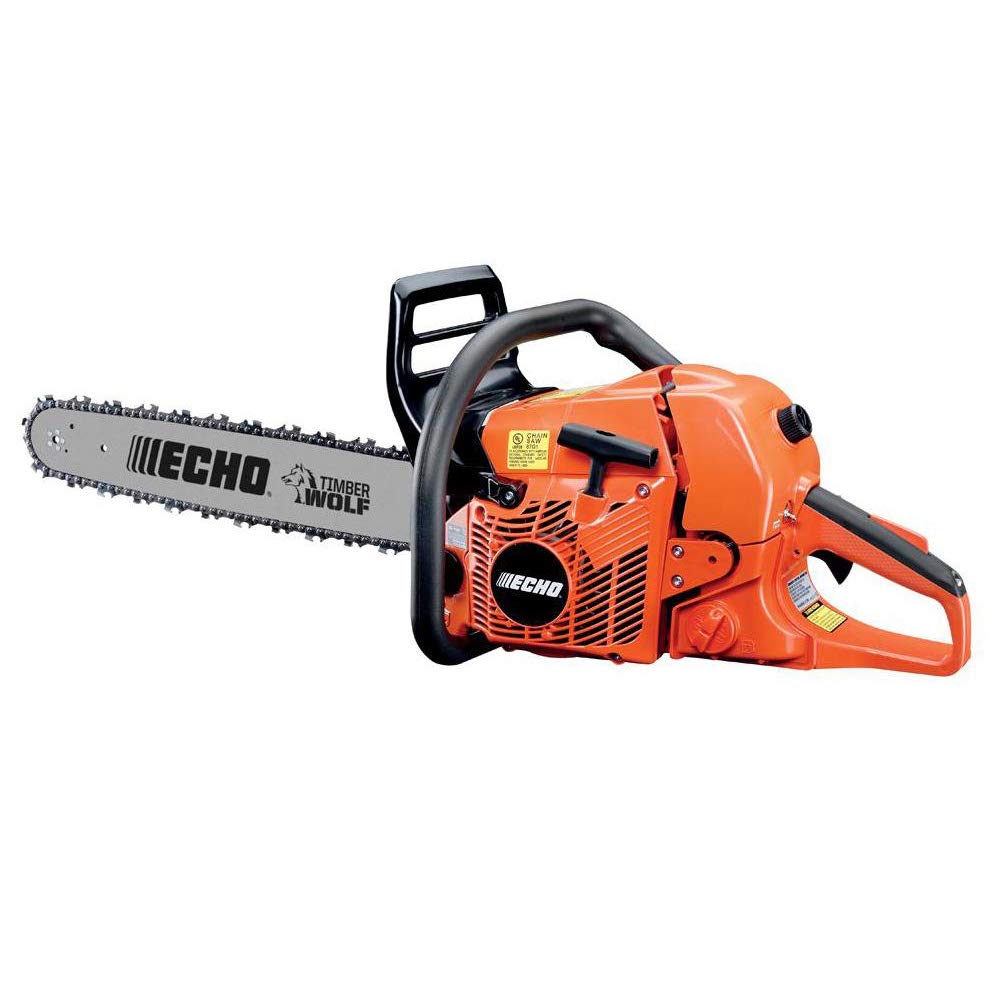
The Echo CS-590's 59.8cc engine and 20-inch bar put it in a different class from Echo's lighter saws – it pulls through dense hardwoods without hesitation. While the lightweight Echo option is easier to carry all day, the CS-590 is built for sustained cutting sessions where power matters more than portability.

This saw is best for experienced home users who need to process firewood or clear larger trees. The starting technique is critical – flooding is possible if the choke sequence isn't followed precisely, so beginners may find it frustrating.

The CS-590 chews through stacked cords with ease, and the build quality feels rugged enough for years of active use. It handles four-cord seasons without losing power, making it a strong value for the price.

To avoid flooding, close the choke for the first pull, then open it after the saw pops – practice the sequence before starting your first cut.

Bottom line: If you value cutting power over portability and are willing to learn the starting sequence, the Echo CS-590 delivers professional-level performance at a mid-range price.

3

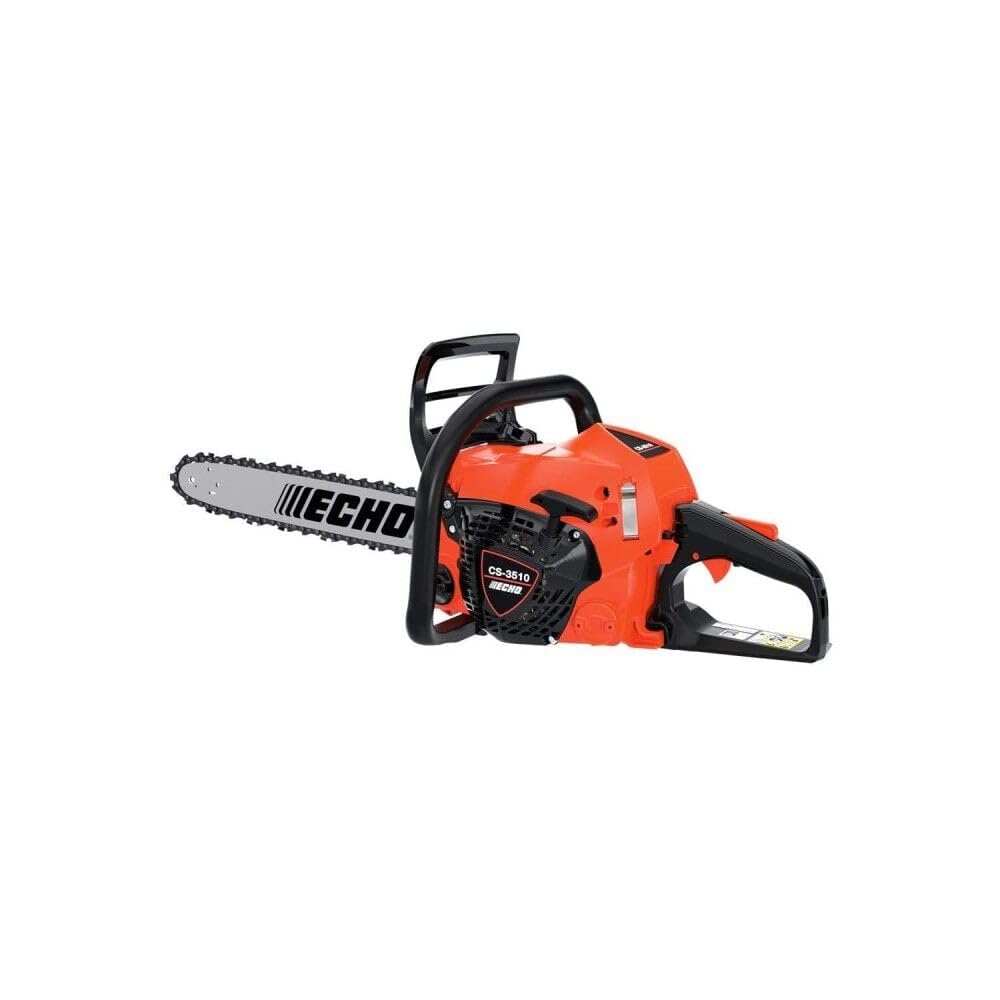
Echo CS-3510

Echo CS-3510

Light commercial

Our Score 8.6/10
Check Price

Worth Noting

  • Some units can have difficulty starting or stop running within the first week.
Bar Length
16 in
Engine Displacement
34.4cc
Read the full review

The Echo CS-3510 weighs just 8 pounds, making it one of the lightest commercial-grade saws in its class. Its 34.4cc engine pairs with the i-30 starter to reduce pull effort, and the three-point vibration damping keeps fatigue low during extended trimming sessions. Unlike the larger CS-590, which is built for heavy felling, this model focuses on portability and precision for limbs and small tree work.

This saw suits professional landscapers or homeowners who need a lightweight tool for pruning and clearing brush. A minority of units have shown starting difficulty or stopped running within the first week, so buyers should be prepared for possible initial issues — not a concern for those with tolerance for occasional tinkering.

The 34.4cc engine provides enough torque for smooth cuts through limbs up to 16 inches in diameter. The air injection system keeps the air filter cleaner, and the i-30 starter reduces the number of pulls needed on restart. For light commercial tasks, the cutting speed and comfort are a noticeable step up from homeowner-grade saws.

Bottom line: For pros who need a lightweight trimming saw, the CS-3510 delivers solid performance in a portable package, but occasional starting issues mean it is not for those who cannot tolerate any downtime.

4

Husqvarna 130

Husqvarna 130

Occasional trimming

Our Score 8.4/10
Check Price

Worth Noting

  • Plastic housing and handle may develop structural issues after limited use
  • May require multiple pull attempts when cold, especially without proper starting technique
Bar Length
16 in
Engine Displacement
38cc
Read the full review

The Husqvarna 130's 38cc engine and 16-inch bar handle typical homeowner tasks like trimming branches and cutting firewood. At 5.7 pounds, it's light enough to carry through a yard without fatigue. The cutting performance matches what you'd expect from a larger saw, making it a practical choice for light work.

The plastic construction can show wear over time – the handle may feel less robust after repeated use. Starting can require a few extra pulls when cold, something to be mindful of if you prefer first-pull reliability. These tradeoffs align with the saw's budget-friendly price point.

This chainsaw suits homeowners who need an occasional-use tool for light trimming and yard cleanup. If cost savings matter more than heavy-duty longevity, the 130 is a sensible choice. Durability varies between units – some have experienced structural issues after limited use, so it's worth inspecting for any defects early. For more demanding work, a heavier-duty model like the 450 Rancher is worth the added investment.

Use the correct choke setting and prime before pulling for easier cold starts.

Bottom line: Best suited for occasional trimming and yard cleanup, where the budget saving outweighs potential durability concerns.

5

Troy-Bilt TB4216

Troy-Bilt TB4216

Light home use

Our Score 8.4/10
Check Price

Worth Noting

  • Cutting performance across different wood types has not been widely documented.
  • Long-term engine reliability after extended use is not yet recorded.
Bar Length
16 in
Engine Displacement
42cc
Read the full review

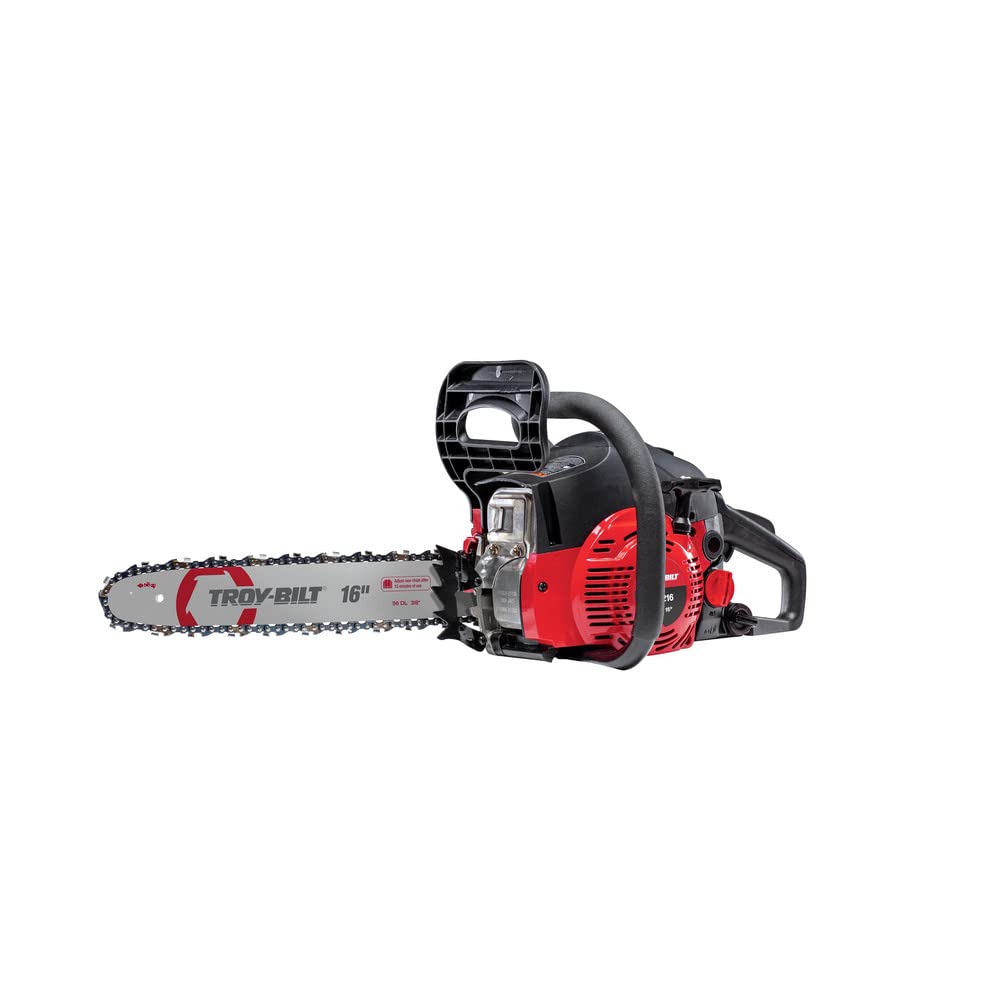
The Troy-Bilt TB4216 offers a 42cc engine and SpringAssist start at a budget-friendly price point, making it an accessible option for occasional trimming and small tree work. The SpringAssist system reduces the effort required to start the engine, and the 16-inch bar is suitable for limbs and smaller logs. However, with limited owner feedback available, its cutting performance under sustained use and long-term durability are not yet confirmed, which introduces more uncertainty than better-documented alternatives.

Bottom line: This chainsaw suits budget-conscious homeowners who need an occasional-use saw and are willing to accept some performance uncertainty.

6

SUPMIXTOOLS 62cc

SUPMIXTOOLS 62cc

Occasional firewood

Our Score 8.2/10
Check Price

Worth Noting

  • Some units may become inoperable within the first few hours of use, making long-term ownership uncertain.
Bar Length
20 in
Engine Displacement
62cc
Read the full review

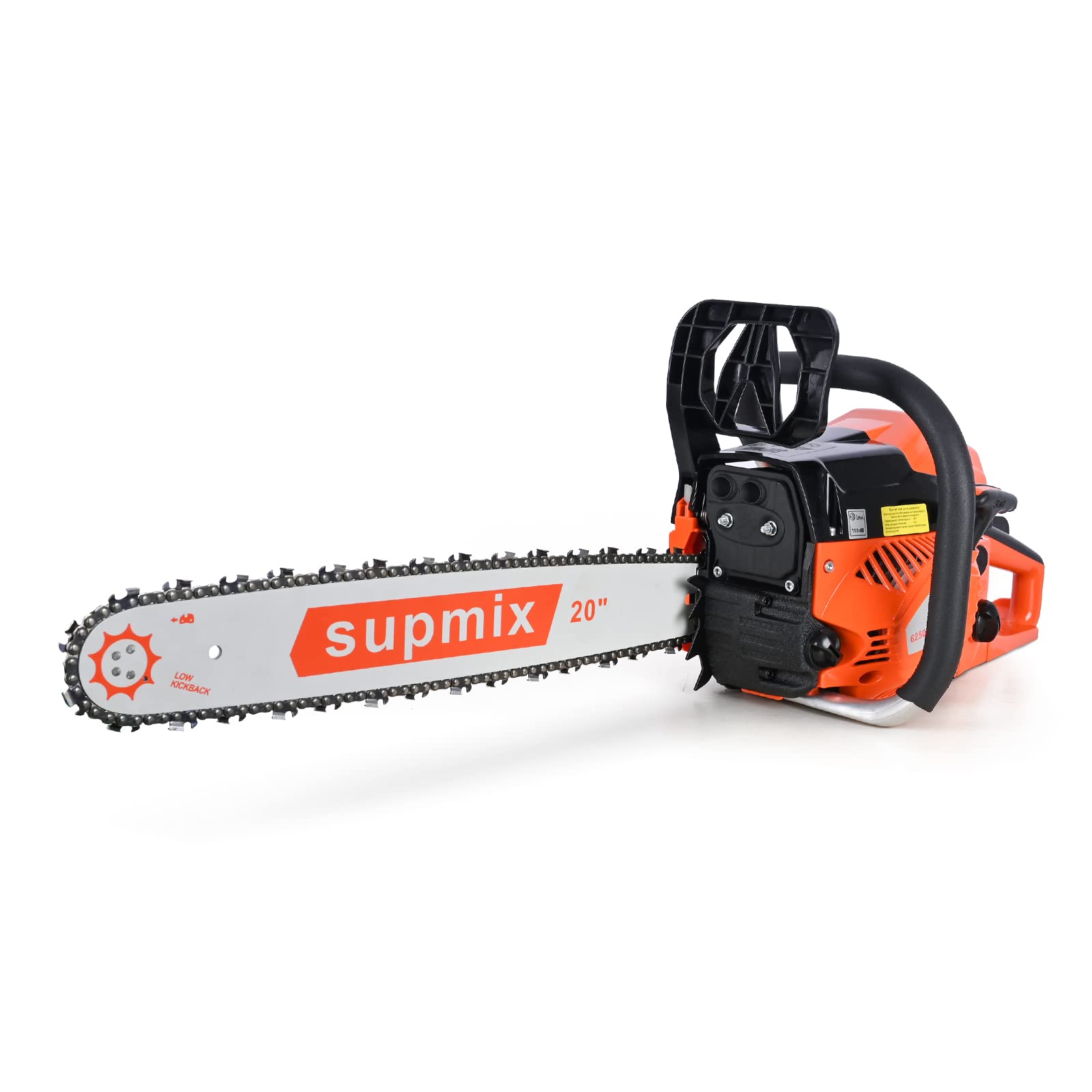
This SUPMIXTOOLS 62cc chainsaw delivers cutting performance that rivals models costing twice as much, with a 62cc engine and 20-inch bar handling large hardwoods and heavy logs without strain. Compared to the top pick in this category, you get more raw displacement for a fraction of the cost.

The saw powers through firewood piles and light clearing jobs with ease, drawing on a 4.2HP engine that runs at 8500 RPM. Quality control, however, varies between units — some owners find the saw becomes inoperable after just a few hours of use, while others enjoy extended service. This inconsistency makes it a choice driven more by budget than by long-term planning.

This chainsaw is a fit for budget-conscious homeowners who need occasional heavy cutting and are comfortable with the possibility that the saw may require early replacement. It is not meant for daily professional work or for buyers who expect years of trouble-free operation.

Bottom line: A high-power chainsaw for the money, best reserved for occasional use where the risk of early replacement is acceptable.

7

WTHW 58cc Chainsaw

WTHW 58cc Chainsaw

Light home tasks

Our Score 8.0/10
Check Price

Worth Noting

  • Plastic housing feels less durable than metal alternatives
  • The bar may loosen during extended cutting, requiring periodic tightening.
Bar Length
20/18 in
Engine Displacement
58cc
Read the full review

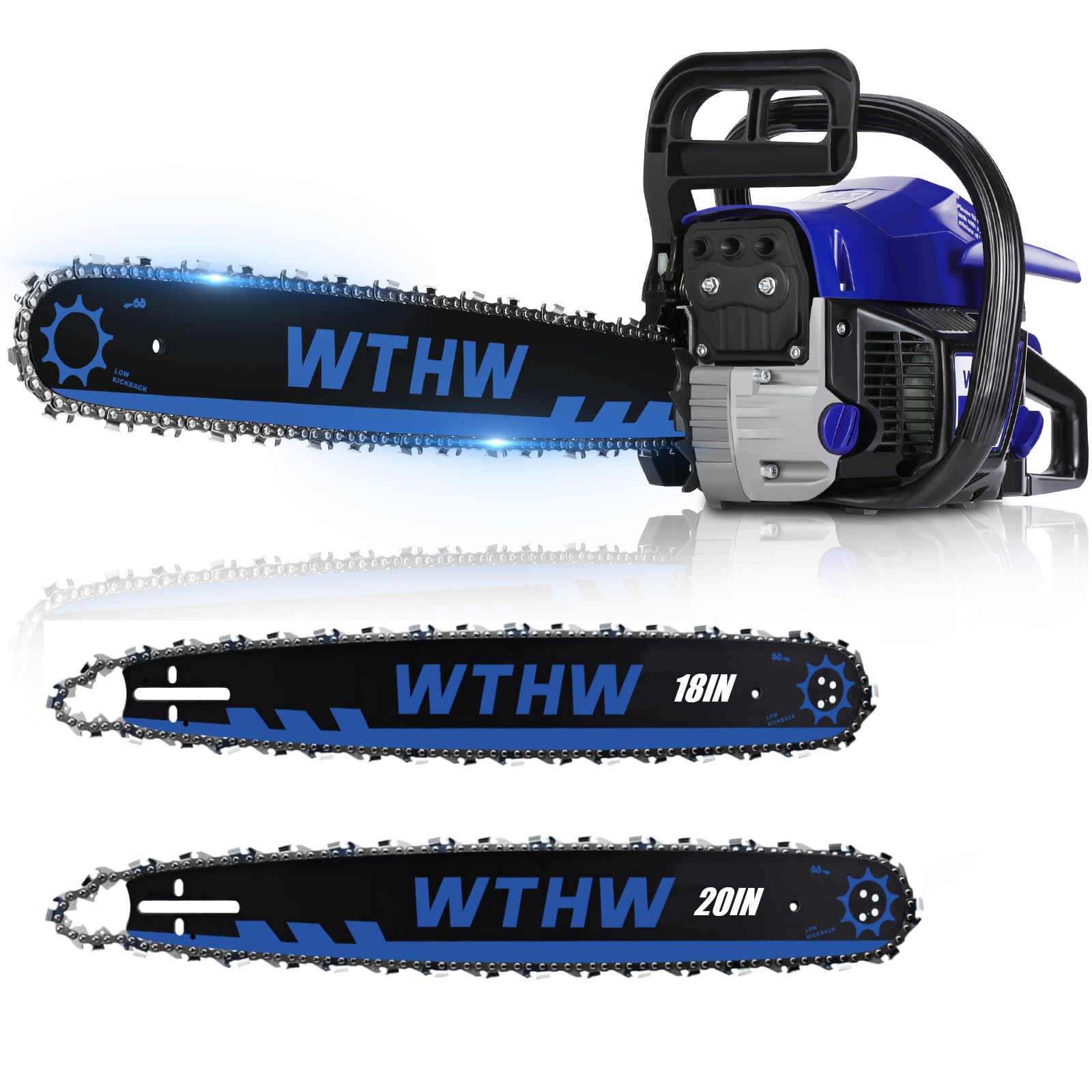
The WTHW 58cc chainsaw includes both 18- and 20-inch quick-switch bars at a budget-friendly price, delivering enough power to handle large branches and small trees with ease. Its plastic housing feels less substantial than metal-bodied saws, and the bar may loosen during extended use – a tradeoff that matters more for heavy daily work than for light home tasks. This saw fits buyers who want bar flexibility without paying premium prices, but those needing a long-haul workhorse should look at more established models.

Tighten the bar mounting nuts after initial use – they can loosen as the saw warms up.

Bottom line: If you need a budget chainsaw for occasional weekend cutting and want the flexibility of two bar lengths, this is a practical option – just be prepared to check the bar tension regularly.

How to Choose

Engine Displacement

Engine displacement (cc) directly determines the torque available for cutting. Larger engines (over 50cc) can drive longer bars and handle dense hardwoods without bogging down. But more displacement also means more vibration and weight, which increases fatigue during long sessions.

For occasional limbing and small trees, a 35–45cc saw is ample and easier to maneuver. For steady firewood cutting of 10- to 20-inch logs, a 50–60cc saw provides a comfortable margin without overkill.

Bar Length

Bar length limits the maximum diameter you can cut in a single pass. A 16-inch bar can handle logs up to about 14 inches thick; a 20-inch bar extends that to 18 inches. Longer bars add leverage but also increase kickback risk and require more engine torque.

Match bar length to the wood you actually cut. A 20-inch bar on a 38cc saw will struggle in hardwood, while a 16-inch bar on a 60cc saw leaves power unused. The sweet spot for most homeowners is an 18-inch bar on a 45–55cc engine.

Weight and Balance

Weight affects how long you can use the saw without fatigue. A saw under 11 pounds is comfortable for pruning and limbing overhead. Heavier saws (12–14 pounds) are better for bucking on the ground where you can brace the saw. Balance matters just as much: a saw that feels nose-heavy will wear out your arms faster than a well-balanced one of the same weight.

Manufacturers often list dry weight without bar and chain. Add about 2 pounds for those components and fuel. A saw that weighs 13.5 pounds fueled quickly becomes a burden during a half-day of cutting.

Starting System

Ease of starting is the single most common source of buyer regret. Features like Smart Start (reduced compression on the pull), decompression valves, and primer bulbs significantly reduce the effort and number of pulls. Without these, even a powerful saw can be frustrating, especially when cold.

The hidden trade-off: decompression valves and primer bulbs add complexity and can fail or leak. However, the convenience gain is substantial for most users. If you only use the saw occasionally, a saw with a reliable starting system is worth paying extra to avoid the two-stroke starting ritual.

Anti-Vibration and Ergonomics

Anti-vibration systems (rubber mounts or spring-loaded handles) reduce the fatigue that leads to hand numbness and loss of control. LowVib and similar systems are common on mid-range and premium saws. Without them, you'll feel the vibration in your hands within 15 minutes of continuous cutting.

Ergonomics also include the position of the rear handle and the width of the front handle. A rear handle that sits low relative to the bar reduces strain during horizontal cuts. These details matter most for users who cut more than a few cords a year.

Frequently Asked Questions