Tree & Forestry Care

8 Best Top Handle Chainsaw of 2026: Arborist-Approved Power Without the Weight Penalty

Which top handle chainsaws balance lightweight climbing design with reliable power, and which ones leak oil or break handles? Find the one for your pruning or tree work.

Top handle chainsaws are built for one thing: making cuts while you're up a tree. Every extra pound you carry overhead turns a full workday into a grind. But the budget end of the category has a dirty secret — plastic handles snap under normal use, oil leaks from day one, and a low price tag often means a high frustration ceiling.

The real trick is finding a saw that stays light enough for climbing but doesn't cut corners on the parts that matter: the crankcase, the oiler, and the handle itself. That trade-off between weight and durability is where most buyers get tripped up.

This guide focuses on models that deliver genuine climbing-grade lightness without the structural failures. It shows you where to spend for long-term reliability and where battery power can save you the hassle of mixing fuel.

1

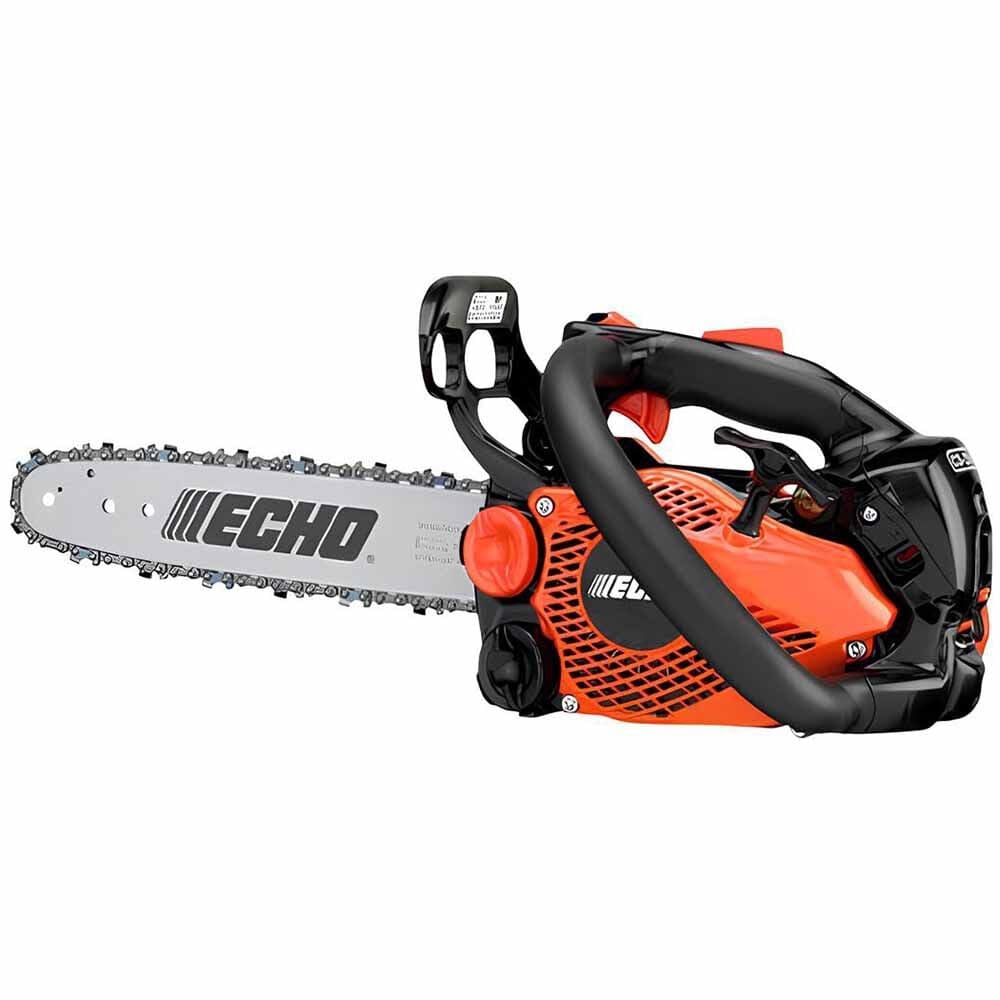
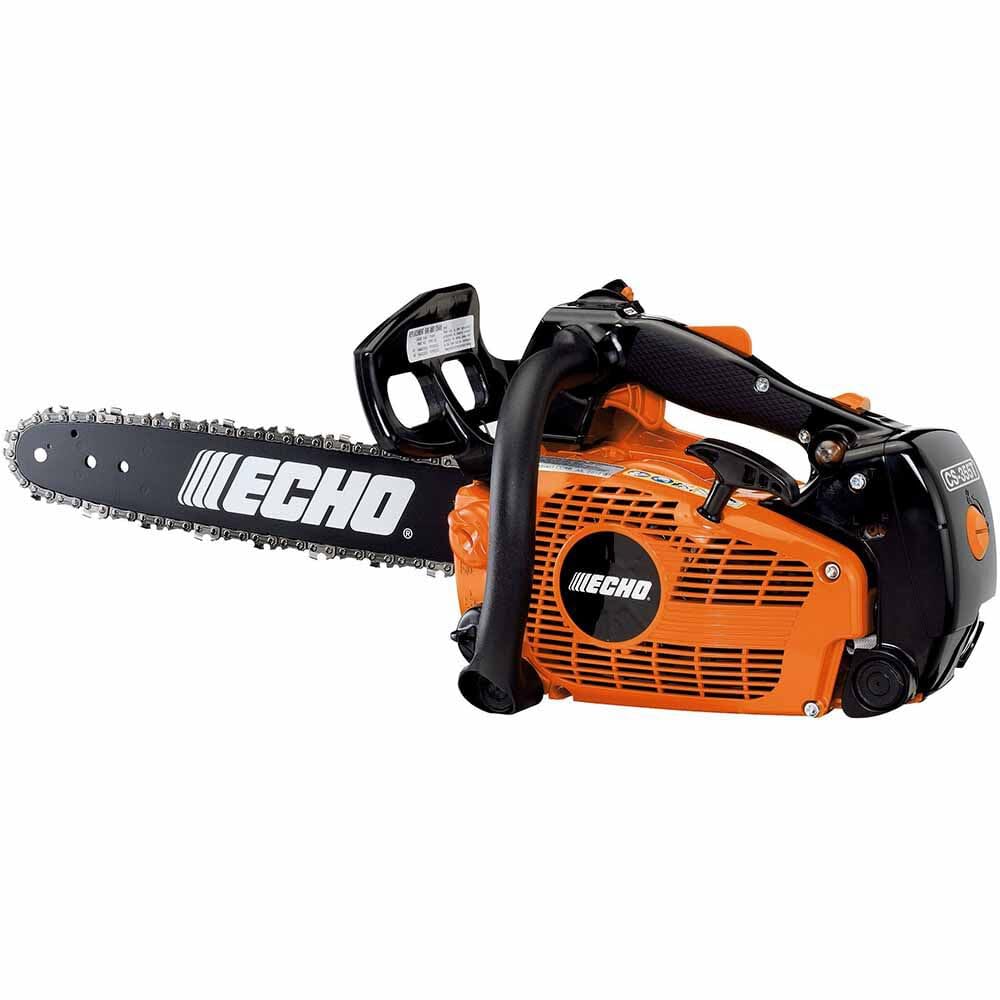
Echo CS-355T 16"

Top Pick
Echo CS-355T 16"

Professional arborists

Our Score 9.4/10
Check Price

Worth Noting

Weight
8.2 lbs
Bar Length
16 in
Power Source
Gas
Engine / Voltage
35.8cc
Read the full review

The Echo CS-355T delivers 5.3 horsepower in an 8.2-pound package — a power-to-weight ratio that sets it apart in the top handle category. This combination allows arborists to carry enough torque for heavy limbing without the fatigue of heavier saws.

Climbers find the saw easy to maneuver in tight canopy spaces, with enough torque to handle hardwood limbs up to 16 inches without bogging down. The saw starts reliably and holds a consistent idle, even after long stretches of full-throttle cutting.

Build quality feels solid and professional — the casing is rigid, the controls are damped, and the top handle inspires confidence during one-handed operation. There are no reported oil leaks or handle failures, common issues in budget alternatives.

This saw is built for professional arborists who climb daily and need a tool that balances power and weight without compromise. It is not a fit for occasional weekend pruning or budget-conscious buyers — the premium price reflects its professional-grade construction and performance.

At its price point, the CS-355T outperforms many competitors in raw cutting ability while matching them in weight. Arborists who value dependability and a strong power-to-weight ratio will find this saw a sound investment for daily climbing work.

Bottom line: One of the best power-to-weight ratios in a top handle saw, and the absence of any reported weaknesses makes it a confident choice for professionals who need a dependable climbing saw.

2

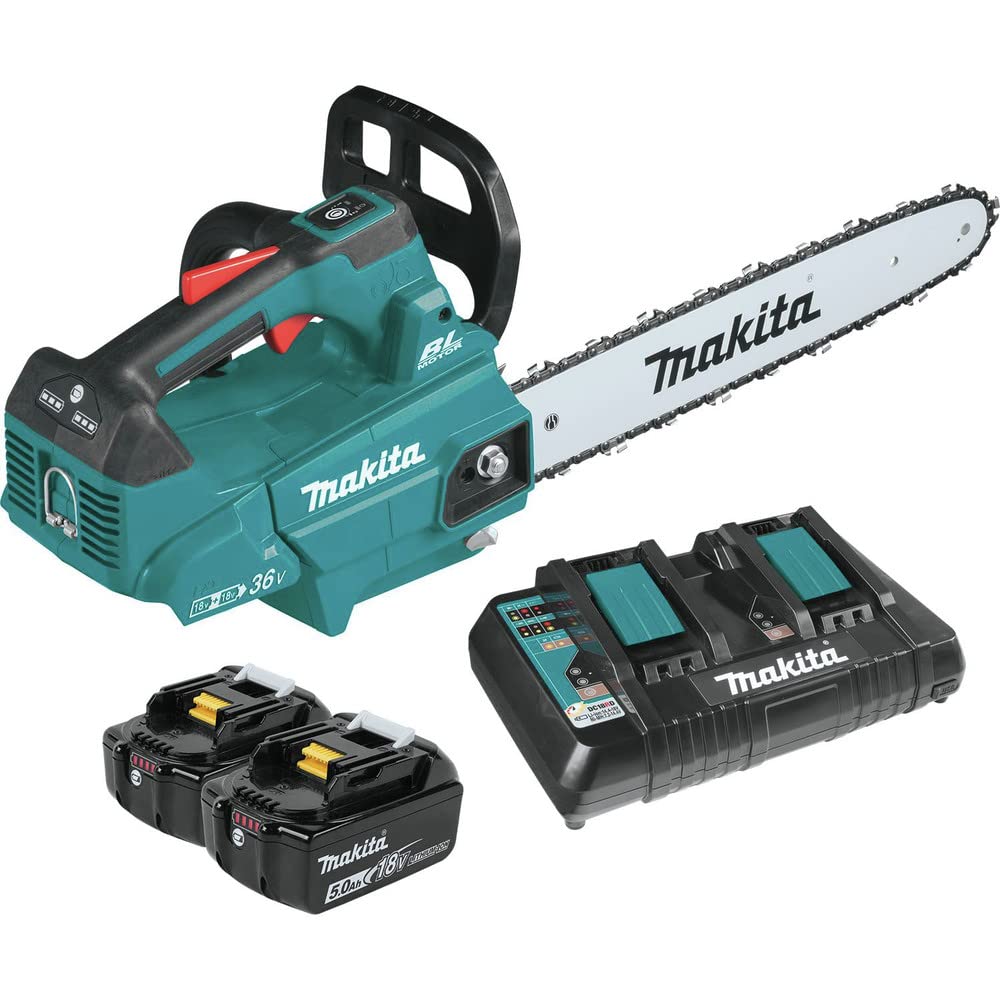
Makita XCU06Z 10"

Makita XCU06Z 10"

Homeowner pruning

Our Score 9.4/10
Check Price

Worth Noting

  • Chain sharpness can fade quickly if the bar contacts dirt during cutting.
  • Battery runtime may not hold up through dense, prolonged cutting sessions.
Weight
7.22 lbs
Bar Length
10 in
Power Source
Battery (18V)
Engine / Voltage
18V
Read the full review

Weighing just 7.22 pounds with an instant-start trigger, the Makita XCU06Z is the lightest top-handle saw in this review and the only cordless model suitable for climbing work. It delivers cutting power equivalent to a 22cc gas saw, making quick work of 3- to 4-inch branches.

The lack of gas mixing, pull-start hassle, and exhaust fumes makes it ideal for homeowners who prune a few times a season or arborists who need a quiet second saw for touch-ups. The 10-inch bar does limit cutting capacity, and battery runtime is best for moderate use, not all-day felling.

For anyone already invested in Makita's 18V battery system, this saw shares the same platform with no additional charger needed. Heavy professional work still points toward a gas saw like the Echo CS-355T, but for lightweight pruning, the XCU06Z is the battery option that makes the most sense.

Keep the chain out of soil and sand to preserve sharpness over multiple cuts.

Bottom line: For homeowners and light arborist work where quiet, lean operation matters more than unlimited runtime, the Makita XCU06Z is the top battery choice.

3

Makita XCU09PT 16"

Makita XCU09PT 16"

Ground pruning

Our Score 9.0/10
Check Price

Worth Noting

  • Chain tension can loosen during use, requiring regular checks to prevent derailment.
  • At 19.25 lbs, the saw is too heavy for one-handed climbing work; intended for ground use.
Weight
19.25 lbs
Bar Length
16 in
Power Source
Battery (36V)
Engine / Voltage
36V (2x18V)
Read the full review

The Makita XCU09PT uses two 18V batteries to produce power equivalent to a 30cc gas saw, handling limbs up to 8 inches with ease, and battery life holds up for extended cutting sessions. Build quality is solid and the saw feels professional. That said, the 19.25-lb weight is a dealbreaker for climbing — this is a ground-only tool despite its top handle design. The chain also tends to loosen, so regular tension checks are part of the routine.

Bottom line: For ground pruning and limbing where weight isn't critical, particularly for users already on Makita's 18V platform, this cordless saw offers gas-like power without the fumes.

4

Husqvarna T435 12"

Husqvarna T435 12"

Pruning and limbing

Our Score 8.8/10
Check Price

Worth Noting

  • Power output may drop in cold or high-altitude conditions, reducing cutting efficiency on dense wood.
  • Plastic oiler gear can wear prematurely in some units, requiring occasional replacement.
Weight
7.5 lbs
Bar Length
12 in
Power Source
Gas
Engine / Voltage
35.2cc
Read the full review

The Husqvarna T435 weighs only 7.5 lbs and starts quickly, making it a practical option for daily climbing and pruning. While it doesn't match the raw power of the Echo CS-355T in cold conditions, its weight and handling suit frequent branch trimming.

This saw fits arborists who need a lightweight top-handle for one-handed use in trees and medium pruning. However, in cold climates or at high altitude, power output can drop, and some units have experienced plastic oiler gear wear. For those working primarily in moderate conditions and willing to check the oiler periodically, it provides good value at a mid-range price.

The 12-inch bar and compact build make it easy to navigate tight branches. The saw's balance during one-handed cuts helps reduce fatigue on long pruning sessions.

Let the engine warm up for a minute before heavy cuts in cold weather to maintain performance.

Bottom line: For arborists working in moderate climates who prioritize weight and cost over peak power, the T435 is a capable climbing companion.

5

Holzfforma G2500

Holzfforma G2500

Budget occasional use

Our Score 8.8/10
Check Price

Worth Noting

  • Fuel and bar oil can leak from tanks, requiring careful storage on a drip tray
Weight
8.6 lbs
Bar Length
12 in
Power Source
Gas
Engine / Voltage
25.4cc
Read the full review

At roughly $100, the Holzfforma G2500 delivers surprising cutting performance for a top-handle gas saw, with straightforward starting and a compact form that suits light pruning and climbing. The tradeoff is that the fuel and bar oil tanks can seep, creating a mess that requires careful storage — best for DIYers who can keep the saw in a garage or shed on a drip tray rather than bringing it indoors.

Place the saw on a tray or absorbent mat when not in use to contain any leakage.

Bottom line: Best as an occasional-use saw for budget-conscious DIYers who can store it in a workshop where minor oil drips are manageable. Not a choice for indoor storage or daily professional climbing.

6

Echo CS-271T 12"

Echo CS-271T 12"

Brand loyalists

Our Score 8.8/10
Check Price

Worth Noting

  • Listed weight of 0.01 oz is a data error; actual weight unverified, so climbers cannot rely on spec for gear calculations.
  • Performance consistency across seasons of climbing work is not widely demonstrated, making it risky for professionals needing a predictable daily driver.
Weight
Bar Length
12 in
Power Source
Gas
Engine / Voltage
Read the full review

Solid build quality and easy starting are immediately apparent, consistent with Echo’s reputation for reliable top handle saws. However, the listed weight is a data error — actual weight is unknown — and the saw’s long-term performance in daily tree work has not been widely confirmed. This makes the CS-271T a suitable option only for buyers who trust the Echo brand and are comfortable with a less-documented model, rather than professionals who require proven reliability.

Bottom line: A viable choice for Echo loyalists who value brand consistency over a heavily documented track record.

7

Echo CS-2511T 14"

Echo CS-2511T 14"

Ultralight climbing

Our Score 8.6/10
Check Price

Worth Noting

  • Oil cap may come loose during heavy use, requiring periodic checks.
  • Oiler can stop functioning after a year of regular use, affecting chain lubrication.
  • Some units may arrive with issues that need immediate attention, such as starting or oiling problems.
Weight
5.2 lbs
Bar Length
14 in
Power Source
Gas
Engine / Voltage
25cc
Read the full review

At 5.2 lbs, the Echo CS-2511T is the lightest gas top handle saw available, making it ideal for climbers who count every ounce during long days aloft. The 25cc engine delivers 3.5 HP, sufficient for pruning and limbing, and the saw starts easily even in cold conditions. Build quality feels solid for its weight class, with a compact 14-inch bar suited for one-handed operation in tight canopy spaces.

This saw targets arborists who prioritize minimum weight over all else and accept that extreme lightness introduces some durability tradeoffs. The oil cap may loosen during operation, the oiler can stop working after extended use, and occasional units may have initial issues out of the box. For daily professional use where reliability is paramount, the Echo CS-355T offers a better power-to-reliability balance.

Check the oil cap periodically during extended cuts – it can loosen with vibration.

Bottom line: The Echo CS-2511T is purpose-built for climbers who need the absolute lightest saw and are willing to accept potential durability quirks for that weight advantage.

8

JPNTECH 12" Gas

JPNTECH 12" Gas

Budget DIY pruning

Our Score 8.4/10
Check Price

Worth Noting

  • Chain dulls relatively quickly under normal use
  • Clutch slip and chain tension issues may occur in some units
Weight
8.6 lbs
Bar Length
12 in
Power Source
Gas
Engine / Voltage
25.4cc
Read the full review

The JPNTECH 12-inch gas saw delivers impressive cutting power for its price, making it a solid option for homeowners tackling light pruning and small tree limbs. Starting is often successful on the first pull, and the lightweight design allows comfortable one-handed use. However, some units may experience clutch slip and chain tension issues, and the chain can dull faster than expected. These factors mean the saw is not suited for daily professional work but works well for budget-conscious DIYers.

Bottom line: Best for budget-conscious homeowners who need an occasional saw for light pruning and are willing to keep a close eye on chain tension and sharpness.

How to Choose

Weight

Every pound you carry overhead multiplies fatigue. A 7.5-lb saw feels manageable for an hour; an 8.5-lb saw will slow you down by midday. The trade-off is that lighter saws often use smaller engines or thinner crankcases, which can reduce torque and long-term durability.

For climbing, aim for 7.5 lbs or less if your bar is 12 inches. If you need a 16-inch bar for bigger cuts, expect weight to climb to around 8.2 lbs. That extra half-pound buys you more power and a stiffer bar, which matters when cutting hardwood all day.

Bar Length

Bar length determines what size branches you can cut in one pass. A 10-inch bar handles limbs up to 3-4 inches easily; a 16-inch bar can take on 8-inch logs but adds length that can snag in dense canopy.

The hidden trade-off: longer bars also require a more powerful engine to keep chain speed up, which usually means more weight. For climbing, a 12- or 14-inch bar is the sweet spot — long enough for most pruning, short enough to maneuver between branches.

Power Source

Gas saws dominate professional climbing because they offer full power all day with a quick refill. Battery saws are quieter, start instantly, and need no mixing, but their runtime drops in cold weather and under heavy loads.

If your sessions are under two hours and you don't mind carrying a spare battery, a battery saw works for light pruning. For all-day tree work, gas engines still provide the consistent power-to-weight ratio that climbers rely on.

Battery voltage matters too: 18V saws top out at around 4,700 FPM, while 36V models match 30cc gas engines but weigh nearly twice as much.

Engine Displacement / Voltage

Engine displacement (cc) in gas saws correlates directly with torque. A 25cc engine is adequate for small limbs; 35cc handles heavier cutting but adds about 1 lb. Battery voltage in cordless saws determines maximum chain speed and runtime.

The trade-off: higher displacement means more vibration and fuel consumption. Most arborists find 30–35cc gas engines offer the best balance of weight and cutting ability for climbing. For battery, 18V is fine for pruning; 36V gets you into limbing territory but at a weight penalty that makes climbing impractical.

Frequently Asked Questions