Garden Tools

8 Best Draw Hoe of 2026: True Flat-Blade Tools for Efficient Weeding

Which draw hoes have a true flat blade for efficient weeding and soil loosening - and which multi-purpose tools break too soon.

Walk down the garden tool aisle and you'll find plenty of 'draw hoes' that are actually combo tools - a hoe blade on one side, cultivator tines on the other. The promise of two tools in one sounds clever, but in practice the blade is often too small or poorly shaped for effective pulling, and the head-to-handle joint is a weak point that breaks under load.

A true draw hoe has a single flat paddle blade designed specifically for scraping and pulling soil. That simplicity makes it more durable and efficient for weeding and soil preparation. Our picks center on models that get this right - no extra tines to snap, no compromises in blade shape.

The difference between a dedicated draw hoe and a multi-tool is the difference between a tool that works all day and one that fails mid-season. We focused on flat-blade designs that actually pull soil and weeds, saving you from handles that unscrew and edges that dull after a few passes.

1

Bully Paddle Draw Hoe

Top Pick
Bully Paddle Draw Hoe

Weeding & soil prep

Our Score 9.4/10
Check Price

Worth Noting

  • For extended weeding sessions, the 3.2 lb weight can fatigue your arms
Weight
3.2 lbs
Blade Type
Flat paddle
Handle Specs
58 in fiberglass
Edge Sharpness
Sharp out of box
Read the full review

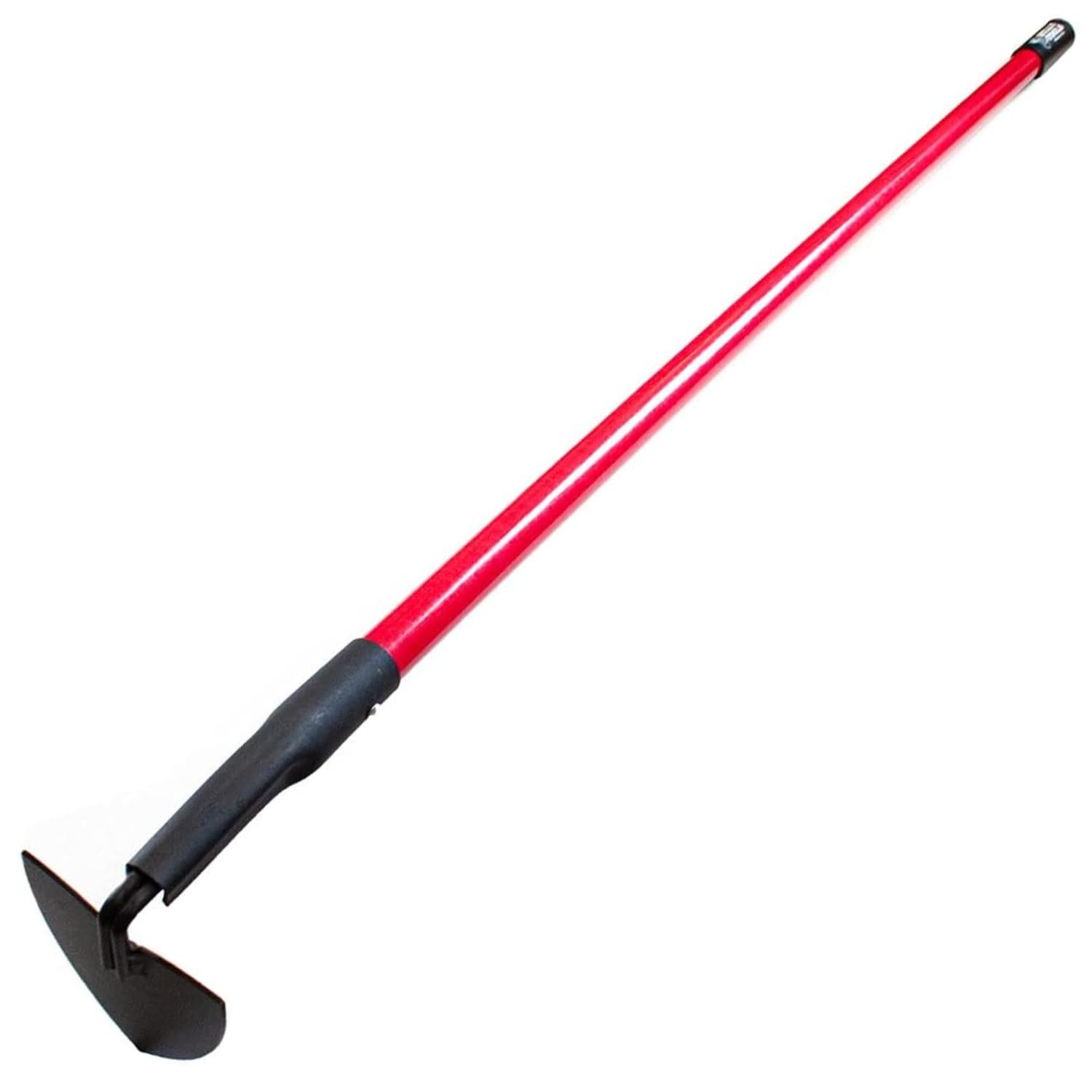
The Bully Tools 12-Gauge Garden Hoe uses a forged 12-gauge steel paddle blade that slices through soil and roots on a clean pull motion. The 58-inch fiberglass handle stays weather-resistant and comfortable in the hand, even after repeated contact with dirt and moisture.

This is a pure draw hoe, not a multi-tool compromise, aimed at gardeners who value long-term durability over a feather-light tool. At 3.2 pounds it will cause arm fatigue during extended sessions, especially for smaller-framed users, but the tradeoff is a blade that won't bend or dull quickly on rocky or compacted soil.

During long sessions, alternate hands or take short breaks to manage the weight – the durable blade will make the work itself quicker.

Bottom line: This is the draw hoe to buy if you want a tool that will last for years of heavy weeding and soil prep, and you're willing to accept a bit of extra weight in exchange for that durability.

2

Rogue 7" Field Hoe

Rogue 7" Field Hoe

Large plots, clay

Our Score 9.2/10
Check Price

Worth Noting

  • Over 4 lbs can cause arm fatigue during long sessions in soft soil where less force is needed.
  • Premium price may be too high for casual or small-space gardeners.
Weight
4.09 lbs
Blade Type
Wide paddle (7 in)
Handle Specs
Long handle (standard)
Edge Sharpness
Very sharp
Read the full review

The Rogue Hoe’s recycled disc blade outperforms standard forged steel in rocky soil — it holds its edge longer and resists chipping. The extra weight (over 4 lbs) drives through hard clay with each swing, reducing the effort to chop and pry.

This tool suits professional landscapers and serious homesteaders with large gardens or heavy soil. The weight and premium price limit it to those who need maximum durability rather than portability or budget savings.

Short chopping strokes leverage the weight best — let the blade do the work rather than muscle it.

Bottom line: If your garden is large and your soil is tough, the Rogue Hoe’s durability offsets the extra weight and cost — it’s a tool built for decades, not seasons.

3

Bully Warren Hoe

Bully Warren Hoe

Precision weeding, digging

Our Score 9.2/10
Check Price

Worth Noting

  • Heavier design may lead to fatigue during long sessions for smaller gardeners.
Weight
Blade Type
Warren (pointed)
Handle Specs
60 in fiberglass
Edge Sharpness
May need sharpening
Read the full review

This warren hoe combines a sturdy pointed blade for precise weeding and furrow digging with a fiberglass handle that won't rot or splinter. It is heavier than the top pick paddle version and may need edge sharpening out of the box, but for gardeners who prefer a pointed tip and want American-made durability at a mid-range price, it offers a professional build that lasts.

Bottom line: Best for gardeners who want a pointed hoe for precision work and value USA-made construction, even with a bit more weight and possible initial sharpening.

4

Edward Hand Hoe

Edward Hand Hoe

Small flower beds

Our Score 9.0/10
Check Price

Worth Noting

  • Blade arrives unsharpened and may need significant effort to bring to working condition.
  • Narrow blade (3 inches) limits soil turnover
Weight
1 lb
Blade Type
Narrow paddle
Handle Specs
Rubber ergonomic
Edge Sharpness
Needs sharpening
Read the full review

The Edward Hand Hoe delivers a solid carbon steel blade at a budget price, making it a practical option for tight spaces like small flower beds or raised planters. Its lightweight build and rubber grip reduce hand fatigue during precision weeding sessions. However, the blade typically arrives dull — owners should expect to hone the edge before the tool works as intended.

This hand hoe suits gardeners who are comfortable with basic tool maintenance and need an affordable companion for spot weeding rather than large-scale soil turnover. The narrow 3-inch blade excels in tight rows but limits efficiency when working broader beds.

Run a fine file along the blade edge before your first session — the factory coating is durable but leaves the cutting bevel too thick.

Bottom line: For precise weeding in small areas and a willingness to sharpen, this is a capable budget hand hoe — but skip it if you want out-of-box readiness.

5

WORKPRO 2-in-1 Hand Hoe

WORKPRO 2-in-1 Hand Hoe

Raised beds, containers

Our Score 9.0/10
Check Price

Worth Noting

  • Compact head size means slower progress on anything larger than a 2x4-foot bed.
  • Head attachment can loosen or separate in some units
Weight
1 lb
Blade Type
Hoe blade
Handle Specs
14 in wood
Edge Sharpness
Read the full review

The WORKPRO 2-in-1 combines a sharp hoe blade and a three-claw tiller in a 14-inch wooden-handled package. Its solid construction handles light weeding and soil loosening in small beds without flexing — a genuine dual purpose for tight spaces.

This tool suits container gardeners and raised bed owners who work kneeling and need quick swaps between cutting weeds and breaking clods. The small head size (14-inch handle, narrow blade) limits ground coverage, so it’s less efficient for garden rows or open plots. Some units have shown head separation under heavier use — check the attachment periodically.

Periodically tighten the screw connecting the head to the handle — a drop of thread-locker helps.

Bottom line: A capable budget companion for raised bed and container work, provided you don’t need to cover larger areas and you keep an eye on the head joint.

6

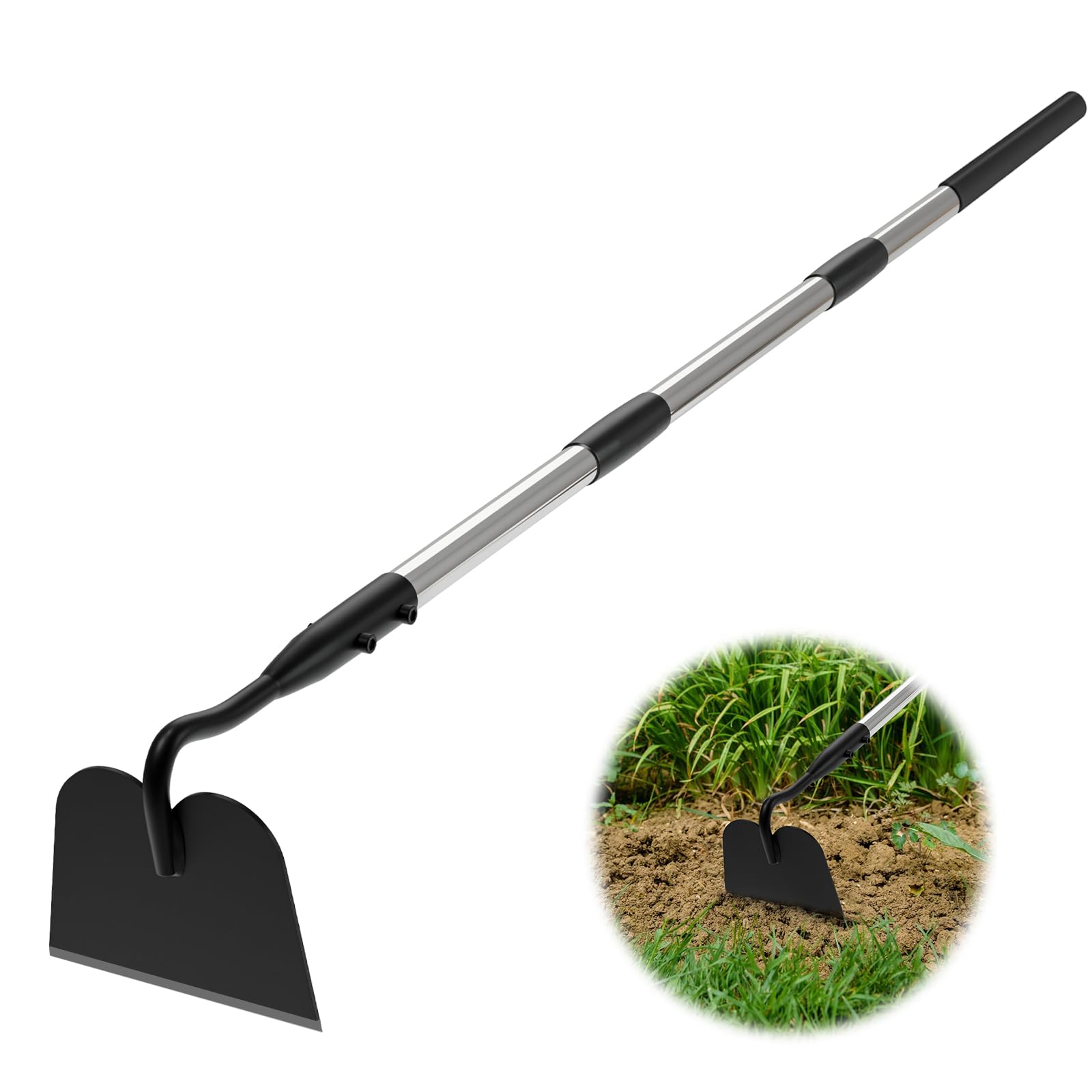
YEELOR Adjustable Warren Hoe

YEELOR Adjustable Warren Hoe

Standing weeding budget

Our Score 8.8/10
Check Price

Worth Noting

  • Blade arrives with a factory edge that may need sharpening for optimal cutting
Weight
1.9 lbs
Blade Type
Warren (pointed)
Handle Specs
57 in adjustable steel
Edge Sharpness
Needs sharpening
Read the full review

The 57-inch adjustable handle lets you weed standing up without bending, and the carbon steel blade handles light to moderate soil loosening. Standing upright while weeding reduces back strain – a real benefit for larger gardens. The three-section handle can loosen during use, so you'll need to check and retighten periodically. Best for gardeners on a budget who share tools with multiple heights and don't mind a little maintenance. Unlike the top pick's one-piece fiberglass handle, the YEELOR's screw-together design introduces a maintenance step at a significantly lower price.

Bottom line: A budget-friendly long-handled hoe that trades all-in-one convenience for adjustability and lower cost.

7

MANXRKUI Draw Hoe

MANXRKUI Draw Hoe

Large area weeding

Our Score 8.8/10
Check Price

Worth Noting

  • Blade can arrive dull and will need sharpening for effective cutting
Weight
Blade Type
Large paddle
Handle Specs
66 in adjustable steel
Edge Sharpness
Needs sharpening
Read the full review

The MANXRKUI Draw Hoe covers ground quickly with its wide paddle blade, and the adjustable handle reduces back strain. However, the blade arrives dull – plan on sharpening. Left-handed users may experience handle unscrewing, making this best for righties comfortable with tool adjustment.

Bottom line: For right-handed gardeners willing to sharpen the blade, this hoe covers large areas at a budget-friendly price.

8

Corona GT 3060 Telescoping Hoe

Corona GT 3060 Telescoping Hoe

Raised beds

Our Score 8.8/10
Check Price

Worth Noting

  • Handle even at full extension forces bending when standing
Weight
1.5 lbs
Blade Type
Hoe blade
Handle Specs
18-32 in aluminum telescoping
Edge Sharpness
Read the full review

The telescoping handle offers a compact 18-32 inch range, making this hoe easy to transport and use in raised beds. Its lightweight design reduces fatigue during light weeding sessions. However, the tines or hoe head may detach under heavy stress, limiting this hoe to soft, loose dirt.

Bottom line: A sensible option for gardeners who work on their knees or use raised beds, as long as the soil is soft and the work is light.

How to Choose

Blade Shape

Flat paddle blades are the classic draw hoe design: a straight, wide edge that catches soil and weeds when pulled. Warren (pointed) blades work better for digging furrows and prying out deep taproots but leave a narrower scrape. Triangle blades cover more ground per stroke but can be less effective on compacted soil.

The blade shape directly affects how much soil you move per pull. A 6-inch flat paddle will clear a row in fewer passes than a 3-inch pointed warren. If your primary task is surface weeding and soil loosening, a flat paddle is the most efficient choice.

Handle Specs

Handle length dictates your posture. For standing work, a 50-60 inch handle allows an upright stance without bending. Hand hoes with 12-15 inch handles force you to kneel or bend over. For large vegetable beds, a long handle saves your back. For raised beds and container gardening, a short hand hoe is often more maneuverable.

Material matters too. Fiberglass handles are weather-resistant and don't splinter like wood. Steel handles are strong but can be cold in winter and heavy. Wood handles are traditional but require maintenance to prevent rot. Choose fiberglass for longevity and comfort.

Head Connection

The joint between blade and handle is the most stressed part of a draw hoe. Welded steel sockets are the strongest and most durable - they hold up under repeated hard pulls. Bolted or riveted connections are next best, but can loosen over time. Screw-together or friction-fit heads are prone to snapping or unscrewing during use, especially under torque.

If you work in rocky or compacted soil, look for a full tang or heavy welded socket. Avoid models where the head is simply pressed onto the handle - those often fail on the first serious use.

Weight

Heavier hoes (over 3 lbs) use momentum to break up hard soil and chop through thick weeds. The extra mass reduces the force you need to exert, but it fatigues your arms during long sessions. Lighter hoes (under 2 lbs) are easier to maneuver and better for precision work, but they require more effort to penetrate compacted ground.

For heavy clay or large areas, a 4 lb hoe like the Rogue can save energy. For flower beds and light weeding, a 1 lb hand hoe is plenty. Consider your soil type and the duration of your work sessions.

Edge Sharpness

A sharp blade is essential for clean cutting. Many budget models arrive with a dull edge because manufacturers skip final grinding. A dull blade tears weeds rather than slicing them, making the pull harder and leaving roots behind. Plan to sharpen any budget hoe with a flat file before first use.

Steel quality affects how often you need to resharpen. High-carbon steel holds an edge longer than mild steel, but it can rust if not dried. Stainless steel resists rust but is harder to sharpen. For most gardeners, a quick pass with a file once per season is enough to keep the blade working well.

Frequently Asked Questions