Poultry & Livestock

12 Best Egg Incubator of 2026: Reliable Models That Hatch Without the Hassle

Which egg incubators actually hold steady temperature and turn eggs reliably? Find the best picks for home hatching without humidity headaches.

Egg incubators under $70 often promise automatic turning and humidity control, but many owners end up battling a 10-20% humidity offset or a turner that stops working after two hatches. The result is wasted eggs and frustration, not the satisfaction of a healthy brood.

Yet a handful of models - including a $43 unit that outperforms triple-priced competitors - prove that reliable incubation doesn't require a premium budget. This guide separates the machines that hold their temp and turn eggs consistently from the ones that demand constant tinkering.

If you're hatching chicks for a small farm, classroom, or backyard coop, the right choice depends on how often you hatch, how many eggs you need, and whether you're willing to babysit humidity. These picks match your situation.

1

CluckRun 12 Egg Incubator

Top Pick
CluckRun 12 Egg Incubator

First-time hatchers

Our Score 9.2/10
Check Price

Worth Noting

  • In humid or very dry rooms, humidity may require manual tweaks to stay on target
  • Temperature can drift slightly in drafty locations, though hatch rates remain strong
Capacity
12 eggs
Humidity Control
Dual external water bottles
Read the full review

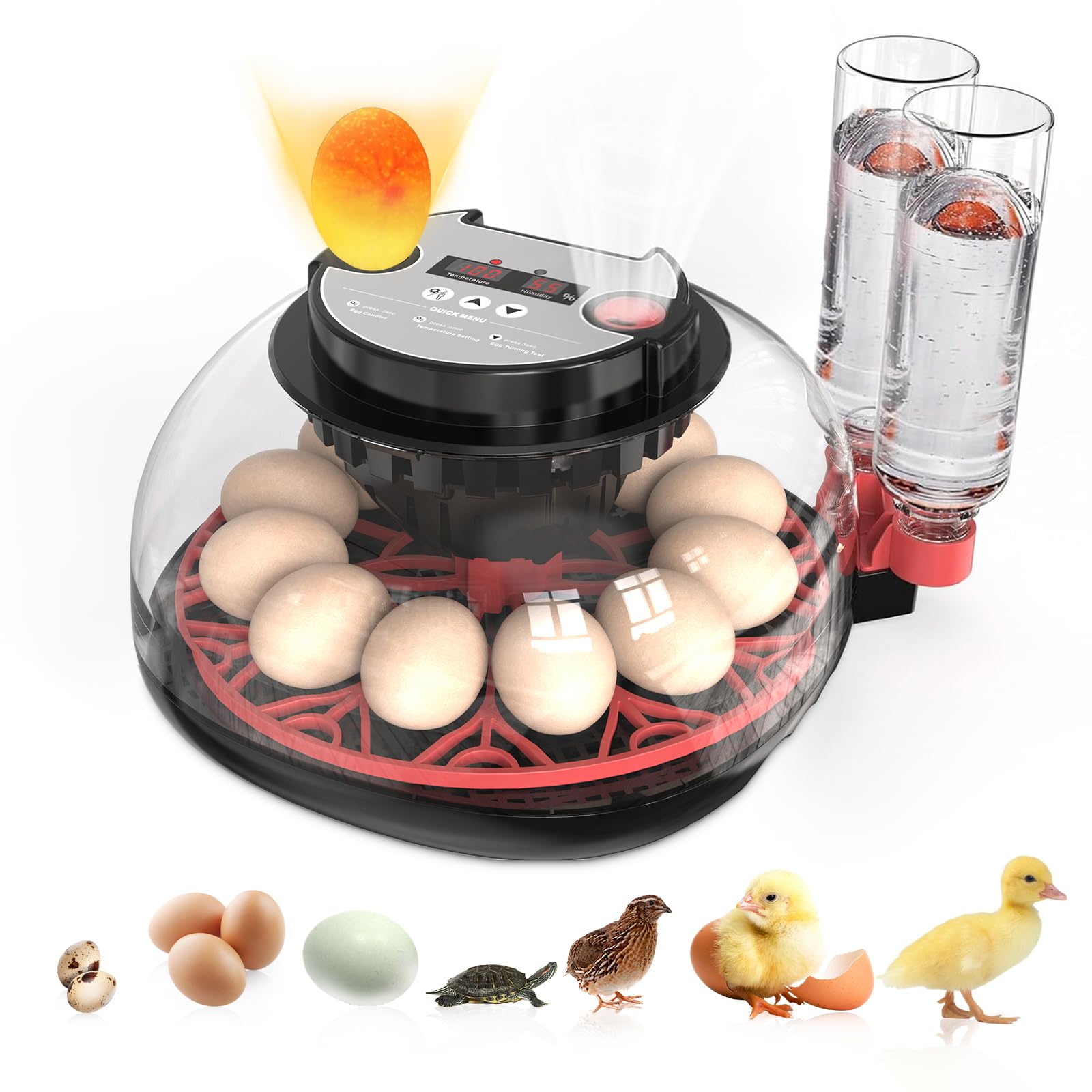
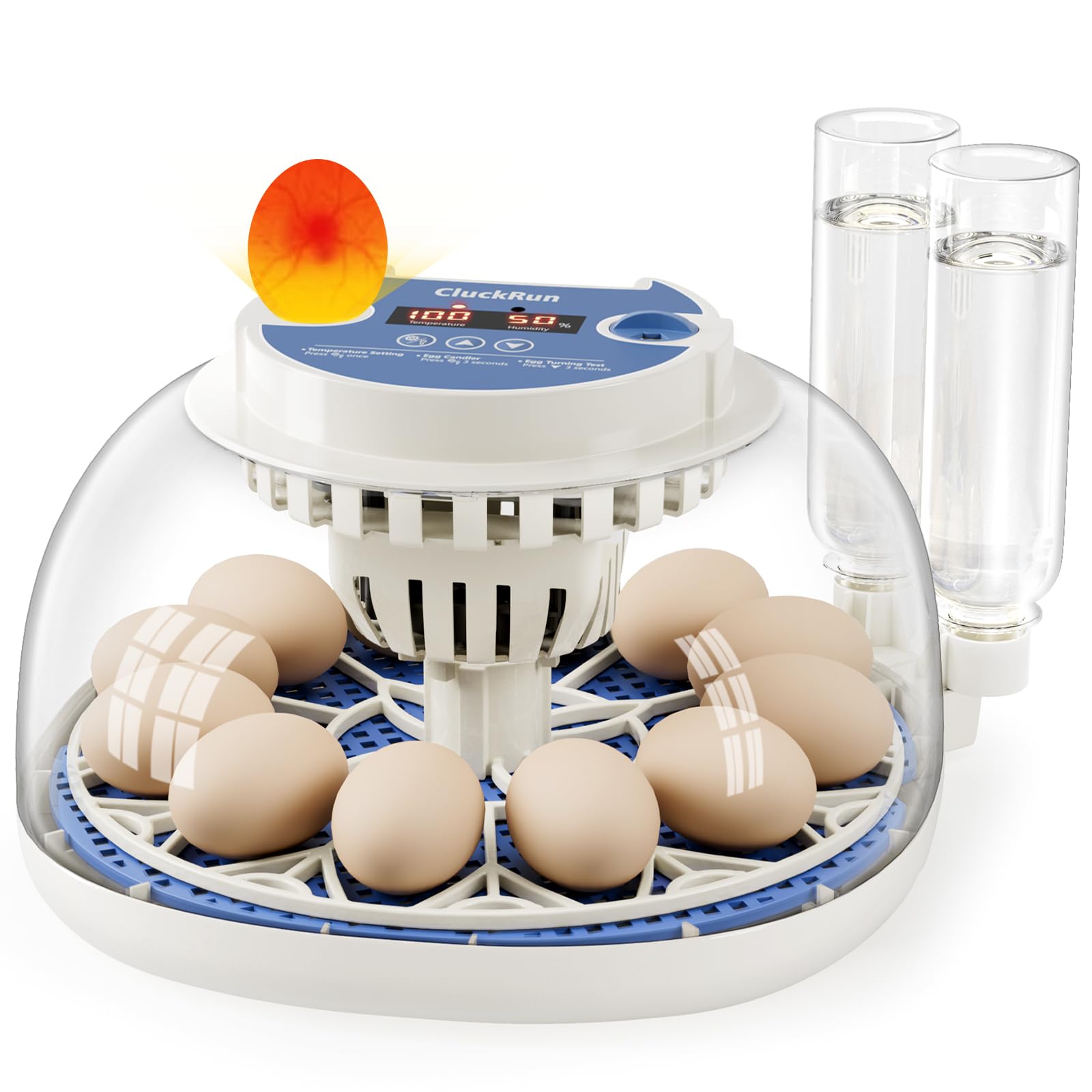
The CluckRun 12 Egg Incubator is built with a solidity that belies its budget price. Setup takes minutes, the auto-turner works reliably, and the built-in LED candler makes checking development simple. Hatch rates are consistently high with viable eggs, and the dual external water bottles help maintain humidity more steadily than many competing units.

This incubator is best for first-time hatchers, classroom projects, or small-scale home use. Humidity may need occasional adjustment — a few users note minor fluctuations, typical for this price bracket. The compact size fits a standard desk or counter, and the clear lid allows easy observation without disturbing the eggs.

Check humidity readings during the first 24 hours; adjusting the water bottles is quick and keeps conditions stable.

Bottom line: For under $45, this incubator delivers features and hatch performance that cost twice as much — ideal for anyone starting out or running small hatches.
2

Sailnovo 70 Egg Incubator

Sailnovo 70 Egg Incubator

Large capacity

Our Score 9.2/10
Check Price

Worth Noting

  • Without sufficient owner feedback, performance and durability are a gamble.
Capacity
70 eggs
Humidity Control
Auto humidification with external bottle
Read the full review

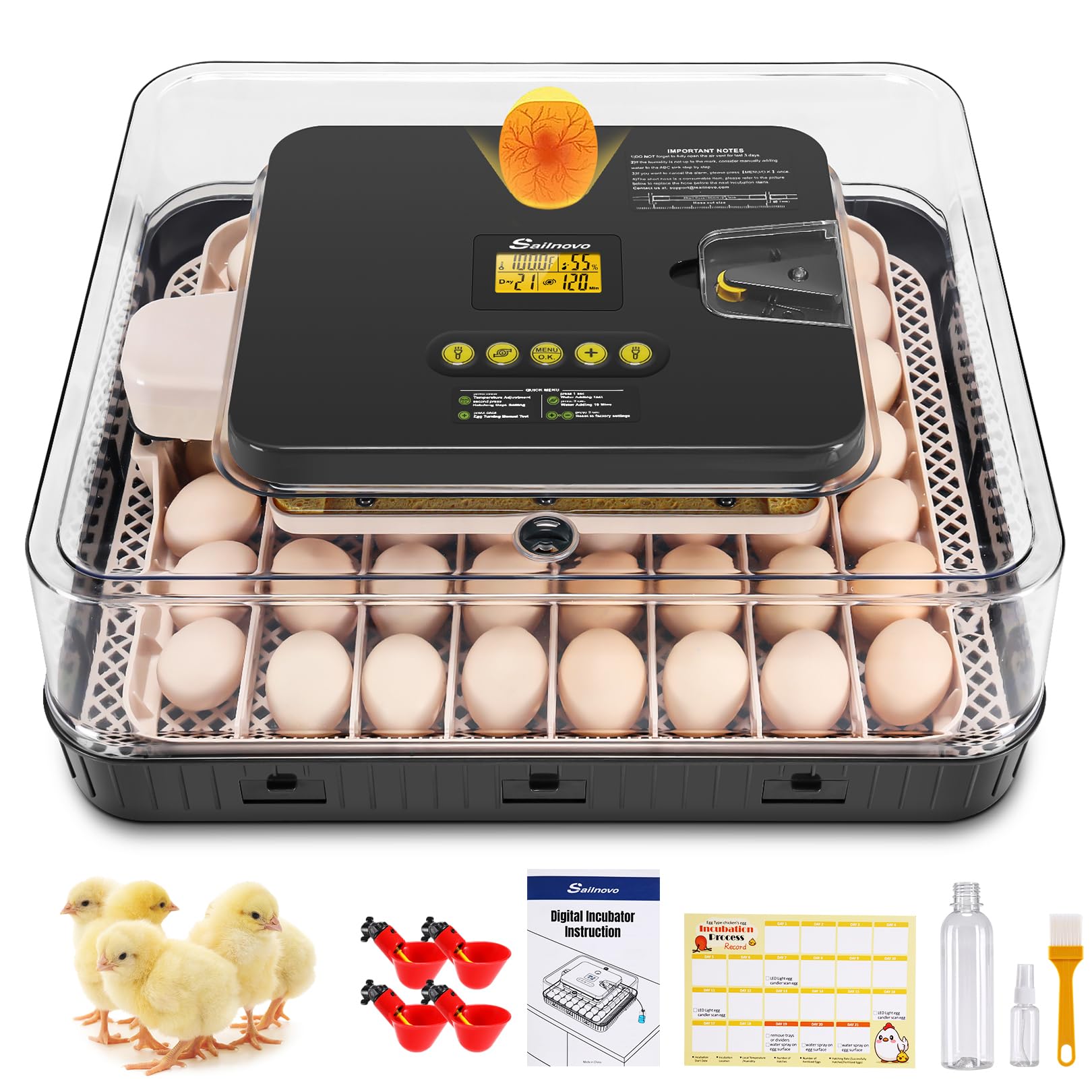
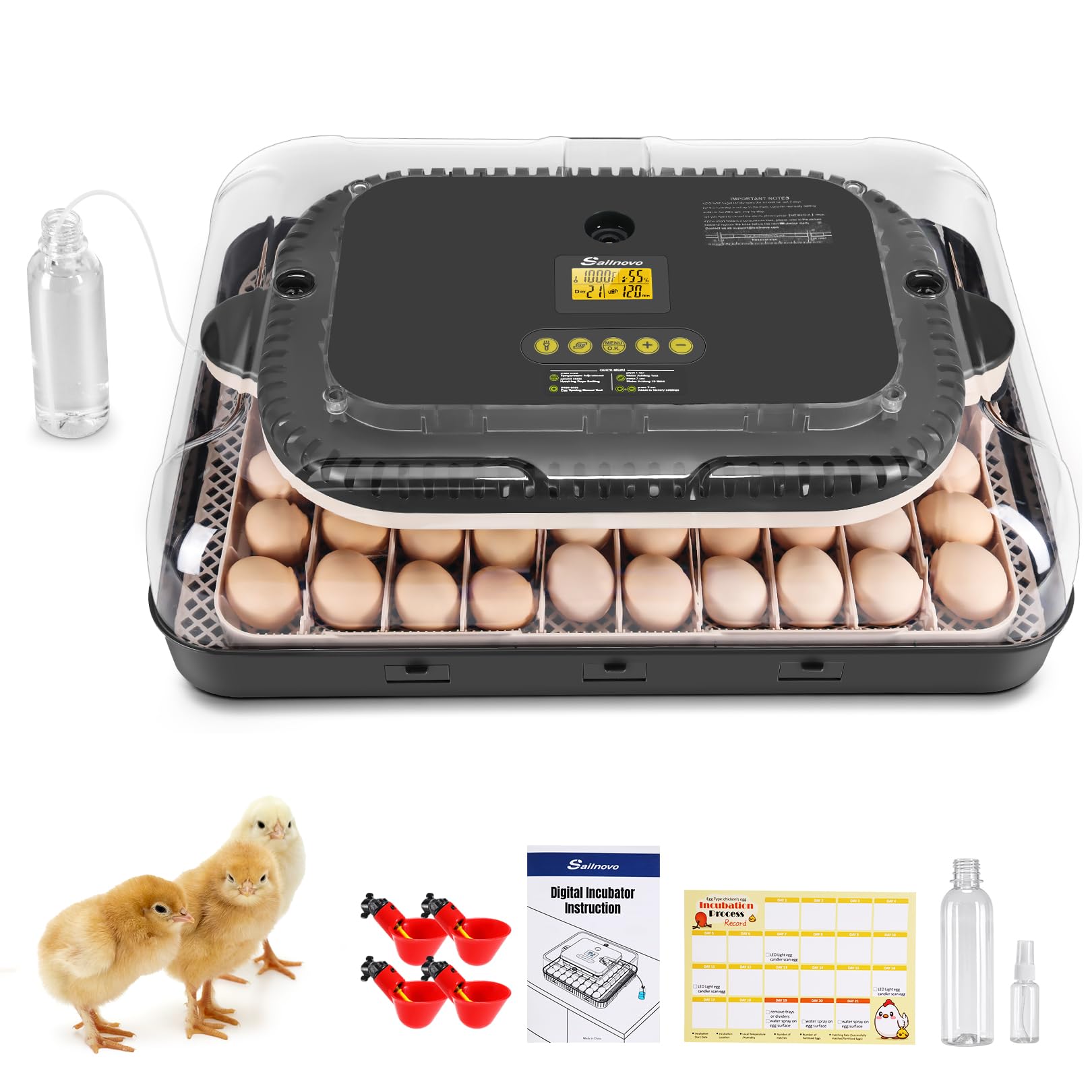
This Sailnovo holds up to 70 eggs with auto turning and a built-in LED candler, plus auto humidification from an external bottle. It's the biggest unit in our roundup, suited for volume hatchers. The catch: without verified feedback from owners, it's hard to know if the specs translate to consistent hatch rates. If you prefer a known quantity, the Sailnovo 56-egg model has enough data to evaluate.

Bottom line: Consider this only if you need maximum capacity and are willing to test an unverified design. For peace of mind, the Sailnovo 56-egg incubator is a safer bet.

3

Brinsea Mini II Advance

Brinsea Mini II Advance

Precision small-batch

Our Score 9.0/10
Check Price

Worth Noting

  • Premium pricing per egg slot compared to larger incubators
  • Only holds 7 chicken eggs, limiting batch size
Capacity
7 eggs
Humidity Control
External water top-up, no sensor
Read the full review

The Brinsea Mini II Advance sets a benchmark for small-batch incubation with dual safety alarms, a three-year warranty, and consistent temperature control. Its durable construction and intuitive controls make it a low-fuss option for hobbyists or classrooms that hatch a few eggs at a time. The tiny 7-egg limit and lack of built-in humidity measurement mean it suits focused, high-value hatches rather than volume production.

Plan to buy a separate hygrometer to monitor humidity – the unit relies on external water top-up without built-in measurement.

Bottom line: This incubator suits the hobbyist who values consistency and build quality over volume, and who is comfortable with small batches and the added step of a separate hygrometer.

4

TRIOCOTTAGE 12 Egg Incubator

TRIOCOTTAGE 12 Egg Incubator

Budget beginners

Our Score 8.8/10
Check Price

Worth Noting

  • Built-in candler is dim
  • Humidity control can be inaccurate; extra monitoring may be needed
Capacity
12 eggs
Humidity Control
Vent and water surface adjustment
Read the full review

Under $40 with automatic egg turning and a humidity display, this unit gets the basics right for a small hatch. The built-in candler is dim against darker eggs, and the humidity readings may drift — conditions that matter less for chicken eggs than for specialty waterfowl. It suits the beginner who wants a low-cost way to learn incubation without investing in a pricier model like the budget champion that offers steadier humidity management.

A separate flashlight works better for checking egg development.

Bottom line: A functional entry point for curious beginners on a tight budget — just keep a separate hygrometer and flashlight handy.

5

Chickcozy 25 Egg Incubator

Chickcozy 25 Egg Incubator

Mid-size hobbyists

Our Score 8.8/10
Check Price

Worth Noting

  • Temperature and humidity sensors may read inaccurately, requiring verification with external devices.
Capacity
25 eggs
Humidity Control
Dual watering zones, pull-out tray
Read the full review

The Chickcozy 25 Egg Incubator stands out among mid-size units for its thoughtful physical design: an anti-slip mat, protective wall around the viewing window, and a pull-out water tray that simplifies cleaning. Hatch rates are consistently high across multiple batches. However, the built-in temperature and humidity sensors may read off by a degree or two – users should verify with an external thermometer and hygrometer, especially for valuable hatches. This incubator is best for hobbyists who appreciate convenience features and are comfortable performing minor calibration checks. For those wanting absolute out-of-box accuracy, a smaller, more precise unit like the Brinsea may be a better fit.

Keep a separate thermometer and hygrometer handy; check readings before setting eggs.

Bottom line: If you value easy cleaning and a stable design over precision sensors, this incubator delivers high hatch rates with minor setup calibration.

6

KEBONNIXS 12 Egg Incubator

KEBONNIXS 12 Egg Incubator

First-time hatchers

Our Score 8.8/10
Check Price

Worth Noting

  • Egg turner may need replacement after several hatches.
Capacity
12 eggs
Humidity Control
Digital display, external fill
Read the full review

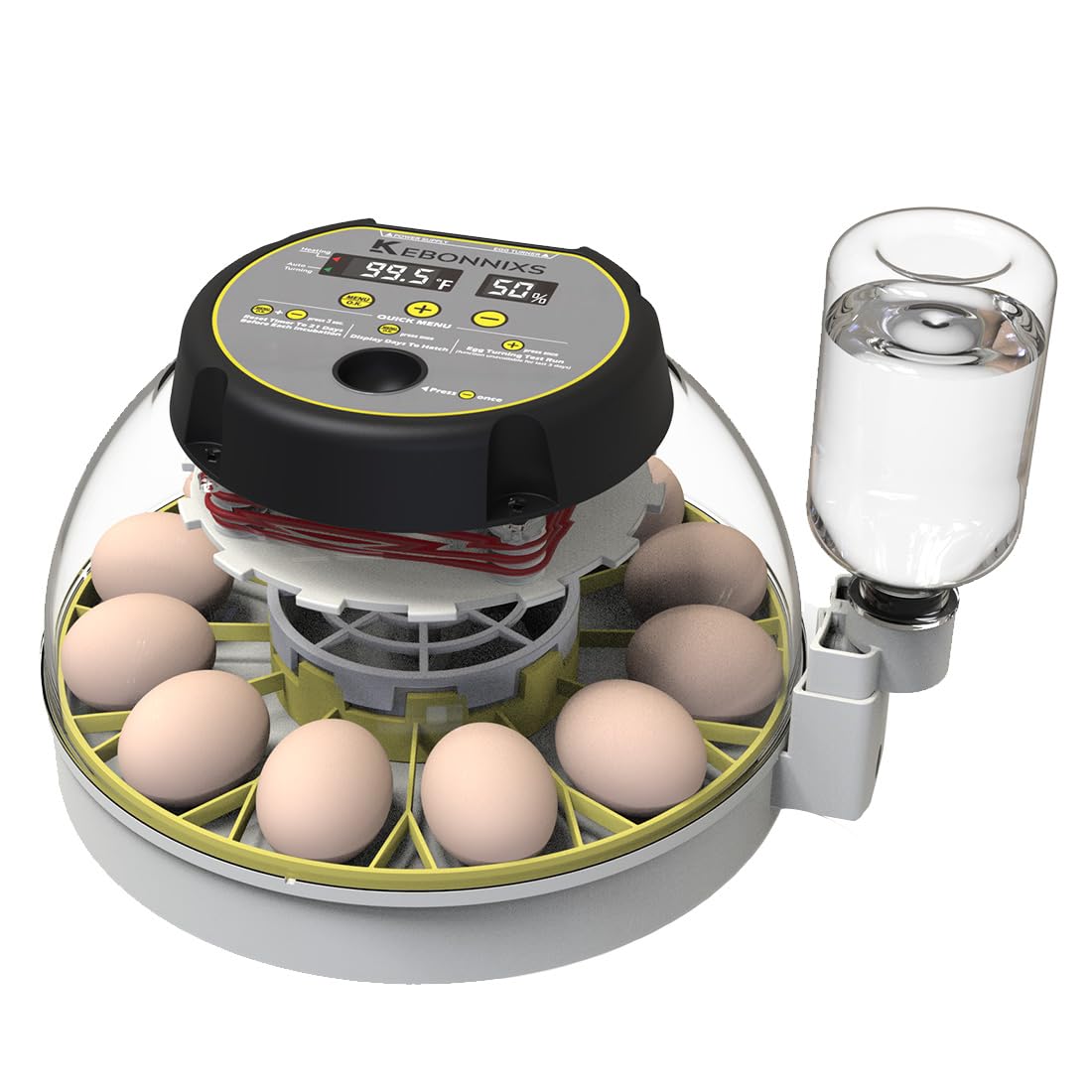
The KEBONNIXS incubator delivers an easy setup and built-in candler that suits first-time hatchers and small classroom projects. However, the egg turner may need replacement after several hatches, and humidity requires frequent adjustment — a better fit for a single batch than repeated seasonal use.

Bottom line: Best for a single hatch or classroom demonstration where simplicity matters more than long-term durability.

7

QVKHPCL 12 Egg Incubator

QVKHPCL 12 Egg Incubator

Budget buyers

Our Score 8.8/10
Check Price

Worth Noting

  • Humidity levels may require periodic adjustment to stay in target range.
Capacity
12 eggs
Humidity Control
Dual 500ml tanks, auto
Read the full review

For budget buyers, this incubator delivers consistent hatching results and a straightforward setup. Humidity levels can drift from the target, and temperature stability is acceptable but not precision-grade — manageable if you monitor with a separate hygrometer. Its low price suits home hatcheries well, though users who need tighter environmental control will want a more consistent unit.

Bottom line: A budget-friendly pick for first-time hatchers or small projects where occasional humidity adjustment is acceptable.

8

MATICOOPX 30 Egg Incubator

MATICOOPX 30 Egg Incubator

Medium capacity hobbyists

Our Score 8.8/10
Check Price

Worth Noting

  • The auto-turner may become inoperable after one or two hatches.
Capacity
30 eggs
Humidity Control
External refill, digital display
Read the full review

This 30-egg incubator delivers high hatch rates and intuitive controls at a mid-range price. Its auto-turner, however, can become inoperable after limited use, so it's best for single hatches or hobbyists ready to manage turner issues.

Bottom line: Best for a single hatch or for hobbyists who can address turner issues, rather than for repeated long-term use.

9

Sailnovo 56 Egg Incubator

Sailnovo 56 Egg Incubator

Large operations

Our Score 8.6/10
Check Price

Worth Noting

  • Fan and turner noise may be too loud for indoor living areas
  • Some units have functional defects out of the box
Capacity
56 eggs
Humidity Control
Auto humidification with external
Read the full review

For large-scale hatching, this incubator delivers decent hatch rates and includes auto humidification — a useful feature at this capacity. However, the noise from the fan and turner can be intrusive in quiet living spaces, and some units arrive with functional defects like faulty heaters or egg turners. This unit is best placed in a garage or outbuilding, making it a practical choice for farms or hobbyists who need 50+ eggs hatched at once and can tolerate the tradeoffs.

Set up in a garage or utility room — the noise is noticeable in quiet indoor spaces.

Bottom line: Works well for high-volume hatching when placed in a non-living space, but inspect the unit immediately upon arrival.

10

Onsju 18 Egg Incubator

Onsju 18 Egg Incubator

Early adopters

Our Score 8.6/10
Check Price

Worth Noting

  • Hatch rates and reliability are unconfirmed
Capacity
18 eggs
Humidity Control
Auto-regulated water system
Read the full review

The Onsju 18 Egg Incubator includes auto egg turning, customizable intervals, and auto humidity control at the lowest price for its capacity. However, because no user feedback is available, its actual hatch rates and reliability are uncertain. This unit suits early adopters willing to test and validate its capabilities before trusting it for valuable eggs.

Bottom line: Best suited for early adopters who want to test a feature-rich budget incubator without relying on prior user experience.

11

APDOE 12 Egg Incubator

APDOE 12 Egg Incubator

Budget beginners

Our Score 8.4/10
Check Price

Worth Noting

  • Humidity readings can be inconsistent; some users need to adjust water bottles and trays to keep levels stable
Capacity
12 eggs
Humidity Control
AB trays + dual external bottles
Read the full review

The APDOE 12 Egg Incubator offers high build quality and simple operation at a budget-friendly price, making it a popular entry-level choice. Where it falls short of the top pick is humidity control: the built-in system can give inconsistent readings, so you may need to tweak water levels manually to maintain target humidity. This tradeoff is manageable for casual or classroom hatches, but if consistent humidity is a priority, consider spending a bit more on a model with better regulation.

Bottom line: Best for budget-conscious beginners or classroom projects where minor humidity adjustments are acceptable.

12

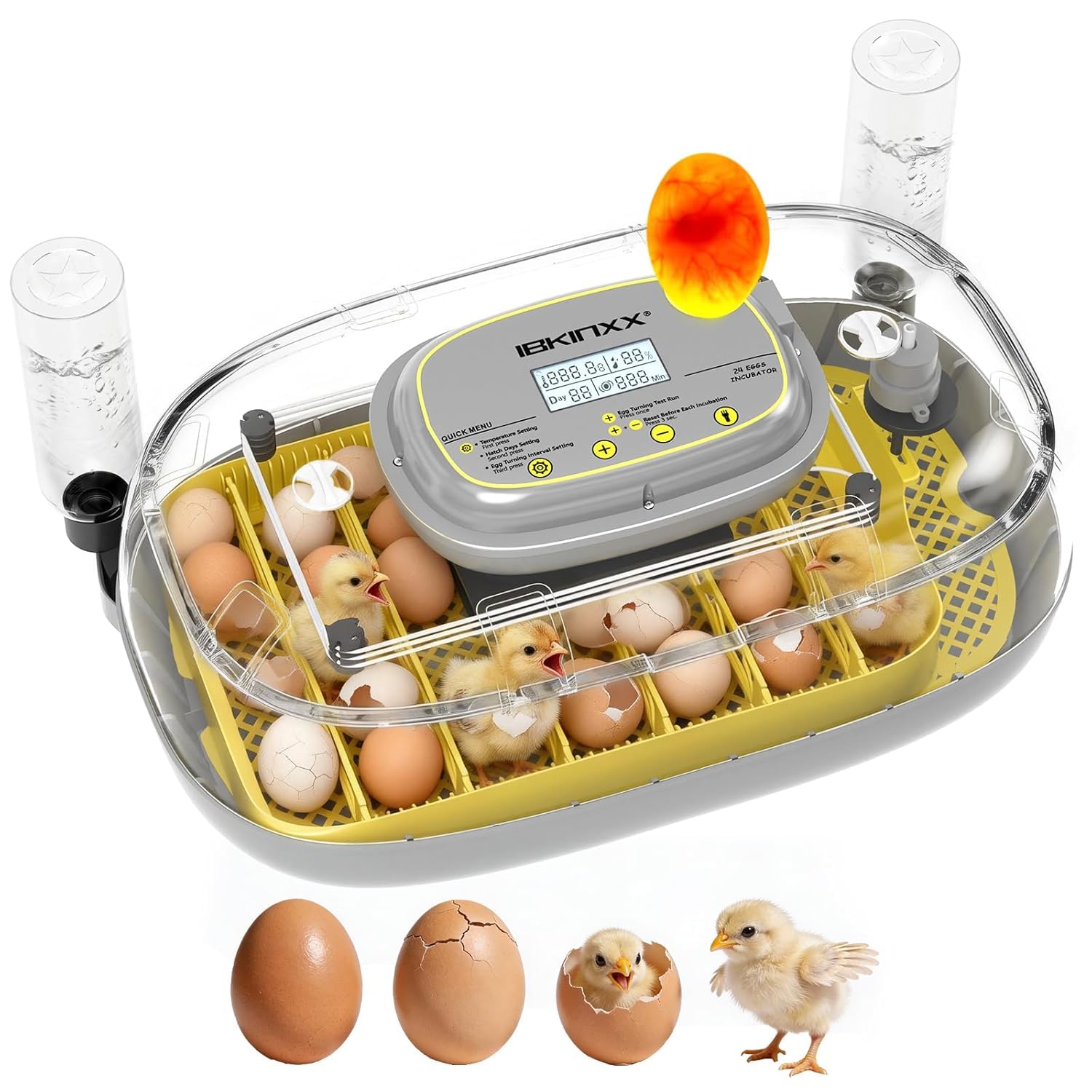
IBKINXX 24 Egg Incubator

IBKINXX 24 Egg Incubator

Capacity-focused users

Our Score 8.4/10
Check Price

Worth Noting

  • Egg turner may not rotate consistently, requiring manual intervention
Capacity
24 eggs
Humidity Control
Built-in sensor, water bottles
Read the full review

For the price, this unit delivers good hatch rates and is simple to operate. The 24-egg capacity fits medium-scale hatches. However, the automatic turner can stop rotating mid-cycle, so a backup manual turning plan is essential. Humidity also needs frequent checking — not a set-and-forget model.

Bottom line: Best suited for users willing to manually turn eggs or modify the turner — the capacity and ease of use are worth the trade-off for hands-on hatchers.

How to Choose

Capacity

How many eggs you can hatch per batch depends on the incubator's capacity, but that number often refers to chicken eggs. Duck, goose, or quail eggs take different space, so a 12-egg unit may hold only 6 duck eggs or up to 24 quail eggs. Check the insert configuration.

If you plan to hatch multiple batches quickly, capacity determines how often you run the machine. A 30-egg unit lets you set a full brooder once every few weeks, while a 12-egg unit may need two back-to-back runs for the same output. But larger units are harder to stabilize temperature and humidity across the entire tray.

Humidity Control Method

Most budget incubators rely on a water pan or external bottle — you add water through a port and the display shows a reading. The catch: the built-in sensor is often off by 10-20% relative humidity, especially during the last three days of lockdown when humidity needs to jump. You may need a separate hygrometer to verify.

Units with dual water bottles or adjustable venting let you fine-tune, but none under $70 regulate humidity automatically in a set-and-forget way. If you hatch weekly, consider a model with a larger reservoir or auto-refill to reduce daily checks.

Automatic Egg Turner Reliability

Egg turners are the most common failure point across all price tiers. Motors burn out, gears slip, or the mechanism stops rotating after two or three hatches. This matters because eggs that aren't turned during the first 18 days stick to the shell membrane and fail to hatch.

Look for incubators where the turner can be easily removed or replaced, or where manual turning is possible as a fallback. Some designs with side-to-side rocking are less prone to mechanical jam than roller-based systems. If durability is your priority, a model with a metal drive gear and user-replaceable motor will outlast plastic gearboxes.

Temperature Stability

A difference of just 1-2 degrees Fahrenheit can shift hatch timing by a day or kill embryos outright. Cheap incubators often rely on a single heating element and no fan, leading to hot spots near the heating element and cold corners. Fan-assisted circulation, even in budget units, reduces this gradient.

Check whether the unit has a digital thermostat with a separate temperature probe rather than a bimetal strip. The probe should be factory-calibrated, but many owners need to run a calibration cycle with a trusted thermometer before the first hatch. Avoid incubators where temperature swings more than 0.5°F during the first 24 hours of operation.

Ease of Cleaning

After each hatch, you'll need to disinfect the interior to prevent bacterial growth that kills future embryos. Incubators with a removable bottom tray or pull-out water pan are much easier to scrub than those with fixed components. Sealed seams and smooth plastics also resist crud buildup.

Some models have a protective wall or anti-slip mat that can be removed for cleaning. If the instruction manual recommends only wiping but not submerging any part, expect a tedious cleaning process after every use. A design that lets you wash the main body in the sink is a major time saver for repeated hatchers.

Frequently Asked Questions