Poultry & Livestock

4 Best Heated Chicken Waterer of 2026: Reliable Models That Don't Crack

Which heated chicken waterers actually survive sub-zero winters without cracking or leaking - and which are disposable. For small to large flocks.

Heated chicken waterers share a frustrating pattern: the plastic cracks, the nipples freeze, or the cord is too short to reach an outlet. After one winter, many end up in the trash - or the coop floor is wet from a slow leak. This guide helps you skip the disposable models and find the waterer that matches your flock size and climate.

The real choice comes down to two approaches: a simple heated bowl or a nipple system. Open bowls are more reliable in deep cold and cost less, but need daily cleaning. Nipple systems keep water cleaner longer but nipples can freeze in sustained sub-zero weather. The best option depends on how many birds you have and how low the mercury drops.

1

Farm Innovators D-19 Bowl

Top Pick
Farm Innovators D-19 Bowl

Small-medium flocks

Our Score 9.2/10
Check Price

Worth Noting

  • Plastic bowl may crack after 1–2 winters in severe cold, requiring replacement.
  • Short 3-foot power cord restricts where you can place the bowl.
Capacity
1.25 gal
Mounting
Ground only
Heating Power
60W thermostatic
Build Material
Plastic
Read the full review

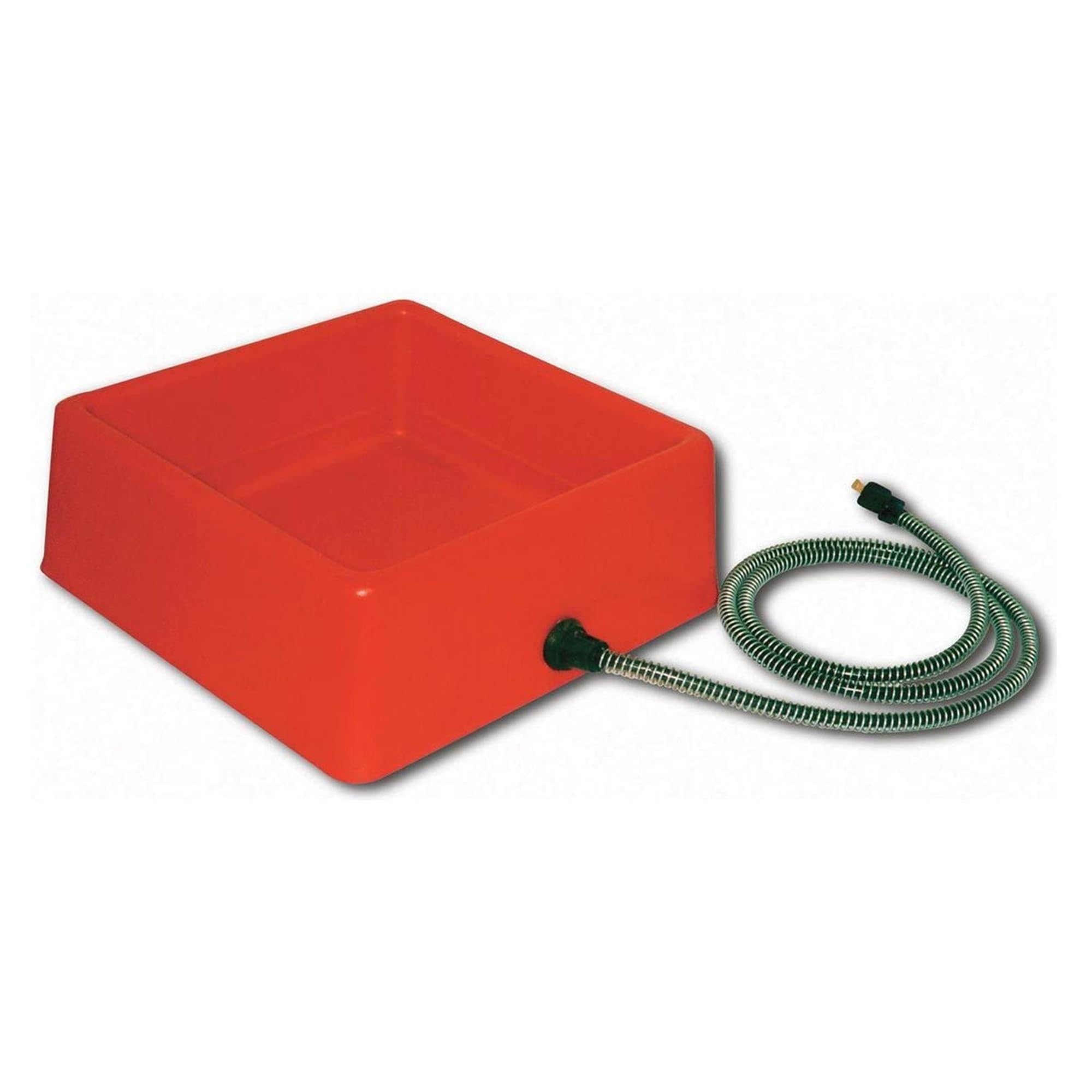
The D-19 keeps water from freezing in single-digit temperatures, even during storms. Its 1.25-gallon bowl holds enough for 10 or more chickens, reducing daily refills. The thermostatic heating element cycles on and off automatically, drawing 60W only when needed.

This open bowl suits small to medium flocks (up to 15 birds) and buyers who want a budget-friendly, no-fuss solution. The plastic bowl may develop cracks after one or two winters in severe cold, and the short three-foot power cord can limit where you place it. These tradeoffs are manageable for the price point — expect to replace the bowl every couple of years.

Consider using an outdoor-rated extension cord to extend placement options.

Bottom line: For small to medium flocks that need freeze protection without complexity, this bowl delivers outstanding value — just plan for eventual replacement.

2

GHWMYD 125oz Heated Bowl

GHWMYD 125oz Heated Bowl

Small flocks

Our Score 9.2/10
Check Price

Worth Noting

  • 1-gallon capacity means daily refills for flocks larger than 3-4 chickens
Capacity
1 gal
Mounting
Ground only
Heating Power
Auto heat 41-100F
Build Material
Plastic
Read the full review

Compared to the leading open-bowl heated waterer, the GHWMYD bowl costs less and still keeps water from freezing through sub-zero nights. Its 1-gallon capacity, however, requires daily refills if you have more than 3-4 chickens. The auto-heat thermostat warms only when needed, keeping electricity costs low. The open-bowl design is simple to clean. This makes it a good fit for small-flock owners on a budget who don't mind daily refills. For a starter flock or as a backup waterer, the capacity tradeoff is acceptable.

Plan on a daily refill routine for flocks of 3-4 chickens to keep water available.

Bottom line: Best for owners of 2-4 chickens who want a low-cost freeze-proof bowl and are okay with daily refills.

3

Farm Innovators HB-60P

Farm Innovators HB-60P

Small-medium flocks

Our Score 9.0/10
Check Price

Worth Noting

Capacity
2 gal
Mounting
Hanging or ground
Heating Power
Thermostatic
Build Material
Plastic
Read the full review

The side-mounted nipple design delivers noticeably cleaner water by reducing debris and waste compared to open bowls. Top-fill access simplifies refilling without removing the unit. The heater effectively prevents freezing down to -20°F, as confirmed by short-term use. However, the 2-gallon capacity limits this to small flocks, and durability over multiple winters is not yet established — open bowls with longer track records may offer more predictable longevity.

Bottom line: Best for small flocks that prefer clean nipple water over open bowls, provided you are comfortable with a shorter durability track record.

4

Premier 1 3-Gallon Heated

Premier 1 3-Gallon Heated

Large flocks

Our Score 8.6/10
Check Price

Worth Noting

  • Nipples may freeze in sustained sub-zero temperatures, blocking water access.
  • Some units may lose heating function after the first season.
Capacity
3 gal
Mounting
Hanging
Heating Power
100W thermostatic
Build Material
Reinforced
Read the full review

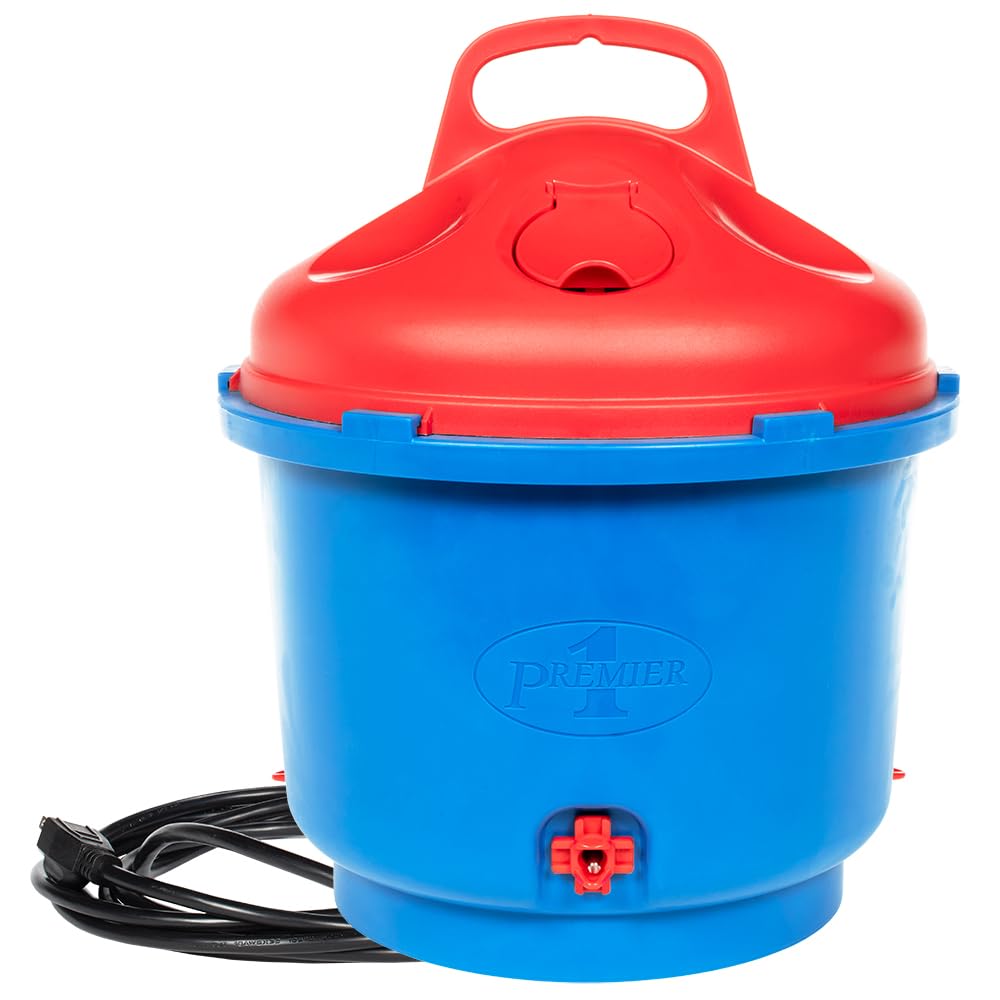
The Premier 1 heated waterer uses a heavy-duty construction and a detachable cord, making it a year-round option for flocks up to 35 birds. Its recessed nipple design keeps water remarkably clean, but in sustained sub-zero temperatures the nipples may freeze, limiting access – this system suits milder winters or climates where added insulation is feasible.

In sustained sub-zero cold, insulate the waterer base or provide an alternate open water source.

Bottom line: A well-built waterer for those who prioritize water cleanliness and have mild winters, but the nipple freeze risk makes it a secondary choice for severe climates.

How to Choose

Capacity: Flock Size vs Refill Frequency

Capacity determines how often you fill. A 3-gallon waterer serves 35 chickens for a day or more, but weighs over 20 pounds when full. For a small flock of 4 birds, a 1-gallon bowl is easier to handle and refill daily.

Heating Power and Thermostat Control

Wattage and thermostat design affect freeze protection and energy use. A 60W heater can keep water liquid down to single digits, but a 100W unit may be needed for sustained sub-zero conditions. Thermostats that activate below 40°F save power by not heating during milder weather.

Open Bowl vs Nipple System

Open bowls are simpler and more reliable in extreme cold because there is no small orifice to freeze. The downside is water contamination from dirt and droppings, requiring daily scrubbing.

Nipple systems keep water clean for days because the water is enclosed. But nipples can freeze in sustained sub-zero conditions, leaving birds without water. If you live in a region that hits 0°F for extended periods, an open bowl is the safer bet.

Hanging vs Ground Placement

Hanging waterers save coop floor space and keep the waterer off bedding, reducing contamination. Ground bowls are simpler to set up and easier for chickens to access, but can be knocked over or soiled. Consider your coop layout and whether you have a rafter to hang from.

Build Material: Plastic vs Reinforced

Most heated waterers use standard plastic that becomes brittle after UV exposure and cold cycles, leading to cracks within one or two winters. Reinforced models use thicker, UV-stabilized plastic that withstands years of abuse. The price difference often pays for itself if you avoid replacing a cheap unit annually.

Frequently Asked Questions