Fencing & Farm Structures

9 Best Electric Fence Tester 2026: Find Shorts Fast Without Walking

Find the best electric fence tester for your farm – from budget digitals for quick voltage checks to premium fault finders that cut troubleshooting time.

A quick voltage check seems simple, but many electric fence testers make it harder than it should be. Neon lights vanish in daylight, digital units vary in accuracy, and probe wires break after a few uses.

The real difference comes down to how you use your fence. If you're troubleshooting miles of rotational grazing, a directional fault finder that shows current flow can cut repair time from hours to minutes. If you just need to confirm a pulse on a small paddock, a bright LCD digital tester does the job for a fraction of the cost.

This guide breaks down the key specs and trade-offs so you pick the tool that matches your fence size and workload – not the one with the flashiest box.

1

Gallagher Smartfix

Top Pick
Gallagher Smartfix

Large ranch fault finder

Our Score 9.2/10
Check Price

Worth Noting

  • Higher cost than basic testers
  • Ground probe wire can develop faults after limited use.
Probe
Ground probe wire
Battery
9V (replaceable)
Display Type
Backlit LCD
Fault Finding
Directional current & voltage
Read the full review

Directional voltage and current display instantly points to shorts and splices, saving hours of walking fence lines on large operations. Unlike basic voltage-only testers, it pinpoints the direction of a fault, not just its presence. This makes it essential for ranches with miles of fence and rotational grazing systems where quick repairs keep livestock contained. The tradeoff: premium pricing and a ground probe wire that may wear out over time – a minor consideration for buyers focused on labor savings.

Keeping a spare ground probe in the toolbox can help avoid field downtime if the original wears.

Bottom line: Best for large ranches where saved labor easily offsets the premium price and occasional probe replacement.
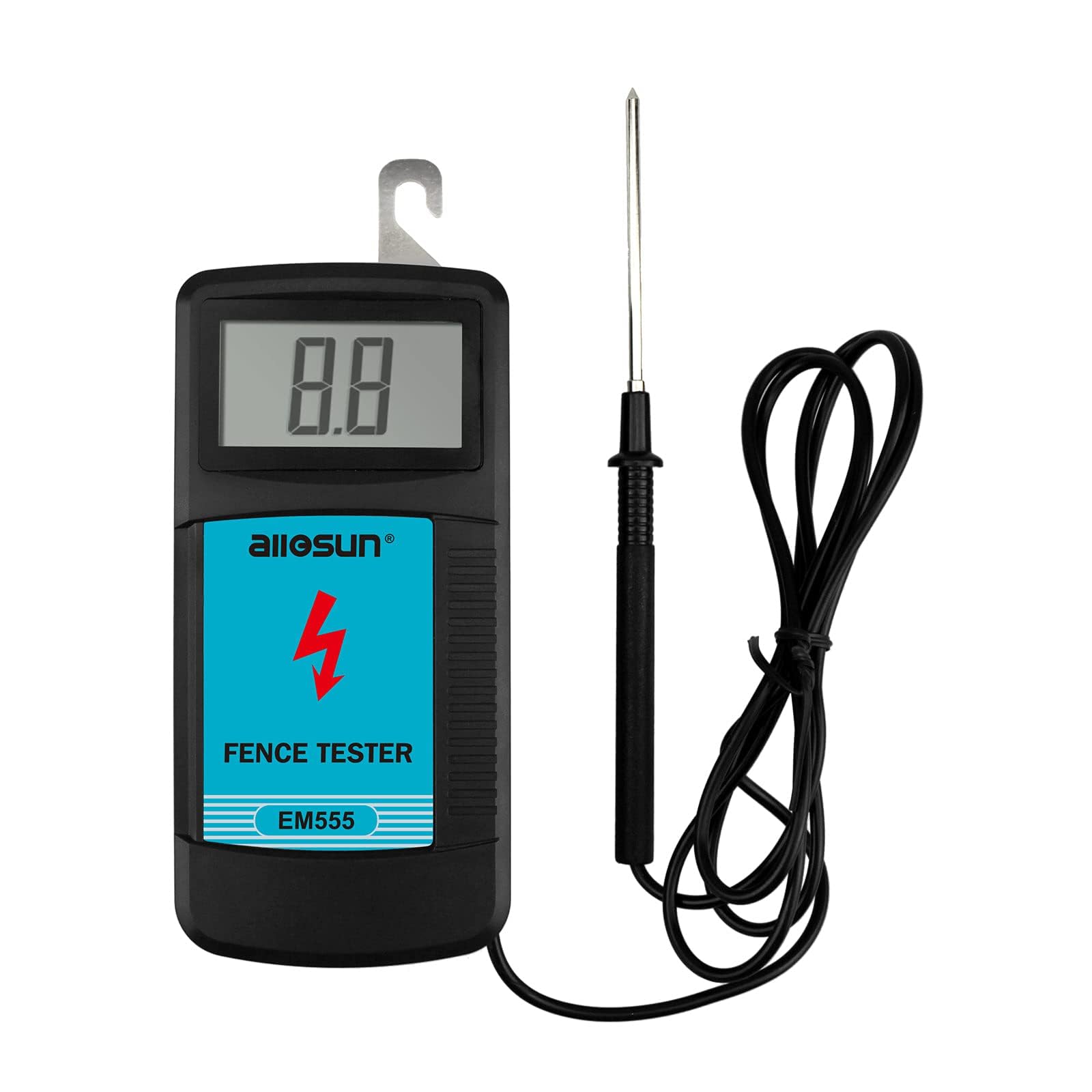
2

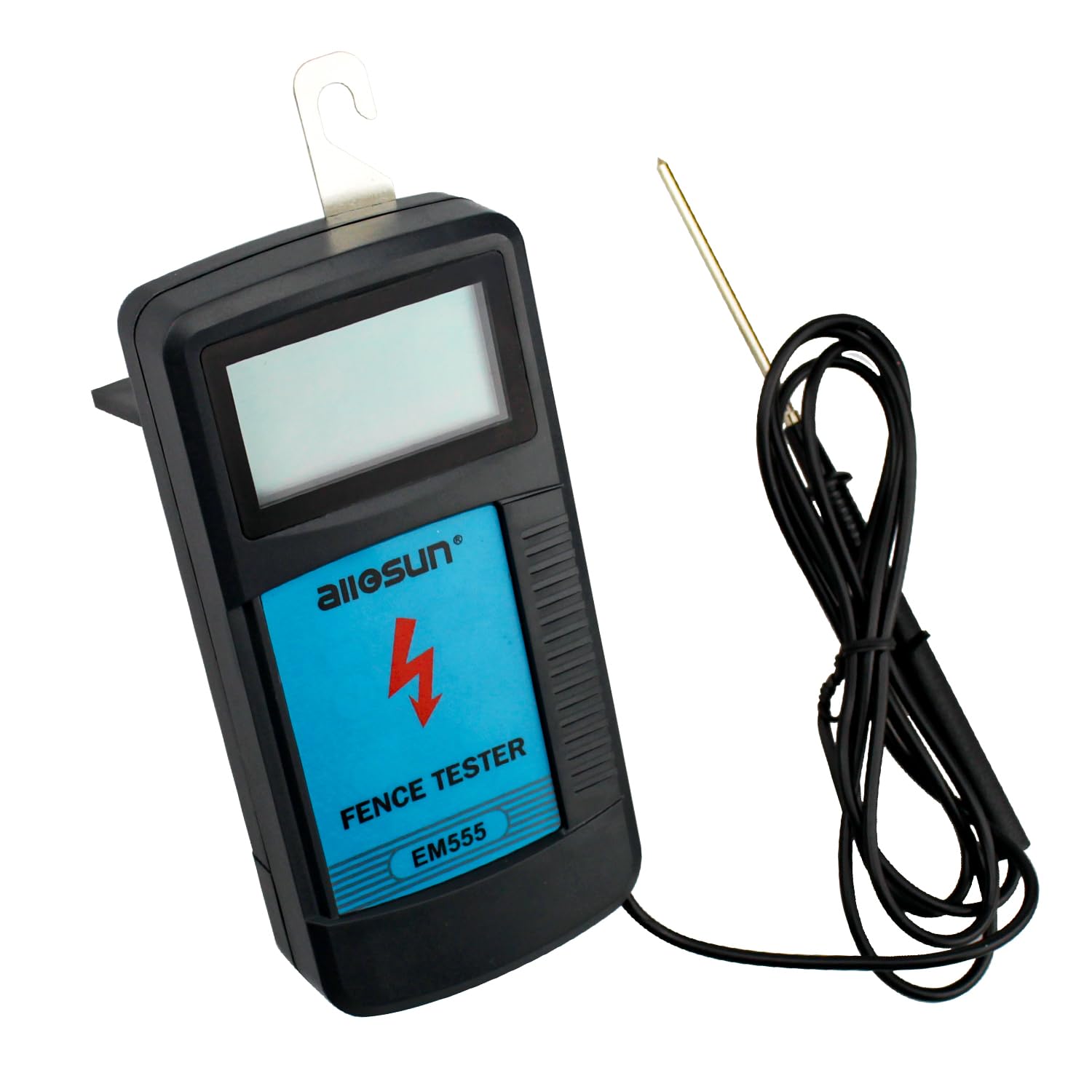
ALLOSUN EM555 Digital Tester

ALLOSUN EM555 Digital Tester

Small-medium farms

Our Score 9.2/10
Check Price

Worth Noting

  • Voltage readings on pulsed or low-voltage fences can vary by 1-2 kV from actual.
Probe
57 in lead
Battery
9V (not incl)
Display Type
LCD
Fault Finding
Voltage only
Read the full review

The EM555 delivers a bright LCD visible in direct sunlight and automatic on/off for simple operation — a clear upgrade from cheap neon testers. Its price makes it a cost-effective entry into digital voltage checking. The ground probe wire can detach after moderate use, so storing it carefully extends its life. This is a good fit for small-property owners on a budget who need reliable daylight readability.

Keep the probe wire loosely coiled when not in use to reduce strain on the connection.

Bottom line: If you can handle the probe with care, this is the most affordable way to get a digital voltage check in daylight.

3

Gallagher Digital Volt

Gallagher Digital Volt

Voltage checks only

Our Score 9.2/10
Check Price

Worth Noting

  • No directional fault finding
Probe
Built-in probe
Battery
9V (included)
Display Type
LCD, auto on
Fault Finding
Voltage only
Read the full review

This Gallagher digital volt meter handles field work reliably with a water-resistant build and accurate voltage checks across battery, solar, and mains energizers. However, it only reads voltage—no directional fault finding—and cheaper allsun digital testers offer similar performance for less. Best suited for farmers who need a simple voltage check without troubleshooting capabilities.

Bottom line: Choose this if you need a rugged voltage-only meter and brand reputation matters more than fault-finding features.

4

allsun Digital (B07DCKG2SX)

allsun Digital (B07DCKG2SX)

Hobby farm checks

Our Score 9.0/10
Check Price

Worth Noting

  • Accuracy may vary between units; some show inconsistent readings
  • Battery not included and drains if left installed; may reduce device lifespan
Probe
6.85 in lead
Battery
9V (not incl)
Display Type
LCD
Fault Finding
Voltage only
Read the full review

The allsun digital tester is the highest-rated budget option for hobby farmers needing a quick voltage check in full daylight. Its LCD stays legible even under direct sun — a common frustration with neon testers. The auto on/off function helps conserve battery, and the unit handles the 300V to 9.9kV range typical of most electric fences. For daily voltage monitoring, it delivers consistent results without fuss.

This tester is best for those who want an affordable digital upgrade from neon testers and don't need directional fault finding. One tradeoff: the required 9V battery is not included, and leaving it installed when not in use can shorten the device's lifespan — easy to manage by removing the battery after each session. Also, some units show slight variation in voltage readings, but for general fence health checks that isn't a dealbreaker.

Remove the 9V battery after each use to prevent drain and extend the tester's life.

Bottom line: A straightforward voltage checker that outperforms its price tag — ideal for routine fence checks on small acreages.

5

Speedrite ST100

Speedrite ST100

Commercial farm fault finder

Our Score 9.0/10
Check Price

Worth Noting

Probe
Ground probe
Battery
9V (low warning)
Display Type
LCD (voltage, current, direction)
Fault Finding
Directional current & voltage
Read the full review

Simultaneous voltage, current, and direction display with an audible indicator — the Speedrite ST100 brings professional-grade fault finding to fence maintenance. The LCD shows all three readings at once, and directional arrows point toward the fault, reducing time spent walking the line. The water-resistant build with belt clip suits all-weather field use.

This tool targets commercial operations and technicians who need precise diagnostics. The button must be held continuously during use, a tradeoff that works with the belt clip but is less convenient for one-handed checks. The premium price is on par with other high-end fault finders, so it is best when time savings justify the investment.

Use the belt clip to manage the continuous button hold more easily during field work.

Bottom line: A precise fault finder for professionals who value time savings over ergonomic convenience; the continuous button hold is an accepted tradeoff when using the belt clip.

6

Zareba DEFT

Zareba DEFT

Shaded fence checks

Our Score 9.0/10
Check Price

Worth Noting

  • Red display is extremely hard to read in direct sunlight, requiring shading.
Probe
Integrated probe
Battery
9V (not incl)
Display Type
Backlit LCD (red digits)
Fault Finding
Voltage only
Read the full review

Covers high-voltage fences up to 19.9 kV in a compact, pocket-friendly design with simple operation. The backlit red display becomes nearly unreadable in direct sun, limiting its use to shaded or indoor fence checks. Despite this, the wide voltage range and pocket size make it practical for such settings.

Bottom line: Best for indoor or shaded fence voltage checks where sunlight isn't a factor.

7

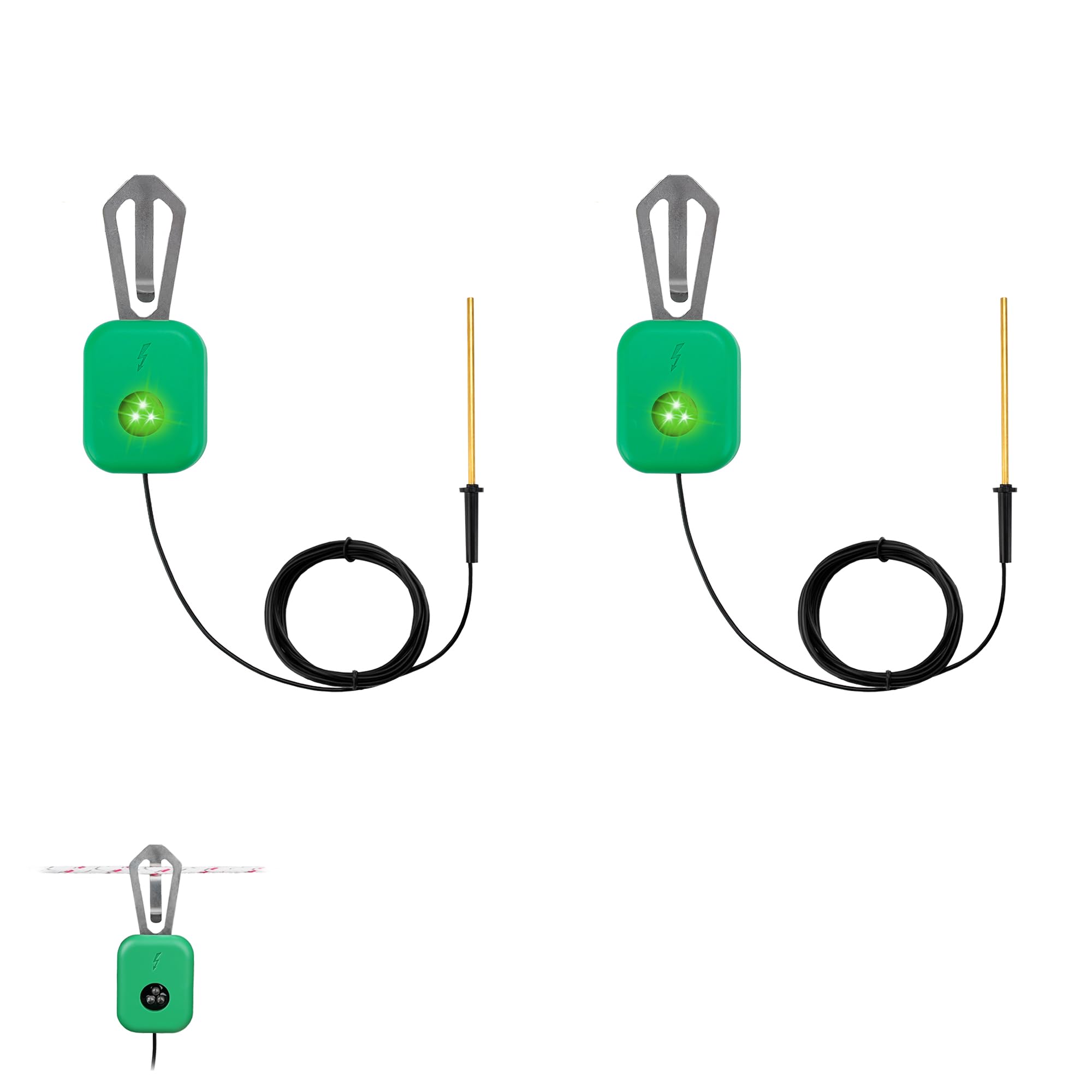
L-FENCE 2-Pack LED

L-FENCE 2-Pack LED

Night multi-point monitoring

Our Score 8.4/10
Check Price

Worth Noting

  • Green LED may be hard to see in direct sunlight, limiting daytime usability.
Probe
Clip + ground rod
Battery
None
Display Type
Green LED
Fault Finding
None
Read the full review

This two-pack offers a cost-effective way to check fence pulses across different sections, with easy clip-and-probe operation. The green LED glows clearly in low light, but in direct sun it becomes hard to read. Occasional units may stop working within weeks, so it suits buyers who need a spare for nighttime use and can accept some variability in longevity.

Bottom line: Best kept for nighttime fence patrols where the LED shines and a budget spare is useful.

8

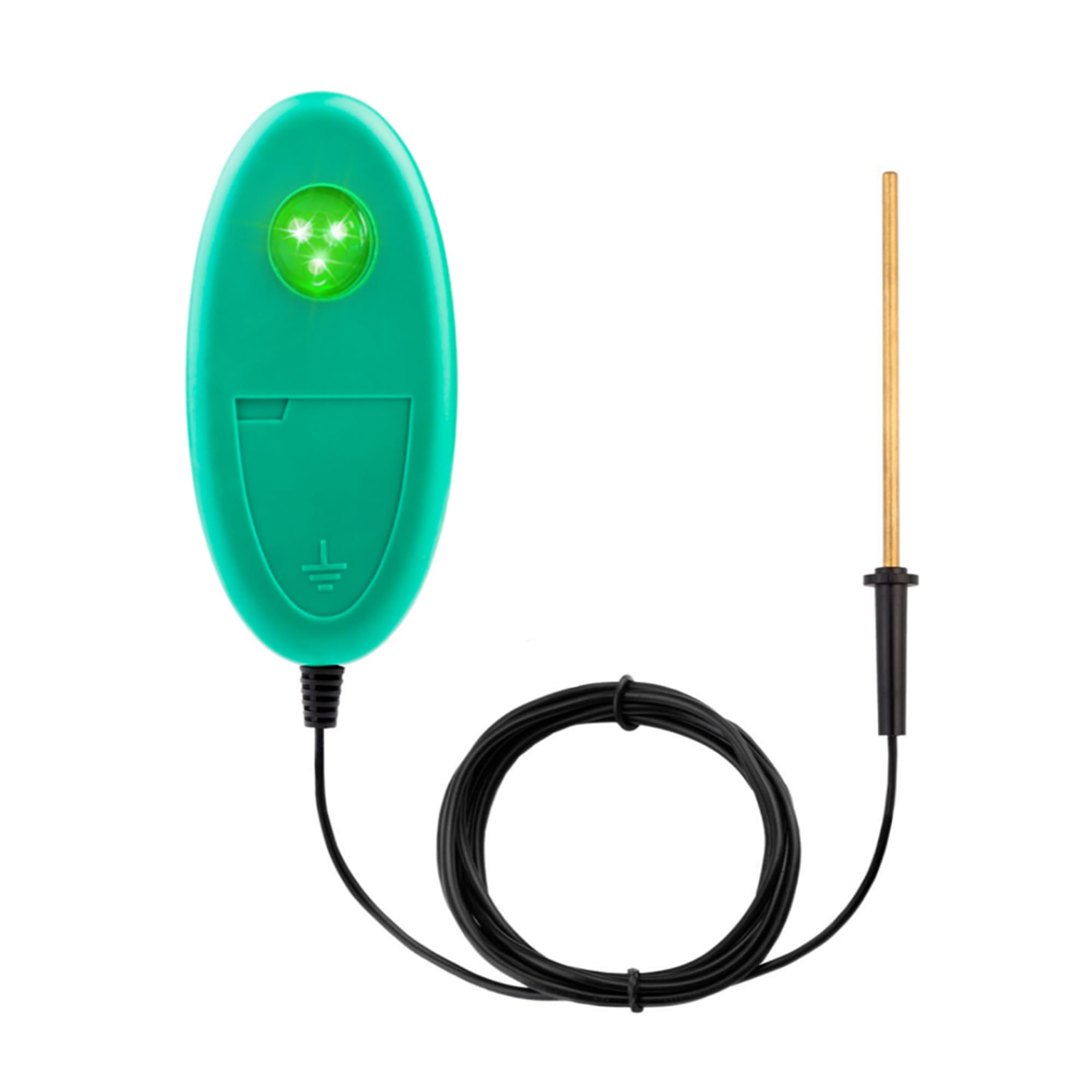
L-FENCE LED Indicator

L-FENCE LED Indicator

Nighttime fence monitoring

Our Score 8.0/10
Check Price

Worth Noting

  • The internal resistance can drop fence voltage by 1–3 kV, which matters on long runs or critical livestock containment.
  • LEDs are dim in direct sunlight; some units stop flashing after a few months.
Probe
Ground rod (included)
Battery
None (fence powered)
Display Type
3 LEDs
Fault Finding
None (continuous indicator)
Read the full review

Unlike a handheld tester you walk around with, this unit clips to the fence wire and stays there, flashing its LEDs with each pulse to confirm the energizer is running. Installation is as simple as clipping the housing onto the fence line and pushing the ground rod into soil — no batteries to buy or replace. The three high-brightness LEDs are visible up to 100 meters at night, making it useful for glancing out a window to see if the fence is still powered.

This monitor works best for owners who don't need precise voltage numbers and can accept a 1–3 kV drop in fence voltage caused by the device's internal resistance. It is not a replacement for a handheld tester when you need to troubleshoot faults or measure exact voltage. The flashing light can be hard to see in direct sunlight, so count on it mostly for nighttime or shaded fence sections.

Position the monitor in a shaded area or on a section where voltage drop won't affect livestock – the light is most useful after sunset.

Bottom line: Grab this if you want a set-and-forget fence monitor for nighttime visual confirmation and are okay with a minor voltage penalty – for diagnosing faults or precise readings, pick a digital tester instead.

9

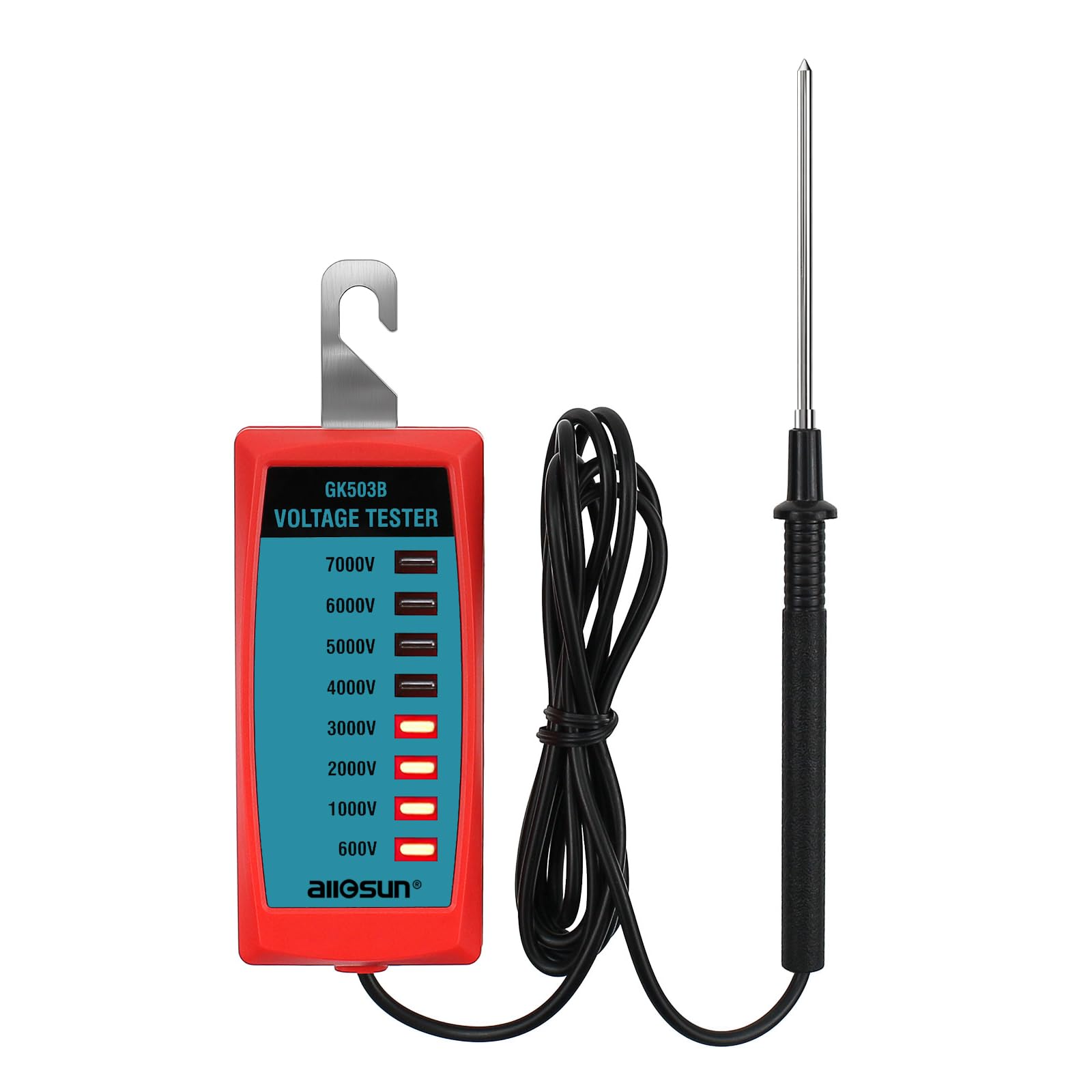
ALLOSUN Neon GK503B

ALLOSUN Neon GK503B

Nighttime emergency checks

Our Score 8.0/10
Check Price

Worth Noting

  • Neon lights are too dim to see in sunlight; only works at dusk or night.
Probe
5 in probe
Battery
None
Display Type
Neon indicator lights (5 levels)
Fault Finding
Basic (light brightness)
Read the full review

No batteries needed, so this tester is always ready for a basic fence pulse check. The neon lights are dim and nearly invisible in daylight, limiting use to dusk or night. It also provides no precise voltage readout, only approximate brightness. For emergency backup or evening fence rounds, it serves at a low cost.

Bottom line: Keep one in your fence toolkit for after-dark troubleshooting or as a dead-battery backup, not a replacement for a daylight-visible digital tester.

How to Choose

Voltage Measurement Range

A tester's voltage range tells you the highest fence energizer it can measure. Most farm fences run between 4 kV and 10 kV, but large operations with high-output chargers may exceed 12 kV.

If your tester's max is too low, it will fail to give a reading at all. Match the top end of the range to your energizer's rated output plus a 20% buffer for cold-weather spikes.

Display Type: Digital vs. Neon

Digital LCDs give precise voltage numbers and are readable in bright sunlight – but only if they have a backlight or high contrast. Neon indicators are cheap and work without batteries, but their glow is virtually invisible outdoors.

The hidden trade-off: neon testers rely on the fence's own pulse to light up, which means they won't work at all if the fence is completely dead. Digital testers can still display a low voltage, helping you diagnose a partial fault.

Fault Finding Capability

Basic testers only show voltage. Fault finders add current measurement and directional arrows that tell you whether the short is ahead or behind you on the fence line.

For long runs, this feature cuts troubleshooting time from hours to minutes. But for a short garden fence, you can visually inspect the entire line in the same time it takes to learn the arrows.

Ground Probe Design and Durability

Most testers use a wire with a metal probe that you stick into the ground. This connection is critical for accurate readings, but the wire frequently breaks at the joint after moderate use.

Cordless designs (clip-on indicators) eliminate the wire entirely, though they sacrifice precision. If you buy a corded tester, expect to replace the probe wire every couple of seasons – budget models are especially prone.

Battery Requirements

Digital testers typically need a 9V battery. Some ship with one; others don't. The bigger issue is that leaving the battery installed when not in use can cause corrosion and failure within months.

Remove the battery between fence checks, or choose a tester with automatic power-off that truly disconnects the circuit. Neon and LED indicators that run off the fence power avoid battery issues entirely.

Frequently Asked Questions