Fencing & Farm Structures

12 Best Electric Fence Insulator of 2026: Which Ones Withstand Sun and Cold

Find electric fence insulators that actually last — UV-resistant picks for T-posts, wood, and tube gates.

Electric fence insulators look simple, but the plastic ones from big-box stores often crack within a single season under direct sun. That leaves you scrambling to replace them mid-summer while your fence shorts out on wet grass. The frustration is real, but the fix is straightforward: choose an insulator built for your post type and climate.

The trade-off comes down to upfront cost versus long-term durability. Cheap multipacks work fine for temporary rotational grazing, but permanent fences in sunny regions demand materials that resist UV degradation. This guide sorts through the options, helping you match the right insulator to your fence’s life expectancy and environment.

Whether you need a quick snap-on for T-posts, a screw-in for wood, or a roller for rope corners, the picks here balance value with performance. No single insulator fits every job — but knowing what fails and why makes the decision simple.

1

Zareba ITY-Z T-Post Insulator

Top Pick
Zareba ITY-Z T-Post Insulator

Temporary or seasonal fencing

Our Score 9.4/10
Check Price

Worth Noting

  • Some T-post studs require extra force to snap on, especially in cold weather
Installation
Snap-on, no hardware
UV Resistance
Cracks within 1 season in sun
Wire/Rope Type
Wire, polywire, polyrope
Post Compatibility
Standard T-posts (1.25/1.33 in)
Read the full review

Exceptional value for money defines this 25-pack — under $6 for enough insulators to fence a small pasture. The snap-on design installs without tools and holds wire securely, preventing shorts that could drain the charger. The tradeoff is material: polyethylene can become brittle and crack within a season in full-sun climates, limiting its lifespan to temporary or rotational grazing setups.

This pack suits budget-conscious buyers testing electric fencing or managing livestock in short-term rotations. The yellow color helps spot fence lines during setup. For permanent fences in sunny regions, the Lock Jawz T-360 offers better UV resistance — but it costs more per insulator. Accept the one-season durability, and you get a functional, no-fuss solution at a fraction of the price.

Warming the insulators before installation in cold weather makes them more pliable and reduces breakage risk.

Bottom line: For temporary fencing on a budget, this 25-pack delivers solid electrical performance without breaking the bank. Don't count on it past one season in full sun, but for short-term use it's hard to beat.

2

Dare Tube Post Insulator

Dare Tube Post Insulator

Corral panels, chain link

Our Score 9.4/10
Check Price

Worth Noting

  • Will not fit tube posts 2.5 inches or larger
  • U-bolts and hardware may rust within months in moist environments.
Installation
U-bolts included
UV Resistance
Good; hardware may rust
Wire/Rope Type
Wire, polywire
Post Compatibility
Round tube up to 2 in
Read the full review

The Dare Tube Post Insulator uses a sturdy U-bolt mount that grips round posts tightly, keeping wire secure even when horses bump against it. Unlike the top pick, this one doesn't fit T-posts or square wood — it's built specifically for chain link gates, corral panels, and pipe fences. That focus means solid insulation and simple installation on compatible posts, but buyers with larger corner posts (2.5 inches or more) will need a different solution, and the included hardware can rust in wet conditions.

Consider replacing the U-bolts with stainless steel hardware if your fence is in a humid or rainy area.

Bottom line: The go-to insulator for chain link and pipe fences, though the per-unit cost is high and hardware rust is a concern.

3

Zareba Roller Insulator

Zareba Roller Insulator

Friction-free corners

Our Score 9.4/10
Check Price

Worth Noting

  • Premium-priced per unit with screws sold separately, adding to total cost
  • Works only on wood posts
Installation
Screw-mount (screws not included)
UV Resistance
Sturdy; limited long-term data
Wire/Rope Type
Polybraid, rope, polywire
Post Compatibility
Wood posts only
Read the full review

The roller design eliminates chafing on corner posts and eases tensioning of polybraid and rope — a clear advantage over static insulators. Unlike standard slant nail-on insulators, the roller allows the fence line to slide freely when adjusting tension, which matters most on long corner runs where braid or rope needs to move without binding.

Best for fence builders setting up permanent corners or gate posts on wood where rope or polybraid needs to slide during tensioning. The premium cost and missing screws mean this is a niche upgrade, not a budget buy. It works only on wood posts, so T-post users should look elsewhere.

Pre-drill pilot holes to avoid splitting wood when using your own screws.

Bottom line: A specialized tool for corner posts where rope or polybraid must slide — invest only if your fence design requires reduced friction on wood posts.

4

Zareba Yellow Top Cap

Zareba Yellow Top Cap

Safety cap, visible color

Our Score 9.4/10
Check Price

Worth Noting

Installation
Snap-on cap
UV Resistance
Limited review data
Wire/Rope Type
Any gauge wire
Post Compatibility
Standard T-posts
Read the full review

The yellow Zareba top cap mirrors the black ITCPB-Z design, offering a visible safety cover and wire groove for T-posts. Without buyer feedback on this variant, quality and longevity are assumed from the black version's record. Best for light-duty, seasonal fencing where color-coding helps, and buyers already comfortable with the black cap's reputation.

Bottom line: For temporary fences where a visible safety cap matters more than verified durability, this yellow cap works — rely on the black version's track record for confidence.

5

Zareba ITTY-Z Tape Insulator

Zareba ITTY-Z Tape Insulator

Polytape fences on T-posts

Our Score 9.4/10
Check Price

Worth Noting

  • Insulators may crack after extended sun exposure or cold weather
Installation
Snap-on, reusable
UV Resistance
Prone to UV damage
Wire/Rope Type
Polytape only (1/2, 1, 2 in)
Post Compatibility
Standard T-posts
Read the full review

Designed exclusively for polytape on T-posts, this snap-on insulator holds tape securely and allows easy relocation. It's budget-friendly at under $12 for 25, but not compatible with wire and may crack from UV exposure — best for temporary tape fences like rotational grazing or garden barriers.

Bottom line: Best for seasonal polytape fences where UV exposure is limited and wire is not needed.

6

Lock Jawz T-360 25-Pack

Lock Jawz T-360 25-Pack

Permanent T-post fences

Our Score 9.2/10
Check Price

Worth Noting

  • Feeding thick poly rope into the slot can be tricky compared to polywire or standard wire.
  • The 25-count pack requires ordering multiple units for large fence projects.
Installation
Clip-on, weave-in slot
UV Resistance
Proven durability, black color
Wire/Rope Type
Poly rope, wire, barbed wire
Post Compatibility
Standard T-posts
Read the full review

The Lock Jawz T-360 uses a 6-position mounting head that works on both corner posts and straight runs, eliminating the need for separate corner insulators. The black plastic holds up to sun exposure better than the orange 100-pack, with fewer reports of cracking or breakage over time. Wire stays locked in place securely, allowing the whole fence line to be tensioned from a single end without the wire popping out.

This 25-pack suits buyers building a permanent electric fence on T-posts where UV resistance matters over multiple seasons. Thick poly rope (3/8 inch or more) can be tricky to feed into the slot, but polywire and standard wire slide in easily. For large projects, expect to order multiple packs since each contains only 25 insulators.

For poly rope installations, use a small pull tool or pre-twist the rope end to feed through the slot.

Bottom line: For permanent T-post fences where UV resistance and corner compatibility matter, this 25-pack delivers better longevity than the budget alternatives.

7

NQN Screw-in Wood Post Insulator

NQN Screw-in Wood Post Insulator

Fast wood-post installation

Our Score 9.2/10
Check Price

Worth Noting

  • Plastic head may snap if over-tightened or in cold weather
  • Screw tips may require pre-drilling in hardwood to avoid spinning without threading
Installation
Drill adapter included
UV Resistance
Moderate; head may snap
Wire/Rope Type
Multiple wire/rope sizes
Post Compatibility
Wood posts, gates
Read the full review

The NQN screw-in insulator delivers the fastest installation on wood posts thanks to the included drill adapter tool, which threads insulators into softwood in seconds. The 50-pack with tool provides good per-unit value, and the slot design handles multiple wire gauges without energy loss.

This set suits small farms and hobby gardens where speed matters, but the plastic head can snap if over-tightened or used in cold weather. Pre-drilling pilot holes in hardwood is recommended to avoid screw spin.

Pre-drill pilot holes in dense wood to prevent screw spin and reduce stress on the plastic head.

Bottom line: A fast-installing insulator for wood posts, best for moderate tension fences where speed is the priority.

8

Zareba Pin-Lock Insulator

Zareba Pin-Lock Insulator

Gates, frequent wire removal

Our Score 9.2/10
Check Price

Worth Noting

  • Steel wire can wear through the plastic pin over time, limiting long-term use with metal wires.
Installation
Clip-on, pin-lock release
UV Resistance
Better cold-weather durability
Wire/Rope Type
Polywire, rope, light wire
Post Compatibility
T-posts; also wood with screw
Read the full review

The pin-lock design sets this insulator apart from standard wrap-arounds — you can snap wire in and out by hand with no tools needed. It holds up better in cold weather than basic Zareba clip-ons, staying flexible instead of cracking. This design is ideal for pasture rotation or gate sections where you regularly remove wire. However, the plastic pin can wear through if used with steel wire over time; it works best with polywire or polyrope for frequent releases.

Use polywire or polyrope with this insulator; steel wire can gradually cut through the plastic pin.

Bottom line: Best for sections requiring frequent wire access — pair with polywire rather than steel to maximize lifespan.

9

Barafat Screw-in Insulator

Barafat Screw-in Insulator

Budget screw-in alternative

Our Score 9.2/10
Check Price

Worth Noting

  • Plastic head can degrade with prolonged sun exposure - best for shaded or temporary setups.
Installation
Drill adapter included
UV Resistance
Early breakage reports
Wire/Rope Type
Wire, polywire
Post Compatibility
Wood posts
Read the full review

The Barafat screw-in insulator offers a budget-friendly way to set up electric fence on wood posts: the included drill bit makes installation quick on softwoods. However, the plastic head may degrade with sun exposure, and limited feedback makes it a gamble for anything beyond seasonal garden use.

Bottom line: Best for short-term garden fencing on wood posts where upfront cost matters more than longevity.

10

Zareba Slant Nail Insulator

Zareba Slant Nail Insulator

Quick wood-post installation

Our Score 9.2/10
Check Price

Worth Noting

  • Included nails may be too long for thin boards or difficult to drive
Installation
Hammer, nails included
UV Resistance
Average; may crack in sun
Wire/Rope Type
9–22 ga steel, polywire, polyrope
Post Compatibility
Wood fence rails, posts
Read the full review

The Zareba slant nail insulator works as intended for quick installation on wood fence posts and rails, with a design that tolerates accidental hammer strikes. Where it falls short: the included nails may be too long for thin boards, and the plastic can degrade under intense sun or high tension within a year. This makes it a fit for temporary paddocks and small gardens rather than permanent high-tension lines.

Bottom line: Best suited for temporary fencing on wooden posts where quick installation matters more than long-term UV resistance.

11

Zareba 5-Inch Extender Insulator

Zareba 5-Inch Extender Insulator

Large offset from fence

Our Score 9.2/10
Check Price

Worth Noting

  • Included nails are too long for many wood types, often requiring predrilling or replacement with screws for secure attachment.
Installation
Hammer, nails included
UV Resistance
Fragile plastic, nails problematic
Wire/Rope Type
9–22 ga wire, polywire, polyrope
Post Compatibility
Wood posts
Read the full review

This insulator's 5-inch offset is a practical solution for keeping a hot wire away from existing barbed wire or wood fences, avoiding shorts. However, the included nails are too long for most boards, often requiring predrilling or replacement with screws. The plastic base can crack under tension or in direct sun over time. Best for temporary or low-stress setups where the extra standoff is needed, but for permanent fences, a sturdier option is worth the investment.

Bottom line: A budget-friendly choice for adding a wide offset to temporary fences or existing barbed wire, provided you swap the nails for screws and accept limited UV durability.

12

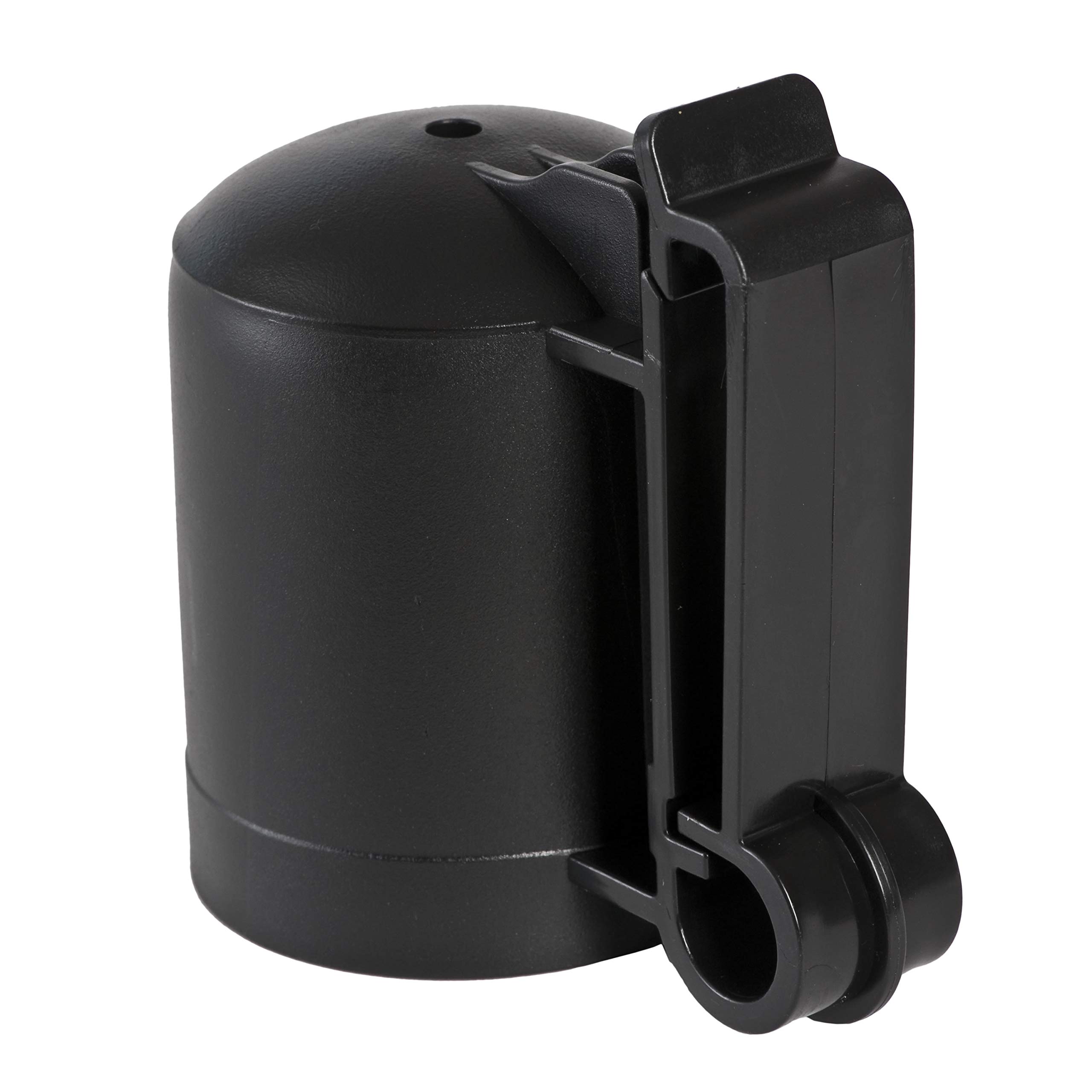
Zareba Top Cap Insulator

Zareba Top Cap Insulator

Animal safety on T-posts

Our Score 9.2/10
Check Price

Worth Noting

  • Long-term UV resistance is unverified
Installation
Snap-on safety cap
UV Resistance
Limited data
Wire/Rope Type
Any gauge wire
Post Compatibility
Standard T-posts
Read the full review

The Zareba top cap insulates electric fence wire while covering sharp T-post edges, making it a practical choice for temporary fencing where safety matters. Limited feedback means its resistance to sun exposure over multiple seasons is unknown — best for rotational grazing or seasonal enclosures where UV resistance isn't a top priority.

Bottom line: A budget-friendly safety cap for seasonal T-post fencing where livestock protection from sharp edges matters and UV exposure is minimal.

How to Choose

Post Compatibility

Every insulator is designed for a specific post shape. T-post insulators wrap around the studs; wood-post insulators screw or nail in; tube-post insulators use U-bolts. Mixing them up leads to loose fits, wire shorts, and premature failure.

Check your post diameter before buying. Standard T-posts are 1.25 to 1.33 inches; wood posts vary, but screw-in insulators need a pilot hole in hardwood to avoid snapping the plastic head.

Wire and Rope Type

Insulators have slots or grooves sized for different conductors. High-tensile steel wire needs a snug channel to prevent slipping. Polytape requires a flat, wide slot — round holes will cut through tape over time. Polyrope and braid must pass through smoothly without catching.

Mismatch causes energy loss or physical damage. For example, using a T-post insulator designed for wire with polytape often results in the tape sliding out or tearing.

UV and Weather Resistance

UV degradation is the number one reason insulators fail. Polyethylene holds up better than polypropylene, but no cheap plastic survives years of direct sun without becoming brittle. Look for insulators made from impact-resistant polyethylene (often black or dark colors absorb less UV than bright yellow).

In cold climates, brittleness accelerates when plastic is stressed at low temperatures. Insulators that crack in winter are often the same ones that fail in summer sun — material quality matters more than price.

Installation Method

Snap-on insulators require no tools but can be hard to attach in cold weather when plastic stiffens. Nail-on insulators are fast but the included nails are often too long or soft; experienced users swap them with ring-shank nails or deck screws. Screw-in insulators with a drill adapter save hours on wood posts but need a pilot hole in hardwood.

Consider how often you plan to move the fence. Temporary setups benefit from snap-on or pin-lock designs that allow quick relocation without damage.

Standoff Distance

The standoff is the gap between the post and the wire. A longer standoff (e.g., 5 inches) prevents wire from shorting against existing barbed wire or wet wood. Shorter standoffs (2 inches) are fine for clean posts but risk arcing if vegetation bridges the gap.

On corners and gates, a longer standoff reduces the chance of wire rubbing against the post, but increases leverage that can snap a weak insulator. Roller insulators solve friction without needing extreme standoff.

Frequently Asked Questions