Fencing & Farm Structures

10 Best Electric Fence Charger 2026: Reliable AC for Livestock

Find the right electric fence charger for your farm or garden. Understand power, range, and durability trade-offs to avoid early failures.

Electric fence chargers promise to keep livestock in and predators out, but the difference between a reliable setup and a frustrating one comes down to a few choices: power source, joule output, and grounding. Many solar chargers struggle to hold a charge after a season, while AC-powered units tend to deliver consistent voltage year after year.

This guide cuts through the marketing claims to show which chargers actually work for small gardens, hobby farms, and large ranches. The key trade-off is power versus reliability — some high-joule models risk early failure, while more modest units offer dependable performance over years.

Choosing the right charger means matching your fence length, weed conditions, and access to AC power with a model that has a proven track record in those conditions. The picks here reflect that match.

1

Zareba EAC50M-Z 50-Mile AC

Top Pick
Zareba EAC50M-Z 50-Mile AC

Large livestock containment

Our Score 9.2/10
Check Price

Worth Noting

  • Some units may cease operation prematurely after several months of use
Joule Output
2.0
Power Source
AC
Range (Ideal)
50 miles
Read the full review

The Zareba EAC50M-Z delivers a solid 2.0 joules across 50 miles of fence line, with enough punch to cut through heavy weeds up to 12 miles — a clear step above mid-range 1-joule units. Owners describe it as holding up well in demanding ranch conditions, keeping horses, pigs, and even bears contained without sagging performance.

This charger suits large ranch operations where a nearby AC outlet is available and predator deterrence matters — deer, bears, and rabbits stay clear. It is not a fit for remote pastures without grid power; that requirement is a hard boundary, not a flaw. For properties with access to AC, it offers the most consistent power output in its class.

Bottom line: Worth the investment for serious livestock containment — strong performance backed by a 2-year warranty that extends to 3 years with registration.

2

Parmak SE5 50-Mile AC

Parmak SE5 50-Mile AC

Heavy weed penetration

Our Score 9.0/10
Check Price

Worth Noting

  • Mounting uses only two small screw holes, which may not align with all post types.
  • Some units have been noted to stop delivering voltage within months.
Joule Output
6.3+
Power Source
AC
Range (Ideal)
50 miles
Read the full review

The Parmak SE5 outputs over 6 joules, enough to cut through heavy brush and maintain a strong shock across multi-strand fences spanning 50 miles. The built-in digital voltmeter lets you verify fence voltage at a glance, simplifying troubleshooting. However, some units have been noted to stop delivering voltage within the first year, and the mounting system uses only two small screw holes — acceptable for permanent posts but less convenient for frequent repositioning. This energizer suits large ranches where weed pressure is high and bear or predator deterrence is required. It is not recommended for small backyard gardens or buyers who prefer a lower risk of early failure.

Bottom line: For large operations that need maximum weed penetration and a voltage readout, the Parmak SE5 is the most powerful option, provided you accept a possible durability risk.

3

Zareba EAC25M-Z 25-Mile AC

Zareba EAC25M-Z 25-Mile AC

Mid-sized pastures

Our Score 9.0/10
Check Price

Worth Noting

  • In bright outdoor installations, the indicator light is too dim to see from a distance
Joule Output
1.0
Power Source
AC
Range (Ideal)
25 miles
Read the full review

With 1.0 joule output and a 25-mile range, the Zareba EAC25M-Z keeps livestock secure through light weed contact on medium-sized pastures. Installation is straightforward — mount and wire in minutes — and the build quality holds up well for the price. This charger is best for hobby farms with 10-25 acres or as a secondary fence line, especially for budget-conscious owners. One practical limitation: the indicator light is too dim to see in bright sunlight, so you'll need to check voltage directly if the unit is in direct sun.

Bottom line: This charger suits hobby farmers who need consistent fence power at a mid-range price — just don't count on the indicator light for a quick status check.

4

Gallagher S12 Solar 4-Mile

Gallagher S12 Solar 4-Mile

Remote paddocks

Our Score 9.0/10
Check Price

Worth Noting

  • For properties exceeding 4 miles of fence, the S12 lacks the power to keep fence charged.
  • In areas with heavy cloud cover, battery runtime may decrease after a year; the plastic ground knob can deteriorate over time.
Joule Output
0.12 (stored)
Power Source
Solar
Range (Ideal)
4 miles
Read the full review

The Gallagher S12 stands apart from smaller solar units by handling up to 4 miles of fence with a battery that holds charge for three weeks without sun. Best suited for buyers wanting a set-and-forget solar charger for remote paddocks, horse and goat enclosures. The 4-mile maximum range means it won't cover large cattle ranches, and the ground knob material may degrade over time – a minor durability point to monitor.

Bottom line: For remote paddocks where grid power is unavailable, the S12 provides consistent solar performance and a 3-year warranty – the premium price aligns with its capability.

5

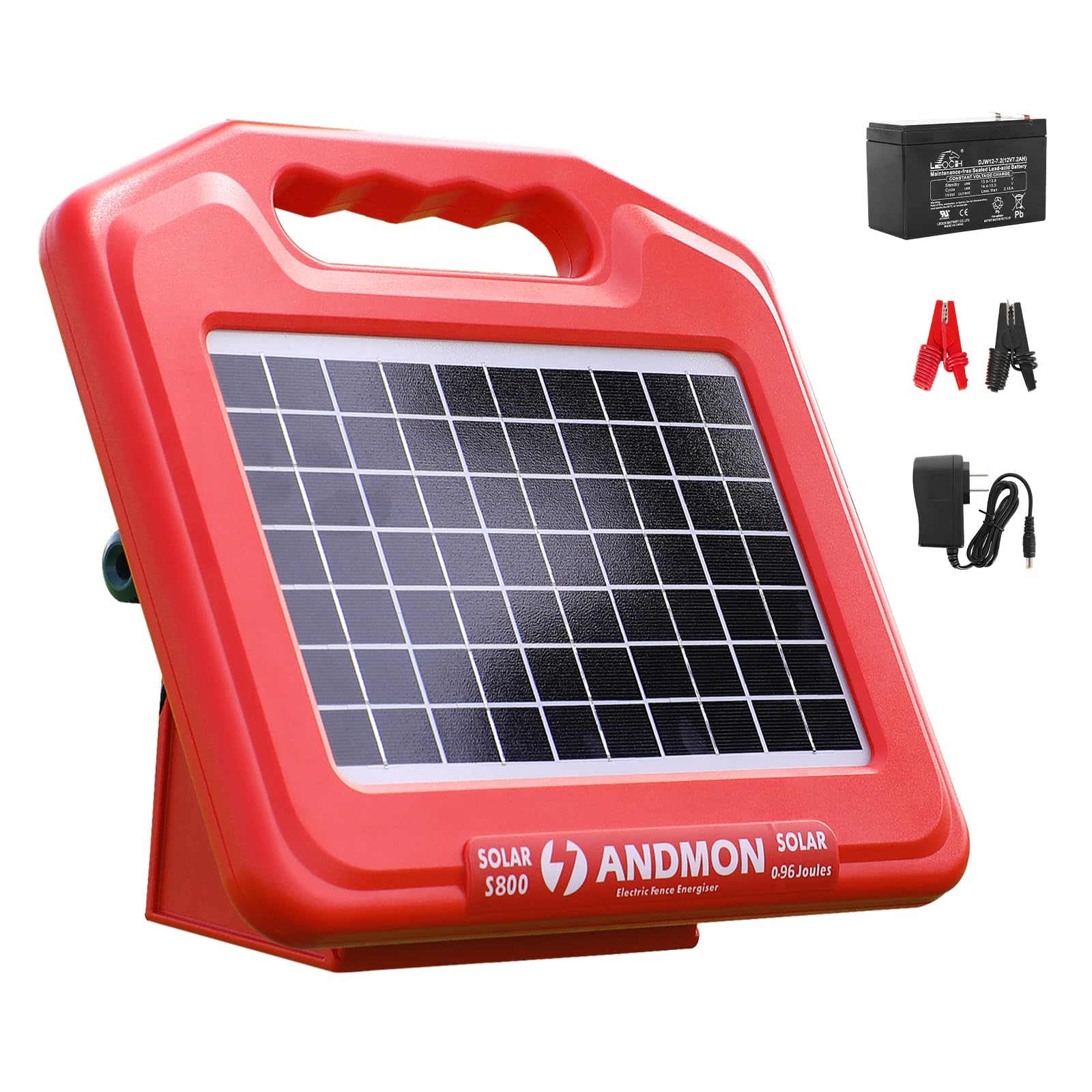
ANDMON S800 50-Mile Solar

ANDMON S800 50-Mile Solar

Large remote pastures

Our Score 8.8/10
Check Price

Worth Noting

  • Some units have stopped delivering voltage within weeks of installation.
Joule Output
0.95
Power Source
Solar + AC
Range (Ideal)
55 miles
Read the full review

The ANDMON S800 provides 0.95 joules and a 55-mile range from solar power with AC backup, making it a strong off-grid option for large pastures. Early failure has been noted in some units, so it suits buyers who accept some risk for high solar output.

Bottom line: For remote pastures needing high solar power, the ANDMON S800 offers strong specifications, but the early failure risk makes it a calculated choice rather than a guaranteed solution.

6

Gallagher S6 Solar Compact

Gallagher S6 Solar Compact

Small gardens

Our Score 8.8/10
Check Price

Worth Noting

  • Output too weak for goats, horses, or any fence over 200 feet
Joule Output
0.06 (approx)
Power Source
Solar
Range (Ideal)
2 miles
Read the full review

The Gallagher S6 Solar Compact delivers consistent performance for small-scale fencing tasks like protecting gardens or containing chickens, with a setup process that takes minutes. Its limitation becomes clear when trying to contain goats or horses: the 0.06 joule output lacks the punch for stubborn animals or fences over 200 feet. For poultry and deer protection, it works well; for livestock, the larger S12 is a more capable investment.

Bottom line: A cost-effective option for small gardens and chicken coops, but step up to the S12 if you need to contain livestock reliably.

7

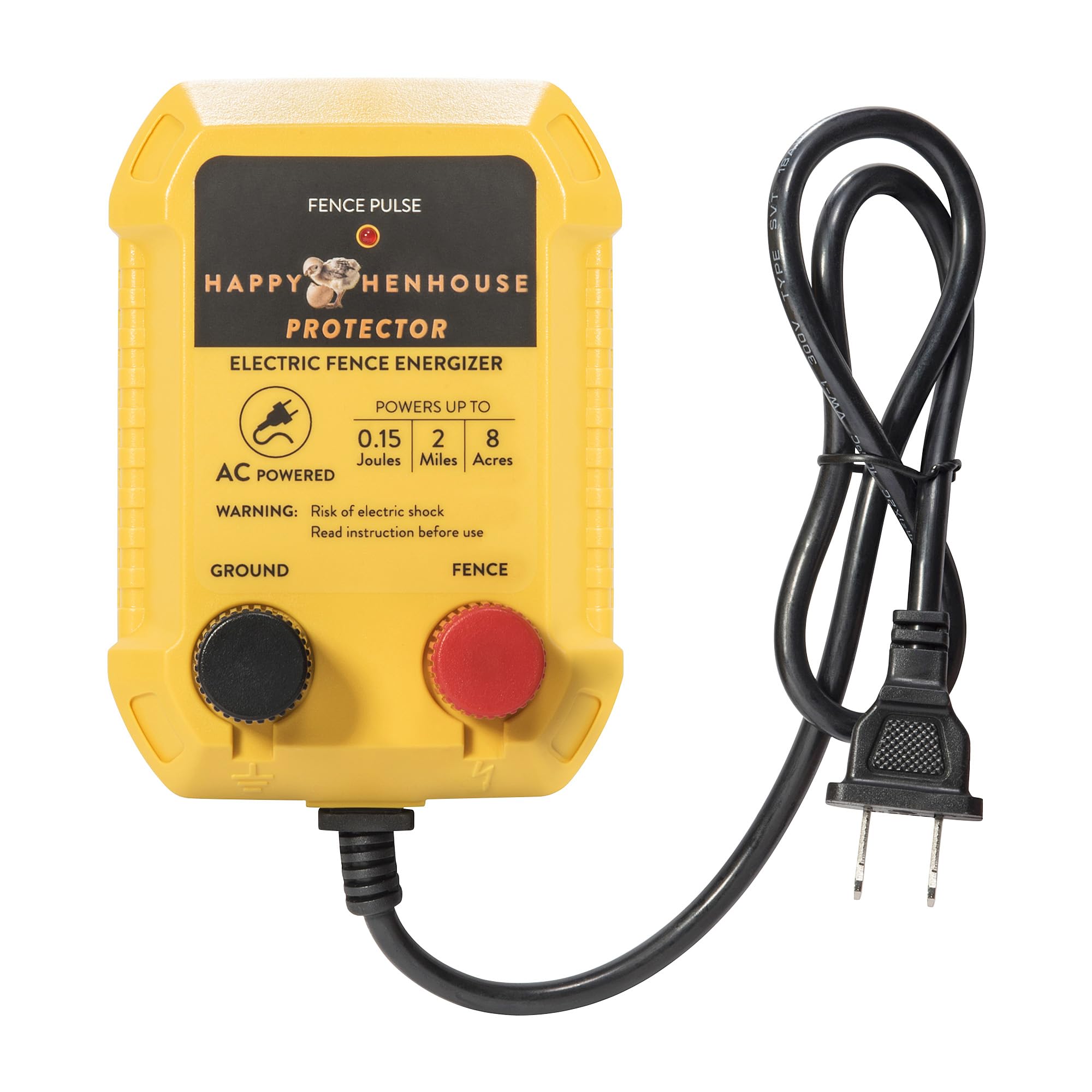
Happy Henhouse FX5AC 2-Mile

Happy Henhouse FX5AC 2-Mile

Chicken coops

Our Score 8.6/10
Check Price

Worth Noting

  • In a rainy outdoor location, water can enter the cavity and stop operation despite marketing claims of weather resistance.
  • Transformer burnout can occur within days of use, rendering the unit inoperable.
Joule Output
0.25
Power Source
AC
Range (Ideal)
2 miles
Read the full review

At a budget-friendly price, the Happy Henhouse delivers a noticeable jolt that effectively contains small animals and deters predators like raccoons, making it a practical choice for backyard coops and temporary garden fencing. However, the unit is vulnerable to early failure — transformer burnout can occur within days of use, and water ingress may stop operation if exposed to rain. This charger works best for covered coops or short-term setups where you can monitor and replace it as needed. Ideal for budget-conscious small flock owners who need a low-cost solution for garden protection or free-range containment, but not recommended for year-round outdoor use or critical predator defense where consistent performance is essential.

Bottom line: A low-cost option for temporary garden and coop protection, but plan for replacement within a season due to possible early failure.

8

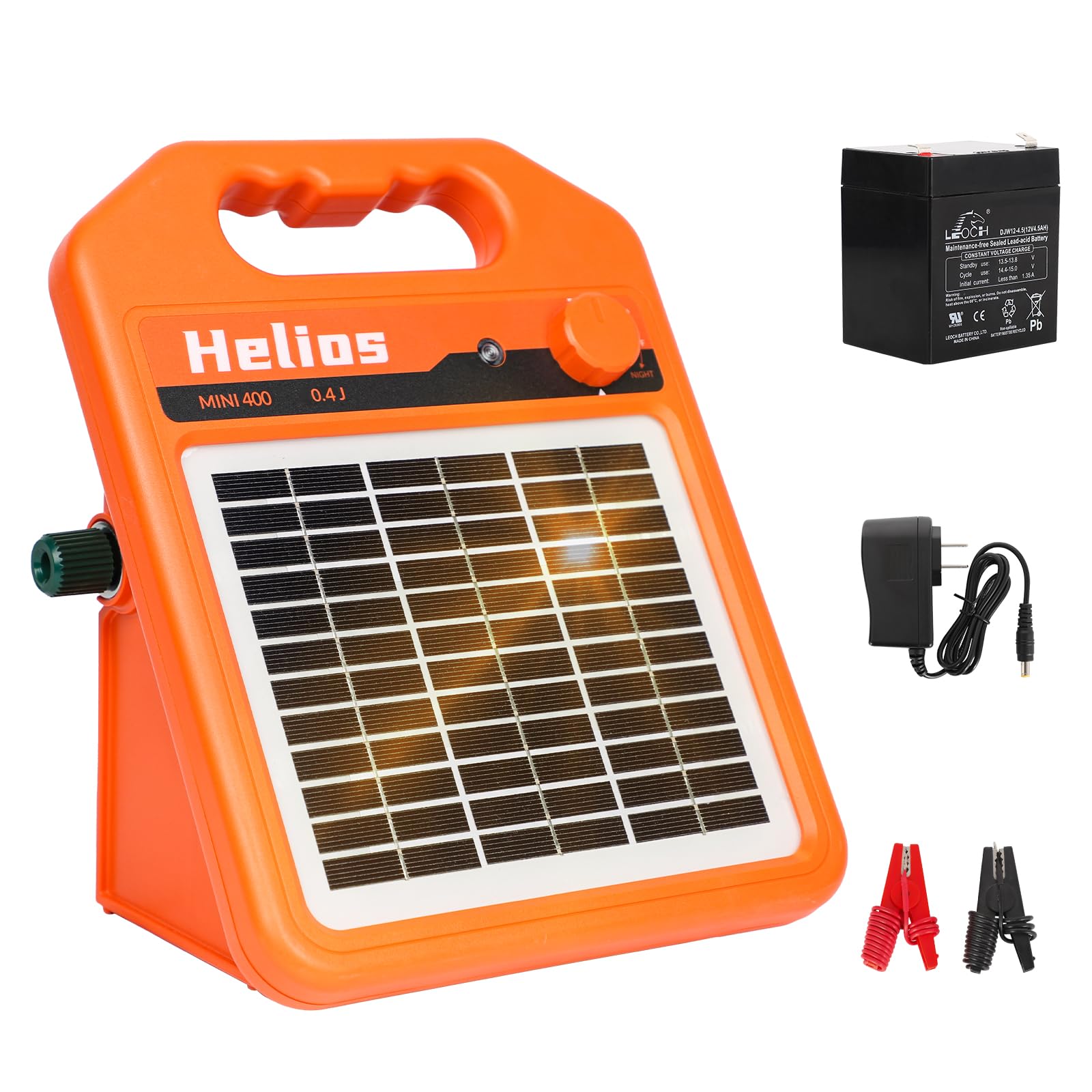
ANDMON MINI400 30-Mile Solar

ANDMON MINI400 30-Mile Solar

Temporary fencing

Our Score 8.6/10
Check Price

Worth Noting

  • Some units stop working within months of use
Joule Output
0.4
Power Source
Solar + AC
Range (Ideal)
30 miles
Read the full review

The ANDMON MINI400 holds charge for several days even in overcast conditions and installs easily on T-posts. Its 0.4-joule output can keep deer, pigs, or goats where they belong over moderate fence lengths. That said, some units stop working within months, which limits this model to short-term or rotational grazing rather than permanent livestock containment.

Bottom line: Best suited for short-term fencing projects where ease of setup and solar charging are priorities over long-term durability.

9

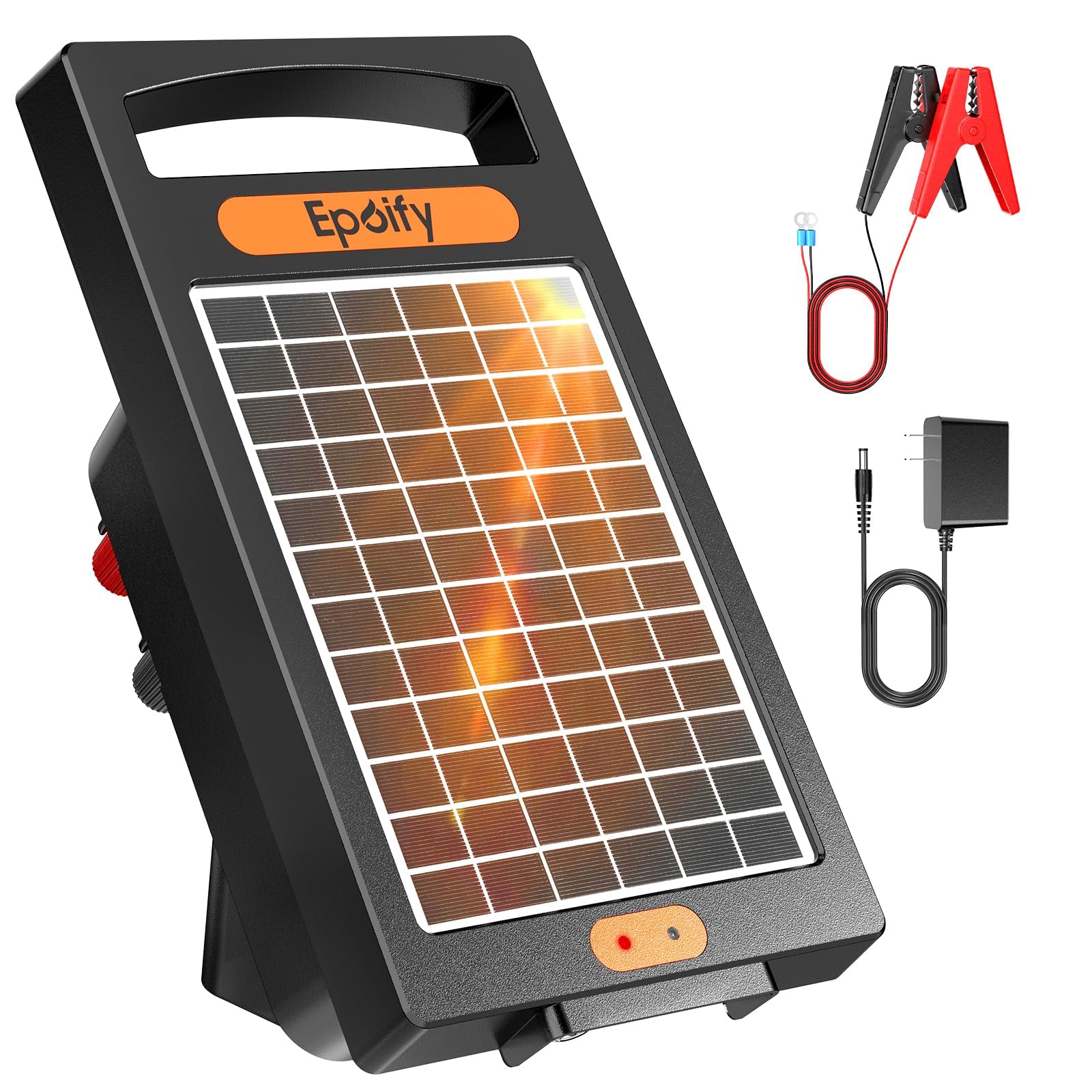
Epoify 10-Mile Solar

Epoify 10-Mile Solar

Small gardens

Our Score 8.4/10
Check Price

Worth Noting

  • Battery charge may not hold overnight in some cases, especially after extended use.
Joule Output
0.18
Power Source
Solar + AC
Range (Ideal)
10 miles
Read the full review

This Epoify charger powers small fences for gardens or temporary pens at a low cost. Solar panel and AC adapter provide flexibility, and setup is simple. However, battery life may drop after a few months, and some units develop charging issues sooner. For consistent long-term containment, consider a more dependable model like the compact Gallagher solar charger.

Bottom line: Works for temporary garden fencing where occasional battery drop is acceptable.

10

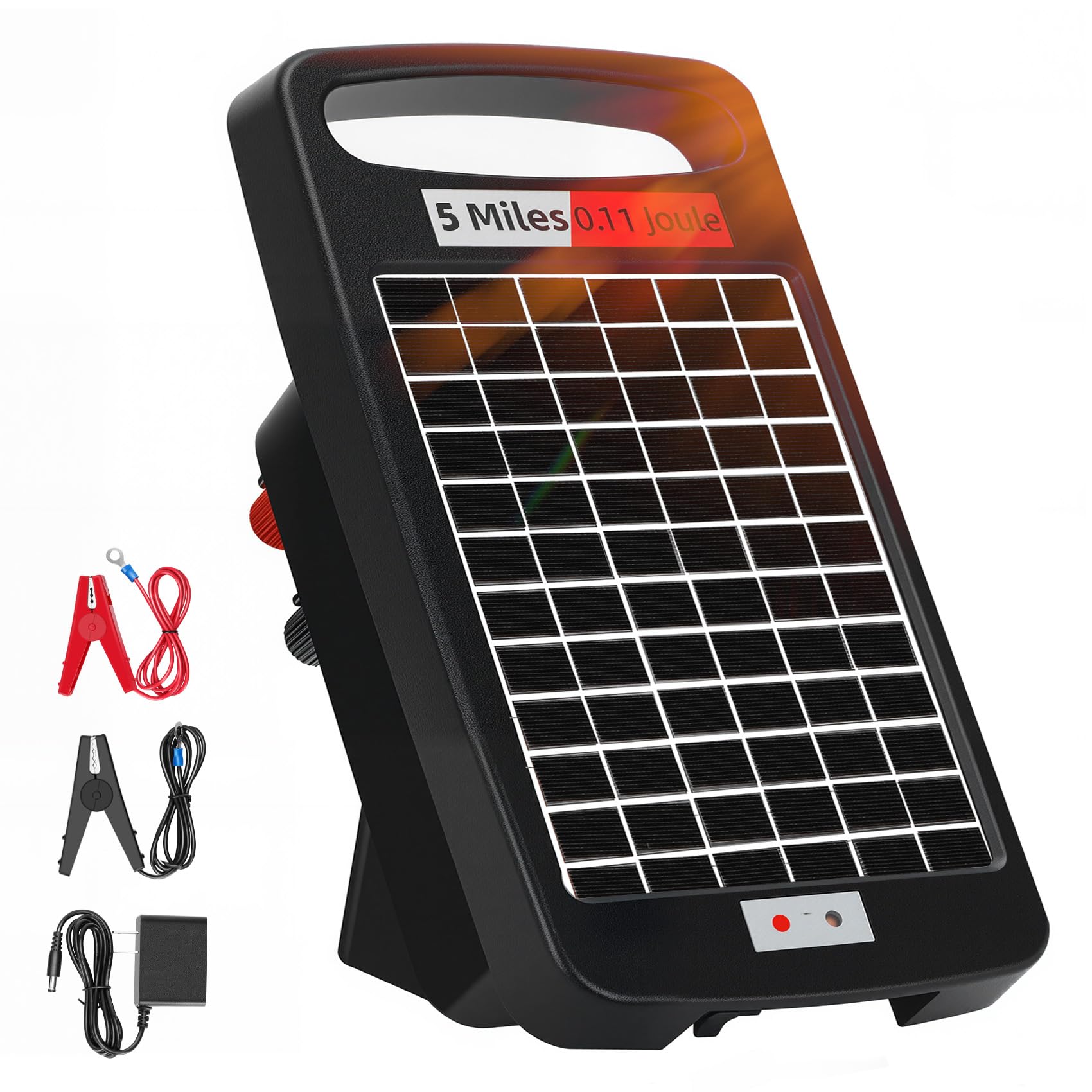
Zhangmengge 5-Mile Solar

Zhangmengge 5-Mile Solar

Small gardens

Our Score 8.2/10
Check Price

Worth Noting

  • In some cases battery charge declines rapidly after a short period.
Joule Output
0.11
Power Source
Solar + AC
Range (Ideal)
5 miles
Read the full review

This budget solar unit powers small garden fences or short-term dog runs at a very low upfront cost. Setup is simple and the build feels decent for the price. However, battery charge can drop faster than expected, and some units develop issues within months — think of it as a disposable option for occasional, non-critical fencing rather than a long-term livestock containment tool.

Bottom line: Works for a small chicken run or portable dog pen where a lower shock level is acceptable and failure means a minor inconvenience.

How to Choose

Joule Output: The Real Measure of Power

Joule output dictates how much energy each pulse delivers to the fence. Higher joules push through weed contact and maintain voltage over long distances. A 0.5-joule charger works fine on a clean 10-mile fence, but heavy weeds require at least 1-2 joules to avoid voltage drop.

Low-joule chargers (under 0.3 J) are only reliable for short garden fences or small animal enclosures where vegetation is minimal. For livestock on multi-strand fences, aim for 1 joule or more.

Power Source: AC vs. Solar vs. Battery

AC-powered chargers plug into a standard outlet and deliver consistent voltage without relying on sunlight or battery health. They are the most reliable option for any property with grid access. Solar chargers offer off-grid convenience but often underperform in cloudy climates or after the battery degrades.

Battery-only units (not covered here) are portable but require frequent recharging. If you need off-grid power, choose a solar charger with a LiFePO4 battery and a proven track record—cheaper solar models commonly fail within a year.

Fence Length and Weed Tolerance

Manufacturers rate chargers for ideal conditions (clean fence, dry grass) and heavy weed conditions. The heavy-weed rating is the realistic number for most farms. For example, a charger rated for 10 miles ideal may only manage 1-2 miles through tall weeds.

Always size your charger for the worst-case vegetation you expect. A 25-mile charger with a 6-mile weed rating is better suited for a 10-acre pasture than a 10-mile charger with a 1-mile weed rating.

Warranty and Build Quality

Warranty length is a good proxy for manufacturer confidence. Premium brands like Gallagher offer 3-year warranties; Zareba offers 2 years. Budget chargers often have no warranty or only 30 days, which matches their higher failure rate.

Check for lightning protection, weather-sealed enclosures, and replaceable batteries. A charger with a 2-year warranty and solid build quality will outlast two budget units that fail within months.

Frequently Asked Questions