Fencing & Farm Structures

11 Best Gas Earth Auger of 2026: Find Durability, Not Just High CC

Avoid early failure in gas earth augers. This guide helps homeowners and farmers pick a durable post hole digger that matches their soil and workload.

A gas earth auger with a big engine looks great on paper. But when the pull cord snaps on the third hole or the throttle sticks wide open, that high cc doesn't matter. The real problem is that many budget units cut corners on the gearbox, clutch, and throttle assembly — the parts that determine whether the tool lasts beyond a single weekend.

This guide focuses on the augers that actually hold up under real garden and farm conditions. After digging through hundreds of user experiences, the pattern is clear: reliable models like the Earthquake E43 prove that a well-built 43cc outlasts a cheap 52cc every time. You don't need to gamble on a brand you've never heard of just to save forty dollars.

Choosing the right auger comes down to matching the tool to your soil type and how often you'll use it. A contractor digging fifty fence holes a week needs different internals than a homeowner planting a few trees. This guide cuts through the spec sheet hype to show you which augers earn their keep and which ones belong in the return bin.

1

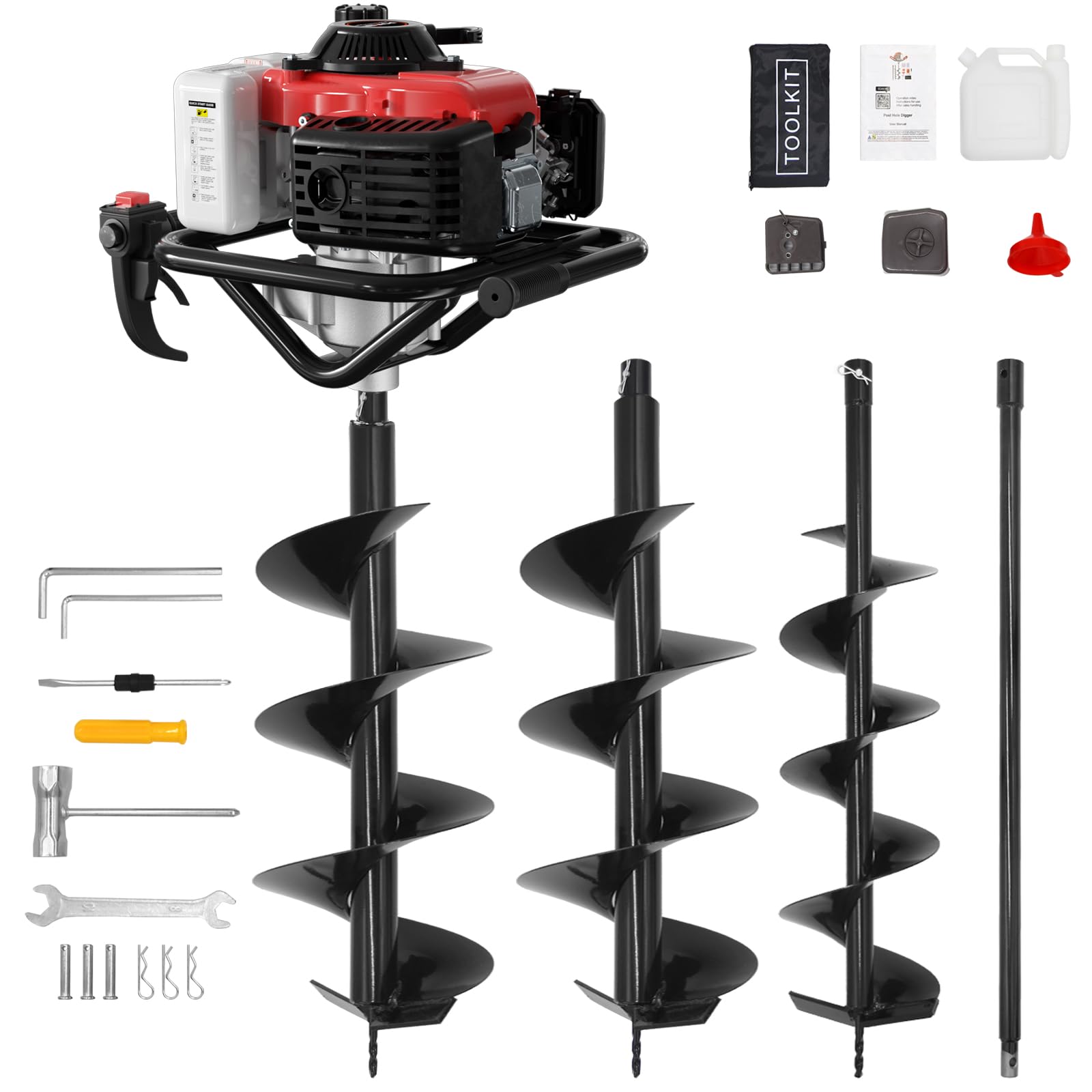
GardenTrax 52cc

Top Pick
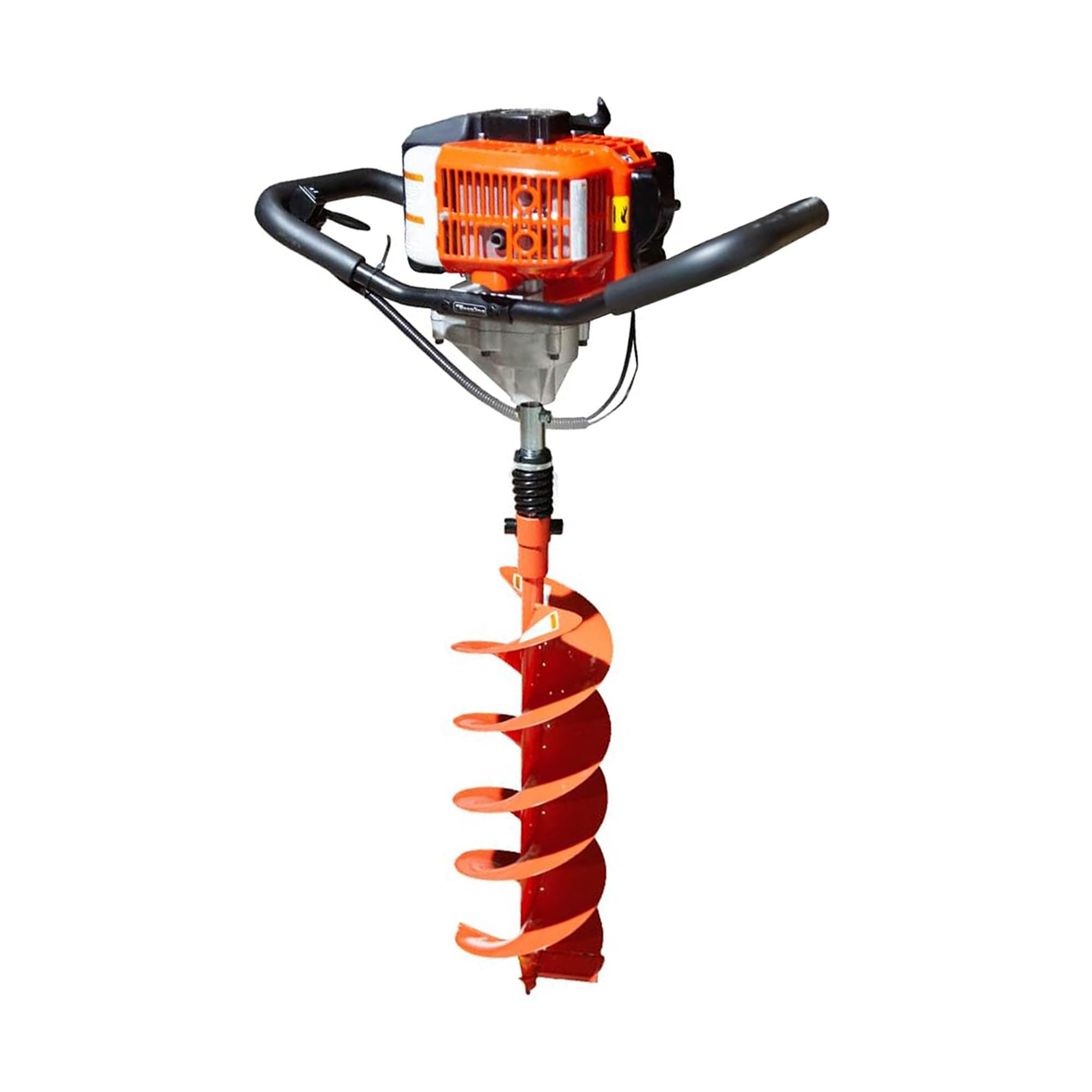
GardenTrax 52cc

Faster digging

Our Score 9.6/10
Check Price

Worth Noting

  • Only one bit size (8 inch) is included
  • Two-stroke engine requires mixing oil with gasoline, adding a step to refueling.
Stroke
2-stroke
Displacement
52cc
Bits Included
8" dual spiral
Read the full review

The dual-spiral bit design sets this GardenTrax apart, cutting through clay and compacted soil faster than conventional single-spiral bits. The 52cc engine fires up reliably even in cold weather, and the build quality shows careful attention – from the patented shock absorber to the overall fit and finish. Digging feels efficient and less tiring thanks to the bit's aggressive spiral.

This auger suits buyers who prioritize digging speed and build quality and are comfortable making a purchase without a long track record of user reports. The included 8-inch bit covers common fence and gardening holes, but those needing multiple diameters will need to buy additional bits. The two-stroke engine requires mixing fuel, a trade-off for those used to four-stroke convenience.

Keep a measuring bottle for oil – pre-mixing before refueling makes two-stroke maintenance simple.

Bottom line: If you value digging speed and high build quality and are not reliant on a large user base for reassurance, this auger delivers on its promise.
2

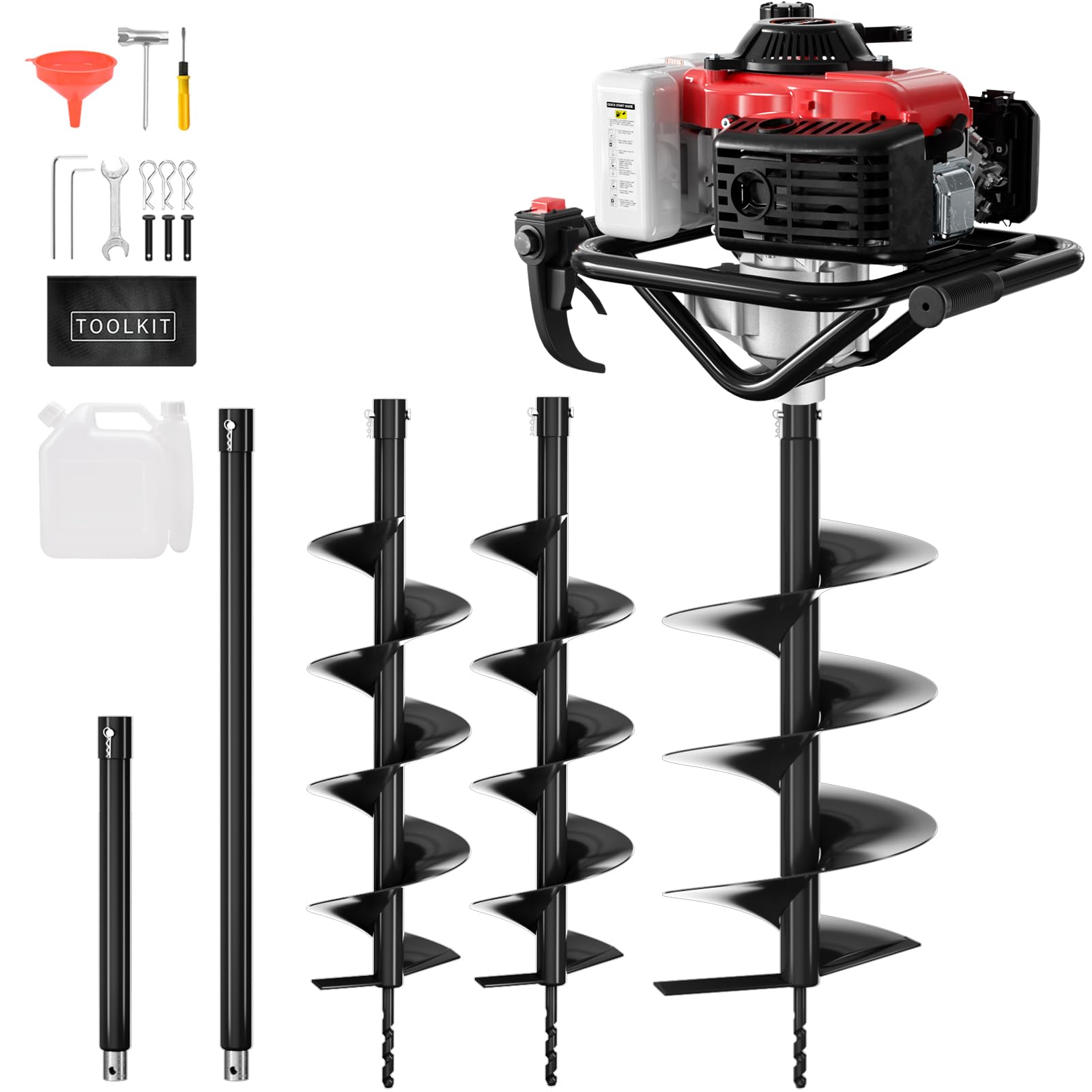
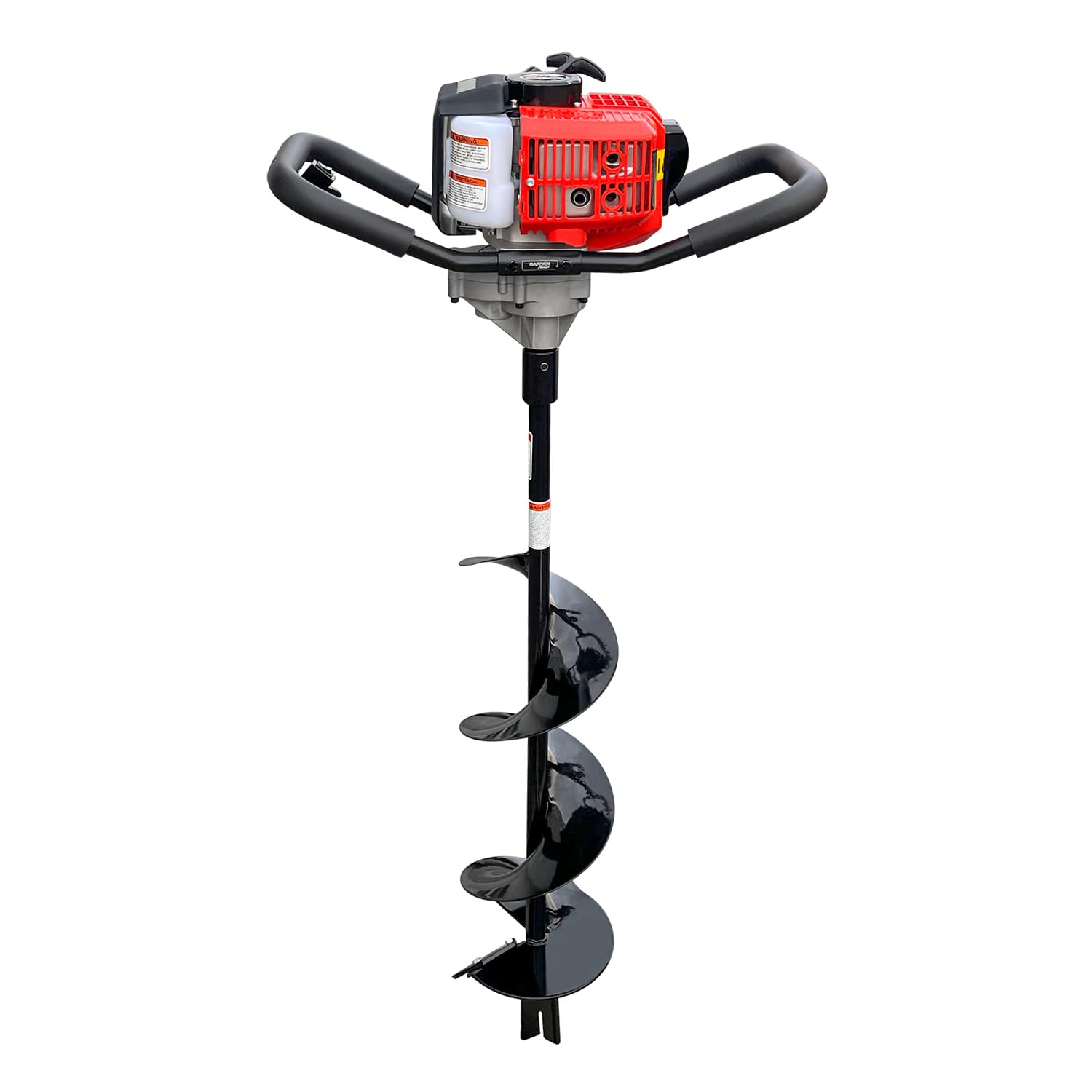
GardenTrax 43cc

GardenTrax 43cc

Home and farm

Our Score 9.2/10
Check Price

Worth Noting

  • 2-cycle engine requires mixing fuel, which some find less convenient
Stroke
2-cycle
Displacement
43cc
Bits Included
8" x 36"
Read the full review

The GardenTrax 43cc offers straightforward, no-surprises performance for typical fence and garden digging. While the dual-spiral bit model cuts through clay faster, this is the more established choice with consistent user satisfaction. The 43cc engine can run out of steam in very heavy clay or large-diameter holes, so it's best for standard home and farm tasks.

Bottom line: A solid choice for homeowners needing a simple, capable auger for occasional use – no need to overcomplicate.

3

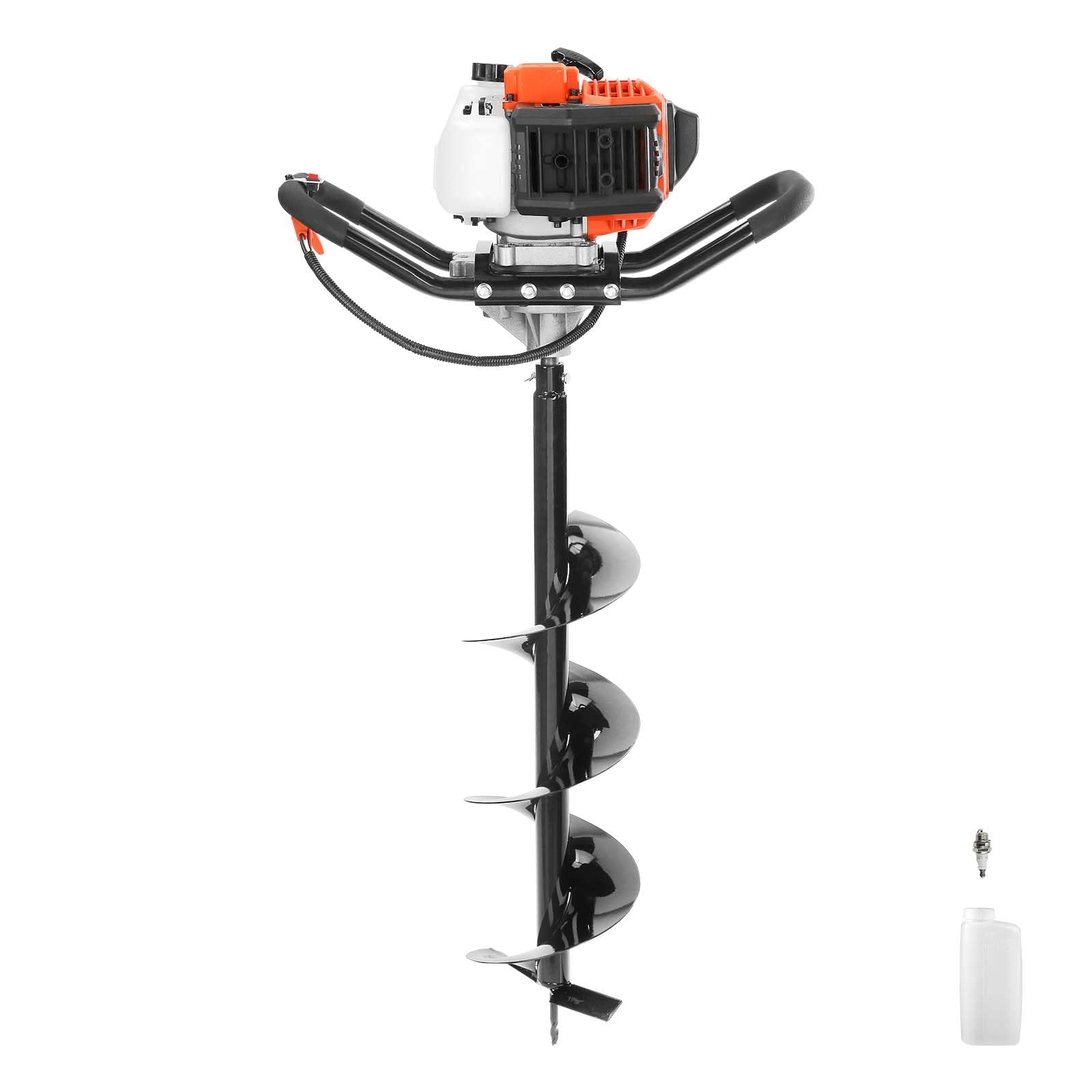
Earthquake E43 43cc

Earthquake E43 43cc

Frequent digging

Our Score 9.0/10
Check Price

Worth Noting

  • Starting requires patience and a consistent pull technique until you learn the choke and primer sequence.
  • Some units have shown overheating or starter seizing under heavy use; the warranty covers such cases.
Stroke
2-cycle
Displacement
43cc
Bits Included
8" x 36"
Read the full review

The Earthquake E43 has drawn consistent praise from over 700 buyers for cutting through rocky soil and heavy clay without bogging down. The 43cc 2-cycle engine provides enough torque for one-person operation, and the 30:1 gearbox with ball bearings handles the load. The 5-year warranty backs up the metal construction, making this a machine built for regular fence and garden work.

This auger suits farmers, contractors, and anyone who digs holes weekly in demanding soil. The occasional reports of hard starting or overheating are real, but the warranty covers most issues, and the starting technique becomes natural after a few pulls. If you need a tool that will show up and dig day after day without expensive repairs, this is the safest bet in the category.

Press the primer bulb 5-6 times and engage full choke when starting cold to reduce pull effort.

Bottom line: The Earthquake E43 is the most thoroughly reviewed gas auger for consistent digging — the 5-year warranty makes the upfront cost a long-term investment.

4

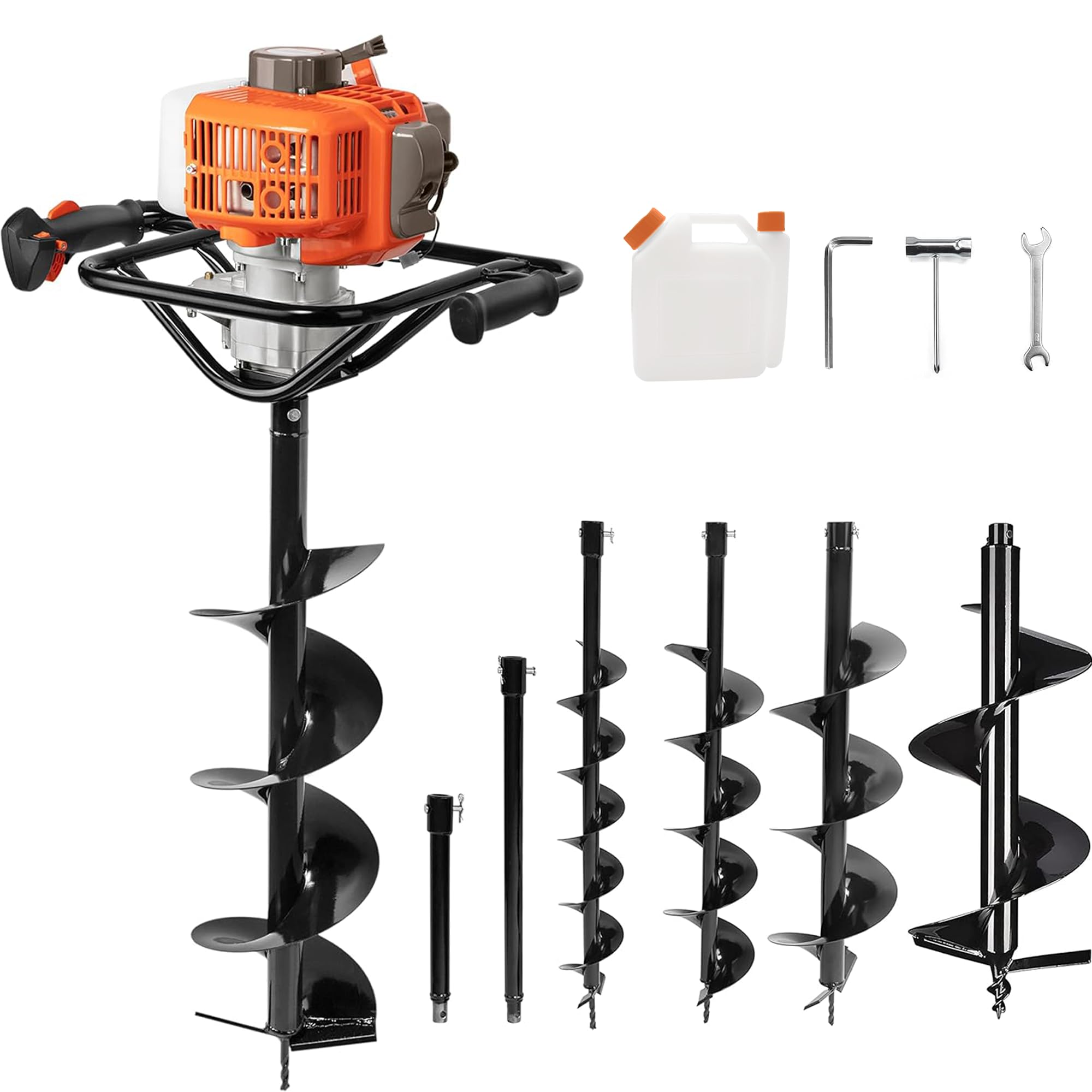
Prowoo 78cc 4-Stroke

Prowoo 78cc 4-Stroke

Medium-duty use

Our Score 9.0/10
Check Price

Worth Noting

  • Weld breakage on the cutter blade can occur in some units
  • Occasional oil leaks have been reported; check seals upon arrival.
Stroke
4-stroke
Displacement
78cc
Bits Included
6", 8"
Read the full review

The Prowoo 78cc 4-stroke runs on straight gasoline, skipping the hassle of mixing oil. Its 78cc engine provides ample torque for cutting through roots and compacted soil, and the kit includes both 6-inch and 8-inch bits plus an extension rod. This makes it a straightforward alternative to the top pick for buyers who prioritize fuel simplicity.

This auger suits gardeners and farmers with medium-duty needs — digging fence posts or planting holes on a regular basis. Weld breakage on the cutter blade and occasional oil leaks have been noted, but these are isolated and the unit holds up well for typical use. The price is fair for the features, though it lacks the long-term track record of the proven 2-stroke option.

Bottom line: For buyers who want no-mix fuel and solid power for occasional fence posts and garden holes, the Prowoo delivers — just inspect the cutter and seals on arrival.

5

Baotree 78cc 4-Stroke

Baotree 78cc 4-Stroke

Homeowners, DIY

Our Score 8.8/10
Check Price

Worth Noting

  • Plastic throttle lever can be fragile under heavy use
  • Weld and plastic component durability may limit the digger's lifespan for long-term heavy projects.
Stroke
4-stroke
Displacement
78cc
Bits Included
6", 8"
Read the full review

The Baotree 78cc 4-stroke post hole digger includes both 6-inch and 8-inch bits plus two extension rods, making it a complete kit for typical fence and garden holes. Unlike the top pick, it runs on straight gas without requiring oil mixing – a convenience for DIYers. This 78cc engine delivers strong digging performance in normal soil and handles roots reasonably well. For homeowners who need a cost-effective way to dig holes for planting or fencing, this kit offers good value. However, the plastic throttle lever may show signs of stress under heavy use, and long-term durability of weld points and plastic components can be a limitation for extended projects. That tradeoff is acceptable for moderate-duty work but means it is not suitable for daily commercial use.

To extend the life of the plastic throttle lever, avoid sharp or forceful pulls and keep movements smooth.

Bottom line: For homeowners who want a 4-stroke without mixing fuel, this kit delivers strong digging at a lower cost than renting – just be mindful of the plastic parts under heavy use.

6

DYRABREST 52cc

DYRABREST 52cc

Single project

Our Score 8.8/10
Check Price

Worth Noting

  • Clutch may not disengage, allowing the bit to spin while idling
Stroke
2-cycle
Displacement
52cc
Bits Included
4",6",8"
Read the full review

Includes three bits and an extension bar at a budget-friendly price. However, the clutch may not disengage, and some units can cease operation after short use — best suited for tight budgets willing to accept early replacement.

Bottom line: Only consider this if you need the cheapest possible auger for a single project and are prepared to dispose of it afterward.

7

VEVOR 43cc

VEVOR 43cc

One-time job

Our Score 8.6/10
Check Price

Worth Noting

  • Some units may not start or may stop running after a few holes
Stroke
2-cycle
Displacement
43cc
Bits Included
8" x 30"
Read the full review

The VEVOR 43cc is the lowest-priced gas auger in this set, and when it runs, it digs adequately. However, the build quality can be inconsistent: some units may not start at all, and components like the pull cord can snap after limited use. This auger suits buyers on a tight budget for a one-time job who are willing to accept that the tool may stop working early.

Bottom line: Buy this only for a single fence project on a tight budget if you can tolerate the possibility of receiving a unit that does not start.

8

DC HOUSE 52cc

DC HOUSE 52cc

One-off project

Our Score 8.6/10
Check Price

Worth Noting

  • Welds and pull cords can fail in some units, limiting its lifespan for ongoing projects.
Stroke
2-cycle
Displacement
52cc
Bits Included
6", 10"
Read the full review

DC HOUSE’s 52cc auger is a popular entry-level choice — low price and easy starting, sufficient for light soil fence holes. But some units may experience weld breakage or pull cord snapping, and the clutchless design keeps the bit spinning at idle. It suits one-off projects where renting isn’t an option, provided you accept the durability gamble.

Bottom line: This auger fits a tight budget for a single fence line or garden bed, but consider it a disposable tool rather than a long-term investment.

9

BILT HARD 52cc

BILT HARD 52cc

Budget DIY

Our Score 8.6/10
Check Price

Worth Noting

  • Fuel lines can degrade and the shaft may snap under heavy load.
Stroke
2-cycle
Displacement
52cc
Bits Included
8" x 30"
Read the full review

Budget-friendly 52cc gas auger delivers decent power and starts easily once you learn the choke, with a solid feel for the price. Fuel lines can degrade over time and the shaft may snap under heavy load, and throttle cable issues have been noted. Best kept to small projects where a failure won't derail your timeline.

Bottom line: Works well for budget-conscious DIYers tackling a single fence or planting project, but not for repeated use.

10

PROYAMA 54cc

PROYAMA 54cc

Varied projects

Our Score 8.4/10
Check Price

Worth Noting

  • Handle and gearbox issues have been reported after limited use
Stroke
2-cycle
Displacement
54cc
Bits Included
4",6",8",12"
Read the full review

Four bit sizes and two extension rods cover most hole diameters, and the engine handles clay and small roots. However, replacement parts are difficult to find and customer support is limited, which can complicate any needed repairs. This makes it a short-term tool for DIYers who can manage potential issues.

Bottom line: Best for a single project where you need multiple bit sizes and are comfortable with the risk of needing repairs.

11

PRIJESSE 72cc

PRIJESSE 72cc

High cc budget

Our Score 8.2/10
Check Price

Worth Noting

  • Plastic throttle and loose hardware may need tightening before first use.
Stroke
2-stroke
Displacement
72cc
Bits Included
4",8",12"
Read the full review

The 72cc engine delivers good torque for the price, making it effective for fence and garden holes. However, starting difficulty and loose hardware have been noted out of the box, and plastic components may require attention. These assembly inconsistencies keep it from reaching the dependability of a more refined 4-stroke option.

Bottom line: A cost-effective choice for those willing to inspect and tighten components before use.

How to Choose

Engine Displacement: More CC Isn't Always Better

A larger engine displaces more fuel and air, producing higher torque — that helps chew through hard clay and roots. But higher cc often attracts budget brands who pair a big engine with a cheap gearbox and plastic throttle lever. The result is a tool that stalls, overheats, or strips its drive teeth after a few holes.

For typical fence-post and tree-planting jobs, 43cc to 52cc is plenty. The key is whether the transmission and clutch are built to handle that power consistently. A well-designed 43cc unit like the Earthquake E43 will outlast a poorly assembled 72cc model every time.

Two-Stroke vs. Four-Stroke

Two-stroke engines are lighter, simpler, and cheaper to manufacture. They also require mixing oil into the gasoline at a precise ratio (typically 40:1 or 50:1). Get the mix wrong and the engine smokes, fouls the plug, or seizes. Four-stroke engines run on straight gas, eliminating that hassle, but they add 5–10 pounds and cost more.

If you dig holes only a few times a year and hate mixing fuel, a 4-stroke saves frustration. If you need to carry the auger across a field or use it frequently, a 2-stroke's lighter weight and easier starts (once warm) win out. The trade-off is simpler daily operation versus higher upfront weight.

Auger Bits: Size and Quantity Matter

The auger bit determines how wide and deep a hole you can dig. A 6-inch bit is standard for 4x4 fence posts; 8-inch for 6x6 posts or larger plants. Kits that include multiple bits offer more flexibility but often skimp on bit quality — thin steel bends under rocky soil, and welds crack.

Look for bits made from thick alloy steel with reinforced cutting edges. A single high-quality 8-inch bit beats a set of four flimsy ones. If you need different sizes, buying a reliable powerhead and then purchasing a second bit separately often yields better long-term value.

Build Quality and Reliability

The real differentiator in gas augers is the clutch and throttle assembly. Cheap models use a straight-through transmission that keeps the bit spinning even at idle — making the tool dangerous and hard to control. A centrifugal clutch that disengages at low RPM is safer and reduces wear.

Plastic components like throttle levers, air filter housings, and recoil starter casings are common failure points. Metal replacements or reinforced plastics indicate a manufacturer that expects the tool to be used hard. Reading user reports of broken welds, snapped shafts, and seized starters tells you more than any spec sheet.

Warranty and Brand Support

A longer warranty — five years versus one or two — signals that the manufacturer stands behind the gearbox and engine. More importantly, it gives you a clear path if something breaks. Several mid-range brands offer 5-year limited warranties, while budget units often have no stated warranty or vague 'contact seller' policies.

If you rely on the auger for income or critical projects, a brand with a known parts network and responsive customer service saves days of downtime. The extra cost of a premium-priced model is often recovered by avoiding a second purchase when the cheap one dies.

Frequently Asked Questions