Seeds & Plants

9 Best Grass Seed for Shade of 2026: Picks That Actually Thrive Under Trees

Which grass seed survives deep shade under trees? Our picks focus on blends that truly work in low light, not just marketing claims.

You've probably seen the bags: 'Sun & Shade Mix' promising a lush lawn in low light. But anyone who has tried seeding under a mature oak or along a north-facing wall knows the reality: most of these mixes are formulated for full sun and stumble in real shade.

The difference comes down to grass species. Fine fescues (creeping red, Chewings, hard fescue) handle low light much better than the Kentucky bluegrass and perennial ryegrass that dominate general-purpose blends. Choosing the right seed type matters more than brand or price.

That's the central decision: do you pick a small-bag specialist that thrives in dense shade, or a larger bag that covers more ground but demands more sun? Neither is wrong — it depends on your lawn's light and your patience for watering.

1

JG Black Beauty Dense Shade

Top Pick
JG Black Beauty Dense Shade

Dense shade lawns

Our Score 8.6/10
Check Price

Worth Noting

  • The 1 lb bag covers only 300 sq ft for new lawns, limiting it to small areas or targeted overseeding.
  • Germination can be slow and uneven, and the grass may fade within months if the area isn't consistently moist and shaded.
Seed Blend
Fescue, bluegrass, ryegrass
Min Sun Hours
Shade Tolerance
Dense shade
Coverage Per Bag
300 sq ft new
Read the full review

The Jonathan Green Black Beauty Dense Shade mix is formulated for the low-light conditions that cause standard sun-and-shade blends to fail. Its four-grass blend (tall fescue, Kentucky bluegrass, perennial ryegrass, fine fescue) delivers a dark green, dense turf under tree canopies and along north-facing walls.

Germination can be slower and patchier than full-sun mixes, and the grass may fade after a few months if the area isn't consistently moist. The 1 lb bag covers only 300 sq ft for new lawns, so this is a targeted spot solution for small shaded patches rather than a whole-yard project. Homeowners willing to water regularly and prepare the soil will get the best results.

Pre-moisten the soil and keep it consistently damp for up to 21 days to encourage even germination.

Bottom line: For small shaded patches where you can control watering, this mix offers the most dependable shade performance in its price range.

2

Scotts Dense Shade Mix

Scotts Dense Shade Mix

Large shade areas

Our Score 8.6/10
Check Price

Worth Noting

  • Germination can be patchy in some conditions
Seed Blend
Dense shade blend
Min Sun Hours
3 hours
Shade Tolerance
Dense shade
Coverage Per Bag
1,400 sq ft overseed
Read the full review

Scotts Dense Shade Mix is built for lawns that get as little as three hours of direct sun, covering up to 1,400 square feet when overseeding — significantly more area than the top pick. The blend includes root-building nutrition and fertilizer, aiming to establish grass in conditions where most standard mixes falter.

This is the right choice if you have a large shady lawn and want broad coverage per bag. However, germination can be hit-or-miss: some patches may not grow even with consistent watering, so plan to overseed a second time if you need full density.

Bottom line: Best for large shady lawns where coverage per bag matters, provided you can handle the possibility of uneven germination and plan for a follow-up seeding.

3

JG Dense Shade 3lb

JG Dense Shade 3lb

Medium shade lawns

Our Score 8.4/10
Check Price

Worth Noting

  • Germination can be slow and patchy; consistent moisture and patience are necessary for even results.
Seed Blend
Fine fescue dominant
Min Sun Hours
Shade Tolerance
Dense shade
Coverage Per Bag
1,800 sq ft overseed
Read the full review

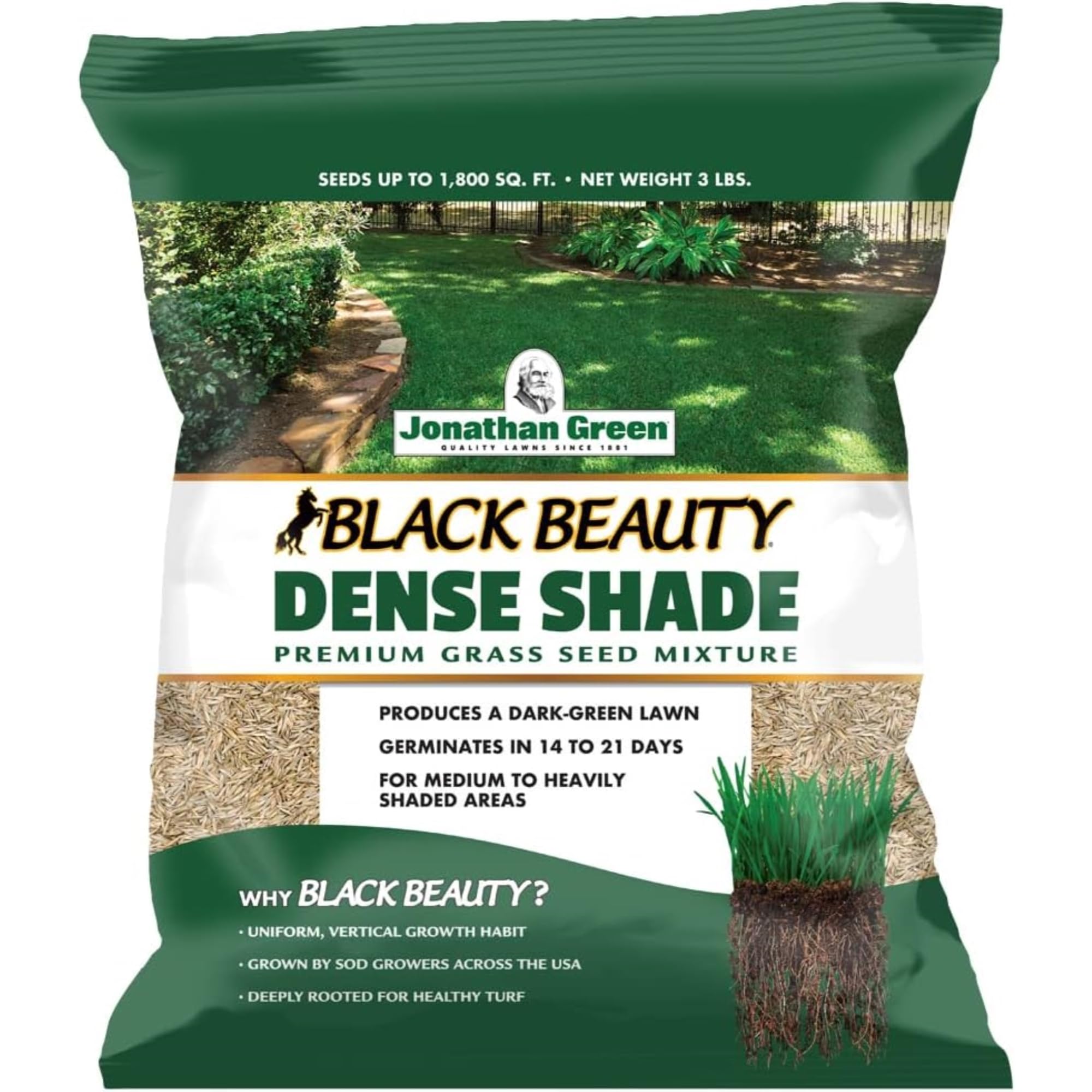
The 3 lb bag of Jonathan Green Dense Shade Grass Seed delivers the same fine fescue-dominant blend that performs well under dense shade, producing dark green turf without filler seeds. It covers up to 1,800 sq ft for overseeding, making it a mid-size alternative to the top pick's 1 lb bag. Shade tolerance is strong, but germination requires patience — new growth may appear slowly over 2–3 weeks, and consistent moisture is critical for even results. This seed suits buyers who have a medium-sized shaded lawn and prefer a pure seed without fillers, but who can accept the slower establishment timeline.

Keep the seedbed consistently moist for the first two weeks to improve germination uniformity.

Bottom line: For medium shaded lawns where the top pick's 1 lb bag falls short on coverage, this 3 lb version delivers the same effective blend — just budget extra time for germination.

4

GreenView Tall Fescue

GreenView Tall Fescue

Heat-tolerant shade

Our Score 8.4/10
Check Price

Worth Noting

  • Germination can be slow and spotty in cooler soil or with inconsistent watering
  • Some bags may contain weed seeds like oxalis that compete with grass
Seed Blend
Tall fescue blend
Min Sun Hours
4-6 hours
Shade Tolerance
Moderate shade
Coverage Per Bag
1,750 sq ft overseed
Read the full review

This tall fescue blend handles heat and dry spells better than most shade-oriented mixes, staying green through summer when fine fescues might go dormant. Its weed-free claim holds up for the majority of bags, producing a thick, uniform turf in areas that get at least 4–6 hours of sun.

Best for homeowners with partly shaded lawns that bake in the afternoon sun — the drought tolerance is a real advantage. It won't thrive in dense shade under trees or north-facing beds, and germination takes 10–14 days with consistent moisture. Some bags have shown occasional oxalis contamination, so inspect before spreading.

Water lightly twice daily until seedlings reach 2 inches tall — dry soil delays germination further.

Bottom line: A strong pick for sun-dappled lawns that need heat tolerance, but plan for a 10–14 day germination window and avoid relying on it in deep shade.

5

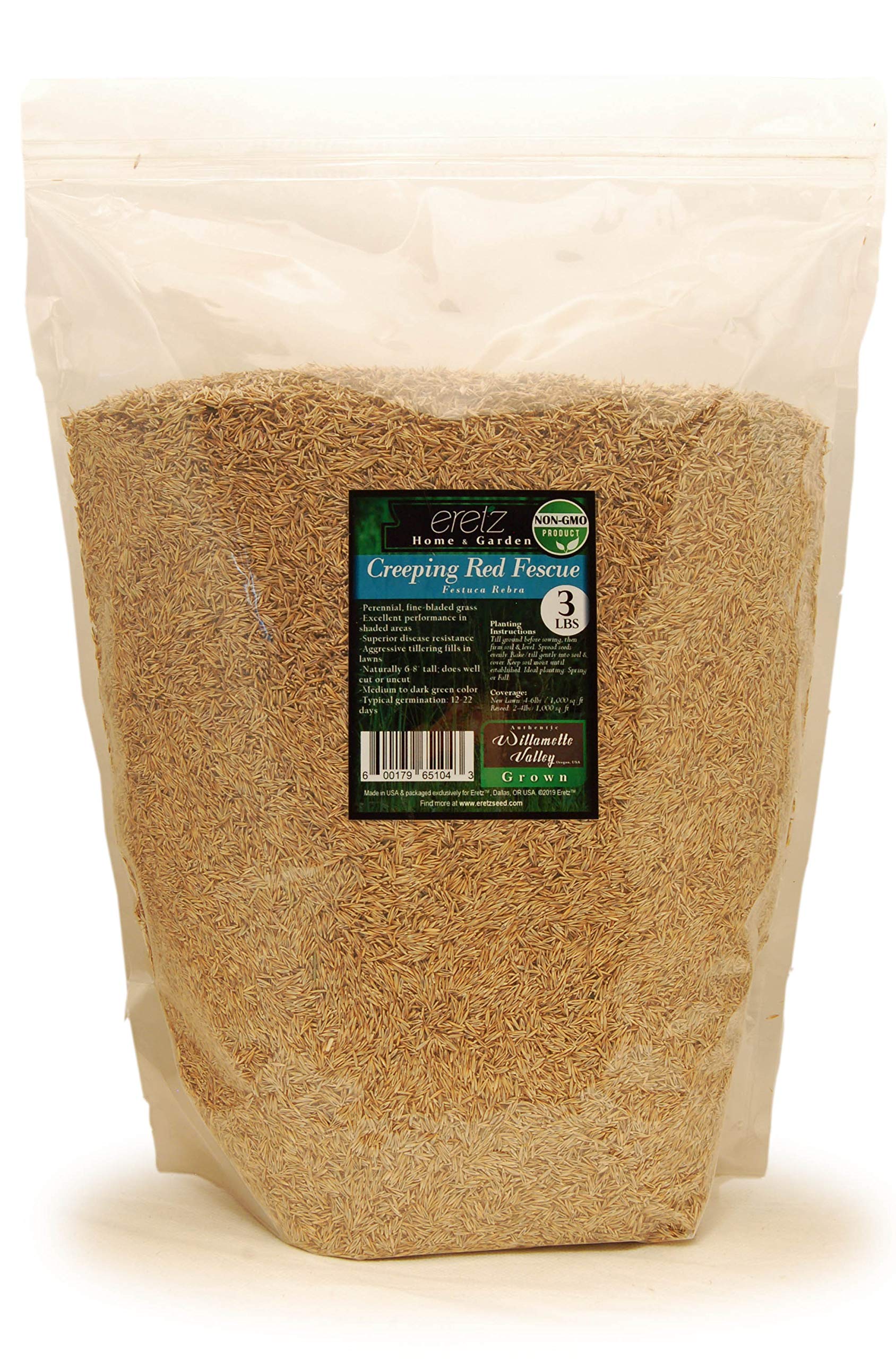
Eretz Creeping Red Fescue

Eretz Creeping Red Fescue

Deep shade natural

Our Score 8.4/10
Check Price

Worth Noting

  • In a bag that may have aged on a shelf, germination can be slow and sporadic
Seed Blend
100% creeping red fescue
Min Sun Hours
Shade Tolerance
Deep shade
Coverage Per Bag
900-1,200 sq ft
Read the full review

Eretz delivers pure creeping red fescue for the toughest shade spots where standard mixes struggle. The fine-bladed grass keeps its color under trees and on north-facing slopes, and the 3lb bag covers roughly 900–1,200 square feet for overseeding. No fillers or weed seeds means the only thing you’re planting is the grass you want.

This seed suits buyers who want a low-maintenance, natural-looking lawn in deep shade and can water consistently during the 2–3 week germination period. The main catch: success hinges on freshness. If the bag has sat on a shelf too long, germination can be patchy. Not a choice for high-traffic areas — the fine fescue stays delicate.

Check the seed lot date before planting — fresher seed gives more dependable results.

Bottom line: A reliable choice for dense shade if you’re willing to verify the seed lot date and water patiently through establishment.

6

Scotts Sun & Shade Mix

Scotts Sun & Shade Mix

Mixed light areas

Our Score 8.4/10
Check Price

Worth Noting

  • In less than 4 hours of direct sun, germination can be sporadic.
Seed Blend
Fescue, bluegrass, ryegrass
Min Sun Hours
Shade Tolerance
Moderate shade
Coverage Per Bag
2,240 sq ft overseed
Read the full review

This mix covers up to 2,240 sq ft for overseeding in lawns that get both sun and moderate shade, and includes fertilizer and soil improver in the bag. For areas with less than 4 hours of direct sun, germination can be unpredictable — this blend is not designed for dense shade. A dedicated dense shade product is a better fit for low-light spots.

Bottom line: Best for lawns with mixed sun and moderate shade that get at least four hours of daily sun — not a solution for dense shade.

7

Pennington Smart Sun/Shade N

Pennington Smart Sun/Shade N

Partial shade north

Our Score 8.4/10
Check Price

Worth Noting

  • Germination can be inconsistent, and some batches introduce weeds instead of desired grass.
Seed Blend
Ryegrass, bluegrass, fescue
Min Sun Hours
4-6 hours
Shade Tolerance
Moderate shade
Coverage Per Bag
1,000 sq ft
Read the full review

Pennington's Smart Sun and Shade mix is a cost-effective choice for northern lawns with 4-6 hours of sunlight. It stays green through winter and works well for overseeding in moderate shade. However, germination can be inconsistent and some batches introduce weeds instead of grass — issues more common here than in the Dense Shade mix. For dense shade or weed-sensitive buyers, a specialized product is a safer bet.

Bottom line: A good value for northern lawns with 4-6 hours of sun and a tight budget, provided you accept the risk of inconsistent results.

8

Pennington Dense Shade

Pennington Dense Shade

Budget dense shade

Our Score 8.2/10
Check Price

Worth Noting

  • Germination can be patchy, with some areas remaining bare despite careful watering
Seed Blend
Ryegrass, bluegrass, fescue
Min Sun Hours
2-6 hours
Shade Tolerance
Dense shade
Coverage Per Bag
1,750 sq ft
Read the full review

Pennington's Dense Shade Mix covers 1,750 sq ft at a mid-range price, combining disease and traffic tolerance with a 2-6 hour sun requirement. It's a better value than the Sun/Shade North blend for shaded lawns, but seed freshness can be a gamble.

This mix suits budget-conscious buyers overseeding large shaded areas, but only if they check the expiration date before planting. Germination may be uneven in some spots, so patience and consistent moisture are key.

Check the expiration date on the bag before planting, and overseed thickly for best results.

Bottom line: This mix delivers good results when the seed is fresh, but the freshness gamble makes it a risk for the price — check the date before buying.

9

Outsidepride Fine Fescue

Outsidepride Fine Fescue

Fine fescue lawns

Our Score 8.2/10
Check Price

Worth Noting

  • Germination can be inconsistent, making results a risk for the premium price
Seed Blend
Fine fescue blend
Min Sun Hours
Shade Tolerance
Dense shade
Coverage Per Bag
~1,500 sq ft
Read the full review

OptiGrowth coating supplies nutrients and kelp for establishment, and the fine fescue blend produces an attractive, shade-tolerant lawn. However, germination can be inconsistent, and the cost per square foot is high compared to other fine fescue options. This mix works best for small overseeding jobs where the premium texture matters more than budget savings.

Bottom line: Best suited for small areas where the fine texture justifies the higher cost, not for large budgets or guaranteed coverage.

How to Choose

Shade Tolerance Level

Shade tolerance labels can be misleading. A product marked 'dense shade' typically contains at least 50% fine fescue, which photosynthesizes efficiently in low light. 'Sun & shade' blends often have less than 20% fine fescue and rely on tall fescue or bluegrass that need direct sun for several hours.

The trade-off: fine fescue is softer and less durable under foot traffic than tall fescue. If your shaded lawn also sees heavy use, you may need to accept thinner coverage or overseed more frequently.

Minimum Sun Hours Required

No grass grows in complete darkness. Even the best dense-shade mixes need at least 2–4 hours of direct sun or dappled light to survive. Products that claim 'as little as 3 hours' are realistic; those that claim 'grows anywhere' usually disappoint.

If your site gets less than 2 hours of direct sun, consider replacing grass with a shade-tolerant ground cover like moss, vinca, or pachysandra rather than fighting for turf.

Seed Blend Composition

The blend matters more than the brand. Fine fescue (creeping red, Chewings, hard fescue) are the workhorses of shade. Tall fescue tolerates some shade but needs more sun. Kentucky bluegrass and perennial ryegrass are poor choices for low light.

Look for bags where fine fescue is listed first (highest percentage). Pure fine fescue products like Eretz Creeping Red Fescue are ideal for deep shade but establish slowly and require consistent moisture.

Coverage Area Per Bag

Coverage numbers on bags assume perfect conditions: full sun, prepared soil, consistent watering. In real shade, expect to use 20–30% more seed to compensate for lower germination rates and competition from tree roots.

A 7 lb bag claiming 1,750 sq ft may only cover 1,200 sq ft in deep shade. Buy extra, and don't hesitate to overseed a second time if bare spots remain after three weeks.

Frequently Asked Questions