Seeds & Plants

10 Best Grass Seed for High Traffic of 2026: Pick by Grass Type, Not Marketing

Find the right grass seed for lawns with kids and pets—durability depends on grass type, not fancy coatings.

High-traffic lawns take a beating—kids, pets, and weekend gatherings turn a neat yard into a patchy mess fast. Many grass seed bags promise durability, but the real question is which grass type actually holds up under repeated foot traffic.

Tall fescue and bermudagrass consistently outperform perennial ryegrass in wear tests, but most marketing pushes fertilizer mixes or moisture coatings instead. Sorting through the claims means focusing on the base grass blend, not the extras.

This guide helps you match seed to your specific traffic load and climate. The right choice depends on how much sun your yard gets, how quickly you need results, and how much you're willing to overseed if the first batch doesn't take.

1

JG Black Beauty Heavy Traffic

Top Pick
JG Black Beauty Heavy Traffic

Kids & pets, durable lawn

Our Score 8.6/10
Check Price

Worth Noting

  • In a small number of bags, germination may be sparse if soil moisture and temperature aren't ideal.
  • Per-pound cost is higher than basic seed mixes; value is questioned when coverage needs are large.
Grass Type
Tall Fescue / Perennial Ryegrass
Key Feature
Root depth up to 4 ft
Coverage (Overseed)
1,200 sq ft
Read the full review

This cool-season seed blend is built around tall fescue and perennial ryegrass, two grass types that hold up well under foot traffic. The root system can reach four feet deep, which gives the lawn resilience against wear from kids, pets, or backyard sports. Color comes through evenly dark green, and the seed mix has minimal weed content, so you get a uniform look without unexpected invaders.

Growth density and durability are where this seed separates itself from basic blends. It fills in thickly in sunny areas, and the deep roots help the lawn bounce back after repeated trampling. A small percentage of bags may produce uneven germination, especially if soil prep or watering schedules are off. That inconsistency is a known tradeoff with many premium seed mixes, but when conditions line up, the results are even and sturdy.

Best suited for homeowners with active lawns who want a dark, resilient turf without resorting to frequent reseeding. The 3-pound bag covers 1,200 square feet for overseeding, which is a modest area — large lawns will need multiple bags. It needs at least partial sun; shaded areas will struggle. Budget-conscious shoppers can find cheaper seed per pound, but the combination of durability, color, and low weed load makes this a focused choice for high-traffic zones.

Water consistently for the first two weeks and keep foot traffic light until seedlings reach two inches tall.

Bottom line: If your lawn sees daily foot traffic and you want a deep green color that holds up, this seed delivers — just be prepared to prepare the soil carefully and accept that a small batch might underperform.

2

Scotts High Traffic Mix

Scotts High Traffic Mix

Pets & kids, self-repair

Our Score 8.6/10
Check Price

Worth Noting

  • Price per pound is steep compared to other high-traffic blends.
  • Germination consistency can be uncertain, especially in less-than-ideal weather.
Grass Type
Tall Fescue / Perennial Ryegrass
Key Feature
Root-building nutrition
Coverage (Overseed)
2,800 sq ft
Read the full review

Scotts High Traffic Mix combines tall fescue and ryegrass with root-building fertilizer, so you don’t need to apply starter separately. The self-repair mechanism helps fill in bare spots from foot traffic over time, and the 5.6-pound bag covers a generous 2,800 square feet when overseeding. This makes it a convenient all-in-one solution for families who want a plug-and-play approach to lawn care.

The main tradeoff is the premium price per pound – this costs more than most competitors. Germination consistency can vary with weather and soil preparation; some patches may need reseeding. This seed suits homeowners with sunny, high-traffic lawns who are willing to invest in a thicker look and don’t mind occasional touch-ups. For tighter budgets or large areas, the top pick (Jonathan Green Black Beauty) offers better value with stronger durability feedback.

Water daily for the first two weeks to support even germination and maximize fill-in.

Bottom line: Best for families who want a self-repairing mix with built-in fertilizer and are willing to pay a premium for convenience – but the top pick offers better germination reliability for the money.

3

Pennington Smart Seed Rye

Pennington Smart Seed Rye

Cool-season overseeding

Our Score 8.4/10
Check Price

Worth Noting

  • Germination may be poor in some batches, requiring reseeding.
Grass Type
Perennial Ryegrass
Key Feature
Uses 30% less water
Coverage (Overseed)
~900 sq ft
Read the full review

This perennial ryegrass seed uses 30% less water while delivering good germination and a dense, green lawn. The appearance is consistently attractive, but the grass type is less durable under heavy foot traffic than tall fescue varieties. It's best used as a winter overseed in warm climates rather than a primary high-traffic turf.

Bottom line: A good choice for winter overseeding in mild climates where water savings matter, but not for lawns with heavy foot traffic.

4

JG 41000 Heavy Traffic

JG 41000 Heavy Traffic

Large high-traffic lawn

Our Score 8.4/10
Check Price

Worth Noting

  • Long-term performance in high-traffic conditions is less documented compared to the most established option
Grass Type
Tall Fescue / Perennial Ryegrass
Key Feature
100% superior grass seed
Coverage (Overseed)
2,800 sq ft
Read the full review

This large bag delivers fast germination and strong early growth across 2,800 sq ft overseed coverage, making it a practical option for sizable lawns with heavy foot traffic. Its track record is less documented than the category leader's, so long-term durability under intense wear is less certain. The premium price per pound means it suits buyers who prioritize a single-bag convenience over upfront cost savings.

Bottom line: Ideal for large overseeding projects where a single heavy bag outweighs the need for a more documented track record.

5

X-Seed Ky31 Tall Fescue

X-Seed Ky31 Tall Fescue

Moisture retention

Our Score 8.4/10
Check Price

Worth Noting

  • Coverage is limited to about 1,000 sq ft for new lawns, which may require multiple bags for larger areas.
  • The seed's suitability for heavy foot traffic is assumed from the grass type, not demonstrated through customer reports.
Grass Type
Tall Fescue
Key Feature
Moisture-retaining coating
Coverage (Overseed)
~1,000 sq ft
Read the full review

The moisture-retaining coating helps this Kentucky 31 tall fescue germinate when soil moisture is inconsistent, a useful feature for drier lawns. Covering roughly 1,000 square feet for a new lawn, this mid-range bag suits smaller projects. Its performance under heavy foot traffic relies on the grass type's inherent durability rather than verified user experience, making it a better choice for buyers who already know and trust the X-Seed brand from local garden centers.

Bottom line: Best for shoppers who already trust the X-Seed brand and need a moisture-tolerant tall fescue for smaller, drier lawns where foot traffic is moderate rather than intense.

6

Scotts Kentucky 31 Mix

Scotts Kentucky 31 Mix

Large area overseed

Our Score 8.2/10
Check Price

Worth Noting

  • Germination can be uneven, with some seeds failing to sprout even under proper care.
  • The annual ryegrass component wears faster than pure tall fescue, limiting durability in high-traffic zones.
Grass Type
Tall Fescue / Annual Ryegrass
Key Feature
99% weed-free
Coverage (Overseed)
1,750 sq ft
Read the full review

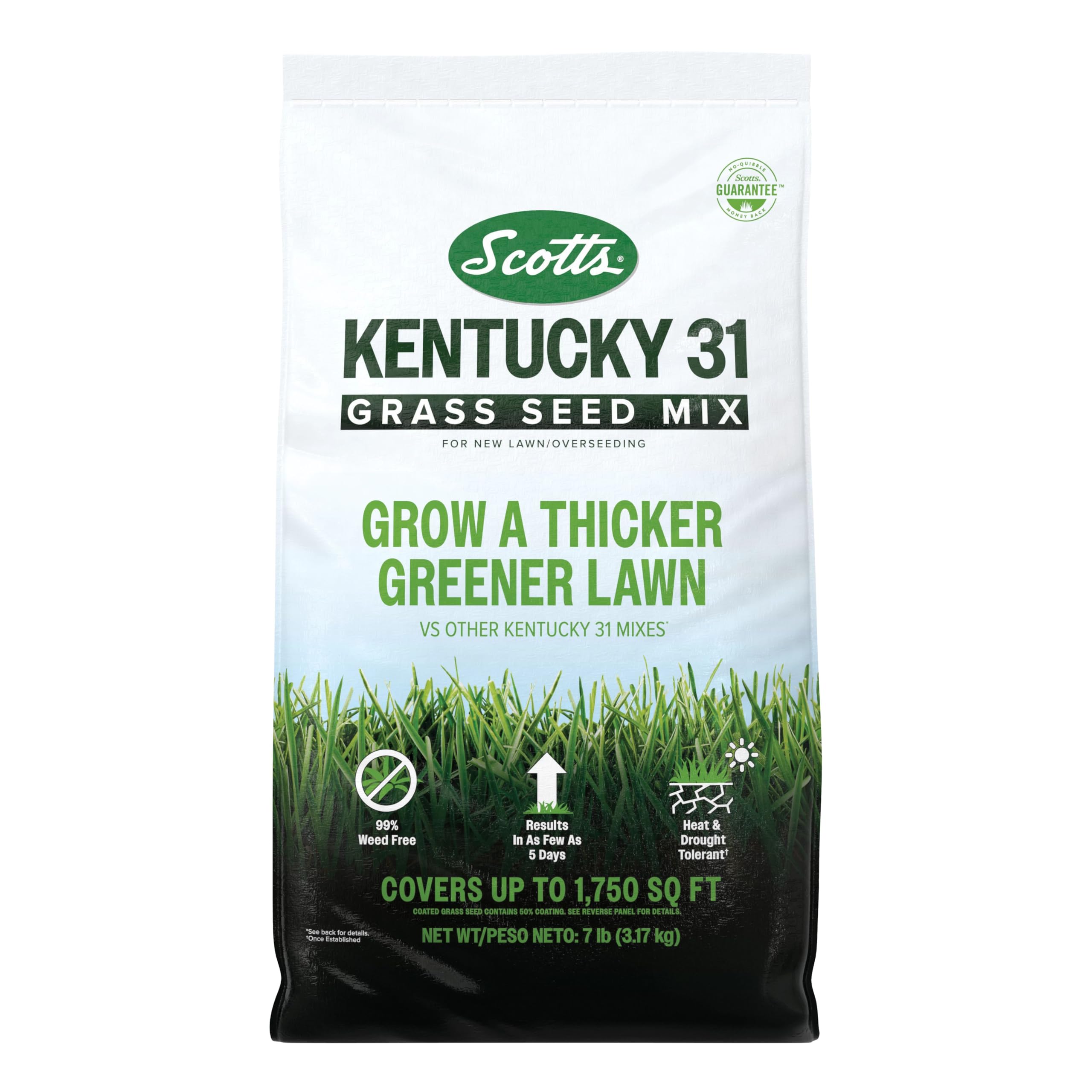
The 7 lb bag of Scotts Kentucky 31 Mix offers more coverage per dollar than many competing blends, making it a practical choice for seeding large lawns on a moderate budget. The tall fescue component provides deep roots that help the lawn withstand dry spells, while the annual ryegrass fills in quickly for early green cover.

This mix suits homeowners who need to overseed a sizable area without spending a premium, and who can accept some patchiness during establishment. The annual ryegrass component wears faster under foot traffic, so it's better for general lawn use rather than play areas or paths. Germination inconsistency has been noted, so careful soil preparation and consistent watering are advisable.

Keep soil consistently moist during the first few weeks to encourage even germination.

Bottom line: This mix works best for large-scale overseeding where budget matters more than perfect uniformity or high-traffic durability.

7

Scotts Bermudagrass

Scotts Bermudagrass

Warm climate, full sun

Our Score 8.2/10
Check Price

Worth Noting

  • Germination success depends heavily on soil temperature and moisture; some bags may produce sparse results.
  • Coverage area is modest for the price if the seed fails to establish, making it a gamble for budget-conscious buyers.
Grass Type
Bermudagrass
Key Feature
Drought-resistant, heat tolerant
Coverage (Overseed)
8,000 sq ft
Read the full review

Bermudagrass handles heat and drought better than cool-season blends like tall fescue or ryegrass, and this Scotts bag covers up to 8,000 sq ft when overseeding (2,665 sq ft for a new lawn) - making it a practical choice for large sunny properties in warm climates.

Once established, the grass spreads aggressively and recovers from foot traffic, creating a dense turf that stays green with minimal watering. However, germination is sensitive to soil temperature and moisture; without warm soil and consistent watering, the seed may not sprout.

This seed is best for experienced gardeners who can manage soil temperature and moisture during germination. Beginners or those in cooler regions will find the top pick's tall fescue blend more forgiving. The payoff - a dense, drought-tolerant lawn that handles heavy foot traffic with less water - makes it worth the extra care for those in warm climates. It is a specialist tool rather than a general-purpose grass seed.

For best results, sow when soil temperatures exceed 65°F and keep the seeded area consistently moist for two weeks.

Bottom line: This seed works best for experienced warm-climate gardeners who can commit to proper soil prep and watering - not for beginners or those in cooler regions.

8

Pennington Kentucky 31

Pennington Kentucky 31

Budget, large area gamble

Our Score 8.2/10
Check Price

Worth Noting

  • Seed quality can vary between batches
  • Germination failure occurs in some bags, requiring overseeding to achieve full coverage.
Grass Type
Tall Fescue
Key Feature
Drought-resistant
Coverage (Overseed)
~1,500 sq ft
Read the full review

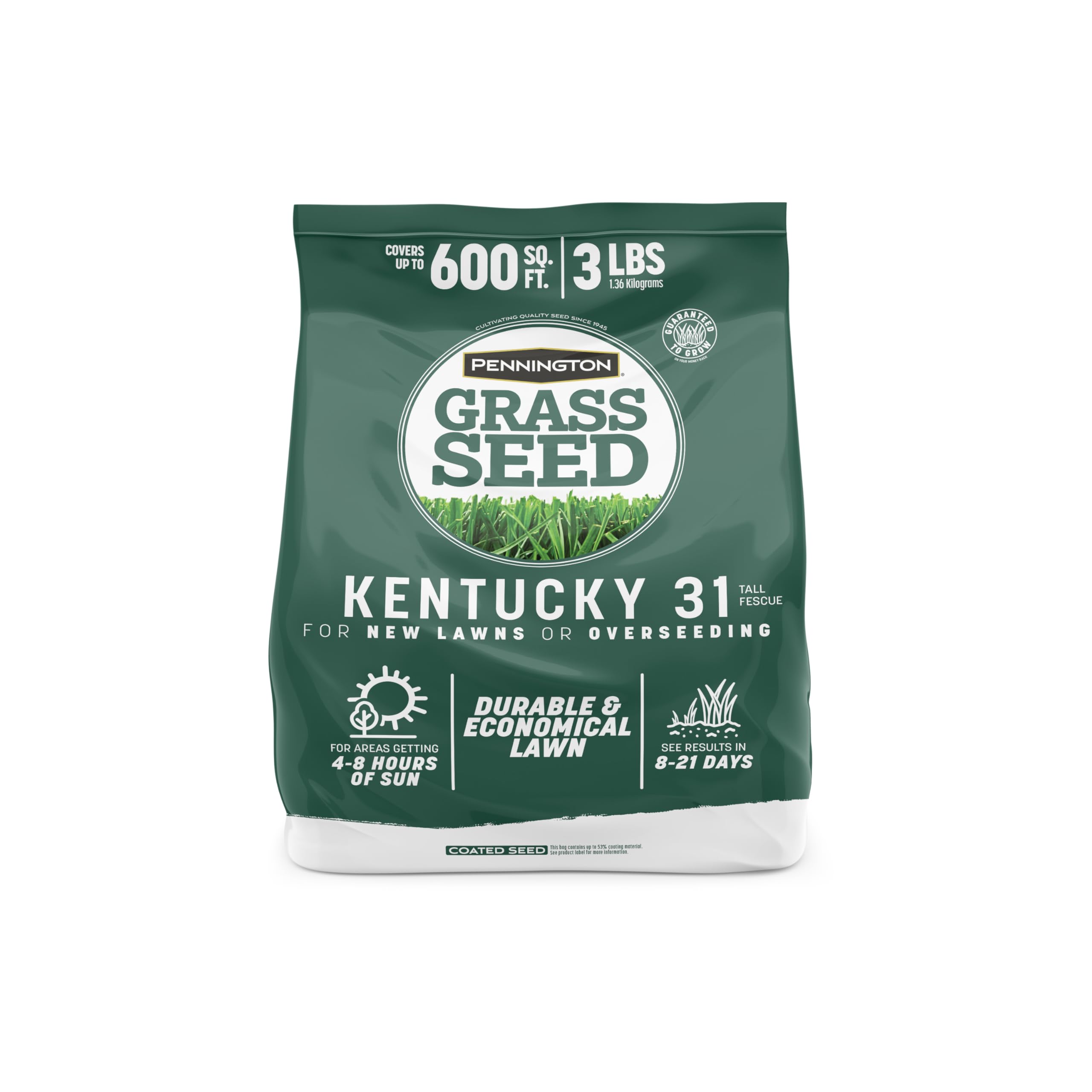
At a budget-friendly price, Pennington Kentucky 31 produces a thick, vibrant green lawn when the seeds sprout. The tall fescue blend forms an attractive turf that holds up well to moderate foot traffic once established.

This seed suits thrifty buyers covering large areas who are prepared to overseed multiple times. The main tradeoff: some bags contain seed that fails to germinate, so expect to reseed and accept that a single application may not deliver full coverage.

Test a small area first to verify the seed's viability before covering the whole lawn.

Bottom line: For budget-minded buyers willing to reseed, this is a cost-effective option – but it's a gamble that pays off only if your batch is good.

9

X-Seed Quick & Thick

X-Seed Quick & Thick

Fast results, cool season

Our Score 8.0/10
Check Price

Worth Noting

  • Some bags produce thin coverage that requires reseeding to fill in.
  • Premium price per pound means poor value if results are uneven.
Grass Type
Perennial Ryegrass / Fine Fescue / KBG
Key Feature
Moisture Boost, 99.9% weed-free
Coverage (Overseed)
4,900 sq ft
Read the full review

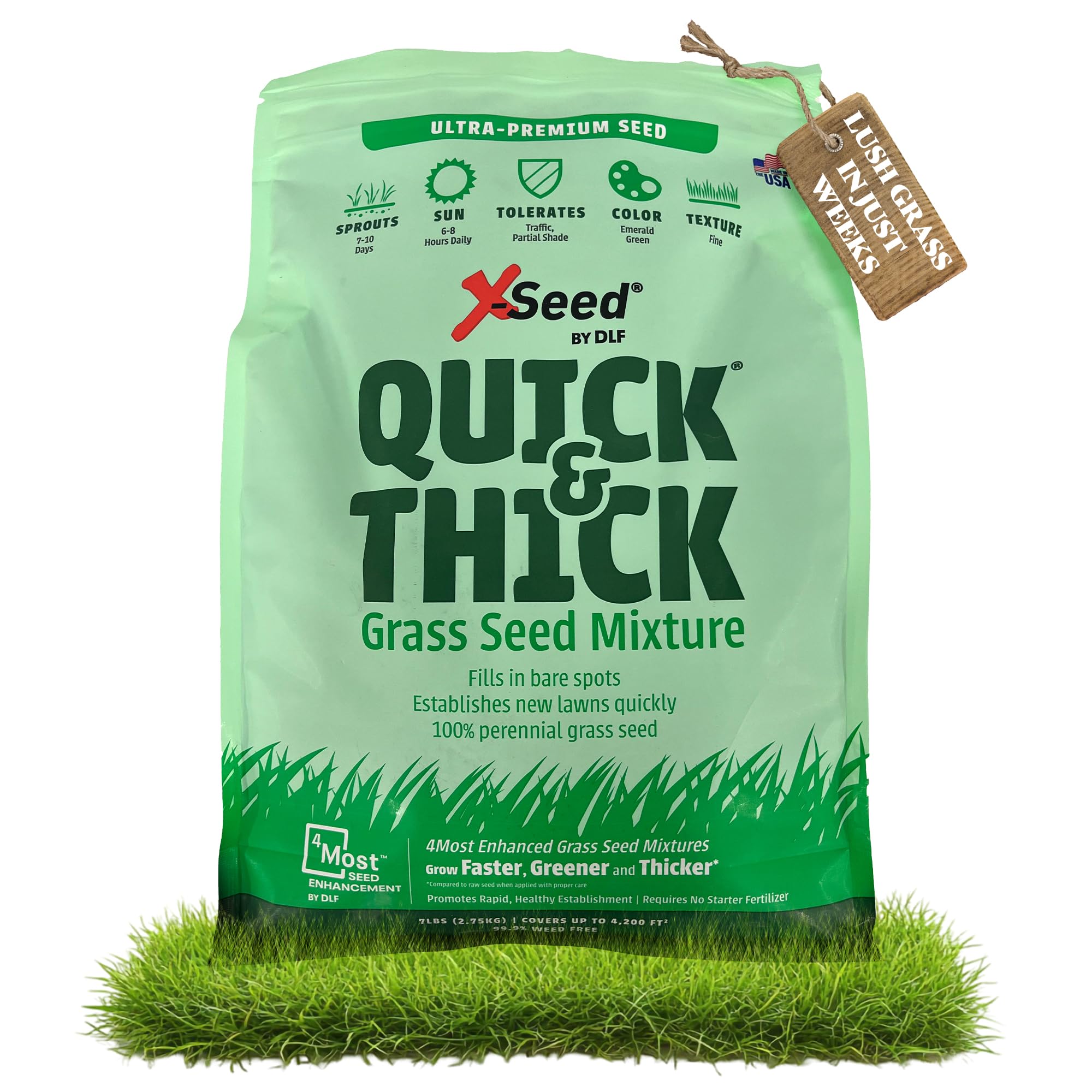
The Moisture Boost coating and 99.9% weed-free guarantee help this blend establish dense turf in as little as a week, making it a strong option for patching bare spots in full sun to shade. The primary grass type is perennial ryegrass, which sprouts faster than the tall fescue in our top pick but won't hold up as well under repeated wear from kids or pets.

This bag suits homeowners in cool-season climates who need quick greening for a visible patch or overseeding a lawn that sees moderate foot traffic at most. The premium price per pound and occasional thin coverage — some batches germinate unevenly — mean it's best reserved for smaller areas where you can monitor moisture levels closely.

Water lightly twice daily until seed germinates; thin patches may need a second pass after 3 weeks.

Bottom line: This is the faster option for cool-season bare-spot repair, but the ryegrass blend wears faster than tall fescue under heavy traffic — buy it for quick cover, not long-term durability.

10

Pennington The Rebels

Pennington The Rebels

Deep roots, dark green

Our Score 8.0/10
Check Price

Worth Noting

  • Germination can be inconsistent across batches, requiring re-seeding in some cases.
Grass Type
Tall Fescue
Key Feature
Deep roots, heat & drought tolerance
Coverage (Overseed)
~2,100 sq ft
Read the full review

Produces a deep green, drought-tolerant lawn in northern climates when given time to establish. The tall fescue blend delivers rich color and heat resistance, ideal for overseeding projects. Cost-effective per pound when germination succeeds, but inconsistent sprouting means it's a gamble for high-traffic areas needing immediate durability. Gardeners willing to wait and reseed if needed will appreciate the visual payoff.

Bottom line: A good option for northern gardeners focused on aesthetics and drought tolerance, provided they accept the possibility of patchy germination.

How to Choose

Grass Type

Tall fescue and bermudagrass are the workhorses of high-traffic lawns. Tall fescue has deep roots (up to 4 feet) that resist tearing and recover quickly from damage. Perennial ryegrass germinates fast but wears thin under constant foot traffic, making it better for overseeding or temporary cover.

Blends that combine tall fescue with a small amount of ryegrass give you quick establishment and long-term durability. Avoid pure ryegrass mixes for high-traffic zones unless you plan to reseed every season.

Coverage Area

Coverage numbers are split into new lawn and overseeding rates. New lawn coverage is roughly one-third of overseed coverage because you need a much thicker layer of seed. If you're overseeding an existing lawn, use the larger number; for bare dirt, use the smaller one.

A 5.6 lb bag might claim 2,800 sq ft for overseeding but only 930 for a new lawn. Ignoring this difference is the fastest way to run out mid-project.

Germination Speed and Consistency

Even top-rated seeds have a 20–40% germination failure rate under less-than-ideal conditions. Soil temperature, moisture, and seed-to-soil contact matter more than the brand. Products with a high proportion of negative germination reviews (like many Scotts mixes) indicate batch inconsistency.

If you need reliable results, look for bags with strong user feedback on establishment, not just pretty packaging. Coated seeds (Moisture Boost, water-absorbing coatings) can help in dry spells but won't fix poor soil prep.

Traffic Tolerance and Durability

Durability claims are mostly marketing fluff unless backed by specific grass type. Tall fescue and bermudagrass have the physical structure to withstand heavy foot traffic – thick cell walls and deep crowns. Perennial ryegrass looks good fast but collapses under constant pressure.

Real-world reviews that mention 'kids playing soccer' or 'dogs running' are your best indicator. A seed's ability to self-repair (like Scotts' claim) is only useful if the grass type itself can actually regrow from the crown.

Price Per Pound

Budget bags under $10 per pound are tempting but often contain filler seeds, weed seeds, or old stock. The sweet spot is $15–$25 for a 3–7 lb bag, which gives you a reputable brand without the markup of fertilized blends.

Paying extra for a 'seed + fertilizer' combo usually means you're buying expensive nitrogen that you could apply separately for less. Separate the cost of seed and fertilizer to see the real value.

Frequently Asked Questions