Fencing & Farm Structures

4 Best Greenhouse Heater of 2026: Safe for Damp Spaces

Which greenhouse heaters actually work in humid environments? We cut through the marketing to find the few that won't short out or need constant ventilation.

Most portable electric space heaters are marketed for 'indoor use' but explicitly warn against bathrooms and damp environments. That includes greenhouses. Buyers often overlook that single line in the fine print until their heater rusts or trips a breaker.

Propane heaters avoid the humidity issue but introduce their own trade-offs: they produce moisture and CO2, require ventilation, and need careful sizing to avoid cooking your plants. The real question isn't electric vs. propane — it's finding a heater engineered for the conditions inside a greenhouse.

This guide focuses on the handful of heaters that either carry a proper IP rating for moisture or are designed with safety sensors for enclosed spaces. The right choice depends on your greenhouse size, power source, and tolerance for ventilation.

1

Mr. Heater Buddy 9K BTU

Top Pick
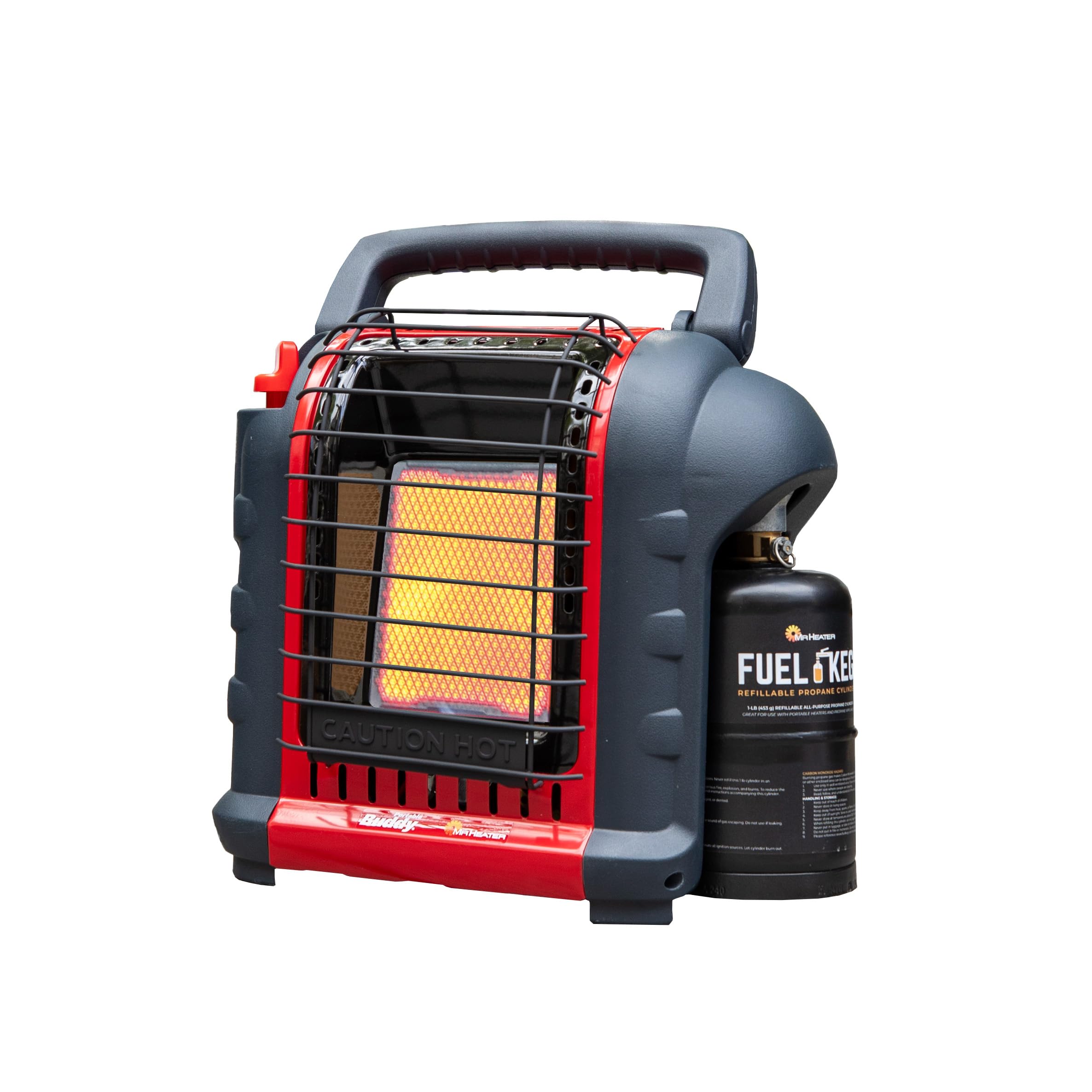
Mr. Heater Buddy 9K BTU

Small greenhouses

Our Score 9.4/10
Check Price

Worth Noting

  • Pilot light may need occasional re-lighting in humid or drafty conditions
Fuel
Propane
Safety
Low-O2, tip-over
Coverage
225 sq ft
Read the full review

The Buddy delivers 9,000 BTU of radiant heat from a compact footprint, making it a go-to choice for small greenhouses under 200 sq ft where running an extension cord isn't practical. It suits off-grid use or emergency backup, but requires cracked ventilation to avoid carbon monoxide buildup – a limitation that makes the electric DR-268 safer for unattended use in humid environments. Occasional pilot light issues have been noted, so it's best for active monitoring rather than set-and-forget frost protection.

Keep a spare ignition source on hand in case the pilot light goes out; the heater still works when relit.

Bottom line: Best for greenhouse owners who need portable off-grid heat and don't mind cracking a vent – the Buddy delivers high output at a mid-range price.
2

Mr. Heater Big Buddy 18K

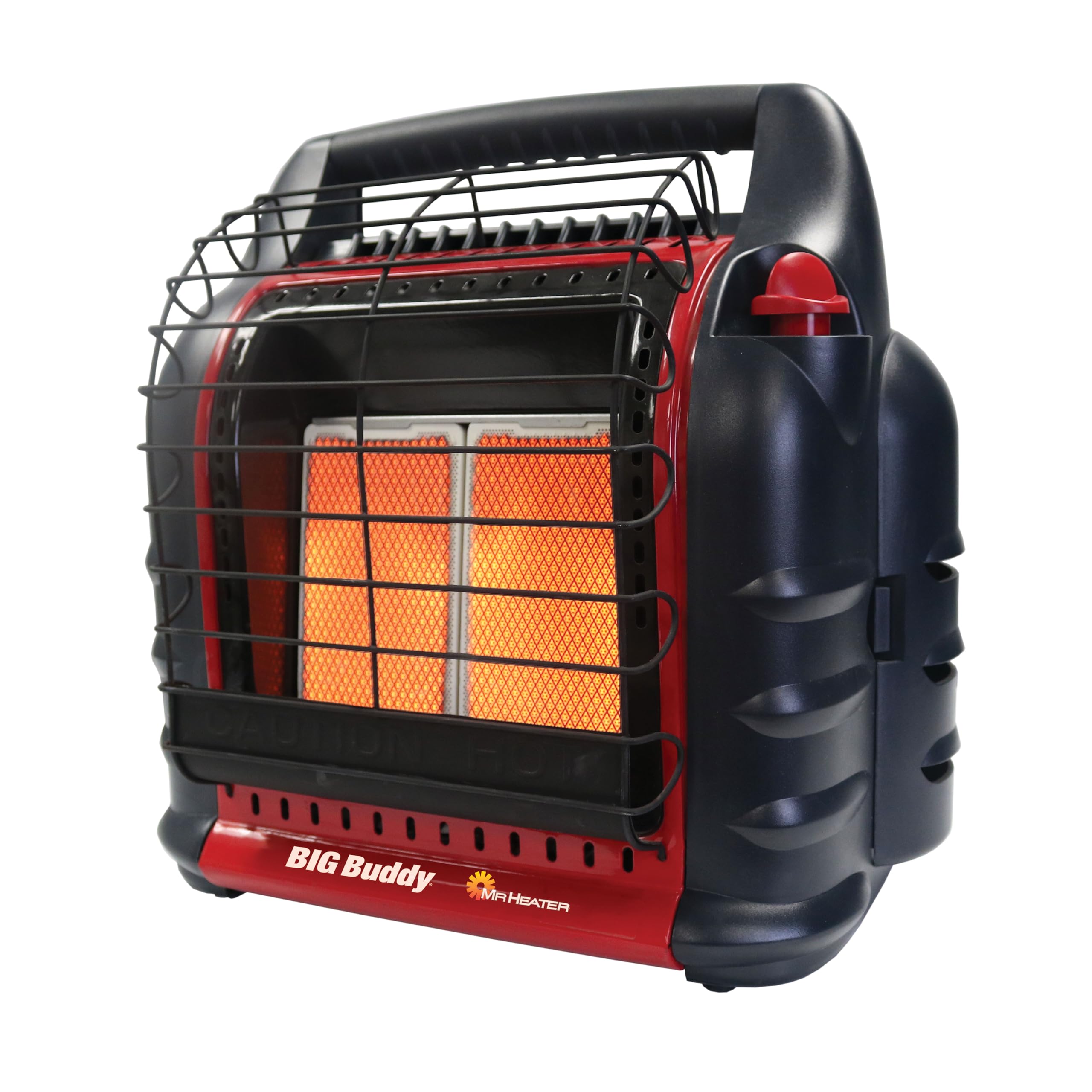
Mr. Heater Big Buddy 18K

Medium greenhouses

Our Score 9.2/10
Check Price

Worth Noting

  • Radiant heat alone may leave cooler spots in larger greenhouses without a fan.
  • Igniter and pilot light issues have been reported in some units.
Fuel
Propane
Safety
Low-O2, tip-over
Coverage
400 sq ft
Read the full review

The Big Buddy delivers 18,000 BTU of radiant heat, enough to warm a 400 sq ft greenhouse without the constant tank swaps required by smaller models. Because it relies on radiant heat only, air circulation is limited — a separate fan helps. Some units have also shown igniter problems, so checking the pilot light early is wise.

Adding a small battery-powered fan helps circulate heat more evenly in the greenhouse.

Bottom line: For gardeners who need high heat output from a portable propane heater and can accept the lack of forced air and occasional ignition quirks, the Big Buddy delivers where smaller units fall short.

3

Mr. Heater 50K Unit

Mr. Heater 50K Unit

Large commercial

Our Score 8.8/10
Check Price

Worth Noting

  • May arrive with cosmetic damage or missing parts
  • Fan noise is noticeable during operation
Fuel
Propane or NG
Safety
High-temp, flame sensor
Coverage
1,667 sq ft
Read the full review

The Mr. Heater 50K unit delivers 50,000 BTU of forced-air heat, covering up to 1,667 sq ft on propane or natural gas. It is a ceiling-mount, hard-wired system that needs a gas line and electrical connection — this is not a portable plug-and-play heater.

This unit suits large commercial greenhouses, barns, and workshops where a permanent heating solution is feasible. Buyers should budget for professional installation and a separate thermostat. Some units arrive with cosmetic dents or missing parts, and the fan noise is present during operation — acceptable in non-residential spaces.

Thermostat is sold separately — ensure you account for that in your setup.

Bottom line: Best for large commercial greenhouses where permanent installation is an option, but plan for professional setup and a separate thermostat.

4

DR Infrared DR-268

DR Infrared DR-268

Small to medium

Our Score 8.6/10
Check Price

Worth Noting

  • Heat output is modest
  • Long-term durability: a portion of units may shut down unexpectedly after several months of use.
Fuel
Electric
Safety
IPX5
Coverage
150-200 sq ft
Read the full review

The DR-268 carries an IPX5 water-resistance rating, meaning it can handle the humidity, drips, and condensation found in a greenhouse without tripping internal safeguards. That alone sets it apart from virtually every other portable electric heater on the market — most are explicitly warned against damp use.

Infrared heating warms objects and plants directly rather than circulating warm air, which reduces energy loss in drafty or semi-enclosed spaces. Mounting options (wall, ceiling, or hang) plus a remote control make positioning flexible. The catch: 1,500W of heat is about 5,100 BTU equivalent, so in an uninsulated greenhouse below freezing or one larger than 200 sq ft, this heater may not keep temperatures where you need them.

This is the right heater for greenhouse owners who prioritize electrical safety and moisture tolerance over raw heating power. It fits small to medium greenhouses up to 200 sq ft, covered patios, or sunrooms where a propane unit’s ventilation and added moisture are unwanted tradeoffs.

Mount the heater close to your plants to maximize the infrared zone heating and avoid drafty spots.

Bottom line: For small to medium greenhouses that need a safe electric heater capable of handling humidity, the DR-268 is the right call — just keep expectations aligned with its 1,500W output.

How to Choose

Heating Coverage vs. Volume

Manufacturers quote coverage in square feet, but a greenhouse's heat loss depends more on volume, insulation, and outside temps. A 10x12 greenhouse with a 10-ft peak loses heat far faster than a room of the same floor area.

A rule of thumb: you need 25-30 BTU per cubic foot in an uninsulated greenhouse. For a 1,200 cu ft space (10x12x10), that's 30,000-36,000 BTU. Electric heaters max out around 5,100 BTU — they're only practical for small, well-sealed greenhouses. Propane units can match higher volumes.

Fuel Type: Electric vs. Propane

Electric heaters are clean, quiet, and safe for humidity if IP-rated. But they require a GFCI outlet and can trip breakers if drawing 1,500W continuously. They also add no moisture to the air, which helps prevent fungal issues.

Propane heaters produce CO2 and water vapor — about 1 pint of water per hour for every 10,000 BTU. That moisture can raise humidity inside the greenhouse, potentially harming plants that prefer dry conditions. They also need ventilation to avoid oxygen depletion.

Safety Certifications

For electric heaters: look for an IP rating (IPX4 or higher) that confirms protection against splashing water. Without it, condensation can short the internals. Many standard heaters carry only basic tip-over and overheat shutoffs — enough for a bedroom, not for a damp greenhouse.

For propane units: low-oxygen shutoff (ODS) and tip-over protection are essential. These sensors kill the gas flow if oxygen falls below safe levels or the unit tips. Do not use a propane heater without these certifications in any enclosed space.

Thermostat Control

A thermostat saves you from manually monitoring temperature. Digital thermostats offer 1-degree adjustments while dial types are less precise. Without one, you'll either overheat or freeze your plants depending on how often you check.

Beware of thermostats that only control when the fan runs rather than the heating element — this wastes energy. Look for units that cycle the entire heater on and off based on ambient temperature.

Mounting Options

Floor space is precious in a greenhouse. Ceiling or wall-mounted heaters free up room for plants and reduce the risk of knocking over a portable unit. Some electric infrared heaters come with brackets; propane unit heaters often require hard-wiring and gas line installation.

Portable heaters are easier to install but must be placed on a stable, flat surface away from flammable materials. Radiant propane heaters get hot on the front and sides — never hang them near plastic sheeting or dry leaves.

Frequently Asked Questions