Fencing & Farm Structures

11 Best Greenhouse Plastic 2026: Films That Resist Brittle Cracking

Identify durable greenhouse plastic that resists cracking and lasts. Our picks separate true horticultural films from repurposed construction sheeting.

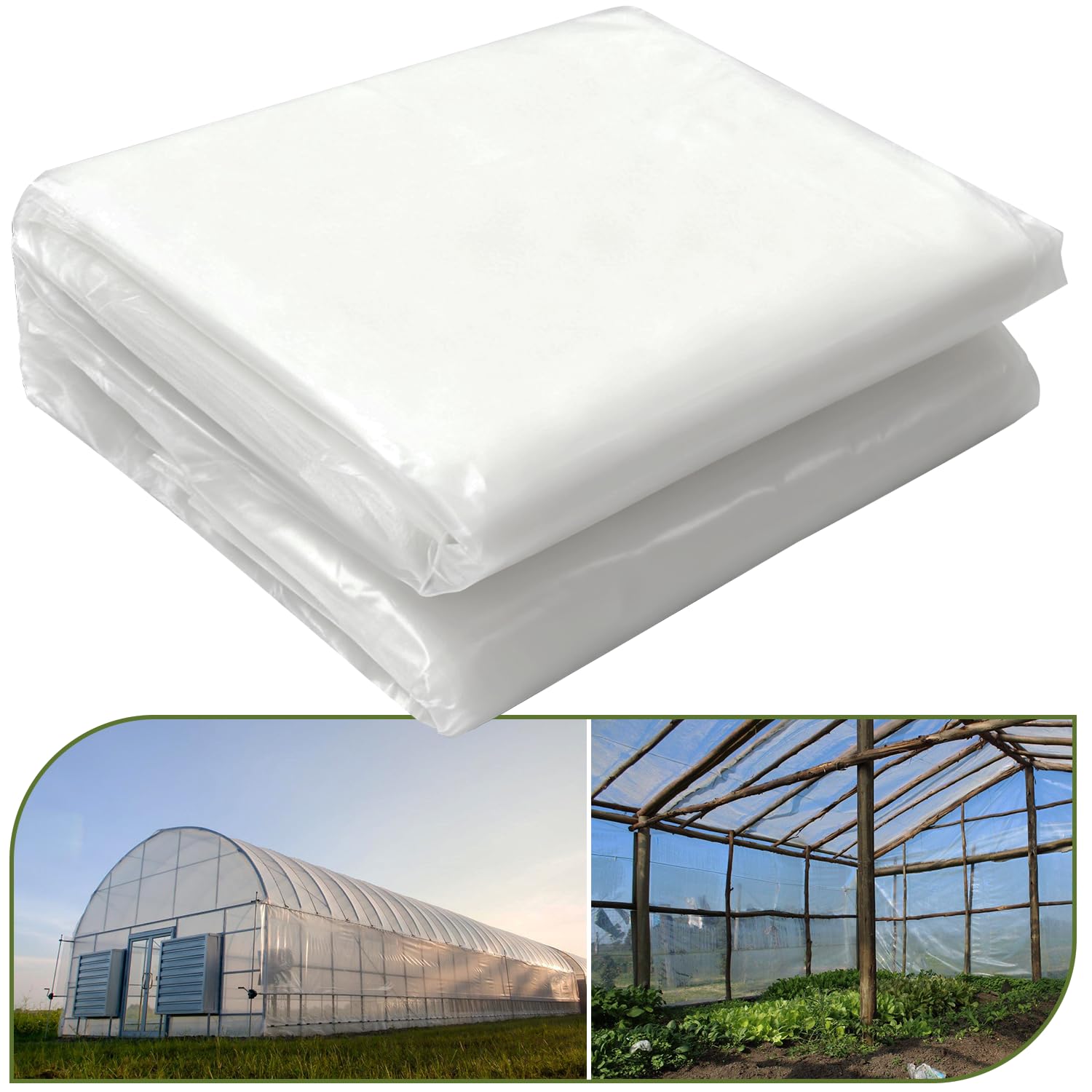
Many plastic sheets sold as greenhouse covers are repurposed construction-grade polyethylene with a light UV treatment. They work fine for a season, then turn brittle and crack. The issue isn't the material itself — it's using the wrong product for the job.

Dedicated horticultural films add anti-aging compounds and anti-drip layers that genuinely extend usable life. This guide cuts through labeling confusion to identify films that hold up under real sun and wind, so you get a cover that lasts multiple growing seasons instead of one.

1

Farm Plastic 6 Mil 25x40 ft

Top Pick
Farm Plastic 6 Mil 25x40 ft

Home greenhouses

Our Score 9.4/10
Check Price

Worth Noting

  • Clarity can be inconsistent; some rolls appear hazier than expected.
Thickness
6 mil
UV Rating
4-year
Size & Format
25x40 ft
Light & Clarity
Clear
Read the full review

Farm Plastic Supply's 6 mil polyethylene film delivers consistent durability across multiple seasons. The 4-year UV rating comes from anti-aging additives that slow sun degradation, while the clear material allows sufficient light transmission for crop growth. Wind resistance is good; the film stays taut on hoop houses without tearing at fastening points. It also resists punctures during installation if handled carefully. Some rolls arrive with a hazy appearance, but this doesn't affect photosynthesis and is an occasional batch variation.

This film fits home greenhouse owners and small-scale farmers with standard backyard hoop houses. The 25x40 foot sheet provides 1000 sq ft of coverage, a practical size for residential structures. It is not meant for tiny temporary covers due to the mid-range price and large roll dimensions. Clarity can vary between production batches, so inspect the film upon delivery. The cost per square foot is competitive for a horticultural-grade film, making it a sensible mid-range investment. For standard hoop houses, this film offers the best balance of cost and expected lifespan.

Bottom line: A solid option for dedicated greenhouse owners who want a long-lasting cover at a fair price.
2

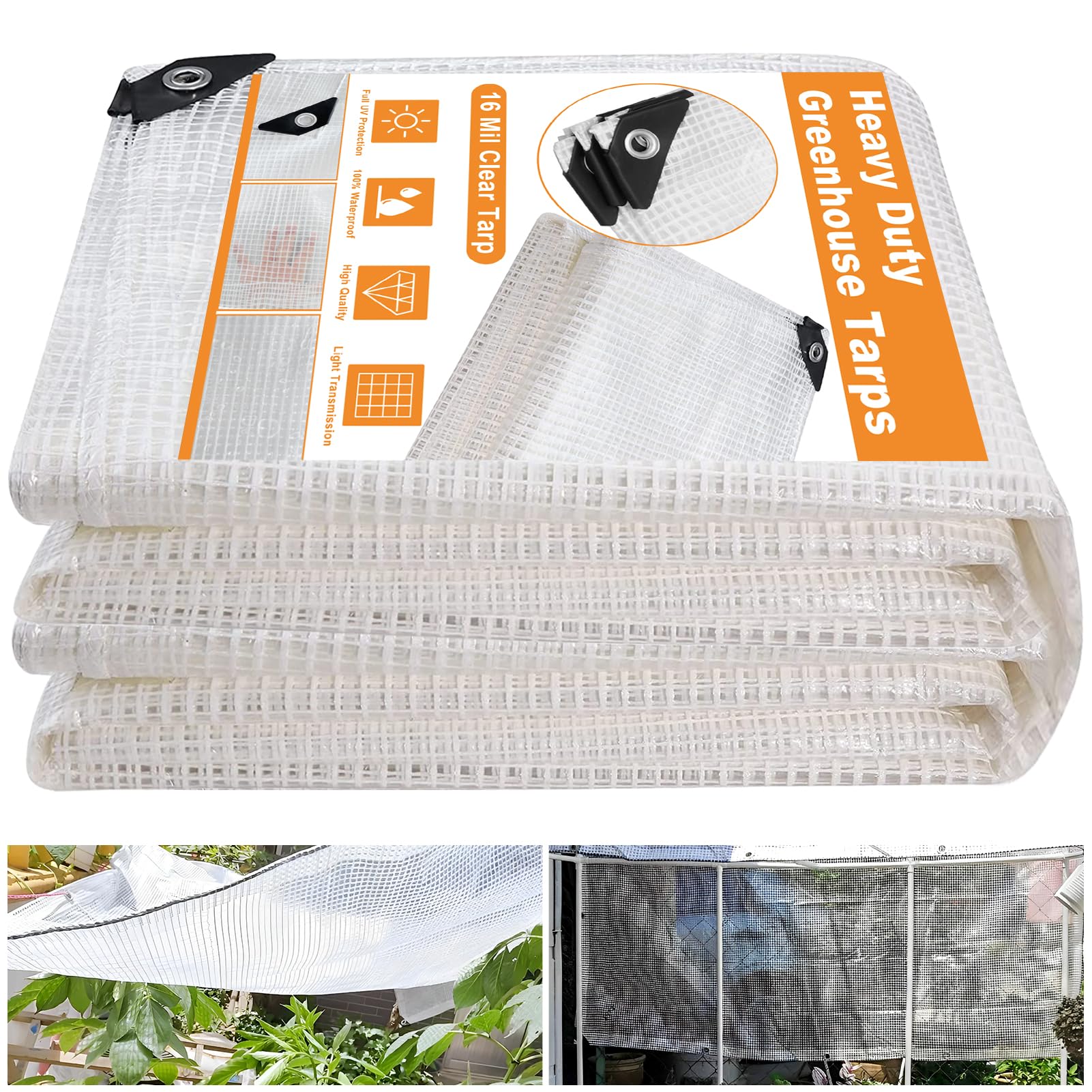
Ansgery 16 Mil Tarp 16x20 ft

Ansgery 16 Mil Tarp 16x20 ft

Wind/snow regions

Our Score 9.2/10
Check Price

Worth Noting

  • Grommets can pull out in extreme wind if not fastened with extra ties
  • Woven construction reduces clarity
Thickness
16 mil
UV Rating
Yes
Size & Format
16x20 ft
Light & Clarity
Translucent
Read the full review

For greenhouses in high-wind or snowy regions, this 16 mil woven tarp offers exceptional durability that standard 6 mil greenhouse films can't match. The reinforced edges and rust-proof grommets every 18 inches hold up well in harsh conditions. Best suited for growers who prioritize toughness over transparency — the woven texture creates a translucent haze, not a clear view, so light still comes through but you won't see crisp outlines.

Secure the grommets with additional fasteners in extreme wind to prevent pull-out.

Bottom line: Pick this tarp if your greenhouse faces punishing weather and you value lasting strength over see-through visibility; it handles what would tear a standard film.

3

VEVOR 6 Mil 25x40 ft

VEVOR 6 Mil 25x40 ft

Budget hoop houses

Our Score 9.2/10
Check Price

Worth Noting

  • Not crystal clear; has a hazy or translucent appearance
Thickness
6 mil
UV Rating
Yes
Size & Format
25x40 ft
Light & Clarity
Hazy
Read the full review

The VEVOR 25x40 ft film delivers 1,000 sq ft of coverage at a cost well below the top pick. Its translucent finish (not crystal clear) is acceptable for hoop houses where perfect visibility isn't needed, and the 6 mil thickness handles wind and weather consistently for standard outdoor conditions.

This film is best for budget-focused greenhouse builders who expect 1-2 seasons of service and don't need high light transmission. The haze makes it less suited for seed-starting or delicate crops that benefit from maximum clarity — it works well for mature plants in a backyard hoop house.

Consider using this film for crops that tolerate partial shade — leafy greens and root vegetables perform well under reduced light transmission.

Bottom line: A solid value for growers who need to cover a large area on a tight budget and can accept lower clarity and a shorter replacement cycle.

4

Farm Plastic 6 Mil 40x100 ft

Farm Plastic 6 Mil 40x100 ft

Commercial large scale

Our Score 9.2/10
Check Price

Worth Noting

  • Extremely heavy and unwieldy roll
Thickness
6 mil
UV Rating
4-year
Size & Format
40x100 ft
Light & Clarity
Clear
Read the full review

This 40x100 ft roll delivers the same premium build and clarity as the top pick's smaller sibling, scaled for large hoop houses. Unlike the 25x40 top pick, the size and 30+ pound roll demand multiple people and equipment to handle. It suits commercial growers covering multiple bays or a single large structure, where the per-square-foot cost justifies the upfront investment and installation effort.

Use a forklift or a team of three to unroll the film – attempting solo risks tearing the material.

Bottom line: For commercial growers with a large structure or multiple hoop houses, this film's durability and coverage make the installation effort worthwhile.

5

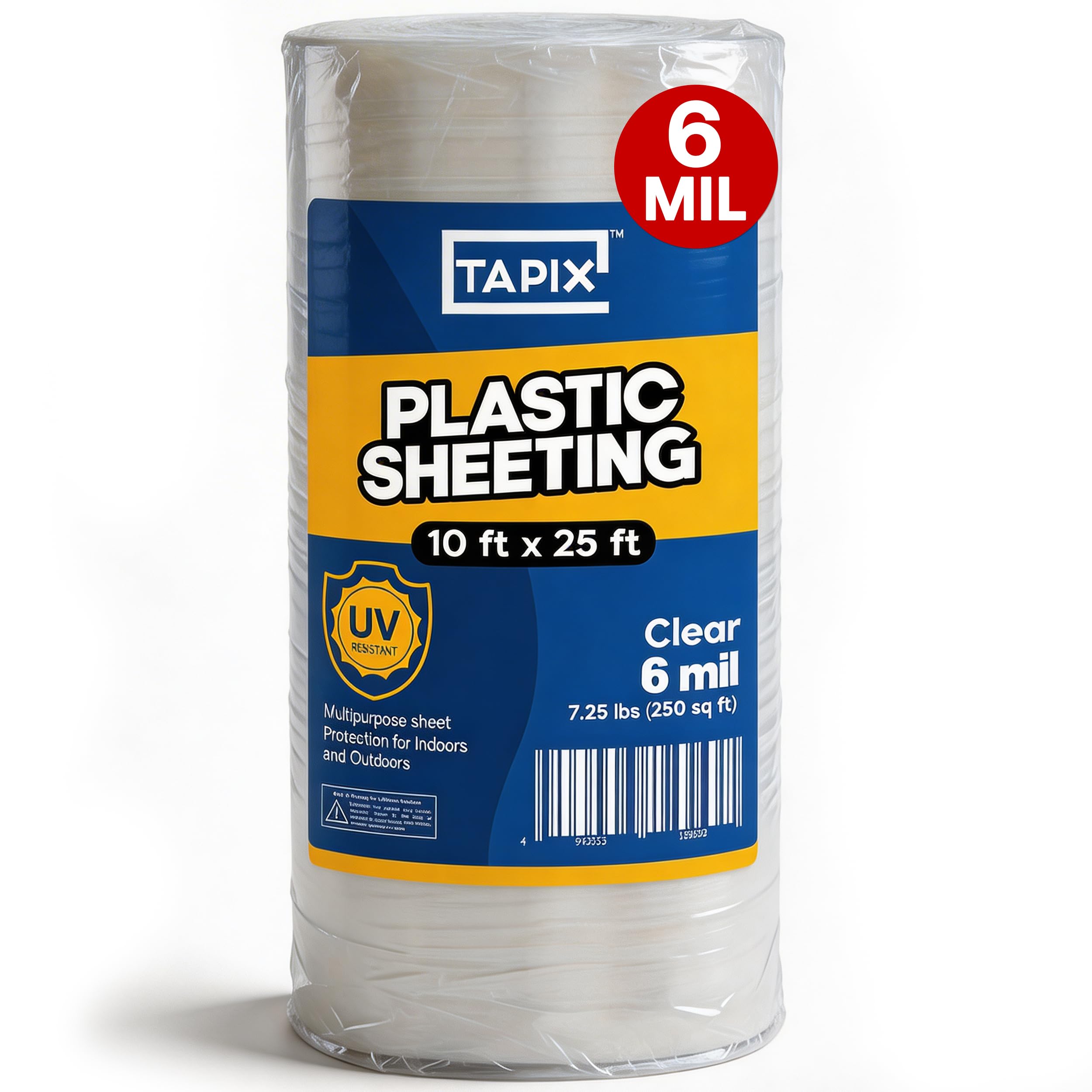
Tapix 6 Mil 10x25 ft

Tapix 6 Mil 10x25 ft

Budget temporary

Our Score 9.2/10
Check Price

Worth Noting

  • Plastic is opaque, not transparent
Thickness
6 mil
UV Rating
Yes
Size & Format
10x25 ft
Light & Clarity
Opaque
Read the full review

This plastic sheeting offers solid material for the price and works for drop cloths or vapor barriers. However, the beige, frosted finish blocks light — not transparent — and the film may crack after a year of sun exposure. It fills the role of a short-term greenhouse cover or utility tarp, not a dedicated greenhouse film.

Bottom line: Best suited for budget-conscious gardeners needing a single-season cover or DIY projects where seeing through the plastic doesn't matter.

6

chicarry 6 Mil 10x50 ft

chicarry 6 Mil 10x50 ft

Temporary covers

Our Score 9.2/10
Check Price

Worth Noting

  • Measured thickness can be as low as 4-5 mil in some rolls rather than the claimed 6 mil
Thickness
6 mil
UV Rating
Yes
Size & Format
10x50 ft
Light & Clarity
Hazy
Read the full review

This budget-friendly roll covers 500 square feet at a low per-foot cost, and the film holds up reasonably against storms and winter weather for an economical option. However, thickness inconsistency means some rolls measure closer to 4-5 mil than the stated 6 mil, which limits confidence for buyers who need a precise 6 mil film for warranty or structural reasons. It's best suited for temporary hoop houses or single-season protective covers where slight gauge variation is acceptable.

Bottom line: Fits temporary or seasonal projects on a tight budget, but not a reliable choice when exact 6 mil thickness is required.

7

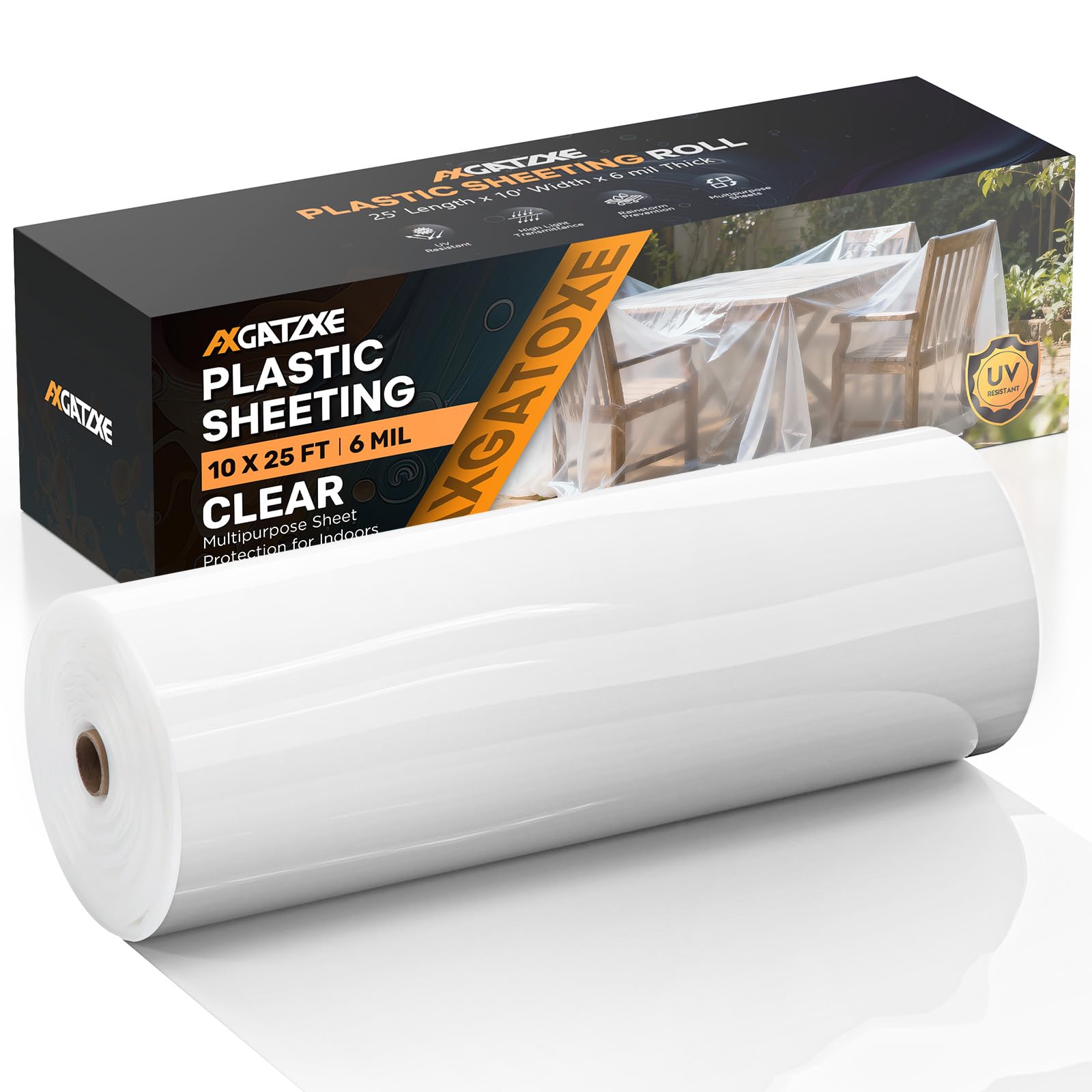
Axgatoxe 6 Mil 10x25 ft

Axgatoxe 6 Mil 10x25 ft

Budget unproven

Our Score 9.2/10
Check Price

Worth Noting

Thickness
6 mil
UV Rating
Yes
Size & Format
10x25 ft
Light & Clarity
Read the full review

This 6 mil polyethylene sheet matches the thickness and UV protection of more expensive films. It resists tearing during installation and works well for greenhouse covering, construction, or floor protection. However, long-term durability is uncertain — this film is best suited for temporary or monitored applications where replacement is acceptable.

Bottom line: Suitable for short-term greenhouse projects or as a backup cover where you can keep an eye on wear.

8

SUNVIEW 6 Mil 12x25 ft

SUNVIEW 6 Mil 12x25 ft

Long-term reliability

Our Score 9.0/10
Check Price

Worth Noting

  • Some users find the film less crystal-clear than expected in direct sunlight.
  • Per-square-foot cost is higher than many comparable 6 mil films.
Thickness
6 mil
UV Rating
4-year
Size & Format
12x25 ft
Light & Clarity
Clear
Read the full review

SUNVIEW's 6 mil film stands apart from the top pick Farm Plastic Supply with slightly better reported longevity and clear inside/outside markings that simplify installation. It survives high winds over multiple seasons, and the 4-year UV guarantee matches the category standard. This film is for gardeners who prioritize durability and are willing to pay a bit more per square foot for that peace of mind. The trade-off: per-square-foot cost runs higher than many 6 mil competitors, but for a cover that stays in place for years, the extra expense often balances out.

If you're starting seeds and need glass-like transparency, verify clarity with a sample before full installation.

Bottom line: For greenhouse owners who want a cover that won't need replacing after a single season, SUNVIEW's film earns its premium — the added cost buys genuine wind resistance and clarity that holds up.

9

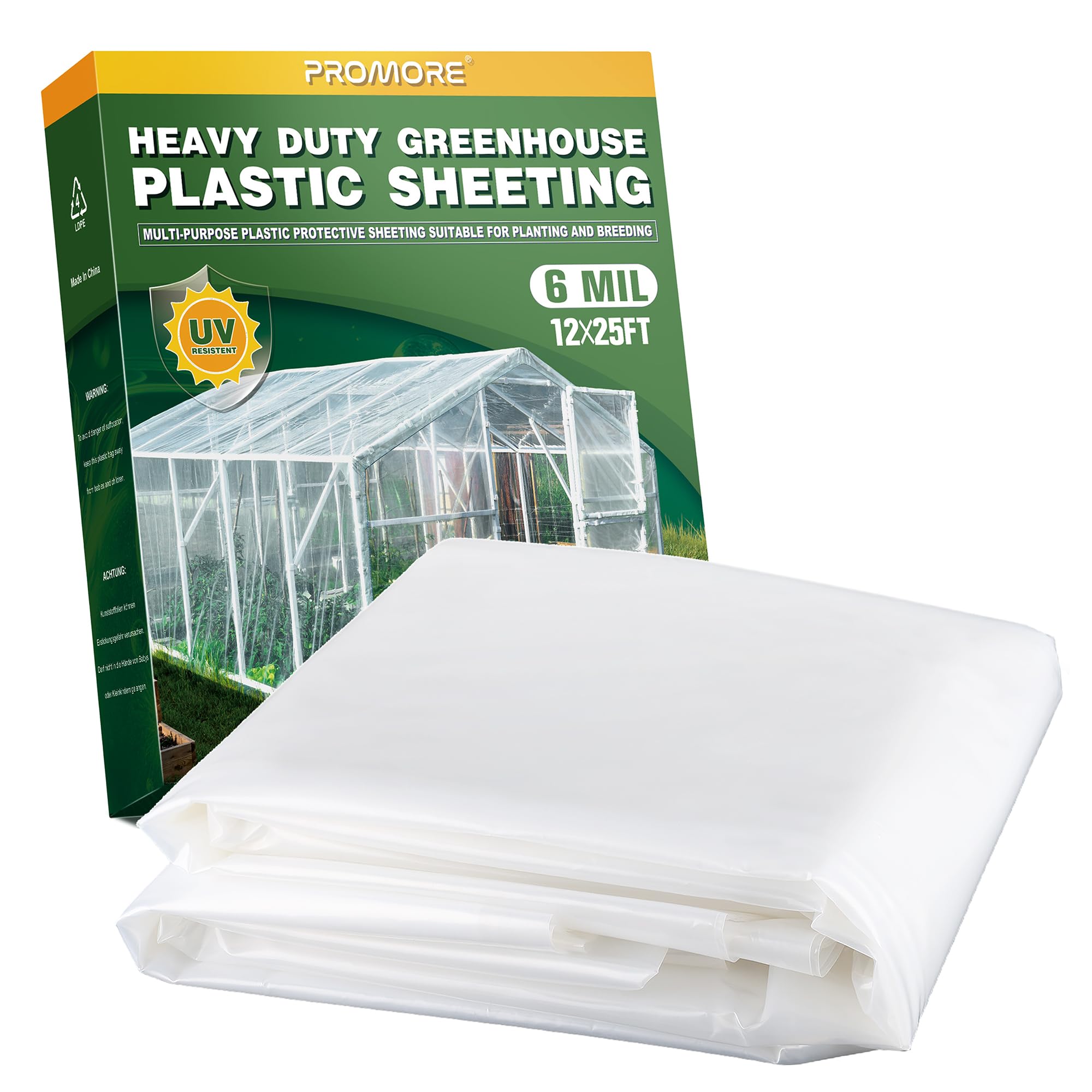
PROMORE 6 Mil 12x25 ft

PROMORE 6 Mil 12x25 ft

Frost protection

Our Score 9.0/10
Check Price

Worth Noting

  • Can tear when stretched around uneven framing or sharp edges.
Thickness
6 mil
UV Rating
>20% UV
Size & Format
12x25 ft
Light & Clarity
Clear claimed
Read the full review

This 12x25 sheet offers adequate thickness for a temporary cold snap or painting project, and its UV resistance helps through a season. However, some users have found the polyethylene film tears when stretched around framing or sharp edges — it holds up best for light-duty, short-term use.

Bottom line: A capable choice for protecting plants from a single frost or as a painting drop cloth, but not built for year-round greenhouse exposure.

10

Inslat 6 Mil 10x26 ft

Inslat 6 Mil 10x26 ft

Cold frames

Our Score 9.0/10
Check Price

Worth Noting

  • In direct sun, the plastic can turn brittle and crack within months
Thickness
6 mil
UV Rating
4-year claim
Size & Format
10x26 ft
Light & Clarity
Hazy
Read the full review

This budget-friendly 6 mil film offers decent UV protection and anti-drip for the price, making it a cheap option for small greenhouses or cold frames. However, the plastic can become brittle after a few months of sun exposure, so it is best treated as a single-season cover rather than a long-term solution.

Bottom line: A passable option for a single season of frost protection or temporary cold frames, but not a durable greenhouse cover.

11

Yowlieu 6 Mil 6.5x9.8 ft

Yowlieu 6 Mil 6.5x9.8 ft

Small plots

Our Score 8.8/10
Check Price

Worth Noting

  • Milky white tint reduces light transmission
Thickness
6 mil
UV Rating
Yes
Size & Format
6.5x9.8 ft
Light & Clarity
Opaque
Read the full review

This 6-mil film offers decent frost and rain protection for small plots, but its milky white tint reduces light — not for sun-loving plants. The per-square-foot cost is high, and size can run short, but it works for temporary cold frames.

Bottom line: Suitable for temporary cold frames or partial-shade garden beds where light reduction isn't a problem.

How to Choose

Thickness (mil)

Thicker plastic resists tearing and wind better but reduces light transmission slightly. 6 mil is the standard for most home greenhouses, balancing durability and clarity. 3 mil is too thin for outdoor use — it tears under snow load and UV degrades it within weeks.

For extreme weather, woven 16 mil tarps offer superior puncture resistance but sacrifice transparency. If you live in a mild climate, 4 mil may suffice for temporary covers, but 6 mil is the safe minimum for year-round structures.

UV Stabilization Rating

A 4-year UV rating on the package does not guarantee the film lasts 4 years. That rating assumes ideal conditions — constant tension, no abrasion, and moderate sun. In real-world use, even quality films start showing brittleness around year two in full sun. Look for anti-aging additives (often listed as UV inhibitors) and check user reviews for actual longevity.

Cheaper films often quote a 4-year rating but lack the chemical package to back it up. The best indicator is consistent positive feedback from multiple-season use, not the label claim.

Light Transmission & Clarity

Clear film maximizes photosynthesis and lets you monitor plants visually. But many budget options are opaque or hazy due to recycled polyethylene or anti-drip coatings. For seedlings and leafy greens, aim for >90% light transmission — anything less stunts growth.

If you need to see through the cover to inspect plants, avoid 'frosted' or 'milky' films. Some anti-drip layers cause a slight haze that reduces light by 10-15% but are worth it in humid climates to prevent water dripping on foliage.

Size & Roll Format

Measure your greenhouse frame carefully. Most hoop houses use widths of 12, 20, or 25 ft. A film that comes folded instead of rolled will have permanent crease lines that weaken the plastic and tear under wind. Always request rolled film if possible.

For large structures, consider joining multiple sheets with sealant tape. The per-square-foot cost drops significantly on bigger rolls, but handling a 40x100 ft sheet requires two people and heavy equipment.

Frequently Asked Questions