Beekeeping

7 Best Honey Extractor of 2026: Manual Picks That Beat Electric Under $300

Find a honey extractor that won't wobble or break - the best manual and electric options for hobby beekeepers with 1-10 hives.

A honey extractor that saves time is useless if it spends more time shaking across the floor. Under $300, many extractors arrive with wimpy legs, missing bolts, and motors that stall after a few spins. The result is less honey and more frustration.

This guide separates the models that work reliably from those that need constant tinkering. The key insight: manual extractors in this price range consistently outperform budget electrics on durability, while still spinning frames fast enough for small to mid-size apiaries. And almost every extractor benefits from being bolted to a solid base.

The best picks balance affordable pricing with stable operation and straightforward assembly. Whether you have two hives or ten, the right extractor is one you can set up, load, and spin without worrying about parts flying off.

1

VINGLI Manual 2-Frame

Top Pick
VINGLI Manual 2-Frame

Hobbyists 1-3 hives

Our Score 9.2/10
Check Price

Worth Noting

  • Some units ship with missing nuts, bolts, or leg screws
  • Wobbles noticeably at higher spin speeds unless bolted to a heavy base
Material
Stainless steel
Operation
Manual
Frame Capacity
3 deep frames
Stability Note
Wobbles at high speed
Read the full review

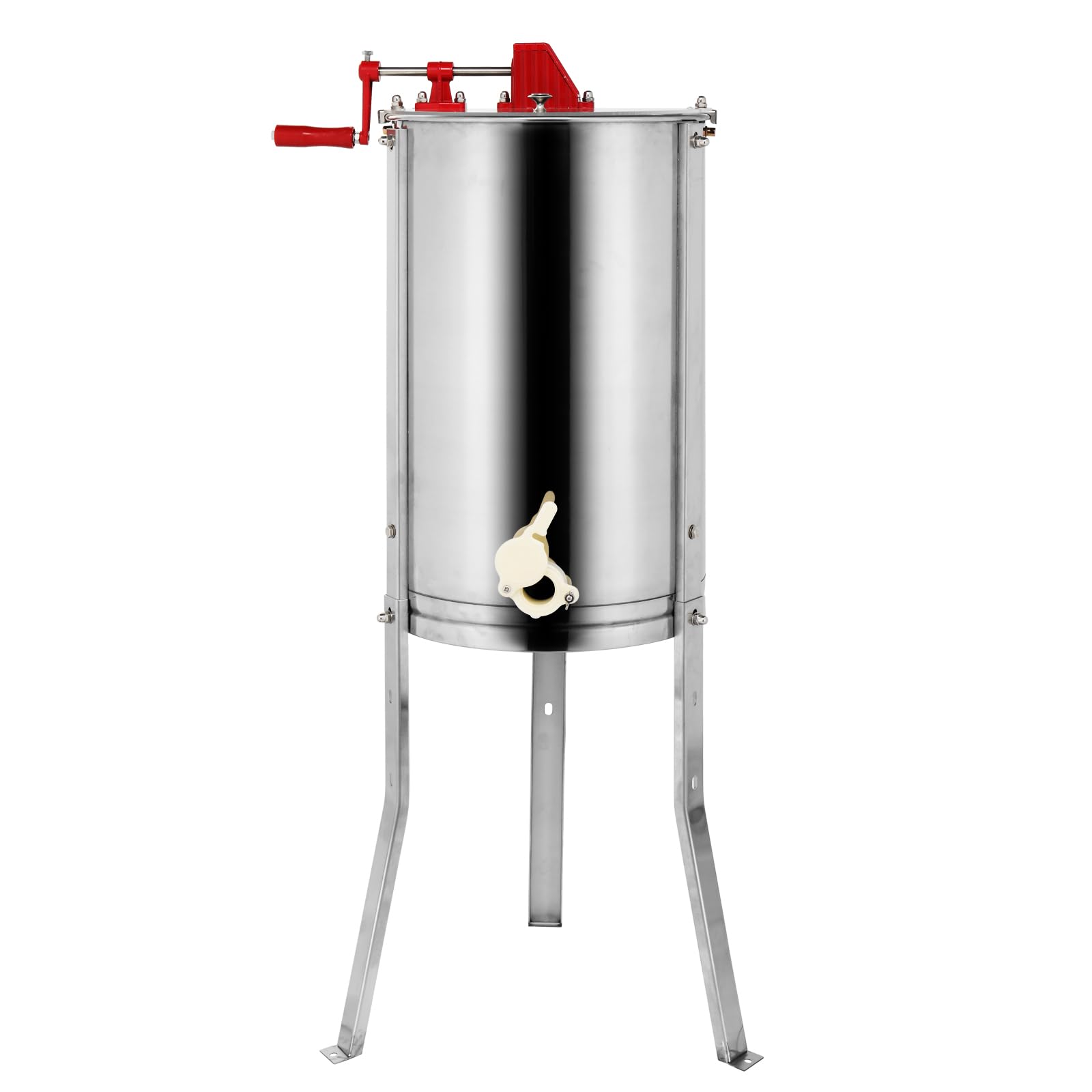
The VINGLI manual two-frame extractor delivers clean honey extraction from deep frames with minimal effort, thanks to its enclosed metal gears and clear Plexiglas lid that lets you monitor progress. At higher spin speeds the unit wobbles noticeably — a common tradeoff at this price point that can be managed by bolting it to a sturdy base or table. The adjustable-height legs also allow tabletop use for added stability.

This extractor suits beekeepers with one to three hives who want an easy entry into centrifugal extraction without investing in an electric model. Be aware that some units arrive missing small hardware pieces like leg screws, so check all parts upon delivery. The wobble at speed means this isn't ideal for continuous high-volume spinning, but for occasional extraction it works well.

Secure the extractor to a heavy workbench or floor plate before spinning at speed — this significantly reduces vibration.

Bottom line: For hobbyists with a few hives who want a manual extractor that won't break the budget, this unit delivers — just budget a few minutes for hardware check and setup.

2

VIVO Manual 8-Frame

VIVO Manual 8-Frame

Larger hobbyist

Our Score 9.0/10
Check Price

Worth Noting

  • Gearbox can slip during use, requiring occasional attention
  • Unbalanced loads may cause noticeable wobble without secure mounting
Material
Stainless steel
Operation
Manual
Frame Capacity
4 deep or 8 medium
Stability Note
Wobbles unbalanced
Read the full review

The VIVO 8-frame manual extractor processes 4 deep frames per load — double the capacity of the compact 2-frame models — making it suited for beekeepers managing 5–10 hives. The stainless steel drum and clear lid allow easy monitoring of the extraction process.

This extractor suits serious hobbyists who need high throughput and are comfortable with occasional maintenance. The gearbox can slip under heavy use, and unbalanced loads may cause wobble — these quirks are manageable with careful mounting and a readiness to service the crank mechanism.

Mount the extractor to a sturdy surface to minimize vibration from unbalanced loads.

Bottom line: If you need a manual extractor that can handle multiple hives and you don't mind a hands-on relationship with the gearbox, the VIVO delivers the biggest loads for the price.

3

VIVO Manual 2-Frame

VIVO Manual 2-Frame

Small hobbyist

Our Score 8.8/10
Check Price

Worth Noting

  • Legs and lid may be fragile; wobble during use can be addressed by bolting down
Material
Stainless steel
Operation
Manual
Frame Capacity
2 frames any depth
Stability Note
Significant wobble
Read the full review

Assembly is simple and the extractor spins honey from frames effectively for hobbyists with a few hives. The legs and plastic lid can be fragile, and wobble during use may require additional securing. For a similar price point, the VINGLI model offers more stable performance with fewer durability concerns.

Bottom line: Best suited for beekeepers willing to reinforce the unit and accept some fragility for a low entry price.

4

VEVOR Manual 2/4 Frame

VEVOR Manual 2/4 Frame

Budget beginner

Our Score 8.6/10
Check Price

Worth Noting

  • Feet may detach and welds can crack during operation.
Material
Stainless steel
Operation
Manual
Frame Capacity
2 deep or 4 medium
Stability Note
Excessive wobble
Read the full review

This manual extractor fits 2 deep or 4 medium frames, offering budget-friendly flexibility for beginning beekeepers. Extraction performance works well for small apiaries, and assembly is straightforward. However, the feet can detach and welds may crack under use, and the basket wobbles noticeably when spinning. These structural concerns keep it from competing with more durable options in the same price bracket.

Bottom line: A functional entry-level choice for those who can secure it to a base and accept occasional maintenance.

5

BeeCastle Electric 4/12

BeeCastle Electric 4/12

Large electric risk

Our Score 8.4/10
Check Price

Worth Noting

  • Transparent magnetic lids can arrive cracked due to insufficient packaging during shipping.
Material
Stainless steel
Operation
Electric
Frame Capacity
4 deep or 12 medium
Stability Note
Read the full review

The BeeCastle electric extractor holds up to 12 medium frames at a mid-range price, with stainless steel construction and adjustable speed. The transparent lids can arrive cracked due to packaging, so inspect on delivery. It suits beekeepers who need high capacity and accept that possible inconvenience.

Bottom line: This extractor fits beekeepers who prioritize capacity over packaging certainty and are ready to inspect upon arrival.

6

VEVOR Electric 4/8 Frame

VEVOR Electric 4/8 Frame

Budget electric user

Our Score 8.2/10
Check Price

Worth Noting

  • Motor reliability can vary
Material
Stainless steel
Operation
Electric
Frame Capacity
4 deep or 8 medium
Stability Note
Significant wobble
Read the full review

This VEVOR electric extractor offers a 4/8 frame capacity at a lower price than most electric models, saving time by spinning frames automatically rather than relying on manual cranking. The transparent lid with auto-stop adds visibility during operation, and assembly is simple enough for hobbyists to set up in under an hour.

The value works best for beekeepers comfortable with some risk: the motor can fail to start in a minority of units, and the drum may wobble enough that bolting it to a floor or heavy stand becomes necessary to prevent shaking. Those who prefer turnkey reliability or have only a few hives will find a manual model less frustrating.

Bolt the unit to a stable surface or heavy stand to minimize wobble during spinning.

Bottom line: This electric extractor makes sense if you have multiple hives and want to avoid manual effort — just be ready to secure it firmly and accept a small chance of motor hiccups.

7

Hardin Manual 2-Frame

Hardin Manual 2-Frame

QC gamble

Our Score 8.0/10
Check Price

Worth Noting

  • Units can arrive with dents, cracked plexiglass, or missing hardware, requiring inspection before use.
Material
Stainless steel
Operation
Manual
Frame Capacity
2 frames
Stability Note
Read the full review

Hardin's 2-frame extractor uses solid 16-gauge stainless steel and a clear plexiglass lid, delivering decent extraction for small apiaries. The brand carries weight among beekeepers, but the unit can arrive with dents, cracked parts, or missing hardware, and the assembly process lacks clear instructions. This makes it a better fit for hobbyists who don't mind inspecting and sourcing a few extra bolts, rather than anyone expecting a plug-and-play setup.

Bottom line: A decent mid-range option if you're prepared to check for damage and track down any missing parts yourself, but the top pick offers similar performance at a lower price with fewer headaches.

How to Choose

Motor Type: Manual vs Electric

Manual extractors use a hand crank and enclosed gears. They require physical effort but are simple to repair and last for years if the gears stay greased. Electric models add a motor that spins frames automatically, but motors in this price range often use low-grade windings or plastic gears that strip under load.

For fewer than 10 hives, manual extraction still spins frames fast enough to yield clear honey without risking motor failure. If you must go electric, budget for a unit with a metal gearbox and expect to replace the motor every few seasons.

Frame Capacity

Capacity is measured in deep frames (standard 9 1/8 inch) or medium frames (6 1/4 inch). A 2-frame manual extractor processes two deep frames per load, which works for 1-3 hives. Four-frame units double throughput, but the trade-off is a larger drum that shakes more if frames are unbalanced.

If you have 4-8 hives, a 4-frame manual or an 8-frame unit lets you finish harvests in two or three loads instead of six. Just remember that larger drums need more space to spin safely.

Build Material

Stainless steel is the standard, but gauge thickness varies. Thicker 16-gauge steel resists dents and rust better than 18-gauge, especially around the honey gate and weld points. Cheaper models use thinner metal that can warp under the weight of a full load of frames.

Check the spec sheet for stainless steel grade (304 is common) and inspect weld quality on arrival. A single cracked weld can leak honey and make the unit unstable.

Stability and Vibration Control

Nearly every budget extractor ships with narrow legs that flex during spinning. The solution is universal: bolt the extractor to a heavy plywood base (2x2 foot, 3/4 inch thick). This reduces wobble and prevents the unit from walking across the floor.

Some models include rubber feet or adjustable leg heights, but these rarely eliminate the need for additional anchoring. Plan on an extra 30 minutes and a few bolts to secure the unit before first use.

Ease of Cleaning and Disassembly

Honey extractors need thorough cleaning between uses to prevent fermentation and attract pests. Models with a removable bottom cone or a wide-opening gate simplify rinsing. Units with welded-in frames or tight corners trap wax and propolis.

Look for extractors that separate into a drum, basket, and base without special tools. Stainless steel parts can be rinsed with warm water, but never use soap on the inner drum as it can leave residue that taints future honey.

Frequently Asked Questions