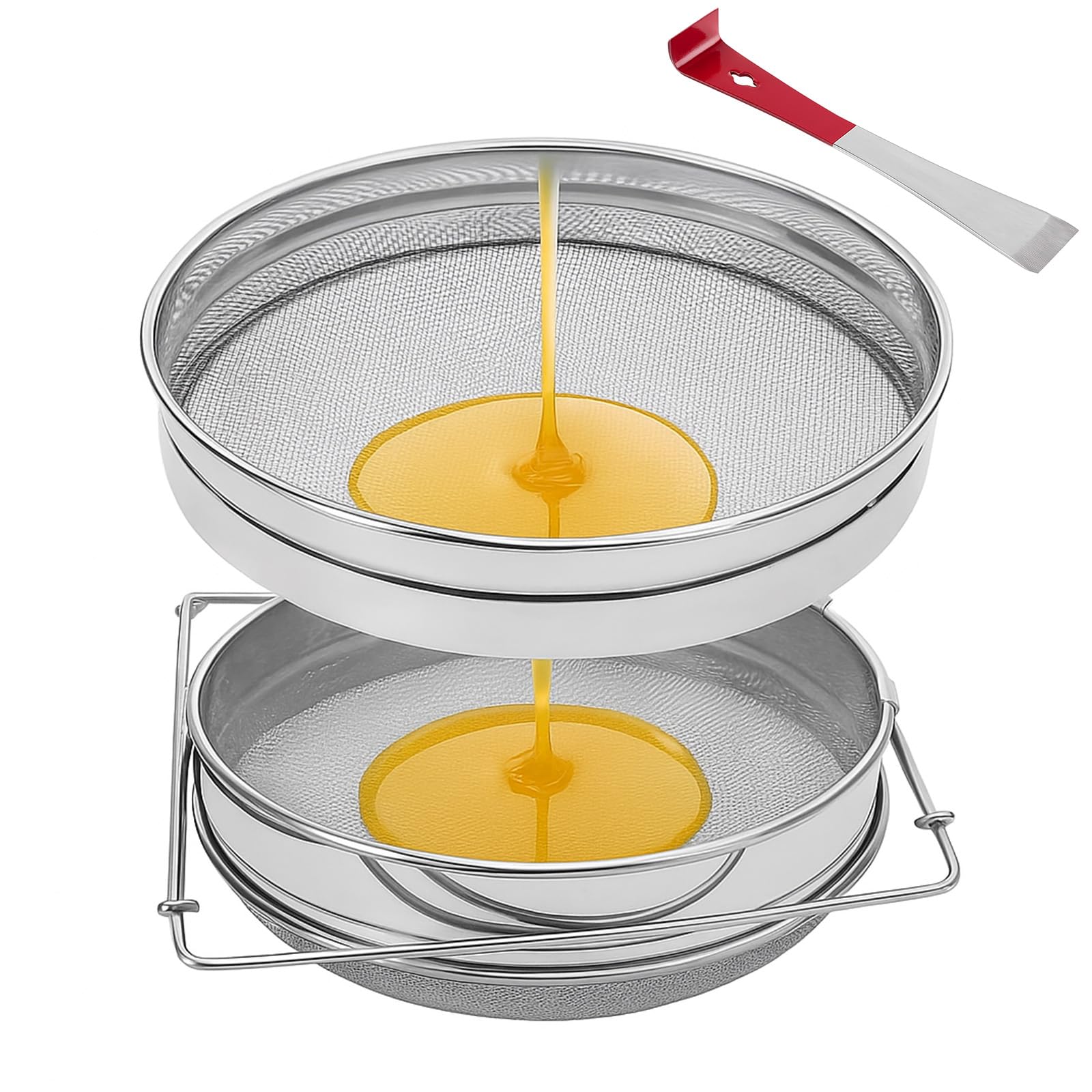
Beekeeping

12 Best Honey Strainer of 2026: Match Your Honey to the Right Mesh

Find the best honey strainer for your apiary: double sieves for speed, fine bags for clarity, and budget picks that actually work.

Walk into any beekeeping supply shop and you will see rows of stainless steel double sieves that look nearly identical. But the difference between a 650-micron bottom mesh and a 400-micron one can mean hours of waiting versus crystal-clear honey in your jars.

This guide cuts through the visual sameness by focusing on what actually matters: mesh size, material grade, and ease of cleaning. Whether you are processing a few frames from your backyard hives or running a small farm operation, the right strainer saves time and reduces frustration.

You do not need to overspend or guess. The picks below are organized by your real priority — speed vs. clarity, budget vs. long-term durability — so you can pour confidently from the first batch.

1

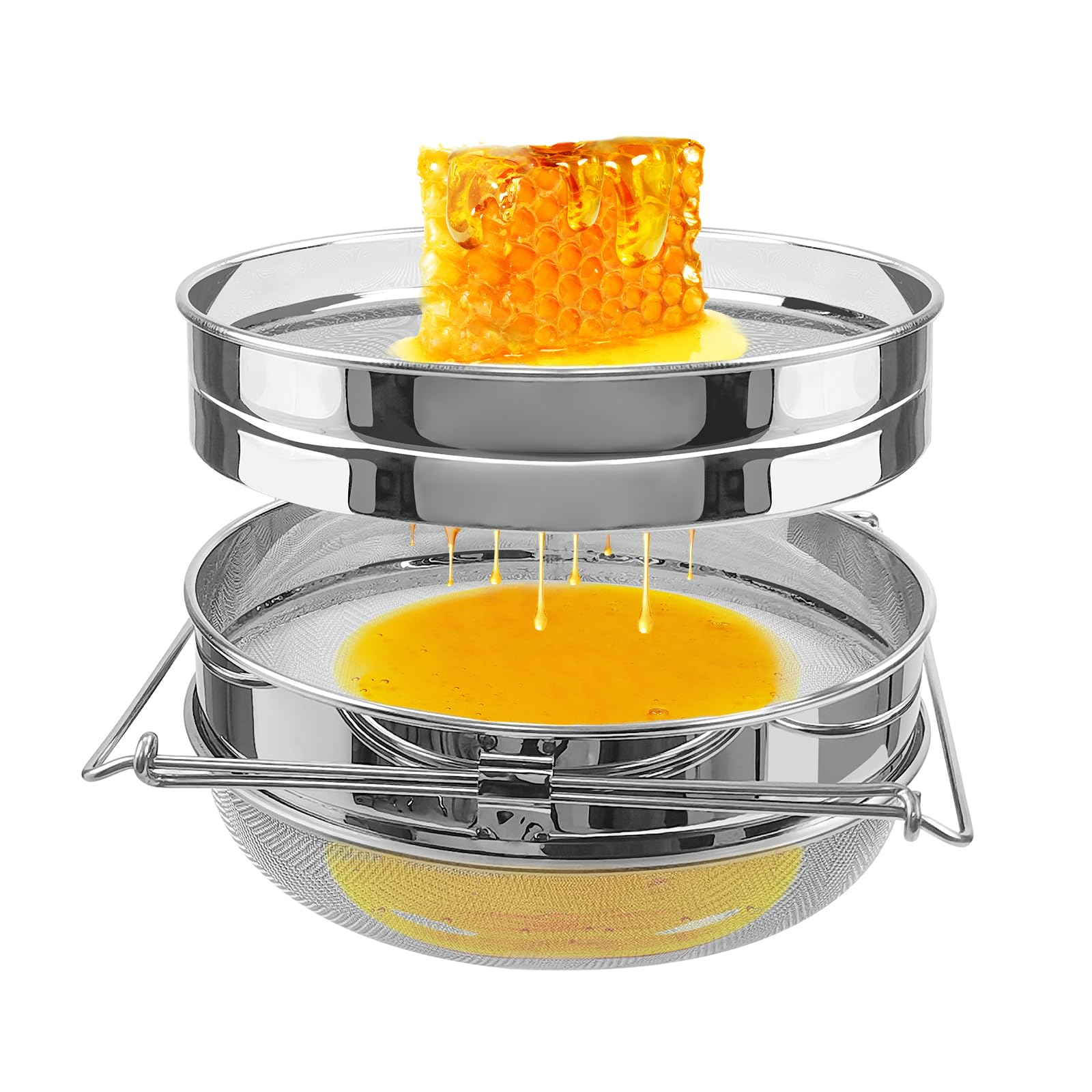
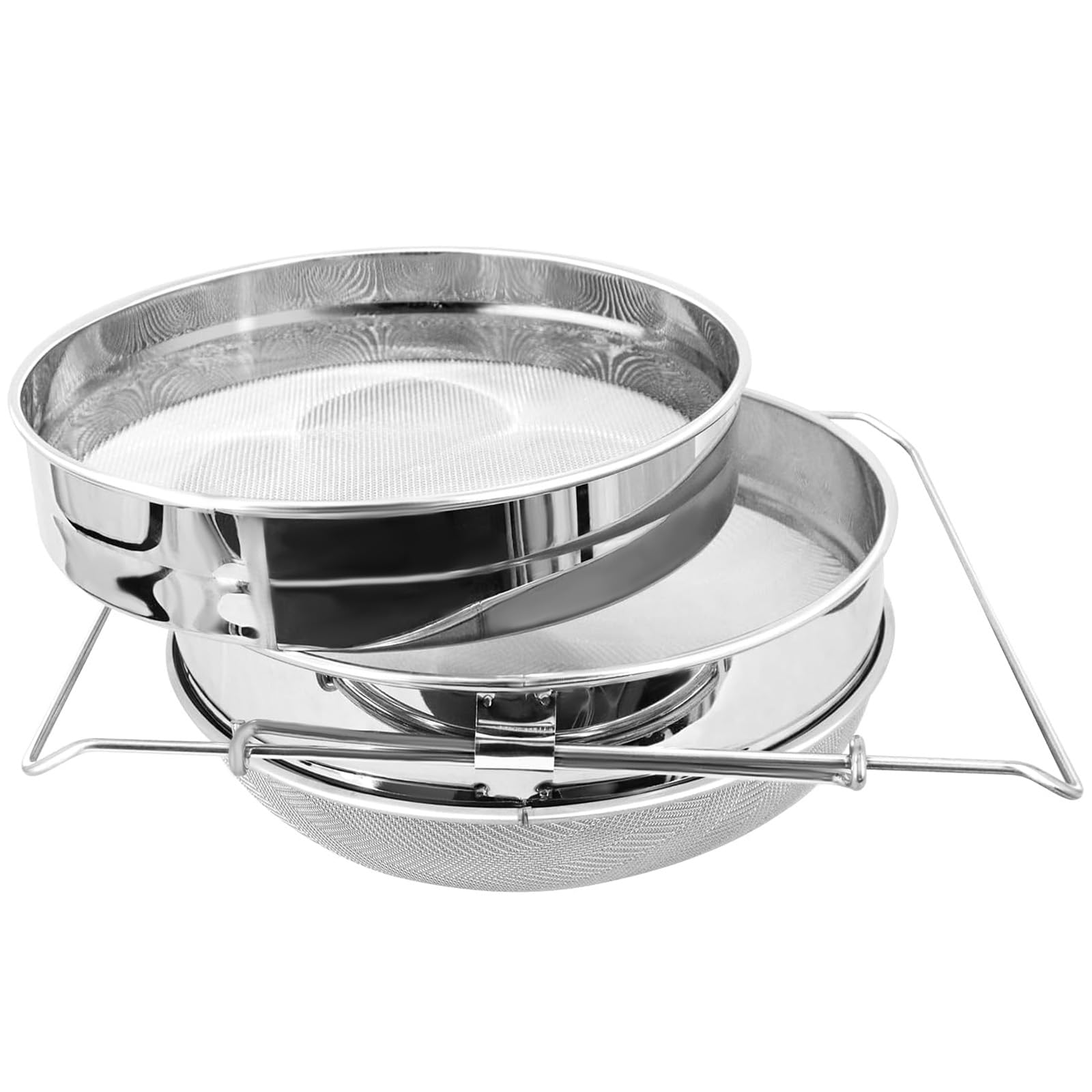
BEEKNOWS Double Sieve

Top Pick
BEEKNOWS Double Sieve

Budget 304 stainless

Our Score 9.8/10
Check Price

Worth Noting

  • For beekeepers processing hundreds of pounds annually, long-term screen integrity is less certain
Stages
Double
Material
304 Stainless Steel
Mesh Size
1875/650 micron
Adjustability
Adjustable arms
Read the full review

This double sieve fits 5-gallon buckets neatly and the 304 stainless build feels solid. For small-scale or first-time beekeepers, it filters wax and debris effectively. Those planning heavy annual extraction may want a more established option, as this sieve hasn't been tested across many seasons yet.

Bottom line: A solid budget choice for beginners or small harvesters who want 304 stainless without paying a premium, provided longevity isn't the top priority.

2

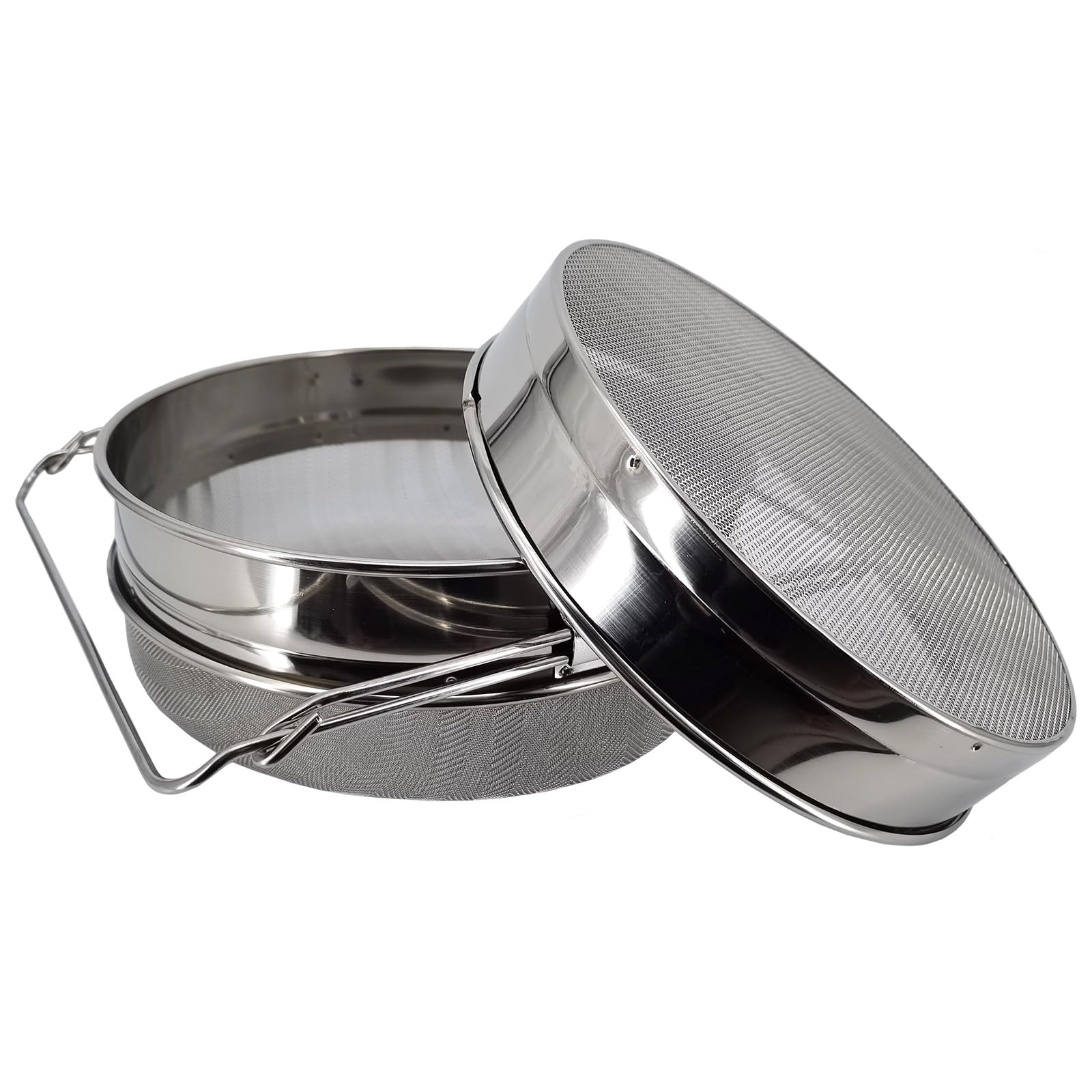
VIVO Double Sieve

VIVO Double Sieve

Hobbyist & semi-pro

Our Score 9.6/10
Check Price

Worth Noting

  • May tilt on bucket if arms are not evenly balanced
Stages
Double
Material
201 Stainless Steel
Mesh Size
1875/650 micron
Adjustability
Adjustable arms
Read the full review

The 1875 and 650 micron mesh combination removes wax and debris efficiently, leaving honey clear without excessive wait times. The strainer sits securely on a 5-gallon bucket, though the adjustable arms need even extension to prevent tilting on some bucket rims. A quick cold water rinse before first use helps reduce wax stickiness during cleaning.

This model fits hobbyist and semi-professional beekeepers who want consistent double filtration without chasing ultra-fine clarity. It is not for those needing below 650 micron filtration or operating on a tight budget.

Rinse the sieve with cold water before first use to minimize wax sticking to the mesh.

Bottom line: For beekeepers seeking a well-tested double sieve at a mid-range price, this strainer delivers consistent results without hidden surprises.

3

BEEXTM Double Sieve

BEEXTM Double Sieve

Budget beekeepers

Our Score 9.6/10
Check Price

Worth Noting

  • Screen can arrive with small tears or dents
Stages
Double
Material
304 Stainless Steel
Mesh Size
1875/650 micron
Adjustability
Adjustable arms
Read the full review

This double sieve delivers the same filtration performance as pricier 304 steel models at a lower price point. Screen damage upon arrival has been noted in some units, so a quick inspection is advisable. Best for budget-conscious beekeepers or beginners who want food-grade stainless steel without paying a premium.

Inspect the sieve for screen damage as soon as it arrives; replacement is straightforward if needed.

Bottom line: If you need a functional 304 stainless steel strainer on a budget, this model delivers the same mesh as pricier options — just be sure to inspect it on arrival.

4

BeeTech Double Sieve

BeeTech Double Sieve

Early adopters

Our Score 9.6/10
Check Price

Worth Noting

Stages
Double
Material
304 Stainless Steel
Mesh Size
1875/650 micron
Adjustability
Adjustable arms
Read the full review

Built with 304 stainless steel and a double sieve of 1875+650 microns, this strainer handles honey filtration effectively, removing wax and debris. Its adjustable arms fit most buckets. For beekeepers comfortable with a newer brand, it delivers solid performance at a mid-range price.

Bottom line: A capable strainer for early adopters who prioritize materials and specs over a long sales history.

5

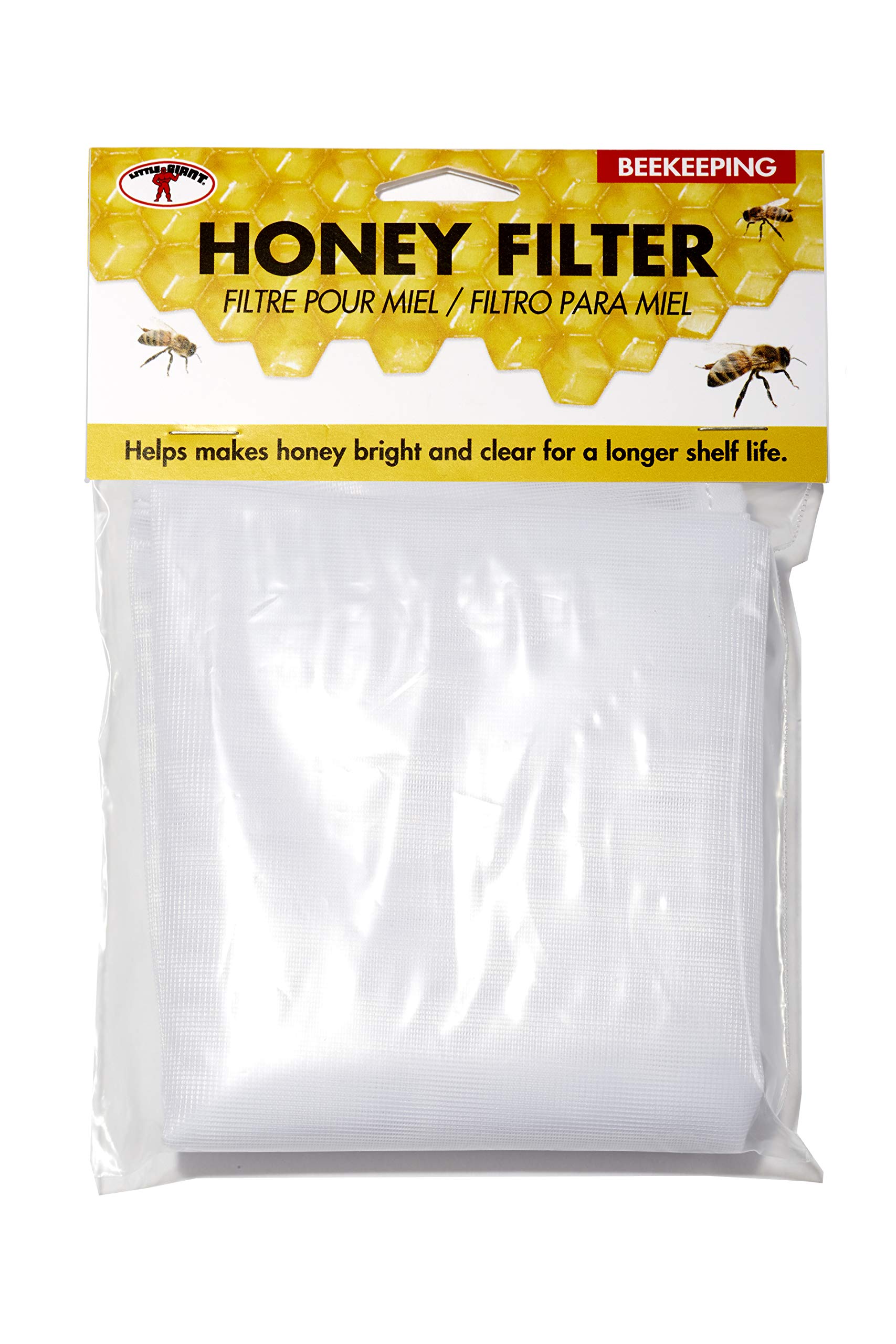
Little Giant Honey Bag

Little Giant Honey Bag

Simple bag filtration

Our Score 9.4/10
Check Price

Worth Noting

  • Filtration speed depends on gravity - slower than metal sieve strainers.
Stages
Single
Material
Polyester/nylon fabric
Mesh Size
400 micron
Adjustability
Elastic band
Read the full review

The Little Giant Honey Strainer Bag is a simple, one-piece filter that drops into any 5-gallon bucket. Its 400 micron fabric captures wax and debris effectively, but gravity alone drives the flow — so expect slower throughput than metal sieve strainers. This makes it ideal for beginners or hobbyists who prioritize ease of use over speed and don't need double-stage filtration.

Set the bucket up in advance - gravity filtration takes time, so plan for overnight dripping.

Bottom line: A practical choice for beekeepers who want an easy-to-use bag filter without assembly - patience required for the slow drip.

6

Fasmov Double Sieve

Fasmov Double Sieve

Fast flow sieve

Our Score 9.4/10
Check Price

Worth Noting

  • Leaves fine sediment that requires additional filtering for clear honey
Stages
Double
Material
Stainless steel
Mesh Size
1000/700 micron
Adjustability
Adjustable arms
Read the full review

Fasmov's coarser 1000/700 micron mesh filters wax and larger debris quickly, cutting strain time compared to bag methods. The stainless steel construction holds up well for the price. However, the mesh isn't fine enough to remove fine sediment, so those wanting crystal-clear honey will need a finer sieve — this is better for speed over clarity.

Bottom line: Best for beekeepers who prioritize fast strain times and have a budget, and don't require ultra-fine clarity.

7

AukBeeFun Double Sieve

AukBeeFun Double Sieve

Larger bowl size

Our Score 9.4/10
Check Price

Worth Noting

  • Arms may tilt on some buckets, causing uneven strainer positioning
Stages
Double
Material
Stainless steel
Mesh Size
1875/650 micron
Adjustability
Adjustable arms
Read the full review

This strainer's wider bowl diameter suits larger buckets, and its stainless steel construction feels solid. However, the arms may not sit level on every bucket, and the price runs higher than similar models — making it a fit only if you need that extra inch or two of diameter.

Bottom line: Consider this strainer only if you need the larger 10.24-inch bowl diameter for wider buckets; otherwise, similar options cost less and avoid the tilting concern.

8

NIZEFEI Double Sieve

NIZEFEI Double Sieve

Budget 304 specs

Our Score 9.4/10
Check Price

Worth Noting

  • Without confirmed user experience, the strainer's longevity and mesh consistency are assumptions.
Stages
Double
Material
304 Stainless Steel
Mesh Size
1875/650 micron
Adjustability
Adjustable arms
Read the full review

This strainer offers food-grade 304 stainless steel, a double mesh of 1875 and 650 microns, and adjustable arms from 10.1 to 16.7 inches — specs that match higher-priced alternatives for under $20. However, real-world filtration behavior has little user verification, making it a risk for first-time buyers. It suits budget-minded beekeepers willing to test an untried design.

Bottom line: Best for budget-oriented beekeepers who are comfortable testing an unverified product and have the patience to inspect for defects upon arrival.

9

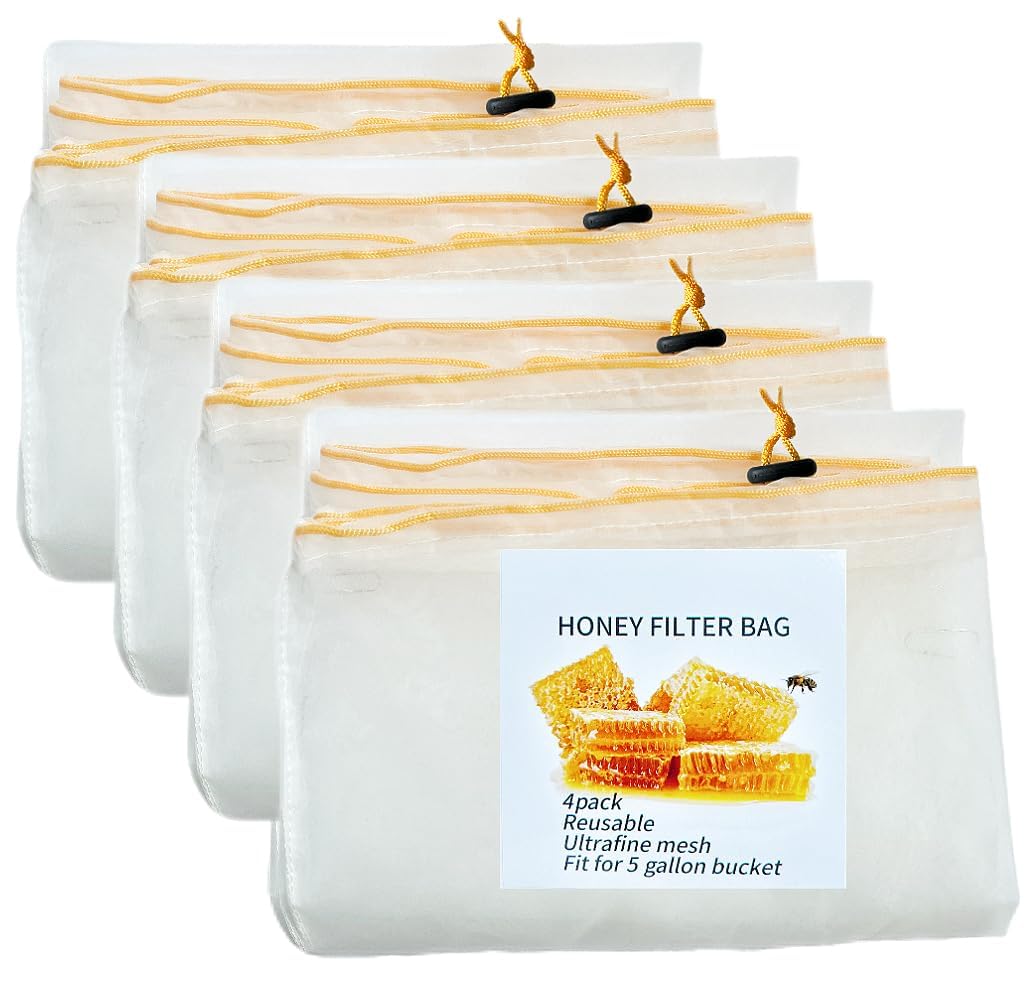
SPMKTQK 4-Pack Bags

SPMKTQK 4-Pack Bags

Crystal-clear honey

Our Score 9.2/10
Check Price

Worth Noting

  • Tight fit on some bucket rims may cause the bag to sag during draining, requiring manual adjustment.
  • Very fine mesh slows honey flow noticeably, requiring patience or occasional stirring to keep moving.
Stages
Single
Material
Food-grade nylon
Mesh Size
125 micron
Adjustability
Drawstring
Read the full review

These 125 micron nylon bags catch the smallest wax particles and pollen grains, producing honey so clear it looks filtered twice. The 4-pack gives spare bags for successive batches without reusing a wet one. Compared to the coarser Little Giant bag, this trades speed for clarity — expect to wait or stir gently as honey drips through the ultra-fine mesh.

Ideal for beekeepers who prioritize crystal-clear bottled honey over fast throughput, especially when processing cappings or fine debris. The drawstring design fits standard 5-gallon buckets, though the bag may sit deep in some buckets — check your bucket rim for a snug fit that can cause sagging rather than a taut strain.

Let gravity work — stirring too aggressively can push wax through the mesh.

Bottom line: If you bottle honey for market or personal preference where clarity matters more than speed, this 4-pack delivers exceptional results without the cost of a metal sieve.

10

Rural365 Double Sieve

Rural365 Double Sieve

Trusted double sieve

Our Score 9.2/10
Check Price

Worth Noting

  • Stainless steel grade is not confirmed, which may affect long-term durability when filtering acidic honey
Stages
Double
Material
Stainless steel
Mesh Size
Not specified
Adjustability
Adjustable arms
Read the full review

The Rural365 double sieve filters honey effectively, removing wax and debris with its dual mesh layers, and the build holds up well during repeated use. Cleaning is straightforward with a hot water rinse.

This strainer suits beekeepers who want a dependable tool without needing the highest review volume. However, the steel grade is not specified — worth considering if you strain acidic honey regularly, as lower-grade stainless may corrode faster.

Bottom line: A practical mid-range choice for beekeepers who prioritize build quality and cleaning ease over material grade certainty.

11

Magnificent Bee 2-Pack Bags

Magnificent Bee 2-Pack Bags

Balanced clarity

Our Score 9.2/10
Check Price

Worth Noting

  • 400 micron mesh may allow more sediment through than finer bags
Stages
Single
Material
Nylon
Mesh Size
400 micron
Adjustability
Elastic band
Read the full review

These nylon filter bags provide effective straining for honey and other liquids, using a 400 micron mesh that balances clarity and flow rate. The elastic band fits standard 5-gallon buckets securely, and the 2-pack is convenient for batch processing. The mesh is not as fine as 125 micron alternatives, so beekeepers seeking crystal-clear honey will need a finer filter, but for everyday wax and debris removal this works well. Compared to single-bag options with longer market presence, the track record here is shorter, so heavy-use durability may be less confirmed.

Bottom line: A solid fit for beekeepers who prioritize flow rate over extreme clarity and want an affordable 2-pack for batch processing.

12

Amroicus Double Sieve

Amroicus Double Sieve

Hive scraper included

Our Score 9.2/10
Check Price

Worth Noting

  • 201 stainless steel may be more prone to rust in damp conditions compared to 304 grade sieves.
Stages
Double
Material
201 Stainless Steel
Mesh Size
1875/650 micron
Adjustability
Adjustable arms
Read the full review

The Amroicus Double Sieve comes with a free hive scraper, making it a convenient starter kit for filtering honey. The 1875 and 650 micron meshes handle both coarse wax and fine sediment. However, the 201 stainless steel is less corrosion-resistant than 304 steel — a consideration for beekeepers in humid environments or who leave equipment wet after cleaning.

Bottom line: This works well for dry-climate beekeepers or anyone who can thoroughly dry the sieve after use, especially if they value the included scraper over long-term material durability.

How to Choose

Mesh Size (Microns)

The micron number tells you how small the holes are. A 650-micron bottom sieve catches large wax chunks but lets moderate sediment through. Drop to 400 microns or below, and you will capture fine pollen and tiny wax particles, producing honey that looks clear in the jar.

The trade-off is speed. Finer meshes clog faster and rely on gravity alone. If you process 5-gallon buckets of honey quickly, a 650-micron double sieve is the better fit. If you bottle for market and need visual clarity, a 400-micron bag or 125-micron bag is worth the wait.

Material Grade

Stainless steel is popular for its durability and easy cleaning, but not all grades are equal. 304 stainless is food-grade and resistant to rust from the acidic nature of honey. 201 stainless is cheaper but more prone to corrosion over years of use.

Nylon bags are lightweight and inexpensive, but they degrade under high heat and can absorb odors. For a one-time investment that lasts multiple seasons, 304 stainless is the practical choice. For occasional use or budget builds, 201 stainless or nylon bags work fine.

Adjustability

Adjustable arms let the strainer sit securely on buckets of different diameters. A poorly fitting strainer tilts or slips, spilling honey onto your floor. Look for arms that extend at least to 15 inches and lock firmly.

Elastic bands on bag strainers are simpler but can sag if the bucket is slightly oversized. Test the fit before pouring. A snug band prevents the bag from dipping into the honey and slowing the flow.

Number of Stages

Single-stage strainers (one mesh layer) are faster but allow more debris through. Double-stage strainers add a coarse top sieve to catch large particles first, then a finer bottom mesh for the final pass.

This two-step process reduces clogging on the fine mesh and gives you cleaner honey without stirring. For hobbyists, a double sieve is the sweet spot between speed and clarity. Single-stage bags are fine for cappings or when you plan to re-strain later.

Ease of Cleaning

Wax and propolis harden as they cool, making cleanup a chore. Start by rinsing the strainer with cold water immediately after use to solidify the wax, then remove it in sheets. Follow with hot water or a dishwasher cycle for the sticky residue.

Some nylon bags can go through the washing machine, but avoid fabric softener that clogs the mesh. Stainless steel sieves that are dishwasher-safe save time, but check that the mesh is not too fine to withstand spray pressure.

Frequently Asked Questions