Greenhouses & Hydroponics

4 Best Hydroponic Reservoir of 2026: Reliable Watering Without Pumps

Find the best hydroponic reservoir for your setup — from self-watering bases to gravity-fed systems that keep plants hydrated without constant refills.

The term 'hydroponic reservoir' covers everything from simple water tanks to engineered self-watering bases. Many listings blur the line, leaving buyers with a product that either lacks wicking, leaks, or fails to deliver consistent moisture.

This guide focuses on standalone reservoirs and watering systems that actually work: bases that wick water to fabric pots, inserts that turn buckets into self-watering planters, and gravity-fed setups that run for weeks. The key trade-off is between ready-to-use convenience and modular flexibility.

Your choice depends on pot type and how often you want to refill. Pick the system that matches your grow style — not the one with the flashiest marketing.

1

AC Infinity Self-Watering Base 4-Pack

Top Pick
AC Infinity Self-Watering Base 4-Pack

Fabric pot users

Our Score 9.2/10
Check Price

Worth Noting

  • Water level gauge can stick, leading to inaccurate readings.
  • Wicking may struggle with very large plants or in dry conditions.
Wicking
Adjustable wick lines
Material
Polypropylene blend
Pack Size
4 bases
Capacity per Unit
1.25 gal per base
Read the full review

The AC Infinity Self-Watering Base uses adjustable wick lines to draw water from a 1.25-gallon reservoir into fabric pots, keeping the growing medium consistently hydrated without pumps. The polypropylene/PVC/ABS blend stands up to repeated use without warping, even under fully saturated pots. Assembly takes minutes, with no tools required.

This 4-pack suits growers with fabric pots in tents or greenhouses who want a low-maintenance setup. The water level gauge can stick and may give off readings — worth checking manually. Very large plants or low-humidity environments may require occasional top-watering. For typical small to medium plants, the system delivers steady moisture with minimal attention.

Give the water level gauge a gentle tap if it sticks — it usually frees up without issues.

Bottom line: For fabric-pot growers wanting a set-and-forget hydration system without pumps, this 4-pack offers strong value — just be aware the gauge can stick and very large plants may need manual top-watering.
2

GroBucket Insert 3-Pack

GroBucket Insert 3-Pack

DIY bucket gardeners

Our Score 9.2/10
Check Price

Worth Noting

  • Reservoir capacity is limited to 1 gallon
Wicking
-
Material
Plastic
Pack Size
3 inserts
Capacity per Unit
1 gallon each
Read the full review

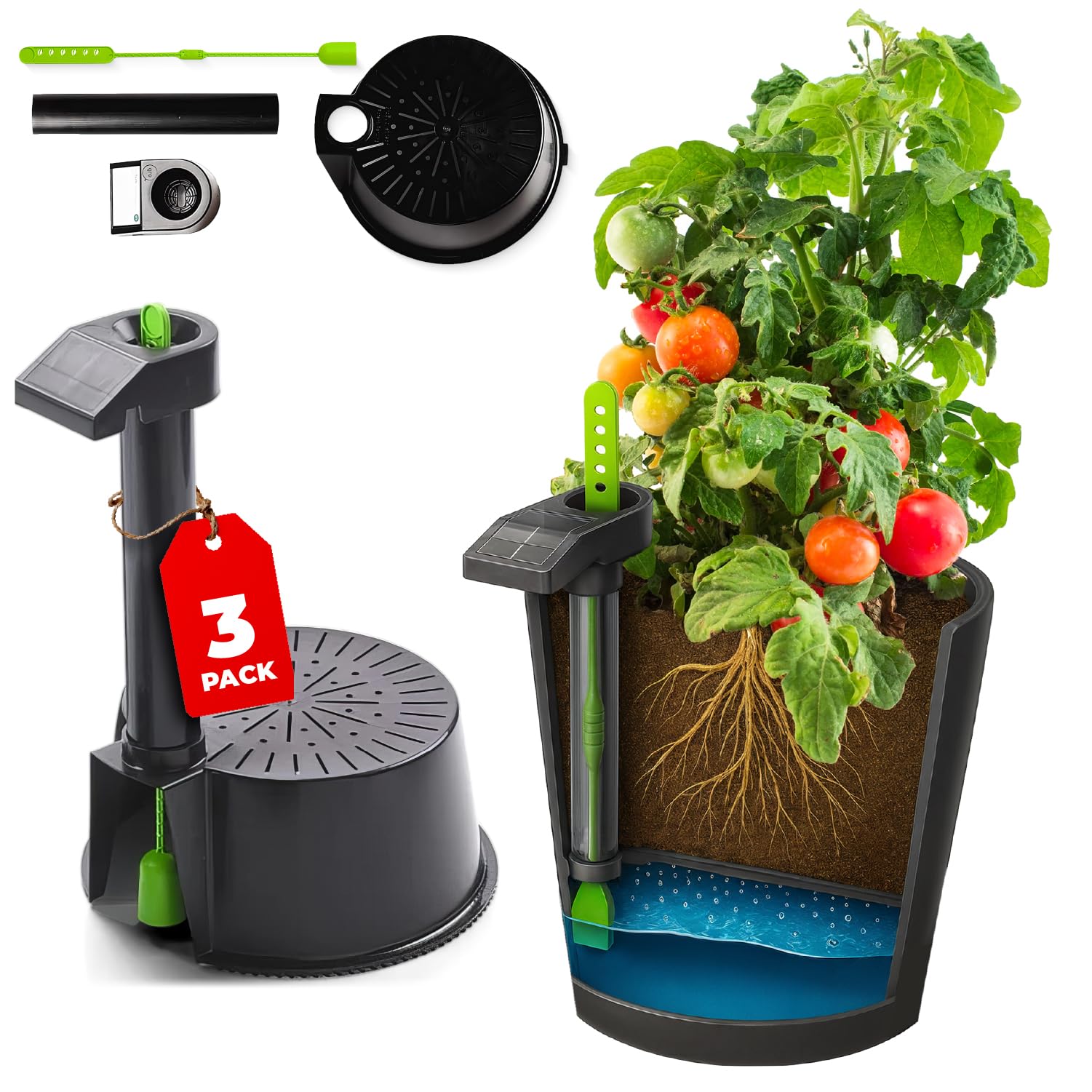
GroBucket's inserts use thick, rigid plastic that holds up to repeated handling and outdoor exposure. Unlike the top pick's ready-to-use wicking bases, this system requires you to supply the buckets — a tradeoff that rewards DIYers who want portability. Best for tomato and pepper growers who already have buckets and want sub-irrigation on patios. Each insert's 1-gallon reservoir means larger plants may need refills every couple of days in hot weather.

Bottom line: A smart, durable option for gardeners who want to upcycle buckets into wicking planters — just plan for more frequent watering with heavy-feeding plants.

3

AeroGarden AeroVoir

AeroGarden AeroVoir

AeroGarden owners

Our Score 9.0/10
Check Price

Worth Noting

  • Siphon bulb may leak if not positioned perfectly vertical
  • Clear plastic tubing can grow algae when exposed to light
Wicking
Gravity siphon
Material
Plastic
Pack Size
1 unit
Capacity per Unit
1.3 gallons
Read the full review

The AeroVoir uses a gravity siphon to keep AeroGarden units topped off automatically, cutting manual refills down to once weekly. Setup takes minutes with no tools, and the slim 1.3-gallon reservoir tucks neatly beside the garden on a countertop.

This is a practical fit for AeroGarden owners who want less frequent watering without switching to a different system. The siphon bulb requires careful vertical placement — an angled position can cause seepage. And because the reservoir and tubing are clear, algae may develop if exposed to direct light.

Position the siphon bulb so it hangs straight down — an angled placement raises the risk of water seeping from the connection.

Bottom line: A cost-effective auto-refill for AeroGarden owners who don't mind checking the siphon placement and shielding the tubing from light.

4

Spider Farmer Gravity System 4-Pack

Spider Farmer Gravity System 4-Pack

Large setup growers

Our Score 8.6/10
Check Price

Worth Noting

  • Threaded connections may leak if over-tightened; hand-tight is sufficient.
  • About 5 liters of water remain inaccessible at the bottom of the reservoir.
Wicking
Gravity-fed wick lines
Material
-
Pack Size
4 bases & 13 gal tank
Capacity per Unit
13 gal central
Read the full review

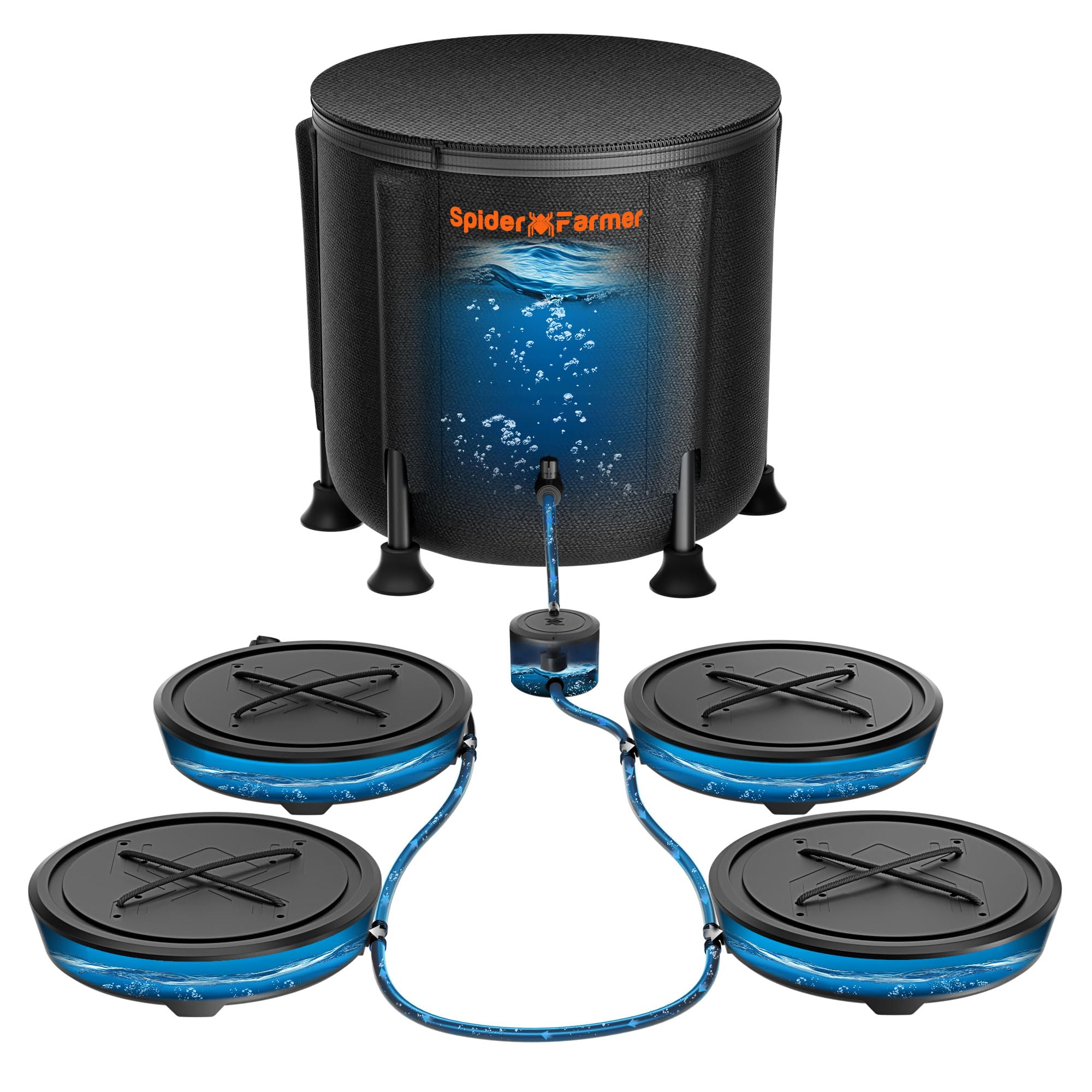
The Spider Farmer Gravity System delivers weeks of autonomous watering with its 13-gallon reservoir and four fabric pot bases. It suits growers with multiple plants who prioritize long unattended operation over minor water waste — about 5 liters remain unusable at the bottom — and are careful not to overtighten threaded connections to avoid leaks.

Hand-tighten threaded connections to avoid leaks; a siphon or pump can help access the final 5 liters.

Bottom line: Best for growers with multiple plants who want weeks of hands-off watering and can tolerate the small unusable water volume and careful assembly.

How to Choose

Reservoir Capacity per Plant

Capacity determines how long you can leave plants unattended. A 1-gallon reservoir may need refilling every few days for a large tomato plant, while a 5-gallon base can stretch to a week.

However, gravity-fed systems often leave a few inches of water unusable at the bottom. Add 10-15% to your estimated needs to account for this dead space.

Pack Size and Scalability

Packs of multiple bases or inserts let you water several plants from one setup. But individual units limit flexibility — you cannot easily move a single plant without disconnecting the system.

If you plan to expand later, choose modular components (like bucket inserts) that can be added one by one rather than fixed multi-packs.

Wicking Mechanism

Wicking uses capillary action to draw water from the reservoir into the growing medium. Adjustable wicks give you control over moisture speed, but they can struggle in low humidity or with very large plants.

Gravity-fed systems use a central tank and hoses — they deliver water reliably without electricity but require careful leveling to avoid overflows or uneven distribution.

Material Safety and Durability

Food-grade plastics (polypropylene, HDPE) are essential if you grow edibles. Acrylic and cheap PVC can leach chemical odors into the nutrient solution, potentially harming plants.

Opaque materials block light and prevent algae growth, while clear reservoirs need regular cleaning or tubing shielding. Check for BPA-free claims when buying budget options.

Frequently Asked Questions