Greenhouses & Hydroponics

8 Best Self Watering Seed Starting Tray 2026: Durable Pick

Find durable self-watering seed starting trays that avoid common weak lights and cracking plastic—for reliable germination season after season.

Many seed starter kits now include LED grow lights, but buyer reviews consistently report that these lights are too weak to produce stocky seedlings for vegetables. The promise of an all-in-one setup often ends with leggy plants and a need to buy supplemental lighting anyway.

The best value in this category lies in simple, passive self-watering trays with a good capillary mat and thick plastic construction. These trays deliver consistent moisture without the complexity of built-in lights, and they last multiple seasons when built well.

This guide focuses on trays that get the basics right: reliable wicking, durable trays that don't crack, and humidity domes that actually seal. Whether you are starting tomatoes, peppers, or herbs, the right tray saves you time and replaces the frustration of drying soil or broken parts.

1

GrowEase 24-Cell Kit

Top Pick
GrowEase 24-Cell Kit

Eco-conscious

Our Score 9.2/10
Check Price

Worth Noting

  • Only 24 cells
  • Higher cost per cell compared to larger kits with more cells.
Material
BPA-free recycled plastic
Self-Watering
Capillary mat, leak-proof
Cell Count & Size
24 cells, 2x2x2.25in
Dome Adjustability
Yes
Read the full review

This kit uses thick, BPA-free recycled plastic that resists cracking and stays rigid through multiple seasons. The leak-proof reservoir and capillary mat deliver consistent bottom watering without guesswork, and the entire tray can go in the dishwasher for effortless cleaning between starts.

Best suited for gardeners starting modest batches of 24 seedlings who want a durable, reusable system and prioritize environmental materials. The higher cost per cell and limited capacity mean larger plantings will require multiple kits — a tradeoff that makes sense if long-term reuse and easy cleanup are your priorities.

Bottom line: For gardeners who value eco-friendly materials and long-term reuse over seed-starting volume, this kit offers premium construction and effortless maintenance at a fair mid-range price.

2

Burpee SuperSeed + Coir Bundle

Burpee SuperSeed + Coir Bundle

Easy transplanting

Our Score 9.2/10
Check Price

Worth Noting

  • Bundle includes two different tray types, which may be unnecessary if you prefer one cell style.
Material
Plastic & silicone
Self-Watering
Capillary mat
Cell Count & Size
72+16 cells, —
Dome Adjustability
Read the full review

This Burpee bundle pairs a standard 72-cell self-watering tray with a silicone pop-out tray that lets you remove seedlings without root damage. The included organic coconut coir bricks expand into a chemical-free growing medium. It suits gardeners who want both a high-volume starting option and easy transplanting for larger seedlings. The two different tray types may be more than needed if you only use one style, but for those who alternate, it avoids buying separate kits.

Bottom line: For gardeners who value both volume starting and gentle transplanting, this bundle delivers two specialized trays and organic coir in one package.

3

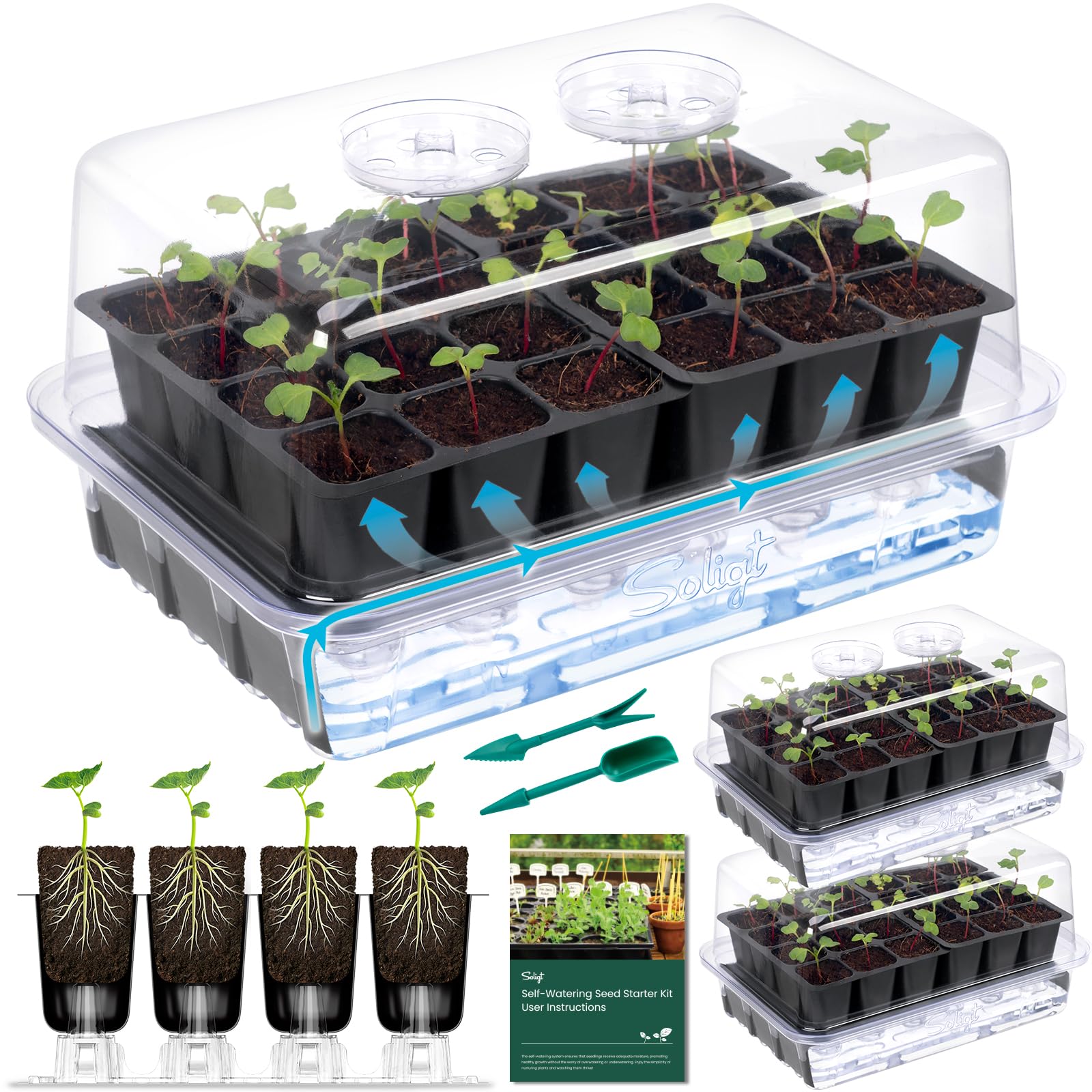
SOLIGT 3-Pack 72-Cell Trays

SOLIGT 3-Pack 72-Cell Trays

Durable large set

Our Score 9.0/10
Check Price

Worth Noting

  • Mid-range pricing may not fit the tightest budgets compared to basic starter trays.
  • No built-in grow light
Material
Extra-thick plastic
Self-Watering
Capillary mat
Cell Count & Size
72 cells, 1.5x1.5x2.17in
Dome Adjustability
Adjustable vents
Read the full review

The SOLIGT tray system uses extra-thick plastic that holds its shape season after season, resisting the warping that thinner trays develop. Water wicks consistently through the included capillary mat, keeping the 1.5-inch cells evenly moist without overwatering — a setup that supports strong germination and healthy root development. Assembly takes minutes: place the mat, fill the reservoir, and snap on the vented dome.

This 3-pack with 72 cells suits gardeners starting a moderate number of seeds who want a durable, reusable system. There is no integrated grow light, so indoor users need their own lighting — a standard shop light works fine. The mid-range price lands between disposable trays and premium options like the Gardener’s Supply Company model, making this a practical middle ground for those who value build quality over the lowest upfront cost.

Bottom line: A durable, effective seed starter that delivers on its promise — just pair it with your own grow lights.

4

Mckanti 4-Pack Silicone Trays

Mckanti 4-Pack Silicone Trays

Flexible cells

Our Score 8.8/10
Check Price

Worth Noting

  • Humidity dome lids may not stay clipped in place during use.
  • Grow light output may be insufficient for strong seedling growth.
Material
Silicone base
Self-Watering
Capillary mat
Cell Count & Size
48 cells, —
Dome Adjustability
Adjustable vents
Read the full review

The Mckanti kit stands apart with its silicone cell bases - seedlings pop out without root damage, a clear upgrade from standard starter trays. The humidity domes, however, do not snap on firmly, and the included grow lights may be too dim for robust vegetable starts. This setup works best for gardeners starting a modest number of seeds who value easy transplanting and are willing to use separate lighting or manage loose lids.

Place the kit under a stronger grow light or near a window for better results - the built-in lights work for low-light starts.

Bottom line: If easy transplanting is your priority and you can supplement lighting, this silicone-based kit delivers where others cause root stress.

5

Patigrow 60-Cell with Light

Patigrow 60-Cell with Light

All-in-one with light

Our Score 8.6/10
Check Price

Worth Noting

  • In a dim room, the included light may not prevent leggy seedlings
  • Grow light durability can be inconsistent
Material
1.5mm PET
Self-Watering
Capillary mat
Cell Count & Size
60 cells, —
Dome Adjustability
Adjustable
Read the full review

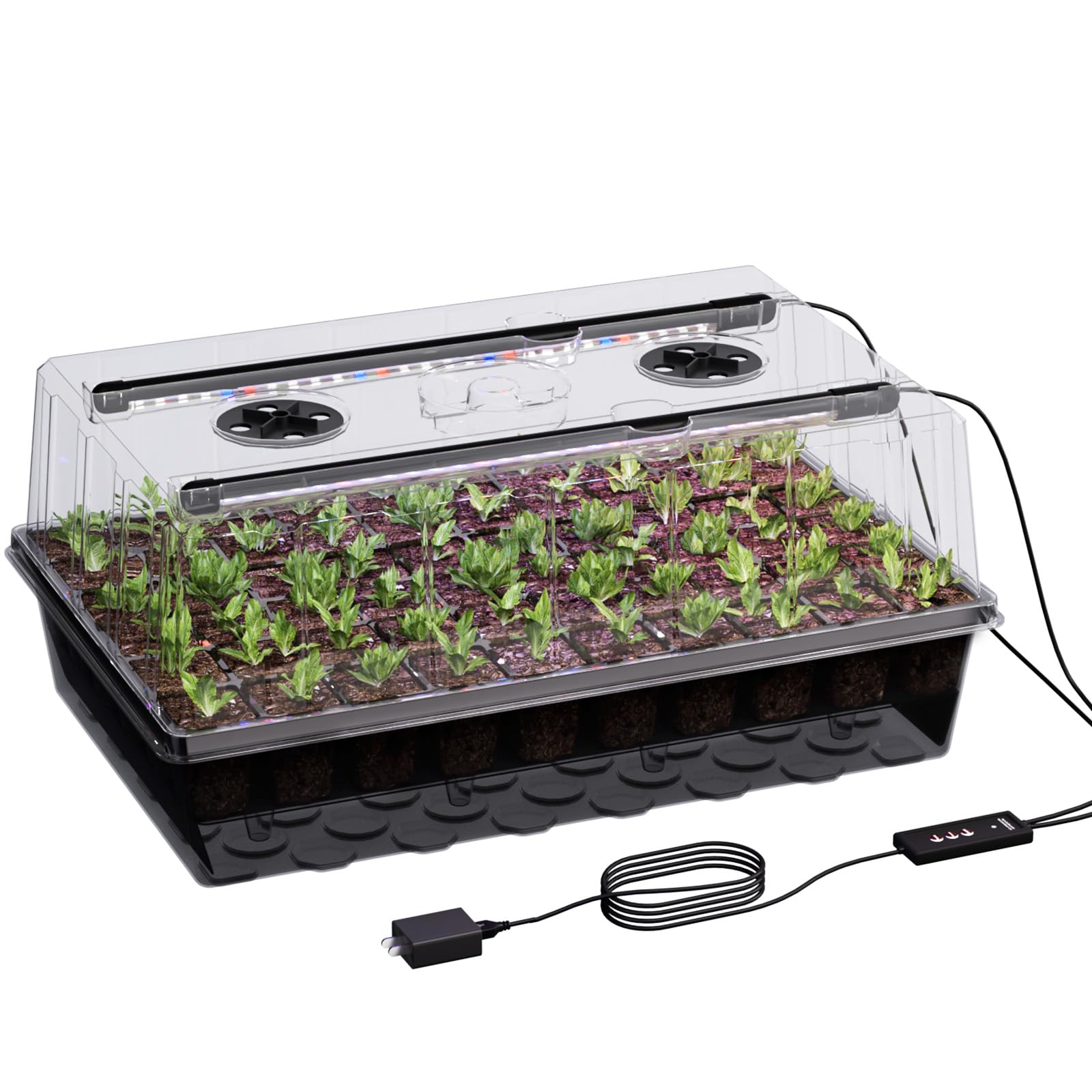
This kit bundles a 60-cell self-watering tray, humidity dome, and adjustable LED light with timer — everything a new gardener needs to start seeds indoors. The light is modest; for light-hungry plants like tomatoes, seedlings may stretch. It's best suited for low-light tolerant herbs and greens, or as an introduction to seed starting without investing in separate lighting.

Keep the LED light within 2-3 inches of the seedlings to reduce stretching, especially for leafy greens and herbs.

Bottom line: A practical starter kit for casual gardeners who want an all-in-one solution — just keep your plant choices realistic if relying solely on the built-in light.

6

Burpee 72-Cell Self-Watering

Burpee 72-Cell Self-Watering

Budget beginner

Our Score 8.6/10
Check Price

Worth Noting

  • Plastic cells can crack under normal handling
Material
Plastic
Self-Watering
Capillary mat
Cell Count & Size
72 cells, 1.5x1.5x2in
Dome Adjustability
Read the full review

Seeds germinate reliably thanks to the self-wicking base, and 72 cells fit plenty of starts on a budget. But the plastic can crack with handling, and removing seedlings from the stiff cells risks tearing roots — this is a throwaway tray for one-time use, not a long-term system.

Bottom line: This is the right choice if you need a cheap, high-capacity tray for one round of seed starting and don't plan to reuse it.

7

YAUNGEL 6-Pack with Light

YAUNGEL 6-Pack with Light

Multi-pack with light

Our Score 8.6/10
Check Price

Worth Noting

  • The built-in grow lights may be too dim for robust seedling growth in light-demanding plants.
Material
8mm PVC
Self-Watering
Capillary mat
Cell Count & Size
72 cells, —
Dome Adjustability
Humidity regulator
Read the full review

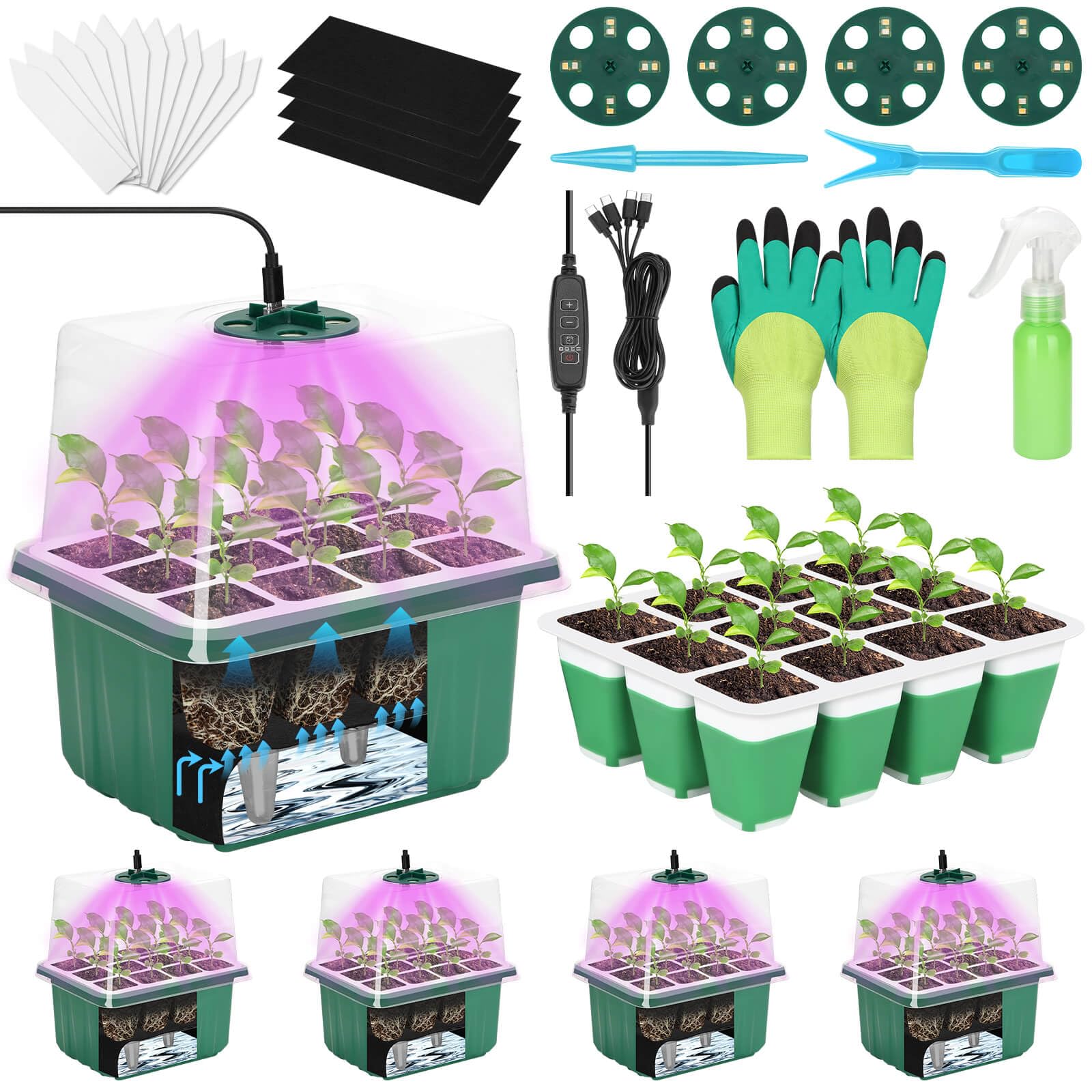
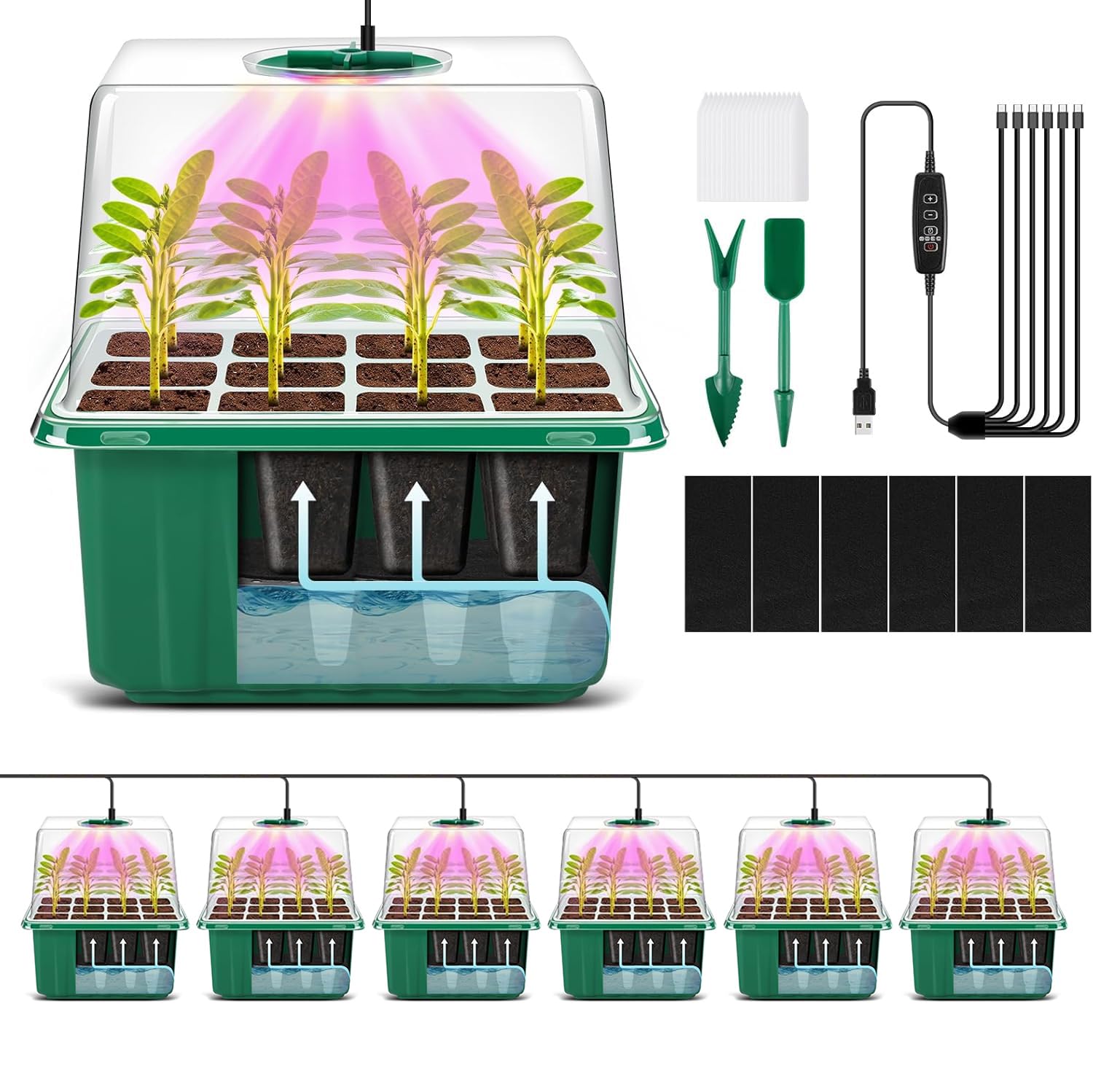
This set bundles six compact seed-starting trays, each with its own LED grow light and adjustable timer — handy for germinating several seed types separately. The trays are sturdy, the self-watering system works, and assembly takes minutes. However, the integrated lights lack intensity: they may not produce the strong, stocky seedlings that many vegetables need. Since the selling price is not listed, the overall value relative to a light-free tray plus separate fixture is uncertain.

Bottom line: This kit suits gardeners who want a compact, multi-tray lighting setup for low-light-tolerant seeds or for starting a small batch of varieties, but anyone needing strong, even light for vegetables should pair it with a separate grow light.

8

BlumWay 5-Pack 60-Cell

BlumWay 5-Pack 60-Cell

Budget with light

Our Score 8.4/10
Check Price

Worth Noting

  • Grow lights may stop working after several weeks of use
Material
ABS plastic
Self-Watering
Capillary mat
Cell Count & Size
60 cells, —
Dome Adjustability
Adjustable vent
Read the full review

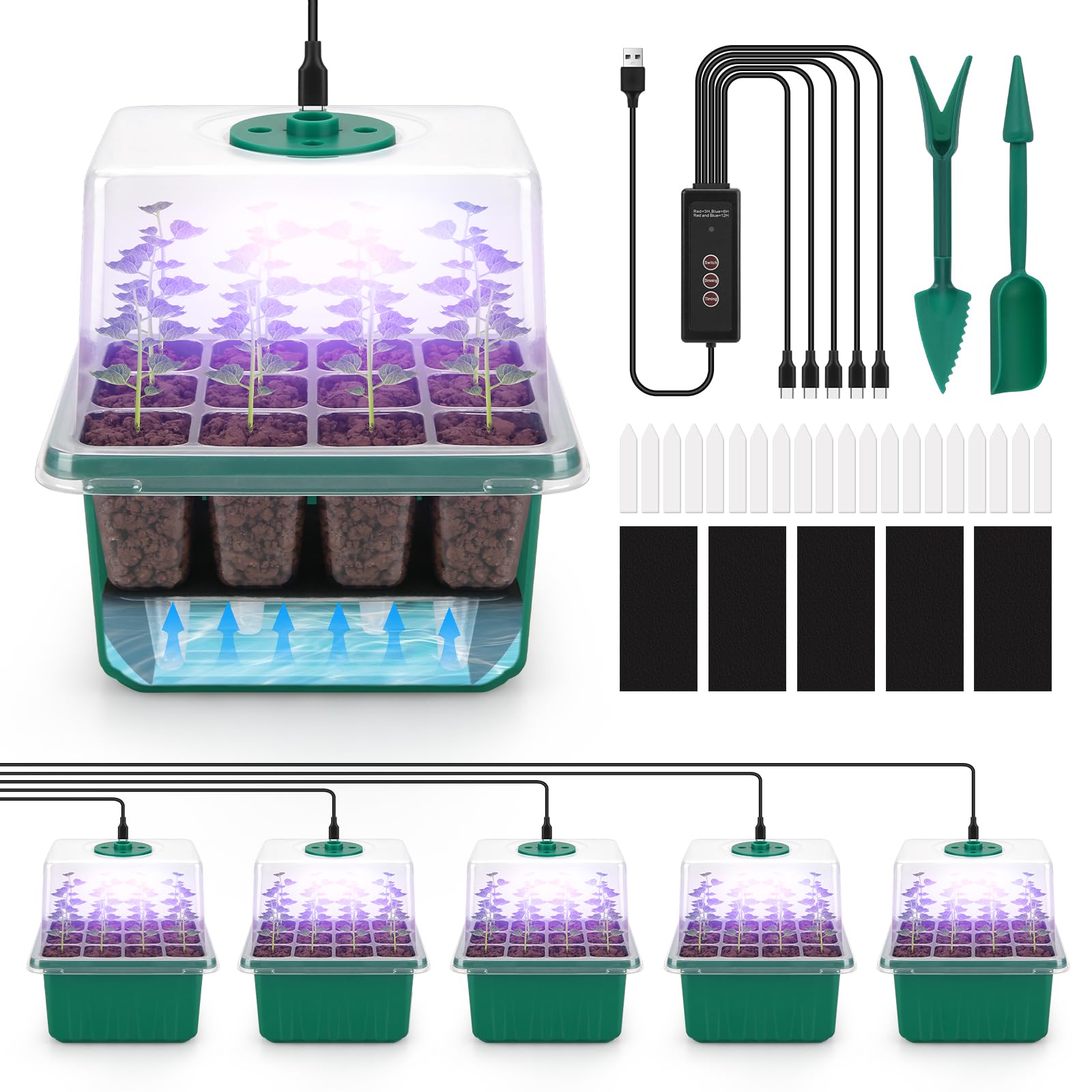
This kit gets seeds growing quickly with easy assembly and built-in lights, though the lights may stop working after a few weeks and the plastic can be fragile. It suits one-time or short-term projects rather than repeated seasonal use.

Bottom line: Best for a one-time seed-starting project on a tight budget where you can accept the chance of light or plastic issues.

How to Choose

Cell Count and Size

Seedling trays range from 24 to 72 cells. More cells mean more starts per tray, but individual cell size also matters. A standard 1.5-inch square cell works for most vegetables, but larger 2-inch cells give roots more room before transplanting.

If you start peppers or tomatoes that need a longer indoor period, larger cells reduce transplant shock. For quick-turn crops like lettuce, smaller cells work fine. The trade-off: fewer larger cells per tray means you need more trays for the same number of seeds.

Material Thickness

Thin plastic trays (often under 1mm) can crack after one season, especially when exposed to UV light or when moving filled trays. Thicker plastic (1.5mm or more) or recycled heavy-duty plastic resists warping and lasts many seasons.

Silicone bases are a newer option that eliminates cracking entirely, but they require a rigid outer frame for support. The extra upfront cost of thicker material pays off if you plan to reuse trays year after year.

Self-Watering Mechanism

Most self-watering trays use a capillary mat that sits in a water reservoir below the cells. The mat must have direct contact with both the water and the cell bottoms to wick moisture consistently. Some cheaper mats are too thin and dry out quickly.

Check that the tray design includes a clear indicator of water level or a simple refill slot. Without it, you may overwater or underwater without realizing. A good capillary mat provides even moisture from below, reducing the risk of damping-off disease.

Humidity Dome Adjustability

A dome that doesn't seal properly lets humidity escape, slowing germination. Look for adjustable vents that let you control airflow as seedlings mature. Domes that snap on securely prevent accidental dislodging, which can dry out the surface of the soil.

Some domes are too short for tall seedlings; ensure the dome height (typically 4 inches or more) gives enough clearance for plants like tomatoes before they need to be uncovered. Domes with removable vent caps offer the easiest fine-tuning.

Included Grow Light Intensity

Built-in lights in budget and mid-range kits are often underpowered for producing stocky seedlings. Many have only 40-56 LEDs and lack the intensity needed to prevent leggy growth. If strong seedlings are the goal, a separate dedicated grow light is a better investment.

If you do buy a kit with a light, look for adjustable brightness and a timer. But be prepared that these lights work best for starting seeds that will be moved outdoors soon after sprouting, not for raising seedlings to a large size indoors.

Frequently Asked Questions