Poultry & Livestock

12 Best Livestock Hay Feeder of 2026: Pick the Right Bar Spacing and Save Hay

Choosing a hay feeder that doesn't waste hay or fall apart. This guide matches bar spacing, material, and capacity to your livestock.

Many hay feeders claim to be heavy duty, but after a season of use the paint flakes and the bars bend. The real difference isn't the label — it's material quality and bar spacing. This guide helps you pick a feeder that actually lasts and doesn't let half the hay hit the ground.

Assembly difficulty is another hidden cost. Some models require two people and an hour of frustration, while others go together in ten minutes. We have highlighted which feeders go together smoothly and which ones to avoid if you value your time.

A catch tray can save you money on hay over time, but not all feeders include one. Matching the feeder design to your animals' size and feeding habits makes the difference between a tool that works and one that gathers dust.

1

Intrepid Corner Rack

Top Pick
Intrepid Corner Rack

Horses, goats, storage

Our Score 9.6/10
Check Price

Worth Noting

  • Corner mount requires a specific wall angle, limiting where it can go.
  • Some units may not include mounting screws, so check the package before starting.
Capacity
Several flakes
Material
Sturdy painted metal
Mounting
Wall mount (corner)
Read the full review

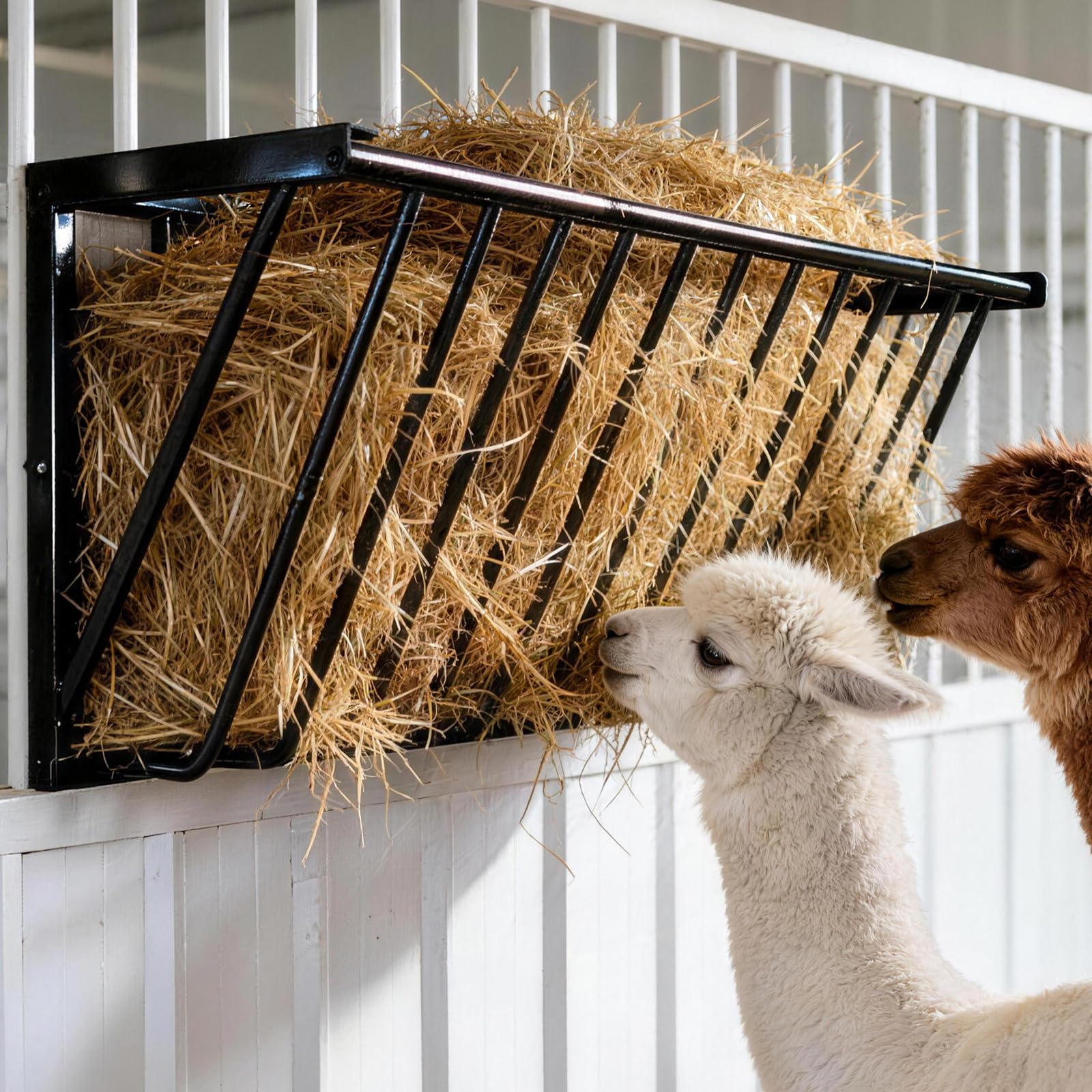
The Intrepid corner rack combines heavy-gauge metal with reinforced welds that hold several flakes of hay without sagging. The welds are strong enough to handle a full load of damp hay without flexing. Its triangular shape tucks neatly into a corner, saving floor space while keeping hay off the ground. Owners also use it as a blanket rack in the barn or home, thanks to the clean painted finish that resists rust better than many feeders in this price range.

This feeder suits horse and goat owners who have a corner wall available and don't need to feed a large herd at once. Capacity is moderate, best for one to two animals. Keep in mind that placement is limited to corners, and a small number of units have arrived without mounting screws so inspect the package before starting assembly.

Before installation, verify the included hardware; standard screws from a hardware store work if any are missing.

Bottom line: A corner feeder built to last for those who have the right wall angle and want a no-nonsense hay rack.
2

Premier 1 X-Tuff

Premier 1 X-Tuff

Small animals, stalls

Our Score 9.4/10
Check Price

Worth Noting

  • Holds only about one flake of hay
  • Some units have sharp metal edges that may need filing to prevent cuts.
Capacity
1 flake
Material
Hot-dip galvanized wire
Mounting
Hanging (L-hooks)
Read the full review

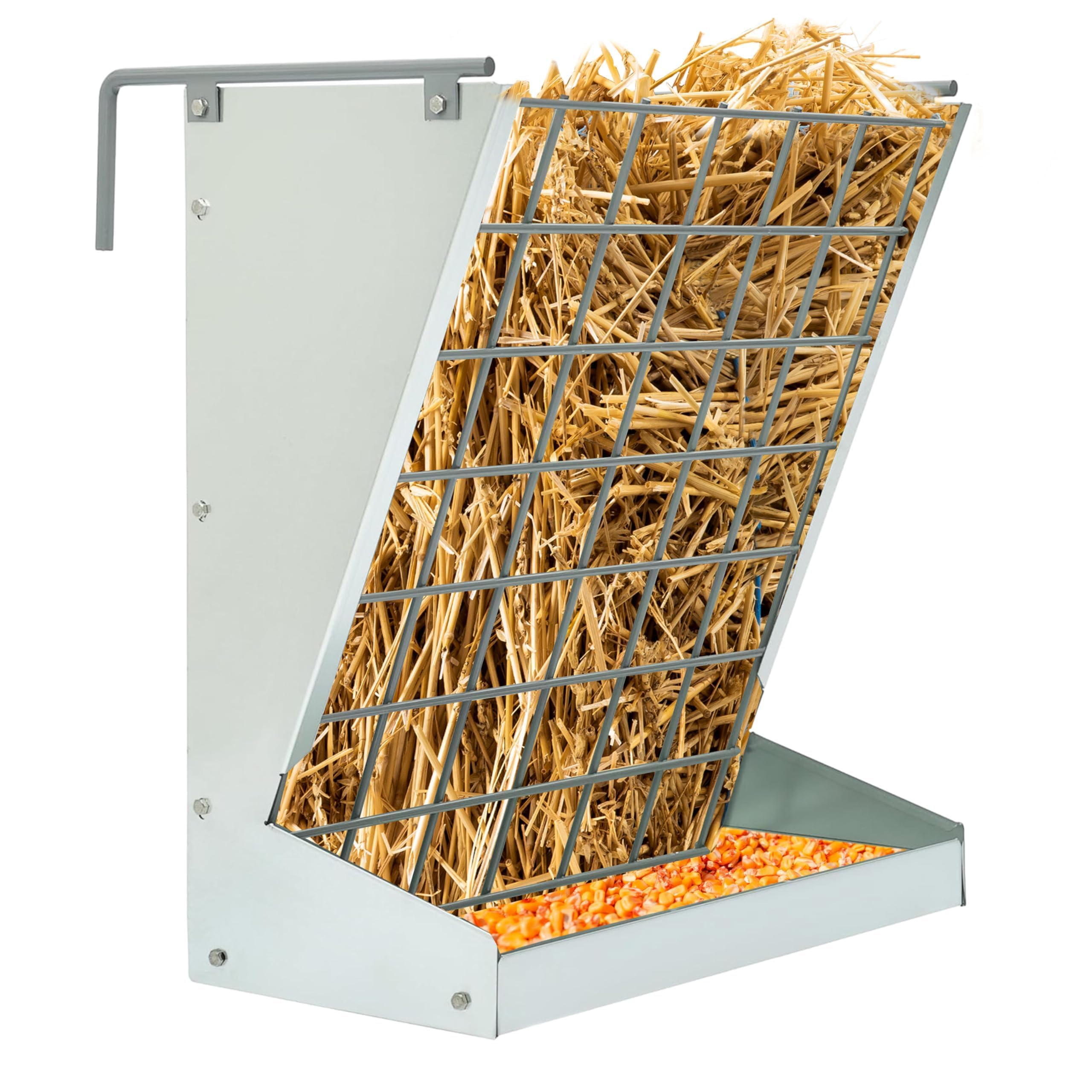
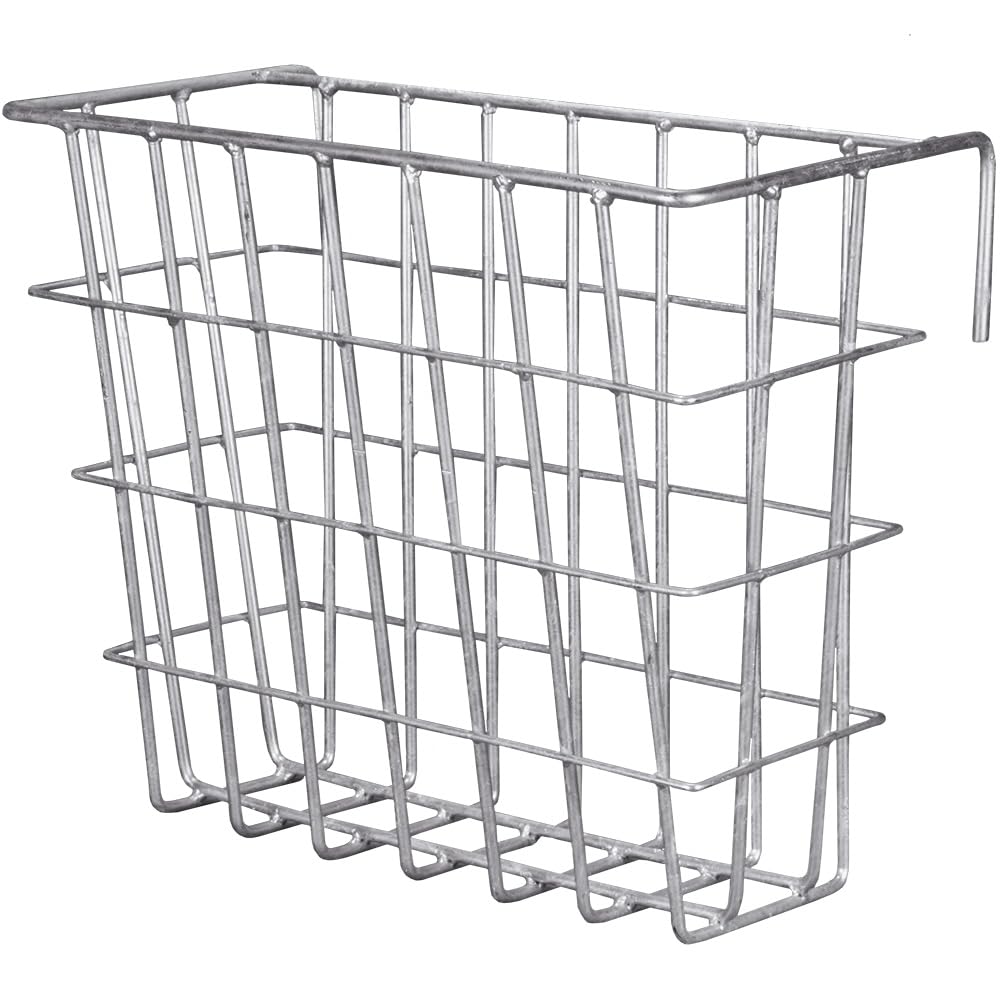
The Premier 1 X-Tuff uses hot-dipped galvanized welded wire that stands up to goats, weather, and years of use. It is designed for sheep and goat owners feeding one animal at a time in a stall or small pen. Capacity is limited to about a flake of hay, and some units may have sharp edges that can be filed down.

Fits only one flake — plan for frequent refills if feeding more than one animal.

Bottom line: A nearly indestructible feeder for single-stall use — best for owners who prioritize durability over capacity.

3

Weaver Slow Feed Net

Weaver Slow Feed Net

Horses, travel, slow

Our Score 9.0/10
Check Price

Worth Noting

  • Net holds less hay than the 36-inch length suggests
  • Holes can trap goat horns
Capacity
3-4 flakes
Material
Nylon synthetic rope
Mounting
Hanging (tie/clip)
Read the full review

The Weaver slow-feed net uses 1-1.5 inch openings to force slower eating, cutting down on spilled hay for horses and goats that tend to gobble. The nylon rope construction holds up to routine use without fraying, and at a budget price it’s a cost-effective way to add slow-feeding to stalls or travel pens.

This net works well for horses and goats without horns, but the advertised 36-inch length holds closer to 3-4 flakes than the full-bale volume some expect. The holes can trap horns or small hooves, so horned goats need a different feeder. For travel or show use, its light weight and simple tie-on design are practical — just avoid leaving it in wet climates long-term.

Hang the net so openings sit at nose height — this helps prevent hoof entanglement.

Bottom line: A solid slow-feed net for horses and goats without horns, but check the real capacity before buying, and keep horned livestock away.

4

VEVOR 18.5 Gal Wall Mount

VEVOR 18.5 Gal Wall Mount

Budget goats, shed

Our Score 9.0/10
Check Price

Worth Noting

  • Wide bar spacing can cause hay spillage and may trap small goat heads
Capacity
18.5 gallons
Material
Cold-rolled steel
Mounting
Wall mount
Read the full review

The VEVOR 18.5 Gal Wall Mount feeder assembles quickly and costs less than most steel racks. However, the wide bar spacing lets hay fall out easily and can trap small goats' heads, while the overall sturdiness suits only gentle, occasional use. This works best for budget-conscious goat owners with a small shed or barn who can accept some hay waste and won't subject it to heavy animals or constant pushing.

Bottom line: Best for small goat owners on a tight budget who don't mind some hay spillage and can mount it in a sheltered spot.

5

Country Mfg Combo Feeder

Country Mfg Combo Feeder

Small herds, USA

Our Score 9.0/10
Check Price

Worth Noting

  • For a small herd of 2-3 goats, the 5-gallon feedpan works
Capacity
5 gallons
Material
Alloy steel (painted)
Mounting
Hanging (hooks)
Read the full review

This all-steel feeder delivers exceptional build quality and strong welds, plus simple wall or gate mounting. But its 5-gallon capacity suits only 1-2 goats or sheep, and the painted finish may rust over time — not ideal for larger herds or wet climates.

Bottom line: For a small herd of 1-2 goats or sheep where build quality matters more than capacity, this feeder delivers — just plan for eventual rust touch-ups.

6

Lazaluking 67 Gal

Lazaluking 67 Gal

Large herds, storage

Our Score 8.8/10
Check Price

Worth Noting

  • Paint may rust if used outdoors in unprotected areas.
Capacity
67 gallons
Material
Carbon steel (painted)
Mounting
Wall mount
Read the full review

This wall-mounted rack holds 67 gallons of hay, enough to feed several goats or sheep for days. Compared to the top-rated corner feeder, it offers larger capacity but requires wall space. Best for owners with moderate-sized herds who want a single feeder for feeding and blanket storage. The painted steel can bend under extreme force from large horses pushing hard, so it's better suited for goats, sheep, and calm horses.

Mount on a sturdy wall and keep it under cover to protect the paint.

Bottom line: A cost-effective indoor feeder for goats and sheep that need bulk hay, but not the right choice for horses that lean into feeders.

7

BUYYAH 20 Gal Iron

BUYYAH 20 Gal Iron

Budget, dwarf goats

Our Score 8.8/10
Check Price

Worth Noting

  • Welds and hardware can fail after a few months in some units, especially if animals are rough on it.
Capacity
20 gallons
Material
Iron with powder coating
Mounting
Wall mount
Read the full review

Where the top-rated corner feeder justifies its higher price with heavy welds and long-term durability, the BUYYAH 20 Gal Iron takes a different route: low cost, quick assembly, and solid enough function for smaller animals. Most buyers get it together in minutes, and the 20-gallon capacity handles a few Nigerian dwarf goats or a couple of sheep without excessive hay waste.

This rack is best suited for budget-conscious owners with gentle breeds — Nigerian dwarf goats, small sheep, or even as a wall-mounted blanket holder. The powder-coated iron holds up fine against moderate use and animals that climb on it, but quality control varies: some units arrive with missing screws or welds that can separate after a few months. That tradeoff is tolerable if you keep it indoors or under cover and are willing to inspect hardware on arrival.

Inspect all welds and screws before mounting; a quick tightening or touch-up can prevent early separation.

Bottom line: Great value if you’re okay with checking the hardware and keeping it to smaller goats or light duty — not the feeder for large aggressive animals or constant outdoor exposure.

8

Rugged Ranch 4ft Pasture

Rugged Ranch 4ft Pasture

Mini horses, sheep

Our Score 8.8/10
Check Price

Worth Noting

  • Shipping damage can occur
  • Hay can fall off the catch tray, creating some waste
Capacity
1/2 square bale
Material
15-gauge galvanized steel
Mounting
Freestanding
Read the full review

The Rugged Ranch 4-foot feeder assembles with just four bolts in about ten minutes — no wrestling with complex hardware. The 15-gauge galvanized steel stands up to weather and light livestock abuse, securing a solid reputation among mini horse and sheep owners.

This feeder suits anyone wanting a freestanding pasture feeder for small animals, but two things require attention: shipping can bend legs or lose bolts, and the catch tray does not prevent all hay spillage. If you can inspect the unit upon arrival and live with some loose hay, the build quality delivers good value.

Check for bent legs and missing bolts immediately upon delivery — and place a mat underneath to collect stray hay.

Bottom line: When it arrives undamaged, this feeder is a well-built option for mini horses and sheep, but the shipping risk and price mean it’s best for buyers who can inspect the box before full acceptance.

9

KUAFU 2-in-1 Hanging

KUAFU 2-in-1 Hanging

Small goats, fence

Our Score 8.6/10
Check Price

Worth Noting

  • 3-inch mesh openings can be too small for animals to eat through easily
Capacity
15-20 gal approx
Material
Galvanized alloy steel
Mounting
Hanging (L-hooks)
Read the full review

This galvanized steel feeder mounts easily on fence rails and holds up well when goats climb on it. The 2-in-1 design accommodates hay and grain, but the 3-inch mesh openings may be too small for animals with larger mouths to eat through comfortably. Best suited for small goats or sheep rather than full-sized livestock.

Bottom line: A good pick for owners of small goats or sheep who want a durable hanging feeder, but confirm your animals can reach the hay through the mesh before buying.

10

INKNOTE Hay Bag

INKNOTE Hay Bag

Travel, budget, gentle

Our Score 8.6/10
Check Price

Worth Noting

  • Bottom fabric can tear under daily heavy use
Capacity
2-3 flakes
Material
Oxford fabric with mesh
Mounting
Hanging (adjustable strap)
Read the full review

For under ten dollars, this hanging hay bag handles light-duty tasks like travel feeding or supplementing a small goat’s daily hay. The Oxford cloth and metal ring make it simple to fill and hang anywhere. However, the bottom stitching can give way within a month of daily heavy use, so it’s best kept for occasional or gentle-animal scenarios rather than permanent outdoor feeding.

Bottom line: Works well for short-term feeding or road trips with small goats or sheep; not a replacement for a sturdy stationary feeder.

11

QVQE 18 Gal w/ Tray

QVQE 18 Gal w/ Tray

Indoor, goats, fix

Our Score 8.6/10
Check Price

Worth Noting

  • Assembly alignment can be off on some units, requiring extra effort to fit parts together.
Capacity
18 gallons
Material
Solid steel powder coated
Mounting
Wall mount
Read the full review

Pairing solid steel with a detachable grain tray, this feeder works well in covered barn stalls. Its 18-gallon capacity suits small herds of goats or sheep. Assembly may require extra effort due to occasional misalignment, and the powder coating does not hold up to outdoor moisture – rust can form after rain. Best for dry, indoor environments where the alignment hassle is a one-time tradeoff.

Bottom line: Suitable for indoor barn use where the assembly hassle is a minor tradeoff for the added grain tray versatility.

12

YXJSTO 2-in-1 Galvanized

YXJSTO 2-in-1 Galvanized

Waste reduction, goats

Our Score 8.4/10
Check Price

Worth Noting

  • Exposed metal edges may cut animals; filing edges recommended before use.
Capacity
15 gallons
Material
Galvanized steel
Mounting
Hanging (adjustable hooks)
Read the full review

The integrated catch tray catches loose hay that would otherwise hit the ground, cutting waste significantly. The galvanized steel holds up well to goats and sheep. However, exposed metal edges can cut animals and require manual filing, and assembly may test your patience with alignment issues. Not suitable for horses.

Bottom line: Best for goat and sheep owners who don't mind filing edges and assembling with some effort, particularly when waste reduction is the top priority.

How to Choose

Capacity and Physical Size

Capacity is measured in gallons or flakes. A small feeder (5-20 gallons) works for 1-3 animals, but a 67-gallon unit can feed a herd of 10 goats for two days. Bigger isn't always better: if your animals are few, a large feeder wastes hay because it stays exposed longer.

Consider refill frequency. A large capacity reduces daily chores but adds weight. Wall-mounted units over 20 gallons need solid mounting into studs or concrete. Freestanding feeders suit pastures but take up floor space.

Material Quality

Galvanized steel resists rust for years outdoors. Painted steel looks good initially but flakes after 6-12 months in wet conditions. Hot-dip galvanized (like Premier 1) offers the best corrosion protection. Cold-rolled steel with powder coating is acceptable in dry barns.

Metal gauge matters too. 15-gauge steel is heavier than 20-gauge and withstands animals leaning without bending. Thin metal feeders often arrive bent or warp under a goat's weight.

Mounting Type

Wall-mounted feeders save floor space but require secure installation. Hanging feeders (L-hooks over fence or rail) are easy to move and adjust height. Freestanding units are best for pastures but must be stable enough not to tip.

Corner-mount designs like the Intrepid maximize space in a stall but limit placement. If you need to move the feeder frequently, a hanging model or hay bag is more practical than a bolted wall mount.

Bar Spacing or Mesh Opening

Bar spacing is the single biggest factor in hay waste. If gaps are wider than 4 inches, small flakes fall through, and animals may pull out more than they eat. Narrower gaps (2-3 inches) retain hay but can frustrate animals with large mouths or horns.

For goats, 3-4 inch spacing works if the hay type is course. For sheep and mini horses, 2-3 inch mesh helps. A catch tray underneath catches what does fall and allows animals to eat it later.

Ease of Assembly

Some feeders arrive pre-assembled (hay nets, hanging racks), while steel wall mounts require bolting together. Reviews consistently show that feeders with clear instructions and pre-drilled holes take 15 minutes, while others need adjustments and extra tools.

If you are not handy, look for feeders with fewer than 10 bolts and positive assembly feedback. Two-person setups can be a deal breaker if you work alone. Check reviews for 'missing hardware' complaints — that is a red flag.

Frequently Asked Questions