Soil & Fertilizer

10 Best Reusable Yard Waste Bags of 2026: Built to Handle Real Yard Work

Find reusable yard waste bags with reinforced seams and double-stitched handles that survive dragging, sun exposure, and heavy loads.

Walk down the yard waste aisle and every bag promises 'heavy duty.' After a season of dragging, sun, and sharp branches, many develop holes in the bottom or ripped handles.

The real difference comes down to material density and stitching quality. Bags with reinforced seams and a fabric weight of 150g/m² or more hold up far longer than lightweight polypropylene alternatives. That usually means spending a bit more or accepting a heavier bag.

Whether you need a bag you can drag across pavement without tearing or one that stands open on its own for easy filling, matching the bag's construction to your specific yard work habits is what determines satisfaction.

1

DURASACK 48 Gal

Top Pick
DURASACK 48 Gal

General yard cleanup

Our Score 9.4/10
Check Price

Worth Noting

  • Bottom can develop holes when dragged repeatedly on rough surfaces like concrete or gravel.
  • Material may degrade if left in direct sunlight for extended periods.
Weight
1.6 lbs
Capacity
48 gal
Material
Woven polypropylene
Self-Standing
Yes
Read the full review

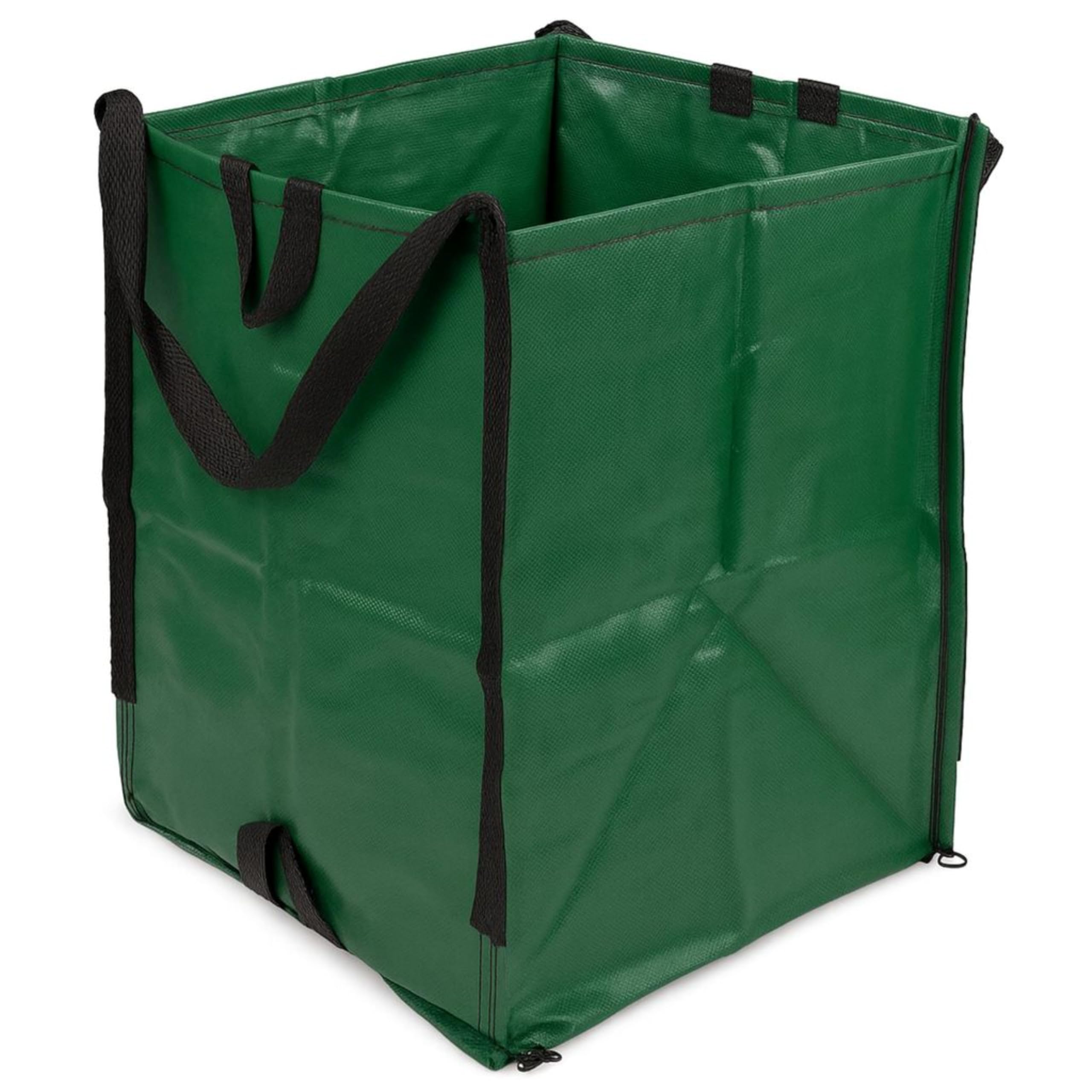
The bag's woven polypropylene shell is stiff enough to stand open without internal support, which means you can fill it without wrestling with collapsing sides. The material is denser than many lightweight yard bags, helping it resist punctures from twigs and dry branches during normal use. Top and bottom handles are double-stitched, giving you secure lift points when the bag is full. At 48 gallons, the size suits medium yards — enough volume to clear a typical fall leaf pile without becoming unwieldy. At a mid-range price, the build quality matches the expectations of a purposeful tool rather than a disposable bag.

During seasonal cleanup, the self-standing feature is a practical time-saver: the bag stays upright as you rake leaves in, and the handles hold up to repeated lifting. The main limitation is the bottom material. Repeated dragging across rough concrete or asphalt can wear through the weave over time, so it performs best when carried rather than dragged. The woven polypropylene also degrades if left in direct sunlight for months — a manageable tradeoff if you store it indoors.

Ideal for homeowners with medium-sized yards who want a rugged bag that requires no assembly or frame. If you regularly drag heavy loads across pavement or handle sharp branches, the Fiskars Kangaroo with its hard plastic bottom is a better fit — though you sacrifice capacity and handle reinforcement. Storing the bag out of direct sunlight when not in use prevents UV degradation and extends its lifespan.

To extend the bag's life, carry it rather than drag it when full, and store it out of direct sunlight when not in use.

Bottom line: For typical yard cleanup where you need a bag that stands up on its own and handles moderate loads without tearing, the DURASACK delivers — just avoid dragging it on pavement.
2

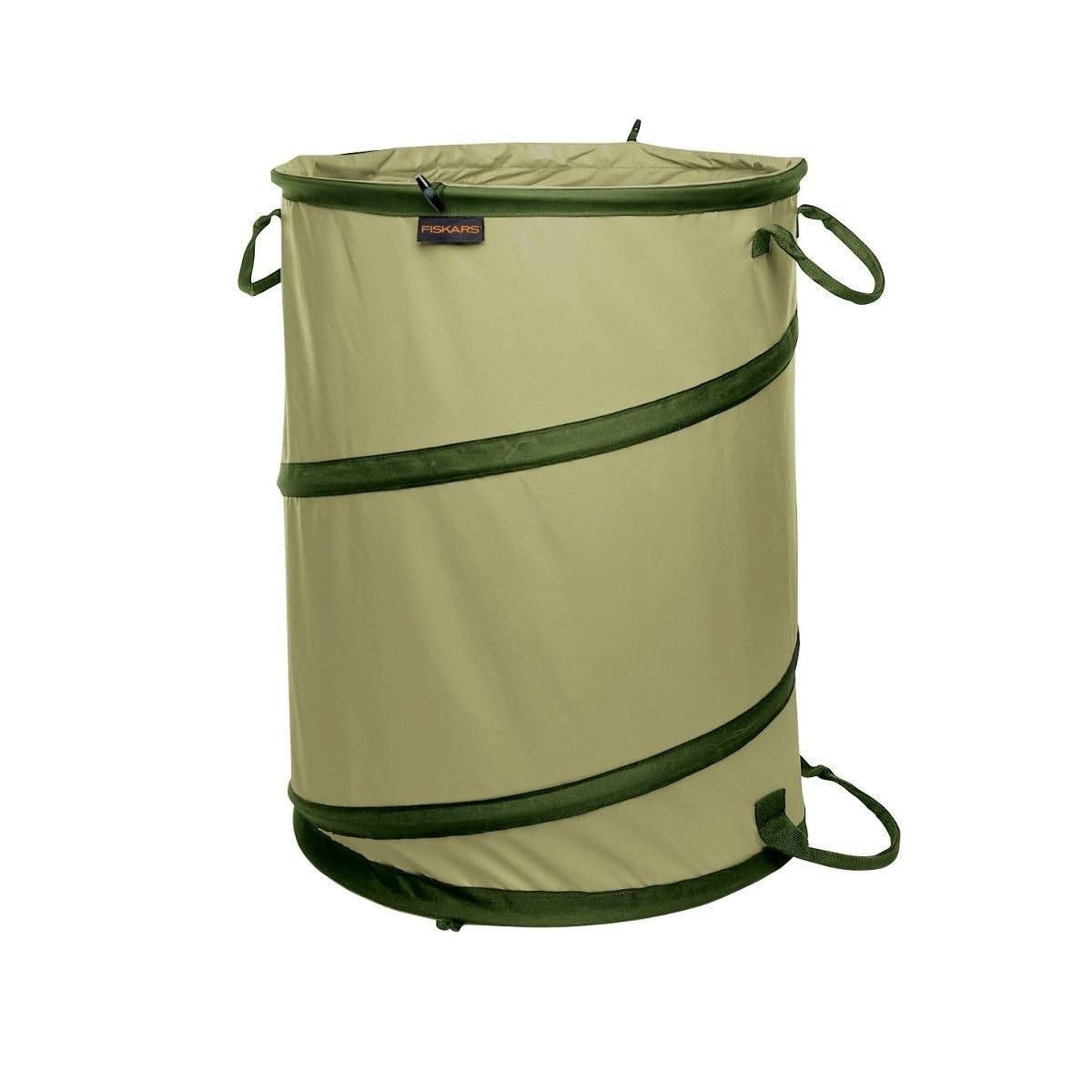
Fiskars Kangaroo 30 Gal

Fiskars Kangaroo 30 Gal

Dragging heavy loads

Our Score 9.2/10
Check Price

Worth Noting

  • 30-gallon capacity fills quickly for medium-sized yards, requiring more trips to the compost pile
  • Handles may rip away from the bag after repeated heavy loads over a season or two
Weight
4.6 lbs
Capacity
30 gal
Material
Plastic/vinyl with hard bottom
Self-Standing
Yes
Read the full review

The hard plastic bottom eliminates scraping damage when moving full loads across concrete or gravel, a design that prevents the tears common in soft-bottom bags. This makes it the bag to grab for weeding sessions along driveways or patios where dragging is inevitable.

This bag suits small yards where the 30-gallon capacity matches light debris like weeds and trimmings, and where folding it flat for storage between uses is a plus. The heavier bottom and overall weight (4.6 lbs) are noticeable when empty, and handles may pull loose under consistently heavy loads over time — so it rewards frequent emptying and moderate weight rather than overstuffing.

Keep loads moderate and empty frequently to reduce strain on the handles — this bag rewards light-to-medium use.

Bottom line: Best for small yards where dragging a bag across pavement is a daily task, but not the choice for large leaf cleanups or heavy branches.

3

joyhalo 6x72 Gal

joyhalo 6x72 Gal

Large properties teams

Our Score 9.2/10
Check Price

Worth Noting

  • Plastic ring can be tricky to thread through the top channel on first setup.
  • Some units show thin spots or small holes after first use
Weight
Capacity
72 gal each
Material
Woven polypropylene
Self-Standing
Yes (detachable hoop)
Read the full review

The joyhalo six-pack delivers the most bags per dollar in this roundup, with a pair of gardening gloves included at no extra cost. The woven polypropylene material handles leaves and light branches without punctures for most users, though quality control can be inconsistent.

This setup suits households with large yards, multiple collection points, or groups sharing cleanup duties. Some bags may develop thin spots after first use, so inspect each before heavy loading. Not ideal for buyers who need a single premium bag or plan heavy dragging on concrete.

The plastic ring insertion is easier if you work it in from one end and push gradually.

Bottom line: For teams tackling large leaf cleanups, the per-bag cost is hard to beat, but expect to inspect each unit for QC issues.

4

GreatBuddy 3x132 Gal

GreatBuddy 3x132 Gal

Massive leaf removal

Our Score 9.2/10
Check Price

Worth Noting

  • Material can tear under heavy or sharp loads; handles may rip and UV weakens the plastic if left outside.
Weight
3.6 lbs total
Capacity
132 gal each
Material
Plastic (tarp-like)
Self-Standing
Yes (plastic strip)
Read the full review

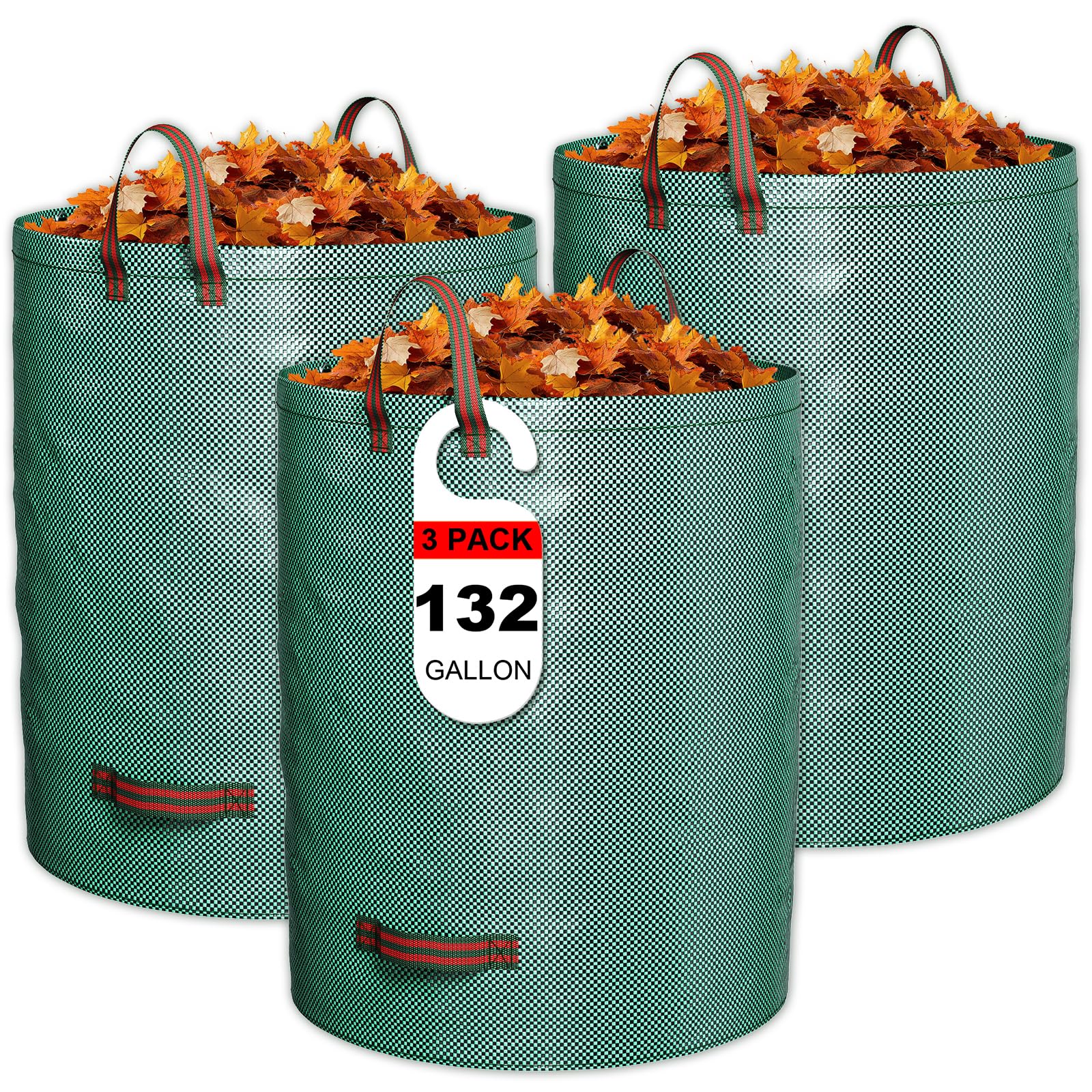
The GreatBuddy 3-pack delivers enormous volume at a budget-friendly price, making it a practical choice for a single fall cleanup. However, the tarp-like material can tear when filled with heavy or sharp debris, and the handles can rip under strain. UV exposure also accelerates breakdown, so these bags need indoor storage between uses. Compared to cheaper options with the same capacity, the GreatBuddy costs more per bag without offering greater longevity - it’s a volume play, not a long-term solution.

Bottom line: Best for a single large-scale leaf removal where volume matters more than durability - avoid if you plan to reuse these bags beyond one season.

5

joyhalo 3x72 Gal

joyhalo 3x72 Gal

Moderate yard waste

Our Score 9.2/10
Check Price

Worth Noting

  • Seams may split after first use on some units
  • Plastic ring can be tricky to thread through the top hem
Weight
Capacity
72 gal each
Material
Woven polypropylene
Self-Standing
Yes (detachable hoop)
Read the full review

This three-pack delivers generous capacity for collecting leaves and grass clippings at a low cost per bag, and the included gardening gloves add convenience. The woven polypropylene material holds up reasonably well for typical yard debris, and the detachable hoop helps the bag stay open during filling. However, some units have shown seam splitting after the first use, and the plastic ring threading can be fiddly. For those who need more bags, the six-pack version offers even better per-bag value.

Bottom line: Best for moderate leaf and grass collection where per-bag cost matters and occasional seam failure is acceptable.

6

WORKPRO 72 Gal

WORKPRO 72 Gal

Single large bag

Our Score 9.2/10
Check Price

Worth Noting

  • May not stand upright when new; needs some breaking in to hold its shape.
  • Material can tear after first use if overloaded with heavy or sharp debris.
Weight
~1.5 lbs
Capacity
72 gal
Material
PP woven
Self-Standing
Yes
Read the full review

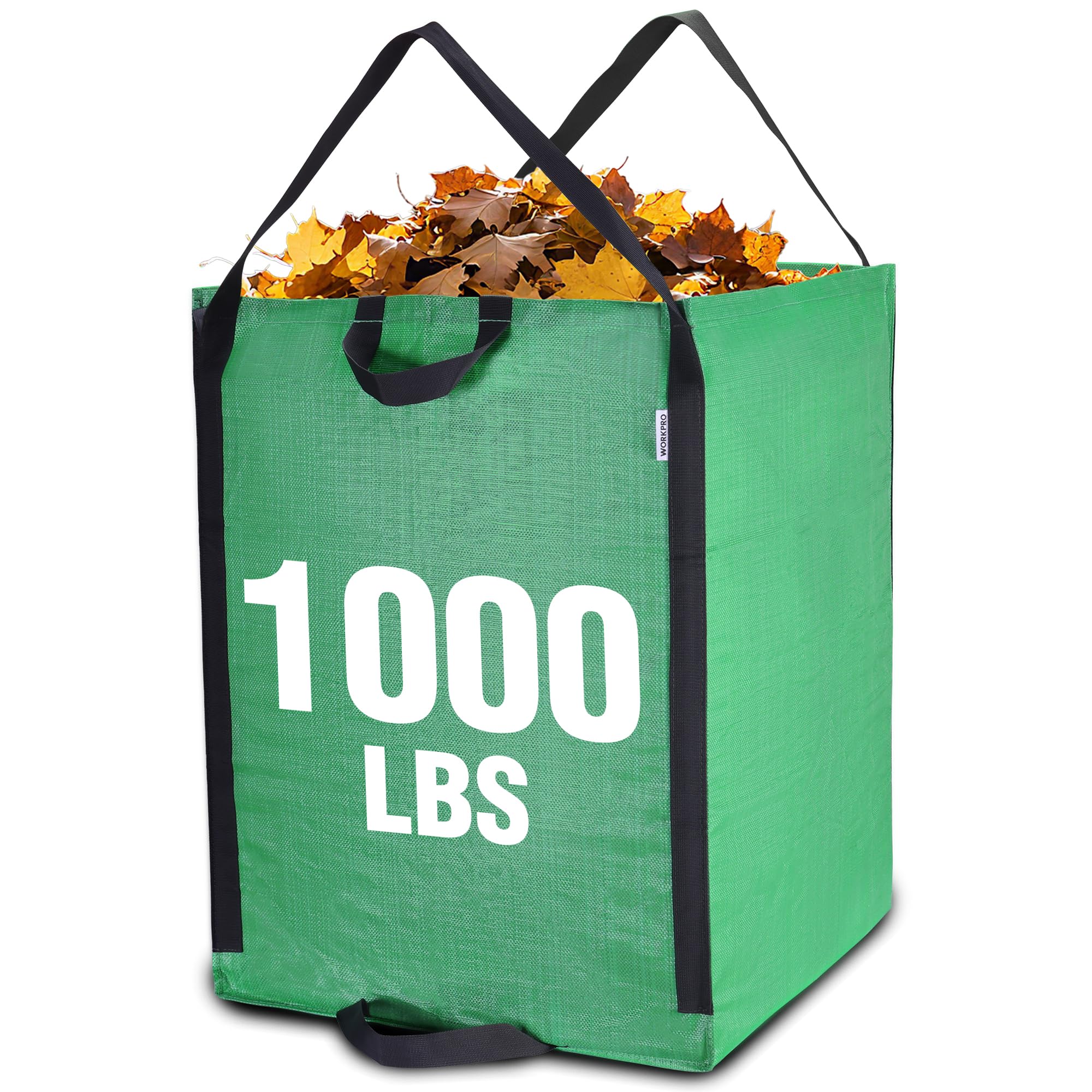
This bag offers solid construction with double-stitched handles that hold up during filling and a generous 72-gallon capacity that handles a full season of leaves. However, the woven polypropylene material can tear after the first use if overloaded with heavy or sharp debris, and the bag may not stand upright when new without a bit of breaking in. With a limited track record and some early failures reported, it suits budget-minded buyers tackling moderate yard cleanup who don't need guaranteed long-term durability.

Bottom line: Best for occasional yard cleanups where the bag won't be dragged or overloaded, and where initial stiffness isn't a concern.

7

GardenMate 2x132 Gal

GardenMate 2x132 Gal

Massive leaf cleanups

Our Score 9.0/10
Check Price

Worth Noting

  • Fabric can tear after several uses, especially when loaded with heavy or sharp debris
  • Lower handles may tear at the seams if the bag is overloaded or dragged
Weight
2.5 lbs each
Capacity
132 gal each
Material
Polypropylene + PE coating
Self-Standing
Yes (flexible hoop)
Read the full review

The GardenMate delivers the most volume per dollar among large yard waste bags, with 132-gallon capacity that swallows whole piles of leaves. That cost efficiency comes from lightweight polypropylene fabric that keeps the bag affordable but limits its lifespan — this is a seasonal workhorse, not a multi-year investment. The trade-off is clear: you get three times the capacity of a typical durable bag for a fraction of the price, but the fabric won't hold up to repeated heavy use.

Best suited for budget-conscious homeowners tackling autumn leaf drops or clearing light grass clippings and pine needles. Avoid loading heavy branches, wet debris, or sharp trimmings — the material can tear under those conditions. If your yard cleanup involves mostly dry, airy material and you are comfortable replacing the bag after a season or two, the value is hard to beat. For those who need a bag that survives multiple seasons of dragging and heavy debris, a sturdier option like the top pick is a better fit, but it costs more and holds less.

Use the upper handles to lift the bag rather than dragging it across pavement to reduce strain on the lower seams.

Bottom line: If you need to move massive amounts of light, dry leaves on a tight budget, the GardenMate delivers the most volume per dollar — just plan to replace it after heavy use.

8

REMIAWY 3x72 Gal

REMIAWY 3x72 Gal

Moderate yard work

Our Score 9.0/10
Check Price

Worth Noting

  • Bottom may tear if bag is dragged over rough ground while full.
Weight
2.6 lbs total
Capacity
72 gal each
Material
Polypropylene/polyethylene
Self-Standing
Yes (plastic ring)
Read the full review

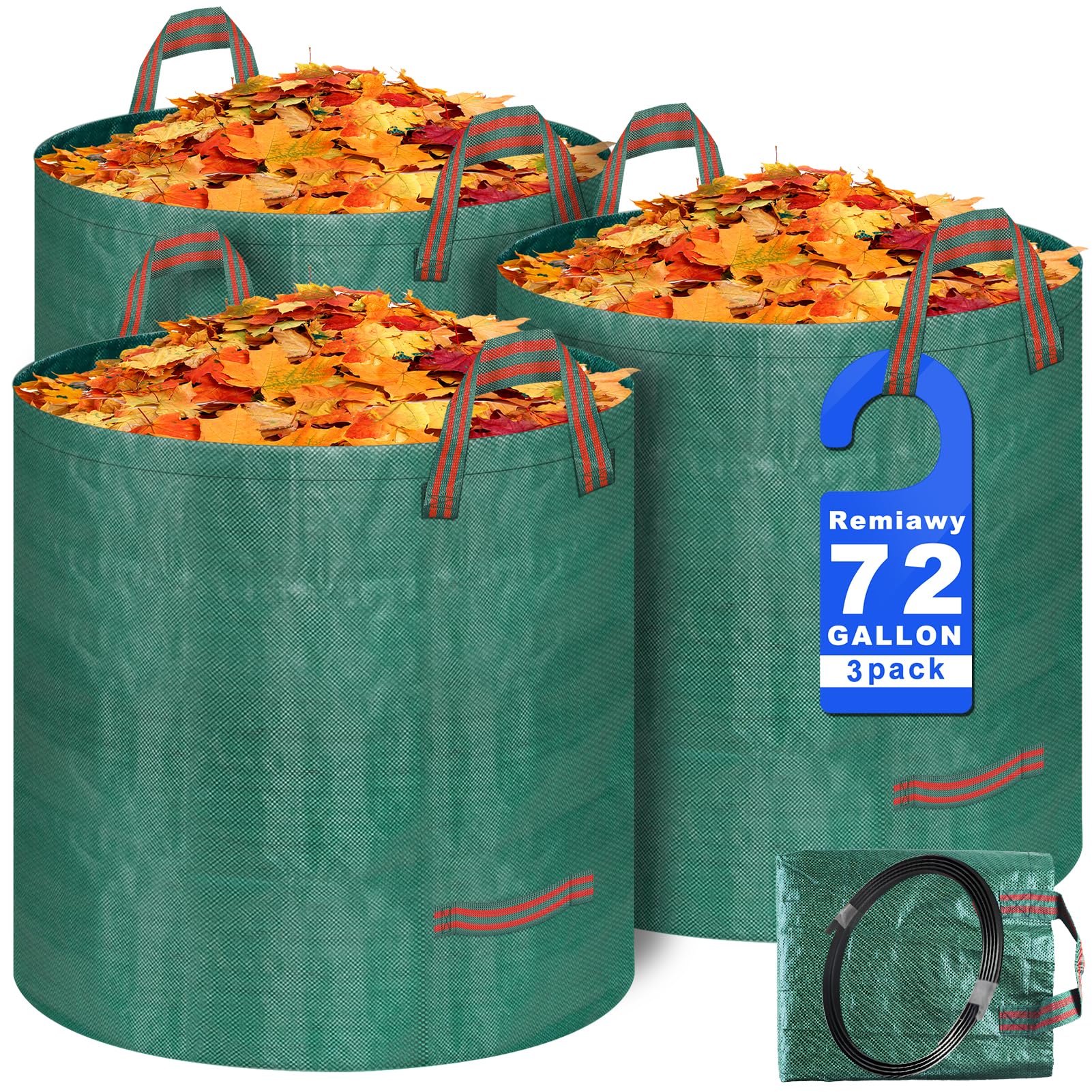
The REMIAWY bags use woven polypropylene with reinforced handles that hold up well against typical yard waste, and the 72-gallon capacity lets you collect a full day’s leaves without emptying. Four handles make it easy to lift and reposition, though the bag is best carried rather than dragged—unlike the DURASACK single bag with its hard bottom, these are designed for moderate use where you fill and move by hand.

This three-pack suits mid-size yards with moderate leaf and garden debris—users who need volume without spending for a premium single bag. Dragging a full bag over asphalt or gravel can tear the bottom, so it’s not the right choice for frequent dragging or heavy construction debris. For the price, you get a set that avoids the early seam failures common in other budget multi-packs, as long as you keep it on smooth surfaces.

Carrying the bag rather than dragging it over rough surfaces helps prevent bottom tears.

Bottom line: For moderate yard cleanup on a budget, the REMIAWY three-pack delivers capacity and handle durability without the early tear problems of other multi-packs—just avoid dragging it over rough surfaces.

9

Tespher 3x63 Gal

Tespher 3x63 Gal

Easy reach filling

Our Score 9.0/10
Check Price

Worth Noting

  • Bottom can tear when dragged full across rough surfaces or overloaded.
Weight
Capacity
63 gal each
Material
Polypropylene (150g/m²)
Self-Standing
Read the full review

The Tespher 63-gallon bags stand 19 inches tall, making them ideal for shorter users who want to fill without bending. They handle pruning, leaves, and general garden debris with ease, and the four integrated handles make moving them around simple. However, the polypropylene bottom can tear when dragged across pavement or overloaded with heavy material, so these are best kept stationary or carried short distances. The short height also rules out collecting long branches or tall weeds, which fits its intended use as a low-to-the-ground garden helper.

Bottom line: Best for gardeners who prioritize easy filling and minimal bending over long-term durability, provided they avoid dragging heavy loads.

10

Pilntons 3x72 Gal Lid

Pilntons 3x72 Gal Lid

Spill-proof car transport

Our Score 8.8/10
Check Price

Worth Noting

  • Bottom can tear when dragged or overstuffed with heavy debris
  • Zipper can become stuck or difficult to operate after repeated use
Weight
2.8 lbs total
Capacity
72 gal each
Material
Polypropylene + PE coating
Self-Standing
Read the full review

Zippered lids on these 72-gallon bags prevent leaves from spilling inside a vehicle, making trips to the compost site much cleaner than open-topped alternatives. The large capacity also handles substantial loads of dry leaves or grass. However, the bottom material is not reinforced and can tear if the bag is dragged across rough surfaces or overstuffed with heavy debris.

For homeowners who gather leaves and transport them by car, the Pilntons bags provide a convenient solution. The lid eliminates mess, and the 72-gallon capacity handles substantial loads. But given the bottom’s susceptibility to tearing, these bags are not meant for dragging filled with heavy wet debris or for long-term heavy use.

For best results, lift the bag from the bottom rather than dragging it across pavement.

Bottom line: If your primary need is transporting yard waste by car without spillage, the Pilntons bags deliver on that front. Just avoid dragging them and expect to replace them after a season of moderate use.

How to Choose

Capacity

More gallons means fewer trips to the compost pile or curb, but larger bags become unwieldy when full. A 48-gallon bag is a practical middle ground for most homeowners with moderate yards.

If you have a single massive fall cleanup or a large property with many trees, 132-gallon bags make sense — but they are heavy to lift when loaded and tend to tear if dragged. Choose capacity based on your volume and lifting ability.

Material

Woven polypropylene is the most common material, but density varies. Bags rated at 150g/m² or higher resist punctures and UV degradation far better than the cheaper 100g/m² variants. Polyethylene bags are lighter but tear more easily.

Reinforced seams — double-stitched or taped — are the difference between a bag that lasts a season and one that splits on the second fill. Look for stitching that runs the full length of the seam, not just at stress points.

Self-Standing Design

A bag that stays open on its own saves frustration and keeps the mouth wide for filling. Plastic rings or hoops create the opening, while some bags rely on a stiff fabric or spring mechanism. Rings can be tricky to insert but are replaceable.

Bags that collapse when empty are easier to store, but if the ring is removable, it can be lost. Models with integrated hoops or hardshell bottoms tend to hold their shape better over time.

Weight and Portability

Heavier bags (over 2 lbs) are more durable but harder to carry when full. Lighter bags are easier to move but more prone to tears. The trade-off is direct: a 4.6 lb Fiskars Kangaroo can be dragged without bottom damage, while a 0.6 lb RAINFLOW is best for stationary filling.

Handle placement matters for balance. Top and bottom handles allow you to lift and dump with control. Bags with only top handles put more strain on the seams. Look for double-stitched handles at both ends.

Frequently Asked Questions