Soil & Fertilizer

9 Best Smart Weather Station of 2026: Which Ones Actually Keep Your Garden Data Reliable

Tired of weather stations that lose WiFi or give inaccurate rain totals? Find the smart station that delivers dependable hyperlocal data for your garden or farm.

A smart weather station should be the backbone of your garden or farm decisions — timing irrigation, protecting tender plants from frost, or tracking local rain totals. But many WiFi-enabled stations promise much more than they deliver: connections drop, rain gauges clog or fail within a year, and the display that looked great in the photos is unreadable from your kitchen table.

The real problem isn‘t technology — it’s matching the right connectivity setup and sensor type to your environment. Stations with tipping-bucket rain gauges need occasional cleaning and are vulnerable to hail, while newer haptic and ultrasonic sensors eliminate moving parts but introduce quirky accuracy with light drizzle. This guide cuts through the marketing to the models that actually hold a stable WiFi connection and keep delivering accurate data season after season.

1

Ambient WS-2902

Top Pick
Ambient WS-2902

Home & garden users

Our Score 8.8/10
Check Price

Worth Noting

  • WiFi connectivity can be unstable with dual-band routers
  • LCD screen whites out when viewed from below
Display
Color LCD display
Smart Home
IFTTT, Google, Alexa
WiFi & App
2.4 GHz WiFi
Data Export
Ambient Weather Network
Read the full review

Setting up the Ambient WS-2902 takes about 20 minutes – mount the sensor array, connect the display, and link to home WiFi. The wind vane, rain bucket, and thermohygrometer deliver readings that align closely with nearby official weather stations. UV and solar radiation sensors add useful data for gardeners. Solar-powered sensors with battery backup keep data flowing through outages. Smart home integration with Alexa, Google Home, and IFTTT allows automated actions based on your weather readings.

Dual-band router setups may require a dedicated 2.4 GHz network to maintain a stable WiFi connection. The LCD display is crisp from straight on but washes out from below – mounting at standing eye level improves visibility. The tipping-bucket rain gauge performs well initially, though accuracy can drift after months of exposure; a periodic cleaning helps. Data uploads automatically to Weather Underground for historical tracking, and the console includes color-coded trend arrows for quick glances.

This station is best for home gardeners and smart home enthusiasts who want a full set of weather parameters – temperature, humidity, wind, rainfall, UV, solar radiation – without paying for a premium ultrasonic model. The lack of barometric pressure measurement is a gap for weather hobbyists, but for monitoring growing conditions and triggering sprinklers or alerts, the WS-2902 delivers consistent performance at a mid-range price. The broad user community provides ample online resources for troubleshooting and customization.

Mount the display at standing eye level to avoid angle-related washout.

Bottom line: For gardeners and smart home enthusiasts who want a complete weather data stream without the premium price tag, the WS-2902 is a practical, well-supported choice.
2

Sainlogic WiFi Basic

Sainlogic WiFi Basic

Budget-conscious buyers

Our Score 8.8/10
Check Price

Worth Noting

  • Real-world accuracy and long-term durability have not been documented by buyers, making it a speculative purchase
Display
LCD display
Smart Home
WiFi & App
2.4G WiFi + Bluetooth
Data Export
2-year Excel export
Read the full review

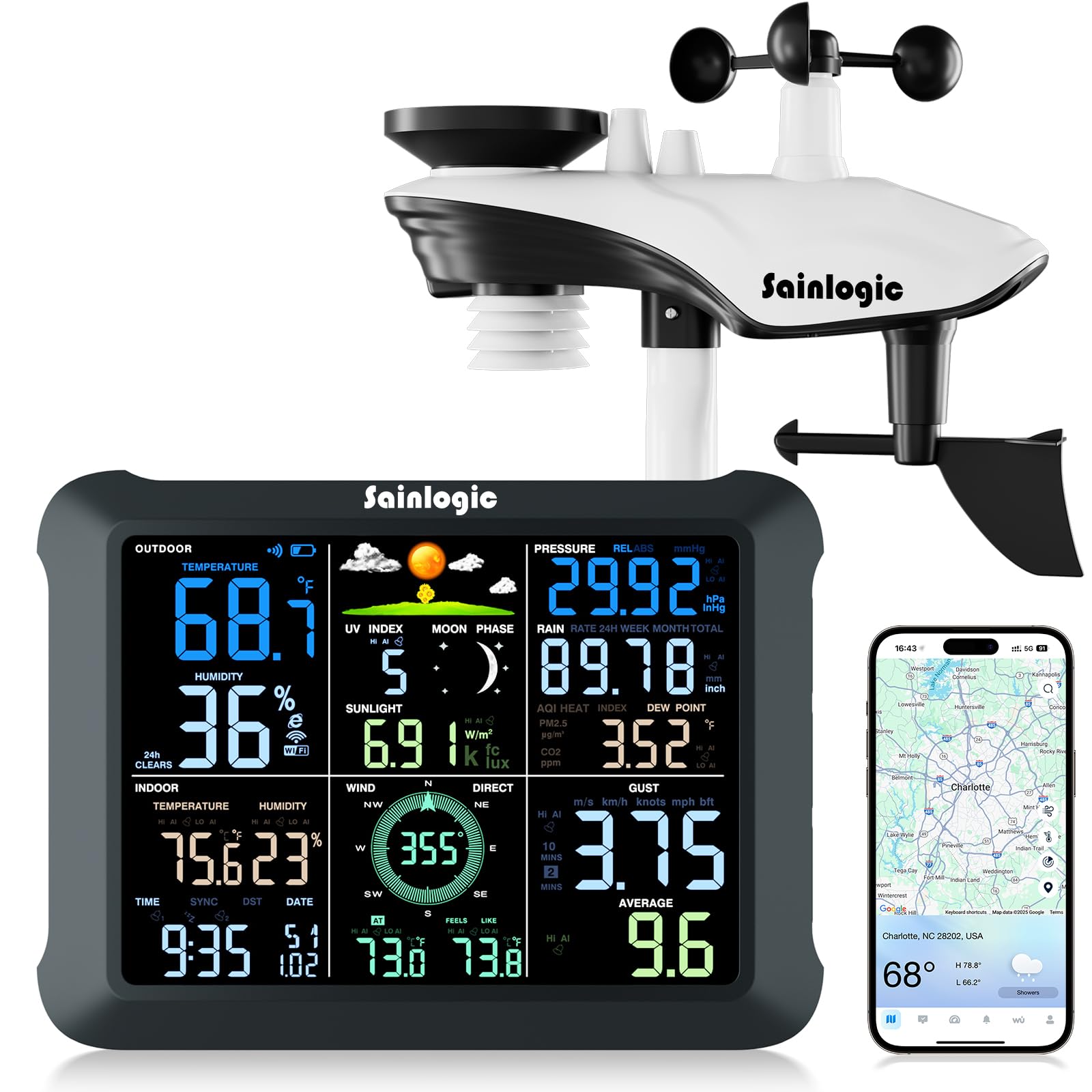
Sainlogic’s entry-level station packs a full sensor array — wind, rain, temperature, humidity, and barometric pressure — plus an AI-driven 24/7 forecast and the ability to export two years of data to Excel. All at the lowest price we’ve seen for a WiFi-connected model. However, no buyer has yet shared feedback on how the sensors perform in actual garden conditions or whether the WiFi connection stays stable over time, so long-term durability and accuracy remain unverified.

Bottom line: Worth considering only if you’re comfortable with an unproven product and prioritize the lowest entry cost over verified performance.

3

Sainlogic 14-in-1 Pro

Sainlogic 14-in-1 Pro

Gardeners & homeowners

Our Score 8.6/10
Check Price

Worth Noting

  • Rain gauge may not capture light rainfall accurately over time
  • WiFi can drop, requiring a restart to reconnect
Display
8.5-inch LCD
Smart Home
WiFi & App
2.4G WiFi + Bluetooth
Data Export
2-year Excel export
Read the full review

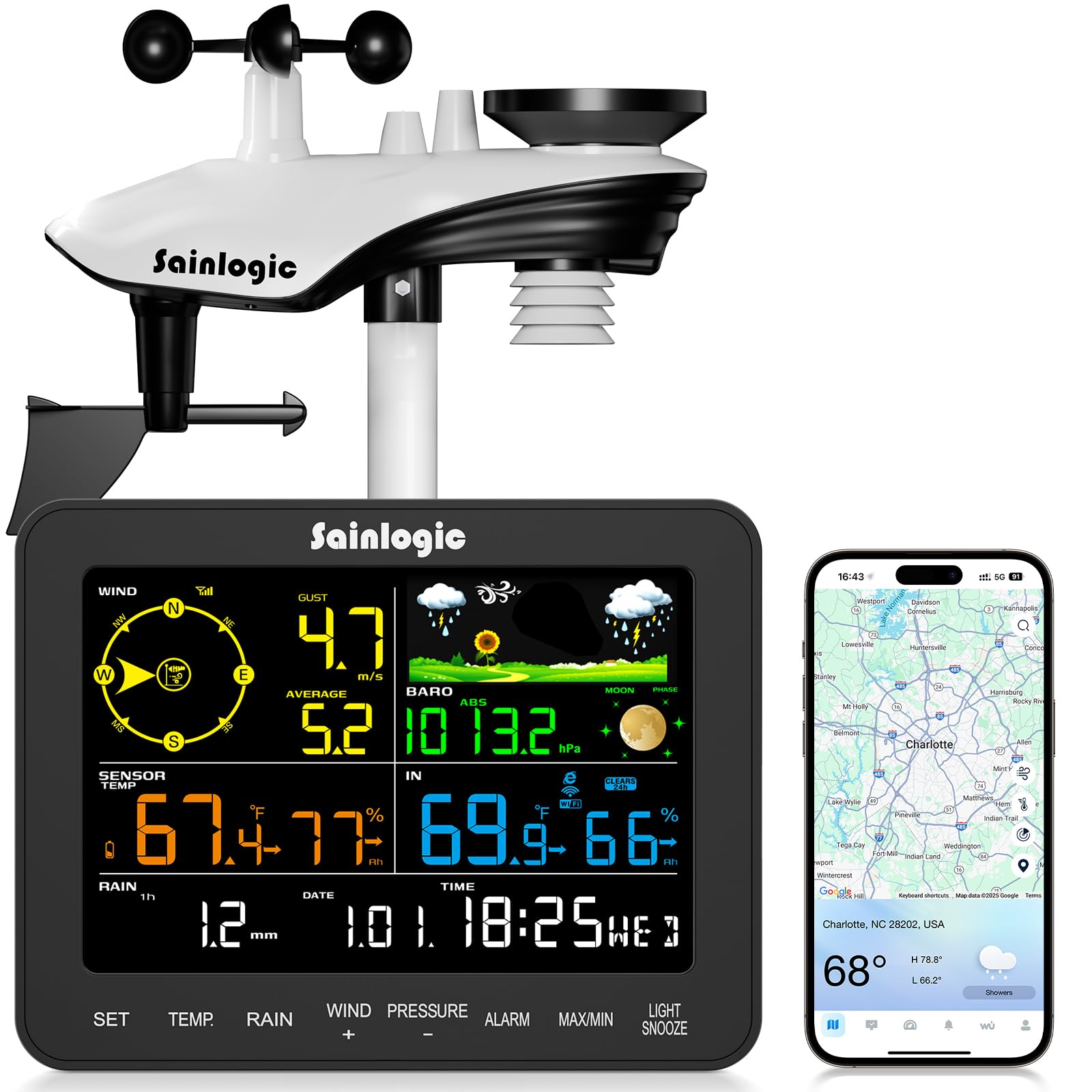
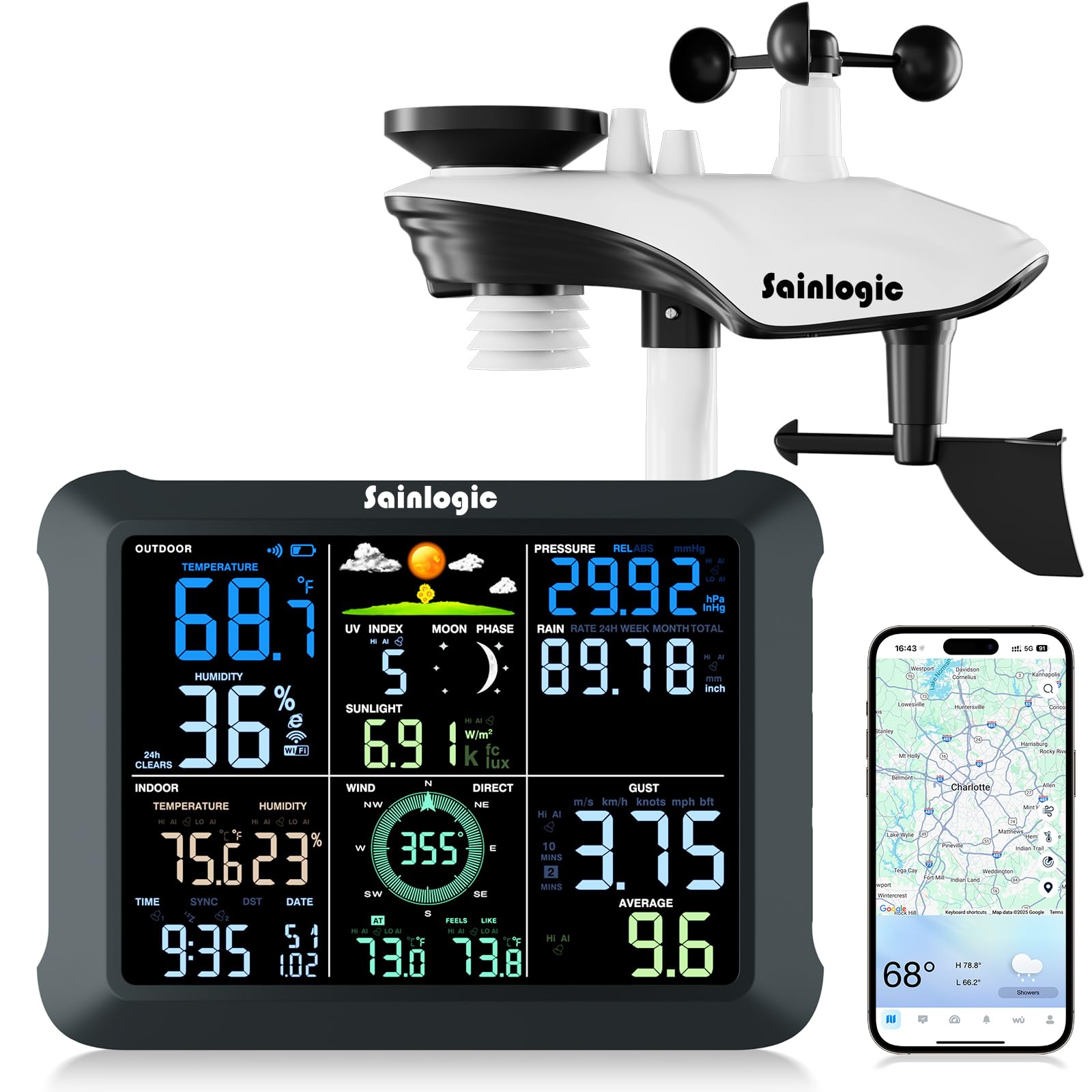
The Sainlogic 14-in-1 Pro distinguishes itself with an 8.5-inch LCD that remains readable from across the room, paired with Weatherseed AI forecasts that update around the clock. Its two-year data export via the Weatherseed app gives gardeners and weather enthusiasts the ability to analyze historical trends without reaching for a premium-priced alternative. While the top pick offers a more robust community and consistent rainfall tracking, the Sainlogic delivers a broader feature set at a lower price.

This station fits homeowners who value a clear display and AI predictions over pinpoint rain data. The rain gauge can struggle with light rainfall readings after extended use, and the WiFi connection may occasionally require a hub restart to stay online - manageable for most, but a dealbreaker for those needing laboratory-grade precipitation accuracy.

If the WiFi connection drops, a simple power cycle of the hub usually restores it.

Bottom line: For gardeners who want a large display and data logging without spending a lot, the Sainlogic 14-in-1 Pro is a strong buy - just don't expect precise rain totals.

4

WeatherFlow Tempest

WeatherFlow Tempest

Tech-savvy homeowners

Our Score 8.4/10
Check Price

Worth Noting

  • Ultrasonic wind sensor underreports gust speeds at higher wind velocities
  • Haptic rain sensor may overestimate drizzle or miss very light precipitation
Display
No physical display
Smart Home
Alexa, Rachio, IFTTT
WiFi & App
Hub-based WiFi
Data Export
Real-time app data
Read the full review

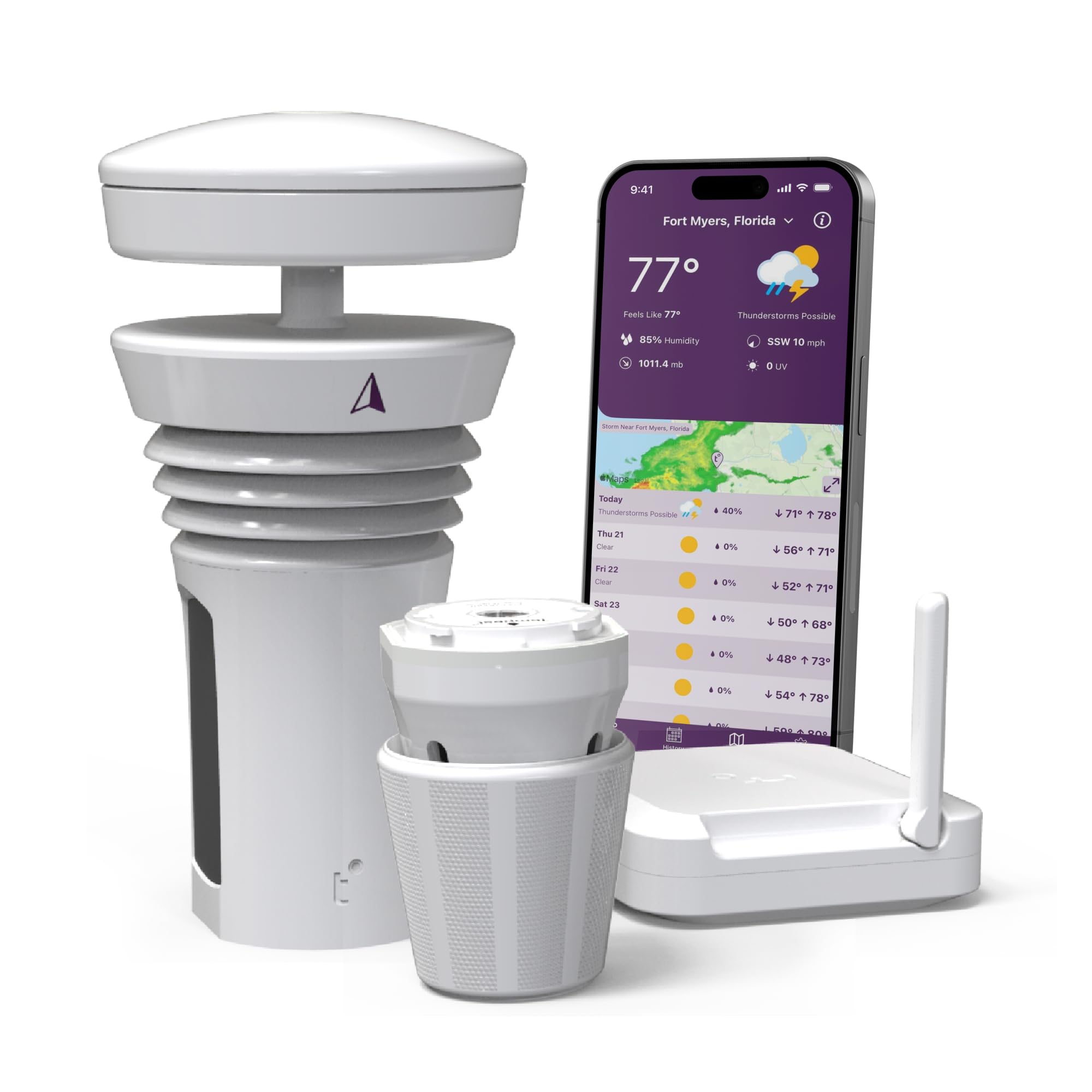
The WeatherFlow Tempest stands apart from sensor-based stations like the Ambient WS-2902 by using ultrasonic wind sensing and a haptic rain sensor with no moving parts to clean or replace. Its sleek, all-in-one design updates every three seconds through a polished app that integrates with Alexa, Rachio, and IFTTT for weather-triggered automations.

This station suits tech-savvy homeowners who live in the app and don’t need a physical display. The trade-off: wind speed readings lose accuracy in strong gusts, and the haptic rain sensor can overestimate light precipitation or misinterpret heavy dew as rain. It’s best for users who value low maintenance and remote monitoring over fine-grained measurement reliability.

Mount the station away from sprinklers and irrigation zones — the haptic sensor can register heavy morning dew as rain, leading to occasional false precipitation events.

Bottom line: If you want a weather station that never needs moving-part maintenance and rewards app-heavy users with strong automation, the Tempest is a polished premium option — just don’t expect laboratory-grade wind or rain accuracy.

5

ECOWITT Wittboy

ECOWITT Wittboy

Tech-savvy smart home

Our Score 8.4/10
Check Price

Worth Noting

  • In areas with frequent morning dew, the haptic rain sensor may register false precipitation events.
  • No physical display means all weather data must be viewed through a smartphone app or web browser.
Display
No physical display
Smart Home
Home Assistant, local
WiFi & App
Hub-based, local control
Data Export
Multiple weather services
Read the full review

Unlike weather stations that depend on cloud services, the Wittboy natively connects to Home Assistant over your local Wi-Fi network, giving hobbyists direct access to sensor data for automation and logging. The hub also supports adding extra Ecowitt modules, turning the setup into a custom monitoring system for soil moisture, air quality, and more.

This station suits tech-savvy users comfortable with configuring network settings and mounting outdoor sensors. Tradeoffs include the lack of a physical display — all data is accessed through an app or web dashboard — and a haptic rain sensor that can misread morning dew or light drizzle as rainfall. Setup requires some technical know-how due to sparse documentation, making it a poor fit for anyone wanting turnkey accuracy out of the box.

Mount the sensor in a spot that dries quickly after sunrise to reduce false rain readings from morning dew.

Bottom line: The Wittboy is the right choice for Home Assistant enthusiasts who value local control and sensor expandability, but its rain sensor quirks and app-only access make it less suited for casual gardeners wanting a simple glance-and-go display.

6

Ambient WS-5000

Ambient WS-5000

Weather enthusiasts

Our Score 8.4/10
Check Price

Worth Noting

  • Premium cost places it above many alternatives with similar sensor sets
  • Internet connectivity to Ambient servers can drop, requiring occasional manual reconnection
  • In some cases, display or sensor communication may stop after extended use
Display
TFT full-color LCD
Smart Home
IFTTT, Google, Alexa
WiFi & App
2.4 GHz WiFi
Data Export
Console graphs + upload
Read the full review

The WS-5000’s ultrasonic sensor measures wind speed and direction without moving parts, removing the need for periodic cleaning or replacement that mechanical anemometers require. The full-color TFT display shows detailed graphs and logs directly on the console, giving weather enthusiasts a rich at-a-glance overview alongside smart home integration with Alexa and Google Home.

This station suits weather hobbyists who want the latest sensor technology and don’t mind paying a premium for a maintenance-free wind sensor. However, some units may experience display or connectivity issues after 12-18 months of use, and the connection to Ambient Weather’s servers can drop, needing manual reconnection. For buyers who prioritize proven long-term value, the top pick offers similar accuracy at a lower price.

If server connectivity drops, a manual reconnection through the app typically resolves it — occasional interruptions are a known trade-off for the smart features.

Bottom line: The WS-5000 delivers ultrasonic precision and a premium console experience, but its price and uncertain long-term dependability make it a choice for enthusiasts willing to take a chance on new technology over a track-record champion.

7

La Crosse V42-PRO

La Crosse V42-PRO

Casual users

Our Score 8.4/10
Check Price

Worth Noting

  • WiFi connection can drop and struggle to maintain a stable link for remote access
  • Wind and rain sensors may lose accuracy or stop working properly after several months
Display
Color LCD with icons
Smart Home
WiFi & App
2.4 GHz WiFi
Data Export
AccuWeather integration
Read the full review

The La Crosse V42-PRO delivers a visually rich display with AccuWeather data and includes UV and air quality sensors that most stations lack. Setup is straightforward and the wall-mount design looks professional. However, WiFi connectivity can be inconsistent, and the wind and rain gauges may show inaccuracies after months of use — issues that keep it from matching the top picks' reliability for dependable remote monitoring.

Bottom line: Best suited for casual users who want a handsome display with AccuWeather forecasts and can accept occasional connectivity hiccups or sensor drift.

8

Sainlogic 14-in-1

Sainlogic 14-in-1

Gardeners & homeowners

Our Score 8.4/10
Check Price

Worth Noting

  • Rain gauge accuracy can degrade over time, making it unsuitable for precision irrigation scheduling.
  • WiFi connection may drop occasionally, which affects remote monitoring consistency.
Display
8.5-inch LCD
Smart Home
WiFi & App
2.4G WiFi + Bluetooth
Data Export
2-year Excel export
Read the full review

This Sainlogic 14-in-1 shares the same core specs as the Pro model: a large 8.5-inch LCD, Weatherseed AI forecasts, and 2-year data export via app. It offers strong value for homeowners and gardeners who want an easy-to-read display and comprehensive measurements without the premium price. However, as a backup option to the Pro, it has fewer buyer reviews. The rain gauge can become inconsistent after extended use, and WiFi connectivity may drop occasionally — both limitations that matter most if you rely on remote access or need precise rainfall tracking.

Bottom line: A capable station for casual home weather monitoring if the top choices are unavailable, particularly for users who prioritize display readability over long-term rain accuracy.

9

AcuRite Iris 5-in-1

AcuRite Iris 5-in-1

Budget-constrained buyers

Our Score 8.0/10
Check Price

Worth Noting

  • WiFi connectivity can drop unexpectedly, limiting remote access.
  • Rain gauge and temperature sensor may become inaccurate after extended use.
Display
Large color LCD
Smart Home
WiFi & App
2.4 GHz WiFi
Data Export
Weather Underground sharing
Read the full review

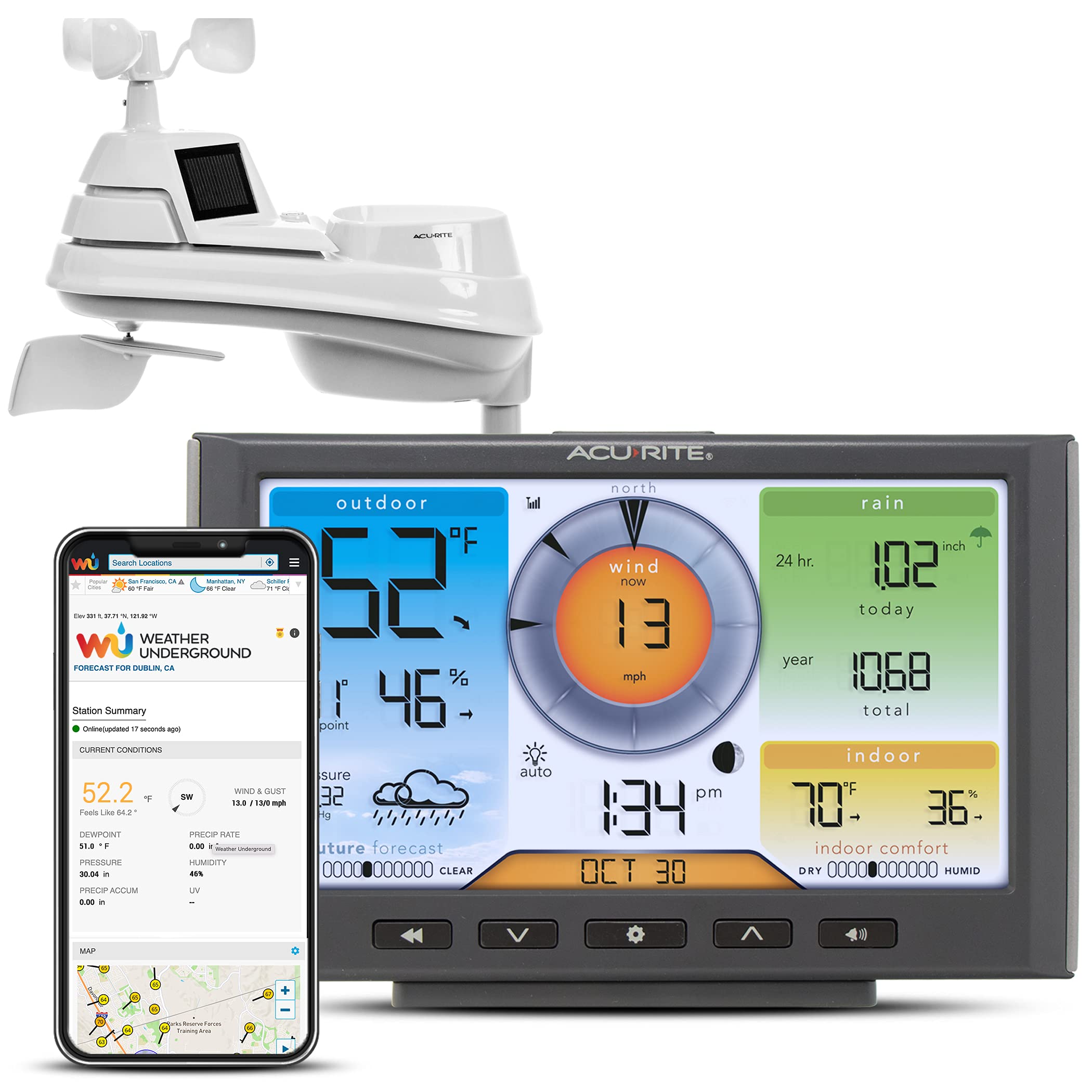
The AcuRite Iris 5-in-1 hits an aggressively low price, comes pre-assembled, and shares data with Weather Underground. WiFi connection can be inconsistent, making remote monitoring unreliable, and the rain gauge and temperature sensor may lose accuracy after a year or two of use. This station suits buyers who want a budget local display and can accept that the remote features and long-term sensor performance are a gamble.

Bottom line: Works best for buyers who prioritize low cost and a local display over reliable remote monitoring and long-term sensor accuracy.

How to Choose

WiFi Connectivity and App Reliability

Most WiFi weather stations require a 2.4 GHz network — 5 GHz bands often cause dropouts during setup or daily use. Check your router settings before buying; many routers broadcast both bands under one SSID, confusing the station.

If your router forces 5 GHz or you have a mesh system without a dedicated 2.4 GHz option, look for a station that uses a separate hub (like WeatherFlow or ECOWITT) to bridge the connection. The hub acts as a dedicated bridge between the outdoor sensor and your home WiFi, reducing interference.

Sensor Accuracy

Tipping-bucket rain gauges are the most common and can be very accurate when clean and level, but they clog with debris and hail within 6-12 months in harsh environments. Ultrasonic and haptic sensors eliminate moving parts but misreport light rain or dew as precipitation because they measure vibration or sound changes in the air.

For gardeners who rely on rainfall totals for irrigation, a mechanical tipping bucket with a built-in debris screen is usually the safer bet — provided you're willing to inspect it twice a year. If you live in a windy or dusty area, an ultrasonic wind sensor avoids the corrosion and drag issues of cups and vanes.

Display Size and Readability

A display is convenient for a quick glance from across the room, but many LCD screens wash out when viewed from below or in direct sunlight. The Ambient WS-2902's display is notorious for this — fine for a tabletop but useless if mounted high on a wall.

If glanceability matters, choose a station with an adjustable backlight and a wide viewing angle (the Sainlogic 14-in-1 Pro's 8.5-inch screen performs well here). If you mostly check data on your phone, a display-less design like the Tempest or Wittboy saves space and cost.

Data Export and Historical Storage

Some stations only show current conditions on the console or app, which is fine for real-time decisions but useless for spotting trends or calculating seasonal water needs. Look for models that export data to Excel or CSV (Sainlogic's Weatherseed app offers 2-year exports) or that push data to services like Weather Underground where you can download it later.

If you track frost dates or irrigation scheduling across seasons, a station with at least 12 months of onboard storage or automatic cloud upload is worth the extra money. Otherwise, you'll lose data when you swap batteries or the power goes out.

Smart Home Integration

Integrating weather data into automations — turning off sprinklers when rain is detected, or triggering a frost alert on your phone — requires station compatibility with Alexa, Google Home, or IFTTT. The Ambient Weather and WeatherFlow models lead here, while budget Sainlogic stations rely on their own app with fewer third-party hooks.

For Home Assistant users, the ECOWITT Wittboy is the clear winner because it allows local network control without cloud dependency. If you just want an Alexa weather report at breakfast, any station with IFTTT support will do.

Frequently Asked Questions