Soil & Fertilizer

5 Best Smart Soil Moisture Sensor of 2026: Know the True Cost Before You Buy

Which smart soil moisture sensors include the hub and which need a separate gateway - so you don't double your spending.

A smart soil moisture sensor promises real-time plant care, but the price tag often hides a second purchase: a separate gateway hub. Many sensors rely on proprietary wireless protocols that require an additional device to connect to your home network, doubling the true cost.

The trade-off is between all-in-one convenience and long-term reliability. Budget kits bundle the hub but may sacrifice stable WiFi connection, while sensors that use a dedicated gateway offer more consistent range and accuracy - at an extra upfront cost.

This guide focuses on which sensors deliver on their core promise without hidden fees or connectivity headaches, so you pick the right tool for your garden setup.

1

ECOWITT WH51L Sensor

Top Pick
ECOWITT WH51L Sensor

Ecosystem gardeners

Our Score 9.0/10
Check Price

Worth Noting

  • Measures only soil moisture
Power
Battery
Ecosystem
Ecowitt gateway (sold separately)
Connectivity
915 MHz to gateway
Sensor Parameters
Moisture only
Read the full review

The WH51L tracks soil moisture with a consistency that matches manual checks — the onboard LCD provides immediate feedback, and the 915 MHz signal holds steady across distances where WiFi sensors often drop.

Build quality reflects the price tier — the IP68 probe survives wet soil and rain, and the 1m cable allows placement in planters or garden beds without strain.

This sensor is for users already in the Ecowitt ecosystem or willing to invest in a separate gateway (roughly the same cost as the sensor) to unlock app monitoring and alerts. Those wanting a complete kit out of the box should factor in that extra expense.

Bottom line: The WH51L's strength is dependable moisture data with long range — a practical choice if you are committed to Ecowitt's system, but not the cheapest path to app connectivity.

2

MARS HYDRO Sensor Kit

MARS HYDRO Sensor Kit

Indoor cultivators

Our Score 8.8/10
Check Price

Worth Noting

  • Requires the Mars Hydro iControl or iHub Pro controller, adding upfront cost if not already owned.
  • Optimized for indoor grow environments
Power
Controller-powered
Ecosystem
Mars Hydro iControl/iHub Pro
Connectivity
RJ12 to iControl/iHub
Sensor Parameters
Moisture, temp, EC, CO2, PPFD
Read the full review

This sensor kit captures environmental data beyond soil moisture, including CO2 concentration and PPFD, making it suited for indoor growers who need to fine-tune lighting and air quality. Unlike standalone soil monitors, it requires the Mars Hydro iControl or iHub Pro controller to function – it is not a self-contained smart device.

For serious indoor cultivators already using Mars Hydro equipment, this kit eliminates the need for separate CO2 and light meters while providing standard soil moisture, temperature, and EC readings. Prospective buyers should note that performance specifications come from the manufacturer – independent testing data is not yet available to confirm long-term accuracy.

For accurate PPFD readings, place the sensor at the same height as the plant canopy.

Bottom line: An integrated environmental monitor for dedicated Mars Hydro growers, but wireless soil moisture shoppers without that ecosystem should look elsewhere.

3

Spider Farmer 3-in-1

Spider Farmer 3-in-1

Indoor growers

Our Score 8.6/10
Check Price

Worth Noting

  • Only works with the Spider Farmer GGS controller
  • Manufacturer's precision claims have not been independently verified through real-world use yet.
Power
Controller-powered
Ecosystem
Spider Farmer GGS ecosystem
Connectivity
RJ12 to GGS controller
Sensor Parameters
Moisture, EC, temp
Read the full review

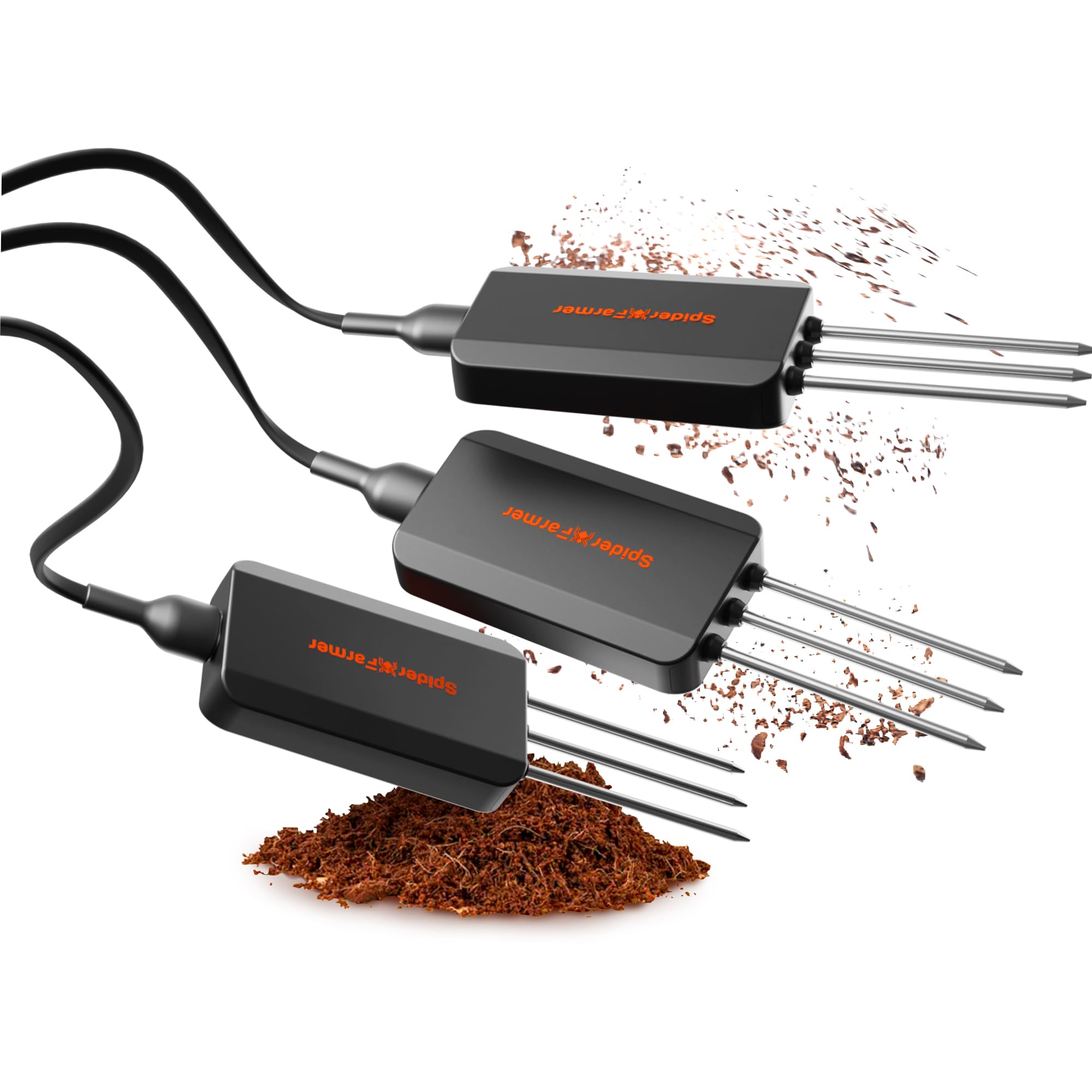
Measures electrical conductivity alongside moisture and temperature, delivering 0.1% resolution through durable 304 stainless steel probes. This precision is critical for hydroponic and grow tent setups where nutrient levels matter as much as water content. Unlike wireless sensors, it requires a wired RJ12 connection to the Spider Farmer GGS controller and offers no app or smart home integration on its own.

Best suited for indoor growers already invested in the Spider Farmer GGS system who need combined EC, moisture, and temperature data from a single probe. It assumes you have the controller and are comfortable with a wired setup. Keep in mind that real-world performance data from independent users is not yet available to substantiate the high precision claims — the manufacturer's specifications remain unconfirmed in the field.

Bottom line: This sensor delivers exactly what serious Spider Farmer GGS users need — if you're already in that ecosystem and want EC data, it's a straightforward addition. Everyone else should wait for independent validation or consider wireless alternatives.

4

RAINPOINT WiFi Hub Kit

RAINPOINT WiFi Hub Kit

Budget plant owners

Our Score 8.2/10
Check Price

Worth Noting

  • Sensor requires batteries that are not included.
  • WiFi connection may drop during use, even with the hub close to the router.
Power
Battery (not included)
Ecosystem
RainPoint Home app
Connectivity
WiFi hub included
Sensor Parameters
Moisture
Read the full review

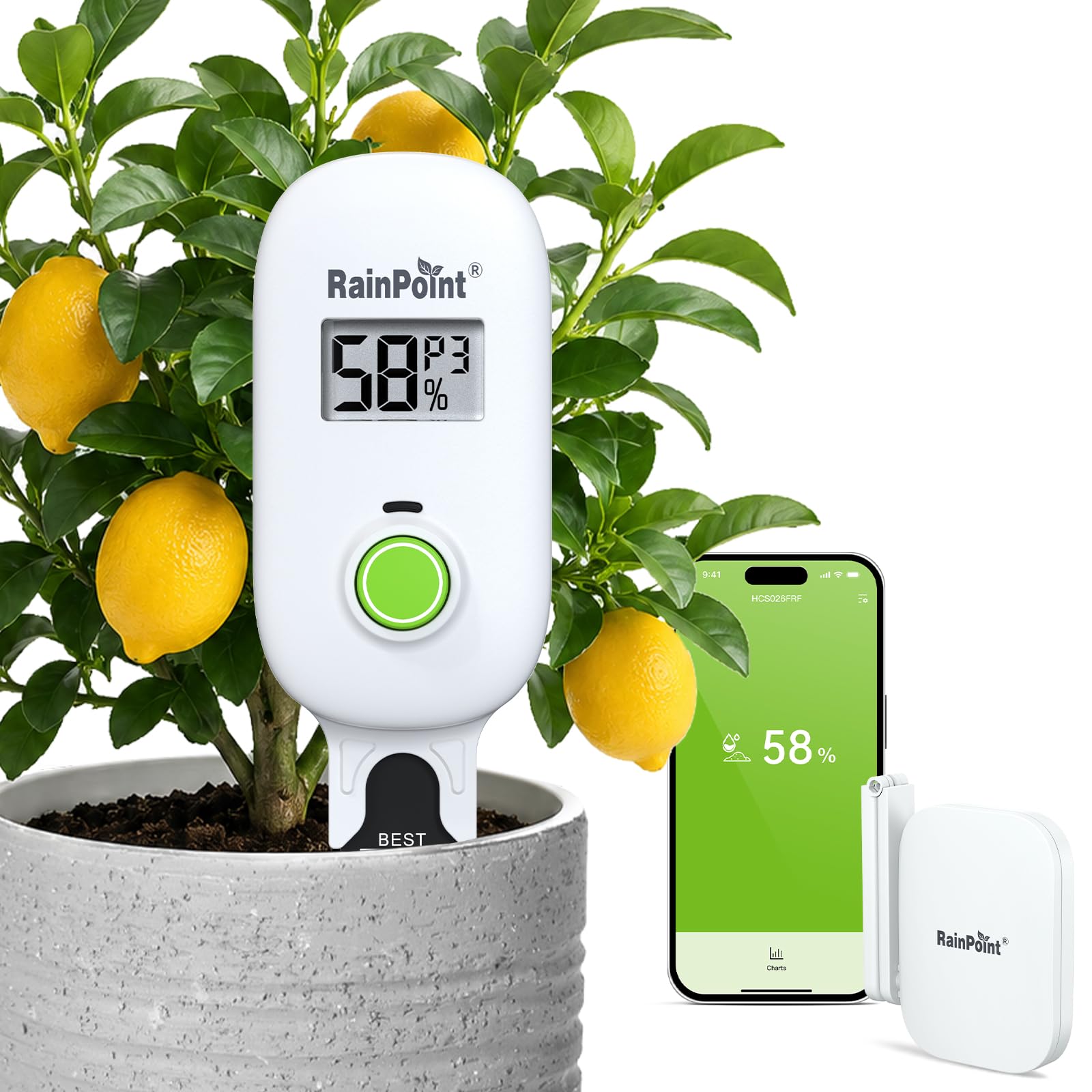
This RAINPOINT kit includes a WiFi hub in the box, so you get app connectivity immediately without buying a separate gateway — a key difference from the top-pick Ecowitt sensor, which requires a $30 gateway purchase. The hub links to the RainPoint Home app for real-time moisture data and customizable alerts, making it a complete all-in-one solution at a budget-friendly price.

Setup takes minutes — insert batteries (not included), plug in the hub, and pair via the app. The capacitive sensor provides accurate moisture readings, and the app sends timely push and email alerts when soil dries below your set threshold. For budget-conscious plant owners who want app connectivity without incremental hardware costs, this kit is a practical entry point. The WiFi connection can be unreliable in some situations — users may experience disconnections even with the hub close to the router. That makes it best for home monitoring where occasional drops are acceptable, rather than for automated irrigation systems that require constant connectivity.

Place the hub within a few feet of your router to minimize potential disconnection issues.

Bottom line: If you want a complete kit that works out of the box and don’t mind occasional WiFi hiccups, this RAINPOINT sensor is a cost-effective way to get app-connected moisture monitoring.

5

Netro Whisperer Solar

Netro Whisperer Solar

Outdoor gardeners

Our Score 8.0/10
Check Price

Worth Noting

Power
Solar + USB-C
Ecosystem
Netro app
Connectivity
WiFi
Sensor Parameters
Moisture, temp, light
Read the full review

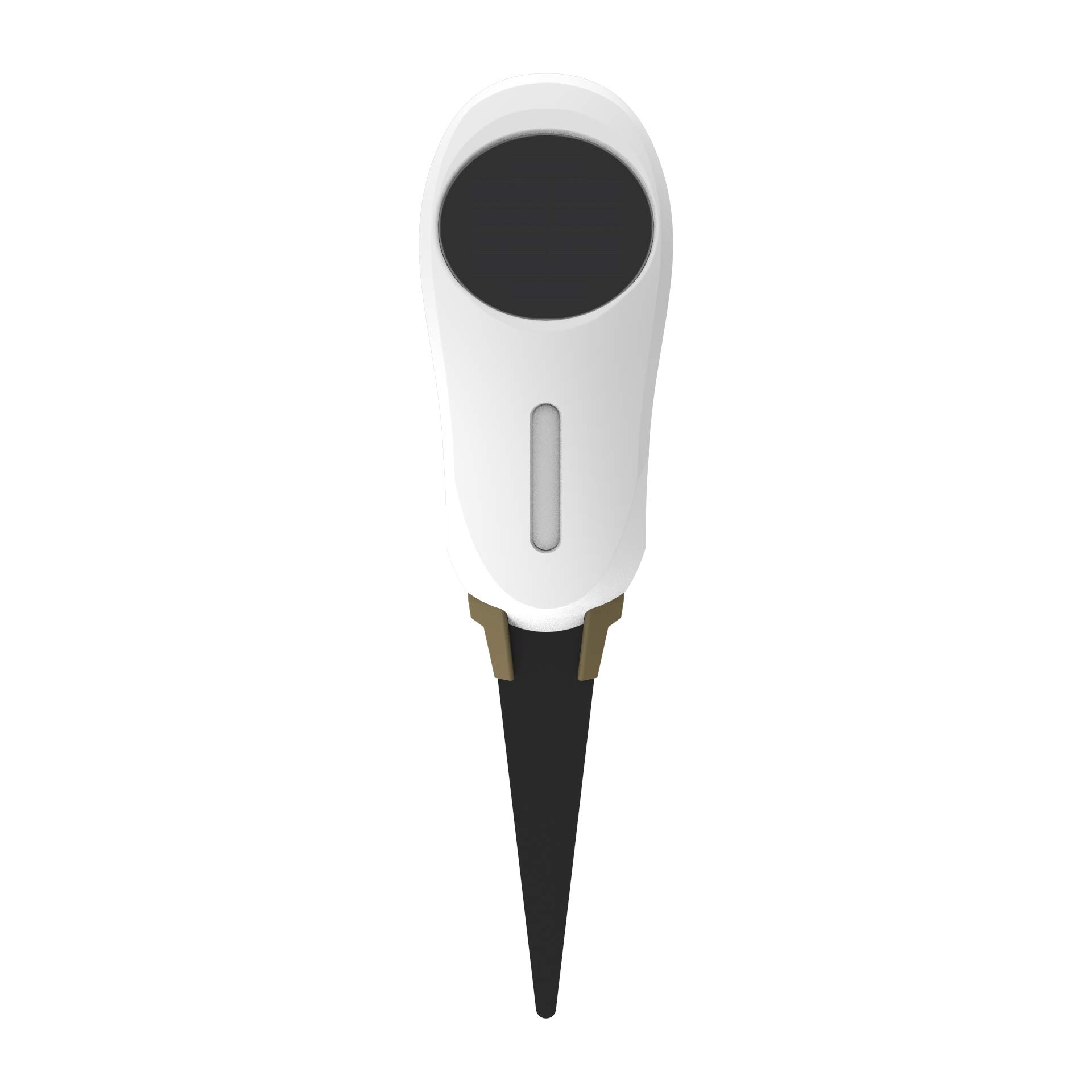
The Netro Whisperer uses a built-in solar panel to keep its battery charged, removing the need to replace or recharge cells over the growing season. It also measures ambient light levels, a feature that helps gardeners understand how much sun their plants are actually getting. The sensor connects directly to WiFi and feeds data into the Netro app for real-time monitoring.

This sensor suits outdoor gardeners who have garden beds or lawns receiving consistent direct sunlight — the solar panel depends on adequate light exposure to maintain charge. Because the product is relatively new to market with limited customer feedback, its long-term app stability and connectivity behavior are not yet confirmed through widespread use. For buyers who prioritize proven performance from an established user base, a different option may be more appropriate.

Use the USB-C port to recharge during long stretches of cloudy weather if the solar panel cannot keep up.

Bottom line: A strong choice for gardeners who can guarantee sunlight exposure and don't mind being an early adopter; the solar convenience is a genuine differentiator.

How to Choose

Connectivity Type

Sensors connect either directly to your home WiFi or through a proprietary hub using sub-GHz radio (e.g., 915 MHz). WiFi sensors simplify setup but can struggle with range and stability if your router is far from the garden.

Hub-based systems trade upfront convenience for a dedicated link that penetrates walls and extends range. If your sensor sits near the house, WiFi is fine; for remote beds or greenhouses, a hub-based approach avoids frequent disconnections.

Sensor Parameters

Basic sensors measure only soil moisture, which suffices for most garden beds and potted plants. Multi-parameter sensors add temperature, electrical conductivity (EC), and sometimes light or CO2 levels.

EC readings matter for hydroponic or indoor grow setups where nutrient concentration needs tracking. For outdoor irrigation, moisture alone often provides enough data to avoid overwatering.

Required Ecosystem

Some sensors work with a brand-specific hub or controller, locking you into that ecosystem. Others use a standard app and connect directly via WiFi, offering more flexibility.

If you already own a gateway from Ecowitt, Mars Hydro, or Spider Farmer, adding a compatible sensor is seamless. Starting from scratch, consider whether you want an open system (WiFi) or are willing to commit to one brand for expandability.

Power Source

Most sensors run on batteries, with lifespans ranging from a few months to over a year depending on transmission frequency. Solar-powered models reduce battery swaps but need direct sunlight to stay charged.

Wired sensors powered by a controller are maintenance-free but limit placement to within cable reach. For convenience, choose solar for outdoor beds or battery for indoor pots near a power outlet.

Frequently Asked Questions