Pest & Weed Control

11 Best Tree Root Killer of 2026: Right Tool for Stumps or Sewer

Find the right tree root killer for your situation — stump removal, sewer line maintenance, or brush clearing. No hype, just what works.

A stump killer that works on a fresh-cut cherry may do nothing for a sewer pipe clogged with roots. Copper nails sound eco-friendly but rarely kill stumps under 6 inches fast. The market is split: chemical stump/brush killers, sewer root killers, and experimental alternatives. Choosing wrong means wasted effort and a still-growing problem.

This guide matches each product to a specific use case: small-stump removal, aggressive brush clearing, septic/sewer maintenance, or chemical-free approaches. The central trade-off is potency versus safety — powerful herbicides like triclopyr kill nearly anything but persist in soil and can damage desirable trees through root grafting. Copper sulfate and dichlobenil are safer for pipes but need regular application. The result is less guesswork and more targeted control.

1

Tordon RTU 32 oz

Top Pick
Tordon RTU 32 oz

Tough brush control

Our Score 9.2/10
Check Price

Worth Noting

  • Can kill nearby trees through shared root systems and persists in soil; requires careful application away from desired plants and water sources.
Form
Ready-to-use
Safety
Toxic to plants
Volume
32 oz
Application
Brush-on
Read the full review

Tordon RTU is formulated specifically for woody plants that resist milder herbicides — mesquite, sweetgum, and poison ivy. No mixing is required; you brush the ready-to-use liquid onto fresh cut stumps, and the herbicide moves through the root system to prevent regrowth.

This product is for ranchers, farmers, and property managers who need to eliminate stubborn brush in pastures or fence lines, not for homeowners with gardens or desirable trees nearby. The herbicide can travel through shared root systems and kill unintended plants, and it persists in soil long after application. Strict safety precautions — gloves, eye protection, and careful targeting — are non-negotiable.

A 32-ounce bottle treats 50–100 cut stumps, so the mid-range price delivers good value for large properties. Because the formula does not require mixing, application is simple once you have identified the stumps and isolated the area from desired vegetation.

Bottom line: Tordon RTU is the tool for serious brush control when nothing else works — but only experienced users who can isolate treatment areas should reach for it.

2

RootX 2 lb Jar

RootX 2 lb Jar

Persistent blockages

Our Score 9.2/10
Check Price

Worth Noting

  • Foam can overflow from toilet or cleanout if water is added too quickly
  • Premium-priced compared to copper sulfate options like Roebic K-77
Form
Foaming powder
Safety
Safe for pipes
Volume
2 lbs
Application
Flush with funnel
Read the full review

RootX uses a foaming powder that expands to coat the full circumference of your sewer line, killing roots both at the pipe wall and further into the lateral. The included funnel makes application as simple as flushing one jar down a toilet or cleanout, then filling the pipe with water to activate the foam. Plumbers frequently recommend this method because the foam reaches sections that granular products miss entirely.

This product suits homeowners who have dealt with recurring root clogs and want a single-treatment solution that lasts months. The active ingredient, dichlobenil, is EPA-accepted for use in sewer and septic systems, though some local plumbing codes restrict its use — worth verifying before purchase. You pay a premium over copper sulfate alternatives, but the per-treatment cost is still lower than a single professional drain-cleaning visit.

The foaming action is powerful, which means careless dosing can push foam out of toilet bowls or cleanout caps. Adding water slowly prevents this mess entirely. The 2-pound jar covers 50 feet of 4-inch pipe, so most homes need just one jar per treatment. Results are typically visible within a week, with no recurring blockages reported for the season.

Add water slowly after flushing the powder to avoid foam overflow from the cleanout or toilet.

Bottom line: If you want a foaming root killer that plumbers trust and are willing to pay more for the convenience, RootX is your pick — just take it slow with the water.

3

Crossbow Herbicide 1 Gal

Crossbow Herbicide 1 Gal

Large acreage brush

Our Score 9.2/10
Check Price

Worth Noting

  • Strong chemical odor and environmental persistence limit use around homes or gardens.
  • Premium-priced for spot spraying; better reserved for concentrated use on large acreage.
Form
Concentrate
Safety
Strong odor
Volume
1 gallon
Application
Spray
Read the full review

This concentrate targets woody plants like berry bushes, invasive trees, and mixed brush in pasture or fence-row settings. It kills tough species quickly when applied as a foliar spray, with coverage up to an acre per gallon. The tradeoff is cost: for small properties with just a few stumps, the price and strong chemical odor make it overkill. Best kept for large-scale work where a single application does the job.

Bottom line: Best for ranchers and landowners managing large brush patches where a single, potent application justifies the cost.

4

Roebic K-77 32 oz

Roebic K-77 32 oz

Sewer line maintenance

Our Score 8.8/10
Check Price

Worth Noting

  • Works best as prevention
  • Banned for septic use in Florida and some California counties; buyers must verify local regulations
Form
Granules
Safety
Banned in FL
Volume
32 oz
Application
Flush down toilet
Read the full review

Flush a cupful of copper sulfate granules down the toilet every six to twelve months, and tree roots that sneak into sewer or septic pipes die off before they become blockages. The active ingredient is the same one plumbers have used for decades — no mixing, no foaming, just a periodic pour-and-forget step that keeps drainage flowing.

This approach targets roots that are already inside the pipe. For a pipe that is fully blocked, mechanical clearing (snaking or hydro-jetting) needs to happen first; the granules won't push through standing water or packed debris. Used as prevention, the product has a long track record of keeping septic lines clear, with many homeowners reporting years without root-related backups.

Ideal for homeowners with septic systems or sewer lines that are prone to root intrusion, especially those who want a simple, low-effort maintenance step. One important limitation: this product is banned for septic use in Florida and in Bay counties of California, so buyers in those areas need to check local regulations before purchase.

Flush granules down the toilet every 6-12 months before roots cause clogs — it's not designed to clear an already-blocked pipe.

Bottom line: A straightforward, low-effort maintenance option for septic lines — flush it down the toilet every six months and avoid repeat plumber calls.

5

Roebic FRK 1 lb

Roebic FRK 1 lb

Proactive maintenance

Our Score 8.8/10
Check Price

Worth Noting

  • Product may arrive clumped or solidified, making it hard to pour and potentially ineffective
  • Foaming action can fail in some batches, reducing root contact
Form
Foaming granules
Safety
Volume
1 lb
Application
Flush
Read the full review

Roebic FRK uses a patented foaming formula to reach roots that standard granules miss — it expands to contact the entire pipe wall and kills roots on contact. For homeowners who have dealt with recurring sewer clogs from tree roots, this can clear existing growth and keep pipes flowing when used semi-annually. The 1-pound bag covers 50 feet of 4-inch pipe, and at a mid-range price it saves hundreds versus professional snaking or replacement.

The tradeoff is batch-to-batch variability. Some units arrive with granules clumped into a solid mass that is difficult to pour and may not dissolve properly. And the foaming action — the core feature — can fail to activate, allowing the chemical to wash through without contacting roots. This makes FRK a gamble for anyone who needs guaranteed results on the first attempt. It suits proactive maintenance users who can inspect the product immediately and return it if defective, rather than first-time buyers facing a clog emergency.

Inspect granules immediately upon delivery — if they are clumped or discolored, return for a replacement before use.

Bottom line: Best for homeowners who can inspect the bag upon arrival and accept that occasional QC issues may affect performance; not recommended for one-time emergency use where results must be guaranteed.

6

Adios! Copper Sulfate 2 lb

Adios! Copper Sulfate 2 lb

Experienced users

Our Score 8.8/10
Check Price

Worth Noting

  • Package lacks dosage instructions, leaving first-time users to guess the correct amount per application.
Form
Granules
Safety
Safe for septic
Volume
2 lbs
Application
Flush
Read the full review

ADIOS! copper sulfate granules effectively kill invasive roots in sewer lines and prevent regrowth without harming septic bacteria or nearby trees. The catch is the package omits dosage and application guidelines, so users must already know how much to flush — a reasonable tradeoff for those experienced with copper sulfate treatments.

Bottom line: Fits best for experienced users who already know copper sulfate dosing and want a budget-friendly option for annual sewer root maintenance.

7

Dubbs Copper Nails 22-pk

Dubbs Copper Nails 22-pk

Eco-conscious gardeners

Our Score 8.6/10
Check Price

Worth Noting

  • Nails may bend if not pre-drilled, requiring careful setup.
  • Effectiveness can be inconsistent; some stumps may not die back at all.
Form
Nails
Safety
Non-toxic
Volume
22 nails
Application
Hammer into stump
Read the full review

These 22 solid copper nails, made in the USA, are the most credible chemical-free stump removal option available. Compared to budget copper nail sets with scant user feedback, the Dubbs pack provides a known quantity with robust nails that resist bending when properly installed.

The method requires patience and works best on stumps under six inches in diameter where chemical avoidance is a priority. Even then, results are inconsistent — some stumps show no dieback after months, so treat this as a low-risk experiment rather than a guaranteed cure. Eco-conscious homeowners willing to wait and accept uncertainty will find this a reasonable try, but those needing fast or predictable stump death should look to chemical alternatives.

Pre-drilling pilot holes with a drill bit slightly smaller than the nail diameter prevents bending and makes installation easier.

Bottom line: For eco-conscious homeowners willing to experiment on small stumps, these nails are a reasonable low-cost trial. Don't expect guaranteed results — this is a patience project, not a quick fix.

8

Ferti-lome Brush Killer 32 oz

Ferti-lome Brush Killer 32 oz

Mixed brush/stumps

Our Score 8.6/10
Check Price

Worth Noting

  • Per-ounce cost is higher than comparable triclopyr concentrates
  • Some resilient plant species may produce new sprouts after treatment
Form
Concentrate
Safety
Volume
32 oz
Application
Brush-on or spray
Read the full review

Ferti-lome's brush killer works well on stumps and woody plants when applied directly to fresh cuts or diluted for foliar spraying. It requires no drilling and prevents regrowth on many species, including camphor and sweet gum. However, results can vary: some resilient species may produce new sprouts even after treatment. The lack of an integrated brush applicator puts it a step behind Bonide's convenience, and the higher per-ounce price makes it less cost-effective for those needing repeated treatments. This suits homeowners who prefer a spray approach or already have a brush on hand, and who are comfortable with species-dependent outcomes.

Bottom line: Best for homeowners who already have a brush applicator and need a triclopyr concentrate for mixed brush and stumps, with the understanding that some species may require follow-up.

9

Bonide Stump-Out 8 oz

Bonide Stump-Out 8 oz

Small stumps

Our Score 8.4/10
Check Price

Worth Noting

  • Bottle can leak during shipping, leaving chemical residue in the packaging.
  • Some resilient stumps or large root systems may require a second application for full kill.
Form
Concentrate
Safety
Herbicide caution
Volume
8 oz
Application
Brush-on
Read the full review

Bonide Stump-Out’s brush-on applicator makes targeted treatment of stumps and invasive vines straightforward — no spraying, no overspray, just paint the cut surface and let the concentrate work. The active ingredient (triclopyr-based) stops root regrowth in most woody species, including poison ivy, bamboo, and wisteria, with visible dieback typically appearing within a few weeks.

Results are consistent on stumps up to six inches in diameter and on thickets of climbing vines. For larger stumps or particularly vigorous root systems (e.g., crepe myrtle), a second application after initial dieback may be needed. The 8-ounce bottle treats multiple stumps — a little goes a long way when painting only the cambium layer.

This product suits homeowners with a handful of small to medium stumps or a patch of unwanted brush who want a low-cost, low-mess herbicide. It is not a solution for clearing acres of land or for spray coverage of large areas; those jobs call for a hose-end concentrate or a stronger formula like Tordon RTU. If you are treating stumps near desirable trees, note that triclopyr can be taken up through root grafts — apply only to freshly cut surfaces and avoid over-application.

Check the bottle seal and cap immediately upon delivery; if any leakage occurred, transfer the concentrate to a sealed container before first use.

Bottom line: For homeowners tackling a few stumps or a vine invasion, this concentrate delivers reliable knockdown at a low price — just budget a few minutes to inspect the bottle on arrival.

10

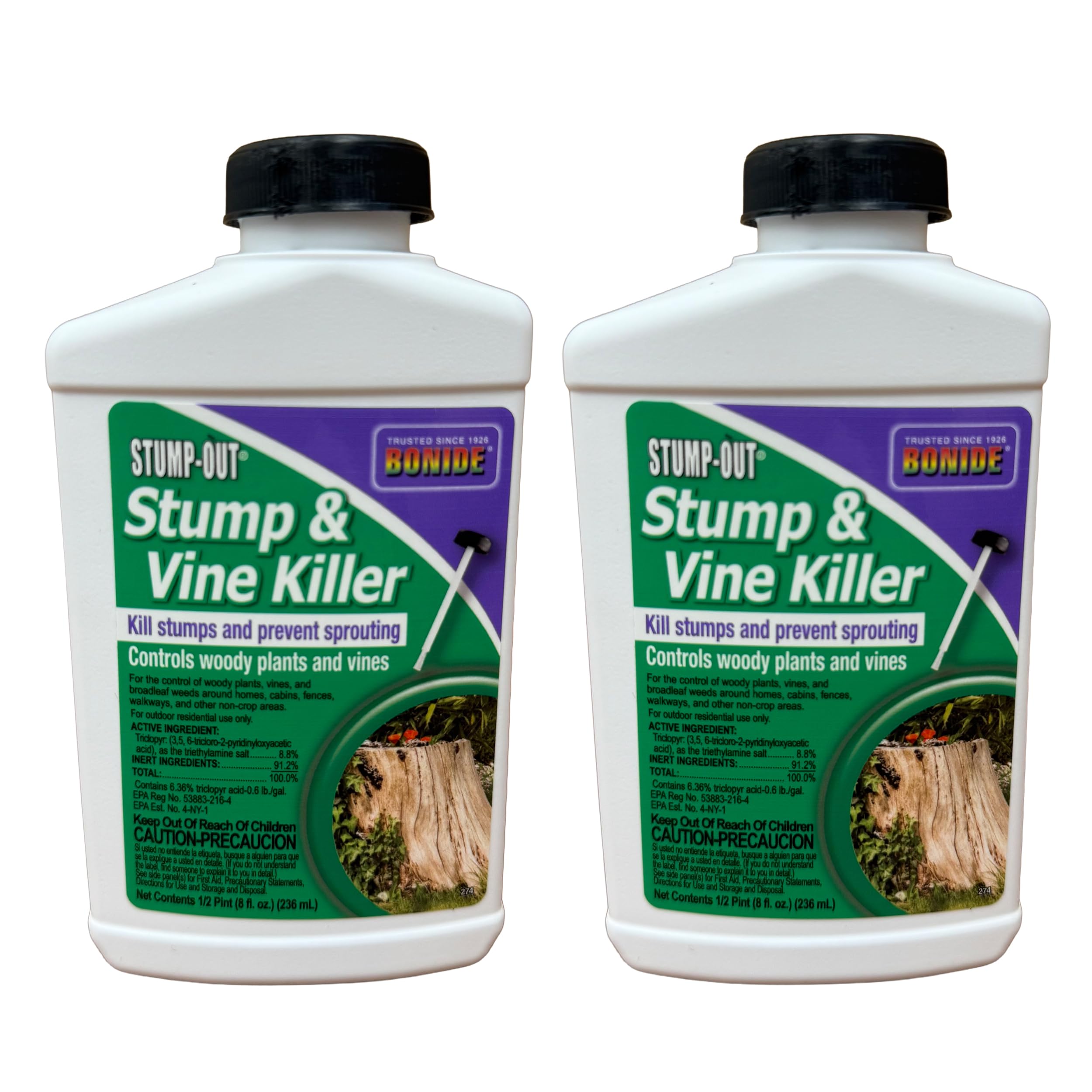
Bonide Stump Killer 2 pk

Bonide Stump Killer 2 pk

Multiple small stumps

Our Score 8.4/10
Check Price

Worth Noting

  • Bottles can leak during transit, so contents may arrive damaged.
  • Small brush applicator is tedious for larger stumps.
Form
Concentrate
Safety
Volume
16 fl oz
Application
Brush-on
Read the full review

The Bonide twin-pack delivers the same concentrate as the top pick but splits it into two 8-ounce bottles, lowering the per-ounce cost. This setup suits homeowners with several small stumps or invasive vines to treat, where the built-in brush applicator makes quick work of small roots and cuts. However, the two-bottle packaging has seen occasional leaks during transit, so inspect upon arrival. The applicator brush is too small for larger stumps, but that's less of an issue for the small jobs this pack is designed for.

Inspect bottles upon receipt and place in a secondary container if leakage is a concern.

Bottom line: Best for homeowners tackling multiple small stumps or invasive vines who don't mind checking for leaks.

11

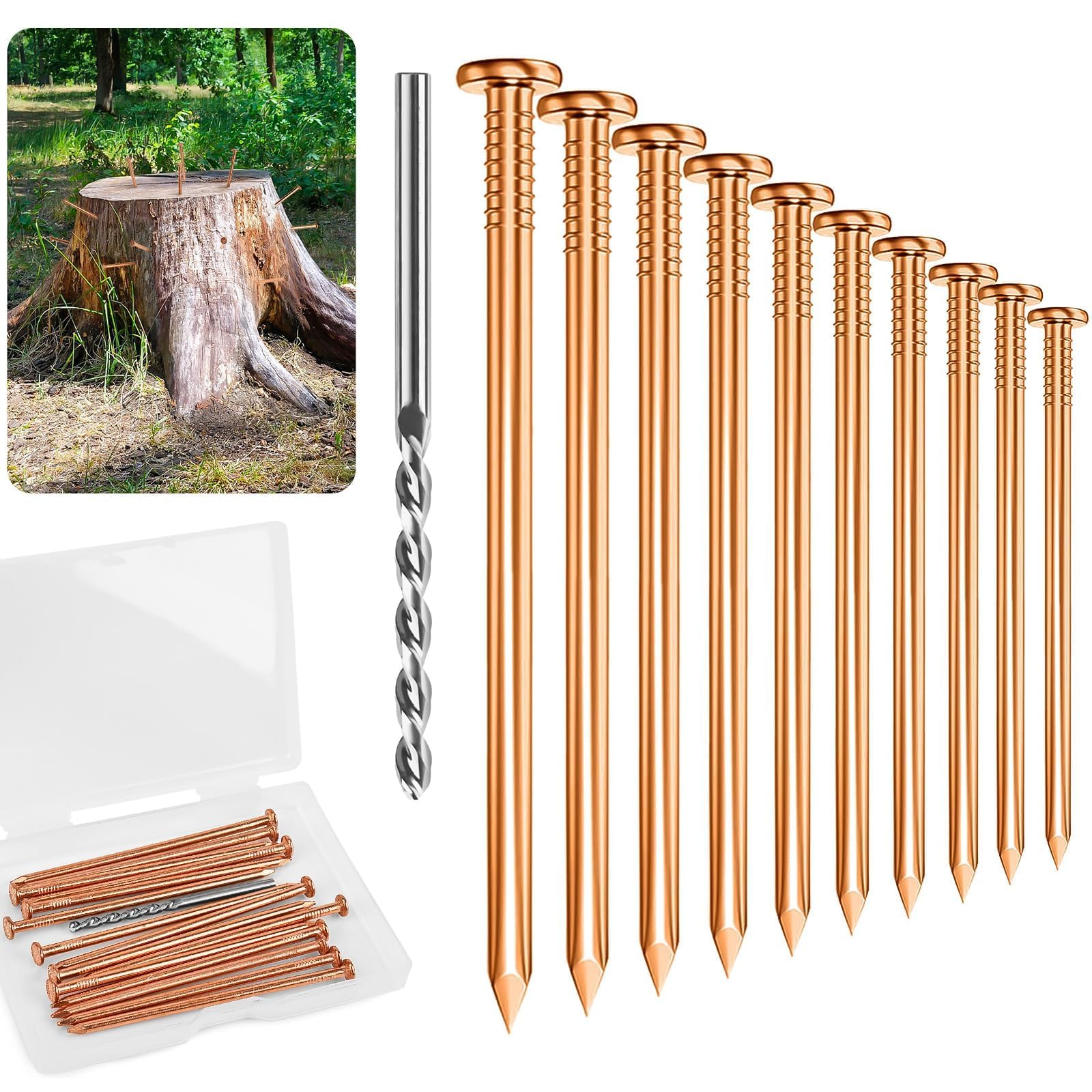
UCandy Copper Nails 10-pk

UCandy Copper Nails 10-pk

Eco experiment

Our Score 8.4/10
Check Price

Worth Noting

  • On dense wood, hammering nails into pilot holes can be labor-intensive even with the drill nail.
  • For those expecting quick stump death, this method's uncertainty and slow timeline can be disappointing.
Form
Nails
Safety
Volume
10 nails
Application
Hammer
Read the full review

Ten copper nails for a chemical-free stump experiment at a price that makes the gamble easy to take. This folk method carries no guarantee — the copper is supposed to oxidize and slowly poison the stump, but actual results depend on species, stump size, and patience measured in months. The included drill nail helps create pilot holes, but the process is labor-intensive and uncertain. Suitable only for eco-conscious gardeners willing to experiment without expecting reliable results.

Bottom line: Best for gardeners who want to try copper nails without much investment and are comfortable with an uncertain outcome.

How to Choose

Active Ingredient

Triclopyr-based products (Bonide, Tordon, ferti-lome) work by mimicking plant growth hormones, causing uncontrolled growth that kills the root system. They are highly effective on woody plants and stumps but can persist in soil and damage nearby trees through root grafting. Copper sulfate (Roebic K-77, Adios) kills roots in pipes by direct contact toxicity, safely breaking down in septic systems. Dichlobenil (RootX, Roebic FRK) prevents cell division in root tips, ideal for sewer lines but requires moisture to activate. Copper nails release ions slowly, a low-risk but unreliable method.

Form

Concentrated liquids (Bonide, ferti-lome, Crossbow) require mixing but treat more stumps per dollar. Ready-to-use formulas (Tordon) eliminate guesswork but cost more per application. Granular products (Roebic K-77, Adios) flush easily and are simple for sewer maintenance. Foaming powders (RootX, FRK) expand to fill the pipe, ensuring contact with roots at the top of the pipe, but can overflow if dosed incorrectly. Copper nails need pre-drilled holes and patience.

Application Method

Brush-on stump killers must be applied to a fresh cut within minutes — painting on an old dry stump yields no result. Flush-down products are passive but require the right dosage and regular use (every 6-12 months). Spray applications cover large areas but risk drift onto desirable plants. Nails require drilling into the stump at intervals; the process is slow and the outcome uncertain.

Safety

Herbicides like triclopyr and picloram are toxic to non-target plants and can persist in soil; avoid use near waterways or desirable trees. Copper sulfate is safer for septic bacteria but is banned in Florida and some California counties due to aquatic toxicity. Dichlobenil is pipe-safe but may be restricted locally. Copper nails pose no chemical risk but offer no guarantee of effectiveness.

Volume and Value

Larger volumes (gallons or 5-pound bags) lower the cost per treatment but are overkill for homeowners with a single stump. Sewer treatments typically last 6-12 months, so a 2-pound jar covers a few years. A bottle of stump concentrate treats anywhere from 5 to 50 cuts depending on stump size. Choose a size that matches your immediate workload rather than stockpiling.

Frequently Asked Questions