Pest & Weed Control

14 Best Weed Killer for Chickweed of 2026: Match Your Lawn Type

Stop guessing which weed killers actually work on chickweed. Find the right selective or non-selective formula for your lawn or bare ground.

Most weed killers claim broad-spectrum control, but very few explicitly list chickweed on the label. That gap causes real frustration when you spray a product expecting results and watch the chickweed thrive while your grass turns yellow.

The real choice is between selective herbicides that target broadleaf weeds without harming turf and non-selective formulas that kill everything. The right option depends on whether you are treating a lawn or a gravel path.

This guide walks through the specific active ingredients and label claims that matter for chickweed, so you can pick a product that matches your exact use case without wasting money on the wrong chemistry.

1

Roundup Quickpro

Top Pick
Roundup Quickpro

Large-scale vegetation kill

Our Score 9.6/10
Check Price

Worth Noting

  • Premium-priced upfront, though cost per acre is reasonable for heavy users.
Form
Powder (granules)
Coverage
Non-selective broad spectrum
Selectivity
Non-selective
Active Ingredients
Glyphosate 73.3%, Diquat 2.9%
Read the full review

This 73.3% glyphosate plus diquat powder kills most weeds within 2 to 5 days and stores well thanks to its granular form that dissolves without clumping. It is effective for clearing large properties, farms, or bare-ground areas where non-selective knockdown is the goal. For a buyer specifically hunting a chickweed solution for a lawn, this product is overkill and will harm desirable grass. The premium upfront cost makes sense only when applied across acres; for smaller jobs, a selective herbicide or a cheaper concentrate like the best value glyphosate option is a better fit.

Bottom line: Roundup Quickpro is the right choice for farms or large properties needing fast, non-selective kill, not for homeowners treating chickweed in a lawn.

2

RM43 Concentrate 128 oz

RM43 Concentrate 128 oz

Large bare-ground areas

Our Score 9.2/10
Check Price

Worth Noting

  • Long-term suppression can fall short of advertised duration in some cases
Form
Spray concentrate
Coverage
17297 sq ft
Selectivity
Non-selective
Active Ingredients
Glyphosate
Read the full review

RM43 knocks down chickweed and everything else within days, and its extended-control formula keeps bare ground clear for a good stretch. Mixing and spraying is straightforward with a standard sprayer. The catch: the 3-6 month regrowth window some users see falls short of the premium price tag, so it fits best for driveways, gravel, and fence lines where you accept possible touch-ups rather than total one-and-done coverage.

Bottom line: Best for large gravel drives or fence lines where occasional spot treatment is acceptable; not a set-and-forget solution for those wanting a full year of bare ground.

3

TZONE SE Herbicide

TZONE SE Herbicide

Tough broadleaf weeds

Our Score 9.2/10
Check Price

Worth Noting

  • Chickweed is not listed on the label, so control is not confirmed
Form
Liquid concentrate
Coverage
Broadleaf weeds
Selectivity
Selective (turf safe)
Active Ingredients
Triclopyr, 2,4-D, Dicamba, Sulfentrazone
Read the full review

This four-active-ingredient blend controls creeping charlie and wild violets without damaging turf. Chickweed is not listed on the label, so effectiveness for that weed is inferred. Best for lawns with tough broadleaf weeds, not for those needing explicit chickweed coverage.

Bottom line: Choose this if you need to control creeping charlie or wild violets and want a selective herbicide that spares your lawn, but skip it if chickweed is your target.

4

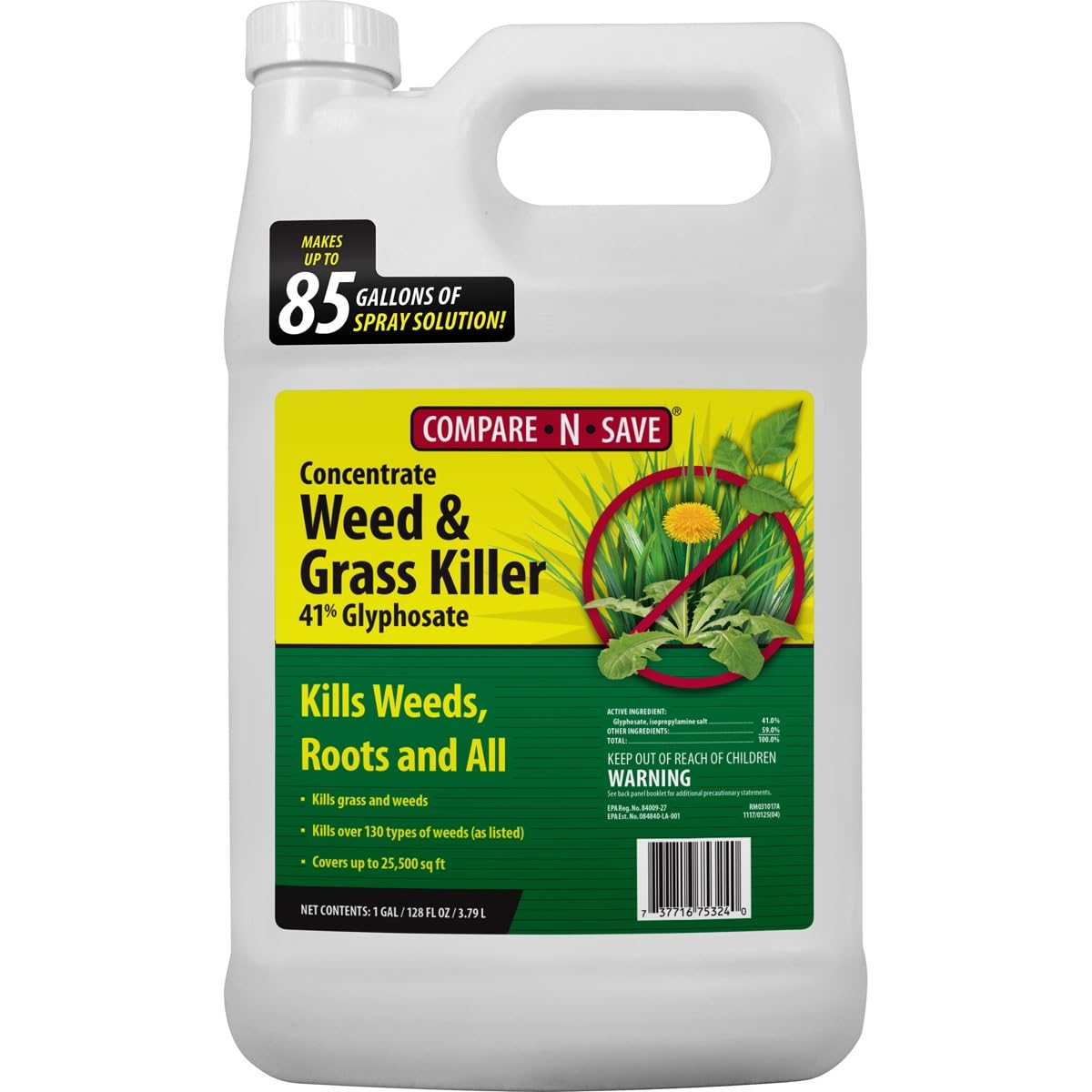
Compare-N-Save 1 gal

Compare-N-Save 1 gal

Budget bare-ground kill

Our Score 9.0/10
Check Price

Worth Noting

  • Strength depends on careful mixing; improper dilution can produce weaker results
Form
Liquid concentrate
Coverage
25000 sq ft
Selectivity
Non-selective
Active Ingredients
Glyphosate 41%
Read the full review

This concentrate delivers 41% glyphosate at a price that undercuts most competitors, covering up to 25,000 square feet. It kills chickweed, dandelions, and grasses within days when mixed correctly. Best suited for driveways, fence lines, or bare-ground prep where you want to eliminate all plant life, including lawns. The non-selective nature means it will kill any plant it touches, so it’s not for spot-treating chickweed in a lawn you want to keep. Performance can vary if the mixing ratio is off, so follow the label precisely for consistent results.

Use a measuring cup and follow the label ratio exactly to avoid under- or over-dilution.

Bottom line: A no-frills glyphosate concentrate that works well for large-scale vegetation removal, provided you mix it right. Skip it if you need a selective product for lawn chickweed.

5

RM43 32 oz

RM43 32 oz

Small bare-ground spots

Our Score 9.0/10
Check Price

Worth Noting

  • Non-selective formula kills any vegetation it contacts
Form
Liquid concentrate
Coverage
Selectivity
Non-selective
Active Ingredients
Glyphosate + Imazapyr
Read the full review

This 32-ounce bottle delivers the same glyphosate plus imazapyr blend as the larger RM43 gallon, making it a convenient option for testing or spot-treating small bare-ground patches where you want season-long weed control, including chickweed. However, the price per ounce is higher than buying the gallon, and the label does not specify coverage area. Since this is a non-selective herbicide, it will kill any vegetation it contacts — so keep it away from lawns and desirable plants.

Bottom line: If you have a small patch of gravel or dirt where chickweed keeps returning and you don't mind killing everything, this compact bottle lets you try the RM43 formula without committing to a gallon.

6

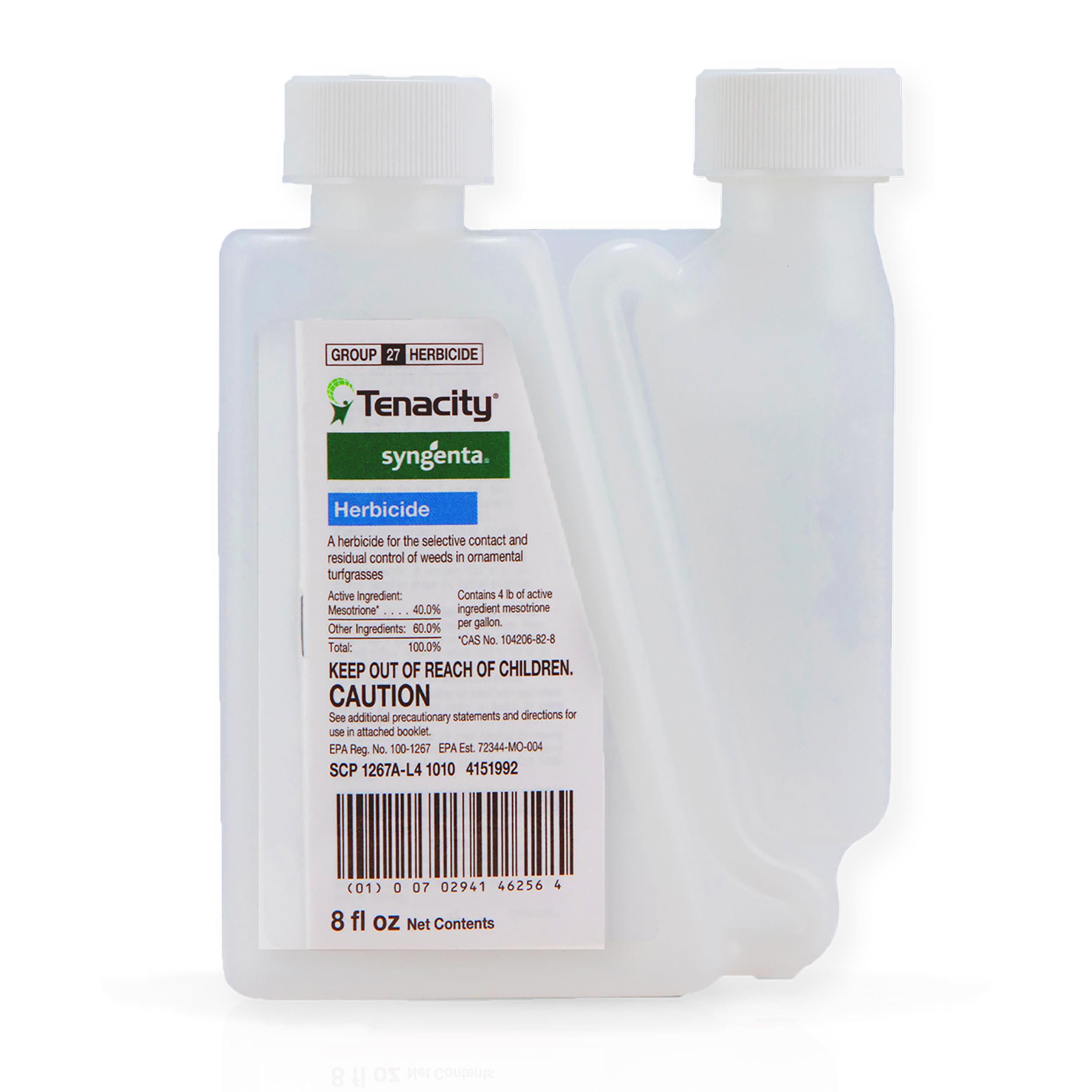
Tenacity Turf Herbicide

Tenacity Turf Herbicide

Lawn chickweed control

Our Score 8.8/10
Check Price

Worth Noting

  • Causes temporary white discoloration of grass that fades after mowing
  • Premium price per bottle, and effectiveness can vary depending on weed type and application timing.
Form
Liquid concentrate
Coverage
2000 sq ft per tsp
Selectivity
Selective (turf safe)
Active Ingredients
Mesotrione 40%
Read the full review

Tenacity uses mesotrione to control chickweed and other listed broadleaf weeds both before they sprout and after they appear, without harming established lawns. One teaspoon covers 2,000 square feet, so the 8-ounce bottle goes a long way despite the premium price.

The catch is temporary whitening of grass blades after application — a bleaching effect that fades within a few mowings but can worry first-time users. This product suits lawn owners who are willing to follow precise mixing instructions and wait out the cosmetic change, not those looking for a quick visual fix.

Plan to mow three times after application — the white patches will disappear as new growth comes in.

Bottom line: For lawn owners committed to following the label and tolerating a few weeks of white grass, Tenacity is the most targeted chickweed control available in a lawn-safe selective herbicide.

7

Southern Ag 2,4-D

Southern Ag 2,4-D

Experienced lawn owners

Our Score 8.8/10
Check Price

Worth Noting

  • Can damage sensitive turf grasses like St. Augustine if overapplied.
  • Sparse instructions require experience to mix correctly.
Form
Liquid concentrate
Coverage
5000 sq ft
Selectivity
Selective (broadleaf)
Active Ingredients
2,4-D dimethylamine salt
Read the full review

Southern Ag's 2,4-D concentrate delivers the same active ingredient as many premium weed killers at a lower price, making it a cost-effective option for controlling chickweed, dandelions, and clover in established lawns. Best suited for experienced gardeners comfortable with liquid concentrates and aware of their grass type — overapplication can damage sensitive varieties like St. Augustine, and the instructions lack detailed home-use dilution ratios.

Bottom line: An economical choice for experienced lawn owners who know their grass type and can handle mixing concentrates.

8

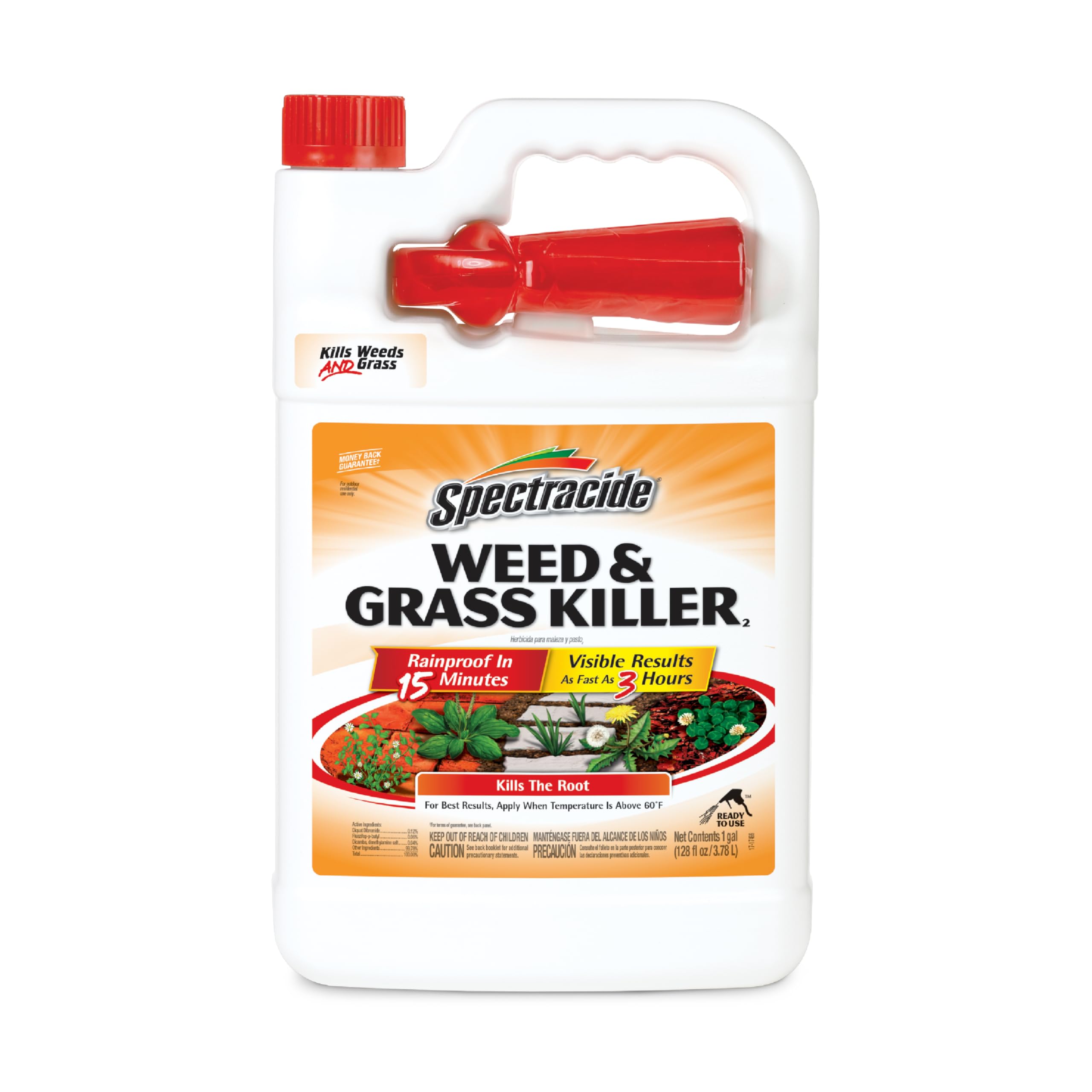
Spectracide 1 Gal RTU

Spectracide 1 Gal RTU

Cheap spot kill

Our Score 8.8/10
Check Price

Worth Noting

  • Sprayer nozzle may leak or fail to spray, requiring a backup plan.
Form
Ready-to-Use spray
Coverage
300 sq ft
Selectivity
Non-selective
Active Ingredients
Diquat, Fluazifop, Triclopyr
Read the full review

This diquat-based ready-to-use spray knocks down chickweed and other broadleaf weeds fast, with visible results in hours. The catch: it is non-selective, so anything green it touches dies, making it unsuitable for lawn use. Coverage is limited to about 300 sq ft, and the sprayer nozzle can fail to spray or leak, so check it before starting. For driveway cracks, sidewalk edges, and garden paths where you want bare ground, this is a cost-effective spot treatment — just don't rely on it for larger areas or expect a consistent sprayer.

Bottom line: Use this for quick chickweed removal on driveways or walkways where bare ground is fine — but verify the sprayer works before you start.

9

Hi-Yield Killzall

Hi-Yield Killzall

Budget large-area kill

Our Score 8.8/10
Check Price

Worth Noting

  • Results can vary from batch to batch
Form
Liquid concentrate
Coverage
6400 sq ft
Selectivity
Non-selective
Active Ingredients
Glyphosate + Surfactant
Read the full review

This super-concentrated glyphosate covers 6400 sq ft for a budget price and kills chickweed along with any other vegetation it contacts. However, consistency varies between batches – some users find it ineffective, making it a gamble for jobs needing reliable knockdown.

Bottom line: Best for temporary chickweed control on hardscapes or waste areas when budget is the priority, but be prepared for possible weak batches.

10

Ortho Year Long

Ortho Year Long

Season-long bare-ground

Our Score 8.8/10
Check Price

Worth Noting

  • Spray wand may be missing from the package, leaving you unable to use the product
Form
Ready-to-Use with wand
Coverage
Selectivity
Non-selective
Active Ingredients
Not listed
Read the full review

Kills weeds in driveways and paths quickly and prevents regrowth for up to a year. The Comfort Wand makes application easy. However, the spray wand may be missing from the package, and the price is higher than alternatives. This limits its appeal for chickweed control in lawns where selective herbicides are required.

Bottom line: Best suited for gravel, paths, and driveways where you want season-long bare-ground control and can verify the wand is included.

11

Scotts Turf Builder Plus 2

Scotts Turf Builder Plus 2

Simple lawn feed+weed

Our Score 8.8/10
Check Price

Worth Noting

  • Actual chickweed control results are not confirmed by user reports, leaving label claims unverified.
Form
Ready-to-Spray hose-end
Coverage
6000 sq ft
Selectivity
Selective (lawn safe)
Active Ingredients
2,4-D, MCPP, Dicamba (inferred)
Read the full review

The Scotts Turf Builder Plus 2 combines fertilizer with a 2,4-D/dicamba blend that targets broadleaf weeds including chickweed, covering up to 6,000 sq ft via a hose-end sprayer for easy application. However, without verified customer feedback specifically on chickweed, buyers must rely on the label claim alone - a gap that makes it less certain than products with documented user results.

Bottom line: Suitable for homeowners who want a convenient all-in-one lawn care product and trust label claims, but for confidence in chickweed control, consider options with proven user feedback.

12

Roundup Pump 'N Go

Roundup Pump 'N Go

Quick spot kill

Our Score 8.8/10
Check Price

Worth Noting

  • Chickweed control is not listed on the label, so effectiveness for that weed is uncertain.
Form
Ready-to-Use with pump
Coverage
300 sq ft
Selectivity
Non-selective
Active Ingredients
Triclopyr, Fluazifop, Diquat
Read the full review

The Roundup Pump 'N Go combines herbicide and sprayer in one unit for spot-treating weeds along garden borders and paths without mixing or measuring. Its triclopyr, fluazifop, and diquat blend handles many broadleaf weeds, but chickweed is not explicitly named on the label, and user feedback on that specific weed is unavailable. For general non-selective cleanup around landscaping it works well; for targeted chickweed control a selective herbicide with a clear label claim is a safer bet.

Bottom line: Best for general weed killing around landscaping where chickweed is not the primary concern and convenience matters more than verified chickweed performance.

13

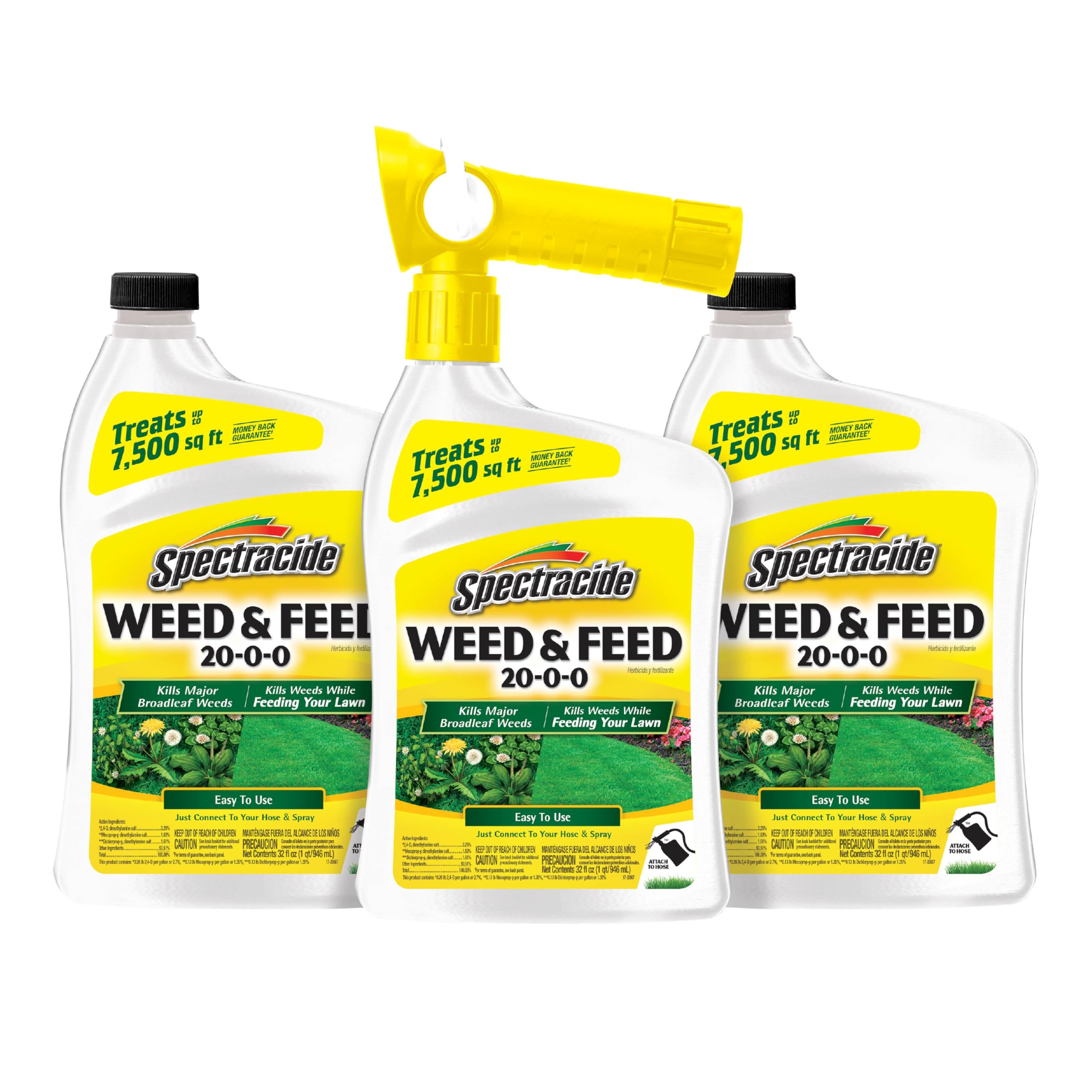
Spectracide Weed & Feed

Spectracide Weed & Feed

Lawn feed + weed

Our Score 8.6/10
Check Price

Worth Noting

  • Sprayer may leak or fail to dispense chemical properly
  • Weed control can be inconsistent
Form
Ready-to-Use hose-end
Coverage
7500 sq ft per bottle
Selectivity
Selective (lawn safe)
Active Ingredients
2,4-D, MCPP, Dicamba
Read the full review

The Spectracide Weed & Feed attaches to any garden hose for a single-pass application that feeds the lawn and targets chickweed along with other broadleaf weeds. Its 2,4-D and dicamba formula works for many, but results can vary — some lawns see no effect on stubborn chickweed patches. This suits homeowners who want a no-mix, all-in-one treatment and accept that chickweed control may not be as consistent as with a dedicated selective herbicide like Tenacity.

Before use, test the sprayer with water to ensure it dispenses evenly; some units may need adjustment.

Bottom line: A convenient hose-end choice for homeowners who prioritize ease of use, provided they are prepared for possible variance in chickweed control.

14

Ortho GroundClear Wand

Ortho GroundClear Wand

Organic spot treatment

Our Score 8.6/10
Check Price

Worth Noting

  • Weed control can be incomplete
  • Wand may be missing from the package, rendering the product unusable
Form
Ready-to-Use with wand
Coverage
5120 sq ft
Selectivity
Non-selective
Active Ingredients
Ammonium Nonanoate
Read the full review

The Comfort Wand’s battery-powered pump eliminates bending and mixing, making quick work of chickweed in garden beds and walkways. The formula dries rapidly and is labeled safe for kids and pets once dry. Because ammonium nonanoate targets leaves rather than roots, some users see regrowth within weeks — this product suits organic gardeners who prioritize safety over total knockdown and can reapply as needed.

Open the box and confirm the wand and battery compartment are present before you begin – a missing wand turns the product into a paperweight.

Bottom line: Best for organic gardeners who value ease and safety and are prepared to spot-treat again when chickweed returns.

How to Choose

Selectivity: Selective vs Non-Selective

Selective herbicides target broadleaf weeds without harming most turfgrasses. Non-selective formulas like glyphosate kill any plant they touch. The wrong choice can turn a chickweed problem into a bare dirt patch.

If chickweed is growing in a lawn, choose a selective product with mesotrione, 2,4-D, or dicamba. For driveways, gravel, or garden beds, a non-selective spray is faster and cheaper.

Active Ingredients

The active ingredient determines how and what the herbicide kills. Mesotrione provides both pre- and post-emergent control of chickweed. 2,4-D is a classic broadleaf selective that works well post-emergent but can drift onto sensitive plants.

Glyphosate is the go-to non-selective, but it needs to contact green tissue. Diquat and ammonium nonanoate are fast-acting, contact-only options that work in hours but don't travel to roots.

Coverage Area

Concentrates often cover 5,000 to 25,000 sq ft per bottle, making them far cheaper per square foot than ready-to-use sprays. Ready-to-use bottles typically cover 300 to 6,000 sq ft.

Match coverage to your property size. A 1-acre lawn requires gallons of concentrate; a patio crack job needs only a small RTU bottle.

Form: Concentrate vs Ready-to-Use

Concentrates require a sprayer and careful mixing, but they are cost-effective for large areas. Ready-to-use products are convenient for small jobs, but the built-in sprayer is often the weakest link – many leak or break.

If you have more than 1,000 sq ft to treat, a separate garden sprayer with concentrate saves money and avoids nozzle frustrations.

Rainfastness and Speed

Rainfastness refers to how soon after application rain won't wash off the herbicide. Most glyphosate products require 6 hours rain-free; diquat-based sprays work in 1 hour.

For regions with unpredictable showers, choose a fast-acting contact herbicide for spot treatments, or apply systemic products when a dry window is certain.

Frequently Asked Questions