Pest & Weed Control

11 Best Weed Killer for Lawns 2026: Stop Weeds Without Damaging Grass

Find the best selective herbicide for your lawn type and weed problem - from fast-acting general killers to specialized nutsedge control.

Many weed killers promise instant results but leave your lawn patchy or miss the mark entirely. The problem isn't always the product — it's often a mismatch between the herbicide and your specific grass type or weed species.

The best approach starts with knowing whether you need a broad-spectrum post-emergent for dandelions and clover, a pre-emergent to stop crabgrass before it sprouts, or a specialized treatment for nutsedge. Some formulas work fast over large areas, while others rely on multiple active ingredients to tackle resistant weeds.

This guide focuses on selective herbicides that target weeds without harming your lawn, covering everything from budget concentrates to professional-grade options. By matching the product to your grass type and weed problem, you can get results without the guesswork.

1

Target 6 Plus MSMA Herbicide

Top Pick
Target 6 Plus MSMA Herbicide

Bermudagrass lawns

Our Score 9.4/10
Check Price

Worth Noting

  • Bermudagrass may temporarily yellow after application; requires full protective gear for safe handling
Form
Liquid concentrate
Coverage
Read the full review

Extremely effective on crabgrass and dallisgrass in warm-season turf. This professional-grade MSMA concentrate provides powerful control for serious bermudagrass lawns. However, it causes temporary yellowing of bermudagrass, requires protective gear, and is restricted to warm-season grasses – making it a specialized tool rather than a general-purpose lawn herbicide.

Bottom line: Best suited for bermudagrass lawns with persistent tough weeds where general herbicides fall short, and only for users willing to follow strict safety protocols.

2

TZONE SE Broadleaf Herbicide

TZONE SE Broadleaf Herbicide

Resistant weeds

Our Score 9.2/10
Check Price

Worth Noting

  • Overkill for lawns with only common dandelions
  • Higher price than basic 2,4-D concentrates
Form
Liquid concentrate
Coverage
Read the full review

TZONE SE uses four active ingredients to control tough broadleaf weeds like creeping Charlie and wild violet that resist standard 2,4-D treatments. It’s a stronger formula than the faster-acting SpeedZone, so it’s better suited for resistant species rather than common dandelions. Best for homeowners dealing with persistent weeds, especially in cool weather down to 50°F. Not recommended for lawns with only light weed pressure or newly seeded areas.

Bottom line: Homeowners facing stubborn weeds that resist standard herbicides will find TZONE SE delivers results, but those with simple dandelion patches should save money and use a basic 2,4-D product.

3

Gordon's SpeedZone

Gordon's SpeedZone

Large lawns

Our Score 9.0/10
Check Price

Worth Noting

  • Some bottles may leak during shipping
Form
Liquid concentrate
Coverage
14,000-18,000 sq ft
Read the full review

Gordon's SpeedZone shows visible results within hours of application on broadleaf weeds like dandelions and clover. Each 20 oz bottle treats up to 18,000 sq ft of lawn, and the hose-end sprayer makes mixing and application straightforward.

This concentrate suits homeowners with large lawns who want fast, noticeable weed control without switching to specialty products. It's less ideal for organic gardeners or those with small patches where a ready-to-use spray would be more practical. Some bottles arrive with caps that may loosen during shipping - inspect the seal when it arrives.

Inspect the cap seal upon delivery and tighten if necessary to avoid spillage.

Bottom line: Gordon's SpeedZone combines fast results and broad coverage, making it a practical choice for most homeowners with medium to large lawns.

4

Scotts WinterGuard Fall Weed & Feed

Scotts WinterGuard Fall Weed & Feed

Fall lawn care

Our Score 9.0/10
Check Price

Worth Noting

  • Granules may clump in the bag, leading to uneven coverage when broadcasting
Form
Granule
Coverage
4,000 sq ft
Read the full review

This granular weed and feed fits a seasonal fall lawn care routine, feeding grass while targeting winter weeds. The Scotts formulation supports spring lawn health, but granules may clump in the bag, causing uneven spreading in the spreader. It works best for homeowners who want an all-in-one fall treatment rather than a precise spot-application or year-round solution.

Bottom line: Good for the fall-only homeowner who wants a combined feed and weed treatment without mixing, but check the bag for clumps before spreading.

5

Southern Ag 2,4-D Weed Killer

Southern Ag 2,4-D Weed Killer

Budget DIYers

Our Score 8.8/10
Check Price

Worth Noting

  • Label instructions are geared toward experienced users
Form
Liquid concentrate
Coverage
5,000 sq ft
Read the full review

This concentrate offers the lowest cost per square foot for killing broadleaf weeds like dandelion and clover – but the label instructions assume you already know how to mix herbicide. It's a perfect match for budget-conscious homeowners who don't mind measuring and mixing their own spray, but beginners looking for a ready-to-use product should look elsewhere. The 2,4-D amine formula covers up to 5,000 sq ft per quart, making it a strong value for larger lawns.

Use a sprayer with ounce markings and double-check the mixing ratio for your lawn size – it saves product and avoids over-application.

Bottom line: If you're comfortable measuring and mixing your own spray, this is the most cost-effective broadleaf killer per square foot – just take your time with the instructions.

6

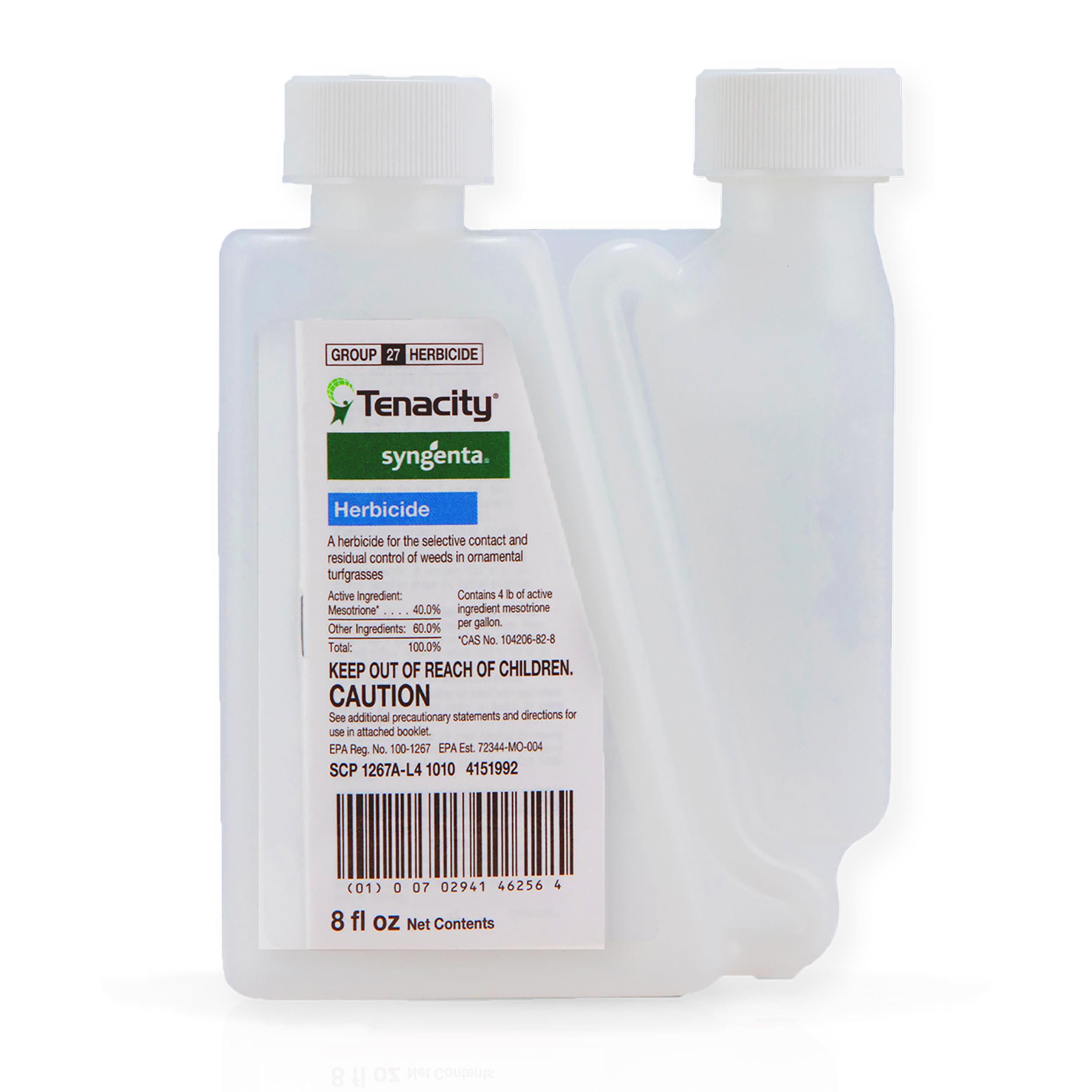
Tenacity Turf Herbicide

Tenacity Turf Herbicide

Lawn renovation

Our Score 8.8/10
Check Price

Worth Noting

  • Premium-priced compared to other herbicides
Form
Liquid concentrate
Coverage
8,000 sq ft
Read the full review

Tenacity's mesotrione formula is unique among selective herbicides: it can be applied at the same time as seeding new grass without harming seedlings. This makes it the go-to option for lawn renovation projects where crabgrass or nimblewill is present. The tradeoff is a premium price and the need for careful measurement – an overdose can burn the grass you are trying to grow.

Measure precisely using a graduated cylinder or syringe to avoid grass burn – the active ingredient is potent.

Bottom line: Best for homeowners undertaking a lawn renovation who need to seed and kill grassy weeds simultaneously.

7

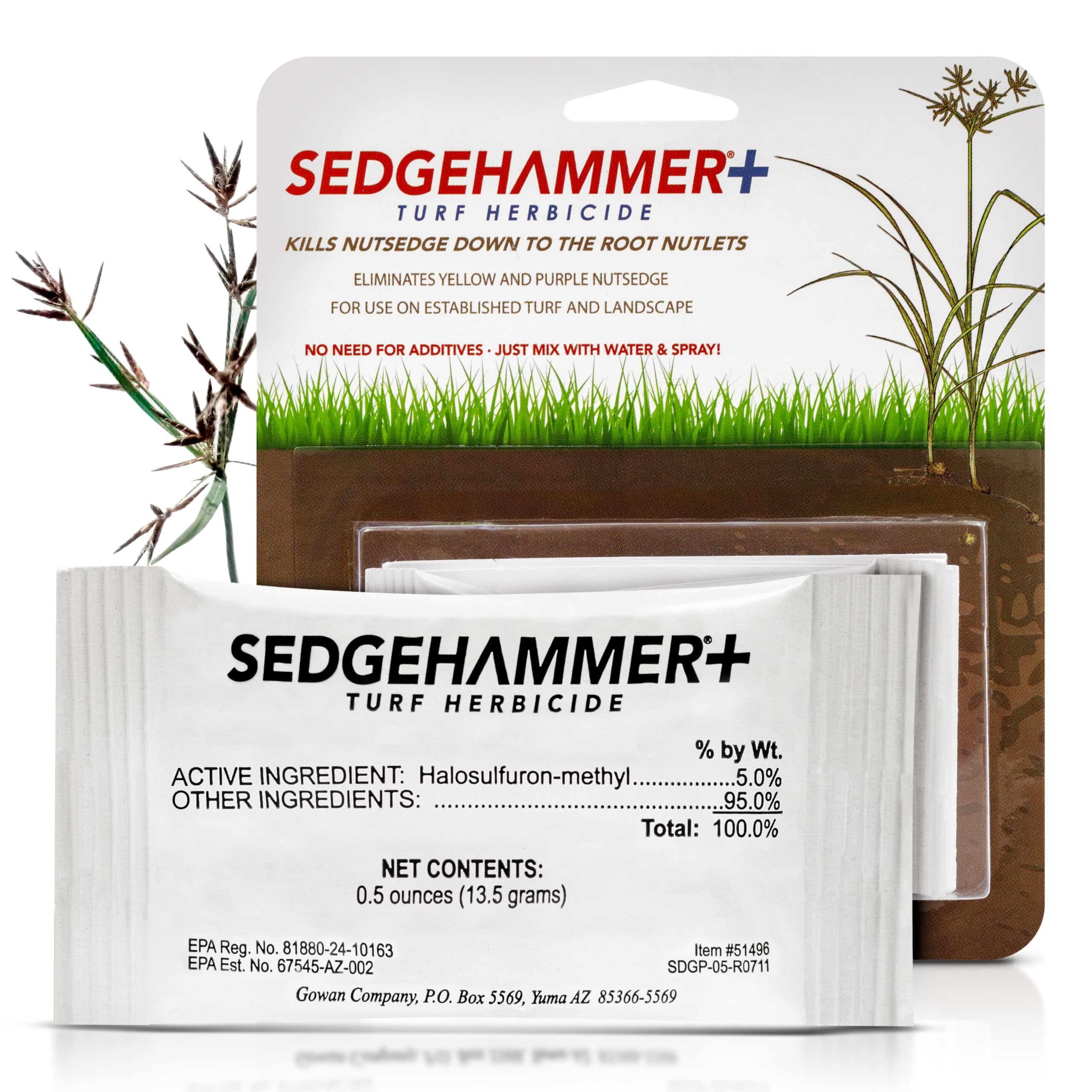
Sedgehammer Plus Turf Herbicide

Sedgehammer Plus Turf Herbicide

Nutsedge control

Our Score 8.8/10
Check Price

Worth Noting

  • Full control can require two or three applications
Form
Powder packets
Coverage
1,000 sq ft per packet
Read the full review

Sedgehammer Plus targets nutsedge and nutgrass specifically, not broadleaf weeds. The water-soluble packets eliminate measuring guesswork, offering a simpler alternative to ready-to-use hose-end sprays. Best for homeowners who have confirmed nutsedge in their lawn and want a pet-safe option after the spray dries. Be prepared for a second or third application; single treatments rarely eliminate the weed entirely.

Plan for a second application 2–4 weeks after the first for complete control.

Bottom line: A specialized nutsedge killer that delivers on its promise, as long as you're prepared for repeat treatments.

8

Andersons Barricade Pre-Emergent

Andersons Barricade Pre-Emergent

Preventative control

Our Score 8.8/10
Check Price

Worth Noting

  • Has no effect on existing weeds
Form
Granule
Coverage
5,800 sq ft
Read the full review

Unlike seeding-friendly options like mesotrione, this granular pre-emergent delivers professional-grade prevention for annual grassy weeds. The fine granules spread evenly with a standard spreader and require only one application per season when timed correctly.

Best for lawns with existing annual weed pressure where the goal is stopping next year's crop – not for clearing current infestations. Critical timing: apply in early spring before soil temperatures reach 55°F for crabgrass, or in fall for poa annua.

Apply when soil temperatures reach 55°F for crabgrass or in early fall for poa annua – a soil thermometer removes the guesswork.

Bottom line: A cost-effective way to stop annual grassy weeds before they start, provided you apply at the right window and have no existing weed problem.

9

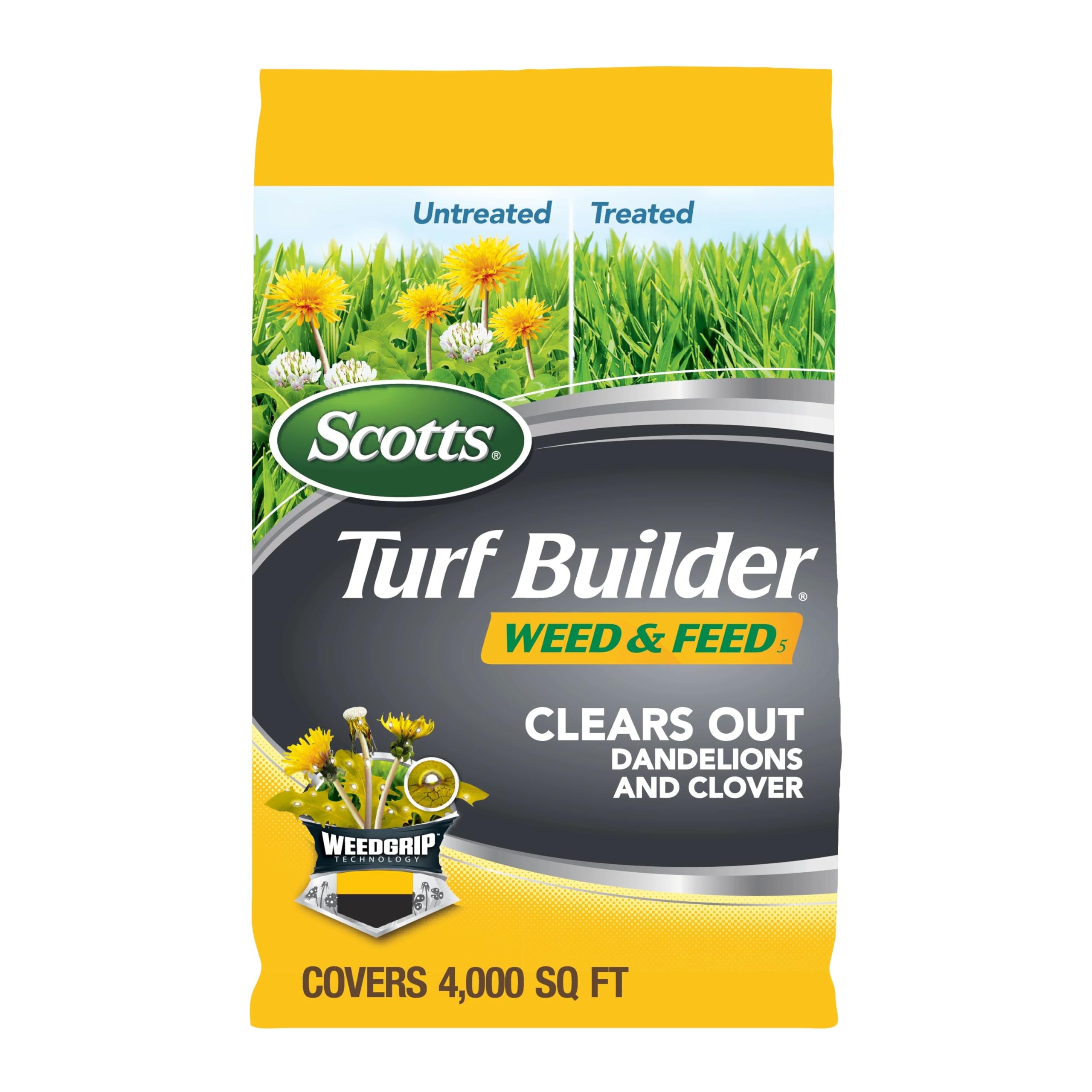
Scotts Turf Builder Weed & Feed5

Scotts Turf Builder Weed & Feed5

Moderate weed pressure

Our Score 8.8/10
Check Price

Worth Noting

  • Granular distribution is less targeted than liquid spot treatments, so heavier weed infestations may require multiple passes or a follow-up spray.
Form
Granule
Coverage
4,000 sq ft
Read the full review

This granular fertilizer-plus-herbicide steps in for homeowners who want a single spring treatment that both feeds the lawn and knocks back common broadleaf weeds. The dry granules flow well through a spreader, delivering uniform coverage across 4,000 sq. ft., and grass often shows a deeper green within a week. Where it falls short is precision: granular distribution can miss spots that a liquid sprayer would reach, making it better suited for light weed pressure than for thick patches of creeping Charlie or wild violet. It also cannot be used on St. Augustine or bentgrass lawns, so check your grass type before buying.

Bottom line: A suitable option for homeowners seeking a simple annual weed-and-feed routine on lawns with light broadleaf pressure – just verify your grass type isn't St. Augustine or bentgrass first.

10

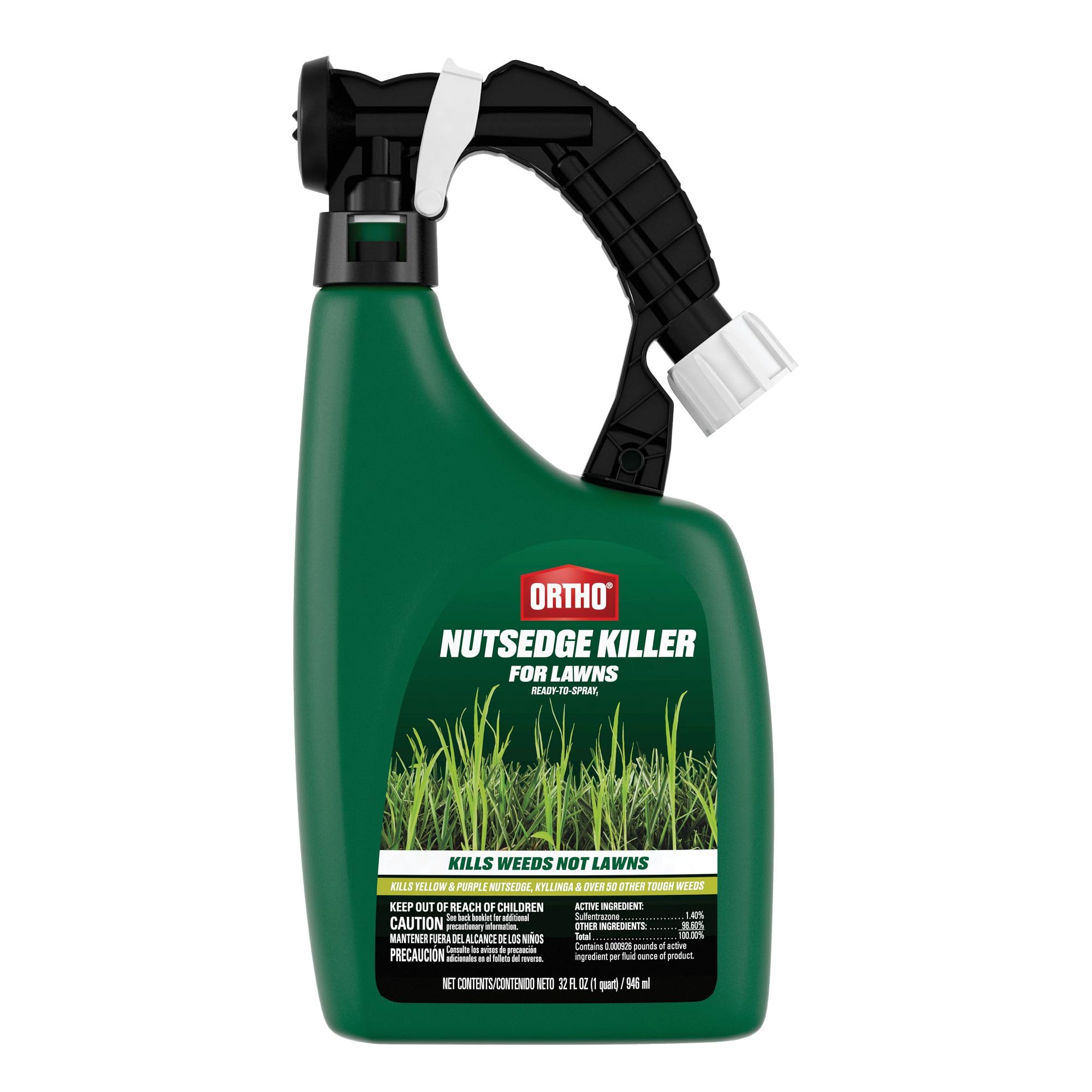
Ortho Nutsedge Killer

Ortho Nutsedge Killer

Spot nutsedge

Our Score 8.6/10
Check Price

Worth Noting

  • Sprayer nozzle may malfunction, delivering only water instead of chemical.
Form
Ready-to-spray liquid
Coverage
5,000 sq ft
Read the full review

Ortho Nutsedge Killer offers no-mix hose-end convenience for spot-treating nutsedge without harming grass. The sprayer nozzle may malfunction and deliver only water, making it less reliable than packet-based alternatives like Sedgehammer.

Bottom line: Best for homeowners who value convenience and have a small area of nutsedge, as long as they are prepared to check the sprayer before each use.

11

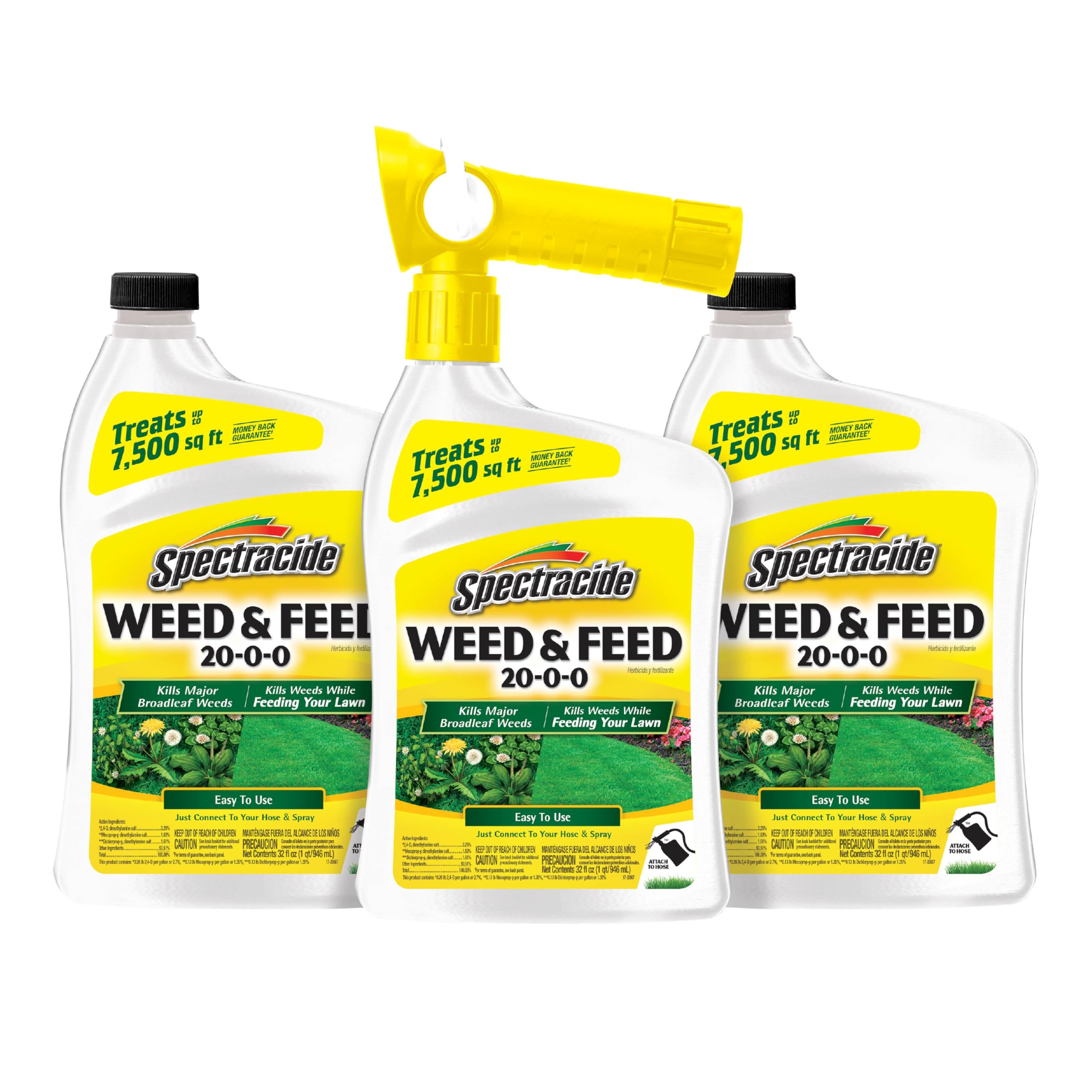
Spectracide Weed & Feed 3-Pack

Spectracide Weed & Feed 3-Pack

Ease over potency

Our Score 8.6/10
Check Price

Worth Noting

  • Weed control is inconsistent; some weeds see no effect even after application.
Form
Liquid hose sprayer
Coverage
7,500 sq ft per bottle
Read the full review

Simply attach the sprayer to a hose and the built-in 20-0-0 fertilizer greens up the lawn quickly. Weed control results are inconsistent — certain weeds may not be affected. Bottles can also arrive leaking during shipping. This product suits those who prioritize fertilization and ease over reliable weed elimination.

Bottom line: Best for homeowners who want a simple lawn fertilizer boost and are willing to accept that weed killing may not happen.

How to Choose

Active Ingredients

Common active ingredients like 2,4-D work on many broadleaf weeds but struggle with resistant species. Formulas with triclopyr, dicamba, or sulfentrazone expand the weed spectrum. Multi-active products cost more but save time on tough weeds like creeping Charlie or wild violet.

Pre-emergent ingredients like prodiamine or dithiopyr stop weeds from germinating but do nothing for existing plants. Match the ingredient to your weed list.

Form

Granular products (weed & feed) are easiest to spread but deliver herbicide unevenly and rely on activation by rain. Liquid concentrates offer better coverage and control over where the chemical goes, but require measuring and mixing.

Ready-to-spray liquids attach to a hose for convenience, but sprayer nozzles can clog or malfunction. Choose form based on how much precision and effort you want.

Coverage Area

Coverage per bottle ranges from 1,000 sq ft (nutsedge packets) to 18,000 sq ft (SpeedZone). Buying a product with far more coverage than your lawn wastes money, while too little means multiple purchases.

Calculate your lawn's square footage before buying. For small lawns, a single-use packet or small bottle avoids leftover chemicals that degrade over time.

Speed of Results

Some herbicides show wilting within hours (e.g., SpeedZone) while others take a week or need multiple applications. Fast action is satisfying but can be harsher on grass if overapplied. Slower products are often gentler.

If you need quick visible results for event prep or immediate satisfaction, choose a fast-acting formula. For long-term weed management, slower but safer products may be better.

Grass Type Compatibility

Not all herbicides work on all grass types. Products containing 2,4-D or dicamba can damage St. Augustine, bentgrass, or dichondra. Always check the label for your specific grass species.

Warm-season grasses like bermudagrass are more tolerant of certain actives (e.g., MSMA), while cool-season grasses like fescue are safer with triclopyr. Ignoring this can kill your lawn along with the weeds.

Frequently Asked Questions