Soil & Fertilizer

11 Best Electric Composter of 2026: Choose Real Compost or Quick Reduction

Find the right electric composter for your kitchen: true compost from microbial units or fast volume reduction from dehydrators.

Electric composters promise to turn kitchen scraps into fertilizer overnight, but the category splits into two camps: machines that dry and grind waste into a pre-compost, and those that use microbes to create biologically active soil. Many buyers discover the difference only after purchase.

This guide clarifies the trade-off, matching each composter to its intended use. If your goal is reducing landfill volume, a dehydrator works fine. If you want real compost for your garden, you need microbial technology. Capacity, processing speed, odor control, and durability determine whether a composter stays useful beyond the first month.

1

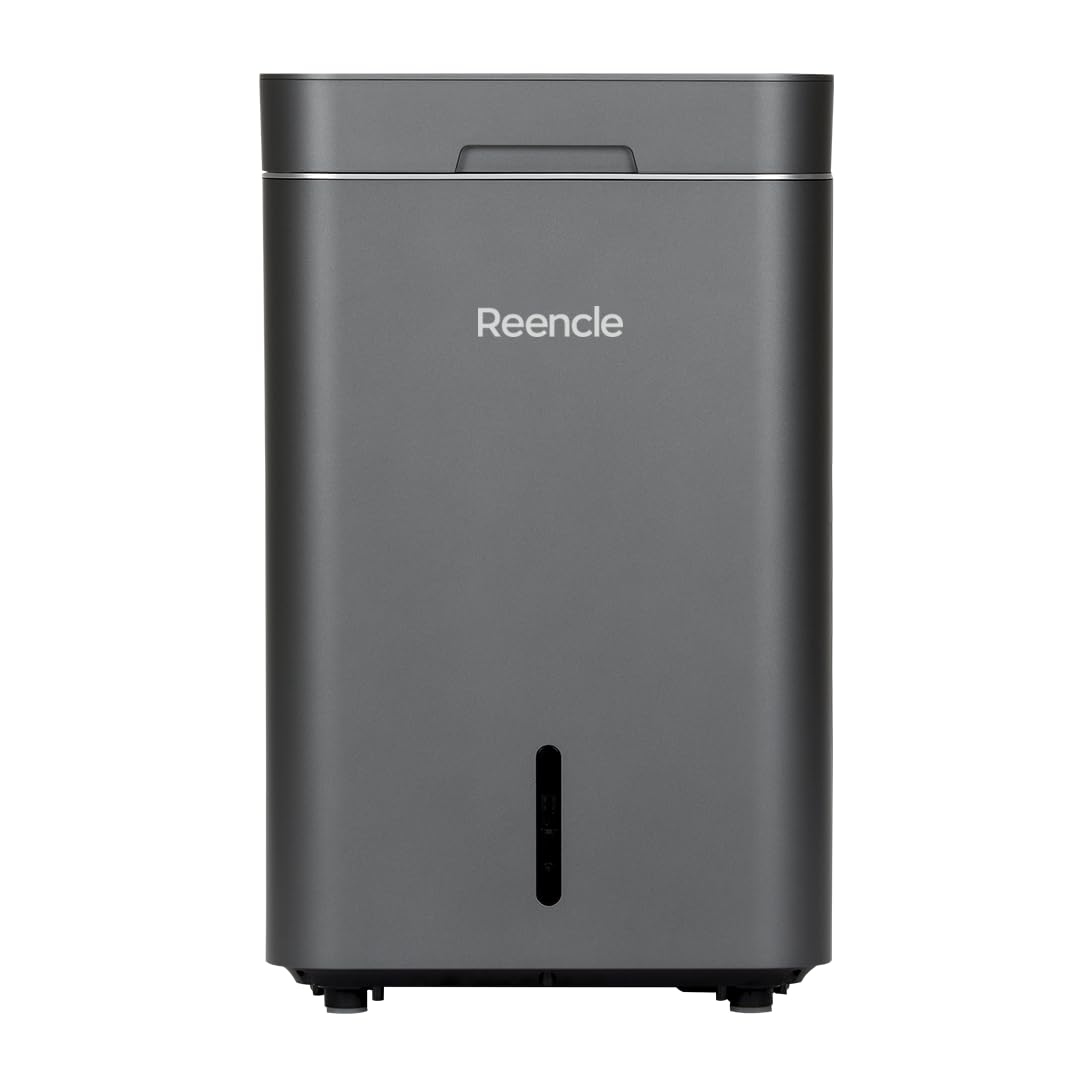
Reencle Prime 14L

Top Pick
Reencle Prime 14L

Moderate waste producers

Our Score 9.2/10
Check Price

Worth Noting

  • Mechanical wear may arise after extended use
Capacity
14L
Noise Level
28 dB
Compost Type
Microbial
Odor Control
3-layer filter
Read the full review

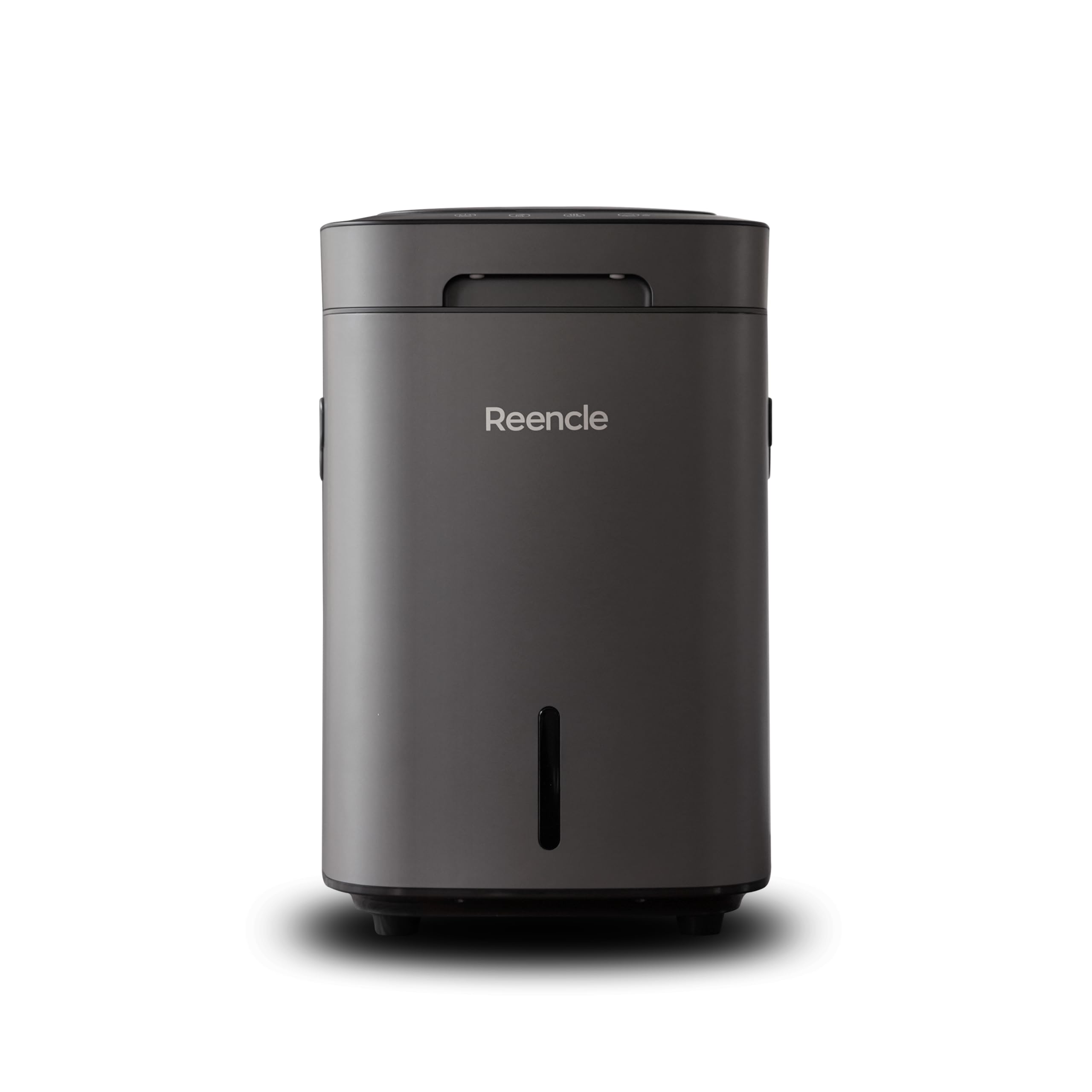
The Reencle Prime uses a microbial breakdown process to turn kitchen scraps into genuine compost, not just dried bits. Its 14-liter capacity handles daily waste from a typical three- to four-person household, and the three-layer filter keeps odors contained — the unit is quiet enough to run in a kitchen without disturbance.

Day-to-day operation is straightforward: the auto-open lid and simple controls make loading and unloading easy. Some units may develop mechanical issues after a year of heavy use, so registering for the extended warranty is a sensible precaution. For homes where consistent real compost output matters more than absolute long-term durability, this tradeoff is manageable.

This composter suits gardeners who want nutrient-rich soil for their beds and produce moderate daily waste. Anyone prioritizing a lower upfront cost or who cannot accommodate the possibility of warranty claims should consider a dehydrator-style unit instead.

Register for the extended warranty to cover any mechanical issues that may arise after the first year.

Bottom line: For households that want genuine compost output and can accept the potential for long-term maintenance, the Reencle Prime offers the best balance of capacity, noise, and true composting at its price.
2

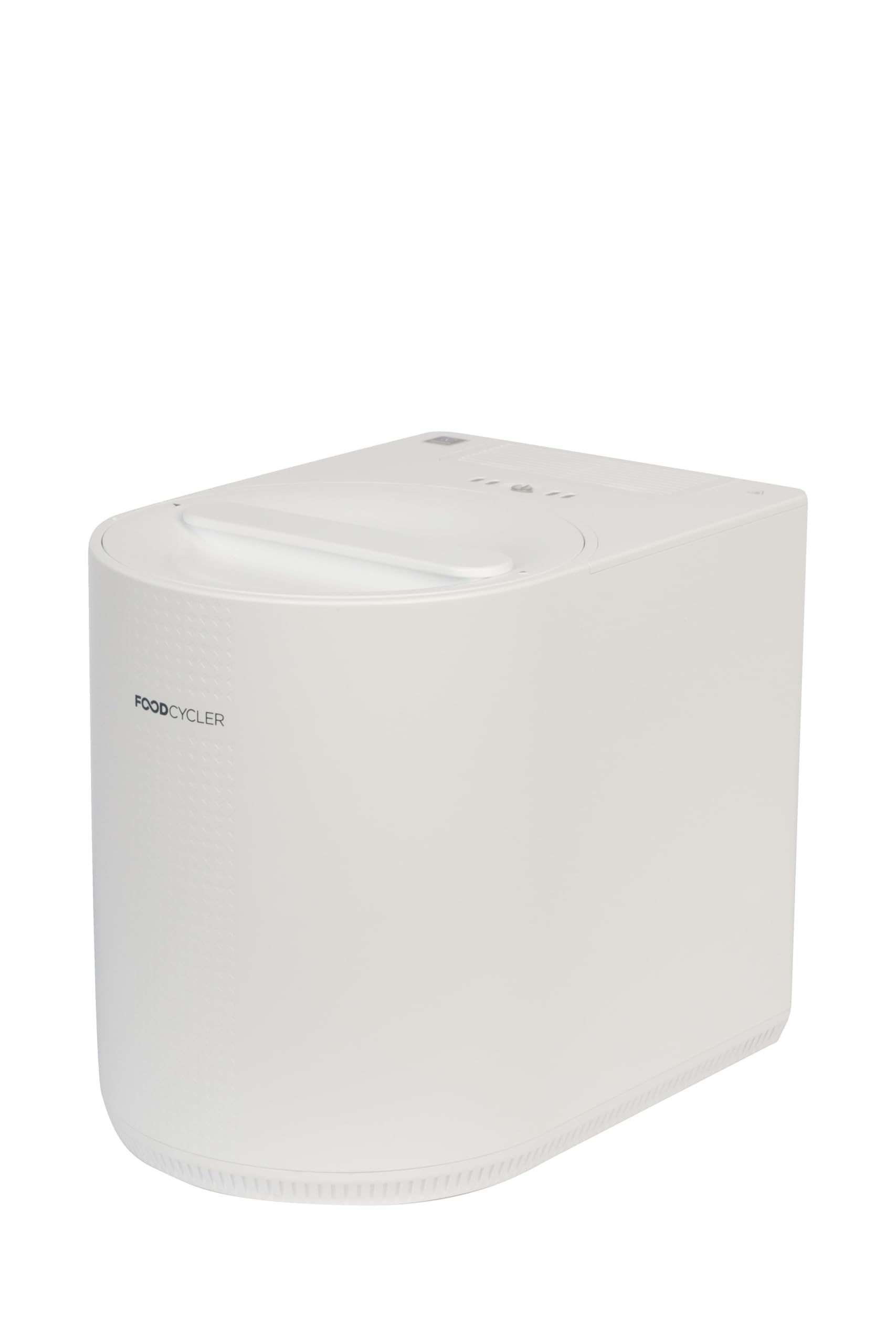
Food Cycler Eco 5

Food Cycler Eco 5

Family waste recycler

Our Score 9.2/10
Check Price

Worth Noting

  • Very wet scraps may clump, requiring a second cycle or manual break-up.
Capacity
5L
Noise Level
Compost Type
Dehydrator
Odor Control
Refillable carbon
Read the full review

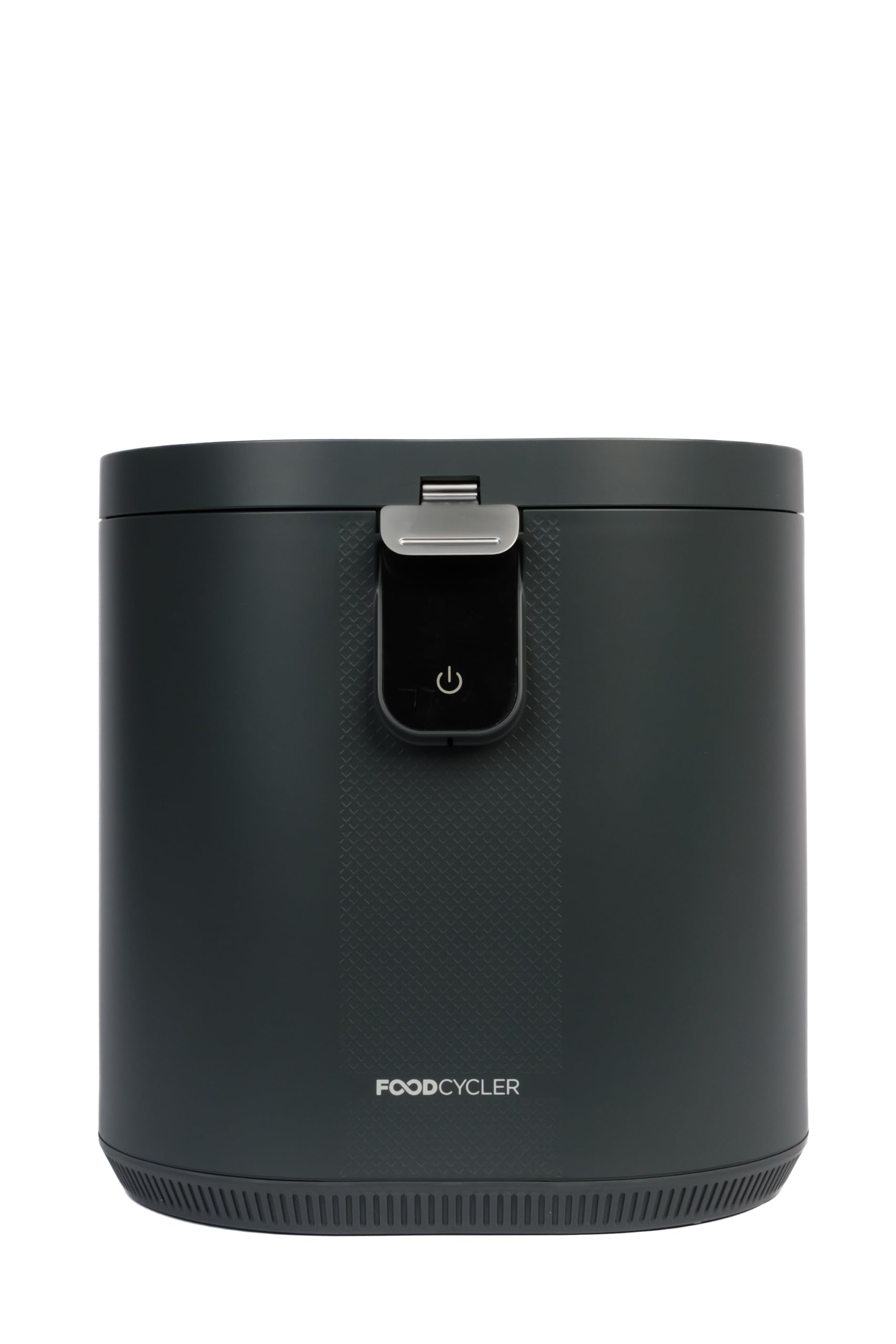
Award-winning design with Vortech grinding that handles bones and pits effectively. Its 5L bucket takes on daily kitchen scraps without needing frequent emptying, and the carbon filter keeps odors contained.

Best for families who prioritize quiet, automatic waste reduction and don’t need biologically active compost. Very wet loads may require an extra cycle to break up clumps, and the dehydrated end product is best added to a compost pile or garden bed as a supplement, not a soil replacement.

For wet loads, running a second cycle or breaking up clumps halfway through helps achieve consistent results.

Bottom line: A strong performer for daily waste reduction if you accept the occasional need for a second cycle on wet loads — the dehydrated output fits households that don’t expect true compost.

3

Ouaken OK-255 5.5L

Ouaken OK-255 5.5L

5.5L capacity

Our Score 9.2/10
Check Price

Worth Noting

  • Long-term performance under sustained heavy use remains unverified.
Capacity
5.5L
Noise Level
<45 dB
Compost Type
Dehydrator
Odor Control
High-iodine carbon
Read the full review

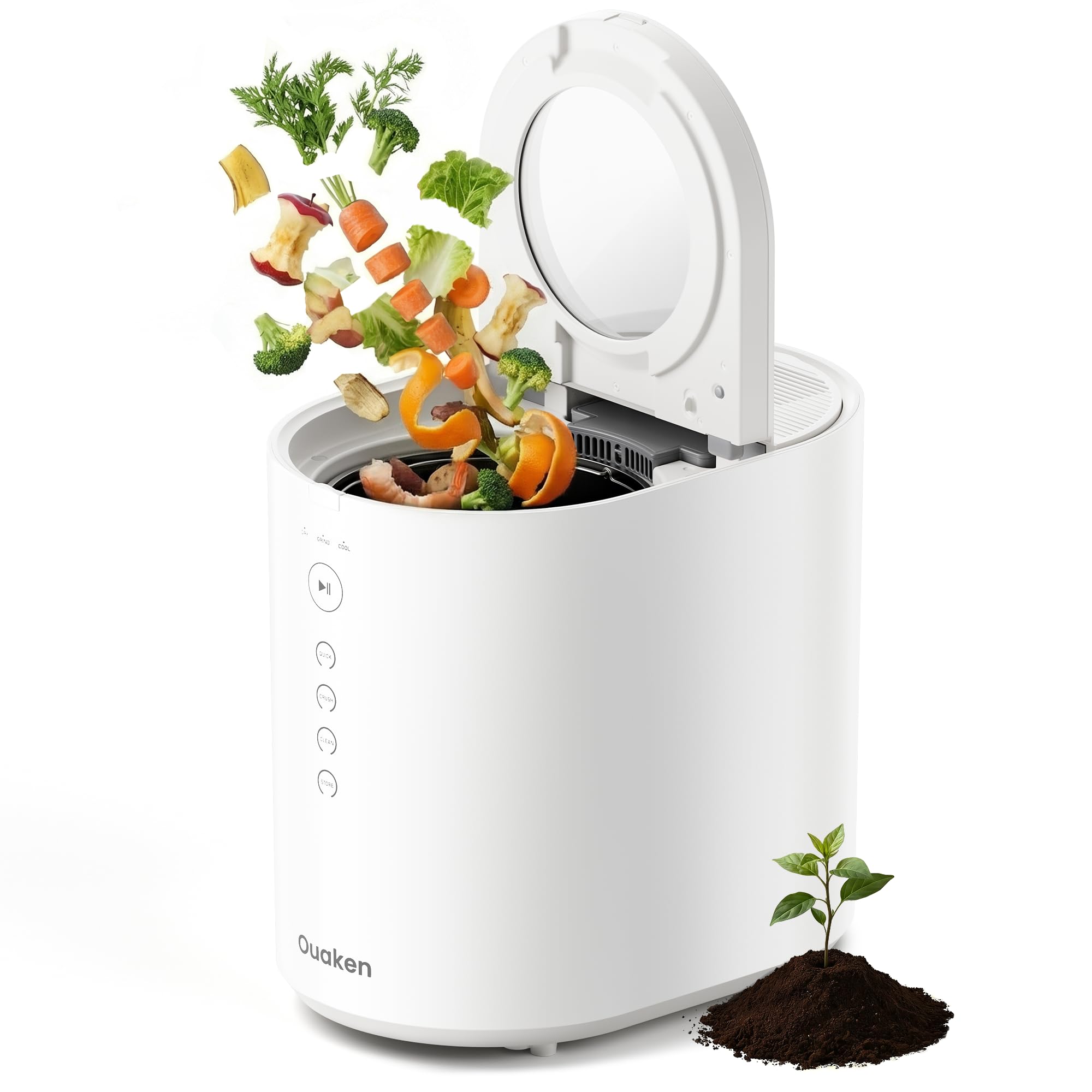
The Ouaken OK-255 offers a 5.5-liter capacity that handles multiple meals before needing emptying, with five modes including a Quick cycle and a Crush function for denser scraps. Its upgraded carbon filter and quiet operation under 45 dB make it suitable for countertop use. However, this model is early in its market life, so its long-term durability under consistent daily use is not yet established. That makes it a better fit for casual users who value capacity and convenience over a proven track record.

Bottom line: Best for buyers who want a larger composter with quick modes and are comfortable with a newer model that hasn't been tested over many months of daily use.

4

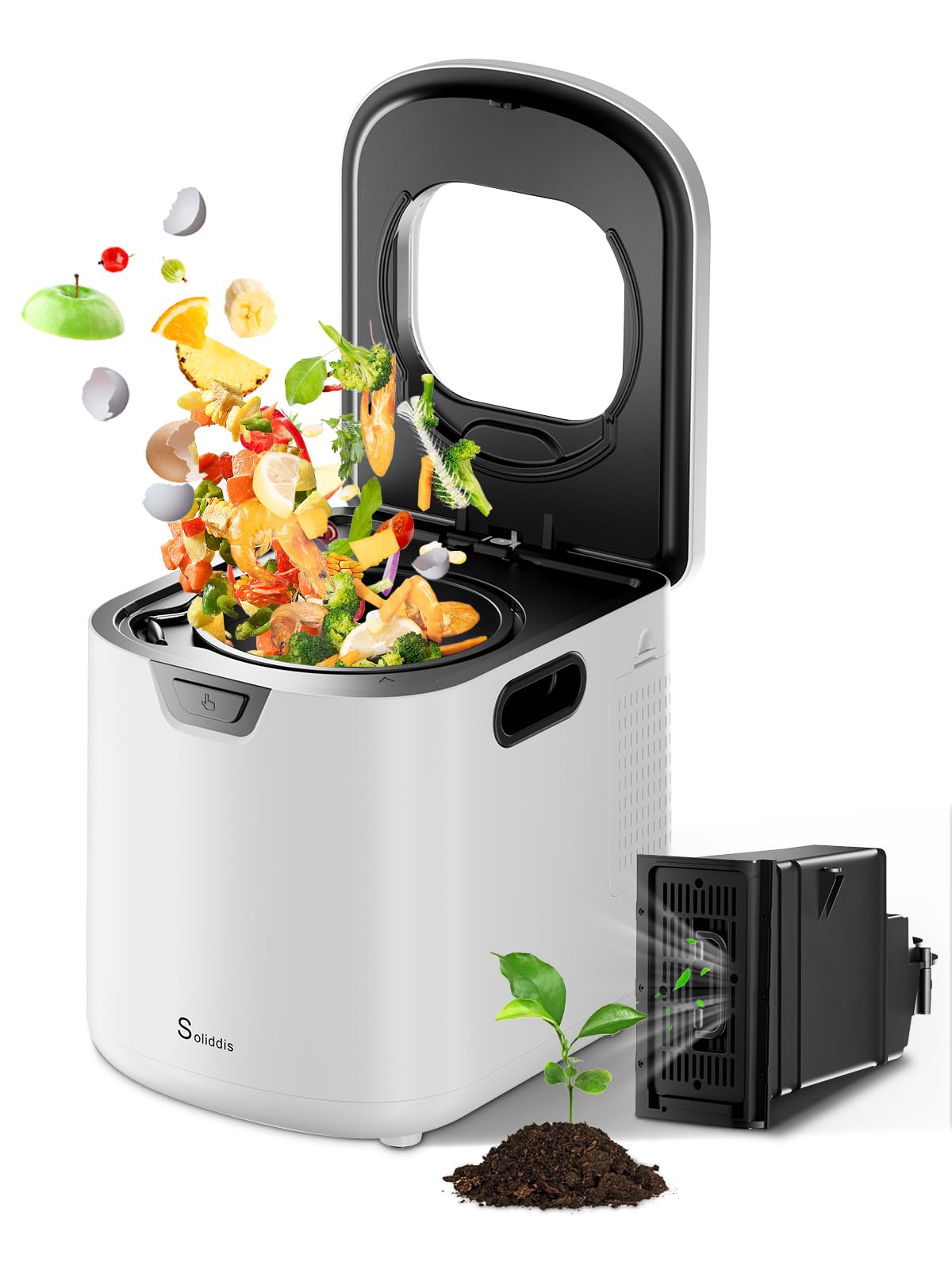
Soliddis 4.2L

Soliddis 4.2L

Adventurous buyers

Our Score 9.2/10
Check Price

Worth Noting

Capacity
4.2L
Noise Level
<45 dB
Compost Type
Dehydrator
Odor Control
High-density carbon
Read the full review

The Soliddis 4.2L electric composter packs competitive specs for its mid-range price: 4.2-liter capacity, a self-cleaning cycle, and 4-6 hour processing time with noise under 45 dB. Its performance claims, however, have not been independently verified through sustained use, making it a speculative choice for buyers who prefer validated track records.

Bottom line: Best suited for adventurous buyers willing to test a new brand based on specs alone, accepting that long-term performance is not yet established.

5

Airthereal R500-V 2.5L

Airthereal R500-V 2.5L

Singles or couples

Our Score 9.0/10
Check Price

Worth Noting

  • The 2.5-liter bucket needs emptying after most cycles for any household beyond singles or couples
  • Bucket coating may scratch or peel over time, potentially mixing with compost
Capacity
2.5L
Noise Level
Compost Type
Dehydrator
Odor Control
Biodegradable carbon
Read the full review

The Airthereal R500-V is the most affordable electric composter in our lineup, featuring a glass lid that lets you watch the drying process and a 3-year warranty that doubles the coverage of many competitors. Where the smart model adds app tracking and design awards, this one keeps things simple and budget-friendly.

This unit fits best for individuals or couples who produce limited kitchen scraps — the 2.5-liter bucket needs emptying after each cycle if you cook more than one meal a day. The interior coating has shown signs of wear over time, so hand-washing is recommended to avoid any flaking into the finished compost.

Bottom line: A no-fuss entry-level composter for light waste loads, backed by a warranty that offers peace of mind.

6

Food Cycler Eco 3

Food Cycler Eco 3

Small households

Our Score 8.8/10
Check Price

Worth Noting

  • The 3.5L bucket can fill up after a few days of typical kitchen scraps, requiring more frequent emptying than larger models
  • The per-cycle cost is higher than many competitors given the limited capacity
Capacity
3.5L
Noise Level
Compost Type
Dehydrator
Odor Control
Refillable carbon
Read the full review

The Eco 3 is the most space-efficient unit in Food Cycler’s lineup, occupying little more counter area than a coffee maker. While the larger 5L model handles more waste per cycle, this 3.5L version reduces food volume effectively — including bones and pits — thanks to its Vortech grinding system. The refillable carbon filter keeps odors contained during operation, and the cycle runs quietly enough for open kitchens.

For a single person or couple who prioritize counter space over raw capacity, the Eco 3 fits neatly under cabinets. Its premium price per cycle reflects the compact footprint rather than cost-efficiency, so budget-conscious buyers may want to look at larger alternatives. The simple controls and compact size make it a low-fuss addition to a small kitchen.

Bottom line: When counter space is the top priority, the Eco 3 delivers a quiet, odor-controlled way to reduce food waste — but if you can spare a few extra inches, a larger model offers better value per cycle.

7

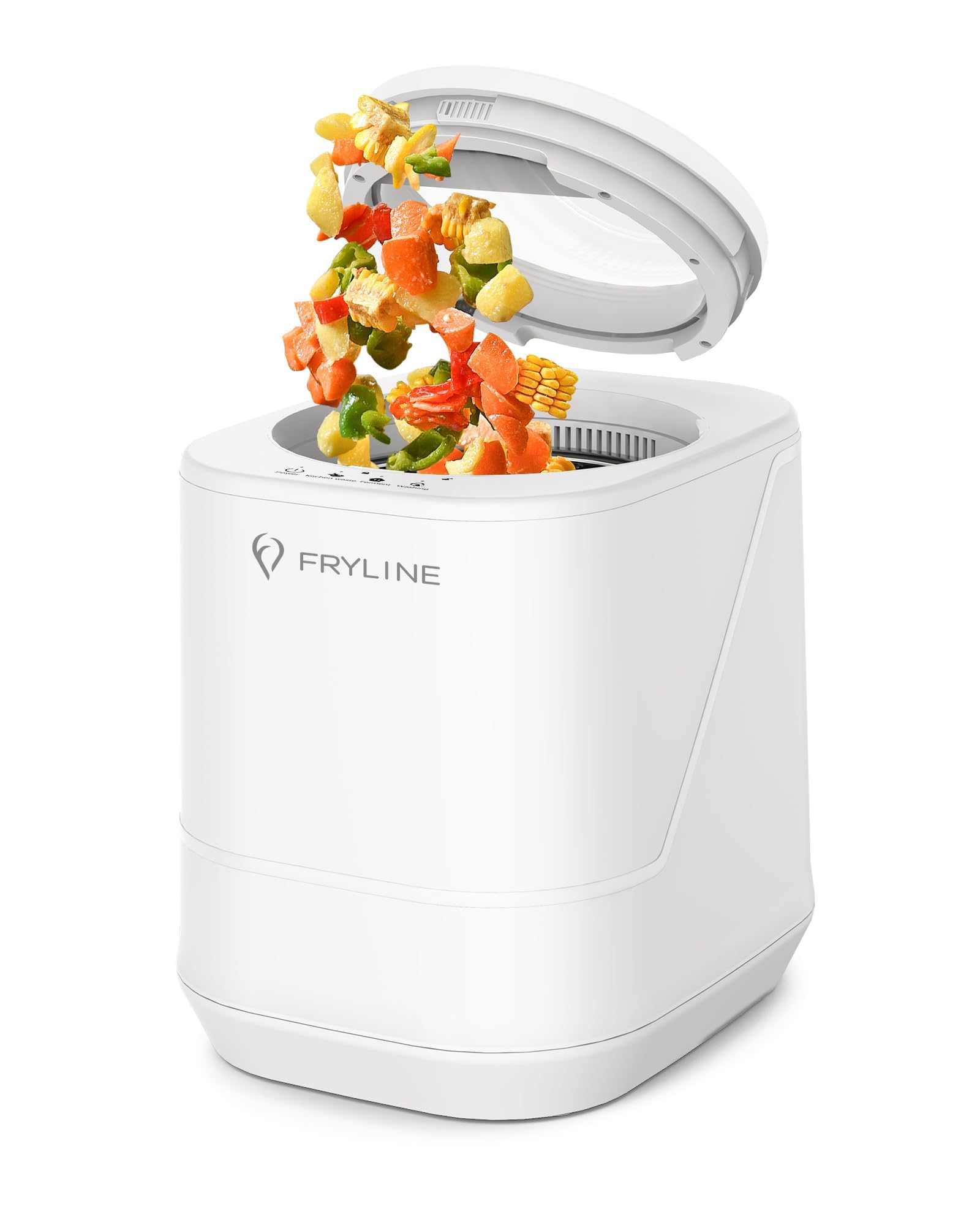
FRYLINE 4L

FRYLINE 4L

Budget-conscious buyers

Our Score 8.8/10
Check Price

Worth Noting

  • The three-mode system covers basic needs but lacks specialized options for different waste types.
Capacity
4L
Noise Level
<40 dB
Compost Type
Dehydrator
Odor Control
Carbon filter
Read the full review

The FRYLINE 4L keeps kitchen scraps quiet and odorless while its self-cleaning function handles the mess. Its three modes (Crush, Ferment, Clean) are enough for everyday peels and leftovers, but the lineup lacks extra settings for tougher or more varied waste. This is a capable entry point for those who want simple, low-cost operation without much fuss.

Bottom line: This fits anyone seeking an affordable, no-frills composter that handles daily food scraps quietly – just know the mode selection is limited.

8

Reencle Gravity 22L

Reencle Gravity 22L

Large families

Our Score 8.6/10
Check Price

Worth Noting

  • Premium price reflects the large capacity, making it a significant investment for most households.
  • Long-term durability under sustained heavy use is less established compared to the category leader.
Capacity
22L
Noise Level
24 dB
Compost Type
Microbial
Odor Control
3-layer filter
Read the full review

The Gravity 22L nearly doubles the bin volume of our top pick, making it the go-to for high-volume waste. Its 24 dB operation is genuinely whisper-quiet — barely audible even in an open kitchen. The microbial process breaks down scraps into usable compost, and the three-layer filter keeps smells contained without needing to run an exhaust.

This model suits households generating over three pounds of food scraps per day — think large families or avid gardeners with a steady stream of trimmings. The premium price reflects that scale, and because the Gravity has a shorter track record than the top pick, its durability under sustained daily use is not yet as thoroughly documented.

Bottom line: The Gravity 22L is unmatched in capacity and quietness for those who truly need to process over 3 lbs daily, but its cost and unproven longevity make the top pick a safer bet for most.

9

Ouaken 4L Composter

Ouaken 4L Composter

Small-medium households

Our Score 8.4/10
Check Price

Worth Noting

  • Lid may crack or become loose after several months of use.
Capacity
4L
Noise Level
<40 dB
Compost Type
Dehydrator
Odor Control
Carbon filter
Read the full review

The Ouaken 4L handles kitchen scraps effectively, using a carbon filter to keep smells contained and running quietly enough for open countertops. The bucket is dishwasher-safe for easy cleanup, and the simple controls make it approachable for first-time users. However, some units develop lid looseness or cracking after a few months, so this is best for those willing to accept possible long-term wear in exchange for an affordable start.

Bottom line: A budget-friendly entry point for new composters who can tolerate the possibility of lid wear over time.

10

Airthereal R800 5L

Airthereal R800 5L

Tech-savvy users

Our Score 8.2/10
Check Price

Worth Noting

  • Premium pricing compared to non-connected dehydrators with the same capacity.
  • Full functionality requires a stable WiFi connection; offline use limits access to tracking features.
Capacity
5L
Noise Level
Compost Type
Dehydrator
Odor Control
Biodegradable carbon
Read the full review

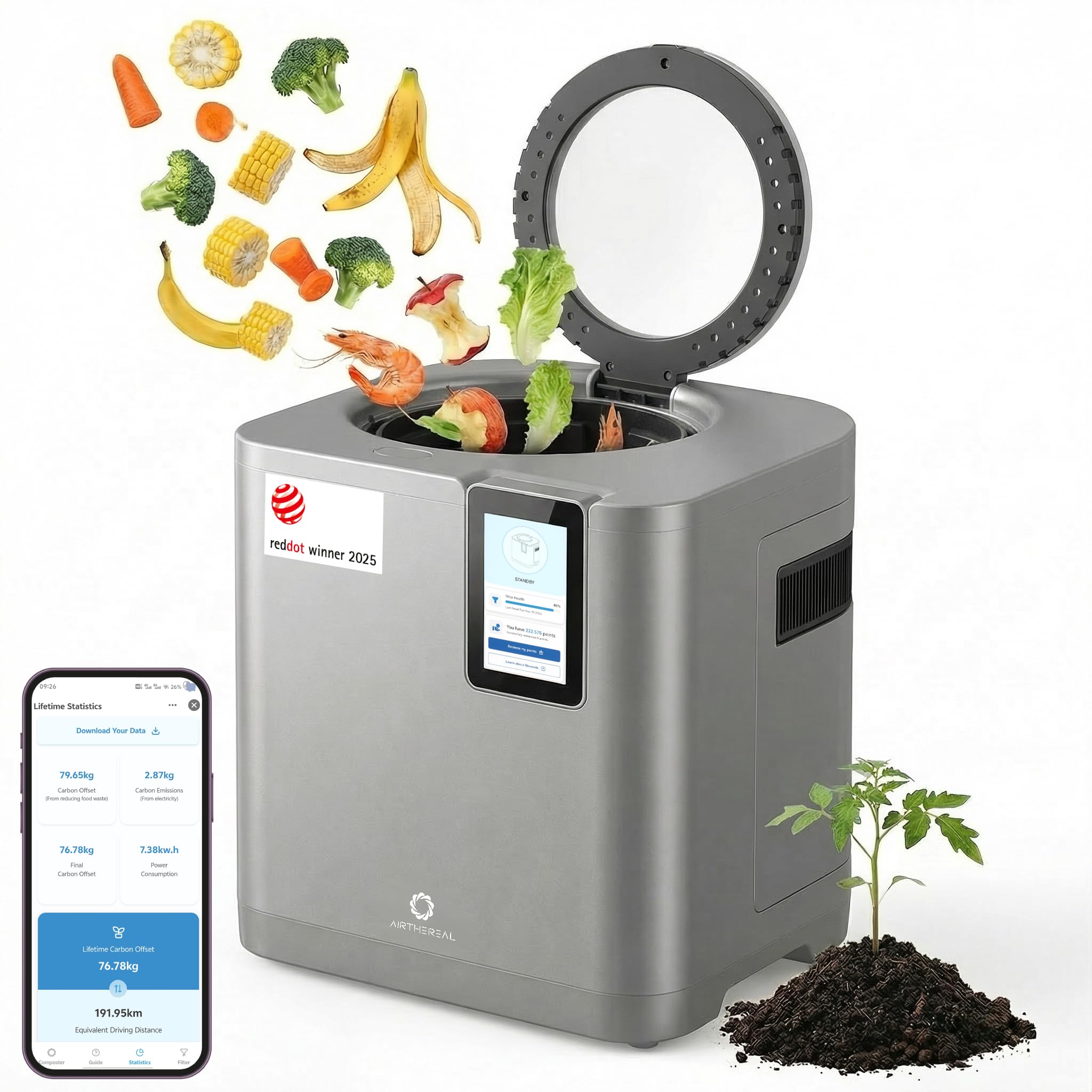
The Airthereal R800 stands out with built-in WiFi that connects to a companion app, letting you monitor each cycle and estimate your carbon footprint directly from your phone. Its 5-liter capacity handles daily kitchen scraps across three modes, including a self-cleaning cycle that reduces post-processing cleanup. ECO mode runs a longer cycle for maximum drying, while Bio Compost mode produces a finer output suitable for garden use. Self-Clean mode heats the bucket to reduce residue and odors, though occasional manual rinsing still helps. The design earned a Red Dot Award in 2025, adding a visual distinction on the counter.

This model suits tech-savvy owners who value data insights and want to see how much waste they divert from landfills. However, with a relatively small pool of user experiences, how well the unit holds up after months of regular processing is not yet clear — a point worth weighing before committing. For those who prioritize a low price and established reliability, the simpler alternatives in this roundup offer more certainty.

Bottom line: If app-driven waste tracking and design aesthetics matter more than an established history, the R800 delivers a polished experience at a reasonable cost.

11

GEME Smart 19L

GEME Smart 19L

Large waste producers

Our Score 8.0/10
Check Price

Worth Noting

  • Premium price may feel steep for those expecting consistent performance over time.
  • Motor stoppage can occur in some units, interrupting the composting cycle.
Capacity
19L
Noise Level
Compost Type
Microbial
Odor Control
Permanent filter
Read the full review

The GEME Smart 19L produces genuine compost rather than dehydrated scraps, processes up to 11 lbs per day, and runs quietly with effective odor control. Its permanent filter eliminates replacement costs. However, some units may experience motor stoppage, and the premium price raises questions about long-term value. This suits gardeners with high waste volume who prioritize true compost over guaranteed longevity.

Bottom line: If you generate a lot of food waste and want real compost – and you are willing to accept the possibility of early motor issues – the GEME Smart 19L delivers on capacity and output.

How to Choose

Capacity

Capacity determines how often you must empty the bin. A 2.5L unit fills quickly from a single family dinner, while a 14L or 22L unit can handle a day's worth of scraps from a household of four.

Oversized machines running partial loads waste energy and may not reach proper processing temperatures. Match capacity to your daily waste output, not your peak holiday volume.

Processing Time

Cycle times range from 2 to 24 hours depending on technology and load. Dehydrators typically finish in 4-6 hours, while microbial units take longer to cultivate bacteria but produce real soil.

Fast cycles mean you can process multiple batches per day, but the output is dry pre-compost. Slow cycles yield richer material but require planning ahead.

Compost Type: Microbial vs. Dehydrator

Microbial composters use aerobic bacteria to break down organic matter into humus-rich soil. The result is biologically active, safe for garden beds and potted plants. Dehydrators grind and heat scraps into a dry, crumbly powder that still needs to be buried or mixed into soil to finish decomposing.

If you want instant volume reduction for landfill diversion, a dehydrator suffices. If you need finished compost for your garden, only a microbial unit delivers that. No machine bridges both perfectly.

Odor Control System

Odor control relies on activated carbon filters or multi-layer systems that trap volatile compounds. Carbon filters must be replaced every 2-5 months; neglecting this leads to smells escaping into the kitchen.

Some microbial units claim permanent filters but require regular airflow maintenance. The trade-off: replaceable filters increase long-term cost, while permanent ones demand disciplined cleaning schedules.

Noise Level

Noise ranges from 24 dB (a whisper) to over 45 dB (comparable to a refrigerator hum). Countertop composters run for hours, so dB rating matters in open-plan kitchens or near sleeping areas.

Units below 30 dB are barely audible at a few feet. Above 40 dB, the grinding action may be noticeable during quiet hours. Check the rating if the machine will sit near living spaces.

Frequently Asked Questions