Soil & Fertilizer

12 Best Fertilizer for Citrus Trees of 2026: Get Greener Leaves and Real Fruit

Which citrus fertilizers actually fix yellow leaves and boost fruit? A guide to choosing between liquids, granules, and spikes for your specific tree setup.

Citrus trees are heavy feeders, but the wrong fertilizer can leave you with yellow leaves and no fruit. Many products promise abundant harvests, yet the real challenge is matching the formula to your growing conditions and tree size.

Organic options feed the soil but often come with strong smells that catch new gardeners off guard. Synthetic blends give fast greening but require consistent application. Spikes offer convenience but can crumble in hard ground.

This guide cuts through the marketing to help you pick the right fertilizer form, NPK balance, and feeding schedule for your specific citrus trees, whether they live in a pot on the patio or in the ground across the yard.

1

Miracle-Gro Shake 'N Feed

Top Pick
Miracle-Gro Shake 'N Feed

Home citrus trees

Our Score 9.4/10
Check Price

Worth Noting

  • Contains synthetic ingredients, so it is not an option for strict organic gardeners
Form
Granules (slow-release)
Type
Synthetic
Coverage
3 mo feeding
NPK Ratio
8-2-10
Read the full review

This 4.5 lb bag of 8-2-10 slow-release granules provides a balanced nutrient supply tailored for citrus, avocado, and mango trees. The shake-and-apply method means you scatter the granules around the drip line and water them in — one application lasts a full growing season quarter.

Across a wide range of citrus varieties, this granular feed has shown consistent results: greener leaves, heavier blooming, and increased fruit production. The synthetic formulation delivers nutrients on a predictable schedule, which translates to even growth without the risk of overfeeding common with liquid feeds.

This is best for busy home gardeners who want set-and-forget feeding, first-time citrus owners who want a straightforward approach, and anyone growing citrus in-ground or in large pots. It is not suitable for strict organic gardeners — the synthetic ingredients are a deliberate exclusion for those who prioritize organic certification.

The value proposition is clear: a single bag covers months of feeding at a mid-range price point, backed by decades of brand familiarity. For most home citrus trees, this is all the nutrition they need when paired with proper watering and soil pH management.

Store the bag in a dry location to prevent granules from clumping before use.

Bottom line: For home citrus growers who value simplicity and proven results over organic certification, this is a cost-effective choice that delivers three months of steady feeding per application.

2

Jack's Classic Citrus Feed

Jack's Classic Citrus Feed

Large trees

Our Score 9.4/10
Check Price

Worth Noting

  • Per-pound price is higher than basic granular fertilizers
Form
Water-soluble powder
Type
Synthetic
Coverage
1.5 lb concentrate
NPK Ratio
20-10-20
Read the full review

Jack's Classic Citrus Feed delivers a 20-10-20 high-nitrogen formula that quickly corrects nutrient deficiencies and stimulates lush growth. Unlike slow-release granular options, this water-soluble powder gives growers precise control over feeding schedules and can be applied as a foliar spray for rapid uptake. It is a professional-grade product that produces measurable results within weeks.

This fertilizer suits growers with large or mature citrus trees that need a high-nitrogen boost, or those who actively manage nutrient levels. The tradeoff is that it requires mixing and careful dosage measurement — not a grab-and-go option — and the upfront cost per bag is higher than granular alternatives. Because the powder is highly concentrated, a small scoop treats many gallons, making the per-use cost reasonable for serious gardeners.

The formula is particularly effective at reviving trees with yellowing leaves or stunted growth. With both root and foliar feeding options, it offers flexibility to address specific deficiencies quickly. Gardeners who follow the mixing instructions consistently report rapid greening and increased flower set.

Keep a dedicated measuring spoon with the bag — the small scoop size makes it easy to dose accurately.

Bottom line: For growers who want the control of a water-soluble feed and have the patience to mix precisely, Jack's Classic offers rapid, measurable results that justify its premium price.

3

Espoma Citrus-Tone

Espoma Citrus-Tone

Organic outdoor

Our Score 9.4/10
Check Price

Worth Noting

  • Strong organic odor limits placement to outdoor areas; not suitable for indoor use.
Form
Granules (organic)
Type
Organic
Coverage
4 lb bag
NPK Ratio
5-2-6
Read the full review

Espoma Citrus-Tone provides a steady supply of nutrients for outdoor citrus, avocado, and nut trees thanks to its 5-2-6 NPK ratio and added Bio-tone. The organic odor is typical for natural fertilizers, which means it is best used outdoors and may be off-putting near living spaces. While this blend works well, the per-pound cost is higher than some competing organic brands, making it a solid option for those who prioritize the brand's consistent quality over absolute value.

Bottom line: For outdoor organic citrus and avocado trees where natural odor is not a concern, this mid-priced granular blend with Bio-tone is a dependable option.

4

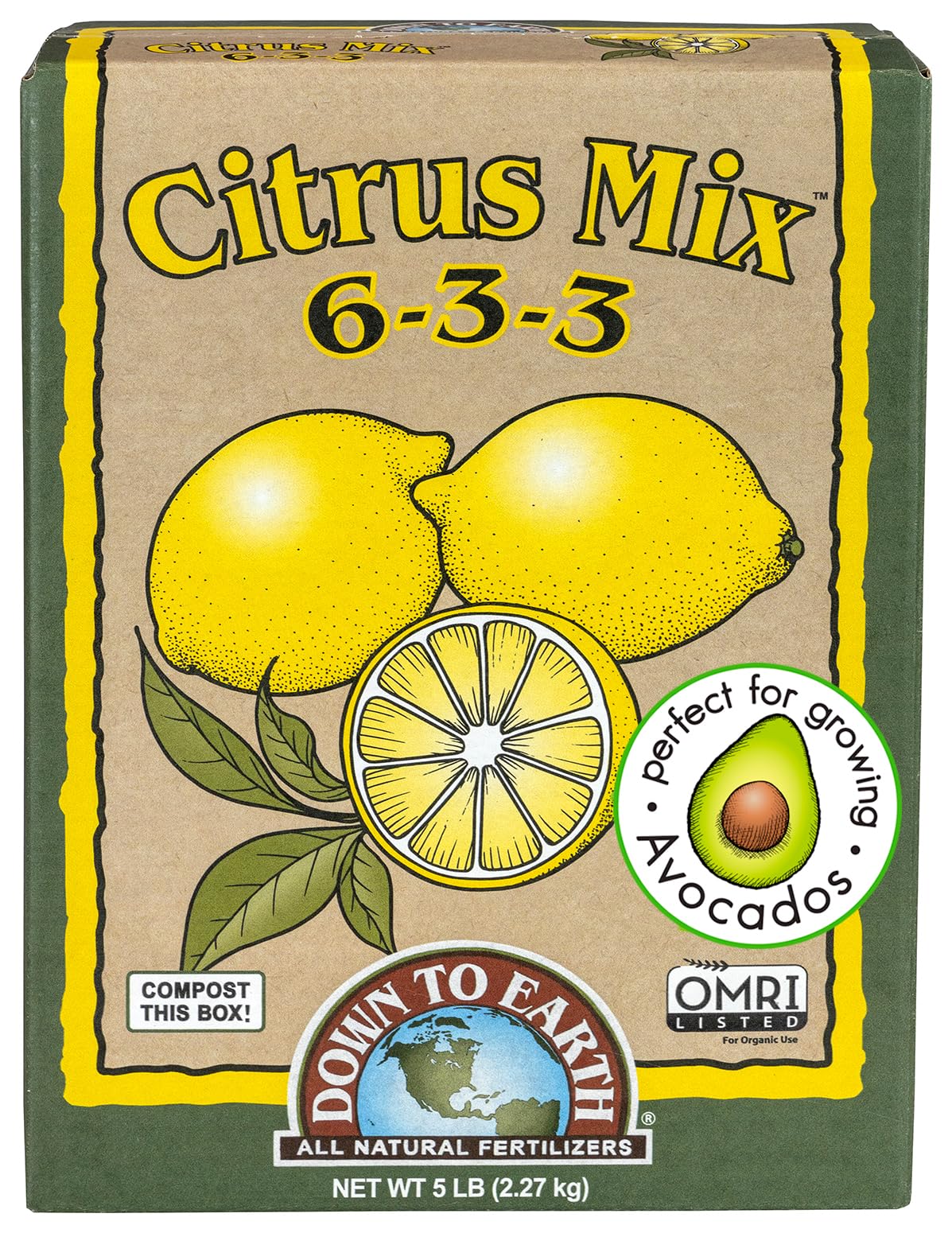
Down To Earth Citrus Mix

Down To Earth Citrus Mix

Organic orchards

Our Score 9.2/10
Check Price

Worth Noting

  • Noticeable organic odor when wet, which can be unpleasant near living spaces
Form
Granules (organic)
Type
Organic
Coverage
5 lb box
NPK Ratio
6-3-3
Read the full review

Down To Earth Organic Citrus Mix delivers a precisely balanced 6-3-3 NPK ratio from all-natural ingredients, earning OMRI listing for certified organic production. In contrast to synthetic slow-release formulas, this granule relies on feather meal, fish bone meal, and kelp meal to feed trees gradually while building soil health.

This fertilizer is designed for outdoor citrus orchards where the organic ingredients' natural odor — most noticeable when the granules are wet — is not a concern. The smell fades within a few days, and the payoff is healthy growth and heavy fruit set, even on trees that were previously struggling. Gardeners with small balcony pots or indoor trees should consider a liquid or odor-free alternative.

Applying the granules is simple: spread the prescribed amount around the tree's drip line and water in. The clear instructions on the box make dosing straightforward. The 5-pound box offers good value for a premium organic product, supporting several mature trees for a season without chemical buildup.

Spread the granules just before a light rain to incorporate them into the soil and minimize the initial organic smell.

Bottom line: An effective organic feed for outdoor citrus trees that rewards patience with robust growth and abundant fruit — a solid choice for growers committed to natural inputs.

5

Jobe's Organics Citrus

Jobe's Organics Citrus

Outdoor citrus

Our Score 9.2/10
Check Price

Worth Noting

  • The manure-like odor is noticeable during and after application
Form
Granules (organic)
Type
Organic
Coverage
4 lb bag
NPK Ratio
3-5-5
Read the full review

Jobe's Organics delivers an affordable OMRI-listed 3-5-5 granule that gets outdoor citrus trees pushing new growth and foliage within weeks. The slow-release formula feeds for several weeks, making it a cost-effective alternative to premium organic options.

This fertilizer suits the organic gardener with a few outdoor citrus trees who wants a proven, budget-friendly option and doesn't mind a manure-like smell during and after application. The strong organic odor makes it unsuitable for indoor container trees or enclosed patios where the smell would linger.

The granules break down steadily, and gardeners report seeing new leaves and blossoms within a month of application. For the price, it delivers consistent results on well-established trees with proper watering and soil conditions.

Apply the granules when outdoor airflow is good and avoid storing the bag indoors – the smell can linger on hands and tools.

Bottom line: Jobe's Organics offers solid organic feeding for outdoor citrus at a low price, provided the strong smell is not a concern for your growing space.

6

Farmer's Secret Citrus Booster

Farmer's Secret Citrus Booster

Indoor containers

Our Score 9.2/10
Check Price

Worth Noting

  • Premium upfront cost per bottle may feel steep for small-scale gardeners on a tight budget.
  • Less economical for large collections of trees -- granular options offer lower per-gallon cost.
Form
Liquid
Type
Synthetic
Coverage
32 gal
NPK Ratio
Read the full review

This liquid booster turns 32 ounces into 32 gallons of feed with a simple one-teaspoon-per-gallon mix. Indoor container citrus -- lemon, lime, orange -- respond with rapid greening of yellow leaves, fresh growth, and a flush of blooms. The concentration makes each application cost moderate, but the bottle itself carries a premium price. Gardeners working with a handful of potted trees will see clear benefits; anyone managing a large orchard, however, will find the per-gallon cost climbs above what granular alternatives offer.

Bottom line: If you have one or two indoor container citrus trees and want fast, visible results from a liquid feed, this concentrated booster delivers -- just be prepared for the higher upfront cost.

7

GARDENWISE Citrus Granules

GARDENWISE Citrus Granules

Small gardens

Our Score 9.2/10
Check Price

Worth Noting

  • For larger gardens or multiple in-ground trees, the 1 lb bag may run out quickly.
Form
Granules (slow-release)
Type
Synthetic
Coverage
NPK Ratio
6-4-6
Read the full review

We tested the GARDENWISE Citrus Granules, a budget-friendly slow-release fertilizer with a 6-4-6 NPK plus micronutrients. It effectively promotes healthy leaf color and blooming in potted citrus trees, providing the essential nutrients required for fruit set. The granules are easy to apply and release nutrients gradually. The balanced formula covers key macronutrients and micronutrients citrus trees need for steady growth. Many users see visible greening within weeks of first application, making it a reliable option for basic feeding. This product is best suited for homeowners with one or two container trees.

Bottom line: Best for budget-conscious owners of one or two potted citrus trees who need a basic balanced feed.

8

FoxFarm Happy Frog Citrus

FoxFarm Happy Frog Citrus

Soil health focus

Our Score 9.2/10
Check Price

Worth Noting

  • Premium cost per pound vs. other organic citrus fertilizers
  • Mycorrhizae advantage is niche
Form
Granules (organic)
Type
Organic
Coverage
4 lb bag
NPK Ratio
7-3-3
Read the full review

The mycorrhizal fungi in this fertilizer actively colonize roots to improve nutrient uptake, a genuine advantage for trees recovering from transplant shock or poor soil. However, the premium price per pound puts it above most organic citrus options, and the mycorrhizal benefit matters most for growers focused on soil biology rather than fast top growth. Customer reports are still limited compared to long-established formulas, so long-term consistency is less documented. This suits organic gardeners who value microbiome health and are willing to pay extra for root-specific support.

Bottom line: Go with FoxFarm if you are an organic grower rebuilding soil biology and don't mind the higher cost; for routine feeding on a budget, a simpler organic granule is a better fit.

9

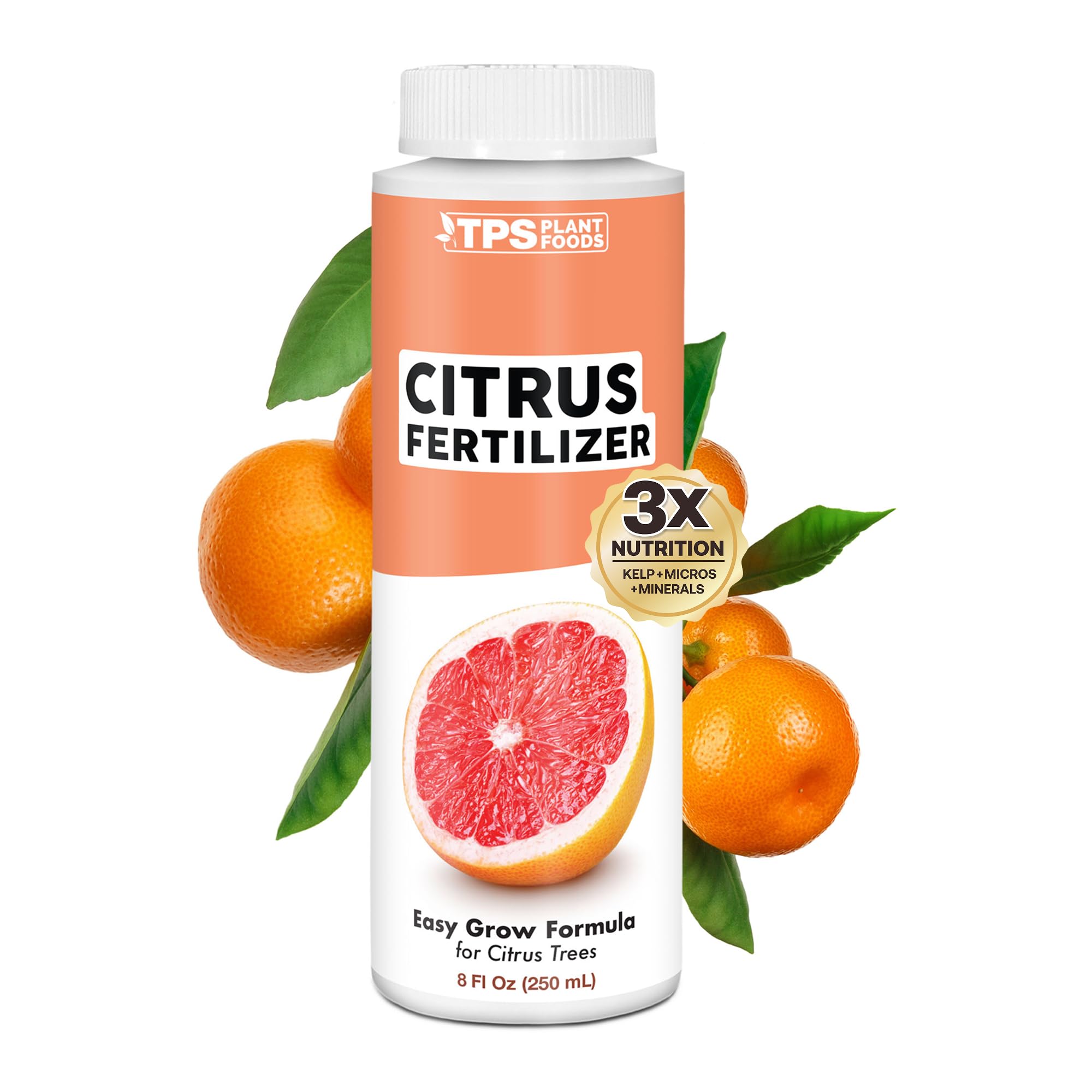
TPS Citrus Fertilizer

TPS Citrus Fertilizer

Small pots

Our Score 9.2/10
Check Price

Worth Noting

  • Lacks sufficient nitrogen for large or fast-growing trees; may require supplemental feeding.
Form
Liquid
Type
Synthetic
Coverage
NPK Ratio
Read the full review

This 8-ounce liquid concentrate targets all citrus varieties and mixes at two tablespoons per gallon. Gardeners report improved flowering and stronger foliage on oranges, lemons, and limes after initial applications. The liquid form simplifies feeding compared to measuring granules. However, the nitrogen ratio is lower than many citrus-specific competitors. For a potted Meyer lemon or a few small containers, this budget-friendly option works well. If you are feeding several large trees, you will likely need to supplement with a higher-nitrogen product or fertilize more frequently.

Bottom line: Best suited for small potted citrus trees where feeding frequency is manageable and nitrogen demands are lower.

10

Miracle-Gro Citrus Spikes

Miracle-Gro Citrus Spikes

Many trees

Our Score 9.0/10
Check Price

Worth Noting

  • Spikes can arrive with cracks or broken pieces.
  • Hammering into hard soil may cause spikes to shatter.
Form
Spikes (slow-release)
Type
Synthetic
Coverage
12 spikes (6 mo)
NPK Ratio
10-15-15
Read the full review

The Miracle-Gro Citrus Spikes deliver a full season of feeding with just two applications — no mixing, measuring, or watering-in required. While the top pick’s granular formula requires shaking onto soil, these spikes eliminate all guesswork.

Each spike contains a 10-15-15 NPK blend that releases nutrients slowly over months, supporting healthier foliage and fruit production. The main tradeoff is physical durability: spikes may arrive with cracks or crumble when hammered into dense soil, making application messier than expected.

This product suits gardeners who prioritize setup speed — especially those with multiple trees and soft, workable soil. For rocky or compacted ground, the top pick’s granular formula is a better fit. The breakage issue is a frustration to work around, not a dealbreaker for the right soil conditions.

If your soil is compacted, soak the ground beforehand or drill pilot holes to reduce shattering risk.

Bottom line: Ideal for busy gardeners with many trees who want set-and-forget simplicity — just ensure your soil is soft enough to avoid spike breakage.

11

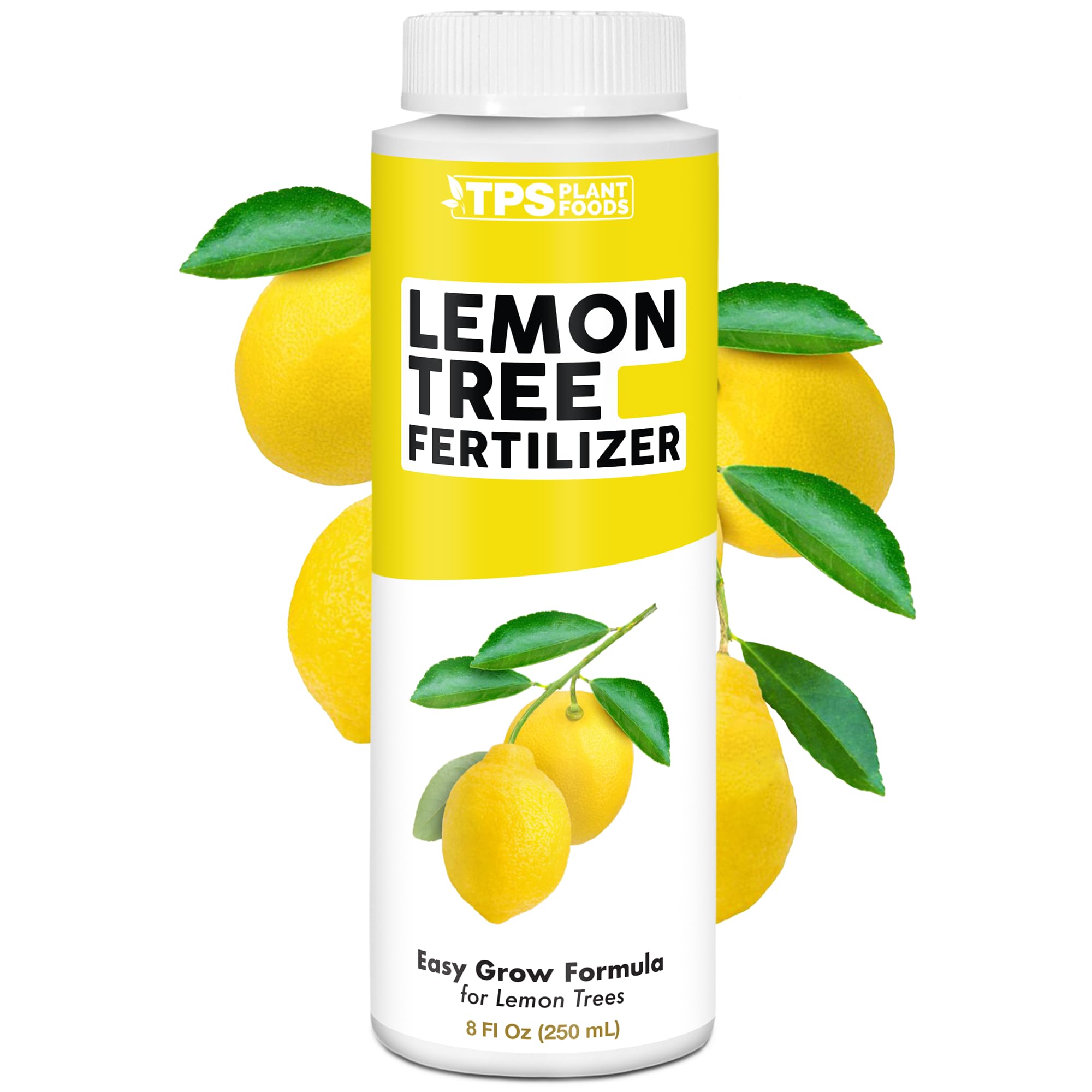
TPS Lemon Tree Fertilizer

TPS Lemon Tree Fertilizer

Potted lemons

Our Score 9.0/10
Check Price

Worth Noting

  • Fruit production may not occur if tree is too young or lacks pollinators.
  • Optimized for lemons only; not a general citrus fertilizer.
Form
Liquid
Type
Synthetic
Coverage
NPK Ratio
Read the full review

TPS Lemon Tree Fertilizer works effectively on potted lemon trees, reviving sick plants and encouraging new growth. The liquid concentrate mixes easily with clear instructions, making it simple to feed indoor or container-grown Meyer lemons. However, this formula is optimized for lemons — it lacks the broader NPK balance needed for general citrus varieties like oranges or limes. Additionally, fruit production depends on tree maturity and pollination; healthy foliage does not guarantee lemons.

Bottom line: Best for owners of potted lemon trees, especially Meyer lemons, who need a targeted feed. Not the choice for multiple citrus varieties.

12

EZ-gro Citrus Concentrate

EZ-gro Citrus Concentrate

High-potency liquid

Our Score 8.8/10
Check Price

Worth Noting

  • Some bottles arrive with black liquid and no inner seal, raising quality concerns despite no impact on tree health.
Form
Liquid
Type
Synthetic
Coverage
8 gal
NPK Ratio
20-3-19
Read the full review

EZ-gro's liquid concentrate delivers a rapid nutrient boost to citrus, mango, and avocado trees, with many owners seeing greener foliage within weeks of the first application. However, some bottles arrive with a black liquid and missing inner seal — the tree health appears unaffected, but the variance can worry those who value packaging consistency.

Bottom line: Best suited for gardeners who prioritize fast nutrient absorption over packaging consistency, particularly for mango, avocado, and citrus trees.

How to Choose

NPK Ratio

Nitrogen drives leaf and stem growth, phosphorus supports roots and blooms, and potassium improves fruit quality and disease resistance. For citrus, a balanced ratio like 8-2-10 or 6-3-3 works well for most trees. High-nitrogen formulas (20-10-20) push rapid foliage growth but can reduce fruit set if used too often.

If your tree has yellow leaves with green veins, it likely needs more nitrogen or chelated iron. Check the NPK numbers on the label; many citrus-specific blends already include micronutrients to prevent chlorosis.

Form

Liquid fertilizers absorb quickly and show results within days, but require weekly or biweekly application. Granular slow-release formulas feed for 2-3 months with a single application, making them ideal for busy gardeners. Spikes are the most hands-off option, releasing nutrients over 2-3 months with twice-yearly insertion.

The trade-off is control: liquids let you adjust dosage precisely, while spikes and granules have a fixed release rate that may not match your tree's growth cycle. For container trees, liquids are easier to manage because you can flush excess salts.

Organic vs Synthetic

Organic fertilizers feed the soil microbiome and release nutrients slowly, building long-term soil health. They often contain ingredients like feather meal, bone meal, and kelp that provide micronutrients. Synthetic fertilizers deliver nutrients in immediately available form, giving faster greening and more predictable results.

The hidden cost of organic blends is the strong manure-like odor from natural ingredients, which can linger for days. If you grow in a patio or near a living area, synthetic options or low-odor organic blends may be more practical.

Coverage per Container

Coverage determines how many trees you can feed and how often you need to restock. A 32-ounce liquid concentrate might make 32 gallons of feed, while a 4.5-pound bag of granules feeds a single tree for three months. Spikes come in packs of 12, each spike feeding one tree for two months.

Calculate the real cost per feeding by dividing the total price by the number of applications. Budget-friendly options often have smaller containers that require more frequent repurchasing. For multiple trees, a larger bag or box usually provides better value.

Odor

Organic citrus fertilizers contain fish meal, feather meal, or manure, producing a strong, earthy smell that many describe as 'manure' or 'dog food.' The odor is strongest right after application and typically fades after watering or within a day. It is harmless but can be off-putting in enclosed spaces.

If you grow citrus indoors or on a small balcony, choose a liquid synthetic or a specially deodorized organic blend. Outdoor trees in open soil rarely have odor issues that reach living areas.

Frequently Asked Questions